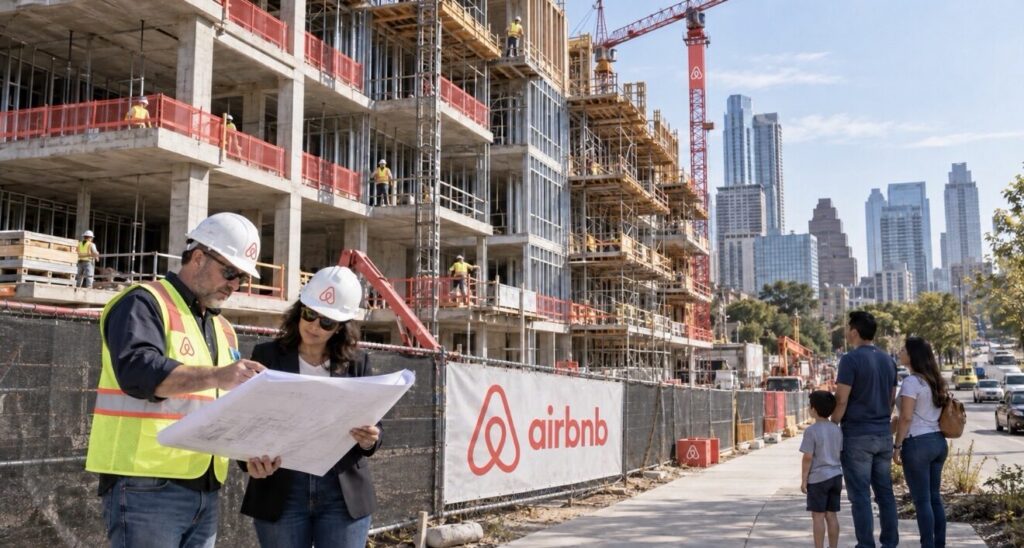
Airbnb is putting $250 million into housing construction as the company fights years of accusations that short-term rentals remove homes from local markets and drive up rents.
The money will not be used to buy existing homes or convert apartments into Airbnb listings. It will provide the final piece of financing that developers often need before affordable and mixed-income apartment projects can begin construction.
The first investment is $6.4 million toward a roughly 200-unit affordable-housing development in Austin, Texas. That works out to about $32,000 in Airbnb financing per apartment, though the company will supply only part of the project’s total construction cost.
Airbnb says its Housing Accelerator could ultimately unlock as much as $5 billion in housing development over the next decade. That would mean attracting roughly $20 from governments, banks and other investors for every $1 Airbnb commits.
The company expects to accept below-market returns and recycle money repaid by developers into additional housing projects. Developers will be able to submit projects through the accelerator’s application process, with priority given to developments stalled by financing gaps.
That could make the fund particularly useful when rising construction costs, interest rates or expiring government subsidies leave an otherwise viable project several million dollars short.
Airbnb is also allocating $5 million to a competition for technology and construction ideas that could reduce the cost or difficulty of building homes.
The move addresses one of the biggest political threats facing the company.
Cities from New York to Barcelona have imposed or proposed tougher restrictions on short-term rentals, arguing that apartments intended for residents are instead being offered to tourists. Airbnb has disputed claims that its platform is a primary cause of housing unaffordability, pointing to construction shortages, zoning restrictions and other structural problems.
The $250 million commitment will not settle that debate. It is small compared with the scale of America’s housing shortage, and financing alone cannot overcome restrictive zoning, lengthy approvals, expensive land and rising labor costs.
But it gives Airbnb a new argument when negotiating with local governments: the company no longer wants to be seen only as a business profiting from scarce housing. It now wants a financial stake in building more of it.
JBizNews Desk | San Francisco
© JBizNews.com. All rights reserved. This article is original reporting by JBizNews Desk. Unauthorized reproduction or redistribution is strictly prohibited.