
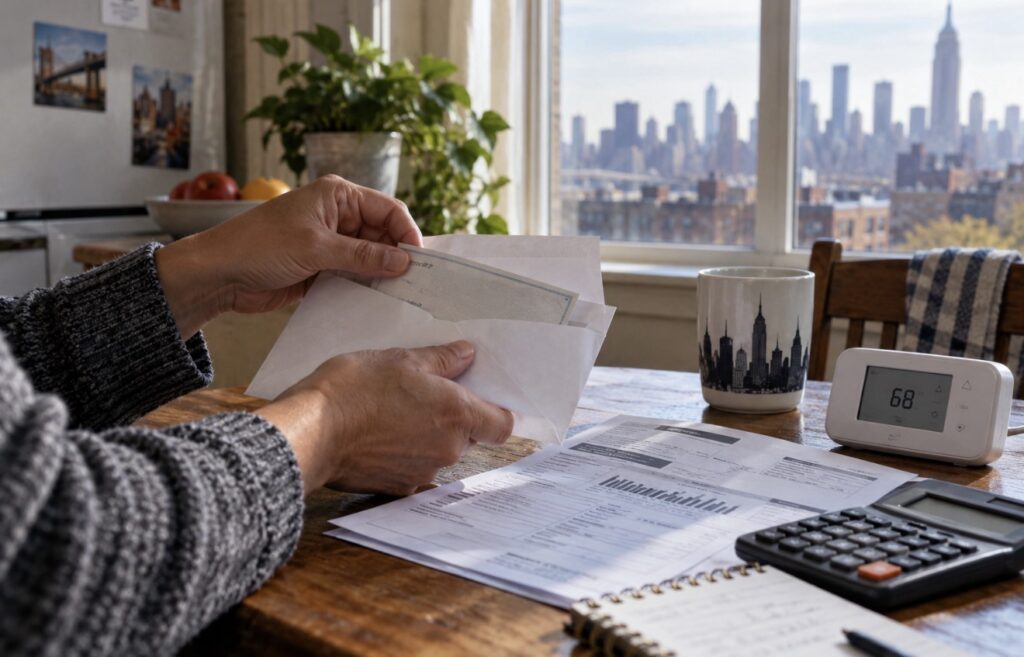
New York will begin mailing energy rebate checks on September 21, putting as much as $200 into the hands of millions of residents as electricity and heating costs remain among the highest in the country.
The $1 billion Protecting Our Wallets Energy Rebate program, known as POWER, was approved as part of the state budget in May. Approximately 8.2 million New Yorkers are expected to receive checks between September and December, with no application required.
Married couples filing jointly who reported income below $150,000 on their 2024 state tax return will receive $200. Joint filers earning between $150,000 and $300,000 will receive $150. Single filers, heads of household and married taxpayers filing separately will receive $100 if their income was $150,000 or less.
Recipients must have been full-time New York residents and cannot have been claimed as dependents on another person’s return. The state will determine eligibility automatically and send physical checks to the addresses associated with taxpayers’ filings.
The money arrives as high utility bills place growing pressure on household budgets. New York residential electricity prices have approached 30 cents per kilowatt-hour, more than 60% above the national average and among the highest rates in the country.
A $200 check will not cover a winter’s worth of electricity and heating costs, but it could absorb one large monthly bill—or help prevent another household expense from being pushed onto a credit card.
The timing also matters to businesses.
When families spend more on electricity, heating and other necessities, they have less money available for restaurants, stores and services. A one-time rebate does not reduce the underlying cost of energy, but distributing $1 billion across the state could temporarily support consumer spending as businesses enter the critical holiday season.
The rebate is part of a broader energy package that includes additional oversight of utility spending and rate requests, along with state investments intended to expand electricity supply and strengthen the power grid.
Those measures could prove more consequential than the checks themselves. Utilities pass the cost of new infrastructure, maintenance and power purchases to customers through their monthly bills. Stronger regulatory scrutiny could limit unnecessary expenses, but it will not eliminate the substantial cost of upgrading an aging system while electricity demand continues to grow.
New York must also add enough dependable power to meet demand as older generating facilities retire and homes, vehicles and businesses rely more heavily on electricity. Without adequate supply, consumers could face both higher prices and increased concerns about grid reliability.
For now, the rebate is immediate relief rather than a permanent solution. The state is returning between $100 and $200 to qualifying residents, but their utility rates will remain unchanged after the checks are deposited.
Payments will be mailed in batches through December, so eligible neighbors may receive their checks weeks apart.
JBizNews Desk | Albany, N.Y.
© JBizNews.com All Rights Reserved. Reproduction or distribution without written permission is prohibited.





