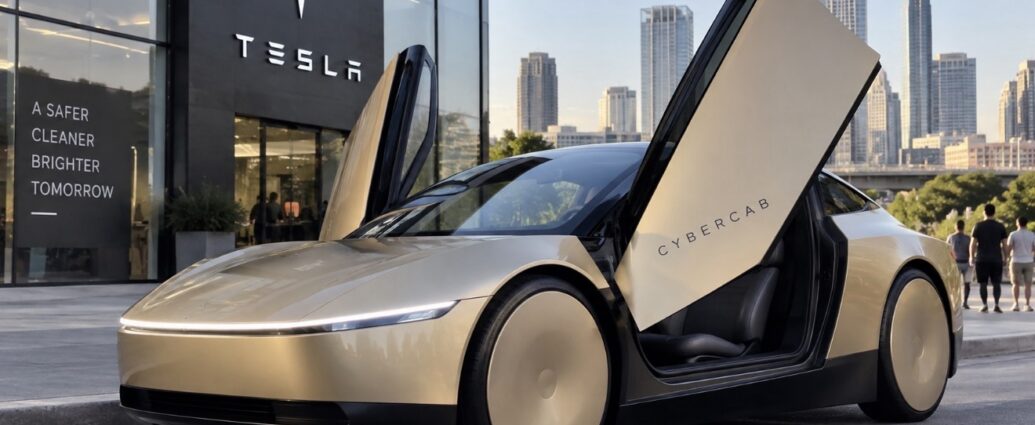
Tesla built the Cybercab around one radical idea: there is no driver.
No steering wheel. No brake pedal. No accelerator. The two-seat robotaxi is supposed to remove the human from driving entirely — and, in theory, remove much of the hardware and cost that comes with a conventional car.
Now federal regulators are asking whether Tesla may still need a way for a human to take control.
The National Highway Traffic Safety Administration is pressing Tesla for information about whether the Cybercab can accommodate temporary or manual driving controls as part of an investigation into how the company certified the vehicle for U.S. roads. NHTSA opened the inquiry after Tesla began carrying paying passengers in limited areas of Austin, Texas, earlier this month.
The investigation covers Tesla’s certification of as many as 1,000 Cybercabs and goes directly to one of the biggest regulatory questions facing the autonomous-vehicle industry: How do safety rules written around human drivers apply to a vehicle deliberately built without one?
For Tesla, that is more than a technical question.
Elon Musk has positioned the Cybercab as a purpose-built autonomous vehicle rather than a regular car with self-driving technology added to it. Eliminating the steering wheel, pedals and other conventional equipment is part of the economics of that strategy. The simpler Tesla can make the vehicle, the cheaper it could potentially be to manufacture and operate across a massive robotaxi fleet.
If regulators ultimately require additional human-control equipment, Tesla could face design changes, additional manufacturing costs or restrictions on how quickly Cybercab can expand.
There is also an unusual twist.
A Cybercab recently appeared with a hidden touchscreen interface that included a virtual joystick and other controls that could potentially allow the vehicle to be maneuvered manually. Tesla has also indicated that certain Cybercabs can be equipped with temporary controls for testing or other purposes.
That capability may become important as NHTSA examines whether Tesla’s approach complies with federal motor-vehicle safety standards.
Tesla’s situation is particularly significant because another autonomous-vehicle company took a different path. Amazon-owned Zoox received federal approval this summer for limited commercial deployment of its purpose-built robotaxi without conventional human controls.
Tesla instead certified the Cybercab itself as meeting applicable federal standards, as automakers are permitted to do, leaving NHTSA to audit that determination afterward.
That puts the regulator’s review at the center of Tesla’s robotaxi ambitions.
If the Cybercab passes regulatory scrutiny largely as designed, Tesla will have cleared a major hurdle toward a future in which cars no longer need to be built around a driver’s seat.
If regulators decide that a human must still have some practical way to take control, one of Tesla’s most futuristic vehicles may end up proving that getting rid of the driver is easier than getting rid of the controls.
JBizNews Desk | Austin, Texas
© JBizNews.com. All rights reserved. This article is original reporting by JBizNews Desk. Unauthorized reproduction or redistribution is strictly prohibited.