Oil got cheaper for a second straight day as Saudi Arabia works to get a critical pipeline back online, easing fears that Middle East fighting would choke off the world’s oil supply. Brent crude, the global benchmark, traded near $106 a barrel Wednesday after tumbling 2.7% the day before, while U.S. crude sat above $102 a barrel following a 3.2% drop.
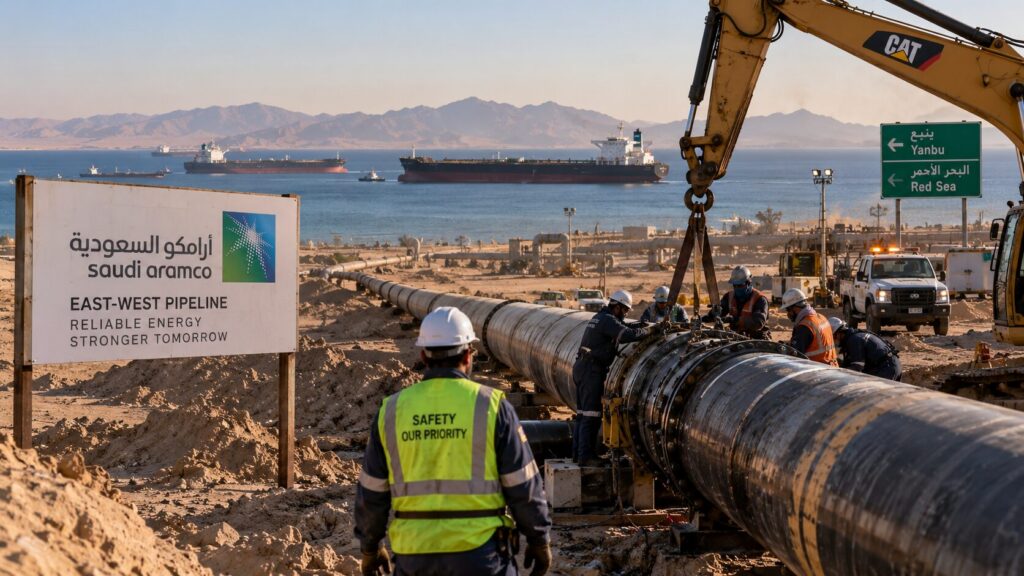
The pipeline at the center of the selloff is Saudi Arabia’s East-West line, which carries oil across the kingdom to its Red Sea coast and normally moves about 7 million barrels a day. It was damaged in a drone attack on September 11, and the outage forced Saudi Arabia to halt some crude shipments through its Red Sea port of Yanbu and cancel deliveries to European customers. That’s what sent oil prices spiking earlier this month.
Now Riyadh says it’s fixing the problem. A person familiar with the matter told Bloomberg that Saudi Arabia expects to bring back roughly half the pipeline’s capacity within days, with full repairs done in about six weeks. U.S. Energy Secretary Chris Wright told CNBC the outage is a “brief and temporary interruption” that “will be measured in days.” Independent analysts see it differently — satellite images of the damaged pumping station suggest repairs could stretch on for weeks, not days.
In the meantime, Saudi Arabia is finding workarounds. The kingdom is offering Asian refiners more crude through ship-to-ship transfers off Oman’s Sohar port, bypassing the damaged pipeline entirely. It’s also pushing more oil through the Strait of Hormuz, the narrow waterway between Iran and the Arabian Peninsula, with help from the U.S. military. That’s a tighter squeeze than it sounds: tanker traffic through Hormuz measured just four vessels Tuesday, down from seven the day before and well below the recent 10-day average of 18.
For American drivers, the math is simple. When oil gets cheaper, gas at the pump tends to follow — eventually. But the relief so far has been thin. The national average for a gallon of gasoline climbed again overnight to $4.37, even as crude prices fell, according to one industry tracker. That’s because oil is still trading roughly 75% higher than it was before the U.S.-Iran conflict escalated, and pipeline repairs take time to show up at the pump. One barrel of oil makes about 19 gallons of gasoline, so even small moves in crude prices ripple through household budgets for months.
The oil market’s turbulence is also showing up in interest rates. The Federal Reserve raised rates Wednesday, citing inflation pressure that oil-driven price spikes have helped fuel. Higher rates mean costlier auto loans, credit cards, and mortgages for consumers already paying more at the pump.
Not everyone is convinced the worst is over. “I wouldn’t call it an all-clear situation,” said Haris Khurshid, chief investment officer at Karobaar Capital LP. “The market is getting some capacity back, but it isn’t getting its margin for error back.” In other words, even with Saudi Arabia’s fix underway, the system has little cushion left if fighting escalates again or repairs run long.
Wright said one recent day saw roughly 18 million barrels of oil and petroleum products move through Hormuz, with the seven-day average closer to 11 million barrels — though other trackers, including Clarksons Research, put the real number closer to 8 million barrels a day. The gap in estimates underscores how murky the picture remains even as prices ease.
For now, the fix is straightforward even if the timeline isn’t: Saudi Arabia is rerouting supply around its broken pipeline while crews race to patch it, and markets are betting that effort succeeds fast enough to keep oil — and eventually gas prices — from spiking again.
JBizNews Desk | Wall Street
© JBizNews.com All Rights Reserved. Reproduction or distribution without written permission is prohibited.