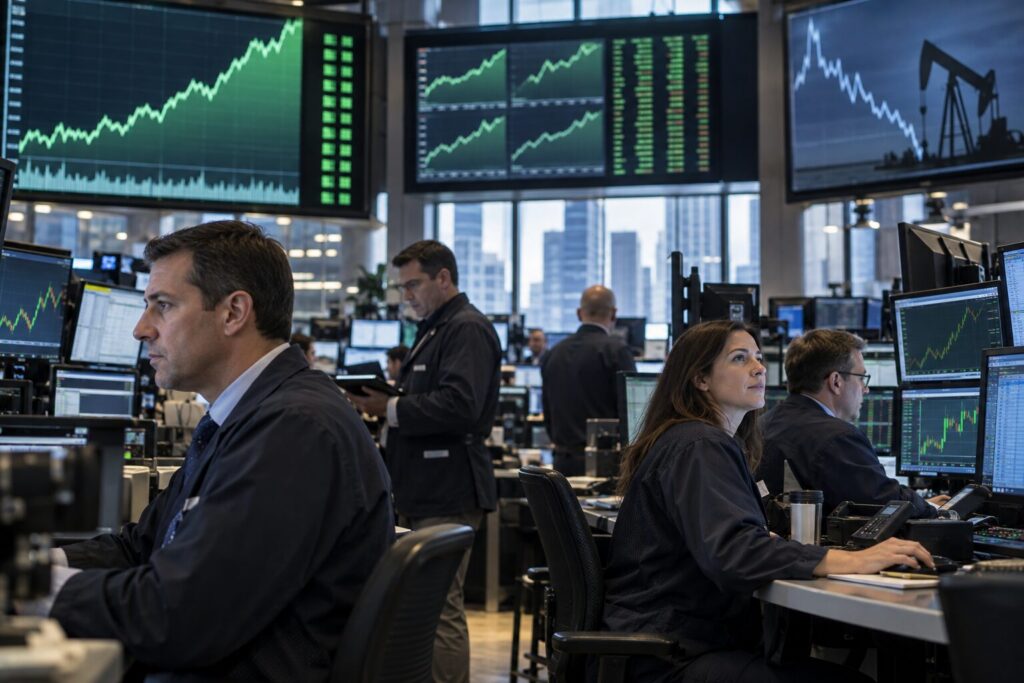
Wall Street rallied Thursday as falling oil prices and easing Treasury yields offered investors relief from the inflation pressures that prompted the Federal Reserve to raise interest rates for the first time in more than three years.
The Dow Jones Industrial Average gained about 0.6% in morning trading, while the S&P 500 rose roughly 0.9% and the Nasdaq Composite advanced approximately 1.3%. Technology companies helped lead the rebound, with all 11 major sectors of the S&P 500 trading higher during the session.
The gains came one day after the Federal Open Market Committee unanimously raised its benchmark federal-funds rate by a quarter percentage point, placing the target range at 3.75% to 4%. It was the central bank’s first rate increase since July 2023 and marked a reversal from the rate-cutting cycle of 2024 and 2025.
Higher interest rates normally weigh on stocks because they increase borrowing costs for companies and consumers while making bonds and other lower-risk investments more attractive. But investors had already anticipated Wednesday’s increase and appeared relieved that the Fed acted decisively without signaling a more aggressive series of increases.
The Fed’s updated projections showed that 16 of its 18 policymakers expect at least one additional rate increase before the end of 2026. Four officials projected two more increases.
That outlook means the relief rally does not signal that the period of expensive credit is ending. Credit-card rates, business loans and some auto loans generally respond quickly to changes in short-term interest rates. Mortgage rates are influenced more directly by longer-term Treasury yields, but they have also remained elevated as investors demand greater compensation for inflation and government borrowing risks.
The immediate boost for stocks Thursday came partly from the oil market. Brent crude fell about 3% to approximately $102.70 a barrel, retreating from nearly $110 earlier in the week. U.S. crude also declined, reducing fears that another energy-price surge would spread through transportation, manufacturing and household expenses.
Oil prices matter far beyond what motorists pay at the gasoline pump. Higher fuel costs raise expenses for airlines, trucking companies, manufacturers and retailers, which may eventually pass those costs to customers. A sustained decline in crude could therefore give businesses more room to absorb costs and reduce pressure on the Fed to raise rates more aggressively.
The bond market provided investors with another measure of relief. The yield on the benchmark 10-year Treasury note fell to about 4.95% after reaching approximately 5.01%. Lower Treasury yields can support stock valuations by reducing corporate financing costs and making future company earnings more valuable in current-dollar terms.
The combination of falling oil prices and lower bond yields helped investors look beyond Wednesday’s rate increase. The Fed’s action also removed a major source of uncertainty that had weighed on markets: whether policymakers would respond forcefully enough to inflation while energy prices were rising and the economy remained resilient.
Federal Reserve Chair Kevin Warsh said inflation remained too high and that the economy appeared strong enough to withstand tighter monetary policy. The Fed’s policy statement said domestic spending had remained resilient, productivity growth was strong and the labor market continued to be broadly balanced.
For businesses, the message is mixed. Companies may benefit if declining oil and transportation costs continue, but those savings could be offset by higher financing expenses. Small businesses, commercial-property owners and companies dependent on revolving credit may feel the effects sooner than large corporations able to issue long-term debt or finance operations from cash reserves.
Consumers face a similar divide. Savers could receive better returns on savings accounts and certificates of deposit, while borrowers are likely to pay more on variable-rate credit cards and newly issued loans. Many homeowners with fixed-rate mortgages are protected from immediate increases, but prospective buyers still face borrowing costs that remain high by recent standards.
Thursday’s rally therefore reflects relief rather than an all-clear signal. Investors welcomed a more predictable Fed response and a break in the oil-price surge, but another rate increase remains likely before year-end.
Whether the gains hold will depend heavily on upcoming inflation data, the direction of energy prices and the bond market’s reaction to continued federal borrowing. If oil resumes climbing or Treasury yields move decisively back above 5%, the pressures that triggered Wednesday’s selloff could return quickly.
JBizNews Desk | Wall Street
© JBizNews.com. All rights reserved. This article is original reporting by JBizNews Desk. Unauthorized reproduction or redistribution is strictly prohibited.