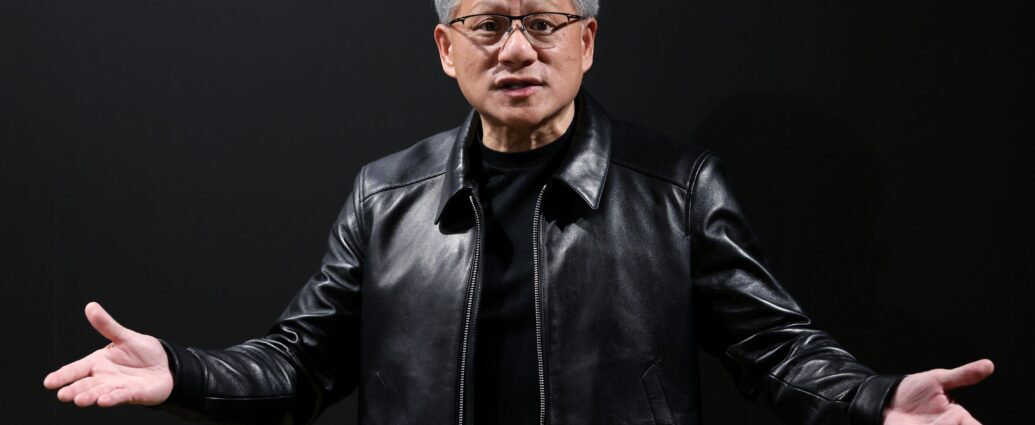
Out of the chaos of AI doomerism AI leaders like Sam Altman and Dario Amodei have found themselves at the center of, the leader of the most valuable company in the world—and the creator of AI’s chip foundation—is rejecting the warnings. In a CBS Sunday interview, Nvidia CEO Jensen Huang called the predictions of an AI catastrophe by 2030 “irresponsible” and the “doomsday narratives” are simply not based in reality.
“2030 is not going to be the end of the world,” Huang told CBS. “There is a 0% chance that’s going to be the end of the world.”
Huang said the concerns about AI safety are legitimate but also said the industry’s dire public warnings are not grounded in “science.” He added that “scaring people is unnecessary,” arguing that AI companies should be devoting engineering resources to safety and verification. Nvidia supplies the chips powering much of the AI industry’s expansion.
“I believe the claims of the end of the world, stirring fear across America, and doing it by the people who are doing it makes no sense to me, so they must be doing it for ulterior reasons,” Huang said. “It is irresponsible, and I don’t know what their motives are.”
This comes after President Donald Trump rejected calls for increased AI regulation, saying existing criminal and civil law can handle AI concerns. On Saturday, he announced that he would form an “AI Force,” modeled on Space Force, and appoint an AI “czar”—though he named no one and gave no timeline for either.
“Whoever wins AI, WINS,” Trump posted on Truth Social. “We are leading now over China, and everyone else, and I’m going to keep it that way! I’m not going to stifle growth of something that will be bigger than the Industrial Revolution, or the Internet itself.”
Huang also posits that AI development shouldn’t be repressed from concerns of AI takeover.
“If we’re compromising safety, that can’t happen,” he said. “We should go as fast as we can, but not faster than we should.”
Huang’s primary reasoning is that AI safety is primarily an engineering issue rather than a government regulation problem. He said companies should be held accountable under the existing laws and regulations before lawmakers rush into creating new rules specifically for AI.
“Go and read between the lines,” Huang said. “They’re actually not asking for more laws. They’re asking to be relieved of the laws we do have.”
“Don’t let this doomsday narrative cause somebody to relieve them of the laws that currently exist,” he added.
Nvidia is also one of the industry’s most important suppliers, with its chips and processors serving as infrastructure for running advanced AI systems. Nvidia’s market value has jumped alongside AI demand, making the company the most valuable in the world.
Nvidia did not immediately respond to a request for comment from Fortune.
Two sides of the same AI coin
Anthropic CEO Dario Amodei has called for the industry to slow the development of capable models, saying the companies need more time to establish safety precautions. According to a report from Reuters, Amodei has proposed independent safety evaluators to check for common safety standards and international cooperation inside frontier AI companies.
OpenAI CEO Sam Altman, after arguing regulation would hinder AI companies, has echoed the same rhetoric. In July, Altman said society may need time to adapt to new capability levels and the industry should consider ways to slow development.
Even Elon Musk, CEO of SpaceX and Tesla has endorsed the worry. In a post on X, Musk noted he had been “sounding the alarm on AI for a long time.”
Former researcher at both OpenAI and Anthropic Jacob Coxon also added to the fire, after he publicly resigned from Anthropic on X in September. Coxon wrote that the companies were “racing straight to self-improving superintelligence,” essentially “gambling with our lives.” His post went viral and drew more than 170 million views.
And a public letter signed by over 1,300 employees at leading AI companies has separately called for governments, industry leaders and society to have the ability to buy time and address emerging risks. Amodei was among the individuals who signed the letter.
This story was originally featured on Fortune.com