A delegation of 21 senior executives and managers from emergency medical services organizations in Latin America and Spain arrived in Israel last week for a professional workshop with Magen David Adom.
As part of the Foreign Ministry’s 545 Project, delegation members from Spain, Mexico, Panama, Peru, Argentina, the Dominican Republic, Bolivia, Chile, and Honduras visited MDA’s national headquarters in Ramle, toured southern Israel, and visited the MDA station in Jerusalem.
The visit was organized through cooperation between the Foreign Ministry and MDA and was intended to share Israeli knowledge and experience in emergency medicine with professionals and decision-makers from abroad while strengthening professional ties between MDA and emergency medical organizations worldwide.
A national asset for Israel’s resilience
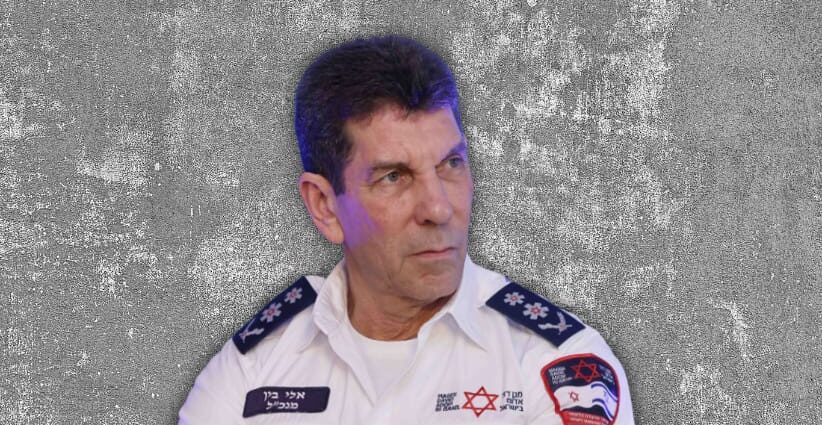
This “knowledge that Magen David Adom has accumulated over the years, in routine and emergency situations, is a national asset that helps strengthen the resilience of the State of Israel,” said MDA Director-General Eli Bin.
“The visit of senior officials from the emergency systems from Spain and Latin America to Israel is an expression of the strength of international cooperation based on shared values and a single goal – saving lives,” he added.
Irit Savyon, head of the division at the Israeli Center for International Cooperation and Assistance at the Foreign Ministry, supported this statement by calling it “an important milestone in strengthening bilateral relations and preparedness for emergency situations.”
Throughout the week, delegation members were introduced to the operations of MDA’s 101 National Emergency Hotline and the technologies the organization uses to receive calls, dispatch teams, and manage incidents in real time. They also received an overview from the Health Ministry of Israel’s healthcare system during routine and emergency situations.
The workshop continued with tours of MDA’s blood services laboratories and the national breast milk bank the organization operates. Delegation members also underwent professional training related to mass-casualty incidents.
At MDA’s training and simulation center at its Ramle headquarters, the delegation explored the advanced training system used for Israeli emergency medical teams, experienced the simulators used for training, and learned about the organization’s working methods and professional models.
Among the delegation members were senior officials from national emergency systems in their respective countries, including the director of Civil Defense of Panama, the minister of 911 and his deputy, the deputy emergency minister of Honduras, and the director of the emergency system of the Neocane Province in Argentina.
“Coming to Israel was truly an enriching experience. Seeing first-hand what world-class practices look like inspired us to think about what we can achieve in our own country,” said Luis René Suasó, Honduras’ Deputy Minister of the Permanent Committee for Emergencies (COPECO).
“We are very pleased and grateful for this opportunity, and look forward to taking all this knowledge back home and putting it into practice,” he added.
Mass-casualty response and MDA’s rescue fleet
During another professional session, delegation members received an in-depth presentation on MDA’s operational approach to mass-casualty incidents and lessons learned from responding to large-scale emergencies.
They were also introduced to MDA’s specialized rescue vehicles, including intensive care buses capable of treating and evacuating up to seven critically ill patients, Unimog vehicles used to evacuate casualties from difficult terrain, emergency motorcycles, and off-road vehicles.
In addition, the delegation received an overview of the work carried out by MDA’s 39,000 volunteers and employees during routine operations, emergencies, and wartime, particularly during operations Roaring Lion and Rising Lion.
The delegation continued its professional tour with visits to Ichilov Hospital in Tel Aviv before traveling south to the Nova complex and to Barzilai and Soroka hospitals, both of which have extensive experience treating casualties from conflict along Israel’s southern border.
While in the South, delegation members visited the MDA station in Sderot, where they heard about the organization’s role during the October 7 massacre and met the family of the late MDA paramedic Amit Mann, who was murdered by terrorists while treating wounded people in Be’eri.
In the final part of the workshop, the delegation traveled to Jerusalem and visited the MDA station in the capital.
Members met servicemen and women from across the city’s communities who serve at the station and were reportedly deeply impressed by their commitment to saving lives.
At the station, they were also introduced to a specialized emergency vehicle that enables MDA teams to manage complex incidents in the field.
“What I appreciated most was not only seeing how MDA operates, but also having very open and practical discussions about the challenges we face in pre-hospital emergency medicine,” said Jorge A. Morales, Medical Director of the Emergency Medical Services System of Catalonia, Spain.
He noted the differences between his own country’s systems and MDA’s operations: “coming from the Catalan Emergency Medical Services System and other systems in Latin America and Spain, it is very interesting to compare the experience and perspectives of the different systems, and to understand how much we can learn from each other.”
Over the years, MDA has partnered in “transferring knowledge and assisting in the establishment and development of emergency medical systems in various countries.” Some members of the current delegation had previously taken part in professional programs conducted in cooperation with the organization.
The knowledge-sharing initiative is intended to continue in the future. “Upon the participants’ return to their countries, they are expected to apply the tools they have acquired and serve as goodwill ambassadors for Israel,” says Sayvon.