In the days leading up to the third anniversary of the October 7 massacre, the IDF is again confronting questions over the failures that preceded the attack, its relations with Israel Police, and the growing burden on reserve soldiers, as new findings and disputes emerged on Thursday.
In a few days, Israel will mark the third anniversary of the October 7 massacre, an event in which the IDF failed in its primary mission of protecting the State of Israel.
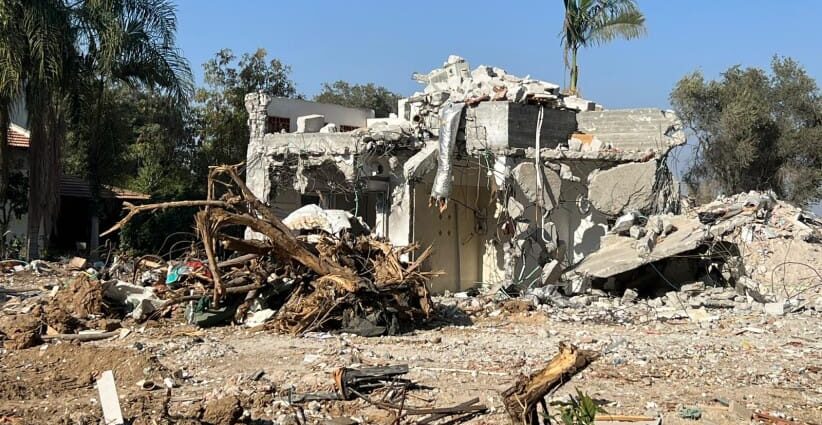
Three years later, the investigation into the fighting at the Paga outpost, which was supposed to protect Kibbutz Be’eri, was released to the public on Thursday.
A total of 133 civilians, members of the kibbutz security team, police officers, and soldiers were murdered or killed in Kibbutz Be’eri on October 7. Eighteen soldiers were killed at the Paga outpost and in the sectors under its responsibility. Another 25 soldiers were wounded. Two soldiers were abducted to Gaza after they were killed.
The investigation determined that the IDF failed in the battle at the Paga outpost. The serious shortcomings within the Golani Brigade included the preparation of the troops for their mission. Operational complacency meant that troops were preparing for public disturbances rather than a raid. The failure went so far that some positions did not have machine guns or MAG machine guns.
It took the IDF three years to release the investigation, which reflects the severity of the failure. The lesson from what happened in southern Israel before October 7 is that the IDF operated like a neighborhood soccer team, without rules or procedures, in a manner that was essentially amateurish.
No sufficiently decisive command structure could recognize what was happening across the border and put the IDF on a war footing or prepare it for a raid.
Following the October 7 massacre, the IDF lost the public’s trust, and it can fairly be said that it did so with good reason. Since then, it has tried to rebuild itself both operationally and in terms of its public image.
IDF criticizes police for claiming to have found tunnels
Israel Police announced on Thursday that two tunnel shafts had been uncovered in the Jaljulia area, near the seam line opposite Kfar Saba.
The IDF responded by attacking the police account, denying the announcement and arguing that the shafts were not tunnels and were not close to the seam line.
IDF Spokesperson Brig.-Gen. Effie Defrin criticized the police and, in an unusual move, wrote: “During the operation, two shafts approximately 12 meters deep were located. Weapons were found near the shafts, including an M16 rifle, a hunting rifle, a handgun, and ammunition, which were confiscated by the troops.
“Contrary to official and irresponsible statements issued on the matter, after the shafts were investigated, the existence of a tunnel route in the shafts was ruled out, and it was also determined that the shaft was not close to the seam area.”
Israel Police’s Judea and Samaria District commander, Dep.-Ch. Moshe Pinchi, directly confronted Defrin, effectively portraying the IDF spokesperson as a liar.
“The report is correct and sticks to the facts. You can’t bury your head in the sand. I don’t work for the IDF spokesperson. After October 7, you can’t simply not report it,” Pinchi said.
Tensions between the IDF and Israel Police are not new, particularly in the West Bank. IDF officers have repeatedly said that the police operate politically rather than operationally. Publicly, however, the IDF’s senior command generally treats the police and the Judea and Samaria District with respect.
The IDF’s senior command learned about the alleged tunnel near Jaljulia following an announcement by Kfar Saba Mayor Rafi Saar.
Deputy IDF Chief of Staff Maj.-Gen. Tamir Yadai received the mayor’s message on his phone, like other Kfar Saba residents, saying that a tunnel had been uncovered meters from the city on the Palestinian side. Within minutes, panic spread among residents of the Sharon region, and with considerable justification.
The IDF was furious with the police command.
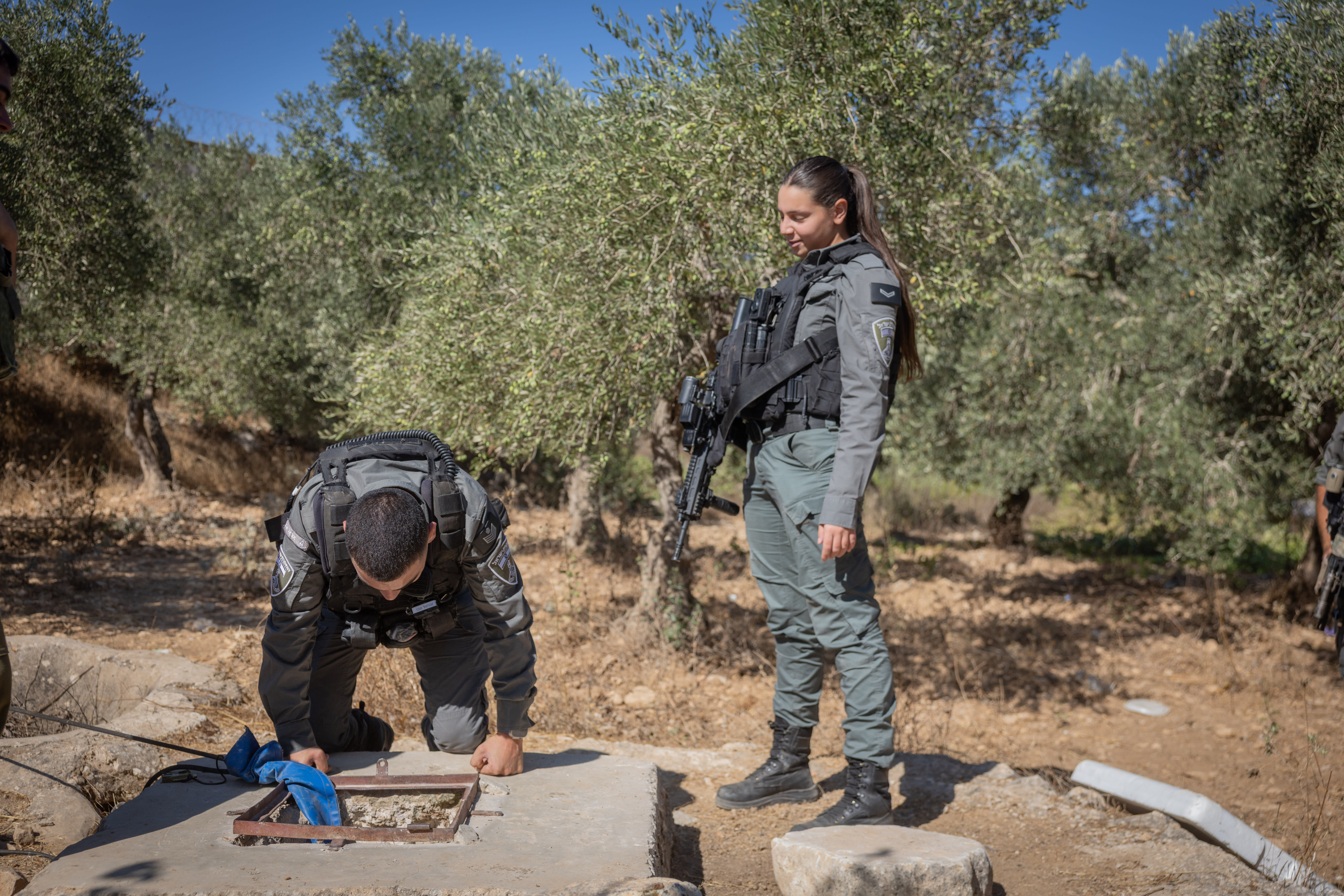
Police intelligence provided the information about the shafts. An operation involving the IDF, Israel Police, and Border Police was subsequently carried out. The commander of the Ephraim Brigade was at the scene when the two shafts were discovered. Four suspects were arrested at the site, and several firearms and other weapons were seized.
Under standard procedure, the Ephraim Brigade commander summoned troops from the Yahalom special engineering unit.
The complexity of the situation must be understood. Investigating a tunnel is a complicated and dangerous process. Robotic systems are first sent inside. Only after it is established that the tunnel is not booby-trapped, contains no terrorists, and poses no danger of collapse can engineering troops enter and inspect its interior.
However, before the first stage began and before the Yahalom troops prepared at the scene, police issued their announcement about tunnels near the seam line.
The police announcement was inaccurate. The shafts were more akin to pits and did not constitute an infiltration route or a passage connecting buildings.
Police disclose information about IDF terror attack victim
In fact, IDF anger toward the police began hours earlier, when the police spokesperson issued a statement about the attack at the Maccabim checkpoint and disclosed that the person wounded was an IDF soldier, before the soldier’s family had been notified.
“They simply went too far in the police. They violated every procedure and every standard of professional ethics. They rush to tell the public without basic responsibility,” a senior IDF officer said regarding the two incidents.
The IDF is currently in a sensitive position. On the one hand, the situation in the West Bank requires the military to flood the area with troops. That is why the headquarters of the 98th Division was sent to the West Bank.
Egoz Unit troops have already been transferred there, and additional units are expected to arrive in the coming days.
But the IDF’s main problem is its shortage of soldiers and money. The political leadership’s lack of responsibility has forced the IDF to prevent soldiers from taking leave ahead of their discharge and to take away their annual vacation days almost casually.
Reservists are being required to serve another round of reserve duty, in direct contradiction to remarks by Deputy Chief of Staff Yadai about seven months ago that reservists would serve a maximum of 70 reserve-duty days in 2026.
In practice, the deputy chief of staff’s promise has not been borne out on the ground. Most reserve units have already exceeded 100 days of reserve duty this year, and the year is not yet over.
IDF unable to assertively confront political leadership with problems
The central problem facing the IDF General Staff is that it does not know how to “bang on the table” and confront Israel’s political leadership with the complex reality.
The same problem existed exactly three years ago, on the eve of the October 7 massacre, when Prime Minister Benjamin Netanyahu preferred to put on rose-colored glasses and sleep soundly at night. The military leadership did not sound the alarm loudly enough.
The 2026 General Staff should have been expected to be more assertive toward the political leadership than the 2023 General Staff, presenting the real challenges rather than attempting to smooth over reality according to the wishes of the political leadership.
Otherwise, it will not end with a dispute with the police. Israel could instead find itself surprised in one of its operational arenas, and that must not happen.