A fragment of a cuneiform tablet found last year at Hattusha belongs to the ancient Egyptian–Hittite peace treaty, the Turkish Culture and Tourism Ministry announced on Monday.
“We have discovered the millennia-old traces of peace in the soil of Anatolia,” wrote Turkish Culture and Tourism Minister Mehmet Nuri Ersoy in a post to X/Twitter. “This valuable discovery, which we shared with the public on September 21, World Peace Day, once again highlights Anatolia’s deep-rooted place in the history of peace and diplomacy.”
The fragment was unearthed during excavations at the Bogazkoy/Hattusha archaeological site, where the Hittite royal palace is believed to have stood, in Çorum’s Boğazkale district in 2025.
Hattusha served as the Bronze Age capital of the Hittite Empire.
Since its discovery, researchers have been examining its cuneiform text and recently determined that it belongs to the front side of one of the treaty’s Akkadian cuneiform copies.
The new fragment contains lines from the treaty’s provisions regulating the treatment of people fleeing from one country to another, explained Ersoy.
Legible portions of the text mention people fleeing from Egypt and the land of Hatti, along with statements concerning the protection of homes from destruction.
Ersoy also congratulated the site’s excavation team and the researchers who contributed to the discovery.
The new discovery contributes to Turkey’s efforts in completing the clay tablet copies of the treaty found at Hattusa, and future excavations at the site aim to uncover the remainder of the missing fragments.
What is the Egyptian–Hittite peace treaty?
The treaty, known also as the Eternal Treaty, or Silver Treaty, is the oldest known surviving peace treaty. It was signed between the Hittite King Hattusili III and the Egyptian Pharaoh Ramesses II in approximately 1259 BCE to end a centuries-long war between the two nations.
It is sometimes also called the Treaty of Kadesh, even though the Battle of Kadesh, which took place in 1274 BCE, is not mentioned.
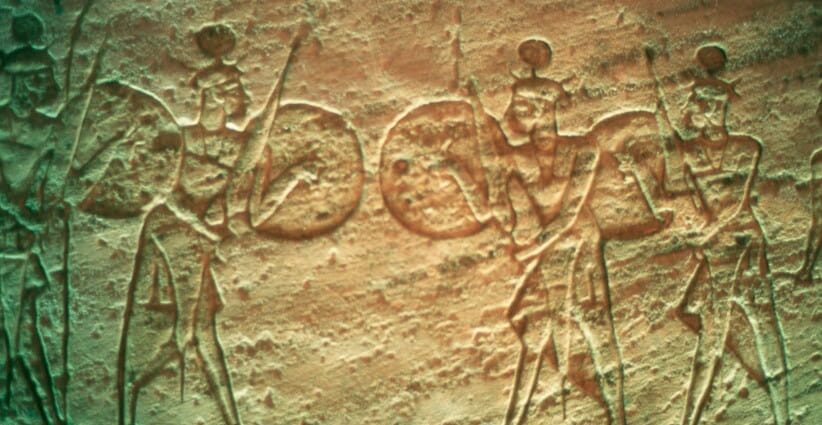
The Egyptian-language text of the treaty was inscribed in hieroglyphs on the walls of two buildings belonging to Ramesses II in Thebes: the Ramesseum and the Precinct of Amun-Re at the Temple of Karnak.
Baked clay tablet fragments of its Akkadian text were uncovered at Hattusha during the earliest excavations of the site, between 1906 and 1912.
Previously found fragments are held in the collections of the Istanbul Archaeology Museums, the Museum of Anatolian Civilizations, the Berlin Museum of the Ancient Near East, and the Hermitage Museum in St. Petersburg.
A copy of the treaty is prominently displayed on a wall at the United Nations’ headquarters.