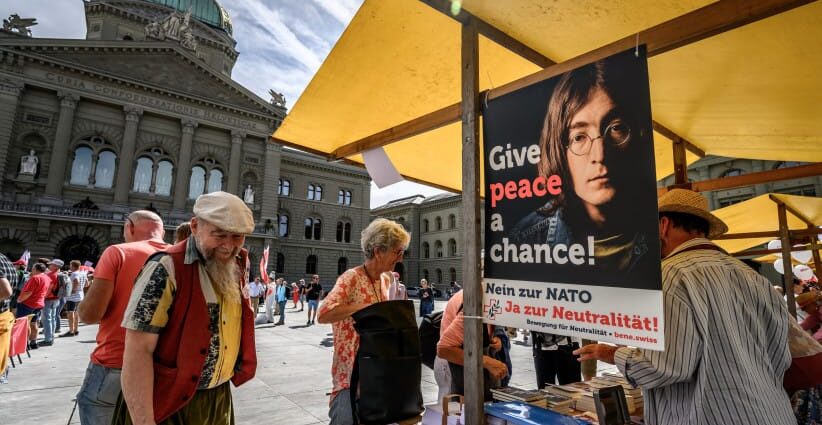
Swiss voters on Sunday firmly rejected a proposal to adopt a more restrictive form of neutrality that would have blocked their country from imposing economic sanctions or cooperating with NATO.
More than two-thirds voted against a proposal for a strictly defined version of neutrality to be written into the Swiss constitution, according to the latest referendum projections by state broadcaster SRF.
Having failed to win the required support of the majority of Switzerland‘s cantonal constituencies, the initiative has effectively been rejected.
While Swiss neutrality has been internationally recognized since the end of the Napoleonic wars in 1815, how the government implements it is not spelled out.
The right-wing Swiss People’s Party (SVP) has said that Switzerland’s traditional position has been eroded after Bern imposed sanctions on Russia following its invasion of Ukraine.
The campaign had funded posters across the country urging people to vote “No war, yes to neutrality,” featuring white peace doves, ahead of the vote.
Swiss government, most parties oppose proposal
Apart from the SVP, most parties and the Swiss government oppose the proposal, with Foreign Minister Ignazio Cassis saying it would harm national security and prevent Switzerland from training with NATO.
The Green Party and the smaller Evangelical People’s Party (EVP) expressed relief over Sunday’s projections.
“Voters understood what the SVP wanted: it wanted Switzerland to isolate itself internationally and shirk its responsibilities when international law is being trampled on,” said Sibel Arslan, a lawmaker for the Green Party.
The SVP meanwhile accepted the defeat and said it currently had no plans for further action.
“I’m of course not pleased with the result,” said SVP lawmaker Lukas Reimann, adding that the commitment to Swiss neutrality expressed by all sides during the campaign was encouraging.
“It is absolutely clear that neutrality belongs to Switzerland and is part of Switzerland’s identity,” he said. “Going forward, we will judge the opponents of the initiative by that commitment.”
If the government or opponents of the initiative were to stray from neutrality, for example by adopting tougher sanctions, the party would need to become active again, Reimann said.
‘Swiss voters like neutrality’
Fabio Wasserfallen, a professor of European politics at the University of Bern, said before the vote: “Swiss voters like neutrality, but they approve of how the government is implementing it at present.”
“They are also generally in favor of the sanctions on Russia over the war in Ukraine, and don’t want that to change.”
The campaign wanted the constitution to stipulate that Switzerland cannot join or cooperate with any military or defense alliance unless attacked, and that it refrain from joining any sanctions unless approved by the United Nations.
It says Swiss neutrality has served the country well in the past, keeping it out of both world wars, and also helps Bern offer its ‘good offices’ to help negotiate peace between warring parties.
“Switzerland has not had a war for 200 years because it is permanently armed and neutral,” Christoph Blocher, the billionaire businessman and backer of the SVP, said ahead of the vote.
“But neutrality has been followed less and less in recent years,” he told Reuters, with Russia now seeing Switzerland as a party to the conflict because of the sanctions.