One of the most biting insults in Alaska politics is to be accused of being aligned with the “Lower 48,” code for candidates taking marching orders from powerful forces in the contiguous United States rather than sticking up for Alaskans.
It’s a central theme of the Alaska’s U.S. Senate race, one of a handful expected to determine control of the chamber in the November elections.
Republican Sen. Dan Sullivan’s campaign has made it a key attack line against Democrat Mary Peltola, a former congresswoman. He lumps her in with “Lower 48 liberals” who have opposed expanded oil and gas drilling in a state that has relied heavily on that industry for decades.
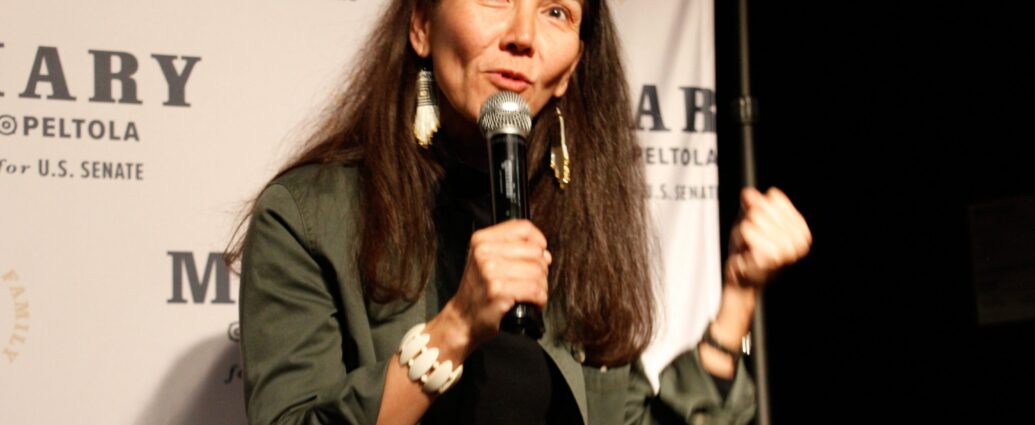
Peltola, an Alaska Native, has countered that she “took on” then-President Joe Biden, a fellow Democrat, to help win approval in 2023 of the huge Willow oil project, which environmentalists strongly opposed. She also says she will “take on anyone, including Democrats — anyone in the Lower 48 who doesn’t understand what Alaska needs.”
The pejorative label reflects a mystique about Alaska, which outsiders often refer to as “The Last Frontier.” A state for less than 70 years, Alaska is renowned for its natural beauty, wildlife and vast landscapes. Its rural nature — isolated from the rest of the country and with many of its communities accessible only by air or water — breeds a self-reliance. It’s a place where many residents hunt and fish to fill their freezers for winter and take pride in their independence.
The two major Senate campaigns and some third-party groups have leaned into that sentiment — that Alaska is different — and cast their candidates as authentic voices for Alaskans.
“We love the persona Alaska is a tough place to live,” said Republican Andrew Halcro, a political podcast host and former state lawmaker who has lived in the state nearly all his life.
Abundance of oil and other resources has created friction with federal government
Alaska, rich in natural resources, has long had a love-hate relationship with the federal government, which owns about 60% of the state’s land. That relationship has been especially strained under Democratic presidential administrations that have sought to restrict logging, mining and the availability of areas for oil and gas development over environmental concerns.
Policies can shift dramatically from one administration to the next.
The Democratic Obama and Biden administrations banned leasing on roughly half the National Petroleum Reserve-Alaska, which is home to wildlife such as caribou and polar bears and provides habitat for millions of migrating birds. Republican President Donald Trump’s administration has rolled back those and other restrictions as part of a broader push for expanded oil and gas development in Alaska. The administration also is supporting lease sales in the Arctic National Wildlife Refuge.
The state also has bristled at Democratic efforts to stifle road building and logging in areas such as the Tongass National Forest, a temperate rainforest in southeast Alaska. That dispute dates to the Clinton administration.
Alaska’s share of royalty revenue from oil and minerals on federal land has been another ongoing source of tension. Some lawmakers say the state was promised a larger share at statehood and that the federal government has failed to uphold its end of the deal.
While oil production is a fraction of what it was at its peak in the late 1980s and has fallen in recent years, political leaders have pointed to signs of a turnaround. They cite in part the strong interest from major companies that snatched up leases in a sale earlier this year for the petroleum reserve, home to the Willow project.
Alaska communities have been hit hard by spikes in fuel prices caused by the Iran war. That is especially true for remote communities that must have their fuel flown in or delivered by barge before the rivers ice over.
Oil development is the top issue in this year’s election for Darryl Hugo, who lives in the small North Slope community of Anaktuvuk Pass. He is backing Sullivan and notes that revenue from oil development is largely responsible for his town’s health clinic, school, police and fire departments and water system.
“My region’s economy depends on oil,” he said via a messaging app.
Candidates are seen as trying to stake claim as ‘the real spokesperson for the real Alaska’
Robert Sewell, an independent from the Juneau area, said he sees the “Lower 48” taunts and Peltola trying to distance herself from national Democrats as examples of the candidates “fighting to establish who is the real spokesperson for the real Alaska.”
He also likens it a bit to the schoolyard jeer, “I know you are, but what am I?”
Peltola, during her unsuccessful 2024 congressional reelection campaign, refused to endorse Democratic presidential nominee Kamala Harris and said she would not vote for Trump. This year, before Alaska’s August primary, Harris sent a fundraising appeal that offered support of Peltola.
In response, Peltola’s campaign told reporters that she “isn’t seeking endorsements from anyone from the Lower 48.”
In videos highlighting her backing of the Willow oil project, Peltola said she will work with Trump, who handily carried Alaska each of the three times he has run, to advance more oil and gas projects.
“I took on Joe Biden to secure the largest development project in decades,” she said in one video on social media. “And I’ll work with Donald Trump on more.”
Sewell, a Peltola supporter, said he does not begrudge that position. He said he does not think “for one moment that she likes Trump or Trump’s agendas” on other issues.
‘Lower 48’ jabs fill social media and airwaves, but do voters care?
Peltola, who is Yup’ik, is among the roughly 43% of Alaskans born in the state. She grew up fishing on the Kuskokwim River in western Alaska and prominently displays fishing photos on her website. Her campaign slogan, “Fish, Family, Freedom,” is intended to appeal to what she believes are Alaskans’ shared values.
Sullivan, originally from Ohio, came to Alaska in the late 1990s when he was in his early 30s. Now a retired Marine, he served as Alaska attorney general and natural resources commissioner, and was an assistant secretary of state in President George W. Bush’s administration.
Sullivan spokesperson Nate Adams said that for the senator, “being an Alaskan means loving this state, fighting everyday for his fellow Alaskans and making sure Alaskans, not Lower 48 liberals, decide our future.”
The SLF PAC, which supports a Republican Senate majority, has been keying in on that theme. In one of its ads, a speaker says of Peltola, “They dress her up, throw her out on a stream somewhere, make her look like an Alaskan.” Another says: “Mary Peltola sounds like Alaska, but toes a different line in Washington, D.C.”
Peltola’s campaign said Alaskans “won’t be fooled by mudslinging ads.” In a statement, her campaign sought to link Sullivan with “Lower 48 special interest donors.”
Halcro, the former lawmaker and podcaster, said Alaskans have been inundated with such ads and flyers, but he is not sure the messaging over which candidate aligns less with the “Lower 48” is one voters want to hear this year.
“It’s all of this stuff just to make us angry at a time where we really genuinely, genuinely just need stability,” he said. “We just need to elect somebody who’s not going to break anything.”
This story was originally featured on Fortune.com