New York’s Health Department said Monday that influenza is now prevalent in the state and launched a combined dashboard tracking flu, COVID-19 and respiratory syncytial virus, giving nursing-home administrators and other health care operators a single place to follow regional respiratory-illness trends.
The department said the flu season is starting earlier than usual and that vaccination rates, based on doses reported to the state, are lower than in previous years. Those are the department’s assessments in its October 26 announcement; it did not provide a statewide case total or a percentage increase in that release.
The change is in how the public and providers can see the information together. The new Seasonal Respiratory Virus Dashboard combines laboratory-confirmed cases and associated hospitalizations for the three viruses, with geographic views and trends over time. The department says the dashboard is updated on Fridays, and its figures are provisional and subject to revision.
For a nursing home, statewide surveillance is useful context for preparedness, but it is not a report that a particular building has an outbreak. A rise in a region’s laboratory-confirmed cases also is not a count of every infection in that region. The state’s case definition depends on a positive qualified laboratory test reported into its communicable-disease surveillance system.
That difference is important when administrators explain the figures to staff and families. People with respiratory symptoms who have not had a qualifying positive laboratory test are not automatically represented in the dashboard’s case count. Changes in testing and reporting can therefore affect what appears in the surveillance data, as well as changes in the circulation of the viruses themselves.
The hospitalization measure has its own boundaries. According to the dashboard’s methodology, hospitals report aggregate admissions associated with laboratory-confirmed flu, COVID-19 or RSV by age group. The count includes patients admitted to inpatient or observation beds, but excludes people treated in an emergency department and released.
Hospitals must complete that weekly survey on Wednesdays for the preceding Sunday-through-Saturday period, the department says. The information is now collected through the state’s Survey Management and Response Tool, or SMART. Before October 2026, it was collected through the Health Electronic Response Data System, known as HERDS. A Friday dashboard update should therefore not be read as a real-time tally of what is happening inside every facility that day.
State Health Commissioner Dr. James McDonald urged eligible residents, particularly vulnerable groups, to receive seasonal influenza and COVID-19 vaccines. The department says older adults and people with underlying health conditions are among those at heightened risk of serious illness. It also points to handwashing, staying home when sick, cleaning frequently touched surfaces and considering a well-fitting mask around others when symptomatic or at higher risk.
Flu, COVID-19 and RSV can have similar early symptoms, including fever, cough, sore throat, congestion, aches and fatigue, the department said. Surveillance showing which viruses are circulating can inform awareness, but it does not determine the cause of an individual resident’s symptoms or replace clinical assessment.
For operators, the practical distinction is between a new source of regional information and a facility-specific finding. Monday’s announcement supplies the former. It does not identify an outbreak at a named nursing home or announce a new staffing ratio, Medicaid reimbursement change or inspection penalty. The dashboard’s weekly reporting schedule and definitions are part of the information readers need to interpret it correctly.
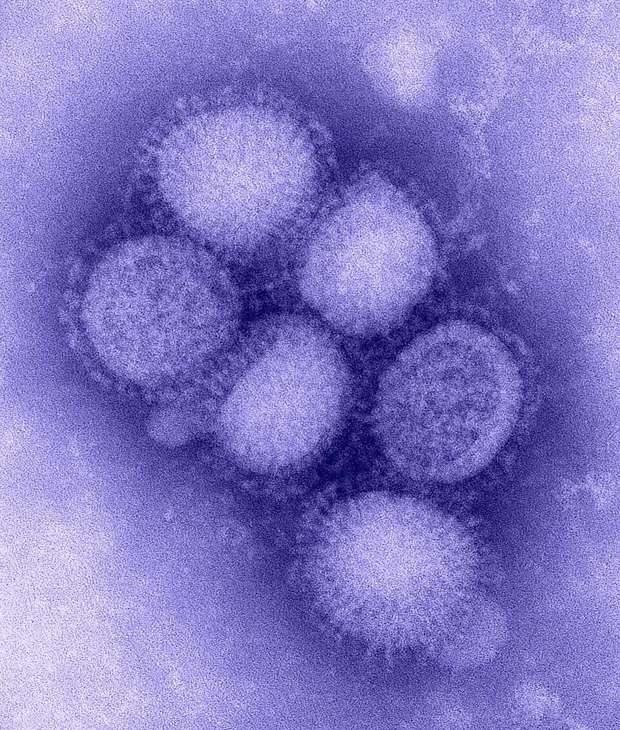
File image: H1N1 influenza virus, CDC Influenza Laboratory, via Wikimedia Commons. Public domain. Resized. This historical laboratory image does not identify the strains circulating in New York this season.
JBizNews Desk | Albany
© JBizNews.com. All rights reserved. Unauthorized reproduction or redistribution is strictly prohibited.