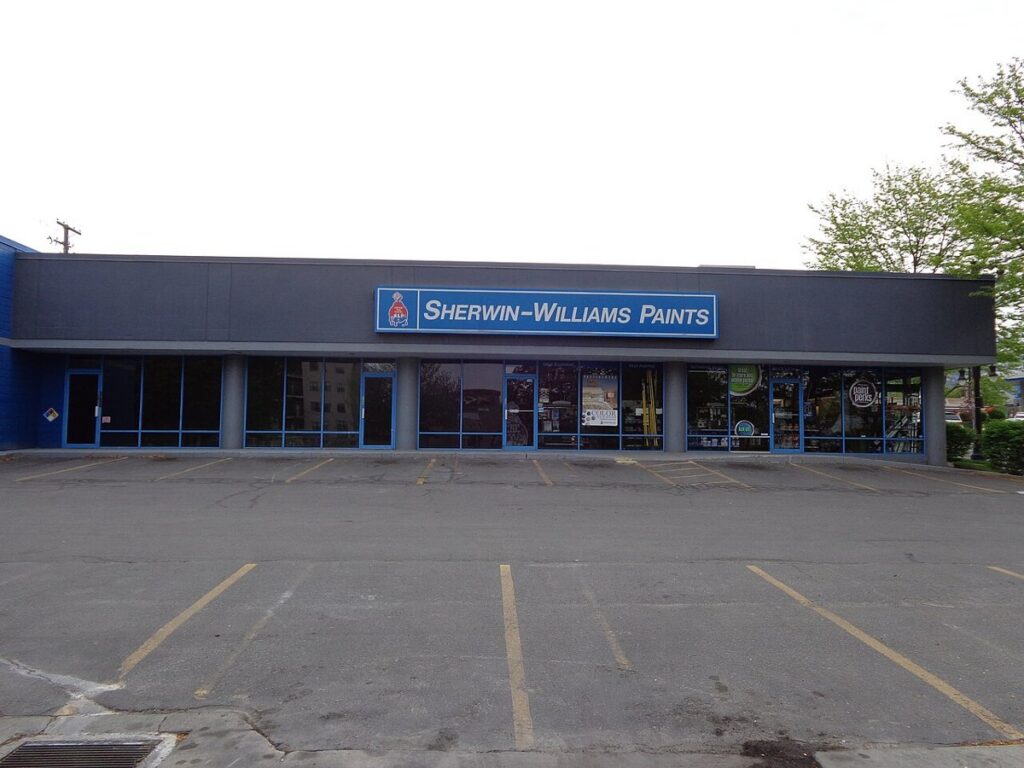
Photo: Saalebaer, Wikimedia Commons, CC0 public domain. Image resized.
Sherwin-Williams reported higher third-quarter sales Tuesday, with price increases helping lift revenue even as higher material and supply-chain costs squeezed profit and the paint maker warned that demand would remain muted into 2027.
The company said sales rose 7.9% to $6.86 billion from a year earlier, while net income fell 1.5% to $821 million. Higher selling prices contributed a mid-single-digit percentage to sales growth, along with the acquisition of Brazil’s Suvinil business in October 2025.
For homeowners and contractors, the results show two pressures moving through the cost of a paint job: manufacturers are charging more, but their own input costs are also rising. The company’s figures describe its overall sales performance, not a uniform increase in the price of every can of paint or a contractor’s final bill.
Professional demand holds up
Sales in the Paint Stores Group increased 4.7% to $4.016 billion. Sales at stores open more than 12 months rose 3.9%. The company said price increases contributed a mid-single-digit percentage to the group’s sales, while sales volume grew by a low-single-digit percentage.
All professional customer end markets grew. Protective and marine coatings led with a double-digit sales increase, followed by high-single-digit growth in commercial work and mid-single-digit growth in residential repainting, Sherwin-Williams said.
Still, the group’s profit grew more slowly than revenue, rising 2.1% to $974.3 million. Its profit margin narrowed to 24.3% from 24.9% as raw material and supply-chain costs rose and the company invested in sales representatives and stores.
Consumer business faces soft demand
The Consumer Brands Group reported a 21.7% sales increase to $937.4 million, but the company attributed that growth mainly to Suvinil, favorable currency translation and a better product mix. Soft North American demand partly offset those gains.
The division’s profit fell 7.1% to $146.2 million, and its margin narrowed to 15.6% from 20.4%. Sherwin-Williams cited higher material and supply-chain costs, expenses associated with Suvinil and unfavorable currency transaction effects.
That contrast matters when reading the headline revenue number. A large increase in the consumer division’s sales does not mean households bought that much more paint at existing businesses. The addition of an acquired company can lift total sales even while demand in an established market stays weak.
The Performance Coatings Group, which serves industrial markets, increased sales 8.8% to $1.903 billion. Price increases and low-single-digit volume growth helped, with general industrial, packaging and coil coatings each posting double-digit sales gains.
A cautious outlook
Chief Executive Heidi Petz said customer sentiment and the leading indicators the company tracks point to muted demand for the rest of 2026 and into 2027.
Sherwin-Williams expects fourth-quarter sales to rise by a mid-single-digit percentage and maintained its full-year sales outlook for mid- to high-single-digit growth. It narrowed full-year adjusted earnings guidance to $11.85 to $12.15 a share and revised standard-accounting earnings guidance to $10.92 to $11.22.
Third-quarter earnings per share rose slightly to $3.38 from $3.35 even though total net income declined. Adjusted earnings were $3.63 a share, up from $3.59. Those adjusted figures exclude acquisition-related amortization and severance and other restructuring expenses.
The company generated $2.59 billion in operating cash in the first nine months and returned $2.98 billion to shareholders through dividends and the repurchase of 7.1 million shares.
JBizNews Desk | Cleveland
© JBizNews.com. All rights reserved. Unauthorized reproduction or redistribution is strictly prohibited.