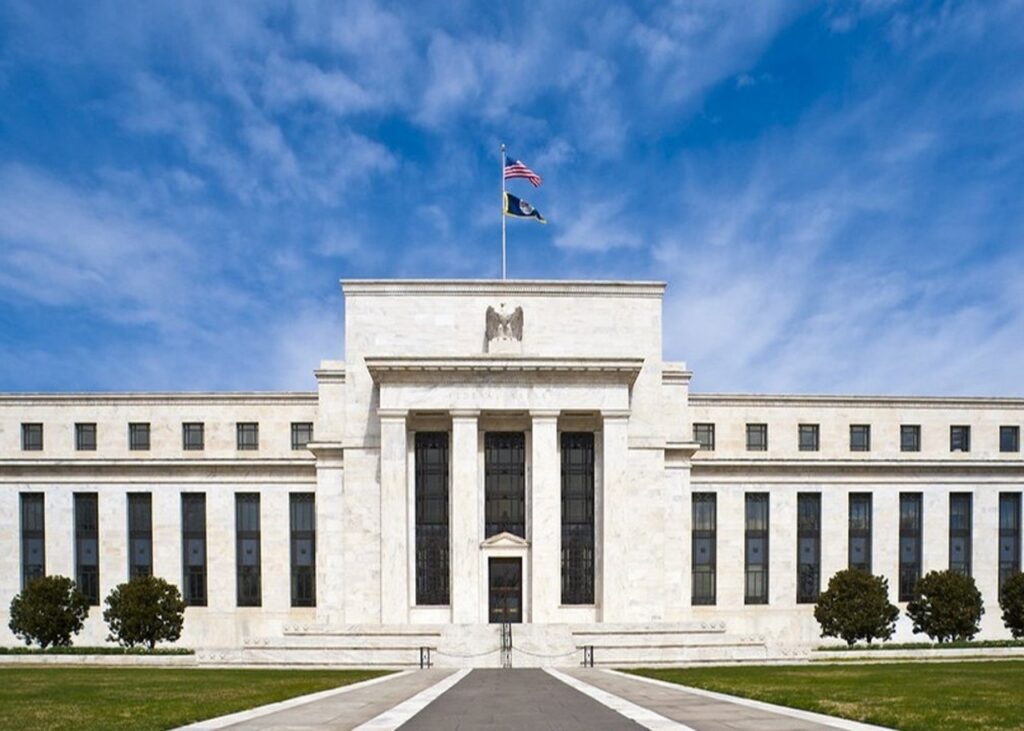
Photo: Federal Reserve, public domain
The Federal Reserve held its benchmark interest-rate target at 3.75% to 4% Wednesday, with two policymakers voting for another increase as inflation remained elevated.
The October 28 decision passed by a 10-2 vote. Lisa D. Cook and Beth M. Hammack dissented because they preferred to raise the target range by a quarter percentage point.
The hold follows September’s unanimous quarter-point increase, which brought the federal funds target to its current range. Wednesday’s action leaves that target unchanged rather than reversing the earlier increase.
A stronger description of growth
The new statement says economic activity is expanding at a “strong pace,” compared with a “solid pace” in September. It again describes domestic spending as resilient and productivity growth as strong.
The Fed said job gains have kept pace with the workforce and the unemployment rate has changed little. It also repeated that uncertainty remains elevated, partly because of geopolitical developments.
Inflation remains elevated, the committee said. Instead of September’s explanation that the rate increase would support a timelier return to its 2% inflation goal, the new statement says accumulating more information will help determine the appropriate policy stance.
“The Committee will deliver price stability,” the statement says. It does not commit to a rate increase or a cut at the next meeting.
The operating rates stay in place
The Fed’s implementation note keeps the interest rate paid on bank reserve balances at 3.90% and the primary credit rate at 4%. The reserve-balance decision takes effect October 29.
The committee also continued its policy of maintaining ample reserves in the banking system. Its instructions retain overnight repurchase operations at 4% and overnight reverse repurchase operations at 3.75%.
The Fed’s official schedule lists a press conference for 2:30 p.m. Eastern. Wednesday’s statement records the rate decision and the two dissents; it does not include remarks from that press conference.
In his opening remarks after the decision, Warsh said financial and credit conditions had tightened for some businesses and households since September’s rate increase, though he was “unwilling and unable to call them tight.” He said inflation remained too high and that the Fed needed to keep renewed energy-price increases from spreading across the economy.
Warsh also announced changes to the Fed’s meeting schedule starting next fall. The committee will still meet eight times in 2027, but one meeting will focus exclusively on monetary-policy strategy, with no rate vote or policy statement anticipated. He said he expects two strategy meetings and six policy-setting meetings in 2028.
JBizNews Desk | Washington
© JBizNews.com. All rights reserved. Unauthorized reproduction or redistribution is strictly prohibited.