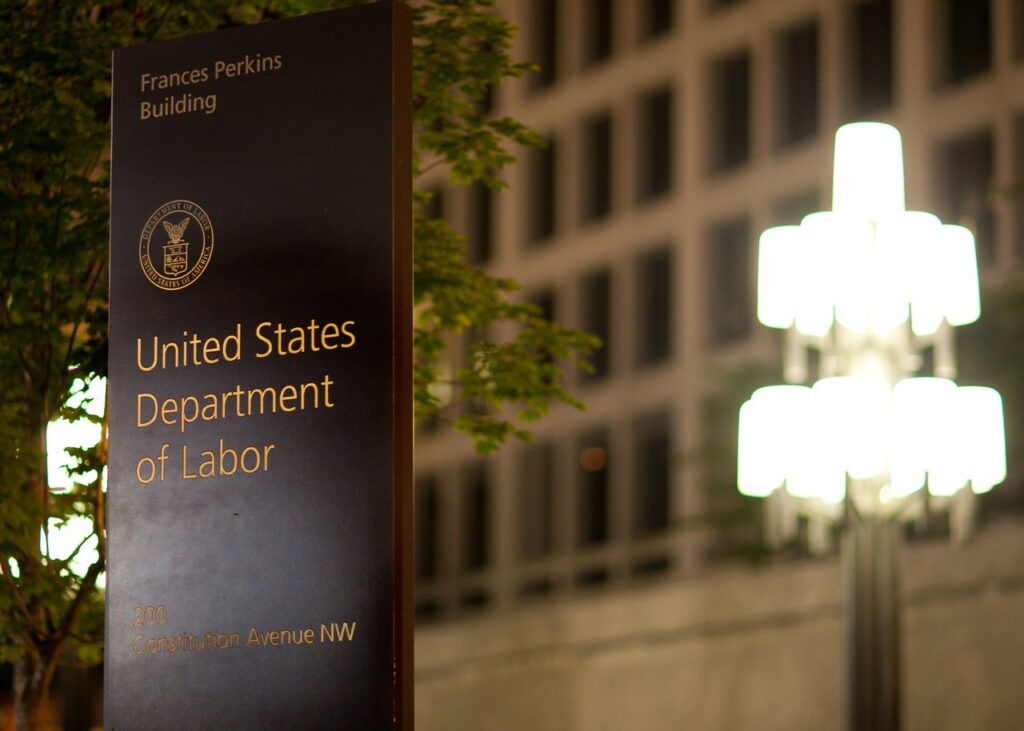
The Frances Perkins Building, headquarters of the U.S. Department of Labor. File photo: Shawn T. Moore / U.S. Department of Labor, via Wikimedia Commons (CC BY 2.0); cropped.
Employers will gain a clearer view of the money their prescription-drug middlemen collect under a final Labor Department rule requiring pharmacy benefit managers to disclose fees, rebates and other compensation to large self-insured health plans.
The department’s Employee Benefits Security Administration announced the rule Thursday, saying the disclosures will help employers compare contracts, judge whether payments are reasonable and negotiate prescription-drug benefits for their workers. In its October 29 announcement, the department projected savings of as much as $22 billion over 10 years for health plans and participants. That is an undiscounted estimate, not a guarantee of lower costs for any individual employer or patient.
Payments beyond the employer’s bill
The rule reaches beyond the fees a health plan pays its PBM directly. It requires disclosure of compensation from drug manufacturers, pharmacies and other participants in the prescription-drug supply chain. PBM-affiliated brokers and consultants are covered as well.
Among the payments employers will be able to examine are manufacturer rebates and other drug-company payments, amounts recouped from pharmacies, and spread compensation. The latter is the difference a PBM retains when a health plan pays more for a prescription than the PBM reimburses the pharmacy that fills it.
The department says those arrangements have made it difficult for plan fiduciaries to get a complete picture of what their service providers earn. Self-insured employer plans served by PBMs cover approximately 90 million Americans, according to the announcement.
Information before signing, then regular reports
Under the department’s explanation of the rule, covered providers must give plan fiduciaries an initial disclosure before a contract is signed, renewed or extended. They must then report the compensation actually received every six months, or quarterly if the plan requests it.
The disclosures also cover price-protection arrangements. The reporting structure is designed to give employers information when choosing a provider and a continuing way to check the arrangement after a contract is in place.
Plan fiduciaries will be able to audit the disclosed compensation information at least once a year. The fiduciary selects the auditor, and the plan pays for the audit, the department says.
A new tool for benefits oversight
The rule sits within the Employee Retirement Income Security Act’s framework for judging service-provider compensation. Employers and other plan fiduciaries must assess whether the payments for services are reasonable; the new disclosures are intended to give them the information needed to make that assessment.
The department said the final rule implements transparency reforms in the Consolidated Appropriations Act, 2026, and advances the administration’s executive order on lowering drug prices. It also provides compliance guidance for service providers required to report fees and compensation under the legislation.
If a covered provider fails to meet the disclosure requirements, the department says fiduciaries can seek relief under an administrative exemption by taking specified steps. Those include notifying the department when a provider does not correct a failure. The rule does not remove the need for employers to review their contracts and monitor what their vendors report.
For businesses, the practical change is a broader accounting of how the companies managing their drug benefits are paid, backed by audit rights. Whether that information produces savings will depend on how employers use it in negotiating and overseeing those arrangements.
JBizNews Desk | Washington
© JBizNews.com. All rights reserved. Unauthorized reproduction or redistribution is strictly prohibited.