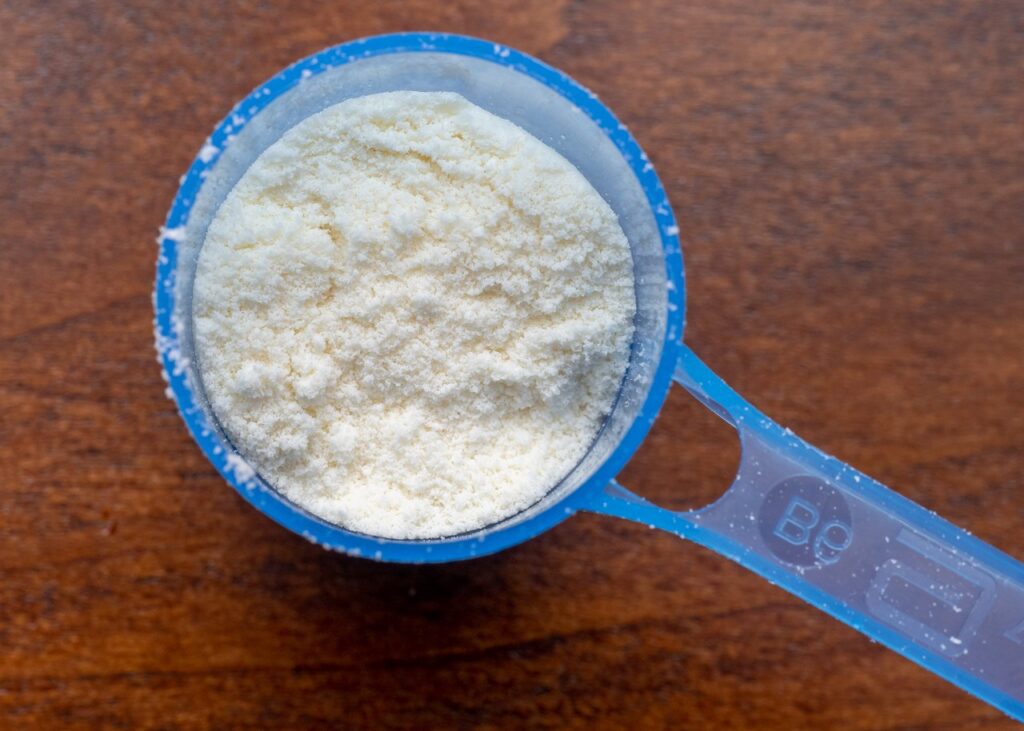
Archive photo: Infant formula powder, January 2021. Ajay Suresh / CC BY 2.0; cropped.
The Food and Drug Administration proposed changes Thursday to infant formula nutrient requirements, opening the first phase of a review that could change limits for iodine, manganese and vitamins A and D.
The proposal published October 29 addresses eight of the 30 nutrients currently required in infant formula. Four would have their specifications changed, while existing limits for chloride, potassium, selenium and sodium would remain in place. The rule is proposed, not final, and does not require parents to change formulas now.
In a separate action announced the same day, the agency released new chemical-contaminant testing data and launched public resources for viewing results, HHS said. Most samples had low or non-detectable contaminant levels, according to the department. The nutrient proposal and the testing release are distinct actions, not a recall announcement.
What would change
The FDA proposes raising the minimum iodine level from 5 to 15 micrograms per 100 kilocalories and lowering its maximum from 75 to 50 micrograms. For manganese, the proposal would lower the minimum from 5 to 1 microgram per 100 kilocalories and introduce a maximum of 50 micrograms.
Vitamin D’s minimum would rise from 40 to 80 international units per 100 kilocalories, while its maximum would rise from 100 to 120 international units. The regulation would express those levels in micrograms rather than international units.
The vitamin A proposal would also change units, reduce the minimum and maximum levels, and count only preformed vitamin A toward those requirements rather than both preformed vitamin A and beta-carotene. Formula labels would be updated to match any final nutrient changes.
The FDA is also seeking input on ingredients commonly added to formula that are not currently required, including DHA, ARA and L-carnitine. The current proposal does not add or remove nutrients from the list of 30 required nutrients.
No immediate reformulation requirement
The proposal is the first of three planned phases in the agency’s review. Later phases will examine the remaining required nutrients, possible additional requirements and carbohydrate sources. The FDA intends to consolidate final changes into one comprehensive final rule rather than require manufacturers to implement separate final rules for each phase.
The agency proposes giving manufacturers three years from that final rule’s effective date to reformulate and relabel products. That schedule is not in effect today, because the rulemaking has not been finalized.
For parents and caregivers, the FDA’s accompanying questions and answers state that infant formulas currently sold in the United States remain safe for babies. The agency says the proposed nutrient changes are not driven by safety concerns, but by a review of current scientific understanding.
The practical distinction is between a proposed future standard and a current safety warning: Thursday’s action begins public review of nutrient changes, while the separate testing release provides additional information on contaminants. Neither announcement directs families to stop using a named formula.
JBizNews Desk | Washington
© JBizNews.com. All rights reserved. Unauthorized reproduction or redistribution is strictly prohibited.