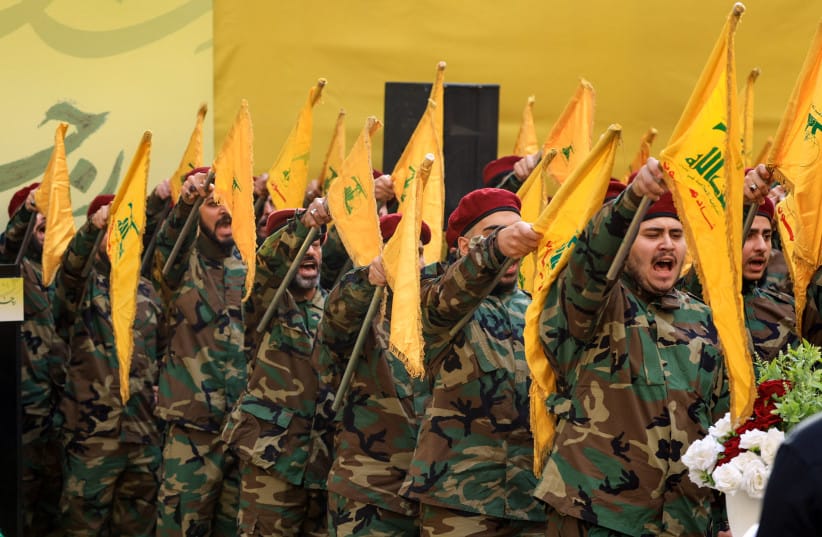
US President Donald Trump pledged to secure a full Israeli withdrawal from southern Lebanon if Beirut agrees to join the Abraham Accords, a senior Gulf diplomatic source told the Lebanese newspaper Ad-Diyar.
The claim was published in an article by Nour Naameh amid ongoing diplomatic efforts and concerns in Lebanon over the potential consequences of another military confrontation between the US and Iran.
According to the report, the source described the American promises as official commitments. However, the newspaper provided no documents supporting the claims, did not identify the diplomat or the country he represents, and offered no confirmation from the White House.
The report also did not specify when the commitments were made, who they were communicated to, or whether a timetable had been set for their implementation.
Senior Israeli officials responded to the report by insisting that Israel would not withdraw its forces before Hezbollah was disarmed.
“No withdrawal before Hezbollah is disarmed,” the officials said.
The officials stressed that any redeployment of IDF forces would depend on Hezbollah’s disarmament throughout Lebanon, rather than solely in areas near the Israeli border.
However, Israel has not ruled out the possibility of reaching a peace agreement with Lebanon once the security threat posed by Hezbollah has been removed.
“A peace agreement after resolving the security issue and removing the threat to residents of the north, that is excellent and consistent with our objectives,” the officials said.
US-Iran negotiations could shape future of Israeli withdrawal
The Lebanese newspaper reported that progress toward such an arrangement would depend on a broader agreement or strategic understanding between Washington and Tehran.
According to the report, any such understanding could have immediate implications for Lebanon’s domestic political and security situation, particularly for Hezbollah, which is backed by Iran.
The report also claimed that Iranian leaders had explicitly instructed Hezbollah not to enter another war in support of Tehran, fearing that its involvement could trigger a broader escalation in Lebanon.
Sources familiar with the matter separately told the newspaper that Israel continues to condition its withdrawal from southern Lebanon on Hezbollah’s disarmament.
They assessed that Israel’s continued military strikes and threats reflect its determination to address Hezbollah’s weapons before proceeding with any withdrawal.
The newspaper attributed this assessment to its sources, rather than presenting it as an official Israeli response to the reported American proposal.
Lebanese leaders push for diplomatic solution
The article also highlighted the Lebanese leadership’s preference for resolving the situation through diplomatic means.
Lebanese President Joseph Aoun emphasized that his country wants the United Nations Interim Force in Lebanon (UNIFIL), the UN peacekeeping mission stationed in southern Lebanon, to maintain its presence in the area.
Alternatively, Aoun proposed deploying European forces in place of UNIFIL, potentially forming the basis for a broader international force made up of personnel from countries friendly to Lebanon.
Aoun argued that wars lead to destruction, displacement, and loss of life without resolving the underlying conflicts.
Lebanese Prime Minister Nawaf Salam, meanwhile, emphasized that the Lebanese government must exercise authority over the country’s entire territory exclusively through its own security forces.
He described this as essential to restoring the state’s authority and made clear that his government would continue pursuing that objective despite the challenges and opposition it faces.
Hezbollah Secretary-General Naim Qassem, whose remarks were also cited in the article, expressed interest in a potential agreement between Iran and the US.
Qassem described such an agreement as a source of strength for Hezbollah, alongside the continued support and steadfastness of its followers.
At the same time, he defended the continuation of what he called “resistance” activities and rejected the legitimacy of the framework agreement.
The report linked the future of Israel’s military presence in southern Lebanon to Hezbollah’s disarmament and the outcome of negotiations between Washington and Tehran.
However, the newspaper provided no indication that an agreement had been reached or that Lebanon’s leadership had agreed to join the Abraham Accords.