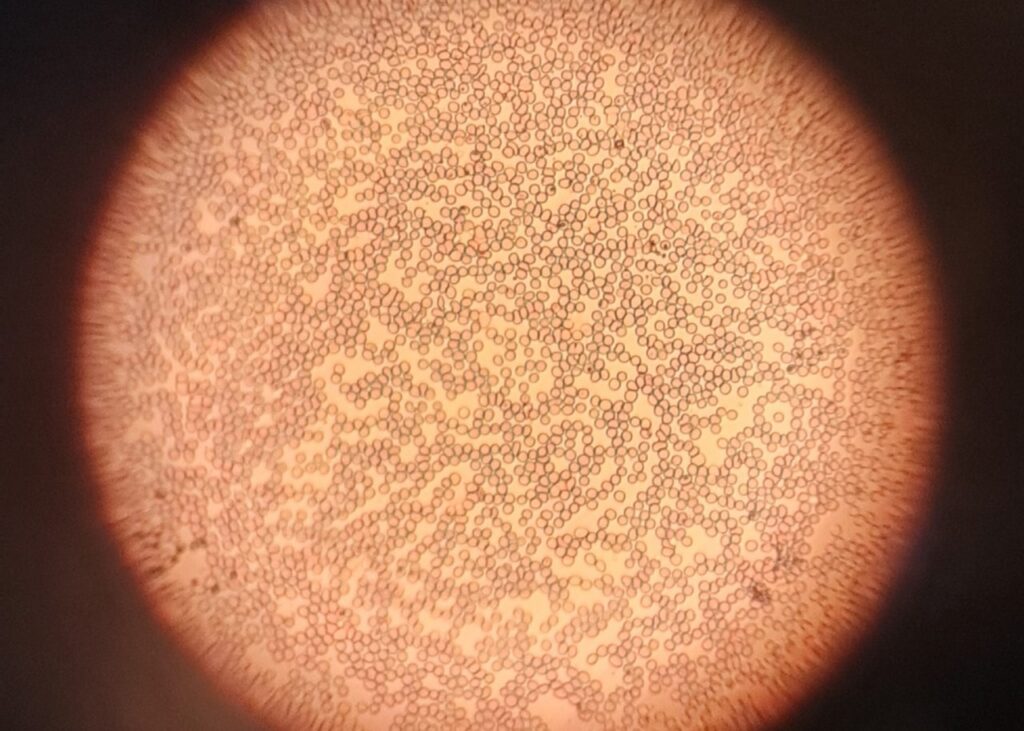
Red blood cells under a microscope, April 2024. Archive micrograph, not a Casgevy patient or treatment image: Koshur / Wikimedia Commons, CC BY-SA 4.0. Cropped; adapted photo under the same license.
Britain’s medicines regulator has extended the authorization of the gene-editing treatment Casgevy to eligible children aged five and over with severe sickle-cell disease or transfusion-dependent beta-thalassemia, lowering the previous minimum age of 12.
The Medicines and Healthcare products Regulatory Agency announced the decision Friday. The marketing authorization extension was granted to Vertex Pharmaceuticals (Europe) Ltd. on October 29.
The decision widens the treatment’s authorized use in the UK. It is not a US Food and Drug Administration approval or an announcement that all eligible children can immediately receive the treatment through the NHS.
A younger group becomes eligible
Casgevy, also known as exagamglogene autotemcel, was already authorized in the UK for patients aged 12 and over with the two serious inherited blood disorders. The extension brings younger children who meet the eligibility criteria within that authorization.
Both conditions affect hemoglobin, the protein in red blood cells that carries oxygen around the body. Severe sickle-cell disease can cause episodes of intense pain, serious infections and anemia. Transfusion-dependent beta-thalassemia can cause severe anemia requiring regular blood transfusions and other treatment.
The MHRA said patients with beta-thalassemia often need transfusions every three to five weeks, alongside injections and medicines throughout their lives.
Cells are collected, edited and returned
The treatment uses the patient’s own bone marrow stem cells. Those cells are collected and edited in a laboratory before being infused back into the patient after conditioning treatment to prepare the bone marrow.
The aim is for the treated cells to establish themselves in the bone marrow and produce red blood cells with functioning hemoglobin. Patients may need to remain in hospital during that process, the regulator said.
Side effects associated with the treatment include nausea, fatigue, fever and an increased risk of infection. The authorization does not remove the need for an individual assessment of eligibility and treatment risks.
Safety monitoring continues
Julian Beach, the MHRA’s executive director of operations, said the extension followed an assessment of the available evidence on safety, quality and effectiveness.
“This approval means this innovative gene-editing treatment can now be used in eligible children from the age of five, extending this treatment option to younger patients,” Beach said.
The agency said it would continue monitoring Casgevy’s safety and effectiveness. Updated product information and patient leaflets will be published on the MHRA Products website within seven days of the approval.
JBizNews Health Desk | LONDON
© JBizNews.com. All rights reserved. Unauthorized reproduction or redistribution is strictly prohibited.