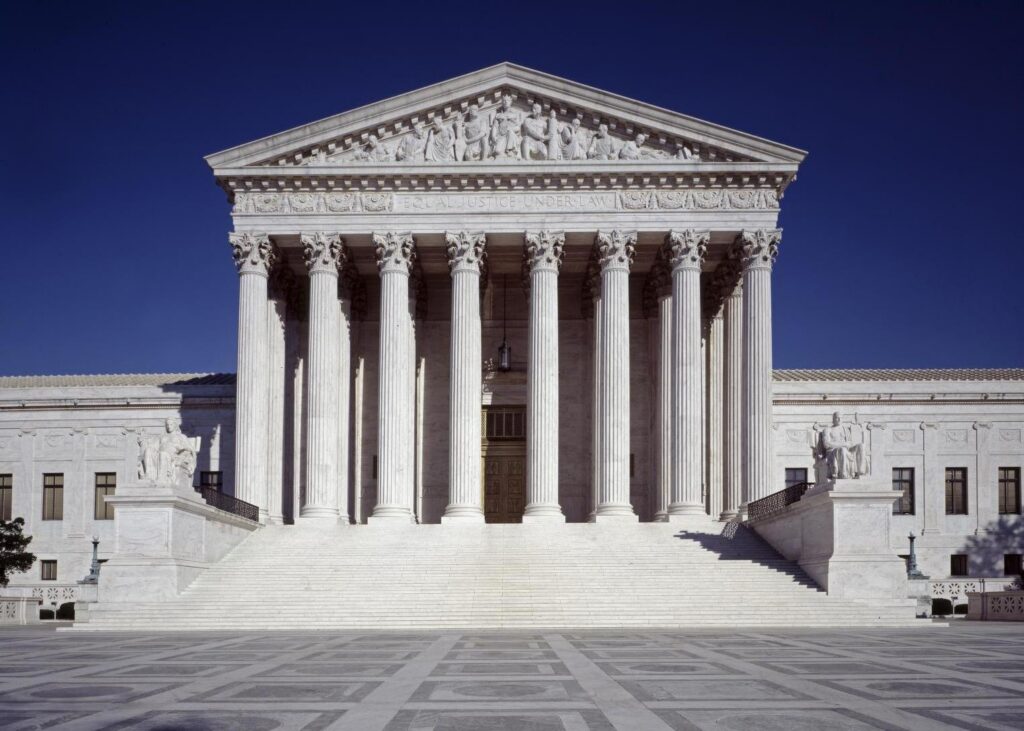
Carol M. Highsmith / Library of Congress (Supreme Court; 1980-2006 archive; no known restrictions; crop).
The Justice Department asked the Supreme Court on Monday, November 2, to order California to separate mail ballots from voters the federal government identifies as likely noncitizens, escalating an election-law fight one day before the midterms after two lower courts refused emergency relief.
Solicitor General D. John Sauer’s application for an injunction asks the justices to require separation while the government pursues its appeal. It also seeks an immediate administrative injunction while the court considers the request. The filing is a request for court action, not an order granting it.
The government says it identified more than 20,000 people who appeared on California voter-registration records and whom it believes are likely not U.S. citizens. That allegation is disputed. The figure is not a verified count of noncitizens who cast ballots, and the application does not establish that everyone on the list is ineligible or has voted.
The administration argues that once a ballot is removed from its identifying envelope and mixed with other ballots, officials cannot retrieve it to address a citizenship challenge. It says separating challenged ballots would preserve the ability to check eligibility without immediately canceling votes.
“The Court should also enter an administrative injunction to that effect while it considers this application,” Sauer wrote in the filing’s conclusion. The Justice Department argues that federal law barring noncitizen voting supports an order directing the state to keep the disputed ballots apart.
Lower courts warned of risks to eligible voters
California and Los Angeles County have challenged the reliability of the federal list and the practicality of imposing a new ballot-separation process while an election is underway. Their objections were central to the Ninth Circuit’s October 30 decision denying an injunction pending appeal.
The appeals court majority said the government had not shown that the law and facts clearly favored the mandatory order it sought. It cited the district court’s finding that the process used to produce the list was not credible and warned that the requested relief could disenfranchise eligible voters and jeopardize the county’s election administration.
Judges Mark J. Bennett and Gabriel P. Sanchez also relied on the principle that federal courts generally should not change election rules at the last moment. Judge Patrick J. Bumatay dissented, viewing separation as a way to preserve disputed ballots while eligibility is investigated rather than a cancellation of votes.
The Supreme Court application disputes the majority’s reasoning. It argues that separating ballots after they have been cast differs from changing rules about how, when or where people vote, and that California’s own procedures already contemplate handling challenged ballots separately.
The case follows the district court’s October 28 refusal to grant emergency relief, previously covered by JBizNews. The Ninth Circuit’s Friday ruling was a separate decision on the government’s renewed request after that district court order.
The immediate question is whether the Supreme Court will require California to change how it handles the challenged mail ballots while the litigation continues. The underlying citizenship claims and the government’s legal authority to obtain its requested remedy remain contested; neither the application nor the number of names on the list resolves those questions.
JBizNews Desk | New York
© JBizNews.com. All rights reserved. Unauthorized reproduction or redistribution is strictly prohibited.