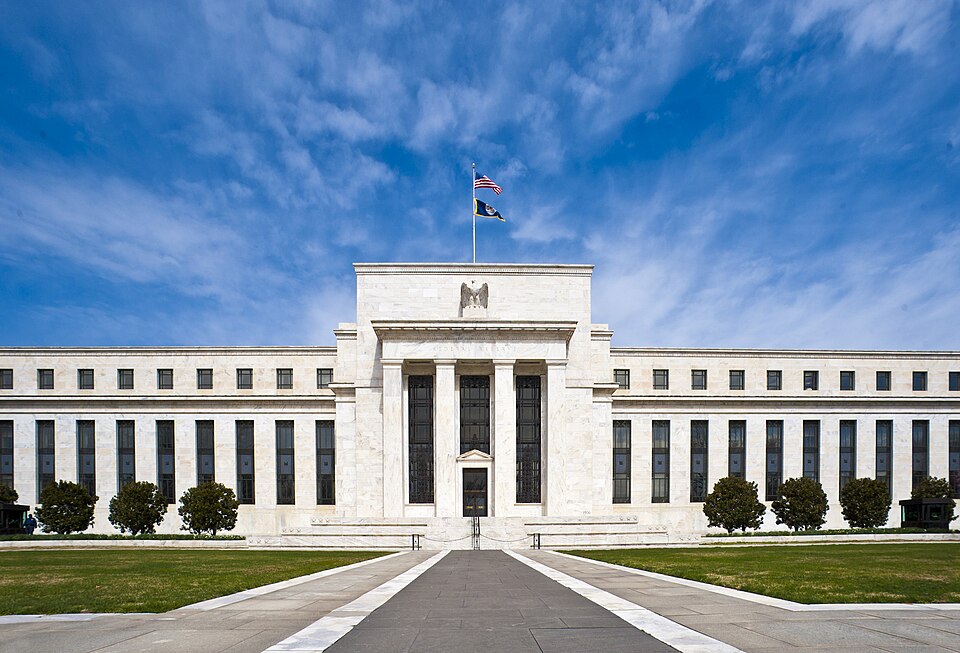
Photo: Federal Reserve (archive photo)
U.S. banks tightened lending standards for commercial real estate and small-business loans while demand for many types of borrowing weakened in the third quarter, according to the Federal Reserve’s October Senior Loan Officer Opinion Survey.
The Fed survey showed tighter standards and weaker demand in all three commercial real estate categories: construction and land development, nonfarm nonresidential properties and multifamily properties. For commercial and industrial loans, demand weakened among companies of all sizes.
The results describe changes over the preceding three months, generally the third quarter of 2026. They are not a reading of fourth-quarter conditions.
Small firms face tighter approval standards
Banks said approval standards for business loans to large and middle-market companies were basically unchanged, while standards for small companies tightened. The survey defines large and middle-market firms as those with annual sales of at least $50 million; small firms have sales below that threshold.
Most loan terms were eased or left basically unchanged, but banks increased premiums on riskier business loans across company sizes. For small firms, collateral requirements and the use of interest-rate floors also tightened.
Banks most frequently pointed to a less favorable or more uncertain economic outlook and worsening industry-specific problems as reasons for tightening.
Weaker demand for business borrowing reflected less customer investment in plant or equipment and a shift toward more attractive funding from other banks or nonbank lenders, respondents said.
Commercial property faces pressure on both sides
The combination of tighter approval standards and weaker demand extended across every commercial real estate category covered by the survey. That means the reported weakness was not confined to office or retail property: it also included construction and land development and multifamily lending.
The summary generally refers to domestic banks. U.S. branches and agencies of foreign banks reported a different demand picture, with stronger demand for commercial real estate and business loans. Foreign banks tightened commercial property standards but left business-loan standards basically unchanged.
Mortgage demand weakens, jumbo standards ease
Standards for most types of residential mortgages were basically unchanged. Banks eased standards for both qualified-mortgage jumbo loans and non-qualified-mortgage jumbo loans, while tightening standards for subprime mortgages.
Demand weakened across all surveyed residential mortgage categories. Standards and demand for home equity lines of credit were basically unchanged.
The survey measures lenders’ reported changes, not a count of loans issued or a forecast for home prices.
Credit cards and auto loans diverge
Banks reported stronger demand for credit card loans and weaker demand for auto loans. Demand for other consumer loans was basically unchanged.
Overall approval standards and most terms for consumer borrowing were broadly stable, but some conditions tightened. Banks reduced credit card limits, raised minimum required auto-loan credit scores and became less willing to make certain credit card and other consumer loans to borrowers below credit-score thresholds.
Special questions covering the past year found banks were more likely to approve credit card applications from prime and super-prime borrowers and less likely to approve subprime applications. Banks most often attributed stronger card demand to changes in consumers’ spending needs in response to the prices of goods and services.
Banks tighten lending to nonbank financial firms
Banks also tightened standards for every surveyed category of lending to nondepository financial institutions, including mortgage and business credit intermediaries, private equity funds and consumer credit intermediaries.
Respondents cited an uncertain economic outlook and weaker financial strength among those borrowers. Demand strengthened from business credit intermediaries and private equity funds, while remaining unchanged for the other categories.
The survey drew responses from 61 domestic banks and 18 U.S. branches and agencies of foreign banks. It was sent on September 21, with responses due October 5. Descriptions such as tighter standards or weaker demand refer to the balance of banks reporting changes, not to a claim that every bank moved in the same direction.
JBizNews Desk | Washington
© JBizNews.com. All rights reserved. Unauthorized reproduction or redistribution is strictly prohibited.