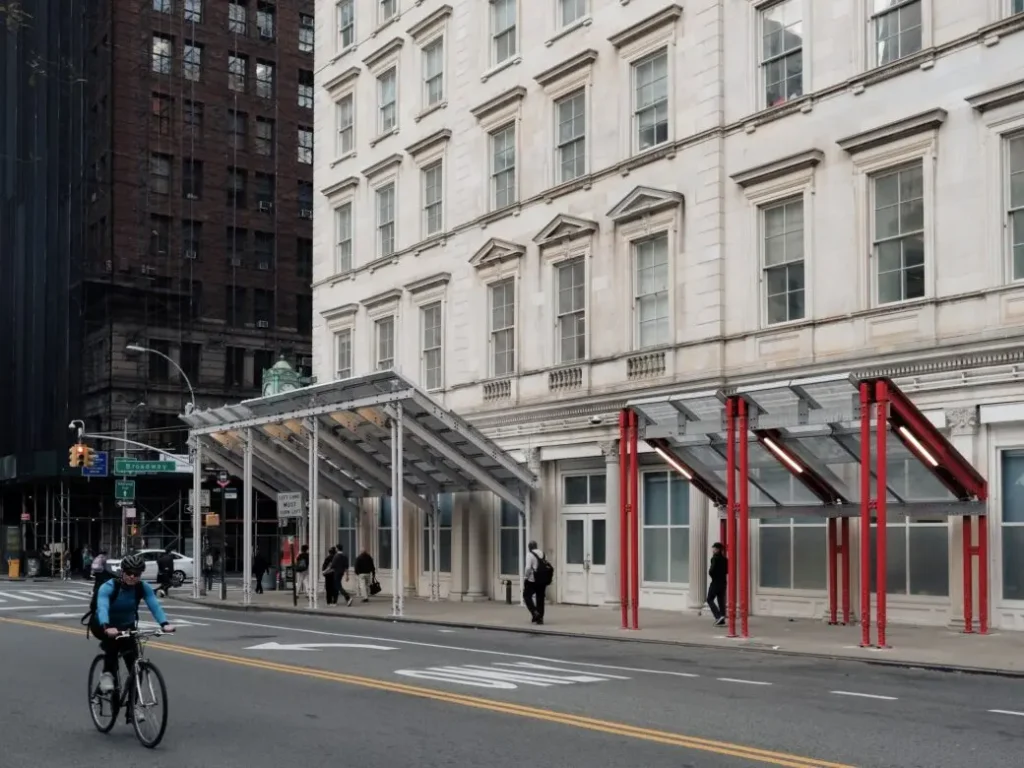
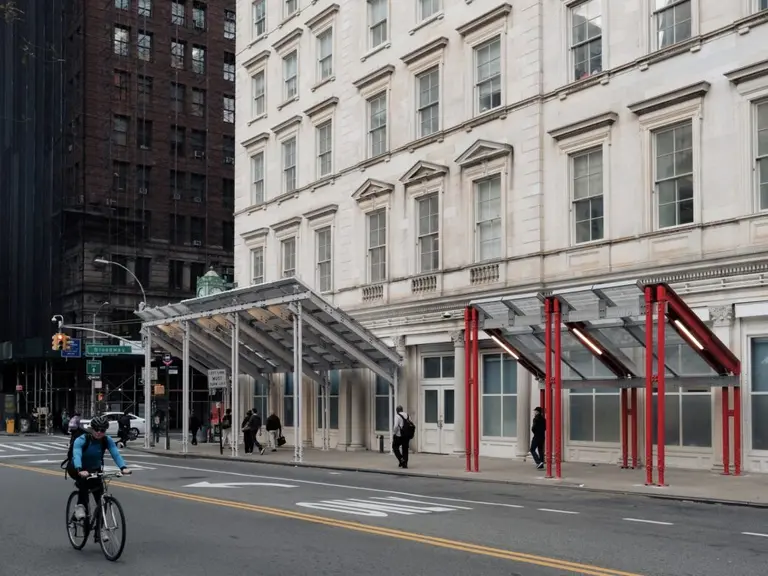
A new generation of sidewalk sheds has debuted in New York City, ushering in a less unsightly way to protect pedestrians from falling debris. Two innovative scaffolding structures designed by Practice for Architecture and Urbanism (PAU) are now on view outside the city’s Department of Buildings headquarters at 280 Broadway in Lower Manhattan. The designs were first revealed last month, when Mayor Zohran Mamdani announced that the city had reduced the number of active sidewalk sheds across the five boroughs by roughly 1,200 since January, a 15 percent decline.
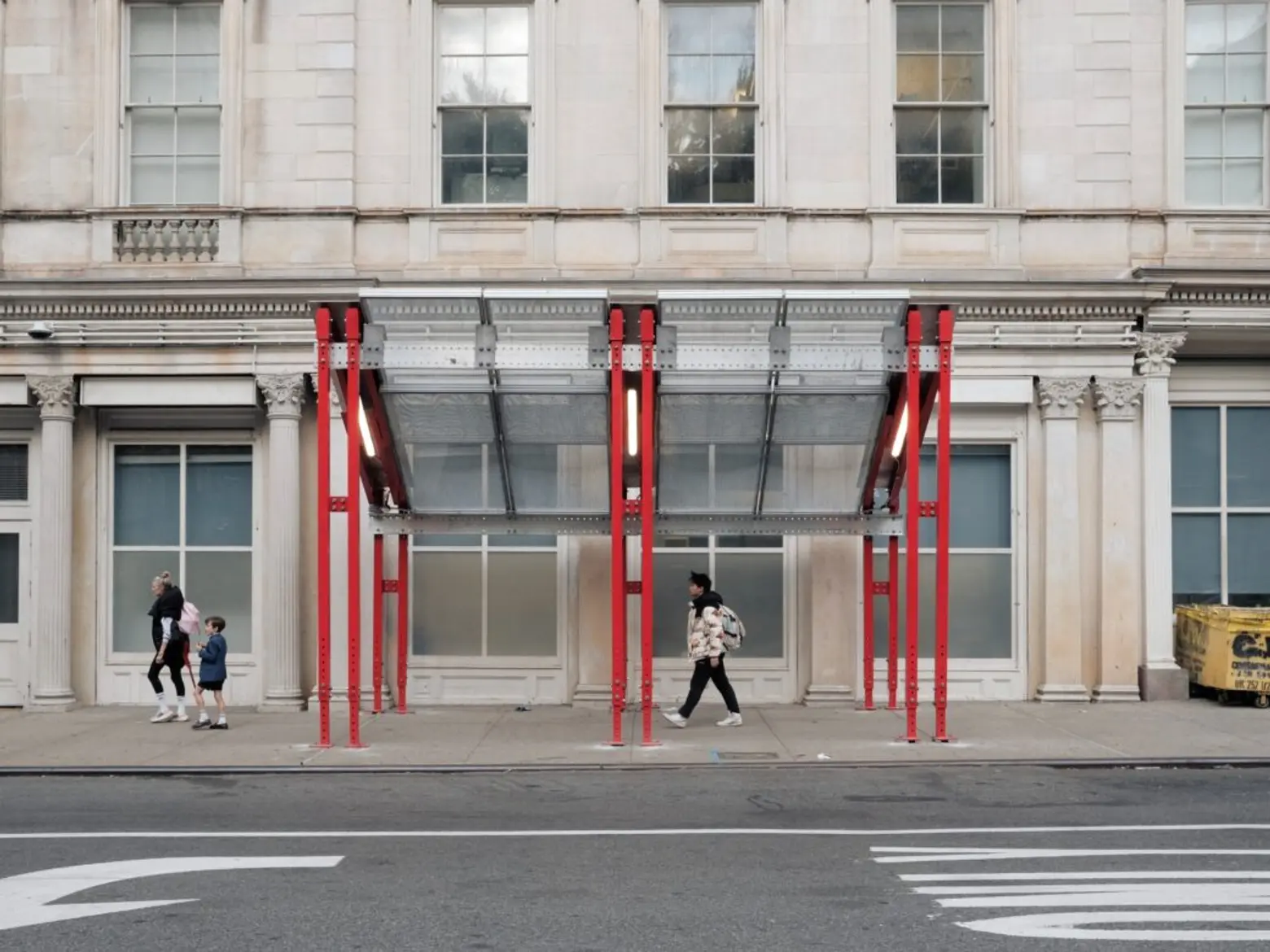
While essential for protecting New Yorkers from falling debris during construction and building maintenance, the city’s sprawling network of sidewalk sheds and scaffolding has long drawn criticism for its unsightly appearance, prompting calls from residents and elected officials alike to rethink their design.
In 2024, under former Mayor Eric Adams, DOB selected PAU and Arup to redesign the structures. Both firms received a $3.5 million contract through Adams’ “Get Sheds Down” campaign, which aimed to remove long-standing sidewalk sheds.
The firms developed six prototype shed designs. The first two, designed by Arup, were unveiled for 30 days in front of 280 Broadway in June. Dubbed the “Flex Shed” and the “Rigid Shed,” the structures featured improved circulation, increased natural light, and greater adaptability to varying site conditions.
Both designs also prioritized the pedestrian experience, with smaller sidewalk footprints and fewer physical and visual obstructions. Last month, TIME magazine named Arup’s design one of its Best Inventions of 2026.
New Yorkers can now see how PAU’s designs compare with the earlier prototypes. The structures currently installed include the “Baseline Shed” and the “Speed Shed,” marking the first time either design has been deployed on a NYC sidewalk.
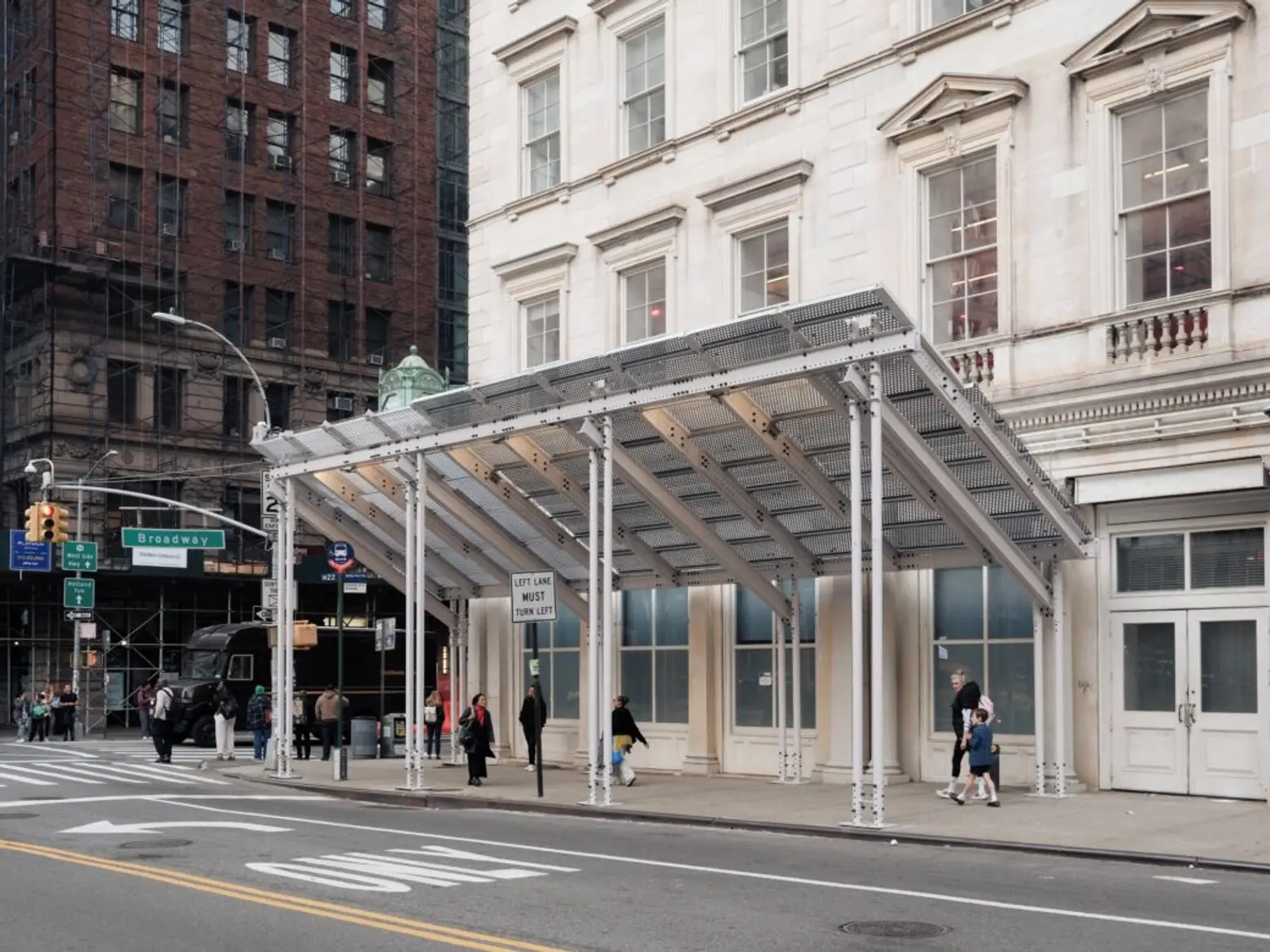
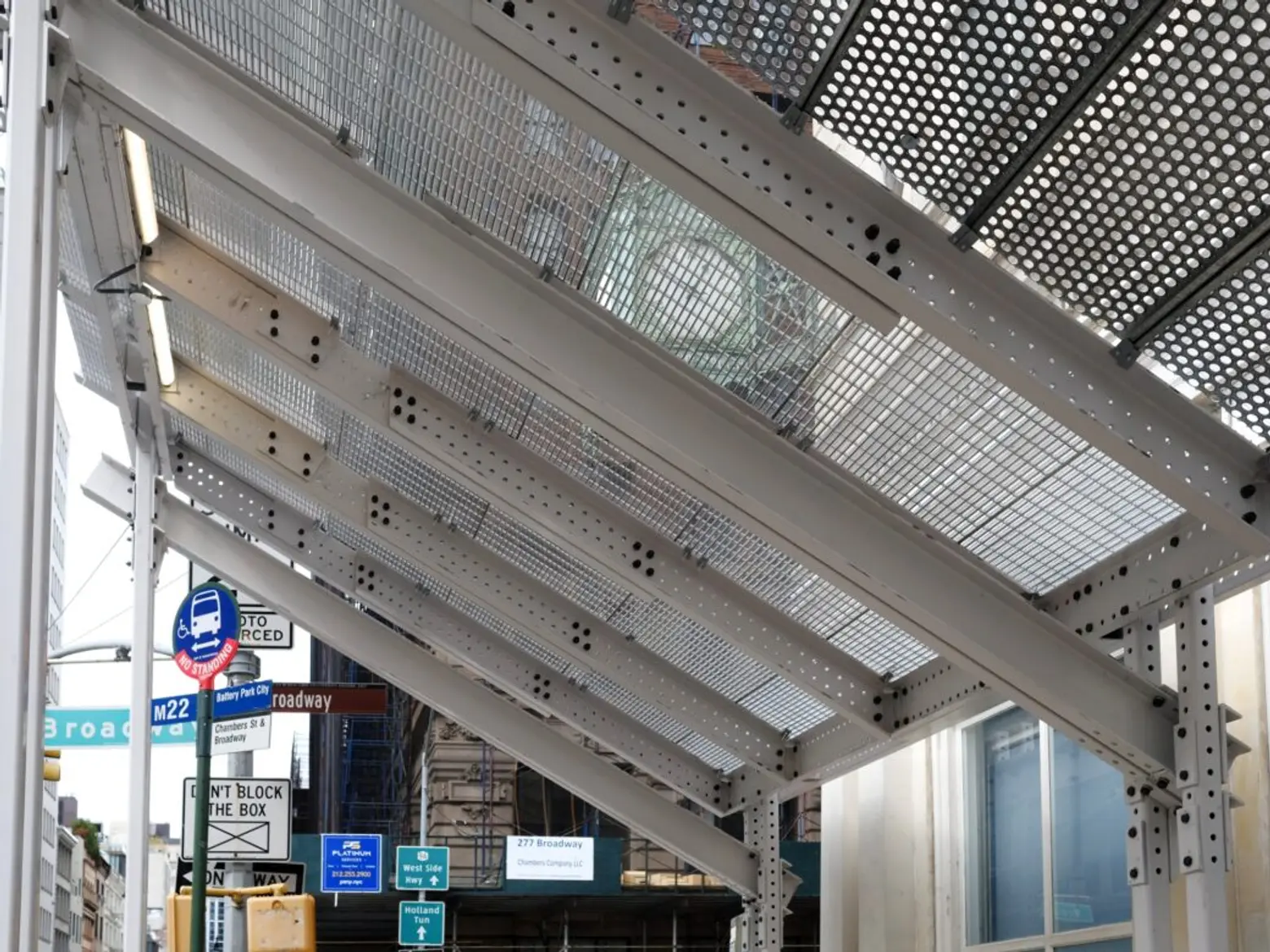
Available in heavy- and light-duty options, the Baseline Shed features transparent polycarbonate decking and an innovative angled roof that lets in natural light, improves sightlines to ground-floor businesses, and creates a more open sidewalk.
Designed for lighter-duty use, the Speed Shed features an angled roof made of rockfall netting that catches debris while allowing natural light to reach the sidewalk. Detachable wheels allow the structure to be quickly moved between locations as needed.
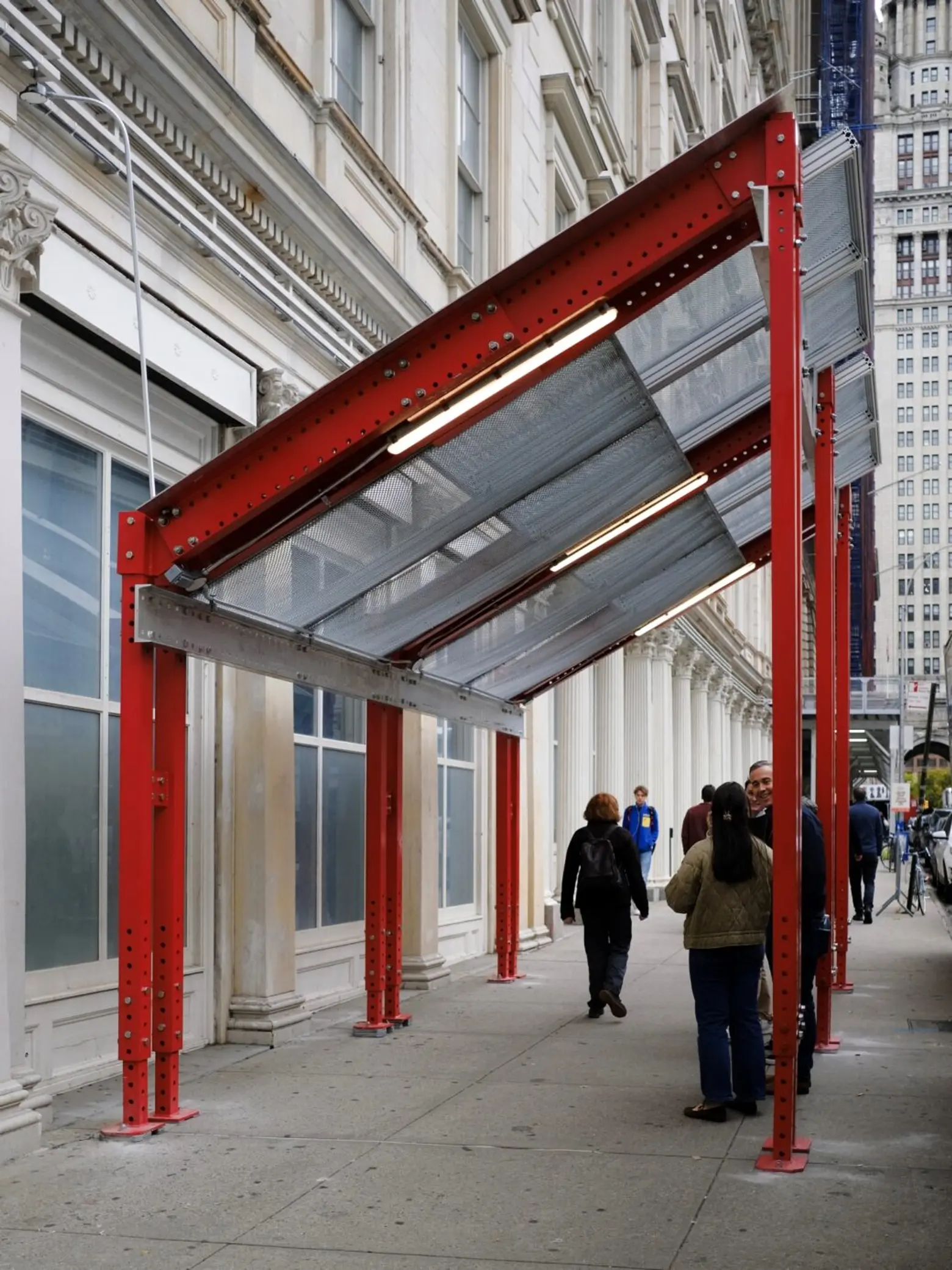
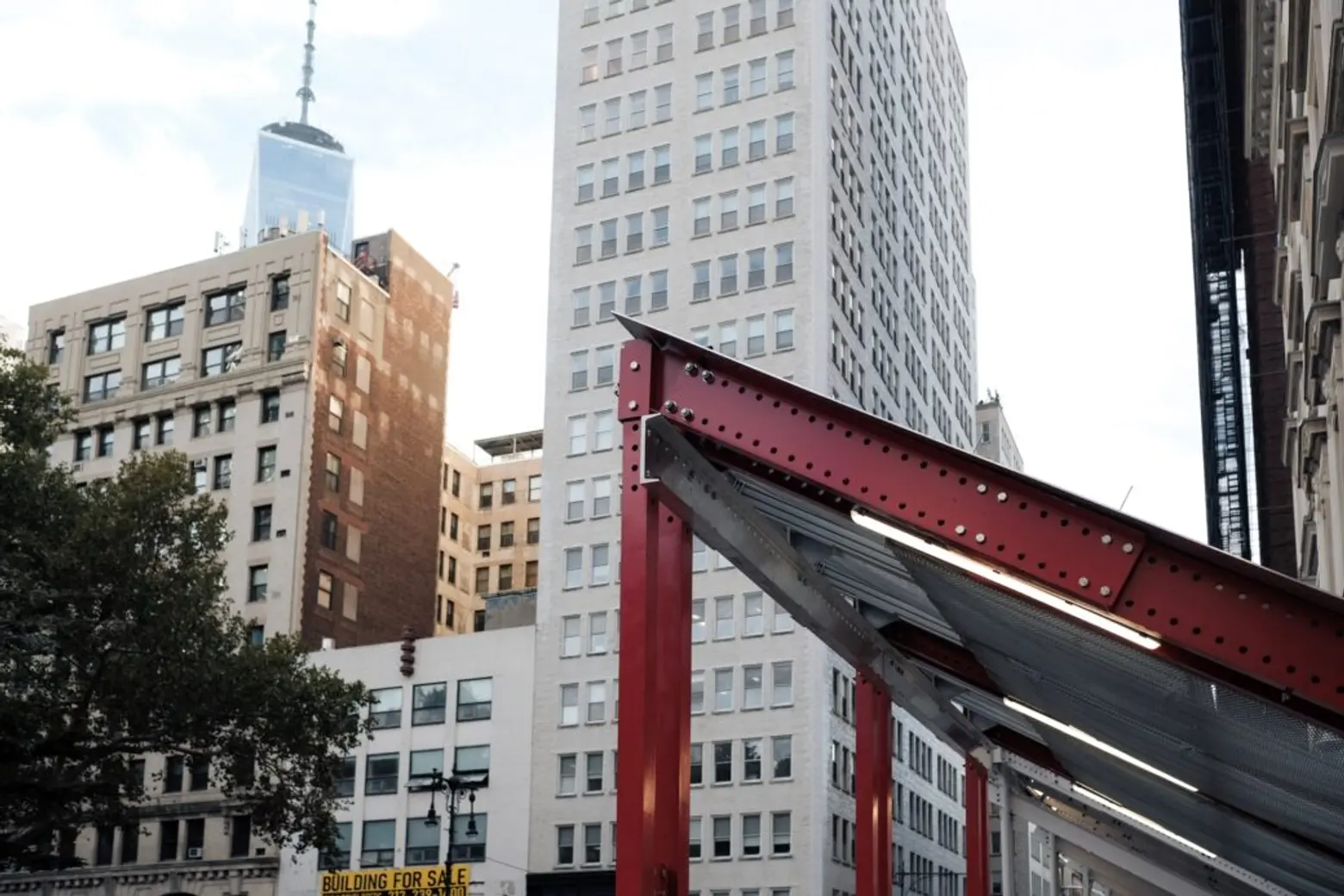
Both designs prioritize cost-effectiveness and ease of construction. PAU created a standardized, modular kit of parts with adjustable aluminum framing designed to simplify installation, maintenance, and reuse. The system can accommodate changing site conditions while reducing the labor and disruption typically associated with traditional sidewalk shed construction.
“PAU was founded on the belief that design can elevate civic life. Reimagining Gotham’s sidewalks, which frame our shared urbanity, gives all New Yorkers the opportunity for a safer, luminous and more inviting public realm,” Vishaan Chakrabarti, founder of PAU, said.
DOB is currently advancing the rulemaking process to make the new designs available for use across the city. Because the designs are city-owned, they can be freely reproduced, encouraging widespread adoption. The agency expects to finalize the rules before the end of 2026.
“In the greatest city in the world, New Yorkers shouldn’t have to accept dark, obstructed sidewalks as a fact of life,” Mamdani said.
“We’re taking down sheds that don’t need to be there and building a better alternative for the ones that do,” he added. “That means brighter sidewalks, clearer storefronts and better public spaces that work for the people who use them every day.”
When the two designs were unveiled last month, Mamdani also announced that the city had significantly reduced the number of active sidewalk sheds since January. Beyond their unattractive appearance, sidewalk sheds have also become a chronic problem in NYC, with some remaining in place for years and further impacting the city’s streetscape.
The achievement comes more than a year after the City Council passed a series of bills reforming sidewalk shed regulations to limit how long the structures can remain in place and requiring the city to move forward with commissioning new shed designs. At the time, NYC had more than 8,400 active sidewalk sheds, spanning roughly 400 miles of sidewalk.
The DOB has also introduced regulations to reduce the footprint of sidewalk sheds on large “campuses,” such as NYCHA properties and university campuses, limiting unnecessary coverage of open spaces far from buildings.
As of Tuesday, November 3, the city has 6,822 active sidewalk sheds, which have been in place for an average of 568 days and span a total of 1,624,990 linear feet, according to DOB.
RELATED:
- NYC unveils the first look at the future of sidewalk sheds
- NYC unveils designs for revamped sidewalk sheds
- Council passes legislation to reduce NYC’s 400 miles of scaffolding
The post NYC unveils latest sidewalk shed designs first appeared on 6sqft.