
Democrats won control of both the House and the Senate on Tuesday, and their leaders spent Wednesday sketching an agenda of affordability and accountability rather than confrontation. For readers watching the Iran war and U.S. sanctions policy, the practical question is what the new Congress can actually change. The answer, based on Wednesday’s own statements and the arithmetic of the Constitution, is: hearings and pressure, yes; reversals, only with President Donald Trump’s signature.
House Democratic Leader Hakeem Jeffries said Wednesday that no member of his caucus had raised impeaching Trump with him, telling reporters Democrats are “relentlessly focused on affordability and on accountability,” CBS News reported. Jeffries predicted his party would win at least 255 seats once the remaining races are decided – his own forecast, not an independent projection, and his impeachment remark was a description of the caucus’s focus, not a pledge.
Trump, for his part, framed the balance of power in one sentence during a post-election phone call with Fox News: “I’ll get along probably with the Democrats, unless they want to be destructive. But I have the power of the veto,” Fox reported. He said Democrats had “already called” to talk, and separately told Fox the midterm results “had nothing to do with my cabinet,” dismissing talk of a shake-up even as CBS reported he was privately asking advisers about Defense Secretary Pete Hegseth’s future.
The constitutional math behind Trump’s confidence is straightforward. Overriding a veto requires two-thirds of both chambers, so even a House majority in the mid-250s cannot reverse administration policy without substantial Republican defections.
On Iran specifically, Trump told reporters at the White House on Wednesday that he had always known the war would cut into his party’s midterm performance. “I knew the war was going to impact it, but whether it impacted it or not, Iran can’t have a nuclear weapon,” he said, according to Fox. He called Vice President JD Vance’s assessment that the war cost Republicans the election “fine.”
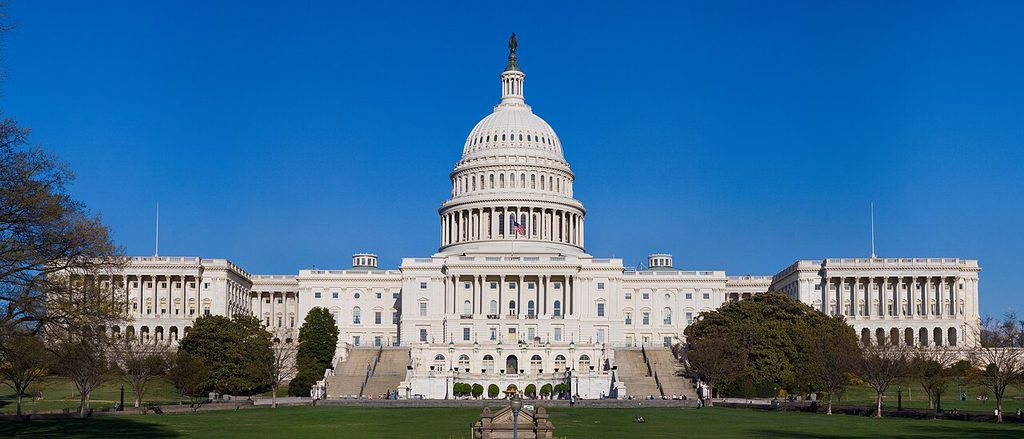
The U.S. Capitol in Washington. Photo: Noclip (public domain).
The clearest evidence that policy continues unchanged came from the Treasury Department on Wednesday itself. A day after the vote, the Office of Foreign Assets Control designated an India-based network it accuses of supplying false ship flags to Iran’s “shadow fleet,” along with a Türkiye-based ground-services company it says services sanctioned Iranian airlines, Treasury announced. The sanctions machine, in other words, ran on the first day of the new political order exactly as it had before it.
What does the new Congress actually hold? Hearings, subpoenas, the floor schedule and the first draft of spending bills – real leverage, but leverage that ends at the president’s desk. For businesses with Iran-adjacent exposure in shipping, energy and finance, the operative fact is not the incoming majority’s rhetoric but Wednesday’s designations: compliance obligations and enforcement risk continue into the new Congress unchanged.
JBizNews Desk | Washington
© JBizNews.com. All rights reserved. Unauthorized reproduction or redistribution is strictly prohibited.






