
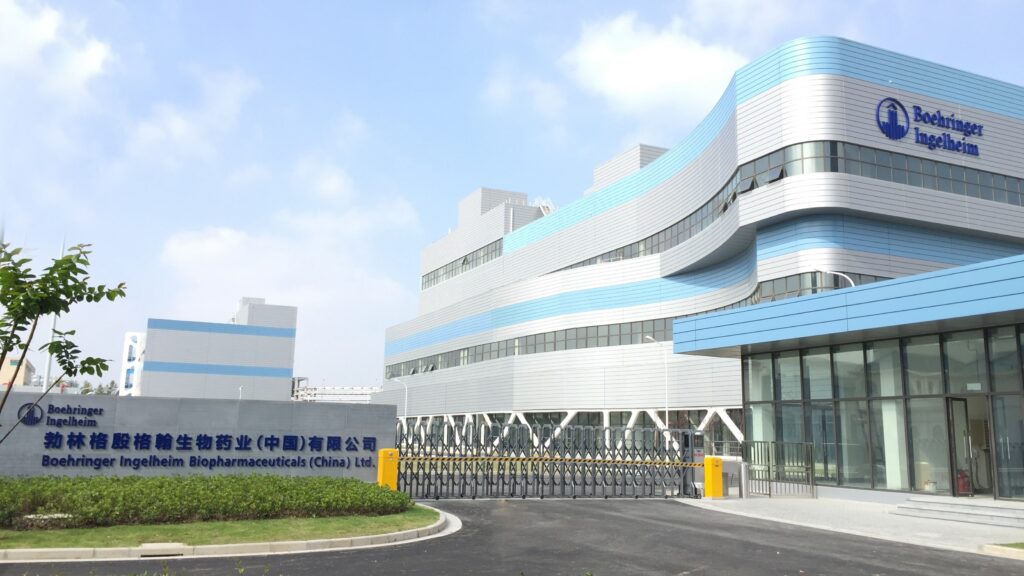
Photo: Boehringer Ingelheim
Boehringer Ingelheim and Sino Biopharmaceutical agreed Wednesday to develop six preclinical cancer-treatment programs, with SBP Group set to receive $358 million in upfront and near-term payments and potentially $7 billion more in option-exercise and milestone payments.
The agreement is an option and license deal, not a $7 billion cash acquisition. The larger payments depend on future development, regulatory and commercial milestones, and none of the six programs is presented as an approved treatment.
The partnership expands the German drugmaker’s access to Chinese oncology research while leaving early development with SBP Group. It is the companies’ second oncology partnership, according to their joint announcement.
Options follow early clinical development
The six programs cover antibody-drug conjugates and T-cell engagers. Antibody-drug conjugates are designed to deliver therapeutic agents more selectively to cancer cells; T-cell engagers are designed to direct immune cells against cancer.
Five programs come from SBP Group’s wholly owned LaNova Medicines subsidiary in Shanghai, and one comes from Beijing Tide Pharmaceutical. SBP will undertake early development. Reuters reported that its role extends through completion of global Phase I clinical trials.
After agreed clinical milestones are reached, Boehringer may exercise options for exclusive development, manufacturing and commercialization rights. Four programs would cover markets outside mainland China, Hong Kong and Macau; the other two would carry worldwide rights.
The $358 million figure combines upfront and near-term payments. It should not be read as an amount necessarily paid entirely at signing. Beyond the potential $7 billion in option and milestone payments, SBP could receive tiered royalties reaching double-digit percentages on future product sales.
Building an oncology pipeline, not announcing a cure
Boehringer said the collaboration could broaden its antibody-drug conjugate and T-cell engager portfolio. Paola Casarosa, its head of innovation, described the agreement as connecting Chinese innovation with the company’s global research and development capabilities.
The company also pointed to its recently opened China research and development center in Shanghai, which expands its early clinical development and external innovation activities.
For SBP, the structure provides near-term funding and a possible route to international development while retaining responsibility for the programs’ earliest stages. The eventual economics will depend on whether the programs reach the agreed milestones and whether Boehringer exercises its options.
The preclinical starting point is important for patients and investors: the announcement is a research and licensing transaction, not evidence that the candidates have established safety or effectiveness in patients or are available for treatment.
JBizNews Desk | New York
© JBizNews.com. All rights reserved. Unauthorized reproduction or redistribution is strictly prohibited.





