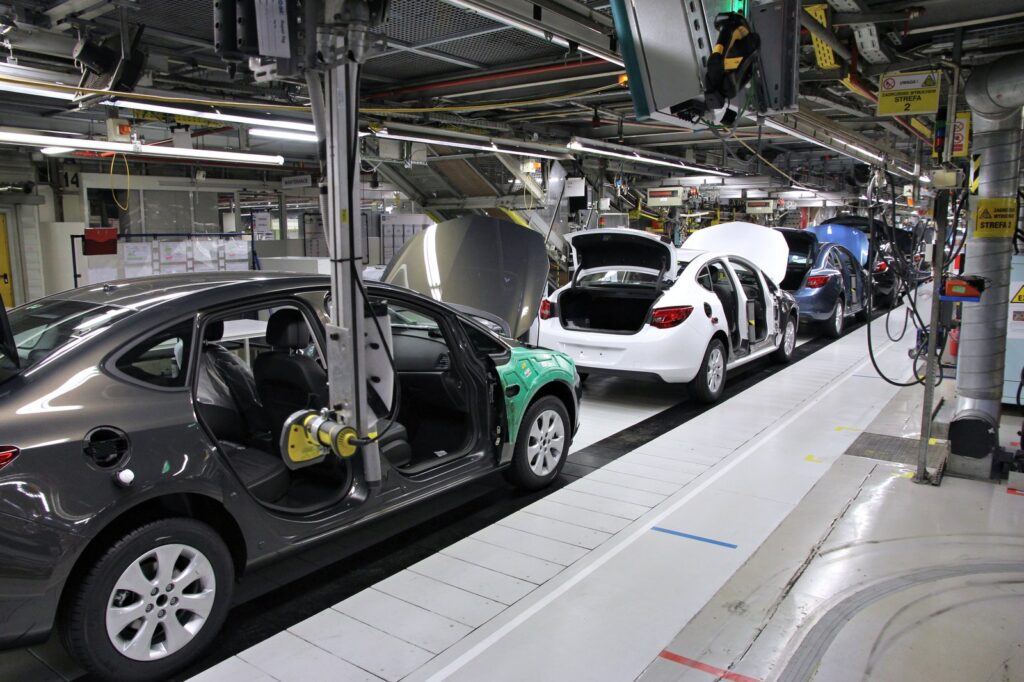
Photo: Marek Ślusarczyk / Wikimedia Commons / CC BY 3.0
The auto industry’s biggest trade group has sided with the Trump administration in court, backing sharply lower fuel-economy standards that California, New York and roughly two dozen other states, cities and counties are suing to block.
The Alliance for Automotive Innovation – whose members include General Motors, Ford and Toyota – filed a brief Monday in the First U.S. Circuit Court of Appeals in Boston, arguing that automakers need predictable rules and that overturning the standards finalized last month would disrupt capital planning, product development and testing for hundreds of models.
The rules, issued by the National Highway Traffic Safety Administration and published in the Federal Register on Sept. 30, call for an industry-wide average of about 34.9 miles per gallon by the 2031 model year – far below the 50.4 mpg target set under the Biden administration. NHTSA projects the change will cut the average price of a new vehicle by roughly $1,300 and save consumers about $138 billion over five years; the agency’s own analysis also estimates the weaker standards will increase US gasoline consumption by about 4.6%, or roughly 121 billion gallons, through 2050.
Alliance CEO John Bozzella said the prior standards effectively demanded a shift to electric vehicles that did not match market conditions. “What the industry needs is long-term regulatory stability that includes balanced, durable and achievable fuel economy standards that continue to reduce emissions and improve fuel economy,” he said. Environmental advocates disagree: the Sierra Club and other groups sued in October, arguing the new standards will raise fuel costs and pollution.
The rollback builds on moves over the past year that ended the $7,500 federal EV tax credit for vehicles acquired after Sept. 30, 2025, eliminated civil penalties for missing fuel-economy targets, and rescinded waivers that had let California set stricter emissions rules. Ford CEO Jim Farley has called the shift a win for affordability.
JBizNews Desk | Washington
© JBizNews.com. All rights reserved. Unauthorized reproduction or redistribution is strictly prohibited.