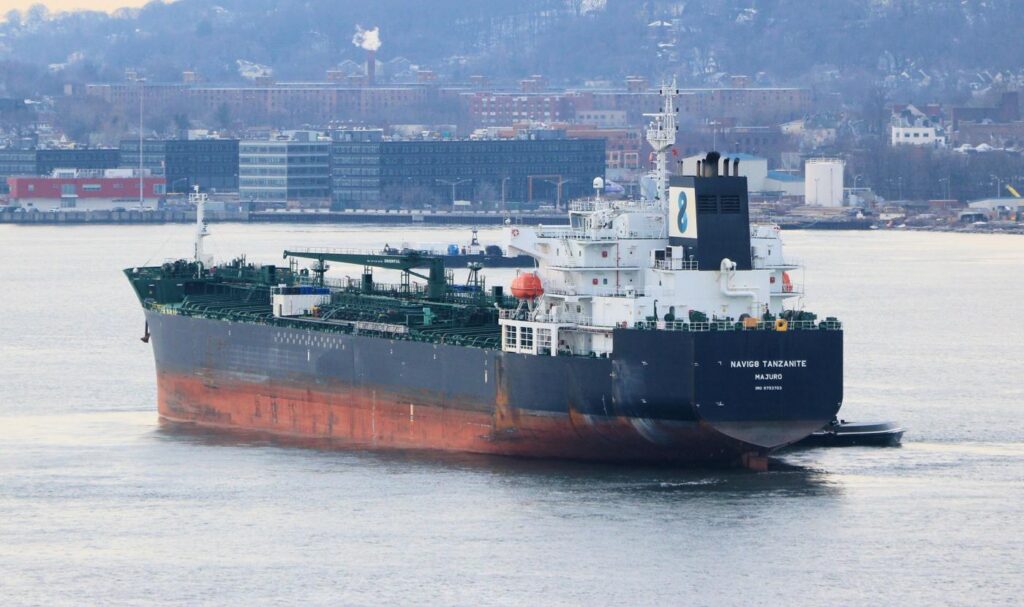
Photo: Paul Harrison / CC BY-SA 4.0
Getting oil safely to its buyer has become a large expense in its own right. Shipping and insurance costs have climbed to more than one-third of the underlying value of crude oil in 2026, OPEC Secretary General Haitham Al Ghais said Wednesday, as three major energy organizations brought industry experts together to address disrupted sea routes.
The International Energy Agency, International Energy Forum and OPEC held an online workshop on November 4 focused on maritime energy flows, shipping and insurance. Their joint statement described rising transport and risk costs as a burden on both energy-producing and energy-consuming economies.
The cost comparison came from Al Ghais, not a new price index published alongside the meeting. He said the extra expenses were being passed along the oil and energy supply chain, adding to inflationary pressure. The statement did not provide a route-by-route breakdown or a calculation for the one-third figure.
The price of the journey matters, too
Crude prices alone do not capture everything it costs to deliver energy. Moving a cargo and insuring it against risk are separate expenses. When those bills rise, a lower price for the oil itself does not necessarily remove the pressure elsewhere in the supply chain.
IEA Executive Director Fatih Birol said the crisis was affecting both production and transportation of oil and gas. He called freedom of maritime navigation a central part of energy security, while acknowledging producers’ efforts to maintain supply under difficult conditions.
IEF Secretary General Jassim Alshirawi warned that disruption can raise energy, food and transport costs far beyond the area directly affected, with vulnerable communities facing the greatest hardship.
A search for solutions, not a reopening announcement
The workshop followed a request from a meeting of Declaration of Cooperation ministers in Riyadh on October 12. Those ministers had expressed concern about elevated shipping and insurance costs and called for continued work with international energy organizations.
Wednesday’s statement described a technical discussion aimed at identifying solutions and improving dialogue and data transparency. It did not announce a new shipping-security agreement, a restored trade route or an immediate reduction in freight or insurance charges.
JBizNews Desk | Global
© JBizNews.com. All rights reserved. Unauthorized reproduction or redistribution is strictly prohibited.