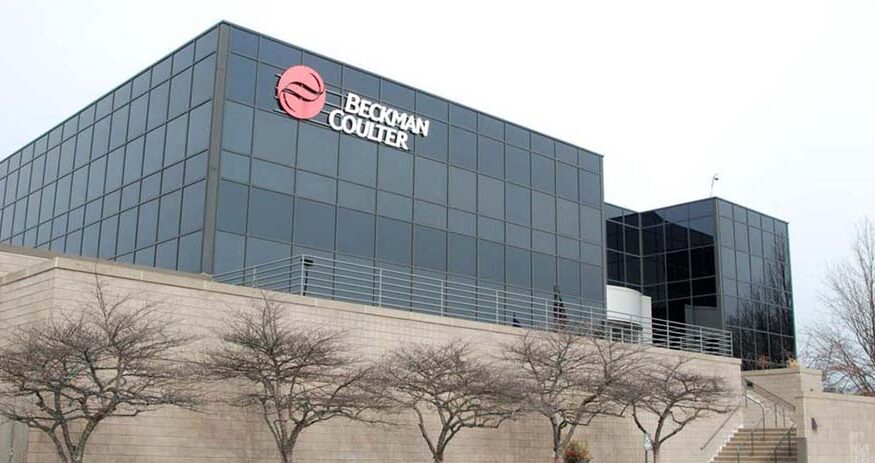
Courtesy Beckman Coulter
When a patient arrives with an infection, one question can shape the next decision: are bacteria likely to be involved, or is the illness more likely viral?
A newly cleared blood test aims to help hospital doctors answer that question using equipment many laboratories already have. Beckman Coulter Diagnostics announced Tuesday that the FDA cleared its Access MeMed BV assay for adults and children as young as 90 days old.
The test runs on Beckman Coulter’s DxI 9000 and Access 2 analyzers. On the DxI 9000, results can be available in as little as 15 minutes, according to the company’s announcement. That timing applies to the analyzer, not a promise that a patient will be diagnosed or discharged 15 minutes after entering a hospital.
It reads the body’s response
Instead of searching for a particular germ, the assay measures three proteins involved in the immune response: TRAIL, IP-10 and C-reactive protein. It combines those measurements into a score indicating the likelihood of bacterial infection.
That can give clinicians another piece of evidence when deciding whether antibiotics are appropriate. But the score is an aid, not a stand-alone diagnosis. The company says it must be interpreted alongside the patient’s clinical assessment and other laboratory findings.
The cleared use covers suspected acute infections with symptoms lasting fewer than seven days, in patients evaluated in emergency departments or urgent care settings, or with samples collected at hospital admission. It uses serum or plasma.
The change is access through existing hospital machines
This is not the first FDA clearance for MeMed’s bacterial-versus-viral testing technology. MeMed BV first received clearance in 2021 on the company’s own MeMed Key platform, as Patient Care reported. The new clearance extends the test to Beckman Coulter’s laboratory analyzers. The Access version received a European CE mark in April.
For hospitals that already have compatible instruments, Beckman Coulter says adoption does not require buying a new analyzer. That is the practical significance of the announcement: a test can move into existing laboratory workflows rather than depend on installing a separate platform.
Clearance does not mean every hospital has started offering it. The announcement does not establish a patient’s local availability, insurance coverage or out-of-pocket price.
A useful clue, with limits
Beckman Coulter points to studies suggesting that MeMed BV can support more appropriate antibiotic decisions and potentially reduce unnecessary admissions and testing. Those findings should not be read as a guarantee that this new rollout will produce the same savings or outcome for every patient.
The company also disclosed that MeMed funded research assistants and provided tests for research cited in the announcement. That context matters when weighing company-promoted evidence.
For families, the appeal is less guesswork during an anxious visit. For clinicians, it is another measured signal to combine with symptoms, examination and other tests. The new clearance broadens where that signal can be generated, without replacing the doctor making the call.
JBizNews Desk | Brea, Calif.
© JBizNews.com. All rights reserved. Unauthorized reproduction or redistribution is strictly prohibited.