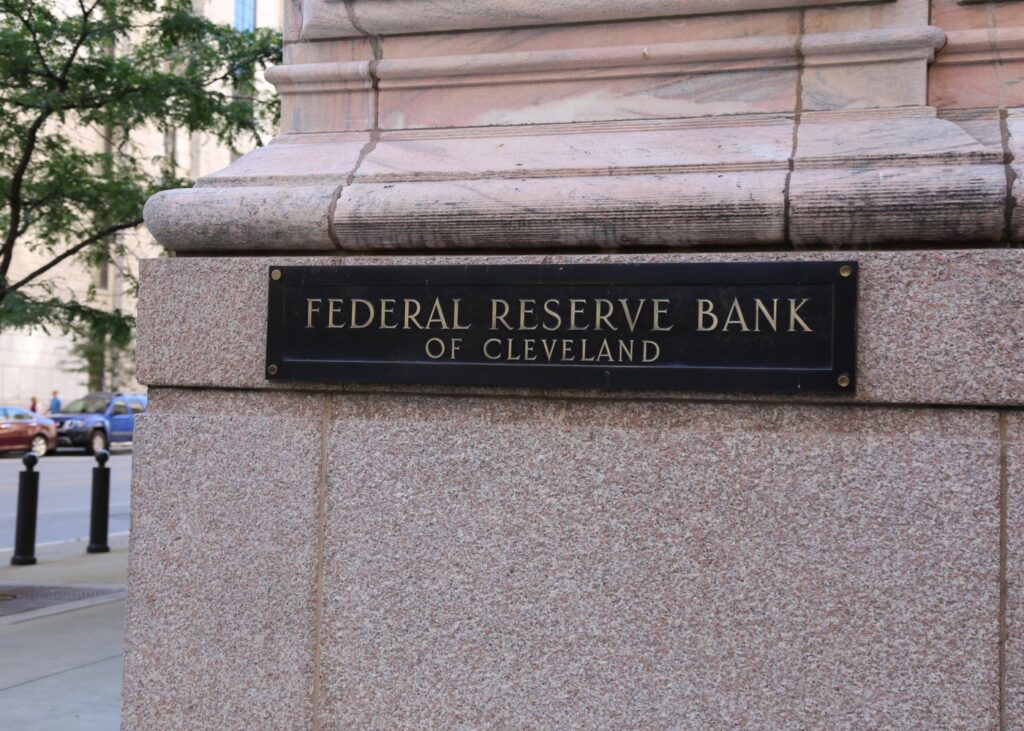
Photo: Kevin Payravi, Wikimedia Commons / CC BY-SA 4.0 (archive photo)
Cleveland Federal Reserve President Beth Hammack said in a speech given Thursday morning that U.S. monetary policy needs to become restrictive to bring inflation back to 2%, and that she favors smaller, more frequent adjustments when possible rather than a more disruptive path.
Hammack, president and chief executive of the Federal Reserve Bank of Cleveland, delivered the remarks at the SNB and Its Watchers conference in Zurich. The Cleveland Fed posted the speech text at 8:50 a.m. Eastern on November 5. She said the views were her own, not those of the Federal Reserve System or her colleagues on its rate-setting committee.
Why she wants a restrictive stance
Inflation has been above the Fed’s goal for nearly six years, Hammack said, with relatively broad pressures reflecting both supply and demand. She cited September headline personal consumption expenditures inflation of 3.6% and core PCE inflation of 3.1%, both above the 2% goal and higher than at the start of the year.
“I expect that monetary policy will need to move to a restrictive stance to bring inflation back to 2 percent in a timely manner,” she said. A restrictive stance means policy intended to restrain economic activity and inflation pressures, rather than support faster demand growth.
Smaller moves, more often
Hammack said she preferred reaching that stance through “more frequent smaller adjustments when possible.” She said that approach would be less disruptive to households, businesses and financial markets, and would reduce the risk of policy falling behind and an inflationary mindset taking hold. The Cleveland Fed’s release repeated those remarks.
That is a preference for the pace of future policy adjustments, not an announced rate increase or a promise about the next meeting. Reuters, reporting via U.S. News, described her position as a gradual rate-hike path and noted that she did not say when she wanted the Fed to raise rates next.
What it could mean for borrowers and savers
One policymaker’s speech does not change borrowing rates today. If the Fed eventually raises its policy rate, some variable-rate loans could become more expensive, while banks might offer higher yields on some savings products. Neither outcome is automatic: loan terms, competition for deposits and lenders’ pricing decisions also matter.
For a business weighing a loan or refinancing, the remarks are a reason to test whether a budget can absorb higher interest costs, not evidence of a new rate already in effect. Borrowers should compare actual lender offers and fixed-versus-variable terms rather than treat a speech as a lending quote.
The policy comments came within a wider discussion of reserve currencies and stablecoins. Hammack said the dollar’s international role depends on strong institutions, deep markets and central-bank independence, and linked the Fed’s credibility to its commitment to price stability.
JBizNews Desk | New York
© JBizNews.com. All rights reserved. Unauthorized reproduction or redistribution is strictly prohibited.