The White House / Public domain
President Donald Trump said Sunday that renewed U.S. attacks on Iran were “highly unlikely” if negotiations made progress, while warning that American forces remained ready to strike. His comments put talks over Iran’s nuclear program and reopening the Strait of Hormuz at the center of the next decision on military action.
The president paired his preference for an agreement with a warning that bridges and power plants remained potential targets, leaving diplomacy and the threat of force running alongside each other.
“It depends on whether or not they sign a very strong agreement,” Trump said in a Sunday telephone interview. “The answer is highly unlikely it’s going to be necessary.”
Trump repeatedly said he did not expect another round of attacks to be needed, but did not rule them out. “I would if necessary, but we hit them really hard,” he said.
Military pressure remains on the table
Trump said three U.S. aircraft carriers were in the region, including one that had recently arrived. “They’re fully locked and loaded,” he said, describing the forces as ready if he ordered action.
He also said the United States had identified 38 bridges it could destroy in an hour and had power plants among its potential targets. The president said he would prefer not to destroy infrastructure because rebuilding it would take years.
“I don’t like ripping down bridges. And the hardest thing to build is a bridge. It takes years, and I’m a good builder,” he said.
Trump also asserted that previous strikes had destroyed Iran’s air defenses and sharply reduced its missile and drone production capabilities. Those were the president’s assessments of Iran’s military position.
Hormuz keeps the talks tied to commerce
The negotiations concern both Tehran’s nuclear program and reopening the Strait of Hormuz, bringing the security of tanker traffic into the same discussion as the threat of new strikes. The interview’s account described tankers passing through the strait coming under Iranian attack during the prolonged standoff.
For companies moving oil through the waterway, the issue is whether ships can pass safely. For businesses and households watching energy costs, the talks connect the prospect of a military agreement with the conditions facing ships carrying oil.
Trump’s position Sunday was that a sufficiently strong agreement could avert renewed attacks, while the forces and targets he described would keep military pressure in place. “Most likely it will not be necessary,” he said. “They want to make a deal so badly.”
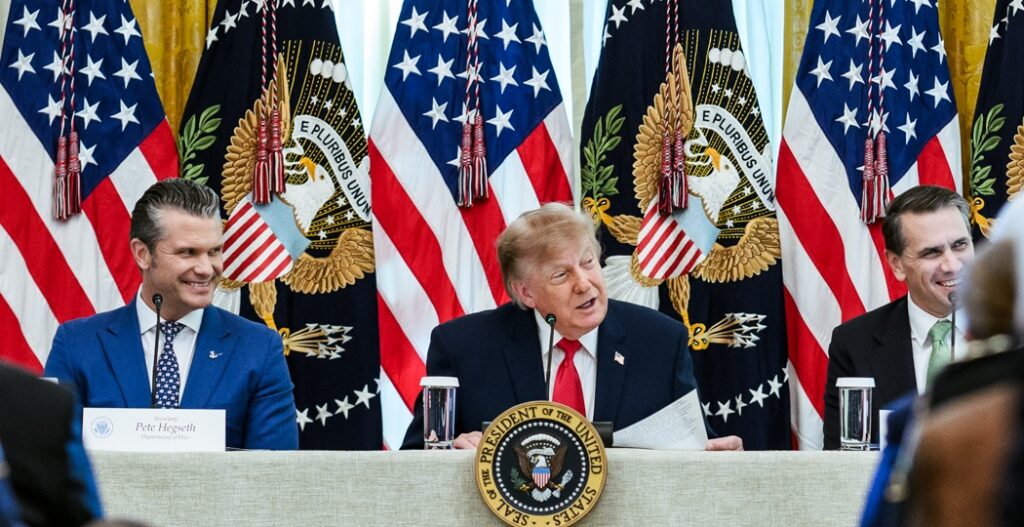
Archive photograph: Trump at an October 21, 2026 roundtable, not Sunday’s telephone interview.
JBizNews Desk | Washington
© JBizNews.com. All rights reserved. Unauthorized reproduction or redistribution is strictly prohibited.