
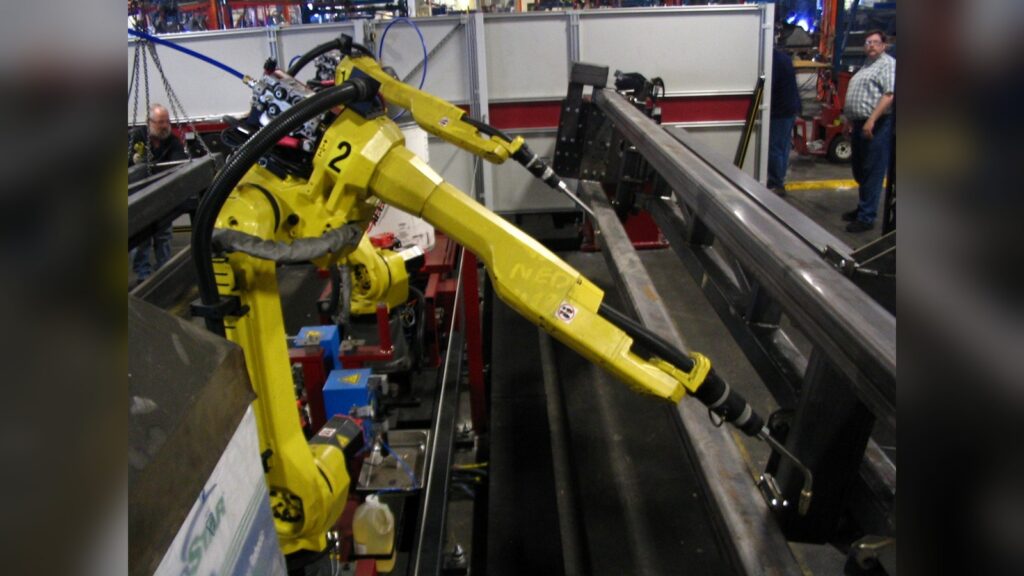
MIPS, the GlobalFoundries-backed computing company in Santa Clara, California, has introduced advances to its Actus platform, aimed at helping robots turn AI decisions into precise physical movement. The design brings motor control, local data processing and communications together for compact robot joints.
The company described the platform in a November 9 announcement ahead of demonstrations at the electronica trade show in Munich, Germany, November 10-13. It did not announce a shipping date, customer orders or pricing.
The problem Actus addresses sits between a robot’s decision and its actual motion. A command to grasp an object still has to become coordinated movements at the elbow, wrist and fingers. Those joints have limited room for electronics and must work within power and heat constraints. Computing speed alone does not solve the need for predictable timing between sensing and action.
Actus combines two MIPS Atlas M8500 real-time processors with motor-control hardware and a vector processor for tasks such as combining sensor readings and running predictive-maintenance models. It uses the open RISC-V processor architecture and GlobalFoundries’ FDX manufacturing technology.
The platform also includes Time-Sensitive Networking over Ethernet, intended to let joint controllers exchange position and torque information with a central controller on a predictable schedule. In plain terms, the separate parts of a robot must agree on when to move, not simply send data as quickly as possible.
Security and safety are part of the proposed design. MIPS says a hardware security module supports post-quantum cryptography, designed for protection against threats from future quantum computing, while functional-safety support helps developers address production requirements. Those features are not a blanket certification of every robot built with the platform.
The company’s Actus product page says performance, security, safety and certification claims depend on final specifications, software, implementation and the scope of certification. That qualification matters because a chip design and a finished robot face different testing and integration demands.
Developers can begin with a virtual platform before silicon arrives, then move to an Actus-1 evaluation board and software-development kit for prototypes, MIPS said. The approach is intended to let software work start before teams commit to final hardware. Actus sits alongside the company’s Acies AI-inference platform and Aegis safety-focused CPU platform.
For robot makers, the attraction is combining control and communications in a small, coordinated system rather than treating each joint as an isolated motor. The commercial test is still ahead: the announcement does not identify production deployments, independent performance measurements or when customers will receive final hardware. It is a platform-development announcement, not evidence of robots already shipping with Actus.
JBizNews Desk | Santa Clara, California
© JBizNews.com. All rights reserved. Unauthorized reproduction or redistribution is strictly prohibited.