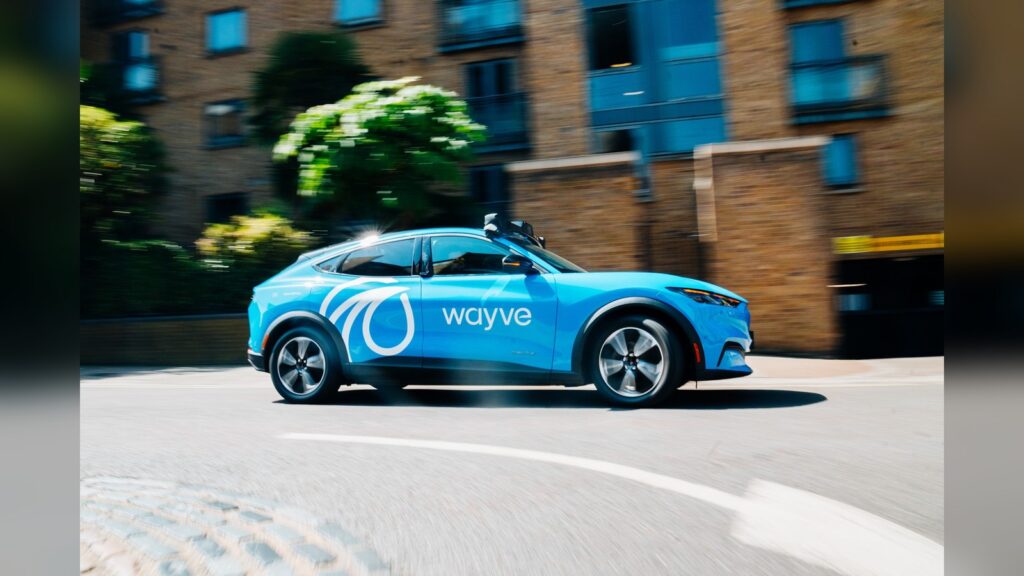
Source: Wayve
CoreWeave announced in Livingston, New Jersey, on November 9 that it has signed a multi-year agreement with autonomous-driving software developer Wayve to train its foundation models on CoreWeave Cloud using Nvidia Blackwell graphics processors. The deal expands the computing infrastructure behind Wayve’s AI Driver, rather than announcing a new robotaxi service or permission to operate autonomous vehicles.
The company release says Wayve began using Weights & Biases and has expanded into CoreWeave Cloud for training, evaluation and simulation. Neither the contract value nor the number of processors was disclosed.
Wayve develops driving software for automakers and fleet owners, rather than describing this agreement as a purchase of finished vehicles. Its foundation models learn from real-world driving data, with CoreWeave supplying cloud infrastructure for the work of training models and testing their performance. CoreWeave says the data is collected in more than 70 countries. That is the geographic reach of the training data, not evidence that Wayve vehicles have approval to operate autonomously in all those countries.
“Our AI Driver gets better by running this data flywheel: gathering real-world driving experience, training on it, evaluating it, and deploying only what outperforms what is already on the road,” said Silvius Rus, Wayve’s senior vice president of engineering. He said access to CoreWeave’s AI cloud could help accelerate commercial deployment. That is the company’s expectation, not a disclosed launch date or a guarantee of safe autonomous operation.
The agreement brings training, evaluation and simulation onto infrastructure intended to support those workloads together. In practical terms, building an updated model is only part of the process: the developer must also compare versions and assess performance before using an update in vehicles. Gavin Jackson, CoreWeave’s managing director for Europe, the Middle East and Africa, said physical-AI developers need infrastructure designed around those connected stages.
For CoreWeave, the deal adds an autonomous-driving workload to its cloud business. For Wayve, it provides access to Blackwell-based computing for a program that repeatedly learns from driving experience. The business significance is the link between large-scale AI computing and software intended to act in the physical world. More computing capacity alone does not establish that a driving system meets a regulator’s requirements or performs safely in every road environment.
The companies did not disclose the contracted capacity, the service start date, the precise duration beyond “multi-year,” or the financial commitments involved. They also did not give a deployment schedule, customer-vehicle volumes or measured safety improvements resulting from this agreement. Those omissions leave the scale of the commercial commitment and its effect on Wayve’s rollout to be demonstrated.
JBizNews Desk | Livingston, New Jersey
© JBizNews.com. All rights reserved. Unauthorized reproduction or redistribution is strictly prohibited.