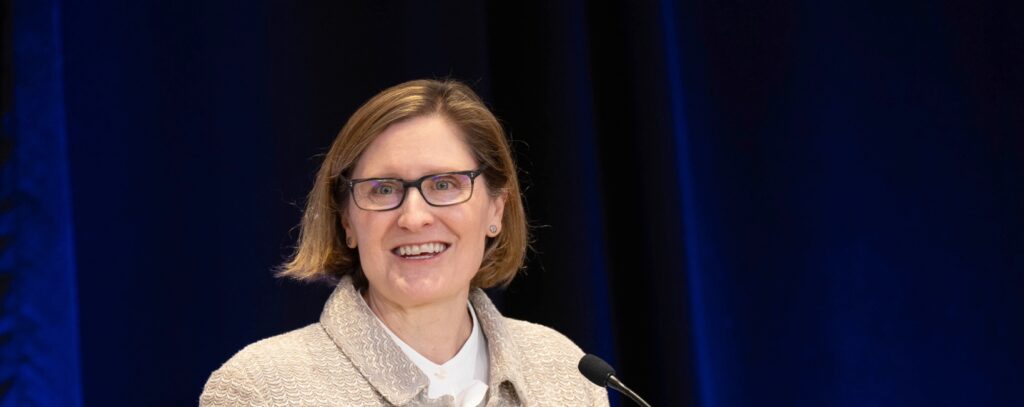
Anna Paulson in an undated file photo supplied in the Federal Reserve Bank of Philadelphia’s media kit. Credit Federal Reserve Bank of Philadelphia. Not tonight’s speech.
More interest-rate increases are likely needed to bring inflation back to 2%, Philadelphia Federal Reserve President Anna Paulson said Tuesday evening, arguing that the central bank should move gradually unless price pressures worsen.
“Skipping a meeting is a matter of pace, not direction. There is likely more work to do,” Paulson said in prepared remarks for the Philadelphia Fed’s 81st Annual Field Meeting Capstone in Conshohocken, Pennsylvania.
She said she supported both September’s rate increase and October’s decision to hold rates steady. Her comments did not announce a rate decision or specify the size of a December move.
“For now, further gradual tightening seems appropriate,” she said, while stressing that the path would depend on how economic conditions develop.
Inflation is not falling back on its own
Paulson said measures of underlying inflation remain stuck between 2.5% and 3%, above the Fed’s 2% target. That suggests the problem extends beyond temporary shocks that might fade without further policy action.
Headline personal consumption expenditures inflation, the Fed’s preferred inflation gauge, was 3.6% over the 12 months ending in September, she said. That figure is separate from Tuesday’s release of October consumer price index data.
She identified tariffs, energy costs and demand associated with the artificial-intelligence buildout as sources of price pressure. Tariff effects appear to be fading, she said, while the outlook for energy supply and AI-related demand is harder to judge.
Paulson said she would favor moving more quickly if inflation expectations rose, wage pressures strengthened or underlying inflation moved higher. “Right now, that’s not what I’m seeing,” she said. Long-term inflation expectations remain anchored and wage pressures have been limited.
A strong economy, with reasons to proceed carefully
Economic growth has averaged 2.7% this year, and October unemployment was 4.1%, according to her remarks. She described growth and hiring as stronger than policymakers had anticipated.
In the Philadelphia Fed’s October survey of Third District manufacturers, every business planned to increase or maintain capital spending next year, she said. That was a regional survey, not a claim that every U.S. manufacturer plans to raise investment.
Gradual rate increases would give households, businesses and banks time to adjust while allowing policymakers to learn from new data, Paulson said. Recent swings in stocks and oil prices also argue for flexibility, particularly because some consumer spending is being supported by investment gains.
Paulson said the views were her own and did not necessarily reflect those of other Federal Open Market Committee members or the Federal Reserve.
JBizNews Desk | Conshohocken, Pennsylvania
© JBizNews.com. All rights reserved. Unauthorized reproduction or redistribution is strictly prohibited.