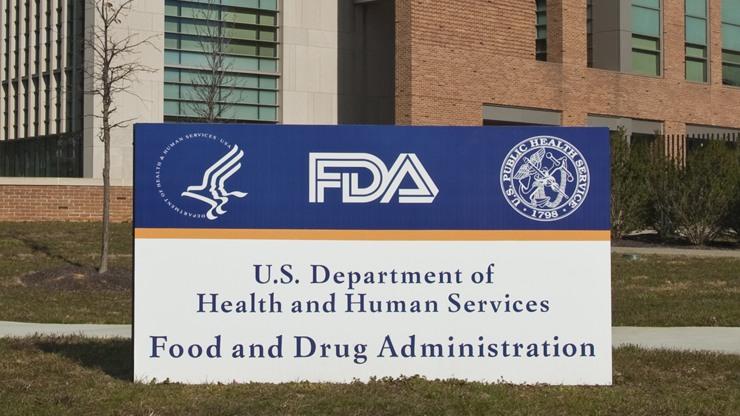
FDA campus, 2010 file: U.S. FDA / Wikimedia (public domain, cropped)
Ascletis Pharma said Wednesday it has submitted an application to the U.S. Food and Drug Administration seeking permission to begin testing a once-daily oral obesity treatment that combines two experimental medicines in one tablet.
The investigational new drug application covers ASC30_39 FDC, a fixed-dose combination of the company’s GLP-1 receptor agonist ASC30 and selective amylin receptor agonist ASC39. The submission is a request to start clinical testing, not FDA approval of the treatment.
The combination’s supporting exposure data came from dogs, not people. Ascletis said the tablet produced a half-life of up to 12 hours in that study, with exposure measures consistent with the individual medicines.
Separate weight-loss findings cited for ASC39 also came from animals. The company reported a 6.6% placebo-adjusted reduction in body weight after six days of treatment in rats with diet-induced obesity. Those results do not establish how much weight people would lose with ASC39 or the combination.
ASC30 on its own is further along in development. It is being studied in two global Phase III trials, AURORA-1 and AURORA-2, enrolling about 4,600 participants with obesity or overweight in the United States, Europe and Canada.
Ascletis expects top-line results from that Phase III program in the third quarter of 2028. That timetable applies to ASC30 alone, not the newly submitted combination.
Company source: Ascletis’ IND application announcement.
JBizNews Desk | Health
© JBizNews.com. All rights reserved. Unauthorized reproduction or redistribution is strictly prohibited.