
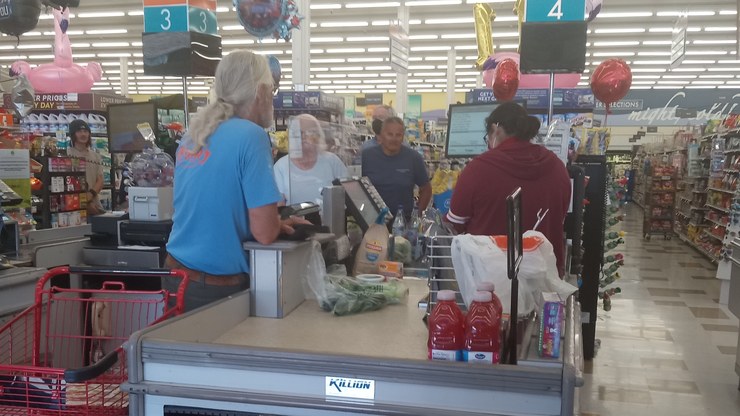
A grocery store checkout line in California, 2022: Sonny doe / Wikimedia (CC BY-SA 4.0, cropped)
Opinion
American retail sales rose for a 13th straight month in October. Before anyone declares the consumer healthy, it is worth reading past the streak.
The CNBC/NRF Retail Monitor, released Wednesday, put October spending at $561.7 billion, up 0.15% from September and 3.57% from a year earlier, as JBizNews reported. Those are real gains, and after years of predictions that shoppers were about to quit, resilience deserves respect.
But the monitor counts dollars, not goods. When prices rise, sales rise with them, even if a household leaves the store with the same cart or a lighter one. A 3.57% year-over-year increase in nominal spending does not mean families bought 3.57% more. It means they spent 3.57% more. In an economy where many prices remain elevated, that distinction is the whole story.
The direction matters too. October’s monthly gain, 0.15%, was roughly half of September’s 0.28%. The annual pace slowed to 3.57% from 4.05%. Growth that is easing is still growth, but it is not acceleration.
The federation’s own explanation cuts both ways. Its president, Matthew Shay, credited a strong Halloween and early holiday promotions that “pulled demand forward,” and described households “timing purchases around special offers and sales events in order to stretch their dollars.” That is careful budgeting, not confidence. Demand pulled forward is borrowed from November and December, and a shopper waiting for a discount is telling you something about room to spend.
Look under the topline and the texture is uneven. Electronics and appliances jumped 9.3% from a year ago, a category where deep promotions move big-ticket purchases. Furniture and home furnishings fell 2.62% and sporting goods slipped 0.44%. The discretionary middle, the purchases families make when they feel ahead rather than merely afloat, is softer than the headline suggests.
Two cautions belong with every use of this data. The monitor is a card-transaction panel of roughly 120 million debit and credit cards, weighted and projected to match Census totals; it is not the government’s retail survey. And a methodology change that began with September’s data means these readings cannot be ranked against the series published before it. Anyone claiming a record streak on this basis is leaning on numbers the publisher says are not comparable.
None of this makes the report bad news. Thirteen months of growth during high gas prices is not nothing. It makes the report narrower than its headline. Card swipes say Americans are still spending. They do not say how much of that spending is inflation, how much is promotion-chasing, or how long demand borrowed from the holidays will last. Watch the next two months before calling it strength.
JBizNews Desk | Washington
© JBizNews.com. All rights reserved. Unauthorized reproduction or redistribution is strictly prohibited.