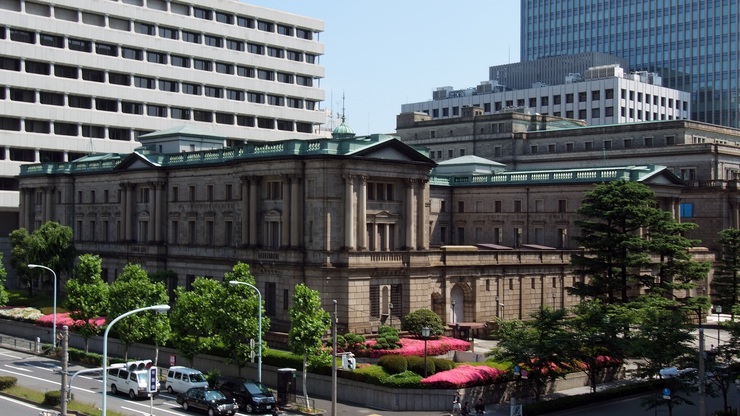
FILE: The Bank of Japan’s head office in Tokyo in 2010, not the Nagasaki speech venue. Photo: Wiiii / Wikimedia Commons, CC BY-SA 3.0 (cropped and resized). This cropped photo is distributed under CC BY-SA 3.0.
Bank of Japan board member Toichiro Asada warned Thursday that raising interest rates too quickly could weaken Japan’s economy and push down underlying inflation, calling for careful consideration of the pace of further increases.
In a speech to local leaders in Nagasaki on November 12, Asada said private consumption was not showing strong growth momentum and that recent price increases had not necessarily been driven by stronger demand.
“I consider it necessary for the Bank to give due consideration to the pace of any policy rate hikes,” he said, according to the central bank’s published English translation.
The remarks set out one policymaker’s position. They did not announce a new interest-rate decision or reverse the Bank of Japan’s stated approach to future policy.
Higher rates can carry greater economic costs
Asada said he had voted against rate increases at the June and September policy meetings. The central bank raised its policy rate at those meetings, bringing it to 1.25%, according to his speech. He supported leaving the rate unchanged at the July and October meetings.
His concern is that, as borrowing costs rise and financial conditions become less supportive, further increases can have a larger effect on real economic activity than earlier steps taken from much lower interest rates.
Asada said particular attention should be paid to the risk that rate increases would slow the economy and, through that channel, push down underlying inflation. He also cautioned that the effects of a rate increase may take a year or longer to become clear.
Wage gains have not settled the demand question
Asada welcomed positive annual growth in real wages since the beginning of 2026, supported by base-pay increases and bonuses. But he said private consumption still lacked strong momentum, making it important to distinguish rising prices driven by demand from increases coming from other sources.
He acknowledged the risk that underlying inflation could move above the central bank’s 2% target and harm the economy. At the same time, he said past and future rate increases could create downside risks to consumer prices if they weakened economic activity.
The speech described both risks rather than declaring that inflation was no longer a concern.
A different view within the policy debate
The central bank’s October outlook said it was appropriate to continue raising the policy rate and adjusting monetary support in response to economic activity, prices and financial conditions, Asada noted.
His warning focused on the pace and economic costs of that process. For businesses and households, the distinction matters: a board member’s caution is evidence of a policy debate, not a guarantee that borrowing costs will stay unchanged at the next meeting.
JBizNews Desk | Economy
© JBizNews.com. All rights reserved. Unauthorized reproduction or redistribution is strictly prohibited.