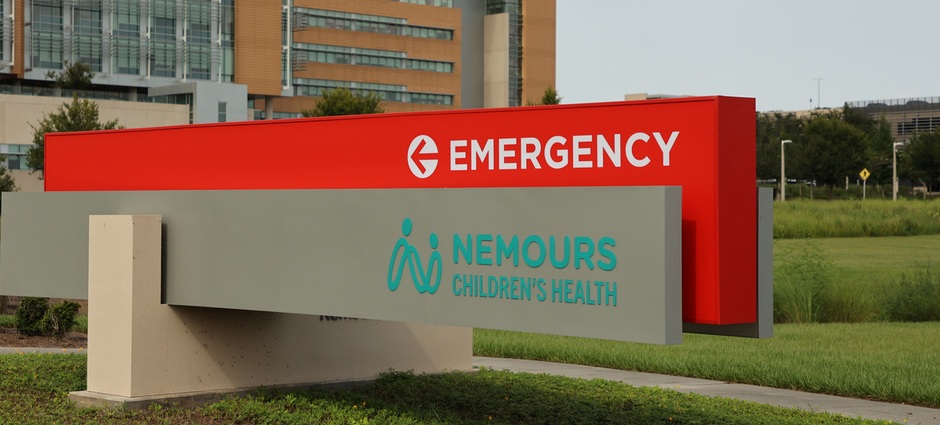
FILE: Nemours Children’s Hospital, Florida, emergency entrance, August 23, 2021. Photo: Nemours Children’s Hospital, Florida/Nemours Children’s Health, via Wikimedia Commons, CC BY-SA 2.0; cropped and resized. Adapted image: CC BY-SA 2.0.
Nemours Children’s Health announced November 12 that its researchers received more than $10 million in National Institutes of Health grants during the third quarter of 2026, supporting studies on diabetes care, sickle cell disease, childhood obesity and other health problems.
The health system said it was the largest amount of NIH funding it had received in a single quarter in its 90-year history. The announcement brings together several research awards, rather than describing one $10 million grant or a new treatment available to patients.
One project will test whether teenagers with type 1 diabetes can benefit from support by peers who understand the daily demands of managing the disease. Researcher Paul Enlow’s team will study a program called Type 1 Together at three children’s hospitals. It combines peer mentors, community health workers and education to help young people keep using continuous glucose monitors, devices that track blood sugar. A separate grant will help adapt the program for adolescents from Spanish-speaking families.
Another study, led by Aimee Hildenbrand, will test a toolkit designed to help young people with sickle cell disease, their caregivers and medical teams make treatment decisions together. The researchers will examine patients’ understanding of treatment choices, their experience of making decisions and their use of available therapies.
Thao-Ly Phan Vo’s team will test GrowSmart, an artificial intelligence tool developed with the University of Delaware. It is intended to help primary care providers discuss a child’s future growth patterns and healthy habits with families. The study will put the tool into electronic health records and assess its effect across Nemours primary care practices.
Other awards will support research into a gene linked to intestinal disease, genetic causes of certain birth defects in boys, and technology that might one day help extremely premature infants receive oxygen while their lungs continue developing. That last project will investigate ways to reduce the need for blood-thinning drugs, which can pose a bleeding risk for premature infants.
A further study will follow 200 children who have survived cardiac arrest, examining heart function, inflammation and factors linked to later brain function.
The grants fund work that still needs to be tested. Nemours did not announce results showing that these projects have improved patients’ health.
Source: Nemours Children’s Health.
© JBizNews.com. All rights reserved. Unauthorized reproduction or redistribution is strictly prohibited.