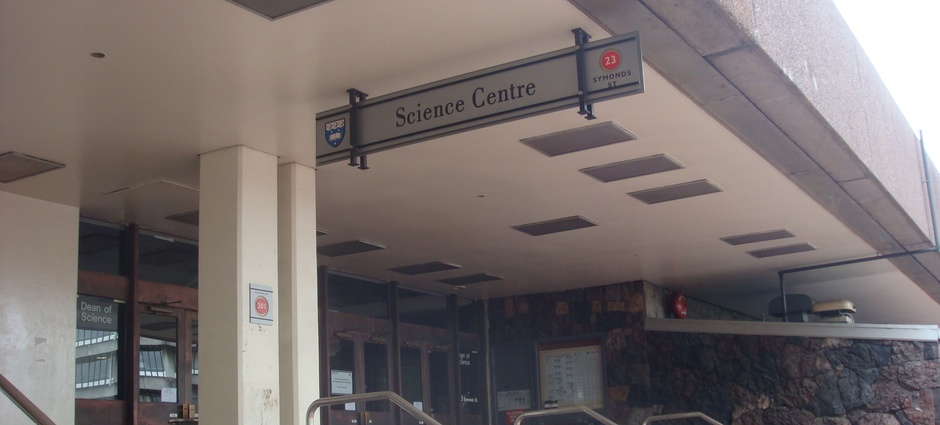
File photo: University of Auckland Science Centre entrance in 2008. Photo: Richard001 / Wikimedia Commons, public domain. Cropped.
University of Auckland researchers are testing an AI coach with 10 people who have type 2 diabetes, asking whether regular conversations and easier health tracking can help patients follow the care plans they set with their clinicians.
The three-month study will compare five people using the coach, called DiNa, with five using an existing diabetes-management tool, the university said Nov. 13. It has not reported clinical results from the trial.
The project addresses an everyday difficulty in diabetes care: people may know they need to eat differently, exercise and take medication, but keeping up those habits between appointments can be hard.
Dr Gonzalo Maso Talou, who leads the project at the Auckland Bioengineering Institute, said the aim is to help people follow their treatment plans, not cure diabetes or replace their healthcare team.
Less typing, more conversation
DiNa brings together meal records, medication tracking, smartphone activity information and readings from continuous glucose monitors, devices that track blood sugar.
Users can photograph a meal so the system can identify foods and estimate nutritional information. They can correct missing details by voice and record whether they have taken prescribed medicines.
The coach uses a voice-only interface. It can help someone work out when to exercise, discuss obstacles to a goal or adjust a plan when daily life interrupts it, according to the university.
Its health information comes from New Zealand diabetes resources selected with clinical partners. It directs users to healthcare professionals when they need clinical advice, the university said.
A small test, not proof of better health
The current trial is the first of three planned rounds, with larger studies scheduled for 2027. Its size and early stage mean it cannot yet establish whether the coach improves blood sugar control or long-term health.
An October study of an earlier DiNa prototype tested usability in 10 relatively young, healthy volunteers. That was a different group and a different question from testing the system in people with diabetes.
The researchers are also developing computer models of individual glucose responses, known as digital twins. They hope those models could eventually help people compare how meals or changes in activity might affect their blood sugar. The university described those uses as future goals, not demonstrated benefits of the current trial.
JBizNews Desk | New York
© JBizNews.com. All rights reserved. Unauthorized reproduction or redistribution is strictly prohibited.