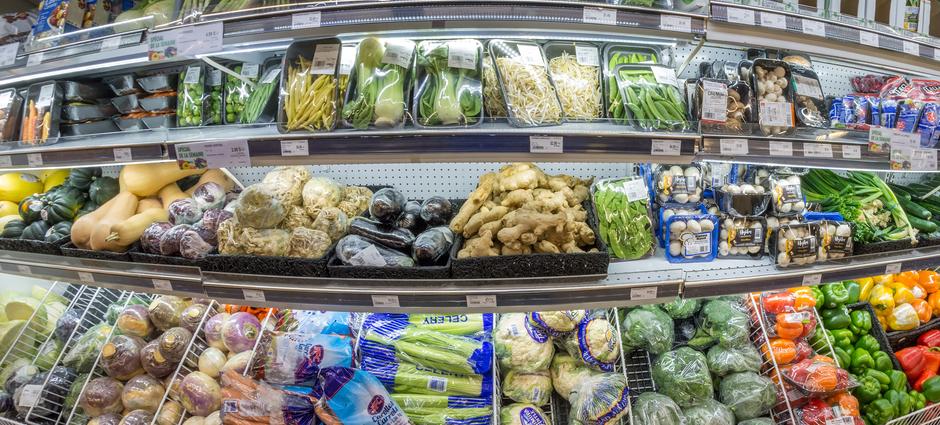
Produce shelves at L’Intermarché supermarket in Quebec City, February 12, 2019. File photo; shelf labels do not show current prices. Photo: Wilfredor / Wikimedia Commons, CC BY-SA 4.0. Cropped and resized; adapted image available under the same license.
Canada’s annual inflation rate held at 3.1% in October, as higher energy and grocery costs offset relief from cellphone plans and slower rent increases, Statistics Canada reported Monday, November 16.
The Consumer Price Index report released Nov. 16 showed the same year-over-year increase as September. Consumer prices rose 0.2% from September to October, both before and after seasonal adjustment. Excluding energy, annual inflation eased to 2.0% from 2.1%.
The unchanged headline rate masks different pressures on household budgets. Gasoline remained far more expensive than a year earlier, groceries accelerated after four months of slowing price growth, and clothing costs increased. At the same time, annual cellphone-service prices fell and rent grew more slowly.
Gasoline’s annual rise reflects a lower comparison point
Gasoline prices were 30.9% higher than in October 2025, up from September’s 27.8% annual increase. That does not mean drivers paid 30.9% more than the month before: gasoline prices actually fell 2.5% between September and October.
Statistics Canada attributed part of the faster annual increase to a base-year effect. Gasoline prices fell sharply in October 2025 as concerns about crude-oil oversupply weighed on the market. As that lower month becomes the comparison point, the annual increase looks larger even though prices fell in the latest month.
The agency said fuel prices remained elevated amid uncertainty surrounding conflicts in the Middle East and Ukraine.
Groceries accelerate while cellphone prices fall
Food purchased from stores rose 2.0% from a year earlier, compared with 1.7% in September. Fresh vegetables helped drive that acceleration, rising 1.4% after a 2.9% annual decline the previous month.
Grocery inflation nevertheless remained below the overall CPI rate for a third consecutive month. That slower rate does not reverse past increases: the agency said grocery prices were 31.9% higher than in October 2020.
Clothing prices rose 1.8% from a year earlier after falling 0.3% in September. They increased 3.4% on a monthly basis, the largest such rise since September 2019, coinciding with higher shipping costs.
Cellular-service prices fell 6.2% from a year earlier, another comparison affected by what happened in October 2025, when several providers raised plan prices. On a monthly basis, cellular services increased 0.6% in October 2026.
Costs still rise despite a steady inflation rate
Shelter costs rose 1.4% from a year earlier, while transportation increased 8.9%. National property taxes and other special charges, which are priced annually in October, rose 3.8%, less than the 5.6% increase recorded in 2025.
The report leaves annual headline inflation unchanged, rather than showing prices stopped rising. Households still faced a higher overall cost of the CPI basket than a year earlier, with energy creating a much different picture from the 2.0% rate measured when energy is excluded.
JBizNews Desk | Global
© JBizNews.com. All rights reserved for article text. Photograph and its cropped versions are licensed under CC BY-SA 4.0 as credited above. Unauthorized reproduction or redistribution of article text is strictly prohibited.