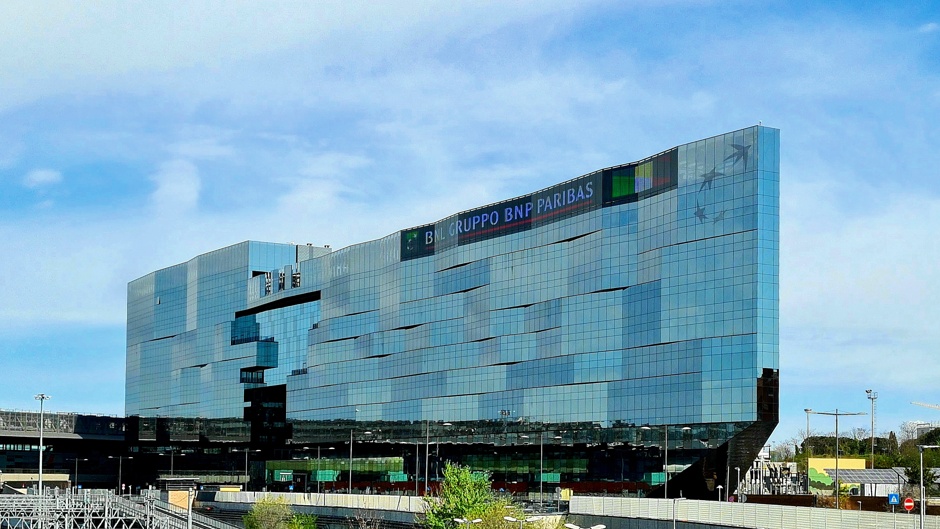
Archive BNL building in Rome, April 2023. Carlo Dani / Wikimedia Commons, CC BY-SA 4.0; resized. Photo adaptations remain under the same license.
BNP Paribas plans to shift its Italian bank BNL toward corporate banking, private banking and wealth management while retraining about 3,000 employees by 2030, as it seeks higher profitability from a more selective retail business.
The French banking group announced the roadmap Wednesday, November 18, targeting a pre-tax return on notional equity above 20% by 2030. That is a target for BNL, not a result already achieved or a forecast for the entire BNP Paribas group.
In its regulated company release, BNP Paribas said the plan would concentrate investment on businesses offering higher-value services to clients. BNL will draw on the group’s payments, transaction banking, investment and specialized-service platforms to deepen customer relationships.
More fees and wealth-management business
BNL aims to increase revenue by more than 3% a year on average between 2025 and 2030, with fee income growing about 4% annually. Assets under management are targeted to grow about 7% a year over the same period.
Revenue from cross-selling between BNL and other BNP Paribas businesses in Italy is expected to reach €2 billion by 2030, up 33% from 2025. That figure is a revenue goal, not a newly announced investment budget.
The bank aims to lower its cost-income ratio, which compares operating expenses with revenue, to 56% in 2030 from 61% in 2025. It plans to keep average annual cost growth below 1.5%, while risk-weighted assets are projected to decline about 0.5% a year.
Retraining and changes to the operating model
The roughly 3,000 employees scheduled for reskilling or additional training represent one-third of BNL’s workforce. The investor presentation describes moves into commercial roles or technology and data work. The number is not an announced layoff total.
The presentation also sets out plans for 2027-2030 to move head-office activities and processes to BNP Paribas centers of expertise, centralize work and hire young employees with targeted skills. Digital tools, artificial intelligence and automation are intended to improve efficiency alongside greater sharing of group resources.
BNL’s profitability measure, return on notional equity, compares annualized pre-tax net income with average allocated equity. It differs from a conventional after-tax return-on-equity figure. The roadmap’s revenue, cost and profitability figures remain forward-looking targets.
JBizNews Desk | Paris
© JBizNews.com. All rights reserved. Unauthorized reproduction or redistribution is strictly prohibited.