Penn State College of the Liberal Arts Jewish Studies Program hosted a speaker series lecture titled “Do We Need to Decolonize Holocaust Museums?” on Tuesday, which caused a wave of online condemnation. The event featured Dr. Erica Lehrer, a sociocultural anthropologist, historian, and curator from Concordia University in Montreal.
News of the lecture sparked outrage on social media, with users condemning the event. The online watchdog, Stop AntiSemitism, reacted to the lecture, saying, “These lunatics are now coming after Holocaust Museums… This is happening right now at Penn State!”
Chairman of the US Holocaust Memorial Council, Jeff Miller, said on X/Twitter, “At a time when antisemitism is surging, and Holocaust denial and distortion are spreading, it is absolutely disgraceful that Penn State is hosting a discussion about “decolonizing” Holocaust museums.”
At a time when antisemitism is surging and Holocaust denial and distortion are spreading, it is absolutely disgraceful that Penn State is hosting a discussion about “decolonizing” Holocaust museums. Six million Jews were systematically murdered by the Nazis and their collaborators. Holocaust museums exist to preserve that truth, honor the victims, and ensure future generations understand the deadly consequences of antisemitism. Penn State owes the public an explanation for why it believes this framing is appropriate. And every university in America should understand the responsibility it carries. Academic freedom must never become an excuse for Holocaust denial, historical distortion, or the normalization of antisemitism. We cannot combat the rising tide of antisemitism while allowing the historical truth of the Holocaust to be diminished or manipulated. Never Again must mean something.
— (((Jeff Miller))) (@JeffMillerCA2TX) November 18, 2026
In response to a request by The Jerusalem Post for comment and to elaborate further about the lecture’s content and her position, Dr. Lehrer said. “Most of the questions I am exploring relate to how Holocaust museums may learn from Indigenous innovations regarding more flexible ways to care for objects that keeps them connected to families and communities rather than only under glass, as evidence of crimes.”
“I am speaking as a person whose own mother’s family heirlooms were donated to a Holocaust museum. There are also questions, for example, about how both Jews and non-Jewish victims, such as Roma people, are in some instances represented in ways that are stereotypical and don’t express their full humanity.
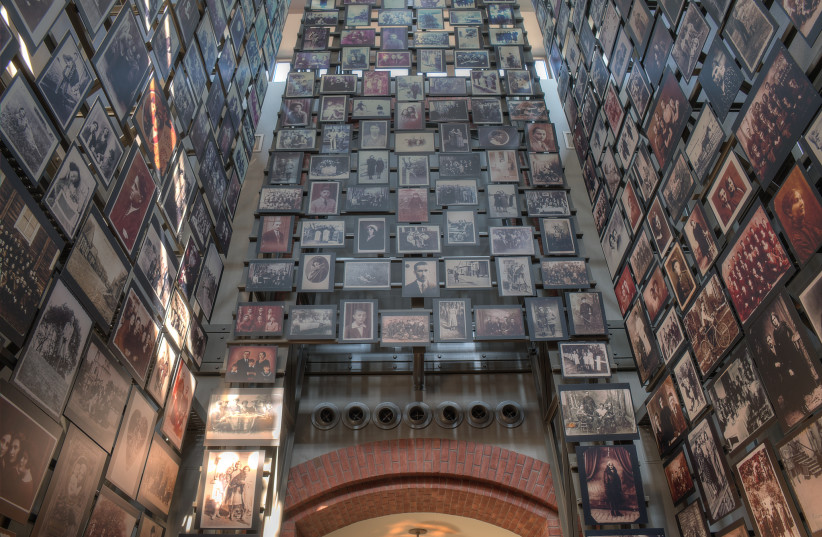
“I am not the only scholar to have raised such questions in the last decade. We ran a very well-received panel on this subject at the Lessons and Legacies Holocaust conference in Chicago this past weekend, and a forum on this topic with multiple scholars will be published next year in Canadian Jewish Studies,” Dr. Lehrer told the Post.
Penn State responds to backlash over Holocaust museum lecture, condemns antisemitism
A Penn State spokesperson said in a statement, “Penn State condemns all forms of antisemitism and is committed to making our Jewish students, faculty and staff feel safe, welcome and supported at Penn State. The presence of any speaker on campus in no way constitutes an endorsement by the University of the views being espoused. We understand the concerns regarding the external speaker’s use of the word ‘decolonization’ in the event’s title, and we recognize how hurtful it was to many in our community.”
“According to Tommaso M. Milani, director of the Jewish Studies Program at Penn State: ‘The term ‘decolonization’ in the context of museum collections explores the ethical questions concerning artifact collections, whose voices are represented in those collections, and how institutions can address historical injustices related to the acquisition and presentation of their collections. This presentation in particular examined questions regarding how museums care for objects taken from Jewish individuals and communities and the responsibilities institutions have when pieces on display were never returned to survivors or their descendants when their descendants asked for them. Importantly, neither the lecture nor the discussion diminished the significance of the Holocaust, the experiences of survivors, or the importance of Holocaust museums and memorials.’”
“Penn State will continue to prioritize our efforts to promote an inclusive, respectful and safe environment for all members of our University community,” the statement said.
Holocaust museum warns of implications of ‘decolonization’ terminology
The Holocaust Awareness Museum and Education Center (HAMEC), America’s first Holocaust museum in Pennsylvania, told The Jerusalem Post that the term “decolonizing” is not without implications. It carries particular assumptions and can suggest that the history being presented is inherently incomplete, biased, or in need of ideological correction. We should be thoughtful about the words and concepts presented to us and ask important questions: Why is this terminology being used? What is it suggesting? What is actually being proposed? And what might the implications of applying the same framework be for other areas of Jewish history, culture, and communal life?”
“We must also be careful not to allow the broader discussion of victimhood to obscure historical specificity. Millions of people were targeted and persecuted by the Nazis and their collaborators, but the Jewish people were specifically targeted for total annihilation. Acknowledging the persecution of other groups does not require us to blur that distinction or diminish the particular nature of the Holocaust as the genocide of European Jewry,” HAMEC told the Post.