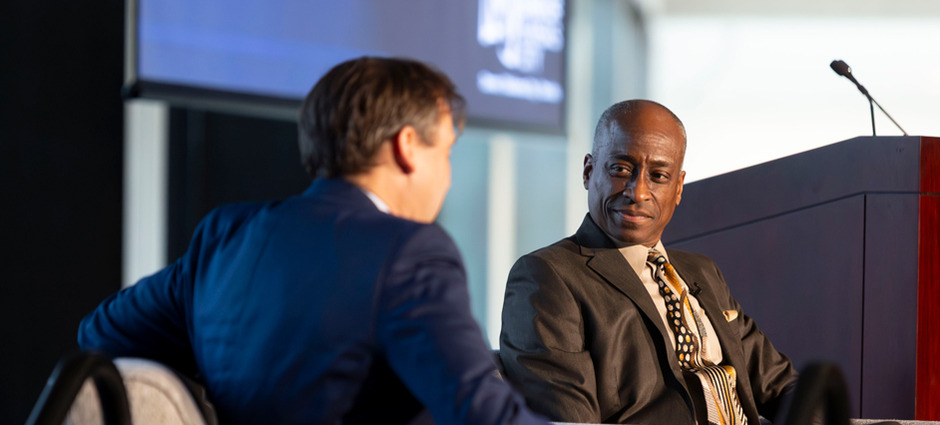
Archive 2025. Federal Reserve; public domain, cropped.
Federal Reserve Vice Chair Philip N. Jefferson said Thursday that the rapid buildout of artificial intelligence infrastructure is currently adding to demand and inflation pressures in the U.S. economy, while future productivity gains could help ease inflation.
“Currently, the AI buildout is exerting upward pressure on demand and inflation,” Jefferson said in prepared remarks for a panel at a conference hosted by the International Monetary Fund and the Central Bank of Brazil in Brasilia. “In the future, advancements in productivity could exert downward pressure on inflation while continuing to support growth.”
Jefferson described AI adoption as a shock hitting both sides of the economy on different schedules. On the demand side, he said, optimism about the technology is boosting business investment in data centers, advanced computing equipment and related products. On the supply side, AI is likely to automate some tasks and augment others, which could raise productivity and the economy’s potential growth rate over time.
He also flagged the labor market consequences. AI could displace some jobs, which he called “a meaningful challenge for affected households,” but he said AI could also create new jobs and new firms, as past technological breakthroughs have done.
Jefferson framed AI as one of several shocks policymakers must weigh simultaneously, alongside energy and trade. He said the recent rise in oil prices tied to the conflict in the Middle East pushes up inflation while weighing on real incomes and demand, a harder combination for central bankers because it pulls their two goals in opposite directions. When that shock arrived, he noted, U.S. inflation was already above the Fed’s 2 percent target. If inflation expectations risk becoming unanchored, a stronger policy reaction is warranted, he said; if price pressures stay contained, it may be prudent to prioritize downside risks to employment.
Jefferson did not address the timing of interest rate moves in the posted text, and he noted that the views were his own and not necessarily those of his colleagues on the Federal Open Market Committee.
JBizNews Desk | Brasilia
© JBizNews.com. All rights reserved. Unauthorized reproduction or redistribution is strictly prohibited.