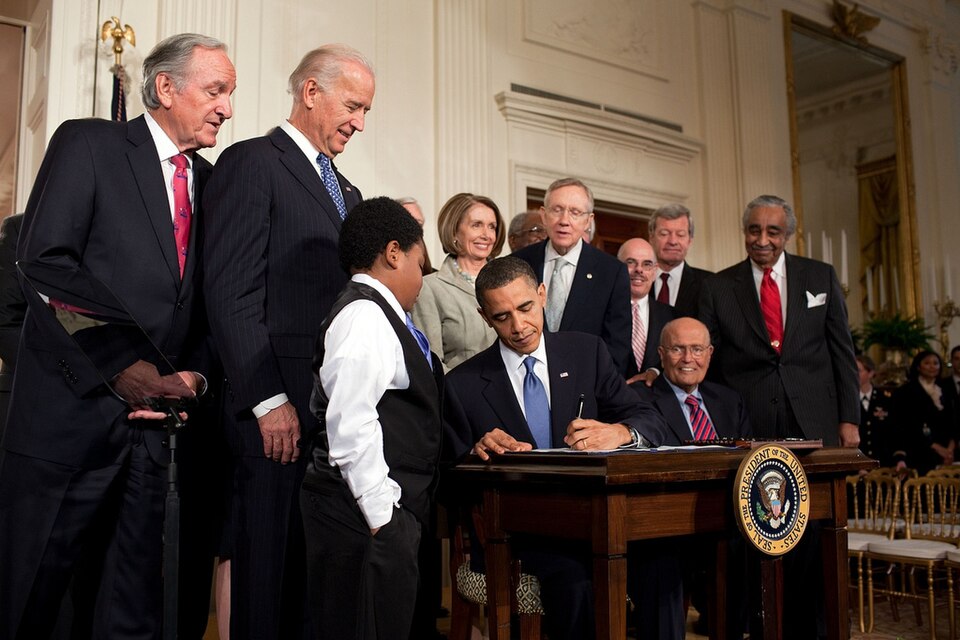
President Barack Obama signs the Affordable Care Act at the White House on March 23, 2010. Archive photo.
Photo: Pete Souza / White House / Wikimedia Commons. Public domain.
Benchmark silver premiums on Affordable Care Act insurance marketplaces will rise an average of 13% nationwide for 2027, according to a KFF analysis published Friday, as most states prepare to open enrollment Sunday, November 1.
That is an increase in the price of benchmark coverage before subsidies, not a forecast that every enrollee’s monthly bill will rise 13%. Most marketplace enrollees receive subsidies that cushion the impact, KFF said. Actual costs will vary by income, location and plan.
The finalized average benchmark increase is 11% in states using HealthCare.gov and 16% in states running their own enrollment platforms. The nationwide figure differs from the earlier 15% median increase insurers proposed: the measures cover different stages and are not interchangeable.
KFF based its analysis on HealthCare.gov, state rate-review websites, state plan-finder tools and data supplied by states. The findings concern benchmark silver premiums, rather than a single rate increase applying to every ACA plan.
Insurers cited faster growth in the underlying cost of medical care and the effects of enhanced premium tax credits expiring. KFF said insurers estimated that changes in the mix of people insured added about four percentage points to premiums on average in 2026 and expected a similar additional effect in 2027.
People with incomes above 400% of the federal poverty level are particularly exposed because they no longer qualify for federal premium tax credits and must pay the full cost of coverage, KFF said. Some state-run marketplaces offer additional assistance, but the support varies by state and income.
The increases follow a 26% rise in average benchmark premiums from 2025 to 2026. KFF warned that higher costs could prompt more healthy people to drop coverage, leaving a costlier pool of insured people.
Consumers also face changing plan choices. As of October 29, 11 insurers had announced plans to leave at least one state’s marketplace for 2027, while seven had announced entry into a new state, KFF said. Those changes vary by location and do not mean every state is losing insurers.
JBizNews Desk | Health Policy
© JBizNews.com. All rights reserved. Unauthorized reproduction or redistribution is strictly prohibited.