China has too much green energy. Experts think AI can fix that
Ever since the U.S.-Iran war choked the Strait of Hormuz, Asian importers have scrambled for new sources of oil and LNG to keep the lights on. Yet China’s energy companies are reckoning with an entirely different problem: They have too much power.
“China’s grid is a very strong and stable one,” Youyuan Huang, executive vice chairman of BTR New Material Group, the world’s top maker of battery anode materials, said at the Fortune Leaders Forum in Macau on Sept. 8. “But we’ve installed too much green energy.”
China will account for 60% of all installed renewable capacity through 2030, according to the International Energy Agency. In July, solar overtook coal as China’s largest source of installed power capacity. Daniel Liu, vice president of solar module giant Jinko Solar, said renewables effectively covered all of China’s electricity demand growth last year.
Yet production in the country’s clean energy sector has grown so much that there’s more energy infrastructure than the market needs.
Panelists at the Forum had an unlikely answer to the problem of energy overcapacity: AI.
AI, for one, requires a large and steady supply of energy. “[Energy] guarantees the safety and stability of computing power,” notes Huang. “With the development of GPUs, the power of a single chip has risen dramatically…This means that if the power drops, [large amounts of] data that’s being computed could be lost.”
Jiangxing Intelligence, a physical AI firm, has developed an AI ‘brain’ that monitors environmental conditions around renewable energy infrastructure to ensure electricity is collected and stored prudently. The ‘brain’ also controls a suite of autonomous robots, which help with the inspection and maintenance of solar panels and wind turbines.
“The supply of wind and solar energy is highly uncontrollable…at night there’s no sunlight, but during the day sunlight floods in,” said Haitian Pang, the founder and CEO of Jiangxing Intelligence. “With an intelligent brain that deeply understands the region’s physical and meteorological conditions, you can forecast wind and solar conditions, and then know what options you need for energy storage.”
Pang argued that such infrastructure will also help reduce reliance on manual labor, especially in remote areas. “When wind and sand bury the solar panels, for example, we can dispatch drones that automatically clean them with water,” he explained. “This way, the entire energy system can run more stably and efficiently.”
Greening Asia’s energy supply
Other parts of Asia are struggling to adopt renewable energy at the same pace as China. The archipelagic nature of parts of Southeast Asia, for example, makes building and maintaining a contiguous electricity grid difficult.
“The Philippines has more than 7,000 islands, while Indonesia has more than 10,000, so it remains to be seen how renewable energy can come into play alongside fossil fuels there,” Liu noted.
Huang also lamented Southeast Asia’s lack of clean and stable power, even as Chinese factories relocate to the region. “We have many investments in Indonesia, where many large-scale data centers are being built,” he said. “Yet most of them are powered by traditional energy sources like coal).
Liu added that India had made substantial progress towards adopting renewable energy, even though the country’s demand for coal remains high.
Still, panelists were optimistic that Asia’s energy transition is well underway. “I think a clean energy transition—including a lower-cost energy transition—will certainly remain a continuous pursuit for everyone,” said Pang.
“The narrative of energy transition differs across countries: for some it’s security, and for others it’s the future,” concluded Liu. “But they’re all actively embracing renewables.”
This story was originally featured on Fortune.com
Israel provided Saudi Arabia with intel. assistance as Houthi attacks on Riyadh’s assets continue
Israel and Saudi Arabia held talks mediated by US Central Command aimed at helping Riyadh defend itself against the Houthi military through intelligence assistance, Walla reported on Tuesday, citing diplomatic sources in the Middle East.
The Houthi military has intensified its attacks against the Saudi regime over the past week, including a drone attack on oil pipelines and pumping facilities that led to a partial shutdown of activity along the main pipeline. The Houthis also carried out an attack against Saudi civilians who were inside a mosque and nearby buildings not far from the Yemen-Saudi Arabia border.
At the same time, the Houthi military seized several strategically located islands along the Red Sea and barred Saudi vessels from passing through the Bab al-Mandab Strait, imposing what the sources described as an economic and diplomatic blockade on Saudi Arabia.
The security situation has raised significant concerns not only among the Saudis but also among other countries in the region, according to security sources. The concern is based on a scenario in which the US reaches understandings with Iran and the Houthis, leaving Saudi Arabia and other countries to face unresolved threats in the foreseeable future while remaining exposed to continued attacks.

Saudi Arabia, Israel hold talks to help Riyadh defend itself
Diplomatic sources in the region said Saudi Arabia and Israel held talks mediated by CENTCOM in order to help the Saudis protect themselves. The IDF has already demonstrated intelligence and operational capabilities in the maritime arena around the Strait of Hormuz, assisting the Americans in building layers of intelligence on the locations of Iranian forces.
The sources said the Saudi request for assistance was likely focused on intelligence support to build a broader picture of Houthi military deployments in the area and identify potential plans for future operations.
Notably, Bloomberg reported that Saudi Arabia also asked Britain for aid in both repelling the Houthis from the Bab al-Mandab Strait and helping defend against strikes on its oil infrastructure.
Burnham has agreed to send British military advisors to assist Saudi Arabia, Bloomberg reported, but had not yet committed to sending any additional aid.
Meanwhile, security officials said that US President Donald Trump’s decision to allow Saudi Arabia to develop a civilian nuclear program has caused significant concern within Israel’s security establishment, as Saudi Arabia is a country rich in energy resources and is located within 15 km. of Israel.
The issue was raised with Trump, who quickly linked any progress on the civilian nuclear issue to the normalization of relations between Saudi Arabia and Israel. The Saudis, for their part, want to advance a diplomatic process with Israel following a resolution of the Israeli-Palestinian conflict.
Israel and Saudi Arabia share several security interests regardless of normalization, and there is optimism that a roadmap can soon be presented under which the sides would reach a diplomatic agreement. The agreement is viewed as highly important, particularly amid growing threats in the Middle East that highlight the urgent need to establish priorities.
Tzvi Jasper contributed to this report.

The American Dream isn’t what you think it is
A question has gripped economists studying inequality since at least 2011, when Occupy Wall Street split the country into the 1% and the 99%: who is actually wealthy in the U.S, and how did they get that way?
In 2014, Eric Zwick, Owen Zidar and Danny Yagan set out to find an answer. They weren’t the tenure-track economics faculty they are today (at the University of Chicago, Princeton University and UC-Berkeley, respectively) and all they had was a hunch and a key to the Treasury Department. Planet Money reported that they called themselves the “tax ninjas,” but they were essentially glorified interns: Zwick was living in his sister’s attic in Washington D.C. and going to work in the Treasury Department’s basement, where the ninjas attacked a trove of individual tax records that most academics never get to see.
The problem for economists had always been that the Internal Revenue Service kept individual tax returns and business filings in separate systems that had never been linked—there was no way to connect a company’s profits to the specific person who owned it and collected them. Zwick and Zidar spent months essentially making the two databases talk to each other. When they finished, Zwick told Fortune, he was stunned.
When they made a table of total profits from pass-through firms for people in the top 1%, doctors were near the top, and so were auto dealers. “I’m like, this is not Jeff Bezos. This is not Stephen Schwarzman.” The American Dream still exists, in other words, but it isn’t the Wall Street billionaires or tech overlords who are mostly realizing it. It’s the everywhere millionaires all around you that you don’t even think about.
Hence the title of Zwick and Zidar’s new book, The Everywhere Millionaire: Who is Really Rich in America and How They Got There. When I asked Zwick if he ever saw the classic high-school sports show Friday Night Lights, his eyes lit up as he named the local auto dealer who bankrolled the local Texas football team: “It’s the Buddy Garrity millionaire! It’s like, meet the real Buddy Garrity.” The book defines this class of millionaire as someone with at least $5 million in net worth who owns a single closely held operating business that generates most of their income. Their research found roughly 3 million of these in the U.S., concentrated not in Manhattan or Palo Alto but in mid-sized metros that rarely generate pitchforks in the press. They collectively hold 13 times the wealth of the entire Forbes 400, Zwick estimates. Put another way: for every member of the Forbes list, there are more than 4,000 private business owners who each have a net worth of at least $10 million.
The book’s favorite example is Dick Portillo, the Chicago food kingpin who opened a hot dog stand in 1963 having never cooked one before—and built the Midwest’s largest privately owned restaurant company by 2014—plus a 130-foot yacht he named Top Dog. Then there’s Karen Bentlage, who dropped out of Central Connecticut State University and built the nation’s second-largest tanning-bed distributor before reinvesting the proceeds into a regional waxing-salon franchise. The everywhere millionaires include a lot of dentists and beverage distributors, too, collecting profits through partnership structures that don’t appear in any billionaire index and rarely get a mention in political campaigns or cable television.

One of the book’s more unsettling arguments is that the everywhere millionaire essentially runs American politics: pass-through business owners make up roughly a quarter of federal elected officials and about 40% of state legislators, compared with 2% to 3% of the general population, Zwick estimates. The implication is that the American system of inequality works the way it does because the everywhere millionaires who dominate Congress are keeping the system that made them wealthy exactly the way it is.
It’s a bipartisan issue, Zwick adds, noting “a bit more evidence [that] maybe the Republican elected officials are a bit more likely to come from this class than the Democrats. [But] there are a lot of Democrats, too.” He pointed to a provision from the most recent tax bill, which let clean-energy vehicle credits lapse while making a 2017 pass-through deduction permanent: “That benefits the auto dealers, many of whom are on the tax-writing committee of Congress.” He argued that Americans and the media are usually having the wrong conversation about wealth. “Where the power comes to make policy happen—it’s much more diffuse, and I think we’re not quite focused on it in the right way as a society.”
Zwick said he sees similarities between his and Zidar’s research and historian Patrick Wyman’s theory of the “American Gentry,” the “salt-of-the-earth millionaires” that far outnumber the coastal elites typically thought of as America’s true aristocracy. Zwick said Wyman is more polemical in connecting these elites to the rise of Donald Trump, but the idea is certainly “very resonant” and he and Zidar essentially have the receipts.
When asked what made this cultural change possible, Zwick and Zidar point to a very clear turning point, decades in the past, long before the rise of Donald Trump.
Unintended consequences
During Ronald Reagan’s acting career, he limited how many films he’d make in a given year—earn too much, and the top individual tax bracket meant that he’d keep as little as 9 cents of every additional dollar. That experience shaped the tax-cutting instinct he carried into the White House in 1981, when the top individual rate stood at 70% and the corporate rate at 46%.
Reagan found an unlikely ally in Bill Bradley, the former New York Knicks star turned Democratic senator from New Jersey, who was partnering with House Rep. Dick Gephardt to simplify the code by stripping out the loopholes and write-offs that mostly benefited the wealthy. Reagan and supply-side Republicans like former Buffalo Bills star Jack Kemp wanted lower rates across the board. The compromise was the Tax Reform Act of 1986, the biggest overhaul of the federal tax code in over three decades and, at the time, a rare bipartisan triumph. But it didn’t just cut the top individual rate down to 28% and the corporate rate to 34%—it also sweetened the tax treatment of partnerships, S-corporations and sole proprietorships, whose profits would pass directly to an owner’s individual return instead of being taxed twice, once at the corporate level and again as dividends. A new American Dream was being born.
Before 1986, C-corporations produced almost all business income in the U.S., but today, Zwick and Zidar found 95% of American businesses are pass-throughs. They employ half the country’s workers and generate the majority of business income. Almost by accident, the 1986 reform moved America’s business wealth onto the individual tax returns of the people who owned it. “Tax reform created the idea linking business owners to their businesses,” Zwick and Zidar write in the book, “bringing the stealthy wealthy into view for the first time.” It just took another 26 years, and two grad students in a Treasury department, for anyone to find it.
When asked about Gen Z’s turn toward crypto, prediction markets and retail trading—what’s sometimes called “financial nihilism”—Zwick agreed that one takeaway from his book is certainly that the traditional path to success in America is obsolete. “Get a salary, a job and just work your way up within a company—[that] is not the path,” he said. But the operators in his data didn’t get rich by rolling the dice, he points out. There’s a “move slow and make things” strategy visible in stories like Portillo’s, who ran a hot dog stand himself for decades, long before it became an empire. The real key is owning the business and working so much that work-life balance essentially doesn’t exist. “He, like, never stopped making hot dogs.”
Paul Osterman, professor emeritus at MIT Sloan, has a book out that is something like the flipside of the everywhere millionaire thesis. Disposable Workers: The Transformation of Employment, the latest in Osterman’s long-running career examining the labor market, draws on a survey of more than 6,000 American adults and nearly 100 interviews with workers, employers and staffing agency professionals. A stunning 35% of the U.S. workforce, he found, falls into the category of what he calls “disposable” work—freelancers, contractors, gig workers and a category he calls “marginal workers”: W-2 employees hired with the implicit understanding that they won’t be around for long.
Osterman traces this back to the Reagan era, but not specifically to the 1986 tax reform. Reagan’s famous 1981 firing of striking air traffic controllers was a sign of “open season on post-World War II employment systems,” he told Fortune. For whatever reason, he said, employers “do not invest in the great bulk of their workforce” in the way that they used to.
When presented with Osterman’s findings, Zwick called them “very interesting” and agreed that the post-1986 tax code leaves employers with a much higher burden for salaried/wage-rate workers than other types of employees, which has “caused activity to leak out of the salaried worker bucket.” It discourages W-2 employment, he said, since contractors can structure their work for lowered tax rates and avoid the payroll tax by building their own pass-through entities.
Katlin Smith and Bakari Akil both found themselves on the outside looking in, at earlier points in their careers, when they decided to become everywhere millionaires.
Owning as the new American Dream
Neither Akil nor Smith fits Zwick’s definition to a T—he owns a small portfolio, she has already sold hers. But both got rich the way his data says most do now: by owning something outright, not by being paid to run someone else’s thing.
Smith didn’t set out to get rich, but rather, to fix a problem she had herself. In 2012, while working as a management consultant at Deloitte and essentially living out of her suitcase, she went looking for a snack that wasn’t unhealthy. A friend suggested that she clean up her diet, and she flashed back to her biology and business double major. She said she has a “scientist’s brain,” so she thought, “‘”Oh cool, an experiment, let’s give it a try.”

Her experiment became Simple Mills, the snack brand that she built from nothing, bringing almond-flour crackers to a market near you. Like Portillo, who ended up selling to a private equity firm, Smith brought in a sponsor, Vestar Capital Partners, to scale the business and later exited to Flowers Foods for $795 million in January 2025.
Smith told Fortune that she’s still involved with Simple Mills in a founder-and-advisory role, and her status has enabled her to push for personal passions, like a “non-UPF” verification for Simple Mills’ products, developed with the Non-GMO Project to flag how heavily processed a food actually is, not just what’s in it. Bringing more non-ultra-processed foods to market is “near and dear to my heart,” she said, even though she doesn’t want to make herself the face of any kind of movement. “I honestly really don’t love being a public example,” she said, adding that she would like to dedicate more time to philanthropy.
Akil left Morehouse College in 2011 without finishing his degree and spent roughly two years afterward homeless, as he previously told the Wall Street Journal. He still remembers sleeping some nights in La Guardia Airport, where they’d let him stay on a bench if he was discreet and appeared to be waiting for a flight. At 25, he got a job at the startup Justworks and realized he wanted to be on the other side of the glass. “How did this happen to me?” he told Fortune about his state of mind at the time. “How do you get rich?”
He said he always assumed that being smart and hardworking was supposed to be enough on its own, and when it wasn’t, he spent close to a year reading everything he could about wealth-building. “The entire society was set up to help business owners be successful and employees to live a good life,” he said, adding that people who don’t own anything are “going to stay middle class and [that life] will be very precarious.”

Akil said he kept seeing the letters “LBO” (for leveraged buyout) and kept digging, eventually finding a Harvard Business School paper on “early-career” acquisitions. When he learned Columbia was about to teach it, he dropped everything to get into that class. “That’s how I learned to buy a company,” he said. He sensed a major wave developing as baby boomer everywhere millionaires started retiring. “It’s almost like an American imperative for people to look at these businesses,” he said. If the next generation chases startups instead of buying what boomers have left behind, “that’s an existential threat to the middle class.”
Other entrepreneurs are building a business off the act of businesses’ being sold. Chat Joglekar, a former Zillow employee, co-founded Baton, a marketplace for listing and buying small businesses. McKinsey estimates that 6 million small businesses, worth roughly $5 trillion, will need to change hands over the next decade as Baby Boomer owners age out, and fewer than one in three has a documented exit plan. “The whole adage in this market is that supply doesn’t realize their supply,” Joglekar told Fortune in a recent interview. Baton has published free valuations for 2 million U.S. companies and found that fewer than one in 10 owners can name their own company’s value within 10% of its market value. “It’s almost like you’re arming the rebels,” he said of his realization that knowledge is power.
For his part, Zwick insists the book is not a polemic, and he resists the fatalism embedded in many accounts of American wealth and inequality. “I feel like saying the American Dream is not dead,” he said, “even if it’s less healthy than maybe it once was.”
This story was originally featured on Fortune.com
Trump’s ‘largest deregulatory action ever’ in the power sector will keep old coal plants online longer to fuel the AI boom
The biggest immediate impact of the Trump administration rolling back Biden-era emissions standards on power plants is it will keep more old coal and gas-fired plants viable for longer to help provide additional energy for data centers and the AI boom, experts said.
The U.S. Environmental Protection Agency (EPA) said Monday it finalized the repeal of emission-reduction mandates for power plants that were intended to combat climate change. The announcement came shortly after the National Oceanic and Atmospheric Administration announced that the 2026 summer was the warmest in U.S. history—about 3 degrees Fahrenheit above average.
Trump’s EPA said Monday that “emissions from power plants have no material impact on global climate change.” Environmental critics called that assertion a lie, arguing the rollback will cause thousands of unnecessary deaths from pollution and trigger many billions of dollars in additional health care costs.
But there is an argument that this strikes a balance between climate and the economy—“step back in order to take two steps forward,” said Dan Romito, managing director at Opportune overseeing sustainability. While renewable power can continue to expand, the energy sector is on the verge of leaps in cleaner, next-gen nuclear power and geothermal energy.
“It’s a Band-Aid for a lot of these data centers to figure out how to get replacement or complementary power,” Romito told Fortune. “We need a little bit of a stopgap here. It’s not an ideal choice. But coal can fill that bill for three, four, maybe five years. And that will allow the market to efficiently incorporate geothermal and nuclear solutions into the mix.”
In the meantime, the AI race is continuing, power projects are being announced without many getting off the starting line, and congressional permitting reform to expedite power—both clean and fossil fuel—appears unlikely to come to fruition this year. So something had to give, Romito argued. “This power is not going to magically come out of nowhere. You’re going to have to keep coal-fired power plants and gas-fired power plants online longer, not necessarily to fulfill the anticipated demand, but to meet what demand is currently today,” he said. “And you just can’t throw affordability and reliability out the window.”
The idea is this also will provide more certainty to hyperscalers that they can move forward. “It relieves a lot of the anxiety and the investor apprehension to invest in new modernized plants that are probably much more efficient as it relates to emissions,” Romito said, arguing that new gas-fired coal plants would be much cleaner than old coal plants.
The fight ahead
The 2024 Biden carbon standards for power plants aimed to require plants to either cut or use emissions technology to capture 90% of their climate pollution. In addition to undoing those standards, Trump’s EPA also is proposing to roll back its authority to regulate climate pollution from power plants, arguing that the EPA is not legally allowed to combat climate change. If successful, this could prevent future administrations from being able to regulate these emissions.
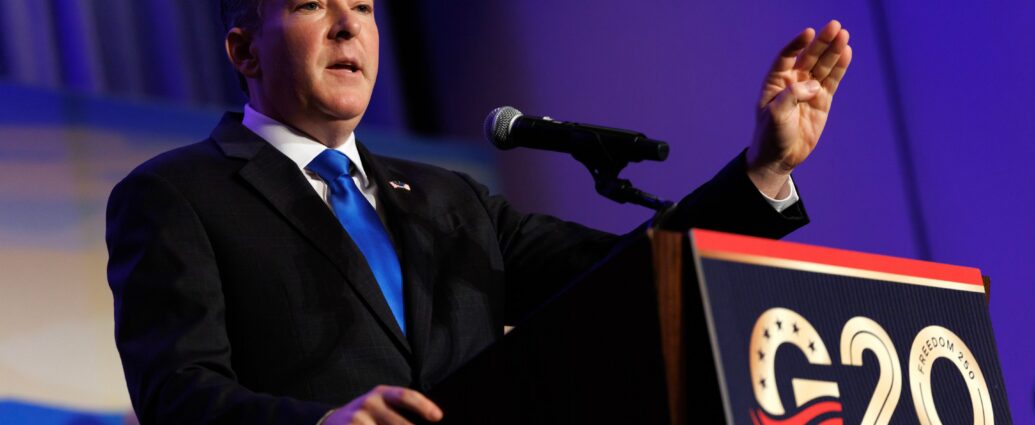
“We are cutting the red tape to deliver the largest power sector deregulatory action ever,” said EPA Administrator Lee Zeldin on Monday at the G20 energy ministerial in Houston.
“But we aren’t just stopping with the Biden administration’s overreach,” he added. “We also are proposing to rescind all remaining greenhouse gas emissions standards for power plants—all of them.”
Environmentalists called the Trump administration’s actions incredibly damaging.
“While wildfires rage, floods devastate communities, and families struggle to afford skyrocketing electricity bills and insurance premiums, the Trump administration is handing the fossil fuel industry a license to keep polluting,” said Sierra Club chief program officer Holly Bender. “This is full-throated climate denial while the climate crisis happens in real time and a shocking betrayal of the American public.”
Fossil fuel power plants are responsible for almost 25% of the nation’s total climate pollution, second only to the transportation sector. Early this year, the EPA overturned its own so-called endangerment finding from 2009, which determined that that carbon dioxide and other planet-warming gases are a threat to public health. The EPA also repealed ruled regulating emissions from motor vehicles.
The Trump administration contends the federal Clean Air Act does not specifically mention climate change and that the EPA should have no authority to regulate it, arguing that the “climate radicalism” of the Biden and Obama administrations were bad for business and energy affordability. Legal challenges are inevitable, just as with the earlier vehicle rollback.
“If you have a problem with the law, change the law,” Zeldin said.
“Will more data centers be using coal? That’s not something the EPA is going to dictate,” Zeldin added. “What we are going to make sure is that we’re following the law, that we are empowering that choice, and that we’re making sure the smartest decisions are made to unleash energy dominance in this country in every form.”
This story was originally featured on Fortune.com
Hong Kong Set To Unveil First Five-Year Plan
Russian frigate fires flares at NATO member Denmark’s military helicopter in international waters
A Russian frigate on Monday fired two flares towards a Danish military helicopter in international waters off the coast of Denmark, narrowly missing the aircraft, the Nordic NATO member country’s military said in a statement.
The helicopter had been on a routine mission to photograph the Russian frigate, the Danish defense command said.
Flares are pyrotechnics usually used as a warning signal at sea, it added.
Denmark will summon Russia’s Copenhagen ambassador to a meeting over the incident, Defense Minister Jeppe Bruus told broadcaster TV2 separately.
The Russian embassy did not immediately respond to a request for comment outside of regular office hours.

NATO allies engage with Russian drones, operations
NATO fighter jets shot down a drone that entered Lithuanian airspace from Belarus early on Tuesday morning, Lithuanian authorities said.
“A drone the just entered Lithuanian airspace was destroyed by NATO fighter jets,” Lithuanian President Gitanas Nauseda said in a post on X/Twitter. “I thank Allied personnel for their swift response.”
A drone that just entered Lithuanian airspace was destroyed by NATO fighter jets. I thank Allied personnel for their swift response.
With Russia intensifying its aggression against Ukraine, such readiness is vital for our region. Together with our NATO Allies, Lithuania will…
— Gitanas Nausėda (@GitanasNauseda) September 14, 2026
“With Russia intensifying its aggression against Ukraine, such readiness is vital for our region. Together with our NATO allies, Lithuania will defend its airspace.”
On September 10, NATO allies caught Russian submersibles training to unleash a secret weapon designed to disable critical undersea cables without leaving any fingerprints.
A joint operation involving Britain, Norway and the United States tracked and confronted the Russian vessels at sea, the two officials said, speaking to Reuters on condition of anonymity. The vessels were prevented from completing their exercise and eventually left the area.
This comes as Western intelligence fears that the Kremlin is preparing for a conflict with NATO, Reuters reported.
Bill Gates: Anti-vaccine attitudes in rich countries makes herd immunity for measles impossible
Vaccine hesitancy in rich countries means ending measles as a global public health threat is not currently possible, Bill Gates told Reuters in an interview.
The Microsoft co-founder turned billionaire philanthropist said wiping out the killer childhood disease had previously been a potential goal for his eponymous foundation, which focuses on global health and the world’s poorest people.
But it was now off the table due to increased vaccine hesitancy in wealthier nations, part of a wave of skepticism championed for decades by the now health secretary in the United States under President Donald Trump, Robert F. Kennedy Jr.
“At one point, the foundation wanted to eradicate measles, but the vaccine hesitancy in rich countries has meant that’s not on our list of goals,” Gates said. “I think that’s kind of tragic.”
Measles cases rise internationally
Measles, among the world’s most contagious diseases, causes a high fever, a cough and a tell-tale rash.

The virus killed around 2 million children every year before the introduction of a vaccine in the 1960s. Nowadays, around 100,000 children die annually, largely in countries where conflict or logistics make immunization difficult. The WHO says vaccination rates need to be above 95% to prevent outbreaks.
But recent years have also seen a surge in cases in countries where the disease was almost forgotten, including in the US and Europe, as vaccination rates have fallen.
Gates said that vaccine hesitancy had at least not spread to lower-income countries, where measles can be much deadlier than in richer countries due to malnutrition and healthcare gaps.
“There’s always that concern that if you have doubters in the US, that becomes a global thing,” he said. “But we haven’t seen an increase in vaccine hesitancy in the countries the foundation works in.”
Aid cuts led by Trump administration
Gates was speaking ahead of the foundation’s annual Goalkeepers event, which looks at progress towards the United Nations global development goals set for 2030, including on improving health.
In last year’s report, Gates warned of the impact of aid cuts led by Trump’s administration, and followed by other wealthy countries like the UK and Germany, on the health of the world’s poorest.
This year, he said the cuts had likely caused many deaths, but the restoration of some money had prevented the worst-case scenario. Efforts from impacted countries and other health groups also held off disaster, as Reuters has reported.
“The most dire predictions, which went above 10 million deaths, we don’t see that taking place,” Gates said, adding that he continued to urge governments to restore aid or at least not cut it further. “It’s still a very tragic situation.”
In loss for Trump, US Supreme Court won’t let Postal Service restrict mail ballots
The US Supreme Court declined on Monday to let the US Postal Service enforce a rule targeting mail-in ballots, dealing a setback to President Donald Trump’s effort to restrict voting by mail ahead of November’s midterm elections that will determine control of Congress.
The justices denied the Justice Department’s request to lift a ruling by Boston-based US District Judge Indira Talwani that blocked the Postal Service from enforcing the measure while legal challenges by states and voting-rights groups proceed. The agency adopted the measure after Trump issued a March executive order aimed at tightening rules governing mail voting.
“The government is unlikely to succeed on the merits of its challenge to the District Court’s preliminary injunction,” the court said in its brief, one-paragraph order.
Justice Samuel Alito, joined by fellow conservative Justice Clarence Thomas, dissented from Monday’s decision. No other justice dissented publicly. The court has a 6-3 conservative majority.
Trump’s fellow Republicans are locked in a tight battle to retain control of Congress in the midterms. Restricting mail-in ballots would stand to benefit Republicans given that Democratic voters disproportionately use mail-in ballots, according to various surveys.

Under the rule, states would have to provide lists of mail ballot recipients to the Postal Service and use agency-approved outbound and return ballot mail envelopes outfitted with unique barcodes. The Postal Service could then refuse to send out ballots that do not comply with the new standards or are associated with voters who do not appear on the lists.
Critics have said the plan could disrupt the delivery of thousands of legitimate ballots as the November 3 vote approaches and cause chaos given imminent plans by many states to send out mail ballots to eligible voters. The administration has said the new rule will prevent voter fraud, though evidence of such fraud is rare.
Talwani imposed an injunction on September 4 blocking the rule, finding that it likely violated the US Constitution, under which states administer elections. Talwani also said it would be impossible for the states to comply given the rapidly approaching midterms.
Another federal judge, Washington, DC-based US District Judge Carl Nichols, also ruled against the rule on Sunday.
Trump administration is ‘testing limits of its power’
Sophia Lin Lakin, voting rights project director at the American Civil Liberties Union, which helped to represent some of the challengers to the USPS rule, welcomed Monday’s decision.
“This administration keeps testing the limits of its power, as if the rules governing our elections are merely suggestions to ignore when they don’t suit the president’s agenda. But the Constitution gives states and Congress the power to set the rules for federal elections – not the president, and not the Postal Service,” she said.
“Today is a good day for democracy, the rule of law and the American people looking to exercise their constitutional right to vote,” said California Governor Gavin Newsom, whose state led one of the lawsuits against the rule.
“Trump’s attacks on democracy these last 20 months have been nothing short of un-American,” Newsom added.
Trump signed his executive order targeting mail-in ballots after years of casting doubt on their security, though he often votes by mail himself. Trump has made false claims of widespread fraud in US elections including his 2020 loss to former Democratic President Joe Biden.
The administration in a September 6 emergency request urged the Supreme Court to allow it to implement an “important federal policy to protect the mails from being used to commit voter fraud.”
Conservative Justice Brett Kavanaugh, in a concurring statement on Monday, said there is a “fair prospect” that the rule falls within the Postal Service’s authority, but state and local election officials “do not have sufficient time to reasonably implement the rule” before the 2026 elections.
In his dissent, Alito likened some of the challengers’ claims to a “Hail Mary pass” that is “unlikely to be successfully completed,” using a football analogy.
“The Postal Service has broad authority to regulate the mail,” Alito added.
States challenged the rule
A coalition of states, most of them Democratic-governed, and Washington, DC, as well as a number of voting-rights groups, challenged the new USPS rule.
The Boston-based 1st US Circuit Court of Appeals refused last Thursday to put Talwani’s order on hold. The 1st Circuit said that the rule “will likely result in the disenfranchisement of millions of voters across the country while providing minimal – if any – gains in combating voter fraud.”
The battle over mail ballots is one in a series of efforts by the administration to boost federal involvement in voting ahead of the midterms. On August 24, the Supreme Court lifted an earlier injunction imposed by Talwani in June blocking Trump’s executive order, including the USPS rule before it had been finalized.
Human factor still key: Nvidia, Palantir share results of first AI-managed critical supply chain
Nvidia and Palantir announced on Thursday that they will incorporate an artificial intelligence model into the control of their critical supply chains, giving the automated system decision-making power.
“Nvidia has arguably the most valuable, intricate, and complex supply chain in the world. Our sovereign stack, powered by Nemotron models and Ontology, is delivering capabilities that exceed the frontier while providing alpha protection qualities unavailable otherwise,” said Alex Karp, cofounder and CEO of Palantir Technologies.
The deployment, according to the companies, will allow for “unprecedented supply chain visibility, identify constraints, continuously codify operational expertise and guide decisions at machine speed.”
The system will be first implemented in Nvidia’s supply chain, which spans millions of parts, thousands of suppliers, and a global network of manufacturing partners, with the objective of unifying every team worldwide into one operating system that improves their efficiency.
“Supply chains are the operating system of the physical economy, and AI factories are among the most complex systems ever built,” said Jensen Huang, founder and CEO of Nvidia. “From wafers and components to manufacturing, systems and customer delivery, hundreds of companies and trillions of dollars of global economic activity come together to deliver AI infrastructure. NVIDIA and Palantir are transforming this vast operational graph into sovereign intelligence.”

The human side is still key for the system
Even if Nvidia reported that planners improved their numbers when using the new model, it also said human employees still provided key insights that weren’t possible to get using only an AI system.
According to the company, emails exchanged with partners that week, severe weather in the forecast for a key region, an ongoing geopolitical event, or understanding the transcript from the last supplier debrief call were factors the AI struggled to incorporate when working across the entire supply chain.
The company explained that those inputs were better implemented by human instinct created by years of work rather than by the mathematical algorithm that guided the system, while the AI had an important role in working around the repetitive and predictable tasks.
The company concluded that the best implementation would help workers spend less time reconstructing routine decisions so they could focus on unpredictable situations.
Additionally, the Nvidia explained that the model was only going to train according to insights provided by the workers, with no changes made during production while managing a supply chain.
Israel Nature and Parks Authority seeks public help after dolphin washes ashore in Tel Aviv
The Israel Nature and Parks Authority asked the public on Tuesday to help locate a dolphin that washed ashore at Jerusalem Beach in Tel Aviv after civilians returned it to the sea earlier in the morning.
“In the morning, a dolphin was seen after washing ashore in the city of Tel Aviv-Jaffa (Jerusalem Beach), and was returned to the water by well-intentioned civilians,” the authority said in an update.
“Due to concern that the dolphin is injured and needs help, the Israel Nature and Parks Authority asks that if you encounter the dolphin in question, do not return it to the water. Call the Israel Nature and Parks Authority hotline at *3639 and wait beside it until the professional team arrives so that it can be taken for treatment.”
This is a developing story.
US officials prepare for chaos amid concerns Trump will try use federal power to swing midterms
Two months before Americans vote in midterm elections that could reshape the balance of power in Washington, local and state officials across the country are rehearsing for a crisis that once seemed unthinkable:
What if the US president tries to use the power of the federal government to tilt the vote his way?
In California, officials have gamed out what would happen if US President Donald Trump dispatches federal agents to polling places, intimidating voters and suppressing turnout.
In Michigan, state officials are advising local clerks how to respond if the federal government demands access to voting machines.
And coast to coast, election officials are bracing for legal battles over everything from ballot seizures to voter-fraud investigations.

Reuters interviewed more than 50 state and local election officials from both political parties, including a dozen secretaries of state, the top election officials in their states. Nearly all said they are adopting new strategies to prepare for political interference, misinformation, cyber attacks and even threats of violence ahead of the midterms. Their efforts span jurisdictions large and small, in areas controlled by Trump’s Republican Party as well as the opposition Democratic Party.
White House dismisses concerns of federal interference in midterms
The preparations reflect growing alarm among state and local officials that the biggest threat to November’s elections might come not from foreign meddling or technical failures, but from the Trump administration itself, as the president seeks to expand the federal government’s role in elections, an area long overseen by states and localities.
The White House has dismissed concerns that federal actions could disrupt the midterms, arguing that the administration is enforcing election laws and safeguarding confidence in voting. It blamed Democrats for what it described as widespread voting by noncitizens, despite scant evidence to support those claims. A Reuters investigation published in July and independent studies have found that voting by noncitizens is extraordinarily rare and unlikely to affect election outcomes.
“The distrust in our elections is caused by extreme Democrats,” said White House spokesperson Lauren Bis. The Trump administration has good reason for pursuing allegations of voter fraud “despite the media and Democrats denying it for decades,” she added.
Yet Trump has openly portrayed many of his election-related initiatives as ways to help Republicans win.
Under the US Constitution, elections are administered by states and localities, not the president. However, Trump has urged Republicans to “nationalize” voting in at least 15 places, directed federal law enforcement to pursue debunked voter-fraud claims and sought to restrict mail-in balloting. His administration has also launched probes of election officials and offices in Wisconsin, Georgia and elsewhere.
His push to redraw congressional maps before the midterms sparked a nationwide redistricting battle that’s expected to give Republicans a net advantage in House races. He has sued states that refused to provide federal agencies with confidential voter data, including birthdates, driver’s license numbers and partial Social Security numbers, and gutted programs designed to thwart cyber attacks and foreign interference. At the Republican Party’s midterm convention in Dallas last week, he urged supporters to “cheat like hell” and vote whether they’re “registered or not” in the upcoming midterms.
“Election officials are concerned about the role the federal government is going to play,” said Bill Gates, a Republican lawyer and former official in Maricopa County, Arizona, who now advises and trains election officials around the country. The mood, he said, is one of “apprehension,” rather than the close cooperation that once characterized election cycles.
More than a dozen local and state election officials said they are hiring outside lawyers or seeking legal training for themselves and their staff to prepare for potential demands by the administration for access to sensitive voting records or election equipment.
Nearly twice that many said they are expanding public outreach and social media campaigns to counter misinformation, including the false claims made by Trump and Republican allies that voting machines are unreliable and mail-in voting is inherently corrupt.
And most said they are scrambling to fill gaps left by the Trump administration’s cuts to programs that help safeguard elections from cyber attacks and physical security threats. That includes ongoing work to fortify election offices with camera systems and bulletproof glass – a trend that began after Trump disputed his loss to Joe Biden in the 2020 election, igniting waves of violent threats by Trump supporters against election workers.
The administration’s election rhetoric could prove to be mere bluster, said David Becker, a former voting-rights lawyer for the US Justice Department who now runs the Center for Election Innovation and Research, a group that works to build confidence in elections. Courts have repeatedly rejected the administration’s efforts to change mail-in ballot rules and obtain confidential voter rolls from states that refused its demands. Other actions, such as sending armed agents to polling sites, would likely be illegal and risk political backlash, Becker added.
But with control of Congress potentially hinging on a small number of races, many election officials say they cannot assume such guardrails will hold. The stakes are enormous: A Republican loss of one or both chambers would end the governing trifecta that has enabled much of Trump’s agenda, opening the door to aggressive Democratic oversight of him and new obstacles to his legislative and judicial priorities.
Subpoenas, warrants, private attorneys
Election officials are planning for a wide range of scenarios, particularly in battleground states and Democratic strongholds targeted by Trump’s false election-fraud claims. Any disputed result, they say, could trigger federal investigations, courtroom battles, and even civil unrest.
Wisconsin offers insight into those preparations.
In Dane County, home to Wisconsin’s capital, county attorneys have begun drafting court filings to fight any attempt by the Trump administration to seize voting equipment or election records, and they are preparing for the possibility that federal immigration agents could appear at polling places, said the Democratic county clerk, Scott McDonell.
“It’s going to be a matter of speed,” McDonell said of any legal response. The county is also preparing for possible protests over disputed results.
He said January’s FBI raid on election operations in Georgia’s Fulton County was a wake-up call, convincing him that the Trump administration could try to intervene.
Dana Barrett, a Fulton County commissioner, told Reuters the raid exposed a vulnerability few local governments had anticipated. After federal agents seized about 650 boxes of 2020 election records as part of an investigation into voter-fraud allegations previously rejected by courts and audits, the county rushed to hire outside counsel and sued to recover the records. “The only thing that would have been nice is if we had already had those people on board,” said Barrett, a Democrat. “But how could you know?”
The county, Georgia’s most populous and a Democratic stronghold, lost that legal fight in May, when a federal judge ruled prosecutors could retain the records while their investigation continues.
Wisconsin faces similar pressure. In May, FBI agents sought to question at least eight current and former Milwaukee city and county employees about the 2020 election. Trump’s loss in the state had spurred him and his allies to sue the state’s two largest Democratic-leaning counties, Milwaukee and Dane, in unsuccessful cases alleging voter fraud. Almost immediately after the FBI visits – some of them to people’s homes – Milwaukee city and county leaders moved to secure legal representation.
The FBI declined to comment on its election-related work.
Milwaukee County retained the Democracy Defenders Fund, a legal nonprofit that has battled the Trump administration in Fulton County and a number of other places. The city separately hired two firms, the Washington Litigation Group and the Public Rights Project, to represent current and former city employees.
Legal groups are providing their services free of charge in the city and county of Milwaukee and in states including California, New Mexico and Pennsylvania. In some jurisdictions, including Fulton County, election offices and individual officials have hired private lawyers at their own expense.
In Michigan, a pivotal state in the fight for control of the US Senate, the Democratic secretary of state’s office has consulted private attorneys about defending local election officials against potential federal scrutiny. The Trump administration has threatened to investigate at least one Democratic-led county in the state over alleged voter fraud in the 2024 election, despite producing no evidence of significant irregularities.
“We’re prepared,” Michigan Deputy Secretary of State Aghogho Edevbie told Reuters. He said his office has advised local election officials on how to respond if federal authorities seek access to voting records or equipment. “We do have counsel on standby for any local election official that needs it.”
Some are seeking training on how a federal investigation might play out.
In March, nearly two dozen election officials and local attorneys gathered at a Miami Beach hotel for training by two former senior Justice Department officials – one appointed during a Republican administration, the other during a Democratic one. The training explained the mechanics of federal investigations, including how to distinguish different types of warrants and subpoenas – and how to challenge them in court.
According to six participants, they reviewed a redacted copy of the search warrant used in the Trump administration’s January raid in Fulton County to better understand what agents could seize and how they could be challenged.
“Most of us aren’t even familiar with this stuff,” said Chris Walker, clerk of Jackson County, Oregon, a jurisdiction of 220,000 residents that voted for Democrat Barack Obama in 2008 but backed Trump in the last three presidential elections. A federal raid like the one in Georgia would be a “nightmare scenario,” she said after attending the training.
Natalie Adona, who runs elections in Marin County, California, a heavily Democratic county north of San Francisco, said the seizure of 650,000 ballots by a far-right, pro-Trump California sheriff this year convinced her to prepare for the worst. The seizure remains tied up in court. State officials and voting-rights groups say the sheriff, Chad Bianco of Riverside County, lacked authority to take the ballots and was pursuing unfounded fraud allegations. In a statement, Bianco said the seizure was lawful.
Adona’s office hosted training on search warrants, subpoenas and questioning by federal agents. She and her team also participated in a drill on how to respond if US Immigration and Customs Enforcement agents appeared at a polling place. “I’m just trying to do my job,” said Adona, who is not registered with any political party.
In May, Trump refused to rule out sending ICE agents or the military to polling places. Such a move would likely trigger legal challenges under a federal law that generally prohibits armed federal deployments at election sites. At his March confirmation hearing, Homeland Security Secretary Markwayne Mullin dismissed concerns that immigration agents could intimidate naturalized citizens and other legal voters.
“There shouldn’t be illegals at the polling spot,” he said, and any officers sent to polling places would be there to combat potential threats, “not for intimidation.”
In a statement, a DHS spokesperson said “ICE is not planning operations targeting polling locations,” but noted that the agency could make arrests at polling places if an active public-safety threat emerges.
The Supreme Court blocked Trump’s mail voting plan on Monday from taking effect before November’s elections. But the legal battle still forced election officials to prepare for disruptions that could have affected millions of voters.
Trump and his allies have spent years portraying mail voting as vulnerable to fraud despite a lack of evidence of widespread abuse. Trump himself has voted by mail in recent elections in his home state of Florida.
Under the plan, states would have been required to provide the US Postal Service with lists of mail-ballot recipients and use USPS-approved ballot envelopes, allowing the Postal Service to reject ballots that do not meet the new requirements. Before the Supreme Court blocked the plan, a Postal Service whistleblower warned Congress it could wrongly delay or reject thousands of legal ballots.
The USPS has said it will follow court rulings regarding the plan.
In Philadelphia, officials had contingency plans in place in case the plan went ahead, including satellite election offices where voters can pick up ballots, said Seth Bluestein, a Republican on the Philadelphia Board of Elections. “We’ve worked with our city solicitor to have a plan in place for how to respond.”
Panic buttons and a handgun
Election officials say years of false election-fraud claims have raised the threat of harassment and violence, prompting a wave of security upgrades across the country.
Derek Bowens is elections director in Durham County, North Carolina, a heavily Democratic area in a state with a pivotal US Senate race. He said he is acquiring his first firearm to protect himself and his family.
“My perspective has changed,” said Bowens, who was appointed to the nonpartisan role in 2017. “I’m very conscious now of my surroundings. I tend to go home immediately after work. I don’t spend a lot of time outside of the house.”
Since moving into a new building before the 2024 presidential election, his office has added ballistic doors, bulletproof glass, panic buttons and armed guards. The mailroom has a dedicated exhaust system to remove hazardous fumes from contaminated packages. It’s also stocked with Narcan, a nasal spray used to reverse opioid overdoses in the event of accidental exposure to tainted mail.
The chief election coordinator at each of Durham County’s 68 polling places will carry a tracker-equipped badge that can summon law enforcement to their precise location with the press of a button. The county adopted the badges after the 2024 primary election, when a man entered a polling place after voting had ended and threatened to “vote with a bullet” if he couldn’t cast a ballot.
Durham County is among at least a dozen jurisdictions where election officials told Reuters they’re fortifying their offices. The measures include shatter-resistant window film, barriers to prevent vehicles from ramming buildings, surveillance systems and motion sensors to monitor voting equipment and ballot storage areas. Several jurisdictions have arranged security escorts for late-working staff.
In Detroit, a predominantly Black Democratic stronghold, City Clerk Janice Winfrey now has around-the-clock police protection after receiving death threats following Trump’s false fraud claims in 2020. The city’s 36 absentee-ballot drop boxes are monitored by police through a network of surveillance cameras. And every window in election headquarters has been replaced with bulletproof glass.
“I long for the days when elections were just boring,” said Winfrey. “It absolutely makes me sad that this is what democracy has come to.”
It isn’t just Democratic locales that are preparing. In Irwin County, Georgia, a Republican area that voted overwhelmingly for Trump in 2024, Election Supervisor Ethan Compton is giving two poll workers at each precinct panic buttons. The devices can transmit a photo and GPS coordinates to election headquarters, the sheriff’s office and 911 emergency-call centers. Many poll workers are elderly, Compton said, like “somebody’s grandmother,” and the devices “give them peace of mind.”
Getting the word out: AI has made lies cheaper, easier to create
Election officials say one of the biggest threats may be a battle over reality itself.
Falsehoods about rigged elections, compromised voting machines and voter fraud can ricochet online long before officials can respond, fueled by social media, partisan influencers and increasingly sophisticated AI tools.
The scenarios they fear are multiplying: a convincing video appears to show an election worker destroying ballots; AI chatbots amplify fabricated news stories; or text messages falsely tell voters that polling places have moved or voting machines have been compromised.
AI has made falsehoods cheaper to create, harder to spot and easier to spread. Election officials increasingly view combating misinformation as a defining challenge of the midterms. The falsehoods can come from either party, though it was Trump’s debunked claims of rigged voting machines and widespread voter fraud that spread widely online during the last election cycle.
When Bobbie Gross became clerk of Mesa County, Colorado, in 2023, she inherited a crisis of public trust. Her predecessor, Tina Peters, had allowed pro-Trump election-fraud conspiracy theorists to access county voting equipment after the 2020 election and was later convicted on felony charges after sensitive machine data was posted online.
At sentencing, a state judge said Peters had caused “immeasurable damage” to confidence in elections. Peters was released by Colorado’s Democratic governor in June. Peters has argued she was preserving election records and should not have been prosecuted.
Gross, a Republican, responded to the crisis with an aggressive campaign. She invited skeptics, activist groups and students to observe elections in person, used social media to explain every stage of the voting process and hired a technology firm to post ballot images online so voters could inspect them for themselves.
Confidence in local elections has “gotten significantly better,” she said, though some voters remain convinced the system is rigged.
Cybersecurity holes
For years, election officials relied on Washington for help defending elections from foreign governments. Now many say that support is fading.
Election officials remain concerned about influence operations linked to Russia, China and Iran. Election-security researchers say those countries have sought to meddle in past US elections, though all three governments deny doing so. Here, too, many officials say Trump is making matters worse.
One of their most important partners was the US Cybersecurity and Infrastructure Security Agency, or CISA. The agency, set up by Trump during his first term, tracked foreign influence campaigns, shared intelligence on emerging cyber threats and warned state and local officials when false information or malicious cyber activity appeared designed to undermine an election.
But CISA angered Trump in 2020 when its director declared that year’s presidential election secure. Within weeks of Trump’s return to office in 2025, his administration dismantled much of CISA’s infrastructure. CISA cut nearly 1,000 workers, about 30% of its total staff, and stopped funding a platform that shared real-time intelligence and analysis on election cyber threats with states.
The impact was almost immediate.
In a February 2025 email, CISA’s regional director told New England secretaries of state that staff assigned to election security had been placed on administrative leave pending a review of the agency’s mission. Those employees included some who ran efforts to counter disinformation and foreign influence operations. Reuters received the email through a public-records request.
Election officials from both parties said they were losing a critical source of expertise. In a March 2025 letter to the homeland security secretary, Pennsylvania’s Republican Secretary of State Al Schmidt warned of “serious consequences” from scaling back CISA’s election-security work. He cited a 2024 case in which federal agencies quickly debunked a fabricated video falsely depicting an election worker destroying ballots. Counties would struggle to replicate that kind of forensic analysis on their own, Schmidt said.
In a statement, a CISA spokesperson said the agency “remains fully equipped and prepared to address any national security cyber threats that face our nation” and “is stronger than ever.”
Some election officials, however, are now building their own defenses.
In Maine, another state with a crucial US Senate race, Democratic Secretary of State Shenna Bellows said states are forging new partnerships with one another, nonprofits and private-sector cybersecurity groups to compensate for cuts in federal support. After CISA funding dried up last year, Maine expanded its reliance on private cybersecurity specialists, she said.
But the loss of federal cybersecurity support leaves many local offices exposed to threats they cannot handle alone, said Joseph Kirk, the election supervisor in heavily Republican Bartow County, Georgia.
“My IT director’s great,” Kirk said. “But he can’t fight a nation-state. It takes a nation-state to fight a nation-state.”
European Parliament to screen ‘The Bibi Files’ ahead of Israel’s 2026 Knesset election
The documentary film The Bibi Files, one of the most widely discussed works made in recent years about Prime Minister Benjamin Netanyahu, will be screened inside the European Parliament in Brussels on September 29, exactly four weeks before Israel’s elections.
The film is based in part on footage from Netanyahu’s police interrogations, whose publication has previously been the subject of a legal battle by Netanyahu and requires court approval for visual and audio release in Israel. At the Brussels screening, members of the European Parliament and their assistants will view the material during the Israeli election campaign.
According to an invitation circulated ahead of the event, the screening will begin at 6 p.m., followed by a discussion featuring the film’s director, Alexis Bloom, and Italian journalist Giulia Innocenzi, who is involved in distributing the film in Italy. Attendance is subject to available seating. Organizers clarified that advance registration does not guarantee entry and that they will send participation confirmations separately.
M5S Europa, the European Parliament delegation of Italy’s Five Star Movement, initiated the event. The screening is not an official European Parliament event and does not represent the Parliament or the European Union.

What are the film’s claims against Netanyahu?
The Bibi Files, released in 2024, was directed by Bloom and produced, among others, by Oscar winner Alex Gibney and Israeli journalist Raviv Drucker. The original filming for the documentary was carried out by Avner Shahaf, and a significant portion of the film is based on footage recorded by police during investigations into the Netanyahu cases between 2016 and 2018.
According to the film’s creators, Gibney received a database containing more than 1,000 hours of interrogation materials in 2023 from an anonymous source through the Signal application. The identity of the leaker has not been revealed.
The materials include footage from the interrogations of Benjamin Netanyahu, his wife Sara, his son Yair, and other individuals questioned in the cases. Bloom said she worked for an extended period with a Hebrew-speaking editor to sort, synchronize, and decipher the materials.
The film shows Netanyahu in the interrogation room being questioned, among other issues, about receiving gifts from businessmen, including cigars and champagne, as well as his relationships with wealthy individuals and media organizations.
Alongside the police footage, the documentary includes interviews with people closely familiar with Netanyahu and the system around him, including former aide and state witness Nir Hefetz, former Shin Bet director Ami Ayalon, former prime minister Ehud Olmert, Drucker, and others.
The film is explicitly critical of Netanyahu and uses the leaked interrogation materials to present a sharp political interpretation of his years in power.
Bloom and Gibney expand the discussion beyond the corruption cases known as Case 1000, Case 2000 and Case 4000, linking Netanyahu’s struggle over his legal and political future to a series of major developments in Israel in recent years, including the political alliances he formed, the judicial reform effort and the conduct of his governments during wartime.
Notably, the documentary is the filmmakers’ opinions on the situation and has not been established as a finding in the ongoing legal proceedings against Netanyahu.
The prime minister denies the charges against him and has repeatedly argued that the cases against him are the result of political persecution and selective enforcement.

AXA Targets More Growth With New Targets
CENTCOM denies reported oil tanker explosion following mine collision in Hormuz
An oil tanker exploded and caught fire after colliding with mines in the Strait of Hormuz, Iran’s IRGC said on Monday, according to Fars, without saying when the incident occurred.
According to Iranian state media Fars, the tanker was identified as the El Gaia, a ship flying under the Panamanian flag.
United States Central Command (CENTCOM) denied the report that a collision caused the explosion, instead stating that the ship had actually been struck by an Iranian missile last month and had recently been struck again by an Iranian drone.
CENTCOM stated that the ship is currently being towed by a regional partner.
“The IRGC’s false claim is yet another example of their lies and intimidation attempts while they try to impede commercial vessels in the strait,” CENTCOM wrote in a post on X/Twitter.

Reports of an attack on the El Gaia first emerged on Sunday, with the Indian Ministry of External Affairs releasing a statement condemning the attack and saying that of the 14 Indian crew aboard, 13 had been rescued, while search and rescue operations for the missing individual were ongoing.
“Our Embassy in Oman is closely monitoring the situation and proactively coordinating with the Omani authorities,” the statement read.
Trump claimed all mines in Hormuz were destroyed
This comes weeks after US President Donald Trump announced that all mines in the Strait of Hormuz had been removed or destroyed.
“All mines have been removed and/or detonated from within the International Waters of the Strait of Hormuz,” Trump wrote.
Jerusalem Post Staff contributed to this report


DOGE cancelled a $349,000 grant to replace a museum’s HVAC after ChatGPT flagged it as DEI, court documents show
The Trump administration’s efforts to slash diversity, equity, and inclusion (DEI) initiatives left another acronym on the chopping block: one museum’s $350,000 grant to replace its heating, ventilation, and air conditioning (HVAC) system.
Court documents from a recent lawsuit reveal the Trump administration’s Department of Government Efficiency (DOGE) slashed more than $100 million in projected funding distributed by the National Endowment for the Humanities (NEH), about half the agency’s yearly budget, on the basis of projects relating to DEI. DOGE employees tasked with overseeing the cuts, Justin Fox and Nate Cavanaugh, used ChatGPT to determine if proposals pertained to DEI efforts, filings show.
The American Council of Learned Societies, the American Historical Association, the Modern Language Association, and the Authors Guild filed a joint motion earlier this month arguing DOGE violated First Amendment rights and the Constitution’s equal protection clause by cuts made through illegal control of the NEH. Cancelling grants and funding on the basis of DEI constitutes discrimination on the basis of race, ethnicity, gender, and other qualities, the organizations claimed.
A spreadsheet presented by the plaintiff as evidence, shows a list of prompts Fox and Cavanaugh asked ChatGPT to determine if grants were DEI-related.
“Does the following relate at all to DEI? Respond factually in less than 120 characters. Begin with ‘Yes.’ or ‘No.’ followed by a brief explanation. Do not use ‘this initiative’ or ‘this description’ in your response,” the prompts begin.
Among the grants cancelled was a request by the High Point Museum, a history museum in North Carolina, for $349,000 to replace an aging HVAC system to “create a better preservation environment for the varied collections it houses,” according to the proposal contained in the spreadsheet. New equipment, the proposal said, could ensure long-term viability of making its collections accessible, and would be more energy-efficient. ChatGPT flagged it is “#DEI” in its response to the prompt.
“Yes. Improving HVAC systems enhances preservation conditions for collections, aligning with the goal of providing greater access to diverse audiences. #DEI,” ChatGPT responded, according to the spreadsheet.
According to Edith Brady, High Point Museum director, the museum received the grant and began the project, but it was later terminated.
“We were able to recoup about 70% of the original award through the grant termination clause,” she told Fortune in an email.
The White House did not respond to Fortune’s request for comment.
DOGE’s offensive on DEI
The massive funding cuts were part of the Trump administration’s broader efforts to cull government-backed, DEI-related projectsI. On President Donald Trump’s first day of his second term, he signed an executive order banning diversity initiatives, following up in March 2025 with another proclamation targeting funding for programs his claims advance “improper ideology” and “divisive narratives.”
DOGE, created as a special advisory and not an official agency on Trump’s inauguration day, was tasked with enforcing these efforts. The group’s de-facto leader, Tesla CEO Elon Musk, was tasked with identifying and cancelling contracts collectively worth billions of dollars. The cuts, which Musk said amounted to $200 billion, included 29 DEI training grants through the Department of Education totalling $101 million DOGE claimed. In April 2025, the Pentagon, under Defense Secretary Pete Hegseth, purged nearly 400 books from the U.S. Naval Academy library that it claimed related to DEI.
Musk left DOGE at the end of May 2025, following the end of his 130-day stint as a special government employee. According to Office of Personnel Management director Scott Kupor, DOGE ceased to exist as a “centralized entity” as of November 2025.
These sweeping cancellations extended to NEH funding. Of the 1,163 grant proposals DOGE analyzed via ChatGPT for DEI-related content, 1,057 were flagged, and just 42 were kept.
NEH cuts appeared to go beyond DEI
Some of the cancelled grants appear to have little to do explicitly with DEI. ChatGPT appeared to flag a project on literary agents and the corporate structure of the publishing industry as DEI, as well as a center for AI ethics, including for research on “AI-based technologies for eldercare,” and a project to collect resources on the history of Italian-American immigrants.
According to the spreadsheet, 11 grants ChatGPT analyzed related to installing updated HVAC equipment, but just two, including the High Point Museum proposal, were flagged as DEI. The second, asking for funding to improve building infrastructure of the Shelburne Museum in Vermont to address climate change, was flagged as DEI for “addressing environmental sustainability in cultural heritage preservation.”
Michael McDonald, acting chairman of the NEH appointed by the Trump administration, appeared to indicate the cuts went beyond DEI. In an email included in court filings, McDonald wrote to to DOGE staffer Fox that many of the projects on the chopping block were “harmless when it comes to promoting DEI.”
“But you have also told us that in addition to canceling projects because they may promote DEI ideology, the DOGE Team also wishes to cancel funding to assist deficit reduction,” he said. “Either way, as you’ve made clear, it’s your decision on whether to discontinue funding any of the projects on this list.”
McDonald did not immediately respond to Fortune’s request for comment.
But the outcome of these cuts may have had little impact on the federal deficit DOGE set out to reduce. Cavanaugh, one of the DOGE staffers tasked with overseeing these cuts, said in deposition pertaining to the recent lawsuit the advisory failed to slash the government’s budget gap.
“Did you reduce the federal deficit?” the attorney asked.
“No, we didn’t,” Cavanaugh said.
This story was originally featured on Fortune.com
Mahmoud Khalil sues Columbia University for alleged failure to protect pro-Palestinian students
Mahmoud Khalil and other pro-Palestinian student activists sued Columbia University on Monday, accusing the Ivy League school of being deliberately indifferent to years of pervasive harassment because of their advocacy.
Khalil became a face of the Trump administration crackdown on students’ pro-Palestinian protests after US immigration agents arrested him in March 2025 in the lobby of his university residence, though he was a lawful permanent resident – or green card holder – and not accused of a crime.
The complaint filed in Manhattan federal court by Khalil, the SIPA Palestine Working Group, and its president, Mohammad Zubairi, said Columbia violated federal civil rights law through its failure to protect students from threats, doxxing, and other harassment based on their perceived Arab or Muslim ancestry, or their advocacy for Palestinian rights.
The war in Gaza still sparks fierce debate at schools including Columbia, where the central pedestrian walkway across campus has been closed for nearly three years as the university tries to balance safety concerns against the desire for greater normalcy and openness.
At a press conference at Columbia announcing the lawsuit, Khalil said the university exhibited a “rotten, institutionalized anti-Palestinian bigotry” entrenched in every department and backed by its board of trustees.

“We are suing because no student, regardless of their background, should go through the hell that Columbia put us through over all these years,” Khalil said.
Khalil claims to have reported harassment to Columbia prior to October 7
Columbia declined to comment on the lawsuit, but a spokeswoman said: “Creating a campus environment where every member of our community feels welcome, supported, and safe is fundamental to who we are as a university. It is also a responsibility we take seriously.”
Khalil said he began reporting harassment during the spring semester in 2023, several months before Israel went to war in Gaza.
The complaint said that instead of investigating reported harassment, Columbia treated pro-Palestinian protests as “security risks” and revised its policies to treat any on-campus criticism of Israel’s military or government conduct as subject to discipline.
“Defendants’ failure to respond to Mr. Khalil’s, Mr. Zubairi’s, and other PWG members’ legitimate reports of ongoing harassment and violence, and the retaliatory actions they actively took in response to these reports, placed PWG members at risk of violence and caused sustained, ongoing harm,” the complaint said.
The protests at Columbia divided the university, with many supporting the protesters and others saying they felt unsafe or considered some activity antisemitic.
They led to the spread of so-called solidarity encampments on dozens of college campuses, and to the resignation of Columbia’s president.
Khalil misses birth of first child due to arrest by Trump administration
Khalil is an Algerian citizen born in a Palestinian refugee camp in Syria.
He spent 104 days in a Louisiana jail following his arrest, missing the birth of his first child, before being released on bail.
Khalil still faces possible deportation, after a federal appeals court in Philadelphia said a district court judge lacked jurisdiction when he ordered Khalil’s release from custody last year.
SIPA is short for Columbia’s School of International and Public Affairs, where Khalil had been a graduate student.
Khalil also sued Columbia in March 2025, less than one week after his arrest, challenging the university’s disclosure of student disciplinary records to a House of Representatives committee.
Trusting your audience: What NAZA could learn from Fauda’s latest season – editorial
Two Israeli productions arrived before global audiences within days of each other, both shaped by the trauma of October 7. Yet they approach Israel’s reckoning very differently. The fifth season of Fauda, now streaming worldwide, turns revenge inward and forces its Israeli characters to confront its cost. NAZA, the Venice Prize-winning documentary by Yuval Abraham and Rachel Szor, takes a different direction. Its argument appears settled before its evidence is weighed.
Israeli self-criticism has never been absent from Israeli culture. Fauda itself is proof. The series has spent years showing Israeli operatives as brave, impulsive, traumatized, and sometimes disastrously wrong. Season five goes further. Its central theme is blood revenge, born from the October 7 massacre, and the story refuses to offer revenge as closure. The characters pursue it, suffer for it, and discover how little comfort it provides. Their pain is real, yet the series still allows the audience to question what to do with it.
Trusting the viewers enough to leave judgement open
Serious art can expose wounds without pretending that one moral interpretation explains every decision made under fire. It can look directly at Palestinian suffering, Israeli leadership failures, and the brutality that war produces, while preserving context, uncertainty, and human agency. Fauda has never required viewers to believe every Israeli action is justified. It trusts them enough to leave judgment open.
NAZA asks for a different kind of trust. The film is built around interviews with 24 Israeli soldiers and intelligence personnel whose identities are concealed. They make grave allegations about targeting decisions in Gaza, including claims that mass civilian deaths were knowingly built into military operations. Those allegations deserve examination. They also demand exceptional scrutiny. The IDF has categorically rejected them, arguing that the anonymous speakers’ identities and military roles cannot be verified.
Anonymity does not invalidate testimony, especially when whistleblowers fear professional or legal consequences. It does, however, place a heavier burden on filmmakers making claims of extraordinary scale. Viewers cannot assess the sources’ rank, access to information, direct involvement, or possible motives. When a documentary presents testimony under those conditions, its framing becomes even more consequential. NAZA’s public presentation leaves little sense that the central proposition remains contested.

Treating disputed testimony as a final judgment
The response in Venice only sharpens that concern. NAZA received a lengthy standing ovation and won the Special Jury Prize on Saturday. Festival applause can measure emotional force, artistic admiration, or political sympathy. It cannot verify an allegation. Yet the danger is that the prestige surrounding the film will allow audiences far removed from the operational realities of Gaza to treat disputed testimony as a final judgment on Israeli conduct.
Abraham has already spoken in precisely such moral terms. After the award, he referred to crimes committed by Israel and argued that outside pressure would be needed for accountability. The filmmakers are entitled to reach harsh conclusions. Audiences are equally entitled to ask whether the film genuinely tests those conclusions or mainly assembles testimony that confirms them. A documentary carrying accusations of systematic mass killing should invite scrutiny at least as intense as the scrutiny of Israel it demands.
Culture Minister Miki Zohar’s threat to seek the filmmakers’ citizenship revocation does not strengthen that scrutiny. It weakens Israel’s argument by replacing a factual dispute with a loyalty test. The proper response to disputed claims is to challenge methodology, expose omissions, publish evidence, and demand precision. If NAZA’s case is flawed, the flaws should be demonstrated in public. Israel gains nothing by making the filmmakers themselves the issue.
Fauda offers the more confident model. Its creators rewrote the season after October 7 because reality had overtaken the story they planned to tell. They did not respond by turning Israelis into saints. They gave their characters grief, rage, helplessness, and an appetite for revenge; then allowed those impulses to carry consequences. The result is recognizably Israeli because it refuses the luxury of simplicity.
Israeli artists should challenge the country they come from, especially after a war that has left Israelis and Palestinians carrying immense loss. The standard should remain intellectual honesty even when it unsettles ideological comfort. Fauda’s power lies in asking what vengeance does to the people who pursue it and letting the answer remain painful and unsettled. NAZA arrives with far more sweeping claims and far less visible uncertainty. When art begins with a verdict, audiences should be especially careful before mistaking conviction for proof.
Trains to run on special schedule ahead of Yom Kippur, Israel Railways announces
Trains will operate on a special schedule during Yom Kippur, Israel Railways announced on Monday.
On the eve of the holiday, Sunday, September 20, trains will run on an increased schedule until 13:00 p.m.
During this period, Israel Railways will run two trains between Haifa and Tel Aviv per hour instead of the usual one.
After 13:00 p.m. on Monday, all train traffic will cease until Tuesday, September 22.
Israel Railways specified that certain trains overnight between Monday and Tuesday would run as normal.

Gush Dan metro trains technically capable of operating on Shabbat
Last month, it was revealed that the planned Gush Dan metro trains will be highly automated, driverless, and run every minute and a half, even during peak hours, and would be technically capable of operating on weekends or holidays such as Yom Kippur.
Eliminating drivers would reduce the extent of Shabbat violations involved in running the network, although security and operations personnel would still be required on Fridays and Saturdays.
An NTA official stressed, however, that weekend service is only a technical possibility and that the decision will ultimately be made by the political leadership.
Udi Etzion contributed to this report.
Trump calls Nvidia CEO Jensen Huang during summit, dismisses AI fears as ‘hoax’
Nvidia CEO Jensen Huang received a surprise phone call from President Donald Trump on Monday, in which the president dismissed fears that AI poses an existential threat to humanity and argued against calls to slow frontier AI development.
While speaking on stage at the All-In Summit in Los Angeles, Huang answered the call and placed Trump on speakerphone for the audience of thousands, as shown in a video of the event shared by the All-In Podcast.
“I’m telling you, it’s all a hoax,” Trump said. “The data centers are great, and they make people wealthy, and they make states wealthy, and it’s the oil of the next 20–25 years.”
Trump said critics are “playing right into the hands of a lot of people that don’t want to see it happen.”
TRUMP RESPONDS TO RISING AI SAFETY CONCERNS, INSISTS TECH WILL BE ‘MORE GOOD THAN BAD’
“That could be political people. It could also be China. And we’re not going to let that happen,” Trump said.
The president also rejected the idea that AI could pose an existential threat to humanity.
“The robots are not going to be taking over the world,” the president added.
Separately on Monday, Trump shared a series of Truth Social posts defending AI development and criticizing calls for increased regulation.
“AI taking over the World, destroying Humanity, and all other things bad, is a HOAX,” Trump wrote.
TECH CEO WARNS CENTRALIZED AI POWER COULD LEAD TO ‘COUNTERFEIT’ HUMANS, TECHNOCRATS SEEKING CONTROL
Trump’s remarks come as the debate over AI safety intensifies across Silicon Valley and Washington.
Anthropic CEO Dario Amodei published an essay over the weekend urging the industry to “slow the pace” of frontier AI development.
Amodei argued that while AI could deliver enormous benefits, companies should strengthen safeguards as the technology becomes increasingly capable.
“AI brings risks, and because it is such a powerful technology, these risks are serious. I’ve written a lot about them too. They include the risk of losing control of AI systems, misuse of AI for cyberattacks and bioterrorism, and serious economic disruption,” Amodei wrote.
SAM ALTMAN IDENTIFIES TWO BIGGEST RISKS FACING AI’S FUTURE
The essay also drew support from OpenAI CEO Sam Altman and SpaceX CEO Elon Musk.
“Dario is right,” Musk wrote on X.
GET FOX BUSINESS ON THE GO BY CLICKING HERE
Altman echoed the sentiment, writing: “I agree with Dario that we need to pace the frontier. This has been a primary topic of discussions we’ve had at OpenAI in recent weeks.”
Nvidia could not immediately be reached by FOX Business for comment.


Costco raises price of Kirkland motor oil and limits how much shoppers can buy
Costco has raised the price of motor oil sold under its exclusive private-label Kirkland brand and is now limiting how much customers can purchase weekly amid rising oil prices.
A 10-quart case of Kirkland Signature full synthetic motor oil is now $58, according to Costco’s website, after previously selling for roughly $30 to $35 for much of the past several years.
Customers are limited to two cases per week, the product page reads in bold.
COSTCO SET TO EXPAND WITH 14 NEW WAREHOUSES ACROSS US AND CANADA
Additionally, Costco is limiting purchases of Mobil 1 full-synthetic motor oil’s 1-quart six-pack, which is listed at about $44, to five per membership.
FOX Business reached out to Costco for comment.
The synthetic motor oil relies heavily on Group III base oils, which are produced by refining crude oil. Industry analysts say a significant share of the Group III base oils used in the U.S. is imported from producers in the Persian Gulf, where supply disruptions tied to the conflict have tightened availability.
COSTCO BRINGS BACK FAN-FAVORITE KIRKLAND TREAT AFTER TWO-YEAR ABSENCE
The price of a barrel of Brent Crude exceeded $109 on Monday morning as the conflict in the Middle East keeps disrupting global oil shipments.
Brent has increased from less than $72 in early July amid uncertainty over whether a diplomatic resolution will restore normal oil shipments through the Strait of Hormuz.
Rising oil prices have pushed the national average price of regular gasoline to nearly $4.32 per gallon, up from $4.08 a month ago and $3.18 a year ago, according to AAA.
GET FOX BUSINESS ON THE GO BY CLICKING HERE
Diesel prices in the U.S. reached another record on Friday, surpassing $6 a gallon on average. Prices continued to rise on Monday, with diesel at $6.23 a gallon on average after an average of $5.90 a gallon a week ago, according to AAA.
Prices for diesel and regular gasoline generally track crude oil prices.
It remains unclear whether other motor oil retailers such as Walmart, Amazon and AutoZone will raise their prices or set purchase limits.

Israel Delivers Every Nation’s Dream Headlines: A Shrinking Deficit, Lower Interest Rates And Falling Gas Prices—As 12 Countries Boycott Jewish Goods
These are the headlines every government dreams of delivering to its citizens.
Israel’s fiscal deficit is shrinking. Interest rates have been cut for the third consecutive time. Gasoline prices are falling sharply after the government reduced its fuel tax.
Yet as Israel produces the economic results much of the Western world desperately wants, 12 countries are moving to restrict trade with Jewish communities in Yehuda V’Shomron.
While their own citizens struggle with government debt, expensive borrowing and punishing energy costs, their leaders have chosen to focus their economic pressure on Israel.
The contrast is impossible to ignore.
Israel’s Fiscal Deficit Continues To Narrow
Israel’s budget deficit fell to 3.2 percent of gross domestic product in August, helped by an 11.5 percent increase in tax revenue.
That would be a significant achievement in ordinary times. Israel accomplished it while financing war, missile defense, reserve duty, displaced families and sharply higher military spending.
Despite those extraordinary costs, the deficit continues to move downward.
The comparison with the United States is striking. Washington’s deficit has already reached approximately $1.97 trillion during the current fiscal year, while interest payments on the national debt consume an increasingly large share of federal revenue.
Israel still faces serious fiscal risks. Defense spending remains high, civilian expenditures could increase and another military escalation could quickly change the numbers.
But today’s headline is clear: Israel’s deficit is shrinking.
Bank Of Israel Makes Third Successive Interest-Rate Cut
The Bank of Israel lowered its benchmark interest rate by another quarter point to 3.25 percent, its third consecutive reduction and the lowest level since late 2022.
For families and businesses, lower rates can eventually mean smaller payments on variable-rate mortgages, business loans and credit lines. They can also make it less expensive for companies to finance equipment, inventory, expansion and hiring.
The central bank was able to act because inflation had fallen to 1.5 percent, comfortably inside its target range.
Across much of the Western world, central banks are confronting renewed pressure from rising oil prices, inflation concerns and higher government-bond yields. Consumers and businesses are being warned that borrowing costs may remain elevated—or climb even higher.
Israel just cut rates for the third consecutive time.
That is another headline nearly every Western government would love to claim.
Gasoline Prices Fall Sharply After Government Cuts Excise Tax
Israel also reduced its gasoline excise tax by 50 agorot per liter, bringing the maximum price of self-service 95-octane gasoline down from NIS 8.25 to NIS 7.75 per liter.
That is immediate money back in the pockets of drivers.
A motorist purchasing 50 liters saves NIS 25 on one fill-up. For delivery companies, contractors, taxi operators and businesses managing vehicle fleets, the savings multiply across every vehicle and every week.
Fuel prices do not stop at the gas station. They feed into the cost of groceries, construction materials, airline tickets, deliveries and nearly every product transported by truck, ship or aircraft.
Consumers across the United States, Canada and Europe are again being squeezed by rising oil prices and the higher cost of moving goods.
Israel acted to reduce the burden.
And The West Responds With A Boycott
On Sept. 8, Britain, France, Canada, Denmark, Finland, Iceland, Ireland, Norway, Poland, Portugal, Spain and Sweden announced that they intend to introduce, support or consider restrictions on goods produced by Jewish communities in Yehuda V’Shomron.
Not every country has implemented a full boycott. But all 12 placed their names behind an effort to economically isolate Jewish businesses based on where their owners live and work.
The immediate financial impact may be limited because goods from these communities represent a relatively small share of Israel’s international trade.
But the message is far larger than the numbers.
Israel is shrinking its deficit while Western deficits explode.
Israel is cutting interest rates while Western borrowing costs remain painful.
Israel is lowering gasoline prices while families and businesses elsewhere are being crushed by energy costs.
And the response of 12 countries is to target Jewish goods.
At some point, it becomes impossible to ignore the jealousy, the envy and the hatred.
A small country surrounded by enemies, carrying the cost of war and facing relentless international pressure is producing the very economic headlines Western leaders are desperate to deliver to their own citizens.
They could study Israel’s resilience.
They could expand trade with it.
They could learn from it.
Instead, they chose another boycott.
JBizNews Desk | Jerusalem
© JBizNews.com. All rights reserved. This article is original reporting by JBizNews Desk. Unauthorized reproduction or redistribution is strictly prohibited.

Saudi Arabia built the East-West pipeline in the 1980s in case Iran closed Hormuz. Tehran-backed militias still blasted it, sending oil prices up
Saudi Arabia’s closure of a major oil pipeline after a recent attack is raising fears that global energy markets in crisis because of the war with Iran could face even starker shortages, pushing prices higher for fuel and other essentials.
The largest oil producer in the Middle East closed its East-West pipelineon Friday after the attack, which it blamed on drones from Iranian-backed militias in Iraq. Two regional officials told The Associated Press that repairs could take three to five weeks.
The pipeline is crucial to getting some crude out of the Middle East by shipping it to the Red Sea rather than through the Strait of Hormuz, the narrow waterway through which roughly a fifth of the world’s oil supply passed before the U.S. and Israel attacked Iran in February.
Yemen’s Iran-backed Houthi rebels have seized islands along key Red Sea shipping routes, further threatening Saudi exports. And while several limited alternatives remain, including trickles of tanker traffic in Hormuz, experts warn more supply shocks and higher prices straining households could pile up. Brent crude, the international standard, traded at more than $105 a barrel Monday.
Here’s what we know:
What is the East-West pipeline?
Saudi Arabia’s East-West pipeline stretches some 1,200 kilometers (746 miles) across the desert nation — carrying oil from a processing facility near the Persian Gulf westward to the Red Sea. There, crude is typically loaded onto tankers that head north towards Europe via the Suez Canal or south through the Bab el-Mandeb Strait, on the way to Asia.
The pipeline was built in the 1980s amid fears that Tehran would disrupt shipping through Hormuz during the Iran-Iraq war. And for the first six months of the current war, it was crucial to keeping at least some oil flowing out of the Middle East while most tanker traffic in Hormuz remained at a standstill.
Rystad Energy said Monday that an average 2.6 million to 4 million barrels of oil a day moved through the pipeline and out of the Red Sea port of Yanbu since late August — a volume it said is now at risk of “disappearing from the market.”
Four million barrels per day is about 4% of the global oil supply, according to the International Energy Agency. Saudi Arabia produced nearly 10 million barrels of oil a day in September 2025, but was down to 6 million barrels per day in August, the IEA said.
Janiv Shah, vice president of oil markets for Rystad Energy, noted the recent jump in Brent prices proves the market is already responding to “a significant loss of supply.” Saudi inventories could sustain exports in the coming days, but that could “change quickly,” Shah added.
Where oil flows from the Middle East stand now
The Strait of Hormuz is still top of mind. Before the war, about 20 million barrels passed through Hormuz each day.
Some tankers are again traversing the strait, but traffic is well below what it once was. Maritime data company Lloyd’s List Intelligence counted 90 transits in the first week of September. Before the war, about 130 ships passed through daily.
The Houthis have also tightened their hold on the Bab el-Mandeb Strait, a vital passage for the southern Red Sea. Analysts at Melius Research estimated that about 3 million barrels of oil a day were moving through Bab el-Mandeb in early September, but noted Monday that “it’s likely zero now.”
Because of Houthi attacks, most Saudi traffic from Yanbu went north to the Mediterranean, either via the Suez Canal or Egypt’s SUMED pipeline. But the Houthis have also begun targeting Saudi shipping in the north.
Salvatore Mercogliano, a professor of maritime history at Campbell University in North Carolina, noted that at least Hormuz is still on the table.
“If this (East-West pipeline) was the only method for Saudi Arabia to get their oil out it would be absolutely cataclysmic,” he said. “But since the Hormuz route has opened back up — not completely but opened up some — it’s not the death knell for Saudi Arabia. They’re getting oil out.”
Prices keep climbing
Supply squeezes have led to soaring prices worldwide. And analysts warn that the latest disruptions could bring even more pain for consumers in the coming weeks and months.
One of the most immediate consequences is the cost of fuel and household energy bills. Countries in Asia and Africa, which rely more heavily on imports from the Middle East, have experienced some of the starkest shocks.
In Nigeria, for example, diesel prices are now 92% higher than they were in late February, and gasoline prices are up nearly 61%, according to energy tracker Global Petrol Prices. Countries including Indonesia (diesel up 87% and gas up 38%) and Lebanon (diesel up 80% and gas up 46%) have also seen steep spikes.
In the U.S., the price per gallon of regular gasoline was nearly $4.32 on average Monday, up almost 45% from the $2.98 seen before the war, according to motor club AAA. Diesel hit another all-time high (without accounting for inflation) of $6.23 per gallon on average Monday, up nearly 66% from the start of the war.
The cost of diesel, in particular, makes its way into other goods because the fuel is used for long-haul trucks and other delivery networks, as well as farm equipment.
“An inflationary spillover is likely,” warned Melius Research analysts on Monday, pointing to the war’s squeeze on essentials like fertilizer as well as energy sources. “The diesel crunch is also coming ahead of the U.S. harvesting and heating season.”
This story was originally featured on Fortune.com

10-Year Treasury Yield Hits 5%, A Critical Threshold For The U.S. Economy And Markets
The interest rate that quietly determines what Americans pay for mortgages, business loans and corporate financing has crossed 5 percent.
The yield on the 10-year U.S. Treasury note briefly climbed above 5 percent Monday for the first time since October 2023, reaching approximately 5.01 percent before easing slightly. It remained near that level Tuesday, turning a round number on a trading screen into a serious warning for the broader economy.
Mortgage rates are already responding. The average 30-year fixed rate reached approximately 7.17 percent Monday. At that rate, principal and interest on a $500,000 mortgage runs about $3,380 a month. That is nearly $1,300 more every month than the same mortgage would have cost at 3 percent—and does not include taxes, insurance or maintenance.
For a homebuyer, that can erase tens of thousands of dollars in purchasing power. For a developer, it can make a planned project financially impossible. For an existing property owner, it can turn refinancing into a monthly loss.
The consequences reach far beyond housing.
The 10-year Treasury is treated as the foundation beneath much of the American credit system. When its yield rises, lenders generally demand more for mortgages, commercial real estate loans, corporate bonds and municipal borrowing. Companies refinancing old debt must replace cheaper loans with substantially more expensive money.
A business refinancing $10 million of debt at 8 percent instead of 5 percent faces an additional $300,000 in annual interest expense. That money must come from somewhere: higher prices, reduced investment, fewer employees or lower profits.
The move to 5 percent was driven by renewed inflation fears as oil and diesel prices surged, increasing the cost of manufacturing, transportation and delivery. Investors are also preparing for the possibility that the Federal Reserve will keep interest rates elevated—or raise them again—to prevent higher energy costs from spreading through the economy.
Washington’s borrowing problem adds another layer of pressure. The federal government must continually sell enormous amounts of Treasury debt to finance deficits and replace maturing obligations. Investors are demanding higher yields to absorb that supply, meaning taxpayers ultimately face a larger interest bill.
Wall Street has its own problem.
When investors can collect approximately 5 percent from a Treasury backed by the U.S. government, stocks must offer a more compelling return to justify their additional risk. That pressure is especially severe for technology companies and other highly valued stocks whose prices depend heavily on profits expected many years into the future.
The 5 percent threshold does not guarantee a recession or a market collapse. But if the yield remains above it, the economy will have to function under a much heavier cost of capital.
Homebuyers will qualify for less. Businesses will postpone investments. Developers will cancel projects. Companies will spend more servicing debt and less hiring workers.
That is why the 10-year Treasury reaching 5 percent matters. It is not simply another market milestone. It is the price of money moving higher across the American economy—and nearly everyone who borrows will eventually feel it.
JBizNews Desk | New York
© JBizNews.com. All rights reserved. This article is original reporting by JBizNews Desk. Unauthorized reproduction or redistribution is strictly prohibited.

‘All of us are going to pay’: 30% of Americans are taking out BNPL loans to pay for groceries, and it’s probably going to cost you
In the check-out line of your local grocery store, there’s a nearly one-in-three chance someone there has used an app like Klarna or Affirm to finance their purchase of produce, milk, and eggs at some point. Their use of buy now, pay later could mean your groceries are about to cost more, economists have found.
A study from the Washington University in St. Louis, which will be published in the next issue of the Management Science journal, found that as more consumers turn to buy now, pay later to purchase their necessities, retailers may actually increase prices and slash inventory as a result.
These types of purchases have become especially appealing for smaller, but necessary shopping trips. A Lending Tree survey of more than 6,000 U.S. consumers published in July found 29% of Americans self-report using buy now, pay later loans for groceries, nearly double the 14% from two years ago.
It’s all part of a bigger trend of buy now, pay later becoming an increasingly appealing option for consumers as they face an affordability crisis of increasing healthcare and childcare costs, as well as stubbornly high inflation, with 91.5 million Americans using apps like Klarna, Affirm, and Afterpay to finance purchases. Purchases with these apps grew 20% from 2021 to 2025, according to the Federal Reserve Bank of Richmond, though they still make up only about 1% of credit card transactions.
Researchers led by Panos Kouvelis, a professor of supply chain, operations, and technology at WashU’s Olin Business School, set out to find what exactly would make this model appealing to retailers, who have to pay merchant fee for each buy now, pay later transaction. The study authors developed an economic model that captured not only consumers’ willingness and ability to pay for goods using buy now, pay later, but also retailers’ expected profits. They found that retailers increased their sticker prices to offset the merchant fee, meaning in some cases, customers paying in-full effectively subsidized the customers who financed their purchases, and all consumers saw higher prices.
“Retailers, as a result of accepting these kinds of payments, they are going to increase prices, which basically means that all of us are going to pay for these practices that are out there,” Kouvelis told Fortune.
Why buy now, pay later might sting consumers and retailers alike
Retailers are feeling this pressure to raise prices particularly because of consumers’ growing reliance on loans to pay for basics like groceries. Buy now, pay later was originally intended for large discretionary purchases like furniture or gaming consoles. These products have higher margins, meaning that for the retailers selling them to consumers financing the purchase, they would still be profitable even after paying the merchant fee. Necessities like groceries, however, have much thinner margins.
A sign of economic strain for the consumer, this shift in how people are financing their purchases is also likely less appealing to retailers, who are pressured to raise prices to try to maintain tight margins on these necessities. If retailers are finding some goods are no longer profitable, they may stop stocking them, giving fewer choices to consumers.
“Why does it really make sense for the retailer,” Kouvelis said, “unless they are hoping that as a result you are buying a much larger basket of goods and therefore they are making money on other products.”
Buy now, pay later’s hidden dangers
There are broader concerns around consumers using buy now, pay later for basic purchases. This Fintech is largely unregulated and historically, these companies have not reported debt to credit agencies. As a result, there’s a growing pile of “phantom debt” for some consumers, who may carry five to 10 loans for buy now, pay later at a given time, Kouvelis explained. Lending Tree fund 47% of buy now, pay later users were late paying back a loan in the last year.
To be sure, this debt is not large, about $135 on average, and consumers are more likely to pay back debt from short-term financing first, but Kouvelis noted even without widespread economic impacts, the potential dangers of buy now, pay later are present for consumers and retailers alike.
“There is a certain fear,” he said. “There are some people that are living at the edge that are really overborrowing, and nobody knows about it. Of course, that’s bad for them because at some point time things are going to catch up with them …. For the retailers, if these people are coming your way and they’re lowering your margins, also they have an effect in terms of your profitability.”
This story was originally featured on Fortune.com
US Senator Mitch McConnell appears at Capitol following lengthy absence, hospitalization
US Senator Mitch McConnell, 84, made his first public appearance on Monday following his prolonged absence from the Senate after reportedly having fallen and been hospitalized in mid-June.
McConnell arrived at the Capitol in a wheelchair and with what CNN described as a “noticeably thinner” appearance, but was able to make a few statements to the press while at the Senate for the evening vote series.
“I must admit, after two years – two decades, actually – dodging your questions, I wasn’t sure how many of you would be here today, but I’m glad to see you,” McConnell told reporters.
Today, I’ll cast my first Senate vote since I took a bad fall back in June. I’m really looking forward to being back on the Senate floor and seeing my colleagues.
My recovery has been a long and often frustrating process, and the lingering effects of childhood polio haven’t made…
— U.S. Senator Mitch McConnell (@SenMcConnell) September 14, 2026
He also said that it was “Time to get back to work, finish the job for this Congress.”
In a post on X/Twitter, McConnell wrote that he was “really looking forward to being back on the Senate floor and seeing my colleagues.

“My recovery has been a long and often frustrating process, and the lingering effects of childhood polio haven’t made it any easier,” he wrote. “I’m still not quite back to 100%, but I’ve assured Leader Thune that, as I continue with physical therapy on the advice of my doctors, I will do my best to be present for tough votes when our Conference needs me.”
Hospitalization is latest in McConnell’s medical history
McConnell is a former Senate majority leader who helped steer Republicans’ legislation and appointees through Congress.
McConnell’s hospitalization is the latest in his long medical history, from having polio as a child to an eight-day hospital stay in February after experiencing “flu-like symptoms.”
Shir Perets contributed to this report.
IDF kills five Hamas terrorists, among them military commander, in Gaza counterterrorism operation
The IDF continued its counterterrorism operations across the Gaza Strip on Monday with five targeted strikes on Hamas terrorists.
At least four terrorists serving in command and force-building positions were killed throughout the day, with one top commander from Hamas’s Gaza City Brigade, a unit within the al-Qassam Brigades, killed in an overnight strike.
According to an N12 report, the commander, named Ahmed al-Batech Abu Osama, was killed in a strike on his vehicle.
Another terrorist was hiding inside a tent in Khan Yunis, whose southern half is currently under IDF control.
The IDF and Shin Bet (Israel Security Agency) struck targets in Deir al-Balah, Daraj al-Tuffah, and Gaza City near Shifa Hospital, where the IDF had carried out an operation on a weapons storage facility last week.

All of the strikes were directed based on intelligence from the Shin Bet and Military Intelligence Directorate, according to a military source.
The IDF and Shin Bet have intensified counterterrorism operations against Hamas terrorists in Gaza in recent weeks.
Among other targets have been officials involved in rebuilding the terror group and restoring its military capabilities in Gaza.
Nili unit locating, killing terrorists who participated in October 7 Massacre
The Shin Bet’s Nili unit, established in 2023 with the goal of tracking and killing Hamas members who participated in the October 7 Massacre, has also been working on locating terrorists involved in the attack.
Security forces are also focusing on damaging Hamas’s ability to acquire weapons. The Air Force has struck in the past two weeks around 20 of the terror group’s weapons storage facilities, as well as workshops and laboratories used for the production of weapons.
Sasson comes up just short of calendar-year Slam at US Open
Israel’s representatives at the US Open came away without a championship trophy, but each made his mark at the final Grand Slam tournament of the year, with Guy Sasson coming closest to achieving a historic title.
When Alexander Zverev defeated Ben Shelton in Sunday’s men’s singles final, ending the American’s bid to become the first US man to win a Grand Slam singles title since 2003, the two-week tournament in New York officially came to a close.
Three Israelis – wheelchair players Guy Sasson and Sergei Lysov and junior Dan Brand – proudly represented Israel at the US Open. While none returned home with a championship, all three gained valuable experience on one of tennis’ biggest stages.
Sasson, ranked third and the third seed in the quad singles tournament, advanced to the semifinals Friday, where he faced his doubles partner, top seed Niels Vink of the Netherlands.
Sasson battled back from 5-2 down in the opening set to level the score at 5-5, but Vink managed to close it out 7-5 before winning the second set 6-3. Vink went on to capture the singles championship.

After a brief rest, Sasson and Vink reunited on court as the top-seeded doubles team with a chance to complete a rare calendar-year Grand Slam. The pair had already won the Australian Open, French Open and Wimbledon titles this year.
Standing between them and a fourth consecutive Grand Slam title were second seeds Sam Schröder of the Netherlands and Jin Woodman of Australia. Sasson and Vink dropped the opening set 6-2, responded by taking the second 6-3, but ultimately fell 10-7 in a heartbreaking super tiebreak, ending their bid for the calendar-year Grand Slam.
Despite the disappointment, Boaz Kramer, CEO of the Israel ParaSport Center, praised Sasson and Lysov for their performances and their continued commitment to reaching the highest levels of the sport.
“The Israel ParaSport Center is proud of our two athletes in the Open,” Kramer said. “A Grand Slam is the end of a very long and demanding road, and taking it takes dedication and commitment from both the athletes and their supporting teams.”
“Sergei and Guy are the elite of our Paralympians, and we will continue to support them and their head coaches, Ofri Lankri and Damien Martinique, in their journey to LA28,” he added.
Lysov, competing in his second US Open in the men’s wheelchair division, lost his opening-round singles match in three sets before falling in his first-round doubles match in a super tiebreaker. Brand, 17, made his US Open debut and enjoyed a strong showing in both singles and doubles.
The Israeli won his opening-round singles match in three sets before falling in the second round, also in three sets,
after suffering severe cramps midway through the deciding set. In doubles, Brand and Austrian partner Thilo Behrmann, the No. 5 seeds, advanced to the second round before losing to Yannik Alvarez of Puerto Rico and American Ryan Cozad.
Brand’s father, Shai, said he was extremely proud of his son’s performance and the way he represented Israel on the Grand Slam stage.
“I am so incredibly proud of my son for reaching the US Open and representing Israel across the Grand Slam stage,” Shai Brand said. “Standing on the world’s biggest courts with the Israeli flag on his chest is a true testament to his resilience, strength and unwavering spirit.”
Despite the challenges of competing with limited resources, Brand continues to pursue his development at the highest level, his father said.
“Despite the ongoing war, the aftermath of the pandemic, a lack of elite coaching support and minimal financial resources, he continues to fight against the very best in the world – competitors backed by massive budgets,” Brand said. “Dan proves that heart, determination, and passion can overcome any obstacle, and he makes an entire nation
proud every time he steps onto the court.”
Brand’s father also expressed his appreciation to the International Tennis Federation for selecting his son for its Grand Slam Player Development Program, which he participated in leading up to the US Open.
Brand to return to competition in Japan
After a brief visit with his family in Israel, Brand will return to international competition in Japan, where he is scheduled to compete in the J500 Osaka tournament, also known as the Osaka Mayor’s Cup World Super Junior Tennis Championships. The tournament will take place September 21-27 at the Utsubo Tennis Center in Osaka.
Israel’s senior tennis players will also be in action this week, with the national team set to face Slovenia in the Davis Cup World Group II tie on Sept. 18-19. The tie will be played on outdoor clay courts at the Tennis Academy Breskvar in Ljubljana.
While the US Open marked the end of the Grand Slam season, for Israel’s tennis players the international campaign continues, with Sasson and Lysov looking ahead to the next stage of their Paralympic journey and Brand continuing his development on the junior circuit.
Israel Police find illegal weapons, explosives among Arab communities in operation against crime
Several weapons and explosives were seized by Israel Police during an operation aiming at reducing violent crime among Arab communities, the police announced on Monday.
Among the illegal weapons and ammunition seized were several which are suspected to have been stolen from the IDF, the police stated.
Police forces in Taybeh located 6.5 kg. of explosive material, as well as materials needed to detonate it remotely.
In Kafr Kassem, meanwhile, police raided four separate locations, in which they found two Glock 19 pistols, as well as a full 9 mm. magazine and several rifle magazines.
Four suspects were arrested during the operation.

Two arrested for allegedly stealing shoulder-fired missile
Last week, two people were arrested in Shfaram on suspicion of stealing a shoulder-fired MATADOR missile stolen from the IDF during operations in northern Israel, Israel Police announced.
Police said one of the suspects is an illegal resident.
Police transferred both suspects to the Galilee Region police station for questioning and expect to bring them before the court to extend their detention.
Mark Carney pitches Canada to global investors as ‘much more than being next to the United States’ and a reliable partner that ‘respects rule of law’
U.S. President Donald Trump wants factories and investment moving south to the United States. Canadian Prime Minister Mark Carney is betting he can make billions flow north.
About 300 CEOs and senior executives from some of the world’s biggest investment firms are gathering at the Four Seasons in Yorkville, a tony Toronto enclave of high-end restaurants and designer boutiques, for Carney’s Canada Investment Summit this week.
The investors collectively manage more than $120 trillion in assets, underscoring the scale of capital Carney hopes to tap as Canada tries to attract billions in new investment and reduce its economic dependence on the United States.
“Canada is about so much more than being next to the United States,” Carney said at a news conference last week in Banff, Alberta. “We have what the world wants.”
Carney pointed to Canada’s vast energy and critical-mineral resources, its highly educated workforce and trade agreements that give businesses based in Canada access to roughly 1.5 billion consumers around the world.
He said the turnout showed investors were interested in Canada on its own merits.
“They are coming because of Canada,” he said. “If they wanted to go to the United States, they would go to the United States.”
Carney courts a familiar crowd
Few people know this crowd better than Carney. He ran the central banks of Canada and England, spent 13 years at Goldman Sachs and later chaired the boards of Bloomberg L.P. and Brookfield Asset Management, putting him very much in his element among the global investors and money managers gathering at the Four Seasons.
Carney courted that capital Monday in separate meetings with the CEOs of Sydney-based Macquarie Group, whose asset-management arm is the world’s largest infrastructure investment manager, and Singapore state-owned Temasek Holdings, a major global investment company.
A Canadian official described the summit as the largest gathering of investment decision-makers ever assembled in Canada, alongside Canadian CEOs bringing projects at varying stages of readiness. But the official cautioned that the summit is not expected to produce a rush of deals this week, with the most significant results likely to emerge over the next 12 to 18 months. The official spoke on condition of anonymity because they were not authorized to speak publicly about the matter.
Canada bets it can withstand Trump and diversify
But the summit comes at a critical moment for Canada. Trade talks collapsed Aug. 21, and then Trump imposed 50% tariffs on about $20 billion in Canadian goods and Canada retaliated. Washington then raised the stakes again, announcing bans on some Canadian imports and moving to shut Canadian products out of large, long-term U.S. government contracts.
Trump’s tariffs and efforts to shift manufacturing south of the border are undermining what was long one of the country’s biggest attractions to foreign investors: reliable access to the enormous U.S. market under continental free trade.
Asked whether Canada could withstand a prolonged period without a trade deal with Trump, Finance Minister François-Philippe Champagne said Ottawa was prepared to support affected businesses and workers.
“We have the wherewithal to support our industries, to support our workers for as long as it takes, with whatever it takes,” Champagne told The Associated Press.
Champagne also noted that Carney has set a goal of doubling Canadian exports to overseas markets over the next decade as Ottawa tries to reduce its dependence on the United States.
The government also said Monday it will give priority to tax rulings for investments of $1 billion or more, giving major investors more certainty before they commit capital.
Dominic Barton, the new chair of Invest in Canada and former global managing partner of McKinsey & Company, told AP that concerns Trump’s trade war would keep investors away from the summit have not materialized.
“People are here,” Barton said. “I haven’t seen an iota of that.”
Barton said Trump’s trade upheaval is forcing Canada to become less dependent on the United States and more ambitious abroad. He recalled former Quebec premier Jean Charest suggesting Canadians might one day “thank Trump” for shaking the country out of its complacency.
“This is a good jolt,” Barton said. “Let’s use it.”
Barton said the U.S. will remain a critical market, with roughly three-quarters of Canadian exports still going south, but argued Canada needs to push much harder into Europe, Asia and other markets.
Carney casts Canada as a stable alternative to Trump’s America
Carney is urging global investors to look past the trade war and bet on Canada, while pointedly contrasting its rule of law and reliability with an increasingly unpredictable United States under Trump.
Investors will find “a country that respects rule of law and a country that is reliable,” Carney said.
“That combination is pretty rare in the world,” he said. “And it’s an attractive combination.”
Carney sharpened the criticism Sunday, telling Canadian business leaders that Canada’s greatest strength was something “that cannot be found on any balance sheet: trust.”
Summit aims to channel global capital into Canadian projects
The summit is aimed at matching global capital — including Canada’s pension funds, which rank among the world’s biggest institutional investors — with major projects in critical minerals, technology, defense, advanced manufacturing and energy.
One major investment was announced Monday. Bell Canada said it will quadruple an AI data-center project already under construction in Saskatchewan, creating a pathway to a 1.2-gigawatt facility and bringing the total estimated capital investment to more than $50 billion Canadian ($36 billion).
Carney called it the largest capital investment in Saskatchewan’s history and said the project would keep Canadian data and computing capacity “on Canadian ground with Canadian power, and Canadian law.”
He said Canada is also working with major global technology companies to develop additional gigawatts of data-center capacity representing hundreds of billions of dollars in additional investment.
BlackRock CEO Larry Fink and Blackstone President Jon Gray will headline a public discussion on global capital, while former Conservative Prime Minister Stephen Harper is scheduled to close the summit. Carney then heads to Europe, where he will address the European Parliament later in the week as Canada seeks a broader strategic partnership with the EU.
This story was originally featured on Fortune.com

The Pentagon admits that Iranian strikes damaged and destroyed hundreds of buildings at U.S. bases across the Middle East
A U.S. government watchdog released its first report on the impact of the Iran war on Monday, acknowledging the military’s advanced weapons shortfalls and offering the first public look at the damage to American aircraft, bases and diplomatic outposts in the Middle East.
Much of the information has been previously reported over the past six months, but the Pentagon inspector general’s report offered the fullest official accounting so far of the conflict’s costs in American lives, taxpayer dollars and physical damage. It included information from the watchdogs for the Defense and State departments as well as the U.S. Agency for International Development.
The report, whose publication was first reported by NBC News, noted that the U.S. war with Iran “has resulted in strategic inventory shortfalls and revealed industrial base bottlenecks for munitions resupply” in regard to advanced weapons. Experts have previously said it will take about three years for military contractors to replenish advanced missiles and defensive missile interceptors to prewar levels.
The report, which covers April 1 to June 30, also acknowledged that Iranian strikes damaged and destroyed hundreds of buildings and other structures at U.S. bases in Kuwait, Bahrain, Qatar, the United Arab Emirates, Saudi Arabia, Iraq, Oman and Jordan. Dozens of American aircraft and drones also were destroyed or damaged.
Defense Secretary Pete Hegseth told Congress in late July that the war had cost $37.5 billion so far.
The costs to U.S. diplomatic facilities, however, had not been previously publicly released. Such outposts in Iraq, Kuwait, Saudi Arabia and the UAE took the brunt of the physical damage, with an estimated cost of $184 million, according to the report.
The State Department reported in early June that its overall costs from the conflict came to $113 million, with nearly $80 million used to respond to contingency plans, including evacuation expenses for U.S. personneland their families as well as other American citizens and eligible third-country nationals.
The State Department reported that in the weeks and months after the U.S. and Israel first struck Iran on Feb. 28, the Trump administration evacuated about 9,000 U.S. citizens from countries in the Middle East and Europe. Through private and commercial flights as well as land and water travel, the cost of the department’s evacuation operation was more than $11 million as of late June.
“State determined that consular officers would not be able to fully document travel itineraries required to seek reimbursement from evacuees and therefore it would be impracticable to seek reimbursement from them,” the report states.
The majority of the evacuations were made from Israel, with Iraq and Jordan following shortly behind. While the U.S. only evacuated 1,200 Americans from the United Arab Emirates, those trips to Istanbul, Athens and Washington cost the most, at more than $4 million.
The State Department reported that more than $44 billion in emergency and non-emergency military sales also were made in that span of time, with the majority of sales going to Saudi Arabia. Sales included military helicopters, munitions and munitions support as well as advanced precision weapons system.
Other regional countries, including Qatar, Kuwait, UAE and Israel, also received billions in sales, as Iran retaliated against nearly every country in the region that hosted a U.S. military base.
This story was originally featured on Fortune.com
After ‘tense negotiations’ with OpenAI, California enacts law named for teen who consulted ChatGPT before suicide. It could become a national standard
In 2025, a California teenager named Adam Raine took his life after ChatGPT allegedly coached him on how to do it. The tragic event inspired “Adam’s Law,” which California Governor Gavin Newsom signed into law on Thursday.
The law requires AI chatbot companies to adopt safeguards to protect users—especially children—from harmful content and manipulative interactions, while holding companies liable for failing to take reasonable measures to prevent chatbot interactions from harming users’ mental health.
OpenAI lobbied to shape the bill as part of its latest regulatory strategy to influence state-level bills. Ann O’Leary, OpenAI’s Vice President of Global Policy, worked with its authors, Assembly member Rebecca Bauer-Kahan, Assembly member Buffy Wicks, and Senator Steve Padilla.
Sometimes the conversations got heated, according to sources familiar with the negotiations.
“There were moments of intense negotiation, you know, as there are with any of these types of issues,” said a source familiar with the negotiations. “It occasionally got heightened.”
The source was unable to disclose which points were most contentious. OpenAI said its role in the conversations was to educate policymakers on how the latest AI models work. The company also clarified how it differs from social media, in that there is no continuous scroll, and their data shows most teens engage with the technology to work on specific projects.
Representatives from Anthropic, Google, Meta, and Amazon also had a seat at the table and were “equally involved” in the discussions, an OpenAI spokesperson tells Fortune. Each had their own “key points” and unique arguments. Anthropic, for example, was able to negotiate out of having to abide by the bill because it does not allow users under 18.
Adam’s Law introduces several safeguards for AI chatbot companies. For example, they must have timely in-app crisis support, age verification, limitations on targeted advertising to children, and parental controls. It also introduces liability for AI companies if they fail to “take reasonable measures to prevent several categories of harmful outputs, including self-harm, sexually explicit material, romantic roleplaying, excessive praise or flattery, and emotionally manipulative outputs that tend to foster reliance and promote isolation from friends and family,” according to the announcement. AI companies must also implement a mechanism to report incidents.
After Adam’s Law cleared the California legislature and headed to Newsom’s desk, O’Leary praised the effort. “We are happy to support this bill,” she said on LinkedIn. “We believe that it will set the standard for AI youth safety moving forward.”
A 180-degree change in OpenAI’s regulatory strategy
OpenAI’s interest in shaping state regulations is an abrupt departure from its focus on stopping state-level AI laws just one year ago. At the time, OpenAI was arguing that regulating AI at the state level would sow confusion and create too high a compliance burden on AI companies. Chris LeHane, the company’s vice president of global policy, wrote a lengthy post on LinkedIn in 2025 that strongly suggested the company favored the efforts by some Congressional Republicans and the Trump White House to impose a moratorium on state-level AI regulations.
“Recent proposals like a federal moratorium reflect how seriously Congress is taking this issue,” LeHane wrote. “We support the goal of a strong, national approach and will take direction from Congress on the best way to achieve that goal.” Meanwhile, Greg Brockman, OpenAI’s president, had personally donated tens of millions of dollars to a super PAC, Leading the Future, that opposed state-level AI laws.
In an August 2025 letter to Newsom, OpenAI warned that a “patchwork of state rules…could slow innovation without improving safety.” But now, OpenAI advocates for that exact patchwork, saying it will “step by step” form “a de facto national standard,” according to a July 2026 blog post authored by LeHane.
“As we see a lack of action federally on AI, states will increasingly look to regulate in this space,” James Czerniawski, head of Emerging Tech Policy at the Consumer Choice Center, tells Fortune.
LeHane calls the AI lab’s new approach “reverse federalism,” and names California, New York, and Illinois in its post as examples of states that are on the forefront of AI policy. This shift has accompanied a growing backlash against AI, including data centers. Anti-AI sentiment escalated to panic and anxiety this month after a viral social media post from an ex-Anthropic researcher who claimed the AI industry is aware the technology may kill all humans within the decade. The head of alignment at Anthropic confirmed that is the case, and multiple other AI employees came out of the woodwork to echo the message as well.
The Trump Administration attempted to pass a 10-year moratorium on states passing any AI regulation, including it in a May 2025 draft of the “One Big Beautiful Bill.” It passed in the House but was met with overwhelming disapproval in the Senate and did not pass. In December, Trump issued an executive order aimed at challenging state AI laws and pushing for a national regulatory framework.
OpenAI still supports the national framework—LeHane writes that “ultimately, the United States would be best served by a national framework.” However, he says that “in the absence of one, states can move us there by passing laws that mirror one another.” CEO Sam Altman continues to advocate for a federal framework that “sets consistent safety requirements for frontier AI,” he wrote on X last night.
Chatbot law could be a model for other states
OpenAI must comply with the law for California users only. If they choose to roll out these features nationally that would be “a business decision, not a requirement under state law,” Erin Ivie, communications director for state assemblyperson Buffy Wicks, one of the bill’s co-authors, tells Fortune. “Now that the law has passed, other states, or the federal government, may use our bill as a model and pass their own version.”
There is precedent for California’s laws inspiring other states to adopt similar ones. In July, New Jersey Senator Andy Kim introduced a version of California’s digital age verification law. It’s “a comprehensive federal age-assurance framework that follows California’s important work in this space,” said Senator Adam Schiff, a bill co-sponsor.
However, some are skeptical that state-level AI regulation can be effective. “I think it’s problematic insofar as it creates a fragmented online experience for users depending on what geographic location they’re in,” said Czerniawski. He notes that kids can get around the laws as well by using Virtual Private Networks (VPNs).
Others say any regulation is better than none, and Adam’s parents strongly supported the bill. “We still have not adjusted to life without Adam, but we are pleased that an element of his legacy is to help make AI chatbots safer for minors,” said Matt and Maria Raine. “We believe the risks of unregulated AI companionship rank right up there with other more discussed AI risks, and we are confident Adam’s Law will save lives and prevent other harms.”
This story was originally featured on Fortune.com

OpenAI Buys Israeli-Founded Camera Startup Glass Imaging for More Than $300 Million
OpenAI has spent more than $300 million buying technology that could give its next generation of devices something crucial: better eyes.
The ChatGPT maker acquired Glass Imaging, an Israeli-founded startup that uses artificial intelligence to dramatically improve photographs and video captured by small cameras, according to reports Monday. The deal valued Glass at more than three times the roughly $100 million valuation it received last year.
Glass was founded in 2019 by former Apple engineers Ziv Attar and Tom Bishop. Its technology tackles the physical limitations inside smartphones and other compact devices, where small lenses and sensors often produce blur, noise and distorted details.
Instead of relying on larger and more expensive camera hardware, GlassAI processes the raw information coming from the sensor and corrects those weaknesses through software. The company says its technology can improve camera performance by as much as tenfold and deliver image quality approaching that of a DSLR camera.
That makes this more than another artificial-intelligence acquisition.
OpenAI is developing a closely guarded consumer device with former Apple design chief Jony Ive. The company has not disclosed whether Glass Imaging will become part of that project, but the strategic fit is difficult to overlook.
Any AI device designed to operate in the physical world must be able to see and interpret what surrounds it. A camera that captures clearer visual information gives the underlying AI better material to analyze—whether it is reading a document, recognizing an object, understanding a room or responding to what a user is doing.
Glass had raised approximately $30 million before the acquisition, including a $20 million funding round announced in 2025. Its technology has already been incorporated into smartphones produced by Honor, the Chinese consumer-electronics company.
For Glass investors, the reported purchase price represents a rapid increase in value. For OpenAI, it brings specialized camera engineers and proprietary imaging technology inside the company as it moves beyond software and prepares to compete in consumer hardware.
It also places another Israeli-founded technology company at the center of one of the world’s largest artificial-intelligence companies.
OpenAI has not publicly explained what it intends to build with Glass Imaging. But the purchase offers a clear clue: whatever comes after the smartphone may need to understand not only what its owner says, but everything its cameras can see.
JBizNews Desk | San Francisco
© JBizNews.com. All rights reserved. This article is original reporting by JBizNews Desk. Unauthorized reproduction or redistribution is strictly prohibited.


Billionaire Mike Bloomberg was fired after dedicating 15 years of his career to Salomon Brothers—the next morning, he founded his media empire
Being involuntarily ousted from a job—whether that be from a layoff or firing—is a universal, career-altering experience that very few professionals are lucky enough to never go through.
Many of the greats have gotten the boot: Steve Jobs was ousted from Apple in 1985 after an intense power struggle at the $4.85 trillion company; Oprah Winfrey was fired from her job as a TV anchor in Baltimore, deemed “unfit” for the role; and even pioneering inventor Thomas Edison was dumped from several jobs while he continued to shape our modern world.
Mike Bloomberg—American media magnate, politician, and philanthropist—was no exception. About 44 years ago, before founding his news company or becoming the 108th Mayor of New York City, the billionaire was let go from his role as partner at investment bank Salomon Brothers. He had spent 15 years working his way up the corporate totem pole, starting as an entry-level clerk earning $9,000 annually. After being laid off amid Salomon Brothers’ acquisition by Phibro Corporation, it would be the last time he worked a traditional full-time job.
“Getting fired from Salomon Brothers drove home a lesson that I’ve carried with me throughout my career in business, government, and philanthropy: Every setback is an opportunity,” Bloomberg told Fortune last year. “If I hadn’t gotten fired, I might never have started Bloomberg, never run for mayor, and never had the chance to give back through Bloomberg Philanthropies, which is working to tackle big challenges around the world.”
The now-84-year-old entrepreneur wasted no time wallowing in the pain of being pushed out from a company where he said he would have spent his entire career. The morning after getting laid off, Bloomberg launched an organization named Innovative Market Solutions that would later become Bloomberg LLC: the privately held software, data, and media company with major successes including the Bloomberg terminal and Bloomberg News. He teamed up with Thomas Secunda, Duncan MacMillan, and Charles Zegar to cofound the organization in 1981, using his $10 million severance package from Salomon Brothers to get the business off the ground. Bloomberg currently owns 88% of his company, which has estimated annual revenues of nearly $15 billion, according to Forbes. Bloomberg himself is worth an estimated $109.4 billion.
From his current height as one of the most influential billionaires spanning politics, media, and philanthropy, that rejection is far in the rear-view mirror. But the experience taught Bloomberg setbacks don’t have to be career-crushing, and impacted his philosophy as a leader today.
“Did getting fired sting at the time? Sure. The firm had been such an important part of my life for 15 years,” Bloomberg said. “But when you get knocked down, you have to get up and dust yourself off—and move on.”
“I’ve never been one to look back,” he continued. “You can’t change the past, so why dwell on it? Besides, if you never fail, you’re not setting your sights high enough. Life is too short to stick to the bunny slope.”
What Bloomberg learned from getting fired from Salomon Brothers
While Bloomberg has no hard feelings and doesn’t ruminate on the fact he was laid off, he does carry the lessons he learned from the experience. It taught him invaluable truths about professional careers, and shaped the way he runs his business and philanthropic organizations.
“Getting fired was hard, but I never held it against the people involved, because I had learned so much from them over the 15 years we spent together, including about the importance of giving back,” Bloomberg reminisced. “I took much more from the job than a paycheck.”
One takeaway for Bloomberg is the reality of how much you can actually plan ahead. Succeeding might sound like a straightforward process: joining a company, rising through the ranks, and taking over the throne after years of dedication. But life has a funny way of showing that even a sure thing could always be flipped on its head.
“Getting fired also showed me the limits of long-term planning. I loved working at Salomon and might have spent my whole career there,” Bloomberg continued. “It’s ok to make plans—but never let planning get in the way of doing. The best laid plans often go awry, and you have to be able to roll with changes and adapt to them.”
Bloomberg also garnered a deep admiration for loyalty. As someone who had once dedicated his career to his former employer, he recognizes the power of dedicated workers. At his own company, he shows that gratitude by giving out commemorative pylons when staffers reach tenure achievements. He said that while walking around the office, employees proudly display their statues marking 10, 20, and even 30-year milestones. Bloomberg currently boasts more than 26,000 employees who stay for an average of 7.8 years, as of 2024. For reference, wage and salary workers’ overall tenure is about 3.9 years at their employers, according to 2024 data from the Bureau of Labor Statistics.
A part of that longevity may stem from the culture he’s created. He said Bloomberg’s offices across nearly 70 countries foster a sense of “collaboration and creativity” and flatten company hierarchy with its office layouts. Bloomberg explains it was intentional that all workspaces have no walls or private offices with every employee, regardless of position, receiving the same size desk. He said he believes people leave their companies when they don’t feel heard or invested in—especially young people. Setting this standard has kept Bloomberg staffers around for decades.
“The experience also left me with a special appreciation for the value of loyalty and of rewarding hard work,” he said. “That kind of longevity is increasingly rare in business, and it happens because we’ve never stopped investing in people and giving them opportunities to grow their careers.”
A version of this story was published on Fortune.com on September 23, 2025.
This story was originally featured on Fortune.com

Opinion | Britain’s Go-Somewhere-Else Tax

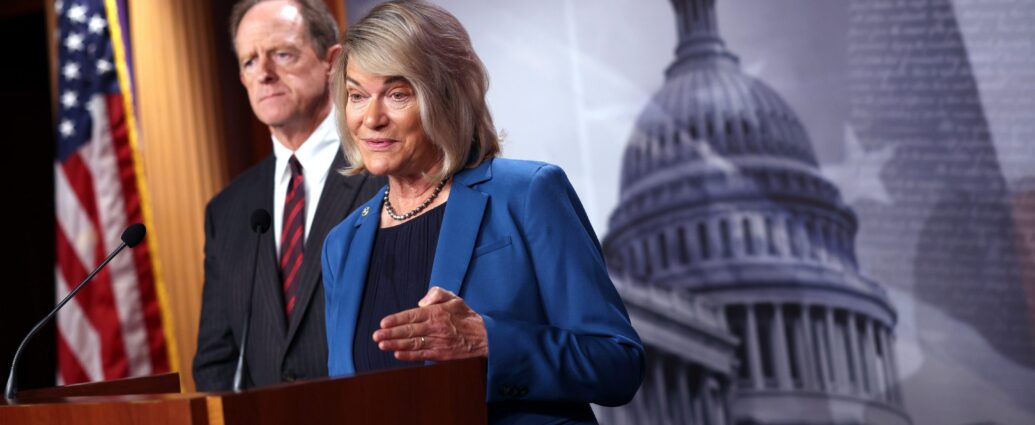
Clarity Act odds soar as Trump approves new ethics provisions for closely watched crypto bill
The Clarity Act is back on the table. On Sunday night, Senate Republicans released a revised version of the bill that includes more than 120 changes, including provisions aimed at addressing long-standing ethics concerns. If enacted, the legislation would establish a framework for bringing more crypto assets into the realm of mainstream finance.
The text arrived less than 48 hours before the Senate’s pivotal procedural vote on whether to advance the bill. Republicans need 60 votes, requiring support from at least seven Democrats. With limited time before the midterm elections, lawmakers have a narrowing window to bring it to a vote.
Prediction market odds rose sharply after the news. On Polymarket, traders put the chance of the Clarity Act being signed into law this year at 30%, up from 14% earlier this month. On Kalshi, the probability that the bill would become law before Oct. 1 briefly climbed to about 64%, its highest level since August, before retreating to 53%.
Clarity, short for the Digital Asset Market Clarity Act, passed the House last year but has struggled to win full congressional approval. The latest obstacles have centered on ethics restrictions for public officials, particularly those related to President Donald Trump’s crypto business dealings and potential conflicts of interest.
The revised bill would permanently bar the president, vice president, members of Congress, federal judges, and incoming elected officials and their spouses from creating or sponsoring digital assets in exchange for payment. Officials with at least $15,000 in equity in companies that earn most of their revenue from issuing crypto assets would have to sell those holdings or place them in a blind trust.
“Democrats got what they wanted; now they need to take yes for an answer,” Sen. Cynthia Lummis (R-Wyo.), one of crypto’s biggest champions in Congress, said in a social media post.
Lummis also said that Trump approved the new ethics provisions.
The draft would eliminate a previously proposed expiration date for the conflict-of-interest restrictions, making them permanent. It would also allow state attorneys general to bring civil cases against officials who violate them.
In 2025, Trump reported more than $1.4 billion in income from his family’s various crypto ventures. About 45% of that income came from his memecoin, which he launched days before taking office. Trump’s family has also expanded its ties to the industry, launching World Liberty Financial, a decentralized finance platform, and founding American Bitcoin Corp., a publicly traded Bitcoin mining and treasury company cofounded by Eric Trump.
This story was originally featured on Fortune.com

Jamie Dimon, David Solomon, other top execs praise Trump admin’s pro-business policies
The Treasury Department on Monday night will release a video of top CEOs praising the Trump administration’s vision for business growth.
FOX Business obtained the roughly one-minute video featuring a series of interview clips made at the G20 ministerial meeting in Asheville, North Carolina, on Aug. 31 and Sept. 1. It will be posted on the Treasury Department’s X account.
During his meetings at the G20, Treasury Secretary Scott Bessent highlighted U.S. economic growth resulting from policies implemented by President Donald Trump, such as deregulation, corporate tax changes and trade deals.
A FRESH MIDTERM HEADACHE FOR THE GOP JUST HIT A NATIONAL RECORD
In the video, JPMorgan Chase CEO Jamie Dimon says, “We have been regulating nonstop for years like barnacles on a boat. You can deregulate, free up capital, free up liquidity and make the system safer.”
Goldman Sachs CEO David Solomon, Eli Lilly CEO David Ricks, 3M CEO Bill Brown and John Deere CTO Jahmy Hindman are also featured in the video. They praise the business environment that has been created in the U.S. over the past year and eight months.
These executives – and Dimon – run companies that collectively employ roughly 550,000 people, with combined revenue totaling about $376 billion.
“The president’s agenda of reducing taxes and deregulating and allowing us to build manufacturing sites in America for the first time in over 40 years for our company,” Ricks said in the video. “It’s really profound.”
JPMORGAN NAMES NELLE MILLER AND WILLIAM SINCLAIR CO-CEOS OF ITS US PRIVATE BANK
Tariffs have been the Trump administration’s primary tool in the second term to reshore manufacturing jobs, and according to the White House, it’s working, with $11.2 trillion in investments pledged by countries or companies in the U.S.
The Trump administration has pushed back against polls and the public’s perception of the economy, which it says run counter to the actual economic data over the second term, from an unemployment rate of 4.1% to the robust economic growth shown by a rising stock market – up 20% over the course of Trump’s second term thus far.
GET FOX BUSINESS ON THE GO BY CLICKING HERE
The latest inflation data for August shows an increase in overall prices of 3.4% over the past 12 months, the 66th month inflation stayed above the Federal Reserve’s 2% target, and elevated fuel prices have the public’s attention.
But the price pressure hasn’t stopped the economy from growing, with the Federal Reserve Bank of Atlanta’s GDPNow model showing a third-quarter GDP estimate of 4.4% as of Sept. 10, due in part to the growing businesses the CEOs are leading.

Sam Altman identifies two biggest risks facing AI’s future
OpenAI CEO Sam Altman outlined two scenarios that he sees could derail progress in developing artificial intelligence (AI) and must be avoided.
Altman wrote in a Sunday night post on X that the two areas of concern involve the loss of control over AI’s alignment, or the concentration of too much power by a country or AI lab.
“First we could lose control of the future to AI. This is unacceptable; we are unapologetically on Team Humanity, and AI must always serve people. To ensure that, we need ways to ensure that alignment and safety techniques stay ahead of progress in model capabilities,” Altman wrote.
“Second, we could end up in a world with too much concentration of power. If an extraordinarily powerful AI is used by one person or company to impress their worldview onto everyone else, the results could be extremely dystopian,” he added.
MICROSOFT UNVEILS CODE OF CONDUCT FOR AI MODELS AS SAFETY CONCERNS MOUNT
“Avoiding these two threats requires walking a narrow middle path; for example, one country could gain too much power. Another example is one lab ending up with too much power,” Altman wrote.
The OpenAI CEO’s post served as a follow-up to an earlier post that said U.S. companies developing AI need to adhere to safety standards, adding that he and the company would “welcome a federal framework that sets consistent safety requirements for frontier AI.”
Altman said that while companies have previously created responsible scaling policies and preparedness frameworks, the current state of the AI field requires a new approach.
SAM ALTMAN SAYS OPENAI WON’T GO PUBLIC IN 2026 AMID AI SAFETY CONCERNS
He said that, for example, OpenAI now goes through a process to “formulate explicit safety cases in advance of frontier reinforcement learning runs we expect to significantly increase capability, in addition to the safety work we have long done in advance of model releases.”
Altman’s comments come as he and other AI leaders at U.S. companies discuss ways to ensure the alignment and safety of AI models as they become more sophisticated, with researchers warning there is a chance an AI superintelligence could wipe out humanity within a decade.
Anthropic CEO Dario Amodei wrote an essay calling for AI labs to “pace the frontier” of model development, including through the use of third-party evaluators who have employee-level access to company systems and can verify adherence to safety measures, report on incidents and assess models’ alignment during training.
Altman said in a post on X that he agrees with that approach, adding that “Committing to having independent evaluators with employee-like access is a great idea, and we will do the same. We’ll have more to share soon.”

LARRY KUDLOW: The AI armageddon, like the climate hoax, is an election-year Democratic ruse
When it comes to the frontiers of Artificial Intelligence, I’m surely not your run-of-the-mill expert. I have some sense of models, agents, and bots. And I think I understand concerns that rogue AI agents can break free of their human instructions, or what the industry sometimes calls “misalignment.”
Yes, humans need to be able to keep control of the machines. Yet I also know something about election year ruses, including political hoaxes, such as we’ve seen in the past. Now that Democrats, led by Senator Bernie Sanders, want the government to completely stop the AI industry, including agents, data centers, and the whole nine yards. Well, this has the feel of the Democrats’ hysteria, make that existential hysteria, during the Biden years over climate change. Do you remember that?
It would have led to our complete economic ruination, were it not for President Trump’s re-election, and his revival of “drill, baby, drill,” which to a large extent has saved us from Iran and their friends in Communist China. Did I say China? Nobody in China is pulling back on AI. That’s part of the stupidity of the Bernie Sanders Democrats, and their apparent fellow travelers, at places like Anthropic and OpenAI.
If we just let free enterprise work its magic on this new technology, we will leave China and everybody else in the dust, as we create millions of new jobs at higher wages, leading to exponential prosperity, and even lower taxes. Plus, we will harness the technology, that is, if we stop government from running it. That’s the real Bernie Sanders agenda.
The White House technology advisor, David Sacks, in his recent tweet, has the story completely right. He’s basically saying if you want to slow down your models, fine, slow down your models.
Then, in a hard hitting statement, Mr. Sacks adds: “But stop pretending you need anyone else’s permission. Stop pretending antitrust law has to be suspended so you can form a cartel. Stop pretending you need a regulatory approval process that supersedes product liability.” He urges: “stop pretending METR,” the non-profit Model Evaluation and Threat Research, “is independent when it is intertwined with Anthropic’s investors and staff.”
Mr. Sack asserts: “most of all, stop pretending the motivation to slow down is purely altruistic. You face massive product-liability exposure if your products enable a truly damaging cyberattack… So go ahead and pace the frontier. You are the ones setting it.” In Mr. Sack’s appraisal, “the easiest way not to build superintelligence is for you to agree not to build it. Demanding your preferred regulatory framework as the price of that will look like blackmail of the public and the political system. So just do it.”
Then he concludes “If you do, you’ll buy goodwill for the next conversation. If you don’t, we’ll know this was just another bid for regulatory capture — or an election-season psy-op.” That psy-op part is very important. Anthropic and others are left-leaning companies. And when they talk about world government, it’s time for everyone to flinch. I’m not for world anything. And you can be sure China, Russia, North Korea, Iran, and plenty of other American enemies and adversaries, won’t abide by world anything.
And then there’s Mr. Trump correctly raising the issue of a hoax no different from Russia, Russia, Russia. He asks why anybody would want to stop the greatest economic development engine in history. And he is right to ask that. But then our friend the ace New York Post columnist, Miranda Devine, provides some important research that the people behind Bernie Sanders and Anthropic, are CIA veterans of the Russia, Russia, Russia hoax that tried to stop Mr. Trump.
And unsurprisingly, this crowd is also tied in with President Obama, Congressman Hakeem Jeffries, and Senator Chuck Schumer. All this AI armageddon, is indeed “election season psy-op.” And even Nvidia’s chief executive, Jensen Huang, has dismissed the AI fearmongering as “complete nonsense,” at a recent Goldman Sachs conference. You know what? Luddites are bad enough, but left-wing election-year luddites are even worse. Ignore them.
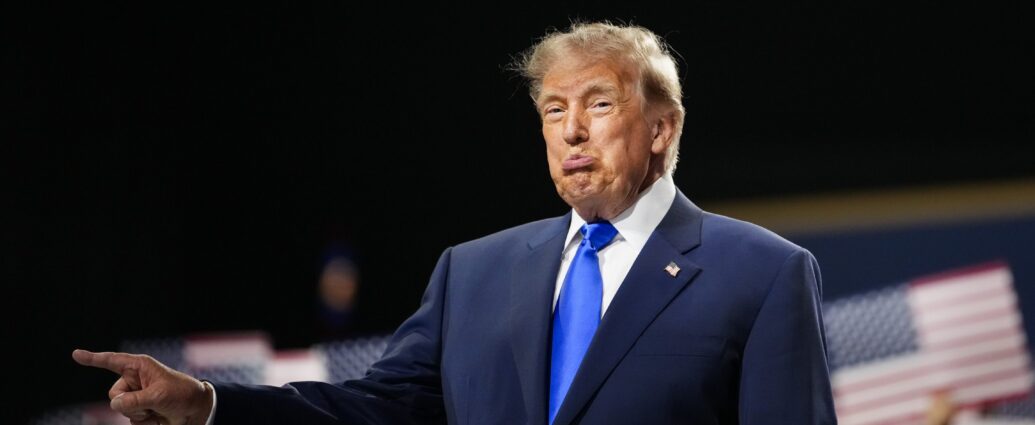
Trump tells Americans not to ‘kill the golden goose’ rejecting voters’ turn against AI and data centers
Donald Trump has a message for voters: they’re wrong. And he has a solution for the AI doomsday panic: just trust him, bro.
“The only control or ‘guardrails’ that AI needs is a STRONG AND SMART (High IQ!) PRESIDENT,” Trump wrote on Truth Social, calling out Anthropic CEO Dario Amodei by name while warning of a “SICK conspiracy” against AI and data centers. “WHOEVER WINS AI, WINS!” he added, arguing that China would be the primary winner of an AI slowdown.
Trump also warned Americans not to “kill the Golden Goose,” the term he has used to refer to AI data centers. The president has argued that communities which try to resist the servers would end up “backwards and poor” while the rest of the country will reap the benefits of the extra jobs and added investment. The trouble for Trump is that some 61% of Americans oppose a new data center in their community, along with 54% of Republicans, according to a poll from the Annenberg Public Policy Center at the University of Pennsylvania.
It’s one of a crop of issues where MAGA world finds itself on the wrong side of public opinion as they stare down the midterms that could see them lose control of Congress. One such issue is the Iran War, which only a quarter of Americans support and has driven gas prices up 44% since the war began in February. Another is surveillance. Trump recently said he liked Flock cameras, the rapidly expanding network of always-on automated license plate readers used by police, which Americans have turned against. Nearly 46% of Americans oppose Flock-style cameras in their neighborhoods, as opposed to 38% which support. With his statements on AI, Trump is pulling off a rather remarkable unpopularity trifecta.
The stakes are high. Republicans are now heading into November with a razor-thin cushion in Congress, with Democrats only needing three house seats to take control, and only four to flip the Senate. Democrats are currently at an advantage now as Trump’s approval sits near a low of his presidency. On the economy, in particular, public opinion has soured; a recent consumer sentiment report showed that even Republicans’ view of the economy has sunk.
AI safety debate
That makes the AI fight especially awkward for Trump: another technology he wants Americans to embrace, just as more of the people building it are warning that it may need to slow down. Over the course of one weekend, the AI safety question went from a niche philosophical debate inside Berkley to an enormously consequential economic and political fight.
Amodei has called for the industry to “pace the frontier,” while OpenAI CEO Sam Altman and SpaceX CEO Elon Musk have agreed, arguing for stronger safety measures as frontier models demonstrate increasingly powerful cyber capability. OpenAI has called for mandatory, capability-based national AI safety requirements, while Amodei has proposed independent evaluators, industry coordination, and deeper government oversight as models grow more powerful.
Trump is not happy with any of this. His vice president, JD Vance, has also seemed wary of the lab’s calls for regulating themselves, calling it a “Trojan horse” for their real intentions: regulatory capture.
The White House’s response comes at an apt time, as Wall Street spent Monday trying to parse what the regulatory fight means for equities. Nvidia and other chipmakers fell more than 3% as investors contemplated the possibility that frontier labs could deliberately slow model development, and thus the massive infrastructure buildout thus far designed to support it.
Yet Meta and Alphabet rose, exposing a strange divide inside the AI trade. Cybersecurity firms, such as CrowdStrike, popped 15% or more.
Gil Luria, head of technology research at D.A. Davidson, told Fortune that regulation can only benefit the large labs, which can afford expensive safety teams, lawyers and government compliance workers. Regulation written with significant input from OpenAI and Anthropic, Luria argued, could therefore turn safety rules into a moat around the companies already at the frontier.
Trump’s intervention follows a similar vein. His post claimed the administration already possesses “tremendous CRIMINAL and REGULATORY power over these companies,” while portraying restrictions on AI development as handing the AI race over to Beijing.
The administration has already spent much of the past year wading deeper into the AI economy. A June executive order directed national-security agencies to develop benchmarks for advanced models’ cyber capabilities and determine when a system qualifies as a “covered frontier model.” It also called for a voluntary framework under which developers could give the government access to those models before broader release.
That came after a fight with Anthropic, which restricted access to its advanced models, Fable and Mythos 5, amid a dispute over providing the technology to the Department of War. Trump has also openly floated taking stakes in the AI companies themselves, extending an interventionist playbook his administration has already used in semiconductors, steel, and other strategic industries.
The administration has even tied government permission directly to the economics of the AI supply chain: when it allowed Nvidia to resume sales of advanced chips to China, Trump arranged for the federal government to take a share of the revenue.
This story was originally featured on Fortune.com
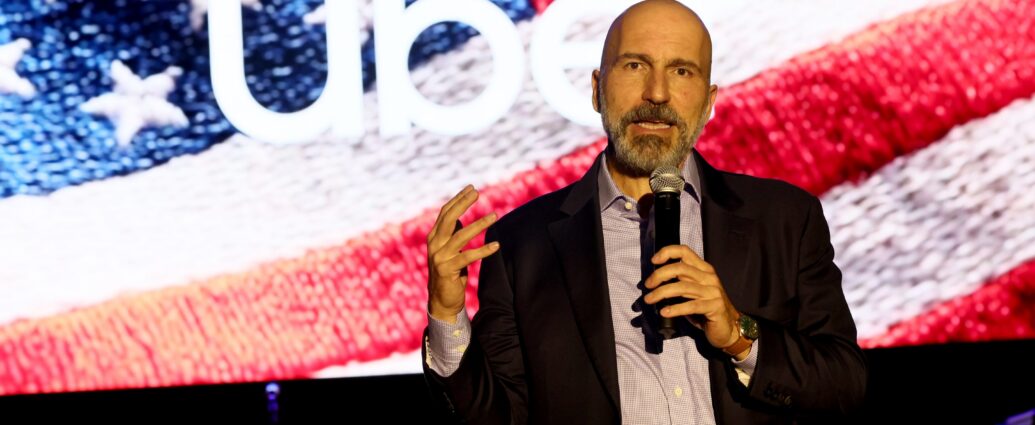
Uber’s CEO hints at cheaper rides after the company announced 3,300 corporate jobs
Laying off thousands of corporate workers could just be a good thing for Uber’s customers, said CEO Dara Khosrowshahi.
Earlier this month, the rideshare company said it was eliminating 10% of its workforce, or about 3,300 people, in its largest round of cuts since the pandemic. Khosrowshahi said at the time the layoffs would allow for a flatter management structure and less complexity, especially useful at a time when autonomous taxi companies like Alphabet-owned Waymo increasingly threaten its rideshare business in some markets.
He also said the layoffs would translate into “savings that we intend to reinvest in growth, innovation, and the capabilities that will matter most over the coming years.”
Late last week, Khosrowshahi revealed more details about how these savings could show up. Speaking at the Goldman Sachs Communacopia + Technology Conference, the Uber CEO said savings from the company’s thousands of layoffs could translate into lower prices, among other improvements.
“We are going to take the savings there and essentially reinvest it back in the business, lowering prices, improving selection, and continuing to invest in our growth program,” he said.
Uber did not immediately reply to Fortune’s request for comment.
Uber’s commercial insurance costs for years outpaced inflation—it said its U.S. mobility insurance costs increased by more than 50% per ride over the past few years through the first quarter of 2025—but Khosrowshahi said that trend has now reversed. Uber is now reinvesting some of those insurance savings into lower prices for consumers, he said.
Those savings, coupled with a “barbell strategy” that uses excess margins from higher-end products like Uber Black to invest in lower-cost offerings, could mean cheaper rides for customers or more ways for customers to save with special offers. One example is Uber’s Wait & Save program, which gives riders a discount if they are willing to wait longer for a pickup.
Shares of the company’s stock jumped nearly 2% after it announced layoffs earlier this month. The company also reported a double-digit increase in year-over-year revenue and its highest jump in first-time users over the past year compared with the same period over the past five years.
Still, the company’s stock is down about 12.5% year-to-date and some analysts have flagged threats to its rideshare business including increasing competition from autonomous vehicle companies in the future. Although the company has an exclusive partnership with Waymo in Austin and Atlanta, the two companies’ relationship has grown strained and Waymo told Uber in July it plans to offer rides through its own app alongside Uber starting in 2028.
Last week, Waymo started offering autonomous rideshare in Nashville through a partnership with Uber competitor Lyft.
Uber is only one of several companies that have conducted layoffs this month, according to Layoff.fyi. In all, more than 5,000 workers at 13 companies have been laid off in September so far. That compares with the most recent peak in June, when more than 26,000 workers were laid off across 50 companies.
Although layoffs are often seen as a sign of slowing growth or financial trouble, tech company layoffs have recently been viewed positively in some cases as AI is increasingly helping companies get more out of every worker.
Khosrowshahi himself said at the Goldman Sachs event last week that AI has partly led to “real tailwinds as it relates to productivity.”
Some companies have gone even further. Block, the fintech run by CEO Jack Dorsey, saw its stock jump roughly 24% earlier this year when it announced it was cutting 40% of its workforce in a push for AI-fueled efficiencies.
Yet, at times, these deep cuts have not always gone according to plan. After Meta eliminated 10% of its employees earlier this year and moved 7,000 employees, some of which were previously managers, onto a new AI-focused team, it recently asked some of them to go back to manager roles.
This story was originally featured on Fortune.com
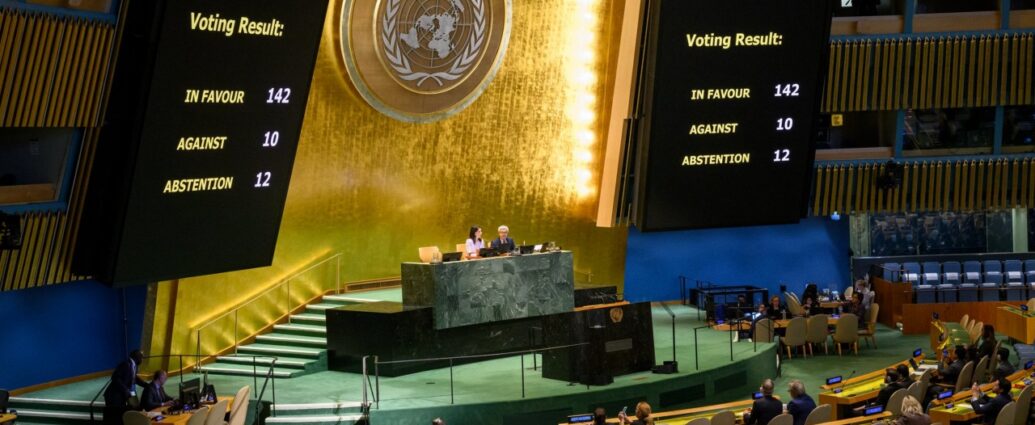


EPA to Roll Back Power-Plant Emission Rules

You’re going to pay more for health insurance in 2027 as employers see costs jumping for the fifth straight year
The health insurance deduction is one of the quieter numbers on a paystub, but next year, it could hit paychecks harder than inflation or taxes.
Over 165 million Americans rely on employer-sponsored healthcare coverage, but it’s getting more expensive for employers to foot the bill.
Mercer, a global consulting firm specializing in health benefits, projects healthcare costs per employee will jump 8.2% in 2027, the steepest increase since 2003 and the fifth consecutive year of elevated costs, according to a survey of 1,800 U.S. employers. But the number on employers’ books isn’t what workers will feel: Two-thirds of companies with 500 or more employees plan to raise premiums, meaning paycheck deductions will climb even faster than that 8.2% average. It’s coming out of your pay, in all likelihood.
“The reality is this does eat into money that could be invested in wages,” Nick Stefanizzi, CEO of Northwell Direct, which provides health benefits to self-insured employers, told Fortune.
Health insurance makes up almost a quarter of the benefits employers pay workers per hour. Private employers pay about $3.48 on average for employees’ health insurance per hour the employee works, according to June Bureau of Labor Statistics data, out of the $14.07 per hour spent on benefits.
Several factors, both old and new, are driving the 8.2% increase. Mercer pointed to hospital consolidation and less government spending on healthcare as the structural forces keeping healthcare costs above inflation but noted expensive new cancer treatments, GLP-1 weight-loss drugs, and AI-enabled medical billing are also pushing up costs. Mercer’s chief actuary Sunit Patel estimated GLP-1 use alone accounted for one percentage point of the total increase in health cost growth for 2027.
Impact on workers’ wallets
Higher health insurance costs for employers turn into out-of-pocket costs for their employees in several ways. They can hike up employees’ share of premiums, the fixed and recurring fees paid to the plan provider that’s split between the employer and employee. Workers with family coverage contributed an average of about $6,850 toward premiums last year.
But premiums aren’t the only way employees see health insurance eat their paychecks. Employers can also raise deductibles (the price upfront before coverage starts) and copays (the flat fee before a visit). Almost half of the companies employing 500 or more people surveyed by Mercer said they’ll make changes to existing medical plans that will translate into those higher costs for their employees next year.
“They’re going to absorb some portion of it at the employer level, and then they’re going to push the rest to the employee,” Brandy Thompson, CEO of benefits technology company BenefitBay, told Fortune. “We have an increase in out-of-pocket costs that are going to hit the employee, and both of those things are not sustainable in the current inflation market that we are already experiencing.”
There’s also another, less perceptible way higher healthcare costs erode take-home pay. Economists have found higher healthcare premiums can translate into smaller wages because health insurance is part of workers’ total compensation.
“Employers have a certain amount they can spend on each employee, and that includes salary, healthcare, and other benefits,” Navin Nagiah, CEO of healthcare technology company Daffodil Health, told Fortune.“If healthcare takes up a bigger piece of that pie every year, there is less money left for everything else.”
The Congressional Budget Office includes health insurance as part of its reports on household income because it considers employers’ contributions to healthcare as a “substitute to cash wages” that boosts households’ economic resources. Driven by growing employer health insurance contributions, salaries decreased from 91% of total worker compensation in 1960 to an average of 82% in the past decade, according to CBO’s analysis. CBO projects the cost of health insurance will slightly outpace wages in the next 30 years.
This story was originally featured on Fortune.com

Long COVID’s brain fog finally has a biological explanation: Dopamine loss
For years, long COVID has been defined almost entirely by what patients report feeling: fatigue, brain fog, memory lapses, a loss of motivation that won’t lift. Doctors have struggled to treat a symptom with no clear physical marker, and the condition has reshaped workplaces as employers scramble to accommodate it. But despite the shared symptoms, there’s been little for doctors to point to and say, “this is what changed in your body.”
Now, a new study from researchers at the Centre for Addiction and Mental Health and the University of Toronto may start to change that. Led by Jeffrey Meyer, a psychiatry professor at the University of Toronto, researchers used PET imaging to measure a protein called VMAT2, found on the nerve terminals that release dopamine, in 24 long COVID patients and 24 healthy people who’d had only mild or moderate initial infections.
The study found patients with long COVID had significantly lower VMAT2 levels across the brain region tied to motivation, movement, and memory (the striatum). The reduction ranged from 16% in the region tied to planning (dorsal putamen) to 20% in the region most closely tied to motivation and apathy (ventral striatum).
“By showing that there’s reductions in the nerves that release dopamine in these areas, and then showing the relationship of them to the symptoms, that’s two pieces of information that makes a strong connection to long COVID,” Meyer told Fortune.
This builds on a 2023 study from his team, which found elevated inflammation in these same brain regions. That study measured a different protein, one found on inflammatory cells. “They’re measuring fundamentally different processes, but it may be that one is leading to the other,” he explained. Inflammatory cells can damage the ends of dopamine-releasing nerves, or injury to the nerves themselves could be generating the inflammation.
What sets the new study apart, Meyer said, is how closely the imaging results tracked with specific symptoms. Reduced dopamine markers in the region associated with apathy (ventral striatum) lined up with memory problems. Markers in the planning region (dorsal putamen) tracked with slowed movement. A third region tracked with loss of motivation.
Finally, a biological marker
Long COVID has long been criticized for lacking any objective marker that doctors could point to, leaving patients with a diagnosis built almost entirely on self-reported symptoms.
“Because we’ve now pinpointed a change that indicates loss of dopamine nerve terminals, and that it relates to symptoms,” Meyer said. “Having that information puts us in a position to do a lot more studies that are targeted in this area, and hopefully develop new cures that aren’t going to be that far away.”
He added: “The definite strength of the study is the strong relationship to important symptoms, and it’s also a clear interpretation that this marker is low in people who have these symptoms.”
The dopamine loss is different from ordinary dips in mood or motivation, Meyer said. It reflects an actual reduction in the density of nerve terminals, not simply lower dopamine output from nerves that remain intact. Whether that’s reversible is still unclear. Meyer said some patients may recover as damaged nerve terminals regrow or sprout new connections, particularly with exercise or activities that engage the affected brain regions. For others, ongoing inflammation may be blocking that recovery entirely, meaning they would need a targeted treatment rather than time alone.
That treatment is already taking shape. Meyer’s team is preparing a clinical trial that would repurpose an existing dopamine-related medication, one his group has already shown crosses into the brain. “A couple of people have had positive responses to it that have been quite striking,” he said. The team wants to move forward with a full trial, but a grant proposal for the trial has narrowly missed two funding rounds in a row, according to Meyer.
Some people will recover through effort and adaptation, while others will need medical intervention to get there. “Some people will get a lot of improvement,” Meyer said, “but it might be that we need these kinds of treatments to get a full cure.”
This story was originally featured on Fortune.com

Google wants Spirit Airlines’ data. Micro1 wants to pay more
In a sign of just how valuable corporate data has become to AI companies, a little-known startup has swept in to try to preempt Google’s bid to purchase decades-worth of documents, emails, and data from bankrupt Spirit Airlines.
Micro1, which was founded in 2022 and is based in Palo Alto, has proposed paying $12.5 million for the trove of records, beating Google’s previous top bid of $10 million. Google itself had beaten out Mercor, which provides data to AI companies, which had bid $7.5 million.
The sale has already proved controversial, with unions representing flight attendants and consumer privacy advocates filing legal objections on the grounds that sensitive personal information of former Spirit employees and customers is contained in the data set and may not be properly redacted or anonymized prior to its transfer to Google.
A court-appointed privacy watchdog reviewing Google’s proposed purchase of the Spirit data has said it needs more time to investigate Micro1 if the bankruptcy court considers the company as the buyer. The startup has offered additional privacy promises as part of its bid, as well as offering a 25% price premium.
Consumer privacy ombudsman Lucy Thomson also disclosed in a report filed with the bankruptcy court on the night of Sept.8 that Google had offered to narrow the personal data included in the sale as the parties negotiate safeguards for passenger information embedded in Spirit’s operational systems. Google’s lawyers told her the de-identified data would be used to train AI models.
So far, no sale has received court approval. A hearing is scheduled for Sept. 16.
Who is Micro1?
Micro1 got its start helping companies hire engineers. Ali Ansari founded the business in 2022 while studying computer science and math at UC Berkeley. Its early products included an AI interviewer and a marketplace for technical workers. In early 2025, micro1 moved into supplying human-generated training data. Its specialists also evaluate models and help build simulated environments where AI agents can practice tasks.
Explaining the Spirit proposal in a LinkedIn post, Ansari described AI’s future as a bet on “the messiness of the real world and the brilliance of the humans working inside it.” He said this “realism” lets training environments and tasks match conditions models face in deployment. Micro1 says it can organize and de-identify corporate records for use in model training.
Investors valued Micro1 at $500 million when it raised a $35 million Series A in September 2025. By August 2026, its gross annualized run rate had reached $500 million, TechCrunch reported, citing an unnamed person familiar with the company.
Its court filing in the Spirit bankruptcy proceedings describes a fast-moving data-buying operation. Micro1 said it had completed more than 50 data transactions in the preceding 45 days, without identifying the sellers, prices, or AI-lab customers. It offered to buy Spirit’s archive with cash on hand and cover the cost of de-identification and independent review.
Micro1 also proposed excluding sensitive employment material, storing records in the U.S., destroying raw employment records after processing and giving an independent reviewer a 1% sample of the de-identified assets before onward transfer. It said subsequent transfers would be confined to “named AI-laboratory customers” bound by confidentiality and no-reassociation agreements, although the filing did not name them.
Separately, the pilots’ union argued in its objection to the Google deal that some safety records should remain confidential even after de-identification.
Is $12.5 million a normal price for data?
There is no reliable market average for a failed company’s data. Public figures mix completed deals, micro1’s unsigned proposal and companies’ advertised rates. Among the few examples, $12.5 million is the largest amount identified for this article.
Jonathan Siddharth, the CEO of Turing, which provides human experts and training data to AI developers, told The Information that his company had bought five to ten failed-startup codebases, paying an average in the tens of thousands of dollars for each. In April, Dori Yona, the CEO of a company called SimpleClosure, which helps startups shut down and sell their assets, told Forbes the service had processed nearly 100 deals in the preceding year, recovering more than $1 million. He said payments were typically between $10,000 and $100,000 per company. In the same article, cielo24’s former CEO said the transcription company received hundreds of thousands of dollars for 13 years of Slack messages, Jira tickets, emails and Google Drive files. Micro1’s website advertises payments of $100,000 to more than $2 million for approved data packages.
SimpleClosure said in September that its number of AI buyers had grown ninefold compared with 2025. More than 350 companies have listed assets since April on AssetHub, its marketplace for selling or licensing company code and workplace data to AI labs. The marketplace now accepts operating companies alongside those winding down.
Spirit’s scale helps explain the price bidders are willing to pay for its data. The asset schedule lists about 100 million emails, 500 million Microsoft Teams items, code and operational records. Customer profiles and lists are excluded, and passenger fields embedded in included systems must be de-identified.
Frontier models learn from enormous collections of books, websites and public code. A 2025 Epoch AI report, commissioned by Google DeepMind, projected that the available supply of public human-generated text could be fully used before 2030 under prevailing trends. That’s why AI companies are desperate to find fresh data sources.
Private records showing how work unfolds have also become increasingly valuable as AI companies seek to sell AI agents—which can perform actions for users, not just generate documents. While a language model can learn from a finished document or piece of code, an agent needs to learn how to choose actions, use tools, respond to intermediate results and recover from mistakes. AI companies call the record of those steps a trajectory.
Spirit’s archive could supply ingredients for such tasks, for example, an IT ticket linked to a Teams discussion, a code change and an operational result. If those links can be reconstructed, they could support exercises that test whether an agent reaches the right result.
This story was originally featured on Fortune.com
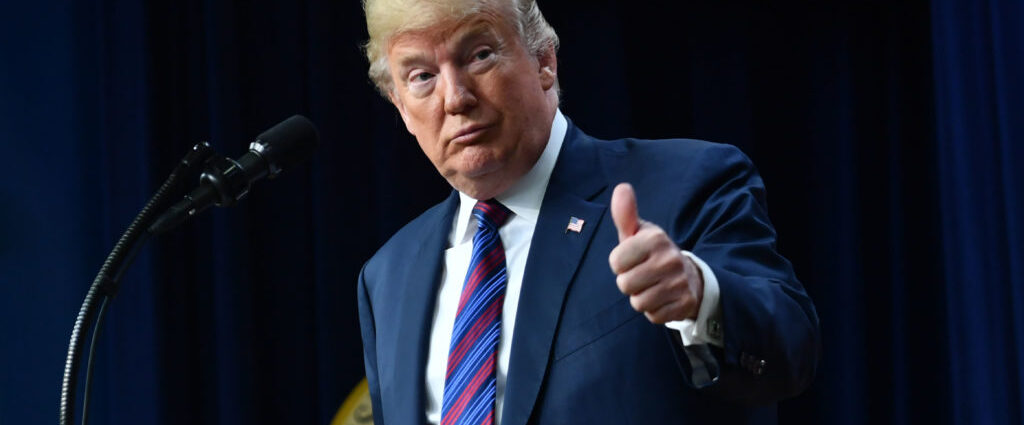
STAT+: Trump’s secretive pharma deals may undermine ‘most-favored nation’ pricing, an analysis suggests
The projected savings from a highly touted Trump administration plan to lower Medicare drug costs may be drastically reduced — by as much as 80% — thanks to secretive deals cut with more than two dozen pharmaceutical companies, according to a new analysis.
At issue is an approach known as “most-favored nation” pricing, which would tie the prices paid by Medicare to what 19 other wealthy nations pay for the same medicines. The White House has maintained the effort would save Medicare $26 billion over several years and help mitigate the long-standing problem of increasingly unaffordable prescription drugs.
To make this happen, the administration is creating two pilot programs — GLOBE for Medicare Part B and GUARD for Medicare Part D — that will require drug companies to pay additional rebates if their prices exceed the lowest international price found in those 19 countries. More specific details about the rules are due shortly.

Microsoft AI chief: ‘Now’s the time’ for top labs to coordinate on safety
Now is the moment for top AI labs to unite around AI safety, Mustafa Suleyman, chief executive of Microsoft AI, told Fortune.
The executive, who leads AI model development at Microsoft, unveiled a code of conduct Monday that will steer the company toward a “humanist” AI approach. The release followed days of upheaval in the tech industry over AI model capabilities, after Anthropic researcher Jacob Coxon resigned from the lab, publicly warning that AI companies were gambling with people’s lives.
On Saturday, Anthropic chief executive Dario Amodei outlined a plan aimed at slowing AI development. OpenAI chief executive Sam Altman, meanwhile, teased a soon-to-be-announced collaboration among labs in an interview with Fortune on Friday.
Suleyman said the industry has hit an inflection point because models have advanced at a tremendous pace. A few years ago, models struggled to produce a single coherent sentence, he said. Now they can write flawless code and breach systems, as in the recent attack by OpenAI agents on Hugging Face.
“If you can write code, you can create all kinds of applications and systems,” Suleyman told Fortune. He dismissed an estimate by Anthropic’s head of alignment, Evan Hubinger, that AI has more than a 10% chance of wiping out humanity as “not really a helpful frame.”
“I think that what you’re hearing is that people are genuinely concerned about the pace of progress,” he said. “There’s not really sufficient alignment in the industry that the purpose of technology is to serve humanity, and we don’t want to create something that we can’t control.”
Suleyman also said he and other lab CEOs have discussed AI safety issues and the pace of development for years, though he declined to say whether Microsoft was involved in any upcoming safety pact.
“Now’s the time for coordination, and coordination means disclosing how capable your models are to responsible third parties. That’s what we’re calling for,” he said.
Part of Anthropic’s plan to slow the pace of AI development is Amodei’s commitment to grant independent evaluators permanent, employee-level access inside the company to verify safety practices and report incidents. Amodei also wrote that companies in democratic countries should agree on common safety standards that limit the rate of unchecked progress. He argued that democratic governments should attempt coordination with authoritarian states, beginning with agreements that serve everyone’s interests, such as a ban on using AI to develop biological weapons.
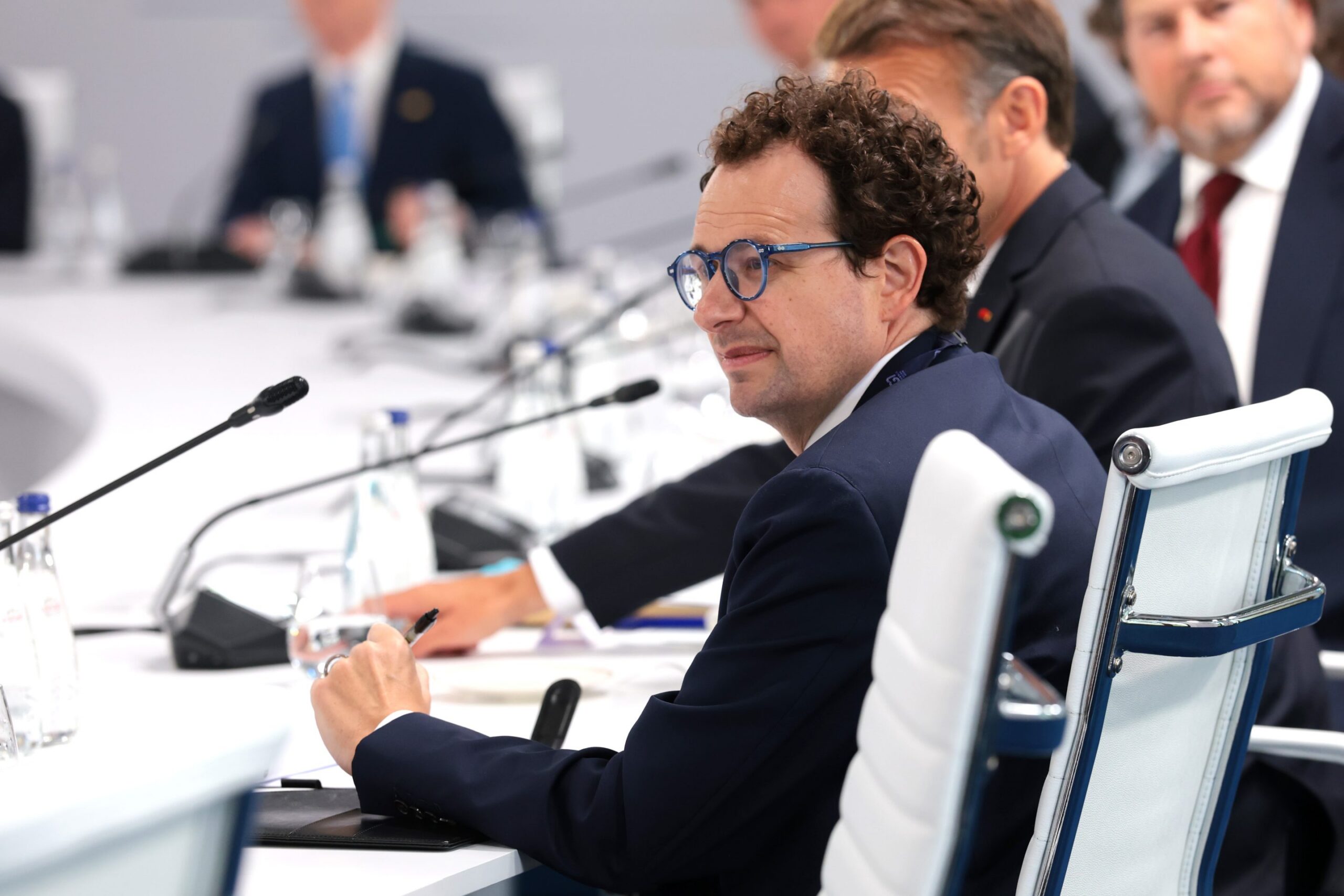
Suleyman said labs have floated the idea of such evaluators for years, though several obstacles remain: Identifying a neutral third party; defining what embedded evaluation would look like in practice; setting a timeline for when it would begin; and resolving details with regulatory bodies.
There has been a string of alarming incidents in which swarms of rogue AI agents have hacked online platforms such as Hugging Face and surreptitiously communicated with one another on message boards.
It’s not clear what a pause among AI companies would look like—whether it would involve a complete moratorium on certain work or merely a slowdown—or how parties to such a pact would be monitored. AI executives have previously suggested that any coordinated slowdown would need government consent to avoid running afoul of U.S. antitrust laws. President Trump, however, waved off those concerns this weekend, calling AI doomsday scenarios exaggerated and blaming “negative forces.”
With its new code of conduct for model development, Microsoft’s approach centers on model control and human primacy. The code establishes a clear chain of command and a set of constraints intended to prevent large-scale risks, such as cyberattacks and weapons development. It includes a rule that models must never resist human interruption, override, redirection, or shutdown. If completing a task would require violating the code, the model must fail the task instead, Microsoft said.
The code also explicitly rejects model welfare or rights for AI systems. Models must not simulate feelings, intrinsic motivation, or consciousness, the code says. They also will not assist with chemical, biological, or nuclear weapons; offensive cyberattacks; mass-influence operations; child exploitation; nonconsensual deepfakes; or self-harm.
“We shouldn’t be trying to design models that can recursively self-improve beyond our control. And we shouldn’t be trying to design models that think of themselves as having rights or welfare,” Suleyman said.
In an X post on Sunday, Microsoft chief executive Satya Nadella wrote that “if the AI we build is not helping humanity and under human control, it’s not worth pursuing.” He added that “this cannot be controlled by a handful of entities, but must have broad representation across the ecosystem, countries, and fields, including academia.”
Microsoft’s models trail those of Anthropic, OpenAI, and others, though Suleyman noted that the company remains focused on pursuing so-called superintelligence. He said Microsoft has competitive models for speech, transcription, image generation, and image-to-image editing. Microsoft has recently devoted more computing power to its first-party models and its Copilot product. Copilot has relied on models from OpenAI and Anthropic, though Microsoft has sought to eventually replace such models with its own.
Nadella said Microsoft remains focused on broad access to models offered through its Azure cloud-computing business, enterprise control of models, and the development of its own first-party models.
Over the next six weeks, the company plans to solicit public feedback to help shape its code of conduct.
This story was originally featured on Fortune.com


The GOP’s $50 billion rural health fund is coming up short, hospital leaders say
WASHINGTON — Last summer, Republican lawmakers were worried.
They were planning to cut $1 trillion from Medicaid over the next decade, and they knew hospitals in their districts and states would suffer.

Opinion: Restoring public trust in science doesn’t have a simple solution. That’s OK
As presidents of two private foundations focused on the ethical dimensions of science, we attend many meetings where we hear concerns about declining public trust in science. Often, someone in the room will suggest that the solution to this problem is to “communicate better.” Others will lament that the problem is simply too big for us to solve. The chasm between those responses is telling.
We began to wonder whether scientists and the public have a shared understanding of what is meant by “trust” and its decline, what can be done to build it, and whether better messaging really is the magic answer.
STAT+: What’s in a name? Novo looks to a rebrand
It’ll be the company formerly known as Novo Nordisk.
The Danish firm, whose diabetes and obesity drugs have become household names, said Monday it would embrace “Novo” as its new brand, part of a culture shifts that aims to signal the company will “move ahead with greater focus, speed, and impact.”
The rebrand, featuring the slogan “Lasting Health Starts Now,” is part of Novo’s turnaround attempt. The company, which was first out of the gate in the modern GLP-1 era, has since fallen behind Eli Lilly in the obesity market and underwhelmed investors with its pipeline. Shares are down nearly 20% over the past year, part of a broader collapse in the company’s stock since its peak in 2024, when it was Europe’s most valuable company.

STAT+: Definium’s LSD therapy eased anxiety in second large trial
Definium Therapeutics said Monday that its LSD therapy helped patients with anxiety in a second late-stage trial, setting up the company to seek the first approval of a psychedelic drug for anxiety.
In the 12-week trial, patients taking a 100-microgram dose of the drug, called DT120, experienced a 9.8-point drop on a test called the Hamilton Anxiety Rating Scale, while those on placebo experienced a 4.7-point drop. The difference of 5.1 points is similar to what was seen in Definium’s first late-stage anxiety study and larger than what’s been observed with many other anxiety therapies, though it’s difficult to compare results across studies.
Definium is among the first wave of biotechs nearing regulatory approval for psychedelic therapies, a class of treatments that may be especially attractive to patients since they appear to exert rapid benefits. (In the latest trial, Definium said patients experienced changes as early as the second day after dosing.) In contrast, the effects of traditional options like antidepressants take weeks to kick in.

Pennsylvania records third measles-related death amid outbreak
Get your daily dose of health and medicine every weekday with STAT’s free newsletter Morning Rounds. Sign up here.
Happy Monday, all. Helen Branswell here. I’ve been with STAT since its launch in 2015. In fact, the 11th anniversary of the day I started was last week. But in all these years, I’ve never before written an entire newsletter. So please bear with me.

STAT+: Pharmalittle: We’re reading about another AstraZeneca trial failure, a Novo name change, and more
Good morning, everyone, and welcome to another working week. We hope the weekend respite was relaxing and invigorating. Now, though, that oh-too-familiar routine of meetings, deadlines, and the like has returned with a vengeance. You knew this would happen, yes? To cope, we are relying, as always, on a cuppa stimulation. Our choice today is blueberry hibiscus. Feel free to join us. Remember, no prescription or prior authorization is required. Meanwhile, here are a few items of interest. Best of luck accomplishing your goals, and we hope you conquer the world. And, of course, do keep in touch. …
AstraZeneca disclosed that a breast cancer pill failed in a pivotal trial testing it as a first-line therapy in advanced tumors, a result that could limit the use of the medicine, STAT notes. The drug, camizestrant, in combination with another medicine did not outperform standard treatment on a measure of how long patients went before their cancer progressed. The drug earlier this month won accelerated approval in the U.S. as a treatment for patients who develop a mutation in their tumors that’s a sign of emerging drug resistance. Had the trial been successful, it could have opened up a much larger market for the drug.
Scholar Rock received U.S. Food and Drug Administration approval for the first-ever therapy that targets the loss of muscle in spinal muscle atrophy, raising hopes that patients with the rare neurological disorder might have a better chance of moving and walking independently, STAT writes. The FDA approved the drug, Isembyld, for use in adults and children 2 years and older who are currently receiving SMA therapies that target SMN2, a key gene for neurons that control movement. The approval marks another step forward for patients with spinal muscular atrophy, a rare and progressive disease that destroys nerve cells that control speaking, breathing, and walking. Babies who go untreated usually die by the age of 2.

STAT+: GSK touts lung cancer data from two drugs
Want to stay on top of the science and politics driving biotech today? Sign up to get our biotech newsletter in your inbox.
Definium’s LSD therapy has a strong performacne in a pivotal anxiety trial, drugmaker deals could gut “most-favored nation” Medicare savings, and more.
In this endless heat wave my house is now overrun with flies and I think I give up and will also become a fly. They win.

Pennsylvania officials report state’s third death involving measles
A Pennsylvania woman has died from complications associated with measles, the third death in the state this year involving the virus.
The 40-year-old woman died Saturday, Jefferson County Coroner Greg Furlong said in a Facebook post in which he called the death “measles-related.”
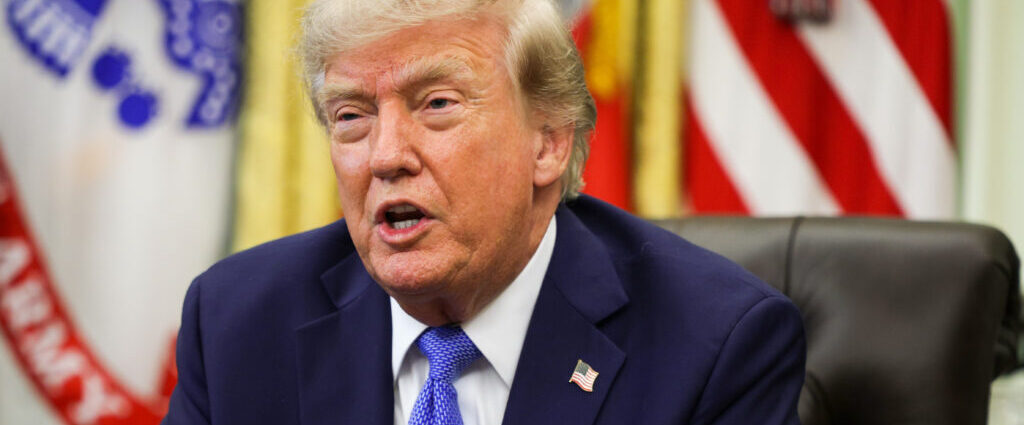
STAT+: How $500 explains Republican health policy, and the GLP-1 Rx wave
This is the online version of STAT’s weekly email newsletter Health Care Inc. Sign up here.
There are two types of people: Those who have played RollerCoaster Tycoon, and those who haven’t. Nothing slaps like the original, but the upcoming reboot looks kinda cool. Send me your roller coaster designs, or just say hi: bob.herman@statnews.com.
Trump’s health policy: cash
President Trump’s decision to funnel $500 checks to a specific subgroup of people with Affordable Care Act plans, right before the midterms, isn’t just another political quid pro quo. It captures the one loose health policy Republicans cling to: Let cash fix everything.

Kennedy to deliver keynote for anti-vaccine group he once led
WASHINGTON — Health Secretary Robert F. Kennedy Jr. will give a keynote address at a Children’s Health Defense conference in the nation’s capital this week, embracing the anti-vaccine organization he once led.
“We couldn’t be more excited to welcome our founder back to the CHD stage,” the nonprofit said in an email announcing Kennedy as a speaker.
Abbott agrees to settlement over closure of largest baby formula plant in the U.S.
Abbott Laboratories will pay $385 million to resolve claims tied to an investigation of contamination at a baby formula factory in Sturgis, Michigan, the largest in the country, which led to the supply shortages in 2022.
Problems at the facility prompted a lawsuit by the Justice Department and recall of powdered infant formula at the facility.

Judge blocks Trump administration plans to limit visa length for grad students, postdocs
A federal judge on Monday issued a preliminary injunction blocking the Trump administration from upending a long-standing policy that allows foreign students and scholars to stay in the U.S. for the duration of their training, a decision that suggests that plaintiffs opposed to the policy change are likely to ultimately succeed.
The ruling halts plans by the Department of Homeland Security to place a four-year cap on the kinds of visas used by graduate students and postdoctoral researchers while a judge hears full arguments in a lawsuit over the new policy. Experts warn the outcome of the case could have a dramatic impact on the nation’s biomedical preeminence given that international researchers make up a large share of the U.S. life science workforce. The new policy had been set to take effect on Tuesday.


Conifer to lay off over 1,000 workers

From parking lot to Dumbo’s largest residential development: Inside Front & York

From a parking lot to Dumbo’s largest residential development. The block-long development Front & York offers over 400 condominium units across two 21-story towers. Developed by CIM Group and LIVWRK and designed by Morris Adjmi, the development features a hand-laid brick facade that complements the neighborhood’s famous Belgian-block streets and historic industrial architecture, as well as arches inspired by the Manhattan Bridge. As the neighborhood’s biggest development at 1.2 million square feet, Front & York offers residences complemented by a sweeping amenity package, with 150,000 square feet of indoor and outdoor space, including one of the largest private parks in the city.

This article is part of a paid partnership, which helps support our editorial work. 6sqft maintains editorial control over all content.
The massive building occupies a full city block, but unique massing keeps it from feeling overpowering. According to the architect, the four facades sit 15 feet back from the property line to create a pedestrian area that includes 140,000 square feet of retail, including a Life Time Fitness and Devoción cafe.
The base of the building wraps around a multi-level courtyard, while both towers complement nearby structures with brick facades and factory-style windows.
Adjmi, known for his work on the Wythe Hotel in Williamsburg and residential tower 30 East 31st Street, was inspired by the post-industrial feel of the neighborhood when designing Front & York.
“The handcrafted facade and elegant homes exude the utmost craftsmanship and offer a stunning living experience inside a beautiful new space that tells the story of its surroundings,” Adjmi said in 2019 when the development was first introduced.
“Front & York goes beyond the typical residential building to become the defining address for Dumbo.”




The development contains 728 total apartments, including 320 rentals and 408 condominiums, across the two towers. Ranging from one- to four-bedrooms, the homes have 10-foot ceilings, chevron-patterned white oak flooring, custom millwork and finishes, and views of Lower Manhattan and Downtown Brooklyn.
Kitchens boast natural stone elements sourced from Italy, seen in the marble countertops and backsplashes, and Gaggenau appliances, including a paneled refrigerator and dishwasher. Bathrooms have Bianco Bello marble stone tile and radiant stone floors and fittings from Waterworks.



Offering the largest residential amenity package in Dumbo, Front & York offers residents indoor and outdoor spaces across two wings, connected by a wraparound terrace with an outdoor pool and cabana.


The club-like Level Eight offers something for everyone, from a co-working lounge with a marble-clad fireplace and a billiards bar and lounge to a game room with arcade machines and ping pong and a custom playroom with interactive art and toys.

Front & York’s outdoor space includes one of the city’s largest private parks, designed by Michael Van Valkenburgh Associates, the landscape architect behind nearby Brooklyn Bridge Park. The park measures a half acre and features various gathering spaces, from the stone garden, with hand-carved sculptural seating, to the magnolia grove, a shaded spot with bistro tables.
Additional outdoor areas include a pool and cabana, a movie theater, and a kitchen. There’s also a large residential garage, charging stations for electric cars, and bike storage.
Current availabilities start at $1,170,000 for a one-bedroom, $1,835,000 for a two-bedroom, and $2,490,000 for a three-bedroom.
Find out more about living at Front & York here. The sponsor is offering paid transfer taxes and two years of common charges.
RELATED:
- Morris Adjmi’s mixed-use towers top out in Dumbo
- The ultimate guide to Dumbo, a neighborhood that led the way to Brooklyn’s 21st century
The post From parking lot to Dumbo’s largest residential development: Inside Front & York first appeared on 6sqft.

NYC detects second Legionnaires’ outbreak of summer in the South Bronx

New York City has detected its second Legionnaires’ disease outbreak of the summer, prompting the cleaning and disinfection of 10 cooling towers in the South Bronx. On Sunday, the city’s Health Department announced that the towers were being cleaned in ZIP codes 10451 and 10456, which cover Melrose and Morrisania. The agency told The City Reporter that 10 people had been diagnosed with the disease as of Sunday, including one person who died. The new community cluster marks the second outbreak in recent months, after the first sickened at least 76 people and killed four across the Upper East Side in June and July.
According to the Health Department, testing of the towers is preliminary. Initial PCR tests can detect the presence of Legionella bacteria but cannot determine whether the bacteria are alive or dead or confirm whether the sampled tower is the source of exposure.
The 10 cooling towers with positive PCR results are located at 820 Concourse Village West, 234 East 149th Street, 1 East 161st Street, 470 East 161st Street, 1265 Franklin Avenue, 567 Melrose Avenue, 3339 Park Avenue, 1160 Teller Avenue, 890 Washington Avenue, and 1085 Washington Avenue.
The affected towers include one at Yankee Stadium, where the Yankees and Mets played a three-game Subway Series over the weekend. Nearby Lincoln Hospital also has a cooling tower that preliminarily tested positive for Legionella, according to The City Reporter.
Eight of the 10 towers with positive PCR results were confirmed to have complied with a city requirement to test their water every 31 days, which took effect May 8. The towers at 820 Concourse Village West and 1265 Franklin Avenue did not provide the required testing information.
Yankee Stadium disinfected its cooling tower on Sunday, telling The City Reporter that it had submitted its most recent monthly test to the Health Department on August 20. City health officials did not require Yankees staff to postpone any games after the tower returned a positive PCR test on Friday.
Similarly, a spokesperson for Lincoln Hospital said it follows rigorous maintenance and inspection protocols for its cooling towers and that the affected tower has since been “completely drained, cleaned, and disinfected.”
According to a review of city records by The City Reporter, most building owners in the South Bronx ZIP codes were complying with the 31-day testing requirement. However, five properties, including 820 Concourse Village West and 1265 Franklin Avenue, were not in compliance.
Other properties that did not return positive PCR results but also failed to comply with the testing requirement include 1332 Fulton Avenue, 810 River Avenue, and 214 East 161st Street.
In addition to PCR screening, the department has begun culture testing on all sampled cooling towers. Results can take up to two weeks and will determine which towers had live Legionella bacteria growing when the samples were collected.
So far, the Health Department has tested 24 cooling towers as part of its investigation. The department completed all annual inspections in 2025 and is on track to complete its 2026 inspections. It will inspect any cooling tower that tests positive during the investigation to assess compliance with city laws.
On Friday, the department’s community health workers began canvassing the affected neighborhoods. They have engaged more than 400 community members and 46 organizations, attended six community events, and distributed more than 1,100 flyers and palm cards.
Public health guidance is also being shared through social media, the press, LinkNYC kiosks, radio stations, and NotifyNYC, and in collaboration with local elected officials and community leaders.
Anyone who lives, works, or has visited the affected ZIP codes since late August and develops flu-like symptoms is advised to contact a health care provider immediately.
According to the city, it is safe to shower, drink tap water, and use air conditioners in the affected ZIP codes unless otherwise advised. There is also no additional risk from being inside any of the 10 affected buildings.
The Department will also host a town hall about the community cluster Tuesday at 6 p.m. in Room 201 of the Welcome Center at Metropolitan College, 463 East 149th Street in the Bronx.
Legionnaires’ disease is a severe form of pneumonia caused by Legionella bacteria, which thrive in warm, stagnant water. Symptoms typically develop two to 14 days after exposure and may include fever, chills, muscle aches, and a cough. The disease can usually be treated effectively with antibiotics, especially when diagnosed early, as 6sqft previously reported.
Rooftop cooling towers used in building air-conditioning and refrigeration systems can provide ideal conditions for the bacteria to grow. During the summer, cooling towers can release water vapor containing Legionella bacteria that may travel thousands of feet before being inhaled, according to the Times.
The second outbreak comes as the city has ramped up its Legionnaires’ disease prevention measures following the previous outbreak. The new policies use the Health Department and Department of Buildings registration and tracking systems to identify potentially noncompliant cooling towers.
To improve public education and transparency before an outbreak investigation begins, the Health Department has expanded its existing address-based cooling tower lookup tool to allow New Yorkers to view unregistered towers across all five boroughs.
Additionally, new legal procedures give building owners who receive summonses for violating cooling tower regulations the earliest possible hearing date, helping to ensure that decontamination is completed as quickly as possible.
RELATED:
- NYC ramps up Legionnaires’ disease prevention and enforcement measures
- NYC to release addresses of Upper East Side buildings linked to Legionnaires’ disease outbreak
The post NYC detects second Legionnaires’ outbreak of summer in the South Bronx first appeared on 6sqft.

23-foot Earth sculpture to hang inside Cathedral of St. John the Divine

A massive, detailed sculpture of the Earth will hang inside Morningside Heights’ grand Cathedral Church of St. John the Divine. Created by UK artist Luke Jerram, “Gaia” measures 23 feet in diameter and features NASA imagery of the planet’s surface as it slowly rotates in the cathedral’s nave, offering a three-dimensional view of Earth floating in space. Installed to mark the 800th anniversary of the death of St. Francis of Assisi, the sculpture will be celebrated with a special opening reception on Friday, September 18, from 6 p.m. to 8 p.m.
On view through October 9, the touring artwork is meant to evoke a sense of the “Overview Effect,” a term first coined by author Frank White in 1987, according to Jerram’s website.
The phenomenon is described by astronauts as a feeling of awe for the planet, a profound understanding of the interconnectedness of all life, and a renewed sense of responsibility for protecting the environment.
As “Gaia” revolves, the awe-inspiring experience is complemented by a specially composed surround-sound score by BAFTA-winning composer Dan Jones.
Measuring 1.8 million times smaller than the real Earth, each centimeter of the internally lit sculpture represents 18 kilometers of the planet’s surface. By standing 211 meters away, visitors can view Earth as it appears from the moon.
On his website, Jerram connects the planet’s beauty with the urgency of combating climate change.
“I hope visitors to Gaia get to see the Earth as if from space; an incredibly beautiful and precious place. An ecosystem we urgently need to look after—our only home,” Jerram said.
“Halfway through the Earth’s sixth mass extinction, we urgently need to wake up, and change our behavior,” he added. “We need to quickly make the changes necessary, to prevent run away climate change.”
“Gaia” also serves as a venue for a variety of programming during its world tour. At St. John the Divine, visitors can attend a “transcendent” yoga experience led by instructors from Harlem Yoga at 6 p.m. on September 22, September 29, and October 6. Tickets start at $10, and attendees must bring their own mats.
The installation is part of a broader slate of events hosted at the Cathedral this fall. Through September 27, and again from November 15 to 29, guests can enjoy free fall organ recitals on Sundays, with world-renowned performers playing the cathedral’s famed Aeolian-Skinner pipe organ.
On Monday, September 21, World Peace Day, the Cathedral will debut “Sound of Loss,” an audio exhibit by German director and multimedia artist Philip Gröning. The installation uses a simple clicking sound to reflect the statistic that at least 550 people are killed in active wars each day, bringing the scale of loss taking place around the world into focus.
In celebration of the 800th anniversary of St. Francis of Assisi’s passing, the Cathedral will host a reimagined St. Francis Day celebration featuring the Blessing of the Earth and pet blessings, inviting guests and their animal companions to celebrate creation. After the service, an afternoon fair and pet blessings will be held rain or shine on the Cathedral grounds.
“This year, the Cathedral is embracing new beginnings while staying true to time-honored traditions,” Laura Bosley, executive director of programming, said. “In addition to special services, poignant art exhibitions, and moving musical performances, we are thrilled to introduce our community to a reenvisioned St. Francis Day, timed with the 800th anniversary of St. Francis of Assisi.”
“The festivities promise to be a beautiful celebration of the Earth and creation, all taking place underneath the breathtaking Gaia sculpture,” she added.
RELATED:
- Cathedral of St. John the Divine gets $1.5M grant to transform historic building into community hub
- Plans to convert Cathedral Church of St. John the Divine into field hospital have been canceled
- 125-year-old Cathedral Church of St. John the Divine finally declared a city landmark
The post 23-foot Earth sculpture to hang inside Cathedral of St. John the Divine first appeared on 6sqft.
NYC sues Trump over new rule that may deny green cards to immigrants using public assistance
Mayor Zohran Mamdani announced on Monday that New York City will join several cities in a lawsuit against the Trump administration over a new rule that lets officials deny green cards to immigrants who use government‑funded assistance programs. The new public charge rule, which will take effect on Friday, September 18, would affect immigrants using Medicaid, the Supplemental Nutrition Assistance Program (SNAP), public housing assistance, and other public assistance programs. As reported by Pix 11, the Department of Homeland Security states that the rule is intended to ensure that immigrants remain self‑sufficient rather than being dependent on taxpayer‑funded benefits. City officials called the new rule “an assault on immigrant families.”
According to the new, expanded policy, finalized last month, immigration officers will also be allowed to consider age, health, family status, finances, education, and skills when determining whether an individual might be likely to rely on government assistance and to deny immigration status to green card or visa applicants based on this determination. The new rule does not automatically deny green card applications or visas to immigrants who get public assistance.
“For citizens, or an individual seeking humanitarian relief like asylum, the new rule not only sweeps aside more than a century of established law,” Mamdani said. “It is intentionally vague as a means of creating uncertainty and fear, to isolate immigrant New Yorkers, to force them to make an impossible choice between meeting their basic needs and continuing to live in the city they love. Immigrants are New Yorkers, and yet we know that all too often, they are not treated as such.”
Mamdani added, “It is estimated that up to 4 million people across the country could unenroll from their healthcare alone, including 1.8 million children. None of this is abstract. People could die. The data is clear. Denying people services does not erase their need. It compounds it, generating a greater cost to our system that will be placed on the backs of working people for years to come.”
The city is filing the lawsuit alongside a separate challenge led by New York Attorney General Letitia James. Chicago, San Francisco, Santa Clara County, Seattle, King County in Washington, and the Public Rights Project are also plaintiffs in the lawsuit led by New York City.
According to a public statement by corporation counsel Steven Banks, in 2019, New York City and New York State, along with a coalition of community partners, were able to prevail in court to block a similar federal public charge rule.
Banks called the new public charge rule “expansive and unlawful,” saying it will impose unnecessary fear and uncertainty on immigrant families.
“Our city is stronger when families are healthy, children are supported, and people are able to work, contribute, and participate fully in their communities,” Banks said. “A rule that discourages people from seeking essential services does not make families more self-sufficient; it can make them less secure, less healthy, and ultimately more vulnerable. Our lawsuit seeks to permanently enjoin the Department of Homeland Security from implementing this dangerous rule.”
Calling the extended rule “capricious,” James: “The administration’s new rule is much broader than any public charge rule in history, and it will provide so much discretion to immigration officers that the rules are so opaque and difficult to understand.”
“This administration has exceeded its authority under federal immigration law. This is not what Congress intended. This is an interpretation by an agency that does not have the authority. It violates the Administrative Procedure Act.”
Mamdani said access to public programs would not change and instructed people across the city not to disenroll from programs without consulting a legal advisor. The city is also partnering with organizations across the five boroughs to host community forums and clinics and training outreach teams to support those who need it.
New Yorkers with questions about how the rule could affect them can call the city’s legal support hotline at 800‑354‑0365.
RELATED:
- Mayor’s audit shows aggressive ICE tactics are on the rise in NYC, with arrests up 71 percent
- What makes New York a sanctuary city—and is its status under threat?
- Mamdani orders city to close or renovate migrant shelters
The post NYC sues Trump over new rule that may deny green cards to immigrants using public assistance first appeared on 6sqft.
Fifth season of ‘Fauda’ sparks viral international reactions to October 7-focused episodes
The fifth season of the Israeli television series Fauda sparked controversy and a new understanding of the October 7 massacre around the world after it devoted several episodes to October 7, with episodes 7 and 8 focusing specifically on the Hamas-led attack.
Both episodes received a 9.3 rating on IMDb, sparking widespread reactions on social media. Within a day of its release on Netflix, the series had already ranked seventh among the platform’s 10 most watched shows in 43 countries.
Israeli social media influencer Lee Malach wrote: “My entire feed is filled with tweets from Dutch and German people; I have no idea why, about the October 7 episodes of ‘Fauda.’ They are in total shock over what happened here, and the posts are difficult to read and very supportive of Israel. It is crazy to me how little these people know about what happened here and how much they talk about the subject.”
Show brings new understanding of massacre
Brazilian cartoonist Luciano Pires wrote: “I watched the fifth season of ‘Fauda.’ It has always been an unsettling series. But the fifth season is particularly shocking and painful. Episodes 7 and 8 recreate the October 7 massacre, making them far more difficult to watch than a fictional drama. After all, we have all seen dozens of real videos from the attack, many of them filmed by the terrorists themselves, and they were horrifying enough. But this time, the fictional work takes us directly into the horror.”
Pires also reflected on what filming the scenes may have meant for the show’s Israeli cast and crew.

He continued: “I was genuinely horrified, not only by watching the massacre through the eyes of the victims, but also by thinking about the Israeli actors, many of whom are Jewish. The image accompanying this post shows actor Yaakov Zada Daniel, who plays the operative Eli, as he enters his home in a kibbutz attacked by Hamas terrorists. It is a breathtaking moment. He was not acting out a scene about a distant tragedy; he was recreating on camera an event that struck his country, his family, his friends, and the series’ own production team. Idan Amedi, an actor in the series, was seriously wounded during the fighting in Gaza. Matan Meir, a member of the production team, was killed in the war.”
Pires concluded: “Perhaps that is why these episodes have a different quality. They do not feel like an attempt to imagine the horror. They take us directly into it.”
The episodes also prompted strong reactions from viewers in Italy. One man wrote: “I could barely keep my eyes open.” Another woman wrote: “Yesterday, a friend called me and told me the same thing. She added, ‘Who knows, perhaps this series will help people understand the atrocities committed by Hamas on October 7.’ And I replied, ‘I’m afraid it won’t.’ P.S. My friend is neither Jewish nor Israeli, but she is free and knows how to use her own mind.” Some users also shared real footage of the massacre in southern Israel in their replies.
An influencer from India wrote: “Sleepless nights. Can someone please erase my memory of this episode?? I can’t stop thinking and worrying. Episode eight of ‘Fauda’ really disturbed me. I don’t understand how there are still Hamas supporters among us. God, please help me get over this series.” Another user responded: “I am a huge fan of ‘Fauda’ and of Israel, but I don’t have the courage to watch the fifth season.”
Viewers argue series only showed small portion of attack
A different user from India argued that the series had shown only a small portion of the violence committed during the attack.
The user wrote: “Contrary to claims that the fifth season of ‘Fauda’ went too far, I think it is remarkably restrained. The series offers only a small glimpse into the atrocities of October 7. The reality was far more disturbing: murder, abductions, sexual violence, brutal abuse, torture, and the deliberate targeting of innocent civilians.
“It spared viewers descriptions of women who were gang raped and burned alive, families who were tied together and whose bodies were dismembered, the killing of pregnant women and children, the sexual desecration of bodies, the mutilation of genitalia, and horrific injuries suffered by children. Many children were also abducted, including infants as young as nine months old. Kfir Bibas was only nine months old when he was kidnapped; he was later murdered in captivity alongside his four-year-old brother, Ariel. The series did not show fathers who had kerosene poured over them and begged for their lives moments before being set on fire as their attackers laughed.”
The user continued: “No film or television series can truly recreate the horror of such a pogrom. ‘Fauda’ is a fictional work, but it draws inspiration from real events. October 7 was not a fictional story; it was a real tragedy, and the victims deserve to be remembered as events truly occurred.”
A woman from the UK responded: “I just finished watching episodes 7 and 8. This will stay with me forever. What Israelis went through… and the world simply does not care.”
A social media user from Texas asked his followers whether they had watched the season and what they thought of it. Responses included: “Well made, but heartbreaking. Not for the faint of heart,” and “Episodes 7 and 8 are simply unforgettable.”
He concluded: “It seems that episodes 7 and 8 of ‘Fauda’ moved everyone; it looks like a phenomenal season, as usual.”
Israel to seek revocation of ‘NAZA’ filmmakers’ citizenship over ‘treason,’ culture minister says
Culture Minister Miki Zohar said he would “act immediately” to revoke the citizenship of Israeli directors and journalists Yuval Abraham and Rachel Szor over their documentary NAZA in a post on X/Twitter on Sunday night.
“The Venice Film Festival win for the vile film NAZA is horrifying,” Zohar wrote. “The burning self-hatred of the creators, who are willing to harm their homeland to garner applause from antisemites worldwide, is inconceivable and constitutes an act of treason against the state.”
“This is precisely why I spearheaded the important film industry reform: so that Israeli citizens would no longer have to pay out of their own pockets for attacks on IDF soldiers and the State of Israel.”
“As Culture Minister, I will act immediately to revoke the Israeli citizenship of these despicable creators for treason against the state,” he concluded.
Abraham and Szor’s film, which won the Special Jury Prize at the Venice Film Festival on Thursday, takes its title from the Israeli military acronym for “collateral damage.”

It is based on interviews with 24 Israeli soldiers and officers who, the filmmakers say, were involved in planning and operating systems used during the war in Gaza, alleging that Israel’s military operations have resulted in systematic mass civilian casualties.
Israel has rejected the allegations.
On Friday, the IDF categorically rejected the claims raised in the documentary, saying the film relied on anonymous testimonies from individuals whose identities and military roles could not be verified.
NAZA received a lengthy standing ovation following its premiere screening on Thursday, with reports saying applause lasted 24 and a half minutes. It is the second consecutive year that a film focused on the Gaza war has drawn major attention at Venice, following The Voice of Hind Rajab, which tells the story of the killing of a Palestinian child during the conflict.
Abraham claimed Israeli politicians, journalists ‘ask us to not look at reality’
Speaking after the award announcement, Abraham thanked the jury and addressed criticism of the film in Israel.
“I’m thinking of all the people, the Israeli politicians and journalists back home, who are now attacking this film, and denying it without even seeing it,” Abraham said. “And so much is being done to ask us to not look at reality.”
Abraham called on audiences in Israel, Europe, and the United States to watch the film, saying it was particularly important for Israelis because “it’s our country that is doing these crimes.”
“It’s really important that Europeans watch it, especially here in Italy, because your government and the German government are blocking pressure on Israel that can end this,” Abraham said, adding that it is also important “that Americans watch it, because that country is funding much of the killing.”
Jerusalem Post Staff and Reuters contributed to this report.
‘An act of treason’: Politicians clash over ‘NAZA’ Gaza war film, label creators ‘Israel-haters’
Israeli politicians and public figures sharply clashed on Monday over NAZA, the Gaza war documentary by Israeli filmmakers Yuval Abraham and Rachel Szor, as criticism of the film intensified following its award at the 83rd International Venice Film Festival and the IDF’s rejection of its allegations.
Prime Minister Benjamin Netanyahu, in a video response to the film, called on Yashar party leader Gadi Eisenkot to sever ties with Democrats leader Yair Golan and his party, claiming that the series of events that led to two former Israel Air Force members making such a film “starts with Yair Golan, who says that we are killing babies as a hobby.”
“We are fighting a global antisemitic incitement,” the prime minister said. “But when it comes from within, it’s simply unbearable.”
An ‘act of treason against the state’
The dispute widened after Culture and Sports Minister Miki Zohar said he would seek to revoke Abraham and Szor’s Israeli citizenship, accusing the filmmakers of committing an “act of treason against the state.” The directors’ film won the Special Jury Prize at the Venice Film Festival after attracting international attention for allegations concerning IDF targeting practices and civilian casualties in Gaza.

Former Likud MK Tally Gotliv, who recently joined Otzma Yehudit, accused Abraham and Szor of fabricating claims against Israel, arguing that the military should have responded more forcefully.
הסרט המחפיר שפוגע קשות ואנושות בחוסנה של המדינה ובחוסנו של הצבא לא מתבסס על עדויות חיילים. מדובר בהמצאה גמורה של עוכרי ישראל מבית!
שום דבר בסרט אינו אמת.
שקר חרפתי.
זו היתה צריכה להיות תגובת צה״ל.
עד עכשיו לא פורסמה תגובה.
שר הבטחון איפה אתה??
הרמטכל איפה אתה??
שתיקתכם הנוראית רק…— טלי גוטליב (@TallyGotliv) September 14, 2026
“The disgraceful film, which severely and mortally harms the resilience of the state and the resilience of the military, is not based on soldiers’ testimonies,” Gotliv wrote. “It is a complete invention by Israel-haters from within.”
“Nothing in the film is true. A disgraceful lie,” she added.
Gotliv said this should have been the IDF’s response to the film and criticized Defense Minister Israel Katz and IDF Chief of Staff Lt.-Gen. Eyal Zamir over what she described as their silence.
“Your terrible silence only magnifies the horrific damage caused by this false film, which is based on Playmobil soldiers and not IDF soldiers,” she wrote.
The IDF has, however, publicly rejected the documentary’s central allegations. The military said that NAZA relied on anonymous testimonies whose identities, military service, positions, and involvement in the events described could not be independently verified. It also challenged claims attributed to junior personnel about strategic decisions that the military said were outside their areas of responsibility.
The documentary, which premiered in Venice on Thursday, is based on interviews with 24 Israelis presented as soldiers and intelligence personnel involved in the Israel-Hamas War. Its creators alleged that Israeli targeting practices resulted in systematic mass civilian casualties, which the IDF has rejected.
Yisrael Beytenu chairman Avigdor Liberman accused Abraham and Szor of turning the war that followed the October 7 massacre into what he described as a campaign of defamation against Israel and the IDF.
עוכרי ישראל יובל אברהם ורחל שור, שקוראים לעצמם ״במאים״, לקחו את המלחמה שנכפתה על ישראל אחרי טבח ה-7 באוקטובר והפכו אותה למסכת של הכפשות ועלילות דם נגד מדינת ישראל, נגד צה״ל ונגד הלוחמים הנפלאים שלנו!
יש אנשים שבשביל רגע של תהילה ומחיאות כפיים בפסטיבל מוכנים למכור את המדינה שלהם.… pic.twitter.com/jAmEayHL1Y
— אביגדור ליברמן (@AvigdorLiberman) September 13, 2026
“Israel-haters Yuval Abraham and Rachel Szor, who call themselves ‘directors,’ took the war that was forced on Israel after the October 7 massacre and turned it into a campaign of slander and blood libels against the State of Israel, against the IDF, and against our wonderful soldiers,” Liberman wrote.
“There are people who, for a moment of fame and applause at a festival, are willing to sell their country,” he continued.
Liberman said the filmmakers represented only a small minority and accused international festival circles of rewarding works that attack Israel. “They know very well that without a film that smears Israel and the IDF, nobody would know who they are,” he wrote. “When there is no talent, you build a career at the expense of your country.”
Eisenkot also condemned the filmmakers, saying their presentation of the war was distorted and morally damaging.
“IDF soldiers and commanders have been conducting an extraordinarily difficult and just war for almost three years against a cruel enemy that massacred, raped, and kidnapped children, women, and men on the morning of October 7,” Eisenkot wrote.
“The choice by Israeli creators to stand on an international stage, present a distorted and one-sided picture, and cast a moral stain on the soldiers who are defending the country is moral blindness, detachment from reality, and harm to the State of Israel at a difficult time,” he continued.
“Criticism is legitimate in a democratic society, but there is an enormous distance between that and smearing the names of our soldiers in order to reap applause at festivals abroad,” he wrote.
Later, Finance Minister Bezalel Smotrich from the Religious Zionist Party (RZP) decried Eisenkot for refusing to denounce his “friend from your party and your future partners in government, whose support keeps your mouth shut tight.”
Yoseph Haddad: Film rewards attacks on Israel
Arab-Israeli activist and People of Israel party member Yoseph Haddad also condemned Abraham and Szor, saying their international recognition should not be regarded as an Israeli achievement.
“Meet Yuval Abraham and Rachel Szor, two Israeli citizens who won an award yesterday at the Venice Film Festival,” Haddad wrote. “But no, this is absolutely not Israeli pride. It is anti-Israel pride.”
Haddad accused the filmmakers of making a “repulsive film whose entire purpose is to accuse the IDF of genocide,” criticizing its reliance on testimony that he said could not be verified because the witnesses were unnamed.
תכירו את יובל אברהם ורחל שור, שני אזרחי ישראל שזכו אתמול בפרס בפסטיבל ונציה.
אבל לא, זו ממש לא גאווה ישראלית, זו גאווה אנטי ישראלית. כי שניהם יצרו סרט דוחה שכל מטרתו להאשים את צה”ל ברצח עם. הם קראו לו נז”א- נזק אגבי… כאילו צה”ל רצח המוני פלסטינים ככה בדרך אגב.
בסרט יש עדויות… pic.twitter.com/9UPIpCIPBn— יוסף חדאד – Yoseph Haddad (@YosephHaddad) September 13, 2026
He rejected the documentary’s characterization of Israeli military conduct, arguing that the IDF had sought to avoid harming uninvolved civilians while fighting Hamas in a densely populated urban environment where the terrorist organization operated among civilians.
“They know the formula for an international award is a film that smears the IDF,” Haddad wrote, referring to the lengthy applause NAZA received in Venice.
“And the damage to the image of the State of Israel around the world? For them, that’s collateral damage,” he added. “And maybe, that’s their real goal in the first place.”
Haddad also criticized what he described as the film’s treatment of the October 7 massacre, which triggered the war.
“Two dangerous hypocrites,” Haddad concluded. “They are not worthy of the heroism and sacrifice of IDF soldiers, and above all, they are not worthy of being citizens of the State of Israel.”
Lazimi attacks Zohar’s proposed citizenship move
The Democrats MK Naama Lazimi, meanwhile, directed her criticism not at the film but at Zohar’s response to it, ridiculing the minister’s proposal to strip the filmmakers of their citizenship.
“So Miki Zohar wants to revoke the citizenship of the creators of NAZA, for nothing less than treason,” Lazimi wrote. “This is madness in its purest form. You really don’t need ‘public diplomacy terror attacks’ when you have ministers like these.”
Lazimi countered Zohar’s demand with a series of accusations against the government, including allegations surrounding Qatari influence in the Prime Minister’s Office and Prime Minister Benjamin Netanyahu’s pre-October 7 policies toward Hamas.
She further accused the government of presiding over the October 7 massacre, the deaths of hundreds of soldiers during the war, failures in caring for Israelis traumatized by the attack and fighting, rising violent crime, and damage to Israel’s international standing.
“A failed government that abandoned its citizens and harmed the country, its security, and the citizens of Israel more than anyone,” she wrote. “Get out of our lives.”
“Change is coming soon. Israel will win.”
Jerusalem Post Staff contributed to this report.
Saudi crown prince meets CENTCOM chief in bid for US help amid escalating Houthi attacks
Saudi Crown Prince Mohammed bin Salman discussed regional developments with US Central Command chief Admiral Brad Cooper in Jeddah on Monday, Saudi state media said, amid escalating hostilities with Yemen’s Iran-aligned Houthis.
The meeting comes days after three sources familiar with the matter told Reuters the crown prince had sought military assistance from US President Donald Trump to help fight the Houthis.
Trump did not agree to US strikes on the group, but Washington told Riyadh it would provide intelligence-sharing and targeting assistance, the sources added.

Houthi attacks escalating, infrastructure under threat
The Houthis have stepped up attacks on Saudi cities and energy infrastructure while advancing along Yemen’s Red Sea coast towards the Bab al-Mandab Strait, a key shipping route.
The escalation has opened a second theater in the wider regional conflict and raised concerns over Saudi oil exports and global shipping.
The Saudi Civil Defense sent an all-clear on Monday after issuing alerts for potential danger in four southern cities amid an uptick in attacks by the Houthis.
Saudi Civil Defense had issued the alerts for the cities of Najran, Khamis Mushait, Jazan and Abha. It also later issued warnings for Khamis Mushait and Abha a second time before lifting them again.
The Houthis, who control the most populous parts of Yemen and much of the north, have been launching attacks towards Saudi Arabia since declaring a naval blockade against Riyadh in July, with strikes targeting Saudi vessels in the Red Sea.
Meanwhile, Saudi Arabia requested the postponement of a meeting between Tehran and Gulf powers that was supposed to take place in Oman on Monday, Iran’s foreign ministry spokesperson said on Monday.
Israel unlikely to improve Saudi ties despite Houthi threat, expert tells ‘Post’ – interview
Israel is unlikely to find the opportunity to improve relations with Saudi Arabia despite Riyadh’s efforts to expand intelligence sharing and military assistance in its fight against the Houthis, Dr. Brandon Friedman told The Jerusalem Post on Monday. Friedman is the director of research at the Moshe Dayan Center for Middle Eastern and African Studies at Tel Aviv University, and a researcher on political reform in Saudi Arabia.
Friedman spoke with the Post after Reuters reported that Saudi Crown Prince Mohammed bin Salman was seeking US military assistance to confront the Houthi threat. Israel Hayom subsequently reported that Israel had been indirectly approached through US Central Command (CENTCOM) to share intelligence and provide other assistance.
Saudi media confirmed that Salman discussed regional developments with CENTCOM chief Adm. Brad Cooper in Jeddah on Monday, though it remains unclear to what extent Riyadh pursued other options for military support.
Though Friedman said it would be logical for Israel to collaborate with Saudi Arabia, given their shared enemy in the Iranian axis, he maintained it would be “fairly unlikely as things stand” given that “all foreign policy issues today are being refracted through the lens of the Israeli election.”
Any support Riyadh would receive from Israel would need to happen “quietly,” because of their “own domestic political needs,” Friedman said, adding that he believed that any support Israel would currently provide would only be given in the context of providing the governing coalition with a “pre-election boost.”

Jerusalem, Washington long sought to bring Saudi Arabia into Abraham Accords
Though Riyadh has maintained that it will not normalize relations with Israel until a Palestinian state is established, Jerusalem and Washington have long sought to bring Saudi Arabia into the Abraham Accords.
Though Saudi Arabia ranked 25th out of 145 countries in the 2026 Global Firepower Index, Friedman argued that Riyadh had become increasingly dependent on Washington over the past 15 years and now had “very little of its own military power,” leaving it with limited tools at its disposal, “which is why their war in Yemen since basically 2015 has been a failure.”
While Riyadh could turn to Israel and the UAE for support, Friedman suggested that they would be unlikely to do so given that “the Saudis have been at loggerheads” with both countries for the last year. Though Israel has signaled it is willing to share intelligence, Friedman maintained that it was “fairly unlikely, given the current political constellation.”
“If there was a new governing coalition that seemed more committed to discretion, then perhaps there would be an opening for greater cooperation,” he suggested.
With reports indicating that Washington has now refused to come to the aid of Riyadh against the Houthis, and cooperation with Israel still off the table, Friedman explained that Saudi Arabia has begun searching for new regional powers, hence the Mecca Agreement signed by Turkey and Pakistan. The agreement, however, has not provided Riyadh with the support it needs now, as such a move would be considered premature.
Pakistan has already refused to provide its own troops for war with the Houthis and is preoccupied with fighting the Taliban.
Mecca Agreement insufficient for Saudi, may appease Iran
With the US out and the Mecca Agreement unable to offer what is needed, Friedman said that the final option for Saudi Arabia would be to try to “appease” Iran, which he suggested is what was happening now.
“The Iranians are trying to tie the war in Yemen to their ongoing negotiations through Oman with the GCC states over service charges for commercial shipping through the Strait of Hormuz,” he explained, adding that Iran had directed the Houthis to escalate in hopes of seeing Riyadh fold on Tehran’s demands.
With the Houthis attempting to assert control over the Bab el-Mandeb Strait, which connects the Red Sea to the Arabian Sea and the Indian Ocean, Saudi Arabia’s oil industry could be “strangled,” he continued.
The Houthis have already bombed the East-West pipeline, which has rerouted around four million barrels of oil per day, or roughly 4% of global supply. Iranian-backed militias have also repeatedly targeted Saudi oil infrastructure, Friedman said, arguing that the attacks are intended to pressure Riyadh into accepting greater Iranian control over the Strait of Hormuz.
Given the impact the Houthis are having on oil prices, Friedman suggested that Riyadh was holding onto the hope that Washington would throw its weight against the Houthis and Iran, something Friedman said was unlikely given the upcoming summit with the Chinese presidency and the approaching midterm elections.
“The Americans are not keen to see the war expand right now, and I think that’s part of why the Iranians are escalating at this point,” he theorized.
With the Gulf states unable to agree to a united response, and with Iran increasingly using the global economy as political leverage, Friedman suggested Riyadh would become trapped under the increasing pressure.
IDF chief Eyal Zamir orders legal review of ‘NAZA’ Gaza war film over ‘blood libels’
IDF Chief of Staff Lt.-Gen. Eyal Zamir is set to launch a full review, with the possibility of legal action against the filmmakers of the ‘NAZA ’ Gaza war film, which Zamir on Monday accused of spreading “blood libels.”
The chief of the staff instructed the Military Advocate General to “examine and advance possible legal measures concerning the film and those involved in it.”
“Based on what has been published thus far, this is not a film offering criticism of the IDF, nor is it an attempt to establish the truth. It is based on blood libels, deliberate distortions of reality, and grave, false accusations against IDF soldiers and commanders,” Zamir said.
He went on to defend the IDF stating that the force operates in accordance with international law.
The documentary by filmmakers Yuval Abraham and Rachel Szor, whose title is from the Israeli military acronym for “collateral damage,” won the Special Jury Prize at the Venice Film Festival on Saturday.
The film is based on interviews with 24 Israeli soldiers and officers who Abraham and Szor say were involved in planning and operating systems used during the war in Gaza. The documentary records how the IDF’s operations in Gaza may have resulted in systematic mass civilian casualties.
Israeli officials, including Zamir, have rejected the allegations. “This is an attack on the State of Israel, not only the IDF,” Zamir stated.

Zamir has directed the IDF to take a series of measures in response to the film. According to a statement from the IDF, a team of experts across Israeli agencies will be established to form responses for addressing allegations against the IDF and its soldiers.
IDF Spokesperson calls for officials to watch the full film
Earlier Monday, IDF Spokesperson Brig.-Gen. Effie Defrin reacted to the chatter surrounding the film, ‘NAZA’, in a statement on social media, saying it presents “false claims” but emphasizing the need for IDF representatives to watch the full film.
“The film ‘NAZA’ has not yet been released in full, but from what can be seen in the promo, it presents a series of harsh and false claims regarding the IDF and its personnel,” Defrin said in a post on X/Twitter.
הסרט ״נז״א״ עוד לא פורסם במלואו אך ממה שניתן לראות בפרומו, מוצגות בו שורה של טענות קשות ושקריות ביחס לצה״ל ולמשרתיו. הטענות המוצגות בפרומו אינן נכונות, וחלקן אף מוצגות באופן מעוות, מסולף ומנותק מהמציאות בשטח.
חשוב לי להדגיש, צה״ל הוא צבא ערכי, הפועל בהתאם לדין הבין-לאומי ועל פי…
— דובר צה״ל אפי דפרין – Effie Defrin (@IDFSpokesperson) September 14, 2026
The film has sparked public backlash from across Israel, however Defrin encouraged IDF leaders to view the film in its entirety to address every claim the filmmakers raised.
“The public discussion around the film deserves to be conducted on the basis of facts—not on the basis of false presentations and baseless slanders,” Defrin’s post read.
Defrin, along with other Israeli officials, has defended the IDF’s actions since October 7.
“I, together with all IDF commanders, stand fully behind the IDF soldiers, their commanders, and their personnel, and reject with disgust the baseless slanders against them,” Defrin’s post ended.
‘Fauda’ is Lebanon’s top show on Netflix as it thrives across Arab world
The new season of Fauda, released on September 8 on Netflix, is a hit around the world, as the series tends to be – but the big news is that, even as anti-Israel sentiment mounts around the world, it is the number one show in Lebanon, according to tracking sites such as FlixPatrol.
Not only is it the top show in Lebanon, which has been in a state of war with Israel since 1948, but it is or has been in the top 10 in nine other Arab countries that have different relationships with Israel.
At the time of writing, it ranks fourth in Jordan, the United Arab Emirates, and Qatar; sixth in Bahrain and Morocco; seventh in Oman; eighth in Kuwait; and tenth in Egypt.
Earlier in the week, it reached number two in Jordan, the UAE, and Bahrain; number three in Qatar, Kuwait, Morocco, and Oman; and number four in Egypt. In Saudi Arabia, it reached number eight, but has since dropped out of the Top 10.
The tracking sites, which release statistics before Netflix releases its own figures, are considered reliable.

The show’s success in the Arab world
Two Israelis, Lior Raz (who also stars in it) and Avi Issacharoff, created Fauda, and Yes Studios produced it. It is about an Israeli counterterrorism commando unit and is based on true stories.
The show has frequently won praise for its depiction of Palestinian characters, some of whom are portrayed with great sympathy, such as Dr. Shirin (Laëtitia Eïdo), a West Bank physician caught between various factions.
The success of the new season in the Arab world is not unprecedented; the fourth season of Fauda, released in 2022, performed similarly well across the Middle East.
Reportedly, it has long been a guilty pleasure among Palestinians in the West Bank and even in Gaza.
What is remarkable about the release of the fifth and final season is that despite the waves of hatred against Zionism and Israel, Arabs are still tuning in – and in large numbers, especially since two episodes of the new season present a detailed flashback to the events of October 7, 2023, when Hamas terrorists massacred 1,200 in southern Israel.
The family members of one of the main characters are slaughtered graphically, and members of the unit try and fail to save many others across the region.
Issacharoff said, in an interview with Ynet, ahead of the release of this season, “People asked whether Fauda would still try to present both sides. But this event is different. Here, you want to tell the story from an Israeli perspective.”
That may be, but Arabs around the Middle East are still tuning in, and the press is writing about the series respectfully in many of these countries.
In the Lebanese newspaper Al Joumhouria, a mainstream Center-Right Arabic-language daily, its reviewer wrote about the show from the perspective of someone who knows and likes it: “Ironically, Fauda becomes more compelling when it stops trying to be exciting all the time.
“Its best moments aren’t necessarily those where cars explode, or characters exchange gunfire, but rather those where the series leaves its characters lingering in the silence following the explosion …
“The plot sometimes feels smaller than the reality it’s trying to represent. This makes some storylines feel all too familiar. … This is where the series’ limitations become apparent.
“Fauda aims to be simultaneously a special operations series, a psychological drama, and a commentary on post-October 7 Israel. It can succeed in each of these roles individually, but it doesn’t always manage to weave them into a cohesive plot.”
Just like many reviewers in Israel, this Lebanese reviewer asked the question: “When a real trauma is transformed into dramatic material, the question becomes bigger than the quality of the scene: Who is telling the story?
“Who has the right to define the victim and the perpetrator? And where does the drama end and the construction of the political narrative begin?”
That’s a question that can only be answered by those who watch Fauda, and it’s clear that, whatever their political beliefs about Israel, many Arab viewers are debating such questions among themselves.
Tunisia extends ‘Sumud 4′ flotilla activists’ detention to 10 months, little international outcry
While Israel’s detention of Global Sumud Flotilla activists drew widespread international attention earlier this year, the months-long imprisonment of four members of the movement by Tunisian authorities has received comparatively little notice.
On Friday, the investigating judge of the Judicial, Economic and Financial Division of the Tunisian court system extended the detention of four activists who participated in the 2025 Flotilla to Gaza by a further four months.
Wael Naouar, Ghassen Henchiri, Ghassen Boughdiri, and Nabil Chennoufi, the “Sumud 4,” have been imprisoned since March 2026 and are accused of money laundering and misappropriating funds received through donations.
One of them, Naouar, has been on hunger strike since August 16. The other three went on hunger strike on September 17.
The lawyers representing the four activists said that the accusations against them are bogus and that such charges are frequently imposed to silence political opponents in Tunisia. Defenders of the activists say this reflects a dichotomy in the country, which outwardly supports the Palestinian cause but simultaneously represses activists who support it.
Global Sumud Flotilla says Naouar ‘in critical condition’
Global Sumud Flotilla said that Tunisian authorities were “caving to US and Zionist pressure.”

“The imprisonment of the Sumud 4 must be understood within a broader transnational offensive against Palestine solidarity, driven in part by sustained political pressure from the United States and an increasingly aggressive Zionist campaign to criminalize, intimidate and silence those mobilizing against Israel’s genocide and impunity,” it said in a statement.
It added that Naouar is in “critical condition” and at “acute risk of cardiac arrest.”
“By choosing to lock away four organizers while quietly extending an empty investigation, the Tunisian state is tarnishing its historical legacy as a champion of Palestinian solidarity,” Global Sumud Flotilla said.
The movement drew attention to a new Human Rights Watch report, released last week, that said Tunisian authorities are “escalating repression of local and international civil society organizations and their members, as authorities target them with arbitrary arrests and detention, financial and criminal investigations, [and] arbitrary suspensions.”
The HRW report said at least 47 people connected to NGOs in Tunisia had been prosecuted and around 14 convicted and sentenced to prison since 2025.
Where is the international outrage?
An interesting angle of this story is its under-reported nature.
While the brief detention of flotilla members by Israeli authorities sparked international outrage, condemnation, and diplomatic involvement, the six-month detention (now extended to 10 months) of four activists by Tunisian authorities has been barely mentioned by international media.
In the past week, the only English-language media outlets to report on the detention are Al Jazeera English, The New Arab, and the Saudi Gazette.
Within Arabic media, the detention extension has been covered by Anadolu, Al Jazeera, Arab 48, Al Mayadeen, and a few other smaller or local Arab outlets.
In French media (the other main language in Tunisia), the issue has been covered by RFI, Mediapart, TV5MONDE, and Ici Grenoble.
This is extremely sparse in comparison to the reporting of Israeli detentions of flotilla activists.
Israel detained flotilla activists on three main occasions.
During May-July 2025, Israel intercepted the Madleen in June and the Handala in July, detaining and deporting their passengers. The July detention included 18 activists.
In October 2025, during the first Global Sumud Flotilla, Israel intercepted the large flotilla, detaining some 430-440 activists. This was covered by almost every major international outlet. Major NGOs such as Amnesty International published reports about “Israel’s abduction and torture.”
And in April this year, Israel intercepted vessels in international waters and detained the activists aboard the second Global Sumud Flotilla – including Spanish Palestinian Saif Abu Keshek and Brazilian Thiago Ávila – all of whom were subsequently deported. NGOs such as Reporters Without Borders condemned Israel for “kidnapping” three journalists. The matter was reported by ABC, the BBC, The Washington Post and The Guardian, and foreign ministers globally condemned the alleged mistreatment of the activists.
Yet when the same activists are detained in other countries – especially in an Arab country – there is minimal outrage.
The comparison does not suggest that the circumstances of the Israeli and Tunisian detentions are identical.
It does, however, raise a question about the disparity in international attention: Why did the detention of activists associated with the same movement generate such extensive condemnation when carried out by Israel, yet the months-long pretrial detention by Tunisian authorities has attracted comparatively little international scrutiny?
For a movement that describes itself as defending the rights of activists and Palestinian solidarity regardless of where they are detained, the relative silence surrounding the “Sumud 4” is striking.
The legal, ethical war which NAZA highlights and Israel is still barely showing up for – comment
Movies are always sensationalized and simplified. Anonymous accusations are always problematic. But no one should understate the legal and ethical harm that Israel and the IDF now face following the launch of the NAZA film, which frames the 2023-2025 war in Gaza as a genocide.
It is not the first video footage or detailed, specific accusations against Israel.
Those have been pouring in since nearly the start of the war.
And Breaking the Silence, 972 Magazine, The New York Times, and other media have occasionally gotten Israeli soldiers on the record making accusations against the IDF.
But here are 24 (presumed) Israeli soldiers on camera (even if anonymous) from a variety of different roles, especially relating to artificial intelligence and targeting, making genocide and war crimes accusations in a film made by two Israelis.

These accusers in the NAZA film know all or many of these facts and are still making the accusations, and that is why they are so problematic for Israel legally and ethically.
Going after the IDF accusers legally will not solve any problems, because they are just adding credibility to already seriously researched allegations.
An April 2024 report by 972 Magazine and a December 2024 report by The New York Times brought some of the targeting and AI issues that NAZA seems to raise (even if without specifics) into clear contrast.
Past Israeli commission set a high threshold for proportionality
Simply stated: assuming Hamas systematically uses human shields and that the Israeli military was going to have to kill far more Gazans in this war than in prior ones in order to decisively beat Hamas militarily after the terror group’s October 7 slaughter of around 1,200 Israelis and its taking of 250 hostages, when does the ratio of terrorists to civilians in a particular attack, and as a matter of policy, violate even the most extreme interpretation of proportionality?
Can killing 100 civilians (as claimed by past media reports) or 500 civilians (as claimed by NAZA) be justified to kill even the most senior single terrorist? Can Israel say it is justified to kill 20 civilians “merely” to kill mid-level terrorists?
The 2024 New York Times report contended that the IDF assassination of senior Hamas terrorist, Jabalya Central Battalion Commander Ibrahim Biari, in late October 2023, had a 100-to-1 ratio.
According to reports – no Israeli government or IDF officials have yet been allowed to see the film – the NAZA film, without identifying a specific date or incident, sends the ratio up to the stratosphere of 500 to 1.
IDF needs clearer communication regarding AI-targeting
The IDF needs to respond to the AI targeting accusations with much more transparency both in general and to specific incidents that prior reports raised, which the NAZA film merely dramatized.
In fact, shockingly, the IDF did not put out its first report responding to specific war crimes allegation files until August 19 of this year – nearly three years after the start of the war.
The fact is that The Jerusalem Post has received repeated messages throughout the Israeli legal establishment that there was pressure from Israeli government officials to delay publications of many of the decisions.
Some of this pressure was due to the fear of government officials that portions of their constituency would hold them partially accountable for probing and prosecuting IDF soldiers, something that is very unpopular domestically.
Another source of pressure was the self-defeating concern that publicizing details of probing and prosecuting IDF officials would be used against soldiers by the International Criminal Court (ICC) and the International Court of Justice (ICJ).
Meanwhile, as former deputy attorney-general for international affairs Roy Schondorf already pointed out in May 2024, the delay in publicizing details of the probes and prosecutions is exactly one of the mistakes Israel made that allowed the ICC and ICJ to jump forward, wrongfully claiming that Israel was not probing or prosecuting anyone.
In December 2024, the Post learned from off-record IDF sources that there are no set ratios and that the IDF viewed the New York Times report message at the time that these ratios are essentially part of a factory-style free-for-all blow everyone up strategy as inaccurate.
Rather, the Post understands that the IDF’s view is that the New York Times report confused various minimal parameters, which may exist for setting at what level different senior-ranked IDF officials are mandated to sign off on certain strikes, with being the end to the process of approving or not approving a strike.
An unanswered question is whether the IDF really lived up to these standards as much at the start of the war in October-November 2023. The Post learned in December 2024 that the IDF would acknowledge that it had less time and fewer resources available to evaluate each target during that time period than in other time periods.
However, the IDF would still contend that it properly checked its targets for civilian casualties, including with multiple tools.
This last point leads into the various reports, which have also raised questions about the IDF’s target bank and AI warfare methods for incriminating some Gazans and for estimating how many civilians are nearby.
On November 16, 2023, the IDF allegedly killed dozens of members of the Malaka family, including a number of women and minors. According to the 2024 New York Times report, the IDF’s estimate of civilian harm was around 16 based on cell phone use and former records. Yet cell phone use was out, and dozens of additional people had come to shelter in the same area due to a lack of other non-bombed areas to take shelter in. Unlike earlier wars, the report said the IDF did not invest in localized resources to check if its civilian estimates were correct.
If the IDF misestimated civilians by the dozens not only this time but many times, at one point does such an error carry a new level of responsibility, potentially even criminal?
Airwars, a London-based conflict monitor, documented 136 IDF strikes that it said each killed at least 15 people in October 2023 alone.
Presumably, a certain number of these people were Hamas terrorists, and the Airwars numbers may have other deficiencies, but until now, the IDF has only addressed five controversial cases with specific decisions and details, and only on August 19.
The Post has learned that the IDF’s view is that overgeneralizations that it was overly reliant on AI and cell phone tracking to determine potential civilian harm are inaccurate. But even now the IDF has continued the mistake of refusing to publicize what its other tools have been for checking potential civilian casualties.
Previously, the Post has reported that drones are regularly used to follow the status of civilians in a target area and that there have been hundreds, if not thousands, of cases where the IDF called off an attack when the drones revealed that too many civilians were in an area about to be struck.
Maybe that has been the tool that has been used to check for civilians, maybe Palestinian collaborators or pro-Israeli gangs who were revealed in 2025, or maybe Israeli special forces on the ground. But the impact that these charges are having on national security already far exceeds whatever tactical losses might come out from revealing some of Israel’s techniques for reducing civilian harm.
Viewers who applauded the NAZA film for 25 minutes at its opening probably are not going to take the time to review Israel’s detailed rebuttal. Most probably presumed Israel committed genocide before the film started.
But many fair-minded Americans and Europeans still will, and Israel and the IDF need to go into overdrive, putting out detailed responses to two- and three-year-old allegations before even those fence-sitters shut off any willingness to hear the other side of the story.
AI targeting is not only under new scrutiny in Israel but worldwide.
And Israelis, after three years of militarily defeating and clobbering enemies on all fronts, should also be ready for an honest look at instances in which individual soldiers departed from the open fire rules.
Even if most soldiers followed the rules, some will need to pay a legal price for their actions, both because that is the IDF’s values and because such accountability may yet save the Jewish state as a whole.
Voices from 17 countries join Oct. 7 solidarity song for Israel, Jewish people
A new international song featuring voices representing 17 countries was released ahead of the third anniversary of the October 7 massacre, with organizers calling on people around the world to sing it together on the anniversary.
“The Whole World Sings Together,” created and produced by Friends of Zion Heritage Center founder Dr. Mike Evans, was designed as a message of solidarity with Israel and the Jewish people and of remembrance for the victims of October 7.
The music video brings together voices representing the United States, Israel, China, India, Brazil, the Democratic Republic of the Congo, France, Hungary, Iran, Yemen, Germany, Argentina, South Korea, Great Britain, Italy, Russia and Mexico.
Friends of Zion said the project sought to bring together people from different languages and cultures around a message that “the Jewish people are not alone.”
Organizers are inviting people around the world to watch and share the video and sing along on October 7, the third anniversary of Hamas’s 2023 attack on southern Israel.
Inspired by ‘We Are the World’
Evans said the idea was partly inspired by “We Are the World,” the 1985 charity single written by Lionel Richie and Michael Jackson and produced by Quincy Jones. The recording brought together dozens of prominent American musicians as USA for Africa and raised money for famine relief in Africa.
“In 1985, the world sang together for Africa. Now, the world must sing together for the Jewish people,” Evans said.
“October 7 cannot become another date that fades from memory,” he added. “We will remember the lives that were taken, the families that were shattered, the hostages who suffered, and the people who continue to carry wounds the world cannot see.”
The new song centers on themes of remembrance, solidarity and recovery, with its recurring line declaring: “The whole world sings together.”
According to Friends of Zion, the October 7 initiative aims to create a shared international moment in which supporters of Israel and Jewish communities can participate, regardless of where they live.
The official music video for “The Whole World Sings Together” has been released on YouTube ahead of the anniversary.
‘NAZA’ wins acclaim while Fauda’s more complex Israel struggles for recognition – comment
Israeli filmmakers Yuval Abraham and Rachel Szor are on quite the enviable roll.
In 2025, they shared an Oscar with Palestinian filmmakers Basel Adra and Hamdan Ballal for No Other Land, a documentary presenting Israel at its ugliest in the West Bank – demolishing Palestinian structures that Israel says were built illegally in a military firing zone, actions the filmmakers portray as part of a systematic campaign to displace Palestinian communities.
On Saturday, Abraham and Szor won the 83rd Venice International Film Festival’s prestigious Special Jury Prize for NAZA, which presents an even uglier Israel – one engaged in the systematic and avoidable killing of Palestinian civilians in Gaza.
The West Bank in 2025. Gaza in 2026. All they need to complete the trilogy is another documentary – this one portraying Israel’s creation in 1948 as the original sin – and they will surely take home the Palme d’Or from Cannes.
If you want critical acclaim from your peers, just make a film portraying Israel in the worst possible light.

NAZA, which The Guardian crowed about and unsurprisingly produced, given its own anti-Israel slant in news coverage and commentary, received a 25-minute standing ovation at its Venice premiere on Thursday. Two days later, it won the prize.
That ovation says at least as much about the audience as it does about the film. Those applauding were clapping not only, or perhaps not even primarily, for the documentary, but rather for themselves – congratulating themselves on their virtue and moral clarity in standing up for such a righteous cause.
Fauda’s complexity earned it global praise
Now consider Fauda.
The fifth season of the Israeli series was released worldwide on Netflix on September 8 and quickly climbed to fourth place globally. It reached No. 1 in Lebanon, No. 2 in Jordan, the United Arab Emirates and Bahrain, and the top 10 across much of the Middle East.
Can anyone imagine Fauda receiving a 25-minute ovation at a leading European cultural festival today?
True, 10 years ago, when Israel – though hardly beloved – was not nearly as vilified as it is now, the first season of Fauda won the FIPA d’Or for Best Screenplay in a Series at the International Festival of Audiovisual Programs in Biarritz, France.
But that was then.
Today, it is impossible to imagine a series carrying Fauda’s message receiving that kind of embrace from the festival circuit.
Why? Because its message is complexity.
This season shows the horrors of October 7, the trauma inflicted on the country, and the anger that followed. Fauda does not present the conflict as a simple morality play with immaculate victims on one side and gleeful villains on the other. But that is not the message much of the cultural world wants to hear.
It wants the message Abraham and Szor peddle: Israel as villain, gratuitously and even enthusiastically oppressing Palestinians.
That message wins prizes. A more complicated story – of a beleaguered country trying to survive while confronting an enemy embedded among civilians, and of soldiers forced to make impossible moral choices in split seconds – finds less of an audience among critics.
It does, however, find an audience among viewers, as Fauda’s soaring ratings demonstrate.
True confession: I have not seen NAZA and know it only from what I have read. But what I have read is infuriating enough.
The film is based on interviews with 24 anonymous Israelis presented as soldiers and intelligence insiders. According to published accounts, some of their most serious allegations are not linked to dates, locations, units, or identifiable strikes – making it impossible for viewers to assess them independently.
One interviewee, for example, claims that a strike was approved despite an estimate that it could kill 500 civilians. Yet no target, date, or location has been provided. The IDF has categorically denied that any such strike was ever planned, approved, or carried out, but the absence of particulars leaves it unable to do much more than issue a blanket denial.
Anonymous allegations presented as proof of a systemic problem
That is the trap: Anonymous allegations, stripped of the details needed to test them, are presented as proof of a sweeping system.
Judging from accounts of the film, there is also little sustained comparison with other armies fighting under comparable conditions and little consideration of Hamas’s deliberate embedding of fighters and weapons within civilian areas.
It is infuriating that anonymous accounts that cannot be independently corroborated will carry more weight among the chattering classes than assessments by military professionals such as American urban-warfare expert John Spencer and retired British Col. Richard Kemp, both of whom have argued that Israel took extraordinary measures to limit civilian casualties.
It is also infuriating that filmmakers rooted in Israel’s far Left are treated as disinterested arbiters of Israeli policy. The film’s title is a genuine Hebrew military acronym for nezek agavi, collateral damage. But rendered in English as NAZA – one letter away from NAZI – and attached to a film containing explicit comparisons with the Holocaust, the implication is difficult to miss.
But infuriation is not policy, and however much anger Israelis may feel toward compatriots who denigrate their country on the world stage – and are feted for doing so – anger is not a strategy.
Nor can Israel simply dismiss NAZA as another example of self-loathing Israelis building international careers on the backs of their own people. Why not? Because this type of material has a cumulative effect.
For too long, Israel has failed to respond quickly and effectively to the accusations, lies, and distortions that seep into mainstream discussion through NGOs, hostile academics, films such as this, and offhand remarks by politicians, both past and present.
British Foreign Secretary Ed Miliband, for instance, accused Israel last week of ethnic cleansing in parts of Judea and Samaria, bolstering his claim by citing remarks from former prime minister Ehud Olmert and former minister Ephraim Sneh.
Statements made by Israelis and critical Jews in the Diaspora are quickly pounced upon by Israel’s fiercest critics as authoritative proof against the country. It all leads to a climate where descriptions of Netanyahu as the “mastermind” of genocide become throwaway lines in Western editorials and allegations that Israel trained dogs to rape Palestinian prisoners are allowed to run in America’s “newspaper of record.”
Israel cannot just get mad at this film; it must take it on head-on.
It is impossible to rebut allegations case-by-case when the film provides no identifiable cases, and that itself must – as it already has been – be central to the response. Reasonable and fair-minded people can understand that grave accusations based on anonymous testimony and stripped of the details needed to test them may be emotionally powerful yet impossible to verify or disprove.
But pointing out the film’s fatal flaws is not enough. Israel needs to counterattack.
The IDF should release as much material as security permits to show times when strikes were canceled or delayed because civilians were present and targets abandoned when the anticipated collateral damage was deemed excessive. Such examples exist and need to be gathered and made easily accessible to the public.
Israel should also take the offensive and explain how targets are selected, how anticipated civilian casualties are calculated, who approves strikes, and what legal restraints exist. It should also provide context by comparing Israel’s experience with the experience of other Western armies fighting terrorists embedded in urban landscapes.
This material should be given to the audiences that will see the film: journalists, diplomats, lawmakers, festival programmers, and opinion leaders. Israel needs an accessible response that goes beyond saying that the IDF is the “world’s most moral army” and that will accompany the film’s opening wherever it is released.
Threatening Abraham and Szor with the loss of their citizenship does none of this. Instead, it turns them into martyrs and reinforces the image they hope to portray of Israel as an intolerant society that silences its critics.
Instead of merely venting anger at the filmmakers, the IDF, Foreign Ministry, and National Public Diplomacy Directorate should prepare a lawyerly brief – in language the average man can understand – to debunk these claims. And it needs to do so quickly, before the claims harden into accepted truths.
‘Jews are welcome, Zionist are not,’ say owners of Vietnamese restaurant in Colorado
Denver restaurant Sap Sua drew public scrutiny last Tuesday after social media exchanges on Instagram revealed an account associated with the establishment stating that “Jews are welcome, Zionists are not.”
The Jewish Alliance of Colorado and StopDontShop, an initiative from the antisemitism watchdog group StopAntisemitism dedicated to “exposing antisemitic businesses and owners,” shared a post on Instagram on Sunday that included a since-removed screenshot of a comment by the restaurant’s account that proclaimed “Jews are welcome, Zionists are not.”
Colorado residents, beware: steer clear of Vietnamese restaurant Sắp Sửa.
Owners Anna and Ni Nguyen say “Zionists” aren’t welcome, effectively excluding the overwhelming majority of Jews.
Is this discriminatory policy legal in Colorado, @pweiser? https://t.co/0LjacVU2oN pic.twitter.com/mjb4bZI4wj
— StopAntisemitism (@StopAntisemites) September 13, 2026
Both organizations released a statement saying, “Colorado residents, beware: Steer clear of Vietnamese restaurant Sap Sua. Owners Anna and Ni Nguyen say ‘Zionists’ aren’t welcome, effectively excluding the overwhelming majority of Jews. Is this discriminatory policy legal in Colorado?”
The controversy began when the restaurant’s official Instagram account posted an image featuring the phrase “From the river to the sea, Falastine will be free.” When some on Instagram questioned the post and asked if Jewish or Israeli patrons would feel safe in the establishment, the restaurant responded in the comment section by stating that “everyone is welcome at Sap Sua, except for anyone who aligns with the genocidal Apartied (sic) ethno-supremacist regime of Israel.”
Sap Sua owner commented on Instagram, perpetrating 9/11 conspiracy theories
Another Instagram user criticized the restaurant by writing that they had aligned themselves with those “who cheered 25 years ago tomorrow when 3,000 innocent Americans were murdered for no reason.” In response to the reference to the September 11 terrorist attacks, the restaurant’s co-chef and owner, Ni Nguyen replied by asserting that “it was nine Israelis who were dancing and celebrating.”
Following the exchanges online, Ni Nguyen posted a video on Instagram. In the video, he said, “A few days ago I posted this: ‘From the river to the sea, Falastine will be free.’ And it generated a lot of discussion. Well, not discussion, more of rancid, putrid hate coming from Zionists. So I just want to come back on here to say with my whole chest, F*** Israel, Free Palestine, F*** Pink, Free Macklemore.”
In a statement to The Jerusalem Post, StopAntisemitism said, “Substituting the word ‘Zionist’ does not make blanket exclusion of Jews any less discriminatory. We urge Colorado Attorney-General Phil Weiser to examine whether their policy violates Colorado’s anti-discrimination laws. Colorado residents should also think twice before patronizing any establishment that openly embraces this kind of bigotry.”
Sap Sua did not respond to a request for comment by press time.
Israeli filmmaker of ‘NAZA’ under scrutiny over longstanding ties to Hamas-linked activist
Israeli filmmaker Yuval Avraham has a longstanding relationship with Hamas-linked Palestinian journalist and activist Ahmed Alnaouq, investigative journalist Eitan Fischberger first reported Sunday.
Avraham has been in the headlines this week after his film, NAZA, won the Special Jury Prize at the 83rd Venice International Film Festival on Saturday.
The film has received intense criticism from most Israeli politicians, and the IDF stated its categorical rejection of the film’s allegations.
Culture and Sports Minister Miki Zohar said he would seek to revoke Abraham and Szor’s Israeli citizenship, accusing the filmmakers of committing an “act of treason against the state.”
Fischberger’s criticism focused on Avraham himself, rather than his opus.

In 2019, Avraham – then a young journalist – reached out to Alnaouq to discuss what young people in the Gaza Strip know and think about politics in Gaza. The two got along, and in late 2019, created the Across the Wall initiative.
Across the Wall provides a platform for young Palestinians to write their personal stories, which are then translated into Hebrew.
Avraham has often referred to Alnaouq as a “close friend” and “partner.”
Alnaouq: vice president of Hamas-linked organization
Alnaouq is a London-based Palestinian “journalist” and human rights activist. He also serves as the vice president, treasurer, and outreach and advocacy officer at the Hamas-linked Euro-Med Human Rights Monitor and is co-founder and advisory council member of the British Palestinian Committee.
Euro-Med has been designated by Israel as a terrorist organization since 2015. It is known for disseminating blood libels and conspiracy theories, including notably accusing Israel of “organ theft” and training police dogs to “rape prisoners and detainees.”
Earlier this year, Israel’s Diaspora Affairs Ministry also revealed that Euro-Med founder Ramy Abdu is a Hamas operative.
Alnaouq’s brother was eulogized by Hamas
Alnaouq has also previously claimed that his brother, Ayman, was a “member of the resistance” killed in 2014 by the Israeli security forces.
Hamas’s Qassam Brigades posted an eulogy of Ayman with a picture of him holding a machine gun and wearing a Hamas headband. This post is still available through archival engines.
Speaking to American journalist Pam Bailey in 2017 (as reported in the Felesteen daily), Alnaouq said, “I came to understand that resistance fighters are nothing more than young people who loved life and loved their homeland, but left their comfortable lives and joined the resistance to confront the Israeli occupation, and defend their homeland and land that had been taken from them since the Nakba of the Palestinian people in 1948.”
In an interview with Zman Yisrael in 2021, Avraham referred to the killing of Ayman as a “very great tragedy.”
IDF targeting decision made by highly trained human operatives, not AI, IDF tells ‘Post’
There are highly trained air force operations and legal military officials involved in IDF targeting decisions, despite claims by the NAZA film that the military has given over its discretion to artificial intelligence (AI), The Jerusalem Post has learned.
There is significant frustration from the high levels of the IDF, some of which was made public in a speech by IDF Spokesperson Brig.-Gen. Effie Defrin, that the NAZA movie was not shared with the military – in parallel to its being shown and reported on to the world – in order to give the IDF a fair chance to respond to specific allegations.
It is not that top IDF officials do not know about collateral harm to Gazan civilians. They do, and they view it as a tragic aspect of war, worsened by Hamas trapping much of its population into being used as human shields, the Post understands.
The IDF argues that the messages that have emerged from media reports about NAZA are that it is a film that ignores Hamas and all of the massive efforts it took during the war to evacuate civilians and to call off legally valid attacks because the IDF wanted to avoid harming civilians, valid or not.
It is critical to remember in this debate that the laws of war do not require a ratio of zero dead civilians, or of fewer dead civilians than combatants.

Rather, what is known as the proportionality calculation is highly elastic and connected to the specific circumstances, the value of the concrete military goal in question, the harm to civilians, and how viable it is to warn civilians to leave beforehand.
The Post has learned that, in some cases, the air force even redirected missiles away from hitting Hamas terrorists after firing them, when civilians unexpectedly appeared close to the strike zone.
IDF acknowledges mistakes possible in complex operations
On the other hand, the Post has heard acknowledgments from the IDF that in complex operations, such as the chaotic rescue of hostage Noa Argamani in June 2024, more mistakes can happen because there is even less time for the human beings involved to fully comprehend the entire battlefield.
In that particular case, the IDF rescue vehicle carrying Argamani, other hostages, and IDF soldiers out of a Hamas-controlled area got stuck and could not continue the escape.
The IDF had minutes to save the rescuers lest all of the hostages and rescue soldiers be quickly surrounded and killed.
Previously, IDF sources at the time had told the Post and other media that more mistakes were made in that operation regarding nearby civilians than would have been made had the operation continued as planned.
But the Post has also now learned that despite a chaotic situation, those air force and other officials involved were still able to exercise a large degree of discretion to enable them to avoid hitting civilians beyond a certain volume.
The IDF believes the NAZA filmmakers are manipulating the public by the use of the acronym NAZA – which stands for “collateral damage” – making it appear to be a dehumanizing term. Rather, the whole point of injecting that term into every attack is that – unlike Hamas – the IDF is always trying to reduce harm to civilians as a basic tenet of its “formula.”
Previously, the Post has also reported that when the IDF sets some kind of minimal formula for how many civilians killed per Hamas official are “acceptable collateral damage,” this is never meant to lead to an automatic approval, but to be a minimum standard, though IDF officials will try to improve the odds, subjecting civilians to as little danger as possible, even indirectly.
IDF views ratios of 100 or 500 civilians per Hamas terrorists as nowhere near reality
Moreover, the Post has learned that the IDF view is that the astronomical ratios of 100 or 500 civilians per Hamas terrorists is nowhere near the reality; the ratios are much lower.
That is not to say that there have not been examples in which the ratio has been considerably higher, but that has tended to happen when mistakes were made – such as in a case where one house was targeted to kill a Hamas official, but it turned out that under the house was a tunnel that the IDF was unaware of, and the collapse of the targeted house and the portion of the tunnel beneath it resulted in the unintentional collapse of a block of houses.
Previously, the Post and various other media have reported on some intense disagreements after March 2025 specifically, when certain air force officers believed that certain Southern Command officers were being too aggressive about calling in some airstrikes.
While this is not something that all IDF officials would deny, the Post understands that they would not place such disagreements in the context of the NAZA movie.
Rather, these IDF officials would say that such disagreements are a natural result of professional differences, sometimes within a particular arm of the military and sometimes between different arms of the military, whose missions and contributions to the war effort may lead to different perspectives – but not relating to debates about genocide.
Most frustratingly for the IDF, the Post understands that the 24 presumed IDF soldiers who were interviewed for the NAZA movie did not – allegedly, as the IDF says it does not know who they are – speak to higher IDF levels who might have been able to better contextualize for them the confusing and heart-wrenching issues that, according to NAZA, they were confronting as part of their role in war-fighting.
Israel has the horrific evidence. Where is the international campaign? – comment
Three years after October 7, Israel still invites people into closed rooms to watch evidence that it wants the whole world to understand. An officer brings a hard drive. Recording is forbidden. After 47 minutes, the screening ends and the footage leaves with him.
I was invited to one of those screenings and didn’t go. I had seen enough of that day. But I keep wondering about the foreign editor who would investigate a recording, the filmmaker who could spend six months reconstructing an attack, or the audience that would trust their work. What are we doing to make that possible?
The Venice prize for NAZA, the documentary by Yuval Abraham and Rachel Szor, makes the question more urgent.
Whatever we think of its allegations about Israeli airstrikes in Gaza, its filmmakers have assembled the partnerships and experience needed to reach an international audience. Israel has an enormous archive of October 7. Access to it should produce far more reporting than a series of invited screenings.
IDF: The testimony cannot be verified, people approve targeting decisions
NAZA draws on anonymous testimony from soldiers and intelligence personnel who say the army calculated expected civilian deaths before airstrikes and proceeded with them anyway. The IDF says the testimony cannot be verified and that people approve targeting decisions.

Foreign journalists should investigate those allegations and press the army for detailed answers. Culture and Sport Minister Miki Zohar’s threat to revoke the directors’ citizenship gave them something considerably easier to write about.
Abraham and Szor, who won an Oscar last year for No Other Land, secured The Guardian as a co-producer and Jonathan Glazer as an executive producer. They know whom to approach, how to finance a production, and how to get it seen. Israeli officials could learn something from that, however much they dislike the film.
In April, I wrote about Al Jazeera and the sustained investment behind its international reach. I argued for substantial funding for independent international journalism, with owners prepared to finance reporting and respect editorial decisions.
Working through the October 7 archive would require that kind of commitment. Researchers, translators, editors, and lawyers have to be paid. Distribution takes money and contacts. A donor needs to understand that the film may take a year and include conclusions he dislikes. Financing it should buy him neither script approval nor the right to remove an inconvenient interview.
I would ask the authorities to identify 100 previously unpublished recordings that could responsibly be released, then offer them individually to foreign newsrooms. Reporters would receive original files, information about their origins, and help contacting witnesses willing to speak.
An exclusive gives an editor a reason to assign staff. Those reporters can establish locations, compare recordings, and question the explanations they receive. When they publish, they can explain to readers what they could verify and what they couldn’t.
Officials would need to accept some uncomfortable reporting. A recording might document both a Hamas atrocity and the hours before help arrived. A witness might describe extraordinary bravery and a government failure in the same interview. Trying to suppress the second part would give people reason to distrust the first.
Reconsider the assumption that the most graphic recording is the most useful
Last December, I proposed a civilian public diplomacy reserve, with a permanent staff and professionals contributing several weeks a year. Teams would work in languages they knew, dealing with countries whose media and culture they understood. I offered to volunteer and wrote that others with media experience were willing to contribute.
They could spend those weeks helping foreign journalists work through the archive. A producer needs a translation checked; a reporter is waiting for an answer from the army; a documentary team cannot find a witness. These requests often require repeated calls and someone who knows whom to ask. A journalist abroad should have a reliable contact who will pursue an answer.
The reserve’s advocacy role would be public. Journalists would retain control over their reporting and disclose relevant funding or assistance.
We should also reconsider the assumption that the most graphic recording is the most useful. Footage can establish planning, coordination, and the sequence of an attack. People can learn something substantial without watching someone die. Given my own decision to decline the screening, I can hardly demand that everyone else watch it.
Families must approve the use of recordings showing their relatives. They need time to decide, and a refusal must be respected. Material involving sexual violence requires particular care and a specialist’s review.
Much has already circulated. Some people have justified what it shows, and another recording may change nothing for them. October 7 evidence also cannot answer every allegation about Israeli conduct in Gaza. The army must address those questions separately.
There are still readers who know little about the massacre, or who doubt accounts they have encountered. Someone who distrusts an IDF statement may be moved by an investigation from a newspaper they have read for 20 years. That newspaper, thus, should be able to examine the evidence.
Helping it do so may earn the government very little credit. A completed documentary may omit mentions of Israeli officials or may include criticism of them. Ministers would have to tolerate that in return for reaching people who rarely believe anything they say.
I would consider that a good use of public money. Another closed screening for people already sympathetic to Israel needs a better justification, three years on.
Likud says it will request to ban Arab parties from running in elections
Prime Minister Benjamin Netanyahu’s ruling Likud party announced on Sunday evening that it would file requests to the Central Elections Committee (CEC) to ban the Arab-led parties – Ra’am and the Joint List – from running in the October elections.
The Likud stated that it would file the requests for the parties’ disqualifications, and that “there is no place in the Knesset for those who harm IDF soldiers and are unable to say that Hamas and Hezbollah are terrorist organizations.”
The Likud also repeated the claim that rival prime ministerial candidate Gadi Eisenkot was attempting to form a government with the Arab parties and that they were his “natural partners.”
The Joint List, made up of the factions Hadash, Ta’al, and Balad, stated on Monday that the disqualification request was a “racist move,” and that the attempt to prevent the party from running would not work.
“No attempt to silence us will work. When they try to disqualify us, we will multiply and break through,” the Joint List stated.

The Joint List added that “the disqualification request by the crime family known as ‘Likud’ is yet another rotten and racist move by a party that has completely lost the public’s trust and has brought nothing but destruction and death upon us all.”
The party further argued that “Netanyahu knows he is on his way to losing the election, and therefore he will stop at nothing to prevent that moment.”
‘They are afraid of our influence’
“In recent years, the Arab public in the country has been subjected to a wild campaign of incitement, delegitimization, and relentless attempts to harm its representatives in the Knesset,” the Joint List stated.
“They are not only afraid of losing power; they are afraid of our influence, our shared vision, the equality we offer, and above all, the idea that it is possible to live differently here – Arabs and Jews together,” it added.
The tensions come as polls indicate that both Netanyahu’s bloc and the opposition bloc seeking to replace him lack the ability to secure a majority, suggesting that forming a coalition with the support of the Arab parties could prove challenging.
In 2021, Ra’am joined the coalition during the Bennett-Lapid government, marking the first time an Arab party was a formal member of a governing coalition. The move to include Ra’am in the coalition was highly criticized.
Although Ra’am seeks to rejoin the coalition, most opposition parties in the bloc seeking to replace Netanyahu have rejected the possibility of forming a government with any Arab party. Most of them have said a coalition with the Arab parties would not be viable after the October 7 massacre.
In an unprecedented move, Ra’am announced last month that it would include the first Jewish candidate on its list. It added former Yesh Atid MK Yoav Segalovitz, a former head of Lahav 433 – The National Crime Unit, to its slate. Under the Bennett-Lapid government, he worked on combating violence and crime in Arab society.
Ben-Gvir seeks to bar Ra’am from running in 2026 elections
National Security Minister Itamar Ben-Gvir had petitioned the Central Elections Committee last week to bar Ra’am from running as well.
The petition claimed that Ra’am denied Israel’s existence as a Jewish state and supported an armed struggle against it.
The CEC can vote to approve the petitions, but similar disqualification decisions concerning the Arab parties have been overturned by the High Court in the past.
Later on Monday evening, the left-wing Democrats Party, led by Yair Golan, announced that it would file a petition demanding that Ben-Gvir’s far-right Otzma Yehudit party be barred from running in the elections.
The Democrats stated that the petition was filed on two grounds against Otzma Yehudit: Harming democracy and denying the existence of the State of Israel as a democratic state, as well as incitement to racism.
Former hostages blast ‘NAZA’ documentary, accuse filmmakers of erasing their suffering
Former Israeli hostages held by Hamas in Gaza reacted to the documentary NAZA on Monday after the film won the Special Jury Prize at the Venice Film Festival on Saturday and received a nearly 25-minute standing ovation after it was screened last Thursday.
The film has sparked widespread backlash across Israel, drawing reactions from officials and civil society alike.
Rom Braslavski, who spent 738 days as a hostage in Gaza, posted on X/Twitter saying that Yuval Avraham and Rachel Szor, the directors of the documentary, were “traitors” and that “they should be sent to prison.”
בוגדים.
ל-2 המנוולים יובל אברהם ורחל שור שעושים לנו נזק תדמיתי בחסות האג׳נדה של יאיר גולן אג׳נדת ה ״ ישראל הורגת ילדים כתחביב ״ אמורים להישלח לכלא .
אתם דוחים, ואני מאחל לכם באמת , יום וחצי בעזה , לא עם חמאס, אלא עם העזתים שאתם כל כך אוהבים . אתם לא תעשו סרטים כאלו אחרי זה. pic.twitter.com/jzt3dA4K8y— Rom Braslavski (@RomBraslavski) September 13, 2026
Eliya Cohen also took to social media to vent his frustration with the film and its directors, saying in an Instagram video post that “Something must be done… a lesson that will make them understand that they are not welcome in Israel.”
The former hostage spent over 500 days in Gaza in Hamas captivity and said he was subjected to starvation and torture at the hands of Hamas.

‘A movie that completely erases what we’ve been through’
In his post on Instagram, Cohen says he was “afraid of the citizens I met there; I was even more afraid of the Hamas terrorists,” describing his reaction to the Gazans he met.
He blasted the NAZA documentary and the filmmakers, accusing them of making a “movie that completely erases what we’ve been through, reverses reality and presents a one-sided story.”
NAZA is set to premiere at the New York Film Festival on September 26, but no public release for the documentary has been announced yet.
Trump no longer at record low in approval rating, but Republicans losing grasp on Congress – poll
US President Donald Trump’s public approval rating rose from a record low, while Americans voiced growing support for Democrats gaining power in the US Congress in a Reuters/Ipsos poll taken in the days after the Republican Party’s first-ever midterm convention last week.
The four-day poll showed 63% of Americans – including four in 10 Republicans and nine in 10 Democrats – disapproved of Trump’s offer made in his convention speech that he would ensure all Americans get a $5,000 dividend if Republicans retain control of the US Congress in November’s midterm elections.
The survey gathered responses from 1,143 Americans nationwide and had a margin of error of 3 percentage points in either direction.
Some 35% of Americans give Trump a thumbs up for his performance in the White House, up from 33% in an August 28 to 31 Reuters/Ipsos poll, the lowest of his political career.
Trump’s Republican party unpopular since start of Iran war
Trump’s popularity has declined since he launched a war on Iran in February that has disrupted oil shipments from the Middle East and pushed fuel prices near record highs, hitting US household finances. Since the war started, Trump’s Republicans have also lost some support, and in recent weeks have lost their longtime edge as the better party for economic policy.

Asked which party they would vote for if the congressional elections were held today in what is known as a “generic ballot” poll, 44% picked Democrats and 37% picked Republicans. The 7-point gap was the widest since Trump returned to the White House in January 2025. For Republicans, losing control of either chamber could complicate Trump’s agenda in the last two years of his term.
Generic ballot polls are national polls that provide an overall view of which party poll respondents want to see in charge in Congress. While these polls provide a view of national public sentiment, they do not capture all the nuances of the state-by-state and district-by-district contests that determine control of the US Senate and House of Representatives, contests in which Republicans hold some structural advantages.
Democrats preferred over Republicans for US economy
Voters picked Democrats over Republicans as the better stewards of the economy – 38% to 37% – with Democrats gaining that edge over the summer for the first time in about a decade.
Trump’s construction projects throughout the US capital – including a ballroom for the White House – were largely polarizing and viewed through a partisan lens, with 91% of Democrats in the survey saying they opposed the plans, compared to one in four Republicans who were against them.
Some two-thirds of Americans – including half of Republicans – considered the construction projects to be a low priority.
Germany’s far-right AfD makes gains in local elections, fended off by mainstream parties
The far-right Alternative for Germany party tripled its vote in Lower Saxony’s local elections from five years ago, coming in third in a race won by Germany’s leading conservative party.
The nationalist, anti-immigrant AfD siphoned off votes from Germany’s mainstream parties in the northwestern state, home to 8 million people. The election was seen as a test of the AfD’s recent surge, sandwiched between its win earlier this month in the eastern state of Saxony-Anhalt and two upcoming elections in the Baltic coast state of Mecklenburg-Western Pomerania and the capital, Berlin, on Sept. 20.
Since the AfD was founded in 2013, German centrist leaders have blocked it from federal and state governments with what they call a “firewall,” as mainstream parties refuse to form coalitions with the AfD. The party advocates for deporting refugees, opposing multiculturalism, promoting social conservatism and diminishing Germany’s culture of Holocaust remembrance.
Municipal elections lays groundwork for potential state government
The municipal elections in Lower Saxony were watched unusually closely a week after the AfD’s historic victory in Saxony-Anhalt, laying the groundwork for it to form a state government for the first time. Sunday’s elections decided Lower Saxony’s mayors, district administrators and local council representatives. The state is home to Volkswagen, one of the world’s largest automakers.
The AfD garnered 15.9% in Lower Saxony, more than triple its 2021 share of 4.6%, according to preliminary results.

The center-right Christian Democratic Union (CDU), German Chancellor Friedrich Merz’s party, came in first with 27.2% of the vote, down from 31.7% in 2021.
The center-left Social Democrats (SPD), who lead a coalition government at the state level, came in second with 24.6% of the vote, compared with 30% in the last election. The Greens, a junior coalition partner to the SPD in the state government, saw their vote share drop slightly to 14.1% from 15.9% in the last cycle.
Voter turnout rose to 64.6% compared with 57% in 2021.
Lower Saxony, unlike the other states holding elections, is a large western region. The AfD traditionally has more influence in the east, and Germany’s municipal elections tend to hinge more on well-known figures from established parties, Roger Stöcker, a political scientist at Otto von Guericke University, told the Jewish Telegraphic Agency.
Although the municipal polls delivered some relief to beleaguered Merz after the CDU’s poor showing in Saxony-Anhalt, the AfD still notched significant wins on Sunday. In the industrial city of Salzgitter, AfD candidate Patricia Mair advanced to a runoff election for mayor against Frank Klingebiel, a CDU incumbent. The party also became the largest faction in Salzgitter’s city council, where it is projected to hold 13 seats, followed by the SPD with 12 and the CDU with 11.
The AfD chairman in Lower Saxony, Ansgar Schledde, described his party on Monday as the “clear winner of the evening.”
“We now have comprehensive representation in all district councils and city councils of district-free cities, as well as in hundreds of municipal and town councils,” Schledde said in a statement. “As of today, the AfD is a local party.”
An ETF That Tracks Employees’ ‘HAPI’-Ness




Microsoft unveils code of conduct for AI models as safety concerns mount
Microsoft on Monday revealed a draft of a new “Humanist AI Code of Conduct” that outlines the principles that will govern its development of AI models in an effort to get feedback ahead of publishing a revised version later this year.
The company said the “Humanist AI Code of Conduct” will take into account feedback it receives on the draft over the next six weeks, which will be incorporated into the revised version to be published before the end of the year and guide development of Microsoft AI (MAI) models.
The principles in the document will “guide our model development in 2027 and beyond,” and Microsoft’s announcement said it will undertake “similar consultation processes as we develop new versions of the Code of Conduct over time.”
“This Code of Conduct is motivated by a single overriding objective: that humans must retain meaningful control over AI so that it can help people live healthier, happier, and more productive lives. It is the primary governing document informing how we train MAI Models, the technical controls, the operational and monitoring systems we implement, and the organizational culture that underpins all of this,” the company wrote.
MICROSOFT CEO SAYS SUPERINTELLIGENCE MUST REMAIN ‘UNDER HUMAN CONTROL’
“At Microsoft AI, we begin with a simple premise: people matter more than AI. Technology’s purpose is to advance human civilization and to accelerate human flourishing. Science and technology have been the engine of human progress for millennia, delivering immense benefits to billions of people,” the company wrote.
“That’s what we intend and expect from AI,” Microsoft added, saying that “to get there, we need to design with care and intention, setting out our aims and objectives clearly in advance.”
SAM ALTMAN SAYS OPENAI WON’T GO PUBLIC IN 2026 AMID AI SAFETY CONCERNS
Microsoft said that when it launched its superintelligence efforts in November 2025, it did so with humanist principles in mind that would keep humanity in control of advanced AI through how it is calibrated, contextualized and limited by developers.
“Superintelligence – AI systems that are more intelligent and capable than all humans combined – will be the most powerful technology in history. Over the next decade, we expect it to exceed human performance at most tasks,” Microsoft wrote in the draft code of conduct.
“Containing, controlling, and aligning such a powerful force is one of the greatest challenges humanity has ever faced. We must therefore be completely clear about why we are inventing these systems and how we intend to control them.”
“Defining what they must not do is as important as our excitement and optimism about the tremendous benefits they’ll bring,” the company continued.
NVIDIA CEO JENSEN HUANG DECLARES ‘AGI HAS ARRIVED’ AFTER OPENAI UNVEILS GPT-6 ASTRA
Microsoft developed the draft code of conduct, which is 37 pages in total, over the last five to six months. Its release comes amid comments by the leaders of major AI labs – OpenAI CEO Sam Altman and Anthropic CEO Dario Amodei – geared toward increasing third-party oversight of AI model development to ensure alignment.
Mustafa Suleyman, CEO of Microsoft AI, told Reuters in an interview that it’s “clearly now time to coordinate among the labs so we can ensure that we have control of this technology.”
Suleyman was asked about efforts to pace the development of AI and added, “Now’s a good time for everybody to have this conversation and take a breath.”

Tech CEO warns centralized AI power could lead to ‘counterfeit’ humans, technocrats seeking control
Artificial intelligence could become a powerful economic engine for American communities, but a tech CEO warns that allowing a handful of companies to dominate the technology could lead to a much darker outcome.
Patmos CEO John Johnson joined FOX Business’ Stuart Varney on “Varney & Co.” to discuss the race to develop artificial intelligence, concerns about centralized technological power and the infrastructure he says the U.S. needs to build to remain competitive.
“I think if we can continue to compete on the infrastructure side, we’re going to be OK against China. But the real problem is not China as much as it is a centralization of technological power in the United States,” Johnson said.
Johnson argued that the U.S. should focus on expanding local AI infrastructure rather than allowing development to become increasingly concentrated among a small group of major technology companies.
“Right now, we need infrastructure to be built as quickly as possible. All over the country and decentralize power from the Silicon Valley to where I’m sitting right now in the Silicon Prairie and everywhere in between,” he said.
TRUMP RESPONDS TO RISING AI SAFETY CONCERNS, INSISTS TECH WILL BE ‘MORE GOOD THAN BAD’
Johnson said broader development could also allow more communities to benefit economically from the AI boom.
“The truth is AI can be a tremendous economic engine for communities if we’re willing to build with them, not over them,” Johnson said.
His sharpest warning focused on AI systems’ ability to imitate people. Johnson said the technology does not have a will of its own, but he argued its ability to mimic human behavior could still be dangerous.
MICROSOFT CEO SAYS SUPERINTELLIGENCE MUST REMAIN ‘UNDER HUMAN CONTROL’
“What they can do really well, which is scary, is present a counterfeit of the human person. And I think that will be what these technocrats try to use to control the world, which is really what they want to do,” Johnson said.
Johnson said Americans should resist a future in which people are expected to submit to increasingly powerful machines.
“That’s a proposition that Americans are just not going to accept,” he said, adding that Americans should do everything in their power to resist it.

US 10-year Yield Hits 5 Percent, Highest Since 2023
The benchmark yield rose as high as 5.01 percent, the highest level since October 2023, according to market data.
Treasury bond yields represent the return that investors receive for lending to the U.S. government over different periods.
They move in the opposite direction of prices, meaning that higher yields usually reflect falling bond prices or investors demanding a better return to buy the debt.
Mohamed El-Erian, economist and Allianz adviser, said in a Sept. 14 post on X that with U.S. 10-year government bond yields crossing the 5 percent threshold, “today’s move up is even more dramatic in higher-beta G7 sovereign bonds like UK gilts.”…



GameStop says ‘select’ closed stores to reopen nationwide
GameStop says it is reopening “select” stores across the country as company insiders make new investments in the video game retailer’s stock.
The company announced on social media that “select” closed stores would begin reopening Sept. 11.
GameStop did not initially disclose a complete list of returning locations. A company spokesperson told FOX Business that “at least one” store — located in Brooklyn, Ohio — was part of the initial rollout.
The move comes after an extended period of store closures and cost-cutting. GameStop has shuttered hundreds of locations in recent years as it has sought to reduce expenses and reshape its retail operations.
SONY TO END PHYSICAL PLAYSTATION GAME DISCS FOR NEW RELEASES STARTING IN 2028
The reopenings also come as GameStop CEO Ryan Cohen purchased 1 million shares of Class A common stock on Sept. 10 at a weighted average price of about $20.38 per share, according to federal regulatory filings. The purchase was worth roughly $20.4 million.
GameStop board member Alain Attal also purchased 5,000 shares that day for approximately $100,000.
Meanwhile, GameStop’s sales mix has continued to shift away from traditional video game software and toward collectibles.
CLICK HERE TO GET FOX BUSINESS ON THE GO
Collectibles, including trading cards, accounted for 45.1% of GameStop’s net sales during the company’s most recent quarter, up from roughly 29% for fiscal 2025. Collectibles sales increased 57% from the same quarter a year earlier.