


Big Players ravage prediction markets
On Thursday, the European Securities and Markets Authority, in its biannual risk report, finally let the cat out of the bag. The report concluded what was on the tip of many tongues. The Authority wrote that “A growing number of incidents illustrates that prediction markets are rife with insider trading.”
The idea that insiders, with advanced knowledge of events, hold the whip handle in prediction markets, runs counter to claims made by their promoters, who include President Trump and Donald Trump Jr. And the Trumps are not alone. The pantheon of prediction market promoters also includes Michael S. Selig, the Chairman of the Commodity Futures Trading Commission (CFTC), the U.S. agency tasked with regulating prediction markets. Talk about a fox in the hen house. Never mind.
The champions of prediction markets portray them as pipelines to the truth. Enthusiasts insist that the prices of the traded assets reveal the true probabilities of the different events in question. That works well for things like the weather, where no one trading in the market can influence, for example, the chance that a hurricane will make landfall in Hawaii before 2027. But we should doubt the truth-tracking prowess of prediction markets when Big Players can both bet in the prediction market and influence the events in question.
On the prediction market Polymarket, for example, you can buy an asset that pays one dollar if the Fed’s interest-rate policy will remain unchanged in September. If members of the Fed’s FOMC, which sets interest-rate policy, go on Polymarket to trade in that asset, we cannot pretend its price is somehow revealing an objective truth about the world.
What’s that, you say? No Fed officials would stoop so low? Well, in 2021, as reported in Fortune, two Fed officials were found to have engaged in “extensive stock trading in 2020, when the Fed was spending trillions of dollars stabilizing financial markets and boosting the economy.” They were influencing the policies that determined the value of their investments. One of the two “had invested in funds that owned mortgage-backed bonds, the same kind that the Fed” had been scooping up. The episode suggests that, as David Hume advised in 1742, we had better assume that some policymakers are not above profiting from the policies they craft, and that they will even craft policies to make a profit.
Donald Trump Jr. gives us further cause for pause. After Donald J. Trump won the 2024 election, Junior’s investment firm, 1789 Capital, bought shares in Polymarket. As The New York Times reported, “the government had banned [Polymarket] from taking monetary wagers from U.S. residents, but last year a federal regulator granted it an operating license in the United States.” Worth under a billion when 1789 first invested, Polymarket is now worth $21billion. This is naked Big Playerism. The son of the President invests in a business; the rules somehow change during his dad’s administration; and presto, its value climbs to wild new heights.
When Big Players are involved, as they are in prediction markets, red lights should flash. Big Players damage the truth-tracking power of the system they influence, including prediction markets. Small players rationally invest less in tracking objective truth and more in tracking the Big Player. Fed officials, as well as US Presidents and their close associates, are Big Players. They have the power to extinguish the truth-tracking prowess of prediction markets like Polymarket and Kalshi. This makes the future murkier and rational planning more difficult.
Welcome to the age of Big Players. They run the show. We pay the price.
Steve Hanke is a Senior Contributing Columnist at Fortune and Professor of Applied Economics at Johns Hopkins University. He served on President Reagan’s Council of Economic Advisers. Roger Koppl is Professor of Finance at Syracuse University’s Whitman School of Management. He is the author of Big Players and the Economic Theory of Expectations (2002).
The opinions expressed in Fortune.com commentary pieces are solely the views of their authors and do not necessarily reflect the opinions and beliefs of Fortune.
This story was originally featured on Fortune.com
Saudi pipeline attack exposes growing power of Iran-backed militias – analysis
Iranian-backed militias in Iraq were responsible for an attack on a key oil pipeline in Saudi Arabia. The Iraqi government confirmed on Saturday that the attack came from Iraq’s Maysan province. A local commander has been dismissed, the Rudaw media channel in Iraq said. Iraq has sought to prevent Saudi Arabia from retaliating by admitting the attack came from Iraq.
The attack on Saudi Arabia shows how the militias threaten the region. By cutting off energy trade, the militias are also threatening the world. The militias, such as Kataib Hezbollah, have attacked Saudi Arabia in the past. They also killed three American service members in Jordan in 2024. As part of the Islamic Resistance in Iraq, an umbrella group of militias, they have not only attacked Saudi Arabia, Jordan, and Syria, but also Israel and likely several other Gulf states. Iran’s proxy militias in Iraq are growing in their threats.
The militias in Iraq were supposed to be reined in by the new Iraqi prime minister Ali al Zaidi. He had vowed that they would either be disarmed or have their arms put under state control. However, the militias are trying to play for time. They know that US forces are leaving Iraq by September 30. US air defenses are also reported to be moving out of key areas such as the Kurdistan Region of northern Iraq. This enables the militias to fill the vacuum in some areas, increasing their potential threats and control.
US, Saudi Arabia strike Iraqi militias
Back in July, the US and Saudi Arabia carried out strikes on the militias after similar attacks on Saudi Arabia. US Central Command said at the time on July 28 that “US Central Command and the Saudi Arabian Armed Forces conducted precision strikes in Iraq, July 28, against Iran-aligned terrorists that the Islamic Revolutionary Guard Corps (IRGC) directed to attack US forces and Saudi energy infrastructure.”
CENCOM said in July that “US and Saudi fighter aircraft struck multiple terrorist logistics and weapons sites across eastern Iraq in a strong response to over 30 IRGC-directed aerial drone attacks in the last 72 hours. The unwarranted attacks against US forces were not successful. From February through April 2026, there were more than 600 attempted attacks on US citizens and facilities by Iran-aligned terrorist militias in Iraq.”

The attacks have not stopped. In fact, it appears the militias are working closely with Iran’s IRGC and the Houthis to spread havoc. The attack on the pipeline came as the Houthis also seized islands in Yemen that enable them to threaten the Bab al Mandeb Strait.
Rudaw media said “Iraq has previously denied Saudi claims that attacks on the kingdom’s energy infrastructure originated from Iraqi territory, making Saturday’s confirmation a rare acknowledgment by Baghdad that its territory was used as a launchpad for an attack on a neighboring country.” Now Iraq’s prime minister has “directed the formation of an investigative board concerning the Maysan Operations Command.”
Rudaw noted that Zaidi also “ordered that the Operations Commander be relieved of his position, following confirmation that the attacks targeting our brothers in the Kingdom of Saudi Arabia were launched from a location within the province.” Rudaw added that “the announcement came shortly after Saudi Arabia said drones launched from Iraq had struck its East-West oil pipeline, causing casualties and damage. Baghdad condemned the attack and announced an urgent investigation to identify those responsible.”
Riyadh faces threats from multiple fronts
Iraq has asked Saudi Arabia not to respond. Riyadh has a problem in that it now faces threats from multiple fronts. The Houthis have also attacked Saudi Arabia. Riyadh faces threats from Iraq and Yemen. Riyadh has been in touch with the US. It has also received some verbal support from its Mecca Pact allies, Pakistan and Turkey. However, military support is lacking. US President Donald Trump has also mentioned the Houthis but appeared to make it seem that they have been in touch with the White House and are trying to de-escalate.
According to Arab News in Saudi Arabia, “Saudi Arabia temporarily shut down its East-West Pipeline after it was targeted in several drone attacks in the Riyadh and Madinah regions, the Ministry of Energy said on Friday.” It said several people were injured. “Emergency and specialized technical teams were deployed immediately following the attacks to secure the pipeline and assess its safety in coordination with the relevant authorities, the ministry added.”
The Kingdom will “give the brotherly Iraqi government an opportunity to take the necessary measures to prevent attacks launched from Iraqi territory against the Kingdom and neighboring countries,” the ministry said. Saudi Arabia appears to be giving Iraq time to show it can deal with the culprits. Riyadh is also taking a wait and see approach on Yemen.
Iraqi militias, a growing threat to the region
The attacks by the militias in Iraq illustrate how they are a growing threat to the region and the world. The world, because the energy issues in the region affect the world. Iranian-backed militias have become one of the most powerful groups in Iraq since the fall of Saddam Hussein in 2003. Many trace their origins to earlier organizations created during the Iran-Iraq War in the 1980s, when groups such as the Badr Organization were established with support from Iran’s IRGC.
After 2003, Iran expanded its influence by supporting additional militias, including Kata’ib Hezbollah, Harakat Hezbollah al-Nujaba, Kata’ib Sayyid al-Shuhada, Asaib Ahl al-Haq, and Kata’ib al-Imam Ali. Many of these groups later became part of the Popular Mobilization Forces (PMF), which were formally established in 2014 to help fight ISIS after the collapse of Iraqi army units in northern Iraq. While the PMF played an important role in defeating ISIS, several factions retained close ties to Tehran and continued to operate independently of the Iraqi state. Many of the militias are sanctioned by the US as terrorist groups.
Today, Iraq’s effort to place all weapons under state control has exposed divisions within the PMF. Several factions have agreed in principle to integrate fully into the state’s security structure, while five prominent Iran-aligned groups continue to resist. These include Kata’ib Hezbollah, Harakat Hezbollah al-Nujaba, Kata’ib Sayyid al-Shuhada, Ansar Allah al-Awfiya, and Saraya Awliya al-Dam.
These groups argue that they should not disarm until all foreign forces leave Iraq and the country achieves what they describe as full sovereignty. Baghdad, backed by Washington, maintains that a state monopoly on arms is essential for Iraq’s stability, sovereignty, and economic development. The debate over these militias has therefore become one of the defining security and political issues facing Iraq today.
What’s important to know is that the militias continue to grow their power and show they can threaten neighboring states using the pinpoint accuracy of drones and other weapons. This illustrates their growing threat.
Prisoners protest in Syria’s Kobani after Kurdish soldier’s murder test al-Sharaa’s – analysis
Eight prisoners were killed, and 17 others were wounded during clashes between locals and security forces in the city of Kobani in northern Syria on Friday.
North Press, a Syrian news agency, noted that “according to information obtained by North Press, the tensions came after a popular protest in Kobani demanding an investigation into the kidnapping and killing of a member of the Syrian Ministry of Defense, Sami Hassou, which took place in Hasakah Governorate.”
This is the latest in Syria’s tensions, while it also reveals the concerns many Kurds have about how the new government resolves crises. Kurds have sought to integrate into the new security forces as part of a January deal that ended clashes between the Kurdish-led Syrian Democratic Forces (SDF) and the government. The SDF commander Mazloum Abdi has moved to dissolve the SDF over the last month. Tensions remain, and local tensions between various groups, such as Bedouin tribes and Kurds, have a tendency to spill over.
Sipan Hizni, also known as Sami Sheikhmous Hiso, was a member of the Syrian Democratic Forces and had integrated into the Syrian security forces, according to an account of his life published at Rudaw. His sister discussed how he was murdered. He was killed near Hasaka in a brutal killing that has angered people. On Friday, Rudaw noted that “authorities said the main suspect had been identified but had yet to be arrested.”
He was kidnapped and murdered. His family said he was beheaded. “He left home at 2 [pm]. He returned, and I asked him to have lunch. He ate and left but never came back,” his sister, Faner Haso, told Rudaw’s Viviyan Fetah on Friday. “My elder daughter said she had seen a video of her uncle [Sipan] and said that he had fallen [been killed], but I did not believe her. Later I realized that all neighbors had heard about it [his death],” his sister said.

The accused is a member of a local tribe called the Baqara or Al-Baggara. The tribe has many members in the Euphrates River valley, as well as in other parts of the Middle East, such as Iraq and Jordan. It’s plausible the tribe and Hizni had a feud over something that happened years ago.
These tribes in the valley have had to deal with the SDF over the years after ISIS was defeated in 2019. The tribes often had mixed experiences with the SDF, with some working with them and others chafing under their rule. Some tribes also fought ISIS and were massacred, and some worked with ISIS. Some worked with the Assad regime.
No simple story for Syria’s tribes
There is no simple story of the tribes; they tend to work with other tribes. For instance, Wladimir van Wilgenburg, journalist, author and expert on the SDF and Syria and Iraq, noted that there is a new video of an “armed group from the Al-Aqaidat tribe have expressed solidarity with the Al-Baggara tribe and said they are prepared to provide equipment, weapons and manpower in support of the tribe amid tensions between Kurds and Arabs after the beheading of a former SDF fighter (Syrian soldier) Sipan by Baggara tribal members, who claimed it was revenge for an incident 2 years ago.”
Rudaw reported, “His sister said she did not know why her brother was killed.” He was buried in Hasaka. Sipan Hamo, a former SDF commander and a deputy to the Syrian defense minister for eastern areas in Syria, condemned the killing.
“The competent authorities have taken the initiative to apprehend a number of those involved, and they continue their efforts until all the criminals are arrested, to stand before the judiciary and receive a fair trial commensurate with the brutality of the crime committed, in accordance with the law,” he wrote.
After the murder, people protested in Hasaka. This led members of the tribes to gather with weapons. “I call upon the sons and daughters of our people to exercise patience, self-control, and to avoid being drawn into attempts to incite strife,” Hamo said in his statement, according to Rudaw.
In the wake of the first protests on Thursday and Friday, they spread to Kobane in northern Syria. Overnight, it was reported that three had been killed and many injured in the prison fire.
“A large protest was held in Kobane, in Aleppo province, late Friday over the killing of Sipan Hizni, a member of a Syrian army brigade comprising fighters from the now-dissolved Kurdish-led Syrian Democratic Forces (SDF),” Rudaw added. “A fire later broke out at the prison as security forces were preparing to transfer the detainees to Aleppo city, the sources said.”
A third report at Rudaw noted that “an eyewitness said tensions inside the prison escalated after detainees, including people arrested earlier in the day, learned that they would be transferred to facilities in areas of Aleppo city under full government control. Some prisoners then set their cell on fire in protest, the witness said.” North Press confirmed this in a similar account of what happened.
Farhad Shami, who was the SDF’s spokesperson until the SDF was dissolved, wrote about the tragedy. “Following the assassination of the Kurdish young man Sipan Hazni in the Hasakah countryside by an armed group, in a crime that bore the hallmarks of an ISIS-style attack, the Kurdish people in different areas took to the streets to demand the arrest and prosecution of those responsible. Kobani was at the forefront of these protests,” he noted.
He says that the security forces sent by Damascus have insulted Kurds and used racist chants. “They also arrested a number of young men who had taken part in the protests. Such conduct has nothing to do with the role of security forces, whose duty is to protect citizens and safeguard their right to peaceful protest.”
The detainees were subjected to abuse in prison, and the “detainees protested and set fire to their blankets, while the prison administration failed to intervene in time to prevent the tragedy.” Nine people were killed in the fire. “This is a grave tragedy for which Damascus bears responsibility and which demands an independent and transparent investigation, as well as accountability for everyone who caused it or failed to prevent it,” he noted.
Serious test for Damascus
The murder of the Kurdish soldier and the subsequent protests and deaths in Kobane are a serious test for Damascus and for the integration of the SDF into the Syrian security forces. Revenge and murder for incidents from years ago are a serious problem in Syria. Many people are taking out grudges for what happened during the 13-year civil war.
Former members of the regime, for instance, or those accused of being linked to the regime, have been killed. This has included members of the Alawite minority. Ethnic and religious tensions are an issue. For instance, the Druze area of Suwayda remains under Druze control and is not reconciled with Damascus. The Bedouin tribes, and also former members of various Syrian rebel groups, have been accused of abuses as well.
There is no simple story in Syria, just like there was no simple story during the years of civil war and revolution. However, what is clear is that in many cases Damascus has not been able to contain violence or unrest; instead, it often gets worse before de-escalation occurs.
Many Kurds are wary of the new security forces, and they worry that a strong hand will be used against Kurds, rather than against armed Bedouin tribal members, for instance. Damascus will be wary of the tribes, not wanting them to cause chaos in the Euphrates River valley.
In the past, the tribes in that area often felt closer to Iraq than Syria. They served as a conduit for insurgents entering Iraq after 2003; later, ISIS used the same valley, and then Iranian-backed militias came up the Euphrates valley. Damascus is very wary of a security breakdown between Deir Ezzor and Al Bukamal on the Iraqi border. Kurdish cities, such as Kobani, by contrast, have been well run by the SDF over the years. They are used to having a system in charge, not chaos.
Police identified Yamam fighter Itai Persson as dead diver found in Haifa’s Students Beach
Police confirmed that the diver found dead at Haifa’s Students Beach on Saturday was Sgt. First Class Itai Persson, a Border Police soldier from the Counter Terrorism Unit (Yamam), who went free diving with his uncle on Thursday.
The police said they had concluded the search on Saturday, after authorities located his body during a search near Students Beach.
According to official statements, he went a kilometer into the sea in a kayak with his uncle and didn’t manage to return to the surface during one of the free-diving attempts.
Contact was lost on Thursday at 5:30 p.m., when his uncle spotted him for the last time. The police didn’t disclose the reason why he didn’t manage to resurface.
By 9:00 p.m., police were notified, and a search began around the beach area that continued until Saturday afternoon, when his body was found.
The police said that they conducted the search on foot, by air, and by sea, with the help of officers and volunteers from the Carmel region, Border Guard soldiers, maritime police, and the air force, alongside all emergency and rescue agencies and the Haifa Municipality.
This is a developing story.
Higher Interest Rates May Be the New Normal
AI Agents Test the Limits of Human Control
Luxury Shoppers Put Value Ahead of Labels

Mark Penn: How to save a billion and a half hours
AI is supposed to make our lives easier by taking the drudgery out of everything and yet years into this new future, more time than ever is being wasted with legal nonsense that keeps gumming up the internet. It’s easier than ever to save humanity a billion and a half hours, and it won’t take a single technological breakthrough — just common sense.
The digital gunk was introduced mostly by lawyers and politicians. Every company facing a lawsuit or a fine independently landed on the same defensive move — senseless consent banners and agreement paragraphs. Nobody asked for it. They just appeared on every website, app, and digital interface, forcing everyone to waste time clicking through useless buttons. Over time, regulations have piled up with no end in sight, leading to more buttons, more banners, and more waste.
Now with ChatGPT and Claude integrating into our daily lives, we run the risk of even more waste. Before lawyers start taking out their red pens, here are five fixes we should address to clear the clutter.
- To cookie or not to Cookie. Two years ago, you could at least pretend this was a European problem. Now, every site on Earth greets you with a pop-up that takes up your whole phone screen with 15 toggle switches and a “Confirm choices” button. Regulations multiplied, and now consent banners are everywhere. We should just have one universal consent dashboard for different kinds of sites on each device – set it once, apply it to every site, and move on with your life.
- Two-factor authentication everywhere. Security is important and it used to mean one extra step. Now there’s a six-digit code, an email confirmation, and a push notification connected to a device in the other room. There are so many new cybersecurity features that there’s a whole market full of authenticator apps who generate codes for you every 30 seconds, every day. Even streaming an episode of your favorite show in an airport requires 2FA. Apple has it right with Passkeys — we need to move to a full biometric system and end the billions of daily passcodes that gum up our texts and emails.
- Click the images with a fire hydrant. CAPTCHAs are another singularly annoying form of digital torment. Miss one blurry edge of the fire hydrant in a grey corner? You’re not human! Cars, trucks, crosswalks, grainy bicycles, you name it – we’re stuck playing games to prove we’re human as AI gets smarter by the hour and likely will do a better job at answering these questions. Extend passkey to these checks and move on.
- Make a new account with us before you can see our content. Once upon a time, you could search something up and read an article about it. Now you have to register, verify your account in an email, set up a password following very inconsistent and specific rules about capitalization and symbols – and after all that, check the mandatory red box to consent to spam updates or five other newsletters that have nothing to do with you. There should be an AI plugin that autofills everything for you; we shouldn’t be wasting time plugging away our email and shipping addresses 10 times a day. And yet we are.
- Unlimited terms and conditions. There’s always a smaller font for lawyers. I used to think they were long, but now they’re sprawling constitutional updates that you have to scroll to the bottom of in order to proceed to your app or webpage. This happens with every app update, every new product you’re connecting to your phone, every digital integration across your platforms. And it’s only gotten worse with AI, crypto, and new privacy laws. There should just be a plain English summary. Maybe an independent group should read all of these things in detail and provide a rating from “go ahead” to “don’t even think about signing” as average people really can’t possibly give meaningful consent.
Notice how ChatGPT and Claude don’t waste your time with all of this silly stuff as of today. But how long before lawyers get to a question like “What is the best remedy for a sprained ankle?” Instead of getting a simple answer, your chat will respond with: “I would love to answer your question, but first can you sign in? And then next, can you please agree to my terms and conditions, and would you like to hear them? And can we use your information to help others or not? And by the way, ChatGPT is not a healthcare professional and is not liable for any actions of the user following generated advice.” Zip-lining or bungee jumping will seem easier.
It sounds ridiculous but it is just a few lawyers and one class action case away. Underlying these measures are real issues on tracking, security, and legal liability but the way they are being solved today on the open web is simply a waste of humanity’s time.
The opinions expressed in Fortune.com commentary pieces are solely the views of their authors and do not necessarily reflect the opinions and beliefs of Fortune.
This story was originally featured on Fortune.com
Britain’s sanctions on Israeli settlements reveal hypocrisy of its ‘occupation’ policy – opinion
So the gloves are off.
The British government has banned trade with Israeli communities in Judea and Samaria, prohibited settlement goods, and restricted related services.
Foreign Secretary Ed Miliband went further, accusing “settler terrorists” of carrying out “ethnic cleansing.”
Chief Rabbi Ephraim Mirvis called it “a dark day for British Jews.” He is right.
The announcement came three days before Rosh Hashanah. During the High Holy Days, synagogues across Britain will be packed. Their congregants will gather behind security guards, locked doors, and barriers, conscious that simply attending Jewish worship can make them a target.
For me, this is personal. We are approaching the first anniversary of the horrific terrorist attack at Heaton Park Hebrew Congregation on Yom Kippur. Two worshipers were killed and others seriously injured, including a friend of my son. The synagogue is less than a mile from my former home.

As another Rosh Hashanah and Yom Kippur approach, I fear for family and friends who will be especially vulnerable. God forbid that there should be another attack.
The British government will insist that its policy targets settlements, not Jews. But ministers cannot ignore the atmosphere in which their words are heard.
British Jews now feel less secure
At a moment of acute anxiety, branding Israelis as perpetrators of “ethnic cleansing” and turning Israel into a pariah makes British Jews feel less, not more, secure.
The timing is deplorable for another reason. Israel is weeks away from an election. President Isaac Herzog has called the move gross interference in Israel’s democratic process.
Whatever London intended, sanctions imposed during an election campaign will inevitably influence it and may strengthen precisely the politicians Britain opposes.
Israel’s response was swift. It announced the closure of the British Consulate in east Jerusalem and barred 12 British politicians and activists from entering, including Jeremy Corbyn, Diane Abbott, John McDonnell, Zarah Sultana, and every Green Party MP.
Finance Minister Bezalel Smotrich had demanded the expulsion of the British ambassador. National Security Minister Itamar Ben-Gvir suggested that Israel recognize Argentine sovereignty over the Malvinas, known in Britain as the Falkland Islands, and sanction Britain until its own “occupation” ends.
This sounds like political theater, but it raises a fair question: When is an occupation not an occupation? Apparently, when Britain is doing the occupying.
London calls Judea and Samaria “occupied Palestinian territory.” Jewish communities beyond the 1949 armistice lines are treated as inherently illegal. Yet the Falklands, controlled by Britain since 1833 and claimed by Argentina ever since, are called a “British Overseas Territory.”
There are important differences. Falkland Islanders voted overwhelmingly to remain British, while Palestinians do not want Israeli rule. But the United Nations still recognizes a sovereignty dispute over the islands and calls for negotiations.
Britain says history, security, and the wishes of the present population matter. That is a reasonable argument. It is simply one Britain rarely permits Israel to make.
The Chagos Islands are even more uncomfortable.
Britain separated them from Mauritius, forcibly removed their inhabitants, and retained Diego Garcia for a vital British-American military base. In 2019, the International Court of Justice said Britain’s administration was wrongful and should end rapidly.
Britain did not leave. It eventually agreed to recognize Mauritian sovereignty while leasing Diego Garcia back for 99 years.
Then US President Donald Trump reversed his support, called the deal an “act of GREAT STUPIDITY,” and Britain put it on indefinite hold.
London therefore understands that international rulings do not make security needs and strategic geography disappear. When British interests are involved, there can be delay, compromise, and special arrangements. Israel is offered condemnation and sanctions.
Judea and Samaria were not the sovereign territory of a Palestinian state when Israel captured them from Jordan in 1967. The pre-1967 boundary was an armistice line, not a permanent border.
The Jewish connection to Hebron, Shiloh, and Beit El is thousands of years old.
None of that erases Palestinian rights or ends the legal argument over settlements. E1 is sensitive, and its consequences deserve serious discussion.
But this history cannot honestly be reduced to the single word “occupation,” and sanctions cannot substitute for negotiation.
Only last year, Britain recognized a Palestinian state whose final borders, capital, government, and security arrangements had not been agreed with Israel. Now it is using economic punishment to advance its preferred territorial outcome.
There is also a widespread suspicion that this is partly about British politics. The Labour party is losing support on its Left to the Green Party. The Greens immediately welcomed the sanctions and demanded more.
The measure looks less like peacemaking than political positioning designed to stem that flow of votes. The result is a policy announced before the Jewish New Year, during an Israeli election campaign, and against the warnings of British Jewish leaders. It has provoked retaliation, damaged diplomatic relations, and increased the anxiety of a community already living behind guarded doors.
Closing the British Consulate is a serious escalation, and expelling the ambassador would sacrifice a useful diplomatic channel. Israel should instead keep him in Jerusalem and ask him a simple question: Why are Britain’s territorial disputes historical, strategic, and complicated, while Israel’s can be reduced to one condemnatory word?
Britain is entitled to defend its interests. It is not entitled to deny that Israel has history, interests, and security needs of its own.
An occupation, it seems, is only not an occupation when Britain is doing the occupying.
The writer is a rabbi and physician. He writes and teaches on Jewish ethics, leadership, and resilience. His work appears on rabbidrjonathanlieberman.substack.com and youtube.com. @rabbidrjonathanlieberman
The boycott was meant to isolate Israeli settlements – it is doing the opposite – opinion
For more than two decades, various organizations have sought to change Israeli policy through boycotts targeting products, companies, academic institutions, and Israeli communities in Judea and Samaria. Now, government sanctions are also being added to the equation, such as those announced by the United Kingdom.
One basic point must be made: no boycott can change history or undermine the connection between the Jewish people and the Land of Israel.
But after decades of boycotts, it is worth asking: Has the boycott achieved its goal?
The answer is no.
The settlement movement has not stopped. The policies of successive Israeli governments have not changed as a result of boycotts. And over the past 25 years, hundreds of companies and businesses have been established in Judea and Samaria, alongside new industrial zones and factories.

Take Airbnb, for example.
In 2018, the company announced that it would remove approximately 200 properties in Judea and Samaria from its platform. Ironically, however, the decision exposed tens of millions of tourists around the world to a simple fact: there are Airbnb properties in the biblical heartland, and people can visit.
Less than six months later, Airbnb reversed its decision. The boycott generated headlines, but it did not change reality.
The story of Ben & Jerry’s is also well known. In 2021, the company announced that it would not renew the sale of its products in what it called the “Occupied Palestinian Territory,” while emphasizing that it was not leaving Israel.
Following a prolonged campaign in which I was personally involved, the parent company, Unilever, sold its Israeli business to its Israeli licensee. As a result, Ben & Jerry’s products continued to be sold in Israel, including in Judea and Samaria.
Israeli policy unchanged by boycotts
Once again, the boycott created a media storm, but it did not change Israeli policy.
And that is the point: a boycott can cause harm and generate noise. But there is a significant distance between causing damage and changing policy. Boycotts fuel antisemitism. But they do not change Israel.
But here is where things get interesting: the boycott does have an impact. For better, too.
In the United States, it has generated a backlash. Thirty-seven states have already adopted laws or other measures against BDS, including restrictions on public contracts or investments involving companies that participate in boycotts against Israel.
And last week, on September 3, the US House of Representatives passed the Protect Economic and Academic Freedom Act by a vote of 237-169. The bill seeks to restrict certain federal funding to academic institutions participating in boycotts against Israel. The legislation still requires Senate approval.
A paradox has emerged: the boycott intended to isolate Israel has created an opposite movement in the United States, a movement seeking to protect Israel from boycotts through legislation.
And this impact is reaching Judea and Samaria as well. For example, American businesspeople have approached American Friends of Judea and Samaria seeking investment opportunities in Judea and Samaria, both as a response to British boycott efforts and because they believe that investing in the biblical heartland can bring prosperity to their businesses in America.
The boycott did not stop the settlement movement.
It did not change Israeli policy.
But it has encouraged more Americans to organize, take action, and deepen their connections with Israel and Judea and Samaria.
Therefore, instead of defending against each boycott separately, we should turn this challenge into an opportunity: strengthen the relationship between America and Israel, protect freedom of commerce, and encourage Americans to visit, do business, and invest in Judea and Samaria.
That is how we can turn the boycott into something that has an impact, for better.
The writer is the former CEO of the Yesha Council and CEO of American Friends of Judea and Samaria.
No signed Hormuz deal expected yet from Oman, Gulf States meeting on Monday, Iranian official says
A meeting between Iran and Gulf states planned for Monday in Oman will be a chance to discuss issues including the Strait of Hormuz, but is not expected to yield a signed agreement over the blockaded waterway, a senior Iranian official said on Saturday.
Iran has been negotiating for months with Oman, which controls the opposite bank of the strait, over a deal that would govern transport through it. Oman has long said other Arab countries in the Gulf support its negotiations.
Tehran announced on Friday that it was planning to attend a meeting with Gulf countries in Oman on Monday. Oman has not officially announced the meeting, and other regional states have so far remained silent. Bahrain said on Saturday it would not attend meetings with Iran.
The Kingdom of Bahrain said it will not attend the meeting to discuss the Strait of Hormuz until diplomatic ties between the two countries are restored, according to state media.

Oman called for meeting over Strait of Hormuz
The Iranian official, who discussed the plans on condition of anonymity, said Monday’s meeting was called at Oman’s initiative, and would provide a forum to discuss other regional issues as well as Hormuz.
According to the Iranian official, Iran still wants an agreement that would allow it to collect fees from ships that use the strait, which Oman rejects.
Around a fifth of global oil supplies transited the strait before the United States and Israel attacked Iran in February, launching the war.
Global oil prices have surged over the past week after the United States and Iran both fired on tankers in the strait, and Iran’s Houthi allies in Yemen advanced near another crucial Middle East conduit for oil, the Bab el-Mandeb Strait on the opposite side of the Arabian Peninsula.

I saw the movie that Warner tried to delete: ‘Coyote vs. Acme’
The backstory to how this movie got to a theater near you could be a movie. And it might be someday, but Hollywood won’t make it.
Hollywood isn’t making a lot of movies these days. Production has moved away, to Texas, to Georgia, to Canada. California has the natural environment that created Hollywood in the first place, but the business environment that has driven much of Hollywood away and is strangling what’s left of it. It’s so bad that President Donald Trump recently stepped in to try to save the industry that’s been weaponized against him.
Hollywood has mostly forgotten that its primary purpose is to entertain.
Warner Bros. had a movie it spent $70 million to create, finished in 2022. It brought some big names together – James Gunn as writer and producer, stars John Cena and Will Forte, and even bigger names in Bugs Bunny, Wile E. Coyote, and all the other classics from Looney Tunes. Warner didn’t just launch production on this film, it went through the entire process, and had a finished work that was ready for theaters. It was called “Coyote vs. Acme,” pitting the hapless Wile E. Coyote against the megacorp from which he’d bought so much failed gear from over the decades.
TRUMP URGES BIPARTISAN FEDERAL TAX INCENTIVE TO BRING FILM, TV PRODUCTION BACK TO THE US
But thanks to perverse tax incentives and a difficult climate for major movie releases, Warner decided to do the unthinkable: It was going to delete this finished movie. Not just shelve it. Destroy it.
Will Forte, who plays Coyote’s attorney in the film, appeared on Jay Mohr’s podcast, called it “A very frustrating story.”
“So we make this movie. The script is really fun. And then, we went through the process of making this movie, and we made an even better movie than this great script.”
Because half the film is animated with composited cartoon characters, anvils and other tropes, post-production was a long process. But it got through all that, Forte says, and they were called to a screening.
“After all the animation, they’re finally ready to show it to the cast. They called us up on a Tuesday night. Said, ‘OK we’re gonna show it to you next Tuesday. It’s testing really well, we’re very excited about it.’ The next day I get a call that Warner Bros. is going to shelve it. Just wants to take a tax loss.”
The cast still got to see the movie. Forte said he assumed that if Warner was shelving it, “It must be not as good as these guys said. But they saw it, and it’s “great.”
“Which made it even more frustrating… It was nuts.”
As an artist, seeing a corporation shelve your work would tend to be frustrating. But it might be understandable if the work is terrible. The corporation may even be saving you from embarrassment. But “Coyote vs. Acme” was testing well with audiences, and it landed well with the people who made it.
The big names involved, and then more big names, and then a grassroots campaign, all gathered force to try to shame Warner into releasing the movie. A guy wearing a Wile E. Coyote costume showed up at Warner picketing the studio.
And it worked. Sort of. Warner shopped the movie around, but was reportedly asking for more money than it spent from any buyers. Eventually a little 12-person outfit called Ketchup Entertainment bought the film for $50 million.
Ketchup spent roughly 25 cents marketing the movie. There was no build-up of reviews, no big trailers dropping on YouTube powered by ad dollars. Really, very little marketing. I happened to see a video about it one day while trolling YouTube. And it looked fun, like “Who Framed Roger Rabbit?” or “Space Jam” kind of fun.
“Coyote vs. Acme” landed in theaters worldwide in late August. It’s competing with a Spider-Man tentpole and some other summer films, but it’s holding its own, hitting second and third on its first two weekends and getting strong reviews across the board. As of this writing it has blown past $50 million. Ketchup wins by getting its name out there and may even make some money, and with the $100 million war chest it announced in May, it’s not done.
HOW DOLLY PARTON TRANSFORMED A SMALL TENNESSEE TOWN INTO A TOURISM EMPIRE
But is “Coyote vs. Acme” any good?
In some ways it’s irrelevant if the movie is actually good. It’s a piece of art that should be seen by the audience it was made for. Bad movies, and books, and TV shows, get released every day. The art, and the hours of blood, sweat and tears the humans put into making it, matters.
CLICK HERE TO GET FOX BUSINESS ON THE GO
I saw it over the long weekend. And it’s good. Very good. The jokes land, the cartoon combination with live action works, the sometimes surprising use of classic Looney Tunes characters all fit, the cartoon tropes and send-ups work, and John Cena delivers a deliciously villainous performance as Acme’s shark lawyer.
Getting back to what was once Hollywood’s reason to exist, “Coyote vs. Acme” entertains. And then some.
FOX Business reached out to Ketchup Entertainment, John Cena and Bugs Bunny prior to publication.

American schools weren’t broken until Silicon Valley used a lie to convince them they were—now reading and math scores are plummeting
For more than a decade, a trend has emerged in standardized testing data for students in Utah. After years of increasing reading and math scores, results from the state’s National Assessment of Educational Progress testing for fourth- and eighth-graders have shown a steady and continuing downturn.
Neuroscientist and former teacher Jared Cooney Horvath noticed the inflection point of this data coincided with the implementation of Student Assessment of Growth and Excellence (SAGE), the state’s first computer-adaptive test.
“Before 2014, computers were in schools, they were just peripheral,” Horvath told Fortune. “After 2014, every school had to have digital infrastructure in order to take the state assessment.”
According to Horvath, author of the 2025 book The Digital Delusion: How Classroom Technology Harms Our Kids’ Learning—and How to Help Them Thrive Again, Utah’s test score data isn’t a fluke; it’s part of a global trend of plummeting test scores that have coincided with the rise of easy access to computers and tablets in the classroom.
Earlier this year, Horvath testified before the U.S. Senate Committee on Commerce, Science, and Transportation, arguing the technology’s impact on more than just test scores, but on the cognitive capabilities they are intended to measure. He said for the first time in modern history, today’s generation has failed to outperform their parents on standardized assessments. In other words, Gen Z is the first generation to be less cognitively capable than their predecessors.
Citing data from the Program for International Student Assessment taken from 15-year-olds around the world, Horvath revealed it’s not just a dip in test scores, but also a correlation between these slumping scores and how much time students spend on computers, such that more time in front of screens was associated with worse scores.
Technology was put in schools in a bid to help them learn. Instead, Horvath said, computers had an adverse impact on learning.
Horvath blames educational technology (edtech) for these atrophying skill sets, arguing that at the turn of the 21th century and through its first decade and a half, tech companies and advocates pushed a false narrative that the education system was broken, but computers could fix it. Instead, Horvath said, the plan backfired.
“This is not a debate about rejecting technology,” Horvath said in his testimony. “It is a question of aligning educational tools with how human learning actually works. Evidence indicates that indiscriminate digital expansion has weakened learning environments rather than strengthened them.”
The rise of edtech
Edtech found its roots in U.S. schools in 2002, when Maine became the first state to implement a statewide laptop program in some elementary and middle schools. In its first year, the Maine Learning Technology Initiative distributed 17,000 Apple laptops to seventh-graders across 243 schools. By 2016, 66,000 Maine students had laptops and tablets.
By 2024, the U.S. had spent more than $30 billion putting screens in classrooms, with school districts making deals to buy tech at a discounted rate. A Florida state appropriations report from 2003 noted a four-year, $37.2 million lease from Henrico County, Va., for 23,000 Apple computers for high school students. Oklahoma City Public Schools minted a $25 million contract with Dell for 10,000 laptops and wireless carts.
According to Horvath, these deals helped some tech giants find footing after rocky product launches, in particular Google. After the shaky rollout of its Chromebook, the low-cost computers with free Google apps found their way into schools and by 2017, accounted for more than half of digital devices sent to schools. Horvath claimed Google sold these laptops to schools to help it recoup costs on the product. Google did not respond to Fortune’s request for comment.
The snowballing of edtech in classrooms was associated with an emerging narrative on how tech impacts learning, Horvath said: Education was broken, and computers could provide adaptability to students’ differing learning needs. With knowledge at their fingertips, students could be empowered to learn all by themselves.
To Horvath, these pushes toward screens in classrooms was an attempt to solve a problem that did not exist. At the turn of the century, achievement gaps across race and gender were closing, and test scores were rising, he said.
“Everything was looking good,” Horvath said. “So by what argument were they saying education was broken? There was no argument. They were just making it up to try and get people fomented to say, ‘I guess we need a new tool in there.’”
Edtech’s weakness: the ‘transfer problem’
A close look at the history of edtech reveals criticisms of the pedagogy that go back nearly 100 years.
In the 1950s, legendary behaviorist B.F. Skinner debuted his version of a “teaching machine,” based on the 1924 invention of Ohio State University psychology professor Sidney Pressey. The contraption was loaded with a piece of paper with questions, and students pressed keys indicating the correct answer, at which point another question would appear. Both Pressey and Skinner ran into similar problems, though, failing to implement the technology in schools. Educators weren’t convinced of the machine’s benefit, which prioritized individually paced learning not conducive to students of the same age moving through a grade level at the same time.
Later, in a letter to Skinner, Pressey would concede there was a massive pedagogical limitation to the device: Students learned how to master the machine, but not the subject matter.
“The reason they all quit was the transfer problem,” Horvath said. “They found that kids would be very good so long as they were using the tool, but as soon as they went off the tool, they couldn’t do it anymore.”
Edtech’s AI revolution
The results seem to follow, no matter what decade the technology is found in. Today’s teaching machines have taken the form of AI, and educators are once again concerned the technology will encourage students to master the use of bots at the expense of their own critical thinking and synthesis skills.
A Pew Research Center survey published earlier this year found more than half of U.S. teens use AI for their schoolwork. A Brookings report from January suggested students were abusing the technology, using it to cheat as opposed to really learning.
“Students can’t reason. They can’t think. They can’t solve problems,” said one teacher interviewed for the study.
Horvath was inclined to agree. He said the best learning happens where there is friction, or when a student needs to grapple with a problem and work through it. AI is most effective when experts use it, he argued. Someone with mastery of a skill knows how to deploy a certain AI tool and then fact-check its output. A student, however, doesn’t have mastery and looks to AI only for shortcuts.
“The tools experts use to make their lives easier are not the tools children should use to learn how to become experts,” Horvath said. “When you use offloading tools that experts use to make their lives easier as a novice, as a student, you don’t learn the skill. You simply learn dependency.”
Some politicians are taking matters into their own hands. New York City Mayor Zohran Mamdani doesn’t want students to engage with the technology at all, announcing earlier this month a one-year moratorium on student-facing generative AI tools like chatbots.
But a ban may not be necessary to get the outcome that best serves students, Horvath suggested. As schools begin to introduce AI literacy courses for their students, Horvath said there are ways for learners to develop a balanced relationship with the emerging technology. Edtech advocates have confused curriculum with pedagogy, he suggested. While curriculum refers to what is taught, pedagogy is how that material is taught. Instead of teaching students about computers—where technology would be in the curriculum—edtech has become about teaching a subject matter through computers, a pedagogy that has shown it’s not effective.
“If you really want kids to be good at AI, continue to teach them stuff. Teach them math, teach them literacy, teach them numeracy, give them a general education,” Horvath said. “So when they’re older and experts, they can bring meaning to that machine and now use it to make their lives easier, as opposed to trying to help them figure out how the world works.”
A version of this story was published on Fortune.com on March 1, 2026.
More on technology and education:
- Techlash grows in education: ‘My daughter went to middle school and was sent home with a screen addiction in her backpack’
- America’s math and reading scores tanked after schools ditched textbooks for screens—and AI could worsen the brain rot
- Wealthy parents are buying their kids $75,000 AI schooling with guardrails as schools grapple with a literacy crisis
- 84% of students use AI for homework. Only 3 in 10 schools have rules for it
This story was originally featured on Fortune.com

Jamie Dimon runs JPMorgan’s 300,000 employees—but says it beats rivals by fighting in Navy SEAL-sized teams
Jamie Dimon believes that to win big, you often have to think small—or at least in small teams.
In his annual shareholder letter this year, the longtime JPMorgan Chase CEO said the company’s “real competitive battles” are fought on a more granular scale.
Despite JPMorgan having more than 300,000 employees worldwide, he claimed the best way to fix a problem is to assign it to a small but capable team fully dedicated to the task, including in several areas like AI, marketing, and others.
“The teams needed to tackle these challenges should be small and authorized with the decision-making ability to move and act like Navy SEALs or the Army’s Delta Force,” wrote Dimon.
Otherwise, a larger group trying to solve a problem won’t give it the priority it needs to be resolved quickly. When a task is only 1% of a person’s job, you don’t get the same results as when everyone is 100% focused on the same objective, he explained.
“Very often when a management team wants to accomplish something new, like create a digital account opening process that cuts across virtually every area, everyone on the team says, ‘We’ll get it done,’ meaning they will add it to the long list of tasks already on their plate,” Dimon added.
Science mostly backs up this theory. More than 100 years ago, French agricultural engineer Max Ringelmann discovered that an individual pulled a rope with more force alone than they did in a group, which he theorized was partly because people expect their teammates to pick up the slack.
In 1979, another study by Bibb Latané, Kipling Williams, and Stephen Harkins of Ohio State University on “social loafing” found that individual effort dropped sharply as the group cooperating on a task grew.
The researchers argued this psychological tendency comes about because people assume their teammates aren’t trying hard; they set lower personal goals when help is available; and they feel less individual accountability when their contribution isn’t evaluated or rewarded separately. The researchers concluded that at least one of the keys to preventing social loafing is restoring individual responsibility within a group.
Business leaders have tried to tackle the issue of social loafing for years. In the early days of Amazon, founder Jeff Bezos instituted a “two pizzas” rule that claimed any team that can’t be fed by two pizzas was too big.
In 2023, Mark Zuckerberg doubled down on “efficiency” by laying off thousands of employees and flattening the company’s management structure, which he later said led the company to move faster.
In the age of AI, tech companies are reducing their workforces while still expecting the same results or better. Block earlier this year laid off 40% of its workforce partly owing to the progress of AI tools, according to CEO Jack Dorsey.
There’s some data that shows startups in the AI space are getting smaller. A study by researchers at Harvard Business School and nonprofit business school INSEAD found that companies building AI-enabled products employ 15% fewer entry-level workers than the traditional startup. Some startups have even used AI to bring in more than $1 million a month with teams of fewer than 20 people.
For Dimon, winning in business demands “speed, agility, and relentless execution,” and creating small teams is the best way to deliver it.
“This is trench warfare; it’s about fighting for every inch, moving quickly and getting things done,” he wrote.
A version of this story was published on Fortune.com on April 6, 2026.
This story was originally featured on Fortune.com

‘No one was coming to save me’: How Reese Witherspoon built a $900 million company from a problem Hollywood wouldn’t fix
“What, like it’s hard?”
While it’s an iconic line from her career-making film Legally Blonde, it’s also a mantra Reese Witherspoon lives by. The actress-turned-media-company owner has long had the grit required to ideate, found, and ultimately sell a near-billion-dollar company that flipped Hollywood’s script on its head.
By the time Witherspoon was 34, she had spent two decades inside the movie business, she had seen enough. The scripts landing on her desk in 2011 were, in her words, “abysmal [and] really demeaning. One project built around a man with two women “just vying for his affection” really pushed her over the edge because of its “gross jokes and scatological humor,” Witherspoon said on an episode of Founder Mindset by Harvard Business School’s Reza Satchu earlier this year.
“I called my agent, and I said, I’m not auditioning for this, and I’m not interested,” she said. In response, her agent told her every actress in Hollywood was fighting for those two parts because there was nothing else.
So Witherspoon set out on what she called a “listening tour,” visiting the heads of all seven major studios with a single question: How many movies are you developing right now with a female lead? The answer, for the most part, was none. One executive even told her the studio had already made one movie “with the woman at the center of it” that year, and couldn’t make a second.
“First I got mad, and then I was like, Wait—this is a huge white space,” she told Satchu.
With that, Witherspoon set out on her journey to develop Hello Sunshine, a movie company “made by and for the next generation of women” with the mission of putting female stories at the center of film, television, podcasts, books, and other media.
The financial scare that shaped a founder’s mindset
Witherspoon grew up in a household that hit “some pretty bad places” with money in her teenage years, thanks to her father’s “spending issues,” she said. At 16 or 17, she was pulled in to help. The experience shaped her worldview, which has driven every professional decision since.
“I was always had this idea that no one’s coming to save me,” she said. “I didn’t have a financial safety net… my parents were loving and kind, but they didn’t have the means to send me to college. I knew I was going to have to do it on my own, and if I didn’t succeed, there wasn’t anybody coming to save me.”
That same mindset forced her out of Stanford after roughly a year.
“I think people try to paint my dropout story like, I’m some sort of wunderkind that had some great business,” she said. “But it was literally just I couldn’t pay for—I couldn’t afford tuition.”
Tuition, she remembered, was about $33,000 a year. But acting jobs paid. Years later, when she realized the reality of the studio system, she used the same mindset: If she didn’t build the company, no one was going to build it for her.
From Pacific Standard to a $900 million exit
Witherspoon’s first formal attempt at fixing Hollywood’s woman problem came through Pacific Standard, the production company she ran with Australian film producer Bruna Papandrea.
Their first two book options—Cheryl Strayed’s Wild and Gillian Flynn’s Gone Girl—both hit No. 1 on the New York Times bestseller lists. The film adaptations, plus the HBO co-production Big Little Lies, racked up “three Oscar nominations and over $600 million in the box office,” she said. (Witherspoon retained control of Pacific Standard after parting ways with Papandrea in 2016.)
But the economics didn’t work.
“I was only working for producer fees. I had four employees, and I was only breaking even,” she said during the podcast interview. “The overhead was eating me alive. That’s not a real business.”
The fix was Hello Sunshine, the mission-driven media company Witherspoon cofounded in 2016 with Strand Equity’s Seth Rodsky, initially as a partnership with AT&T’s Otter Media. It’s main mission was to put women at the center of every story.
Hits from Hello Sunshine followed quickly, including Big Little Lies, Little Fires Everywhere on Hulu, and The Morning Show on Apple TV+, and the influential Reese’s Book Club.
In August 2021, Witherspoon sold a majority stake in Hello Sunshine to a Blackstone-backed venture led by former Disney executives Kevin Mayer and Tom Staggs in a deal that valued the company at roughly $900 million. Witherspoon and CEO Sarah Harden retained significant equity and board seats, Blackstone announced at the time.
But for Witherspoon, that sale number is less the point than the proof of concept it offers.
“I hope that people out here…will think ‘I’m going to have the next Hello Sunshine,’” she said. “Because it is possible.”
A version of this story was originally published on Fortune.com on May 17, 2026.
This story was originally featured on Fortune.com
Iran used Chinese-sourced satellite images to target US bases, intelligence reveals – report
Iran obtained high-resolution satellite imagery of a US base in Jordan from Chinese sources before launching the missile attack that killed three American soldiers in July, according to a Friday report by The Wall Street Journal, which cited US officials familiar with the matter.
The WSJ reported that Washington has drawn a direct line between the Chinese-sourced imagery and the July 17 strike on Muwaffaq Salti Air Base, but did not confirm direct involvement from the Chinese government.
The officials told the WSJ that Iran acquired the images both ahead of and following the assault, though they would not name the Chinese firms involved and stopped short of accusing Beijing’s government of direct involvement.
According to the WSJ report, Iranian ballistic missiles slammed into a housing area at the base in northeastern Jordan where US troops were sleeping, killing three soldiers and wounding four others who were evacuated for treatment.
The strike was one of three missile attacks on the base within a 24-hour span and represented the first American combat deaths since an April ceasefire.

The WSJ noted that within days of the attack, Iran published high-resolution images documenting damage across three sections of the base, visuals more detailed than the lower-resolution commercial satellite imagery WSJ’s own analysis had reviewed, which showed harm to more than 20 structures.
Diplomatic tensions ahead of Trump-Xi summit
The disclosure comes weeks before a planned September 24 meeting between US President Donald Trump and Chinese leader Xi Jinping. Citing officials, the paper said senior US figures had raised the imagery findings directly with Chinese counterparts, who demanded evidence and rejected the allegations.
US officials told the WSJ that Beijing has denied that Chinese companies supply such material to Iran.
A spokesperson for the Chinese Embassy in Washington, Liu Chang, did not directly address the specific claims but accused unnamed parties of “maliciously linking and smearing other countries,” the WSJ reported.
A White House official, responding to the WSJ, said no outside assistance had improved Iran’s ability to strike US targets, without directly addressing the imagery findings.
Secretary of State Marco Rubio, asked days after the attack whether China was feeding Iran targeting data, declined to answer directly and said Beijing’s actions had not altered the conflict’s course.
Pattern of improving accuracy
The WSJ cited analysts and former officials as saying the satellite imagery was likely just one of several intelligence sources feeding Iranian targeting, alongside Tehran’s own satellites, human intelligence and support from Russia.
Early in the war, US strikes on Iranian radar and satellite systems had degraded Iranian battlefield awareness, and Iranian strikes often missed militarily significant targets. But officials cited by the WSJ said that Iranian targeting accuracy appeared to improve over the summer.
A former CIA analyst specializing in Iran’s military, Jim Lamson, told the WSJ that updated high-resolution imagery could help Iran identify high-value targets more precisely and assess strike damage.
The Trump administration already sanctioned three Chinese companies in May, MizarVision, Earth Eye, and Chang Guang, over allegations that they provided or published satellite imagery usable by Iran against US forces.
The State Department had previously accused Chang Guang of supplying imagery that supported attacks by Yemen’s Iran-backed Houthi militia.
The administration has briefed congressional intelligence committees in recent weeks on both Chinese and Russian support for Iran.
Retired Israeli theater, film star Yossi Pollak dies aged 81
Actor and director Yossi Pollak died at the age of 81 after a career spanning more than four decades in Israeli theater, film and television, as well as in directing.
Pollak, born in 1945, began his professional career in the early 1970s. Over the years, he performed at Habima, the Cameri Theatre, the Haifa Theatre, Beit Lessin Theatre and the Khan Theatre.
In theater, Pollak took part in numerous productions and, as a director, staged works including “Endgame,” “Orphans,” “Othello,” “Romeo and Juliet” and “Of Mice and Men.”
A career spanning stage, film and television
Among the films in which he appeared were “The Thousand Wives of Naftali Siman Tov,” “The Silver Platter,” “Shuf Al HaPartzuf” and “A Place in Heaven.”
His notable stage roles included performances in “Othello,” “Uncle Vanya,” “King Lear,” “Of Mice and Men,” “The Story of a Horse,” “The Bent” and “I’m Not Rappaport,” for which he won Actor of the Year.
More than a decade ago, Pollak announced his retirement from acting. In an interview at the time with Walla Culture, he said: “I have already fulfilled all my dreams.”
Following news of his death, the Habima Theatre said: “The National Habima Theatre bows its head and mourns the passing of actor and creator Yossi Pollak, one of the leading actors of the theater who left a mark on the world of culture in Israel. We share in the family’s grief and send our condolences.”
Israeli AI startup founder pleads guilty to $27 million fraud scheme in New York
Israeli citizen Ilit Raz pled guilty to securities fraud charges in the US after she was found to have defrauded investors of around $27 million by misleading them about the core aspects of a company she founded, according to the US Attorney for the Southern District of New York.
The company, Joonko Diversity, Inc., claimed to offer AI-based services designed to help employers identify and hire prospective job candidates.
Raz, the founder and former CEO of Joonko, made false claims about the company’s customers and revenue to raise around $27 million in funding from investors between 2021 and 2022.
To entice prospective and existing investors, Raz claimed that Joonko’s customers included large global companies, including fashion brands, a credit company, and a travel company.
According to a 2024 US Securities and Exchange Commission (SEC) complaint, Raz claimed that Joonko had more than 100 customers and had worked with over 100,000 job candidates.

The SEC complaint also detailed that she provided investors with fabricated positive testimonials of alleged customers praising Joonko’s effectiveness.
The US Attorney’s Office asserted that Raz knowingly misled investors and that the companies were never customers of her company.
Several victims of Raz’s fraud scheme were left with millions of dollars in losses when Joonko went bankrupt, according to US Attorney Jamie McDonald.
Joonko fraud scheme uncovered in 2023
The fraud scheme was uncovered around 2023 when one investor became suspicious about Raz’s claims and contacted her to request information about Joonko’s performance.
Raz then forged a bank statement showing that the company maintained an average balance of more than $5,000,000, when the company’s actual balance was millions of dollars less than that.
Raz also sent the investor fictitious purchase orders for alleged Joonko customers that contained forged signatures from entities that had no business relationship with the company.
Her scheme was uncovered, and after pleading guilty to the charges, Raz faces a maximum prison sentence of 20 years.
Iran Nuclear Activity Raises New Concerns
Europe’s Solar Boom Has a Storage Problem

The Chamber of Commerce and the College Board on the missing subject in American high schools: business
This fall, students are making their way back to school filled with the possibility that comes with a fresh academic year. Some high school seniors will dive into college applications, some will use this year to prepare to enter the workforce, and some will weigh the countless other pathways available from certifications to military service. All of them will be acutely aware of the weight their decisions will hold for their futures.
However, the stark reality is that America’s leading businesses say high school graduates aren’t as prepared as previous generations, citing that they can execute assignments but struggle to think critically and navigate ambiguity at a time when technology is rapidly reshaping work. Educators see similar gaps.
Recent research shows only 40% of hiring managers say it’s easy to find entry-level candidates with the skills they most need: the ability to communicate clearly, work in teams, solve problems, manage projects, and understand the fundamentals of financial decision-making.
These are gaps our nation can’t afford to ignore. Students are graduating from high school without a clear understanding of how organizations function, how money flows, and how ideas become opportunities. Today, fewer than 20% of high school students take a business course—and when they do, it’s often siloed as an elective or introduced as a path to a business degree rather than foundational for necessary workplace skills.
Our own personal upbringings highlight the long-standing disparity. In rural Oklahoma, Neil’s high school sorted students early into college or trades. His parents – both small business owners – understood their tradecraft but had little expertise in how to grow a business. Ultimately, Neil chose to pursue the “college track,” where college-bound students completed academic courses with few opportunities to build practical, hands-on skills, while those on the “trade track” were rarely exposed to business know-how that could help transform their expertise.
Greg’s parents worked on the assembly line in an airplane manufacturing plant in Williamsport, Penn., but had dreams for more. They tried multiple times to start businesses, including a corner store, and each effort failed because they lacked access to the tools and skills needed to build a business model and run it effectively.
These experiences are not isolated. To sustain our nation’s competitiveness and economic growth, business literacy is no longer optional—it’s critical to achieving full participation, and personal success, in today’s society.
Beyond the practical skills of budgeting, saving, and investing, students need to understand how our economy works, how organizations make decisions, how to evaluate risk, how to bring an idea from concept to execution, and how to lead a team.
For the student interested in visual arts, add business education and the same student learns how to sustain a creative enterprise. For the student interested in computer science, business education leads to an understanding of how to bring innovations to market. Add it to the skilled trades and students gain the tools to run a small business.
There are promising developments to change the status quo. Employers are raising their hands to partner with schools. States are strengthening requirements for financial literacy—the latest report from the Council for Economic Education counts 39 states that now require students to take a course in personal finance to graduate. And students are advocating for learning that feels relevant to their futures.
When students have access to this learning, the impact is clear. Business Professionals of America, DECA, and Future Business Leaders of America show what happens when students engage in business competitions and leadership development. Students build confidence, teamwork skills, and problem-solving abilities they carry into college and careers.
But too often, those opportunities depend on where a student lives, what their school offers, or even a student’s own plans.
Preparing Students for the Modern Economy
Both of us have seen firsthand how earlier exposure to business education could have changed lives.
It’s why our organizations are combining decades of education and business expertise to launch a solution to prepare high school students.
Now available in schools nationwide, AP Business with Personal Finance brings this learning to more classrooms and more students. The course combines rigorous academics with relevant, employer-informed content allowing students to earn both college credit and employer recognition. By pairing business and personal finance, students move beyond just learning how to manage money to understanding how to create opportunity. For example, students are currently working through their first “Business Canvas” projects to develop and pitch a business of their choosing.
When high-quality academic programs like Advanced Placement are made broadly available to students through new coursework, opportunities expand, especially for students who have historically been underrepresented in advanced academic programs. AP Business with Personal Finance is part of College Board’s AP Career Kickstart, a new group of courses that can be tailored to fit into existing career and technical education (CTE) programs.
No student should have to choose between mastering their craft and understanding how to translate that mastery into economic mobility. By making business and financial literacy a part of the high school experience, we can equip every student with the knowledge, skills, and confidence to navigate, adapt, and succeed.
The opinions expressed in Fortune.com commentary pieces are solely the views of their authors and do not necessarily reflect the opinions and beliefs of Fortune.
This story was originally featured on Fortune.com
No. 44: Anat Vidor, Nitsana Darshan-Leitner, and Joseph Gitler
Anat Vidor
Anat Vidor, World WIZO’s eighth president, leads a 106-year-old international Zionist women’s movement spanning 38 federations. Its Israeli network of over 300 institutions employs more than 6,000 people and serves approximately 70,000 daily.
Since taking office after October 7, Vidor has placed Zionism at the center of her presidency – an antidote to despair that replaces helplessness with responsibility. October 7 revealed a shared fate; her mission is to turn it into shared purpose.
For this fifth-generation Israeli, whose First Aliyah family history is inscribed in Israel’s streets, that responsibility is inherited. Leading WIZO means helping bridge the needs of Jewish communities confronting antisemitism around the world with those of an Israeli society rebuilding after catastrophe.
WIZO gives that relationship practical expression. It is an operator, not a grantmaking foundation. Keeping daycare, youth villages and essential services running helps parents return to work and evacuated communities return home. For Vidor, resilience is not a prize for survival; it is the capacity to keep developing despite adversity.
Alongside WIZO’s governing bodies, professional management and teams, Vidor has mobilized international support for protected facilities, reservists’ families and the expansion of Sderot’s Fanny Cohen Open House. Maintaining daily life and identifying new social needs are inseparable responsibilities. Projects change; shared responsibility endures.

That operational capacity also gives civil society influence. Drawing on WIZO representative Rachel Cohen-Kagan’s role in advancing the 1951 Women’s Equal Rights Law, Vidor argues that independent organizations need resources and expertise to shape government policy and safeguard liberal democracy.
Internationally, she applies the same thinking to alternative diplomacy. WIZO’s federations hold generations of relationships with governments, embassies and civil society. She is strengthening their ability to translate those connections into influence, pooling expertise around shared interests and opening doors that formal diplomacy cannot always unlock.
As head of WIZO’s UN delegation, she builds on WIZO’s distinction as the first Zionist organization granted United Nations Economic and Social Council consultative status. WIZO’s 2026 Commission on the Status of Women event addressed sexual violence in conflict and accountability. A further event at September’s UN Crime Congress in Abu Dhabi will address evidence, accountability and the digital dimension of these crimes.
Vidor also serves on the World Zionist Organization’s Executive, as a World Jewish Congress vice president and on the Jewish Agency’s Board of Governors. At the 39th World Zionist Congress, she led two adopted WIZO resolutions addressing community resilience, violence and women’s Zionist leadership.
The Jerusalem Program grounds WIZO’s mission in peoplehood, Hebrew, mutual responsibility and democratic ideals. Vidor promotes education rooted in equality and mutual recognition, confronting youth violence and misinformation while strengthening Zionist identity. She believes confident Zionist communities are better equipped to confront antisemitism.
Direct, humorous and unfiltered, she believes leadership means inspiring responsibility. Her children, Yochanan and Rafaela Twina, are Israeli social media influencers raised in Australia, where they lived for some years. That experience informs her understanding of Jewish communities confronting antisemitism. Her call to leaders is to “be the Zionist in the room.”
For Vidor, no single grand gesture can replace sustained responsibility. Every act matters. Israel was built dunam by dunam, institution by institution. Its future will be built the same way.
Nitsana Darshan-Leitner
Attorney Nitsana Darshan-Leitner is an activist lawyer and the founder and president of Shurat HaDin – Israel Law Center, the world’s leading organization in the legal and financial fight against terrorism and in the defense of the State of Israel and its soldiers.
For more than two decades, she has stood resolutely against powerful international bodies and organizations, including state sponsors of terrorism and the banks that serve them, the International Criminal Court in The Hague, and major corporations that boycott Israel. She has also led an international campaign against antisemitic campaigns and false war-crimes accusations targeting IDF soldiers.
Among her most prominent initiatives over the past year:
Filing a major lawsuit in The Hague on behalf of victims of the October 7 massacre against ICC prosecutor Karim Khan.
Launching Shachpatz (bulletproof vest) – an international legal war room dedicated to protecting IDF soldiers from arrest warrants and legal proceedings in foreign countries.
Filing a US federal lawsuit against Al Jazeera, alleging that it serves as a propaganda arm that aids and encourages terrorism.
Taking legal action in Spain and the United Kingdom to stop the “Greta Flotilla” to Gaza.
Securing the reinstatement of a US federal court judgment requiring the Palestinian Authority to pay $655 million in compensation to victims of terrorism, following a 22-year legal battle.
Filing a lawsuit against the Hezbollah terrorist organization on behalf of the children of Majdal Shams who were murdered in the deadly attack on their soccer field.
Leading the filing of a complaint in The Hague against Spanish Prime Minister Pedro Sánchez for allegedly providing assistance to the Iranian regime.
Darshan-Leitner served as the Mossad’s “legal enforcement arm” after being recruited by Meir Dagan, who established the covert Tziltzal unit. She chronicled this story in her bestselling book, Harpoon, which reveals the secret campaign to target and disrupt the financial networks of international terrorism.
Her work over the years has made her a leading figure in the global fight against terrorism and one of the influential voices in the field of international law, drawing a clear line against the enemies of the State of Israel.
Darshan-Leitner is married and the mother of six children, including triplets, and is the daughter of Iranian immigrants to Israel. She is a graduate of Bar-Ilan University’s Faculty of Law and holds an MBA from the University of Manchester.
Joseph Gitler
For more than two decades, Joseph Gitler has transformed the way Israel addresses food insecurity and food waste, turning a simple grassroots idea into a nationwide movement that has changed lives, influenced public policy, and strengthened society.
After moving to Israel in 2000, Gitler was struck by a profound contradiction: while hundreds of thousands of Israelis struggled to put nutritious food on the table, enormous quantities of perfectly good food were being discarded every day. Rather than accept this reality, he founded Leket Israel in 2003, beginning with a single car and a handful of volunteers collecting surplus food from hotels and event halls and delivering it directly to nonprofit organizations.
Today, Leket Israel, the National Food Bank, is Israel’s leading food rescue organization. Under Gitler’s leadership, it rescues more than 2 million prepared meals and over 32,000 tons of fresh agricultural produce each year. Through a nationwide network of 346 nonprofit partners, the organization helps provide food to approximately 470,000 vulnerable Israelis every week while reducing food waste, supporting farmers, and strengthening communities across the country.
Gitler’s influence extends far beyond building an exceptional nonprofit. He has fundamentally changed the national conversation around food rescue, demonstrating that surplus food is not waste, but a strategic national resource. Through Leket Israel’s annual Food Waste and Rescue Report, the country’s leading research on food waste and food rescue, he has helped shape public discourse and inform government decision-making.
His leadership has also helped drive landmark legislative change. Gitler played a central role in advancing Israel’s Food Donation Act, which established legal protections for food donors and encouraged greater food donation across the country. More recently, he helped champion the 2024 amendment requiring many public institutions serving 500 or more meals each day to make surplus food available for donation rather than disposal. Together, these legislative achievements have strengthened Israel’s food rescue infrastructure and significantly expanded access to nutritious food for those in need.
Gitler’s leadership was especially evident following the outbreak of the Swords of Iron war. As communities across Israel faced unprecedented challenges, Leket Israel rapidly expanded its operations, providing emergency food assistance to displaced families, establishing fresh produce stands in hotels housing evacuees, distributing emergency food supplies, and mobilizing nearly 100,000 volunteers to support Israeli farmers facing severe labor shortages. By helping farmers continue harvesting their crops, Leket protected both Israel’s agricultural sector and its food supply during one of the country’s most challenging periods.
Beyond the measurable impact of the organization, Gitler has inspired a culture of volunteerism and shared responsibility. Tens of thousands of Israelis and visitors from around the world volunteer with Leket Israel each year, reinforcing the idea that addressing hunger is not solely the responsibility of government or charitable organizations, but a collective national effort.
Gitler has received numerous honors in recognition of his leadership and service, including the Presidential Award for Volunteerism from president Shimon Peres, the Bonei Zion Prize, and recognition among the world’s most influential Jewish leaders. Yet perhaps his greatest achievement is creating a lasting national institution that continues to improve the lives of hundreds of thousands of people every week.
Joseph Gitler has not only built Israel’s largest food rescue organization, but he has also reshaped the country’s approach to food security, food waste, volunteerism, and social responsibility. His vision, determination, and ability to bring together government, business, agriculture, nonprofits, and civil society have created a model with lasting national and international impact, making him a truly deserving candidate for The Jerusalem Post’s 50 Most Influential list.
No. 48: Russell Robinson, Elliott Brandt, and Bernard Kaminetsky, Bruce Leboff >>
<< No. 50: Deni Avdija, Matt Turner, Zach Hyman, Oscar Gloukh, and Daniel Peretz
No. 45: Ben Shapiro, Mark Levin, Dan Senor, Jake Tapper: Jewish voices in the American conversation
Ben Shapiro
Ben Shapiro has spent more than a decade as one of the most recognizable figures in American conservative media. A lawyer, author, and co-founder of The Daily Wire, he hosts “The Ben Shapiro Show,” where he provides daily commentary on US politics, culture, foreign policy, and social issues.
Shapiro’s Jewish identity and support for Israel have long been prominent elements of his public persona. Since the October 7, 2023, Hamas attacks, Israel and antisemitism have taken on an even larger role in his commentary, as divisions over both issues have deepened on the American Right.
In a 2025 interview on antisemitism and the changing conservative movement, Shapiro warned about the growth of conspiracy theories targeting Jews and Israel on social media. His disagreements with right-wing figures such as Candace Owens and Tucker Carlson have similarly reflected the widening debate within conservative media over Israel and US involvement in the Middle East.
Shapiro continues to speak at universities, political gatherings, and media events while maintaining a substantial digital audience. His influence comes primarily from the consistency and scale of that platform. For millions of listeners and viewers, his program remains a regular source of conservative political commentary, including on Israel and Jewish affairs.
Mark Levin
Mark Levin represents an older generation of conservative broadcasting. The lawyer, author, and former Reagan administration official hosts the nationally syndicated “The Mark Levin Show” and the Fox News program “Life, Liberty & Levin,” giving him a presence across both radio and television.
Before becoming a full-time media personality, Levin served in several positions in the Reagan administration, including as chief of staff to attorney-general Edwin Meese. He later headed the Landmark Legal Foundation and built a second career as an author of conservative political books.
Levin has remained a consistent supporter of Israel and has frequently devoted his programs to the US-Israel relationship, Iran, and Middle East security. In 2025, US President Donald Trump appointed him to the Homeland Security Advisory Council. He has nevertheless occasionally challenged the administration on foreign policy, including publicly pressing Trump in 2026 to release details of an agreement with Iran.
His role in the broader media landscape is relatively straightforward. Levin has spent decades speaking to an established conservative audience, combining constitutional arguments, Republican politics, and strong views on American foreign policy. His inclusion alongside other Jewish media figures explaining Israel and the Middle East reflects the durability of that platform.
Dan Senor
Dan Senor has built his influence around a different task: translating Israel’s complexities for people who do not live there.
Senor is best known as the co-author, with Saul Singer, of Start-Up Nation: The Story of Israel’s Economic Miracle. Published in 2009, the book helped introduce global business audiences to Israel’s technology ecosystem and helped popularize “Start-Up Nation” as shorthand for the country’s culture of entrepreneurship and innovation.
He and Singer returned to the subject in 2023 with The Genius of Israel, examining Israeli resilience, institutions, and social cohesion. Senor’s ability to connect Israeli developments with broader economic, political, and strategic questions has carried over into his increasingly influential podcast, “Call Me Back.”
The program has become a forum for conversations with Israeli journalists, politicians, military figures, hostage families, American policymakers, and analysts. Rather than treating Israel principally through the lens of periodic conflict, Senor regularly examines the society and institutions behind the headlines.
That approach has given the podcast growing relevance during a period when Americans are seeking context on Israel beyond daily breaking news. In July 2026, Israeli journalist Nadav Eyal used Senor’s podcast to announce that Columbia University was moving ahead with its Tel Aviv center, an example of how the program has evolved into a venue where news is not merely discussed but made.
Senor’s influence therefore extends beyond commentary. Through books, media appearances, investment, and podcasting, he has spent years creating a vocabulary through which international audiences can understand Israeli innovation, politics, security, and society.
Jake Tapper
Jake Tapper occupies perhaps the broadest mainstream platform of the four. CNN’s lead Washington anchor, the host of “The Lead with Jake Tapper,” and a co-host of “State of the Union,” Tapper has covered presidential campaigns, wars, Congress, and successive administrations during a career spanning decades.
His Jewish background has remained visible without defining the entirety of his reporting. Tapper attended Jewish day school in Philadelphia and has spoken about how Jewish traditions of debate and questioning helped shape his approach to journalism.
That background became particularly relevant after October 7. Tapper repeatedly provided airtime to relatives of Israelis and Americans held hostage by Hamas, allowing families to tell viewers who their loved ones were rather than reducing the crisis to numbers. Among them were the relatives of Israeli-American hostage Omer Neutra, whose family spoke with Tapper about the urgency of bringing the hostages home.
His influence also reaches far beyond Israel. Tapper and Dana Bash moderated the pivotal June 2024 presidential debate between Joe Biden and Donald Trump. In 2025, he and Axios reporter Alex Thompson published Original Sin, an investigation into Biden’s decision to seek reelection and concerns surrounding his physical and mental decline, placing Tapper directly inside one of the most consequential debates about the 2024 election.
Tapper’s ability to move between adversarial political interviews, major election coverage, international affairs, and deeply personal reporting has made him a durable presence in American journalism. For Jewish audiences in particular, his platform has also ensured that antisemitism, Israeli hostage families, and Jewish identity remain part of the mainstream national conversation.
No. 44: Prof. Jennifer Mnookin >>
<< No. 46: Michael Dell, Amnon Shashua, Jan Koum, Safra Catz, Brandon Korff, Dmitry and Igor Bukhman
No. 43: William Daroff: Bringing American Jews to the table
William Daroff is one of the most influential figures in the American Jewish community. As CEO of the Conference of Presidents of Major American Jewish Organizations, Daroff serves as the senior professional leading an umbrella organization representing 50 national Jewish organizations across the ideological and religious spectrum.
His job is, for the most part, to build consensus and advance the priorities of the organized American Jewish community. He also focuses on strengthening the US-Israel relationship, combating antisemitism, promoting Jewish communal security, and addressing major foreign-policy issues affecting Israel and Jewish communities worldwide.
That role has given Daroff an unusually prominent seat at the table. He maintains regular contact with the White House, members of Congress, and senior policymakers. He has also testified before committees of the United States Senate and House of Representatives, the European Parliament, and the Knesset.
Over the past year, with the war between Iran and Israel, the changing strategic landscape in the Middle East, and the continued rise of antisemitism, Daroff has remained at the center of American Jewish advocacy.
In February 2026, he led a Conference of Presidents delegation to Azerbaijan for meetings with President Ilham Aliyev and senior officials, discussing Israel-Azerbaijan ties and regional security.

In June, Daroff and conference chair Betsy Berns Korn met with Egyptian President Abdel Fattah al-Sisi to discuss the role of Egypt and the US in achieving peace and stability in the Middle East and addressing shared challenges, particularly terrorism and extremist ideology. The president also stressed the need to continue boosting bilateral relations across various political, economic, and investment fields.
Recent ‘Post’ columns focus on Jewish unity, US Jewry’s obligations during turbulent times
Daroff’s recent Jerusalem Post columns have focused on Jewish unity, Israel, and the obligations of American Jews at a moment of profound turbulence. He is also adamant that US Jews “shouldn’t hide their Jewish identity,” even while taking steps to mitigate personal danger.
Because of his wide-ranging expertise and experience, Daroff has become one of the key figures trying to keep the American Jewish community at the same table.
He is married to Heidi Krizer Daroff. They have two children.
No. 41: Wil2 Scharf and Lee Zeldin >>
<< No. 44: Prof. Jennifer Mnookin
No. 41: Debbie Wasserman Schultz, Randy Fine, Dan Goldman: Jewish voices in a divided Congress
Debbie Wasserman Schultz
Debbie Wasserman Schultz has spent more than two decades in Congress, becoming one of the Democratic Party’s best-known Jewish lawmakers and one of Capitol Hill’s persistent advocates for the US-Israel relationship.
As Florida’s first Jewish congresswoman, she entered the House in 2005, later chaired the Democratic National Committee, and has remained a voice on antisemitism, reproductive rights, healthcare, and Democratic politics.
Her imprint on American Jewish public life is unusually concrete. Wasserman Schultz helped establish Jewish American Heritage Month and has continued to promote it as a tool for education and combating antisemitism. In Congress, she has repeatedly defended Israel’s security while supporting a two-state solution and criticizing Israeli government decisions when she believes they undermine that goal. This combination of pro-Israel advocacy and Democratic criticism has made her a bridge inside an increasingly divided party.
That role was tested again in August 2026, when Republican-led redistricting pushed her into a newly configured South Florida district and a crowded Democratic primary. Wasserman Schultz won the race, defeating challengers who attacked her support for Israel and ties to pro-Israel groups. The victory extended a congressional career that has survived ideological shifts, national party battles, and changes in Florida’s political map.
For Jewish Democrats, Wasserman Schultz represents something increasingly difficult to sustain: a senior lawmaker who speaks openly about Jewish identity, puts fighting antisemitism near the center of her work, and remains firmly rooted in the party’s establishment. Her longevity, committee experience, and ability to win primaries keep her influential.

Randy Fine
Randy Fine entered Congress in April 2025, representing Florida’s Sixth District after serving in the state legislature. He quickly became one of the most headline-generating Jewish Republicans in Washington, largely because of inflammatory comments about Muslims, Palestinians, and the war in Gaza.
Fine serves on the House Foreign Affairs and Education and Workforce committees, but his national profile has been driven less by legislative work than by repeated controversies over his rhetoric.
He has called for sweeping restrictions on Muslim immigration, described mainstream Islam in terms that drew criticism from both Democrats and Republicans, and faced condemnation from Jewish officials after a social media response that was widely interpreted as comparing Muslims to dogs.
In July 2025, he sparked intense bipartisan backlash after posting on social media that Gazans should “starve away” until Israeli hostages are released. He has used language about Palestinians that critics, including pro-Israel Jewish figures, have described as dehumanizing. Fine has defended his statements as blunt responses to terrorism and antisemitism.
His 2026 primary challenge made him a target of antisemitism. Social media personality Dan Bilzerian entered the Republican race while promoting anti-Jewish conspiracy theories and attacking Fine with antisemitic slurs. Bilzerian also invoked Adolf Hitler during the campaign, drawing widespread condemnation.
Fine defeated him decisively in the August primary, a result that prevented an openly antisemitic candidate from capturing the Republican nomination in the heavily Republican district.
Fine’s profile therefore reflects controversy as much as his congressional role. His statements repeatedly force public responses, keeping him in national debates in America over Israel, antisemitism, Islamophobia, and speech.
Dan Goldman
Dan Goldman came to Congress in 2023, but his profile was established years earlier. A former federal prosecutor in the Southern District of New York, Goldman served as lead counsel in the House investigation that led to US President Donald Trump’s first impeachment. That background gave the New York Democrat a prominent platform for a first-term lawmaker and made him a frequent voice on democracy, accountability, and the rule of law.
Goldman has also become one of the House’s most visible Jewish Democrats on Israel and antisemitism. After the October 7, 2023 Hamas-led massacres in Israel, he defended Israel’s right to protect itself while pressing for humanitarian safeguards and a path toward a two-state solution.
In June 2026, he joined Republican Rep. Mike Lawler to introduce the Jewish American Security Act, a bipartisan proposal to expand security funding for Jewish institutions, strengthen protections for students, and improve federal monitoring of antisemitic threats. The measure reflected Goldman’s effort to make Jewish security a bipartisan issue rather than a partisan weapon.
His pro-Israel positioning also became central to his political vulnerability. In June, Goldman lost the Democratic primary for New York’s 10th District to Brad Lander, a progressive ally of New York City Mayor Zohran Mamdani, a vocal critic of the US’s support for Israel.
Goldman’s defeat showed how rapidly the Democratic coalition in New York is changing, particularly regarding Israel. He remains in Congress through the end of his term, giving him months to continue shaping legislation and public debate.
No. 42: Will Scharf and Lee Zeldin >>
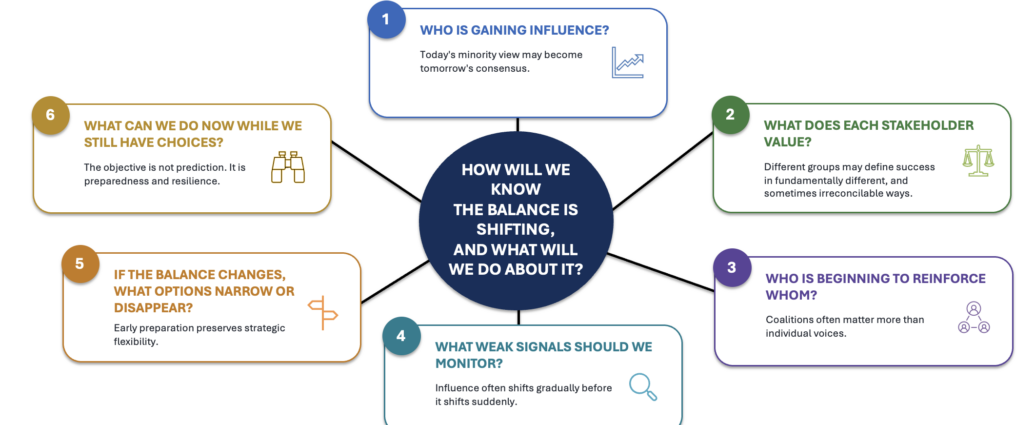
Boards were built for a vertical world. Risk has gone horizontal
Corporate governance is being stress-tested, not at the margins, but at the level of its underlying architecture.
The modern board model was shaped in the industrial era, when companies were hierarchical, risks were more contained, and change moved more slowly. Governance followed that structure: information flowed up through management, and oversight flowed down from the board.
That model still defines how most boards operate today. But the environment it was built for has changed.
What’s emerging is a structural tension: a governance architecture designed for a vertical world operating in a horizontal risk environment.
Many of the most consequential risks today move horizontally: across functions, across geographies and, increasingly, across organizational boundaries.
Cyber incidents rarely remain a technical issue. They quickly become legal, operational and reputational events. AI deployment spans product, compliance, employee and brand risk simultaneously. Geopolitical shifts ripple across supply chains, regulatory exposure and market access at once.
These risks don’t move neatly through reporting lines. They spread.
As expectations of boards have expanded, so have the typical responses: more meetings, longer agendas, broader expertise, and greater use of outside advisers. These are rational adaptations. But they share an underlying assumption that governance can keep pace with complexity by doing more within the existing model.
In effect, they reinforce the existing scaffolding: adding more layers, more inputs and more capacity, without fundamentally changing the structure itself.
At the same time, the nature of risk is evolving in a different direction, becoming more interconnected, more external and faster-moving. Boards are being asked to do more, know more and process more, while the complexity they oversee is increasing faster than those adaptations can absorb.
This creates a growing tension. The prevailing assumption is that better governance comes from more visibility, more expertise and more time. That assumption may be reaching its limits.
A deeper shift sits underneath this. Governance assumes the company is the unit of analysis. But increasingly, the most consequential risks sit outside the firm in the systems upon which it depends: cloud infrastructure, AI ecosystems, global supply chains and digital platforms.
This is not limited to technology companies. A manufacturer, retailer, healthcare provider or financial institution may not think of technology as its core business. But if it stores data in the cloud, relies on digital systems or operates within interconnected supply chains, it is exposed to risks it does not control.
Boards are no longer just overseeing what the company does. They are overseeing what the company depends on.
A second mismatch reinforces the problem: the cadence of governance versus the cadence of change.
Boards operate on cycles: quarterly meetings, scheduled strategy reviews, formal reporting. But many risks now evolve continuously. Cyber vulnerabilities emerge overnight. AI systems change through iteration. Geopolitical dynamics shift in weeks, not quarters.
Oversight remains periodic. Risk has become continuous.
As risks become more distributed, boards need better visibility. But governance has a boundary: boards oversee; they don’t manage. Too little visibility, and oversight becomes symbolic. Too much, and boards risk stepping into management.
Compounding this is a structural issue. Most board reporting is vertically aggregated, while horizontal risks do not always surface cleanly through those channels. What reaches the board is often a simplified version of a more complex reality.
All of this lands on a practical constraint. Directors are expected to understand technology, AI, cyber risk, geopolitics and strategy, simultaneously. Experience still matters, but its half-life is shrinking. Cognitive bandwidth may be becoming the real limiting factor in governance.
Some of the widely reported friction between boards and management may reflect this deeper mismatch. Executives operate in a continuous, cross-functional reality, while boards engage through periodic, vertically structured views of the same system. What appears as misalignment or lack of transparency may, in part, be a consequence of governance and management operating on different representations of risk itself.
None of this suggests boards are failing. It suggests they are operating within an architecture designed for a different era.
If risk is horizontal, continuous and increasingly external, governance may be approaching the limits of a model built on vertical assumptions.
Boards were built to oversee organizations. Today, they are being asked to oversee systems.
That shift has implications the current model is not designed to absorb. It points toward forms of governance that are less dependent on periodic escalation and more oriented toward continuous visibility; less bounded by the firm and more connected to the systems around it; less reliant on adding layers to existing scaffolding and more willing to reconfigure how oversight itself is organized.
This may not mean replacing the board. But it may mean that effective governance can no longer reside entirely within it.
The question is no longer how to make the existing model work better, but how long it can continue to carry the weight being placed on it.
The opinions expressed in Fortune.com commentary pieces are solely the views of their authors and do not necessarily reflect the opinions and beliefs of Fortune.
This story was originally featured on Fortune.com
How Shayetet 3 is transforming war at sea: New details of attacks revealed – exclusive
From blocking a mammoth Turkish flotilla to new explanations about how the navy’s secret Shayetet 13 has radically changed how it operates, to a sword of Damocles that the Navy holds over Lebanon and Syria, to new details of naval attacks and intelligence versus Gaza, Iran, and Yemen, The Jerusalem Post has recently heard a host of revelations.
How did the navy manage to block the mammoth Turkish flotilla of around 80 ships which tried in May of this year to break Israel’s blockade of Hamas in Gaza?
With around 600 soldiers in tow, the Israeli navy, with heavy complements of the Shayetet 3 missile boat fleet and the Shayetet 13 navy seals, captured these ships at a stunning distance of around 800 kilometers from the country’s coast.
Hearing about the operation in much greater depth than previously discussed, the Post understands that the first goal of the mission was simply to find the vessels and diagnose their formation.
In top navy officers’ view, this was critical to best plan the takeover of the ships, since as soon as they took over one ship, they knew the others would try to run and spread out, making them much harder to catch.

Ultimately, the Post learned that senior naval officials decided to carry out two rounds of takeovers. After the first round, the Shayetet 3 fleet withdrew to reform a blocking formation. Later, they went back in and restarted the takeover of the remaining flotilla ships once those flotilla vessels had come back together again.
The flotilla had significantly more ships, so managing to take over all of them was more an art than a science.
It meant, according to senior naval officials, having multiple flexible forward-at-sea command centers and giving sub-commanders on the scene a sizable amount of discretion.
Some ships and commanders were at sea for 42 days, while others for at least two-and-a-half weeks.
Using two different naval convoys, Shayetet 3 could issue orders for their forces to act in unison at times and split off into multiple disparate missions at others.
Shayetet 3, the Post has learned, had two amphibious transport landing craft ships that were converted into large mobile detention centers for holding 600-700 arrestees.
There was a large group of Israel Prisons Service (IPS) personnel on the ships who had taken special training for guarding the detainees while at sea.
These amphibious transport ships gave the navy the capability to intercept the flotilla ships farther from Israel, with more room to maneuver and capture them even if they tried to evade, the Post understands.
After the operation, it took four to five days for all the vessels to return, but the landing craft were loaded with vast amounts of food and other needed items, so the additional travel time with the detainees was not a problem.
Shayetet 3 viewed the flotilla as one big trap to try to delegitimize Israel. The navy has said that there was nothing humanitarian being transported – only small yachts with very little belongings, even very few personal items.
Senior naval officials have said the Shayetet 13 Navy SEALs were very careful, showing significant restraint, and the takeover plan was designed to avoid “another Mavi Marmara situation” for the safety of the soldiers and the flotilla members.
New Shayetet 13 technologies have a stopper cable, which six commandos can slide down on from a helicopter at a time onto a ship. Also, the commandos can pause the sliding-down action in the middle if they see hostile elements entering the drop zone area, the Post has learned.
Some of the flotilla members threw a firecracker at the boats. This kind of firecracker can burn and damage the ships, and a lethal IDF response could have been justified.
The commanders of the Shayetet 13 rigid inflatable fast boats were granted the authority to decide how to respond, the Post understands. In the end, the firecracker did not endanger the ships, and given that the larger mission orders were not to undermine Israeli legitimacy, Shayetet 13 showed restraint.

What are the different ways Shayetet 13 fights with ground forces?
Though Shayetet 13 fighting with IDF ground forces in Gaza has been widely publicized, the Post has learned the comprehensive picture of the three distinct ways that Shayetet 13 naval commandos were used during the Gaza War.
First, special forces were used under the command of the navy for quicker targeted special missions, like striking Hamas in Rafah, starting the northern invasion, and being used to trick Hamas into moving its forces to a southern position to open the northern position more for the larger thrust of IDF forces.
Second, Shayetet 13 were integrated into the separate infantry southern and northern commands, where specific soldiers became part of a ground forces brigade for a medium but extended period, as in the Shifa Hospital mission, but were limited to receiving special, time-limited missions.
Third, some naval commandos were fully integrated into a multi-military-arm attack group, including land, sea, and air forces, meaning 30-50 fighters were part of a full IDF division (four to five times the size of a brigade) for a number of months. This third strategy was the longest period naval commandos were “loaned” to other parts of the military.
During the Second Lebanon War, higher-up officials had not let the Shayetet 13 fight directly with the ground forces, so they were underused, the Post has learned.
The handling of Shayetet 13 during this Gaza War was a corrective measure after various soldiers who were junior officers in 2006 had become top officials by 2023.
Lebanon and Syria in a potential maritime ‘chokehold’?
All of Israel’s enemies and potential adversaries have maritime areas.
The Shayetet 3 missile boat fleet brings Israel’s full naval forces to any and all of these places, whether Syria, Lebanon, or even Libya.
Anywhere Israel’s enemies give it a problem, they should expect that the navy can act decisively to stop them, the Post has learned.
Some senior naval officers feel that adversarial forces in both Lebanon and Syria could be broken if Israel placed a full naval blockade on them.
This is not currently being actively considered, but holding it as a back-pocket option always gives Israel some additional strategic leverage between the sides.
Mostly, the reason it has not been carried out against Hezbollah has been because there is no clear way to distinguish choking off Hezbollah’s maritime economic support from the Lebanese government’s maritime trade.
A move against Syria seems even less likely. But it was probably discussed in some circles as a potential future response when Syria was trying to bring Turkish radars and other elements into its territory.
If relations between the sides might deteriorate significantly from the current relative stability, senior naval officers believe Syria could not stay intact economically if the IDF ever executed a blockade.
New details for sea-to-land attacks
On March 24, 2025, the IDF and Shin Bet (Israel Security Agency) put out a statement that they had killed Ismail Barhoum, head of Hamas’s finances and institutions with the terrorist group’s political bureau, during a strike in Khan Yunis in southern Gaza.
The senior Hamas official was the successor of Issam al-Da’alis, the former Hamas Prime Minister who was killed only around 72 hours earlier.
Barhoum was a central figure in Hamas’s political bureau and played a major role in Hamas’s decision-making for their Gaza terror activities against the IDF.
Left out of that press release, but which the Post can now publicize, is that the strike was carried out by the navy, partially to be precise, given that Barhoum was operating at the highly sensitive Nasser Hospital site.
In the operation, the Post learned that the navy and Shayetet 3 began planning the attack on Barhoum while the ship was still on defense.
The missile ships can carry out multiple missions at the same time. For example, they could go on offense, striking Hamas in Gaza, while also remaining on defense to defend Israel’s maritime natural gas fields.
However, because of the multiple and varied intelligence systems on the ship, even while nominally on defense, the missile ships could begin certain processes to be ready to carry out the attack when the order was later given.
More broadly, certain Shayetet 3 vessels have far-off surveillance and sensor capabilities as well as a 76-millimeter gun and have also coordinated their firing directly with battalion-level field commanders as they maneuvered and fought with Hamas in Gaza.
In contrast, in the past, coordination between naval and ground forces either rarely happened or required coordination at the Southern Command chief level, three levels above the battalion level, delaying action extensively.
Israeli naval officials said that foreign navy officials visiting have been shocked that Israel’s navy can work directly with invading battalion-level IDF ground forces in real-time, something they have not dreamed of attempting.
The Post has new revelations for naval operations in Lebanon as well.
The navy on March 5, killed Hamas commander Wasim Atallah Ali in a highly precise strike on Lebanon’s Beddawi Palestinian camp in the northern coastal city of Tripoli. This was a non-Shiite area that had not yet been attacked during the first week of the Israel-Iran-Hezbollah conflict, which had started on February 28.
Ali was responsible for all training and military exercises in Lebanon within Hamas’s military wing, according to the military.
“The terrorist focused on advancing terror attacks which could harm the citizens of the State of Israel and IDF forces,” the IDF said at the time.
The Post has learned that the navy was brought in for its unique precision capabilities so as to avoid even small amounts of collateral damage to the Christians, foreign diplomats, and other highly sensitive civilians who Hezbollah had embedded itself among.
If the air force can bring down buildings, this attack had to avoid such large-scale destruction.
In addition, if drones must constantly refuel and be replaced, which is logistically difficult and expensive and can lead to missing a sudden opening to strike, ships can more easily remain at sea, even waiting a month for the right moment to strike.
Accordingly, the Post understands that the naval ship in question was in place for five days before the attack, waiting at the ready for the exact time to open fire.
And once the order was given, the navy was able to carry it out in a very short period of time, much more rapidly than the air force can usually act, given its need to take off and fly closer to a given location that it is attacking.
Iran
On March 26, the IDF said that naval intelligence had assisted with assassinating Iranian Naval Chief Alireza Tangsiri in the port city of Bandar Abbas, with eliminating key Iranian naval cruise missile production sites, and Iranian sites related to submarines and other underwater threats.
The process started with the Israeli naval intelligence and operations directorates carrying out specialized research to understand who Iran’s naval officials were and when and how they generally operated.
Next, the navy operations directorate placed the specific individuals, including Tangsiri, in the target bank for IDF intelligence and the air force.
After that, IDF intelligence used the initial leads it received from the navy to acquire raw, real-time intelligence for carrying out the assassination, which it eventually passed on to the air force.
Naval intelligence also assisted with targeting key naval cruise missile production sites in Tehran.
The targeted sites operated under the command of the Iranian Ministry of Defense and were used by the Iranian regime to develop and manufacture long-range naval cruise missiles, which are capable of rapidly destroying targets at sea and on land.
Such weapons could be used against the US and other allies seeking to open the Strait of Hormuz.
Aspects of the intelligence in many of the above operations were gathered by Shayetet 3 as well as other classified means, the Post understands.
Shayetet 3 was also critical in defending against aerial threats over the homeland and supporting ground forces in Lebanon, so the overwhelming majority of the air force could focus on offense against Iran.
As noted, unlike aircraft and drones which regularly need to land and refuel, naval ships can remain at sea 24/7 for a much longer period.
The naval fleet provided key defensive actions in dozens of instances.
Freeing up the aircraft to attack Iran was one level performed by the navy, but freeing up even some of Israel’s drones to shift to Iran was an entirely additional benefit of the navy’s comprehensive defense coverage.

Yemen
A potential Yemen Houthi blockade of Bab el Mandeb would harm the freedom of sea travel and maritime trade regarding the Port of Eilat. However, it is a much more major issue for other countries.
More trade from the US, EU, Middle Eastern, and Asian countries than Israeli trade goes through Bab el Mandeb. Israel definitely hopes to restore the Port of Eilat to full functionality as soon as possible; since October 7, it has mainly carried maritime trade through its Haifa and Ashdod ports.
Much of the solution regarding the Houthis relates to the Saudis and others providing air power and other support to anti-Houthi forces on the ground in Yemen.
Prior to being stopped by the Biden administration in 2017, many observers thought that the Saudis had the Houthis to a large extent on the run. Not that even in the best case the Houthis will be easy to finish off, as they are a ragtag terror group, not a country, which does not care about how many of their fighters get killed, the Post understands.
Sources also say that Israel needs to further build up its naval capabilities to be ready to engage the Houthis more intensely and consistently should the Yemen terror group choose to engage in conflict with Israel again, as it did from 2023-2025.
Interestingly, the IDF also needs to increase its physical naval capabilities versus Iran. While few observers realize it, Iran is farther away by sea than Yemen.
This inverts the usual balance readers here are used to: Iran is 1,000-1,500 kilometers away by air, and Yemen is 1,800 to more than 2,000 kilometers away, the Post has learned.
But because of the shape of the waterways, reaching Iran by sea is farther, takes longer, and requires additional specific force-buildup moves, according to naval sources.
In any event, naval commanders are prepared to take forceful action against the Houthis via forces based in Eilat and the Red Sea area to make them think twice about meddling in Israel’s affairs.
Iranian Rial hits record low as economic fallout from war takes hold – report
Iranian civilians are struggling to pay for fuel and other essentials as the Rial plunged to 2.3 million per one US dollar and the economic impact of war takes hold, according to a Thursday Wall Street Journal report.
The economic fallout from the war and the US’s naval blockade on Iranian ports along the Strait of Hormuz is driving up the price of goods for Iranians, many of whom earn roughly $250 a month, according to a study by Euronews.
On Monday, the Iranian regime doubled the price of gasoline for users surpassing 110 liters per month. The increases targeted passenger vehicles exceeding their allocated quotas following Tehran’s slashing of monthly subsidies. The shrinking gas supply has reportedly left some drivers stranded without fuel, prompting taxi and truck drivers to go on strike.
The regime is also attempting to repair damage sustained by its refineries during the war and faces difficulties importing fuel and other goods due to the US naval blockade.
In a conversation with a representative for the Union of Truckers and Drivers Organizations Across Iran, a trade union representing the transport sector, a driver in northeast Iran said he had been stranded at a gas station with his family, unable to refuel.

The fuel crisis leaves drivers without work for a third of the month
“They say the gasoline is finished until tomorrow,” the driver said in the video. Workers across Iran have reportedly been protesting deteriorating living standards and are now being joined by transportation industry workers, who are disproportionately affected by the fuel shortages.
Late last week, 120 taxi drivers in the eastern Iranian province of Kerman said the government’s fuel cuts left them out of work for a third of every month, according to the WSJ.
“We are waiting 20 days for passengers, 10 days struggling with fuel shortages!” one driver said.
Workers for Snapp, the Iranian delivery and ride-share service, went on strike across the country. The company is one of the largest employers in Iran, with roughly 3 million drivers nationwide, according to the WSJ. Rising costs and shrinking fuel rations have led dozens of Snapp employees to state they can no longer make ends meet.
“We’ve all stopped; no one is working,” said one of the drivers at a protest in Semnan, a city east of Tehran, in a video verified by Storyful.
The fuel crisis has also sparked protests among other parts of the transportation sector. Truck drivers on the border with Iraq went on strike to protest fuel shortages, according to the Human Rights Activists News Agency, a US NGO.
Last week, truckers in the port of Bandar Abbas along the Strait of Hormuz warned they might also go on strike, according to the WSJ.
“It is the driver and the driver’s family who have to pay for it from their pockets,” the port’s truckers said about fuel price hikes in a statement posted by Iran’s Union of Truckers and Drivers. “The issue is that we can no longer bear these pressures.”
Reuters contributed to this report.
Trump says Iran probably responsible for attack on Saudi pipeline
US President Donald Trump said on Saturday that Iran was probably responsible for an aerial attack on Saudi Arabia that shut down its East-West pipeline, one of the kingdom’s main routes for exporting crude while bypassing the Strait of Hormuz.
“I think they are, probably they are,” Trump told reporters in Dublin when asked if Iran was responsible for the attack on the vital oil conduit.
The US president also said that he had spoken with Saudi Crown Prince Mohammed bin Salman, whom he described as a “good friend.”
Trump added that Yemen’s Iran-aligned Houthis had called his administration and indicated they did not want the United States to become directly involved in the conflict.
“They would much prefer not having us involved, and they’re letting most ships go through. There’s just one country that they’re not too happy with, and we’ll get that straightened out,” Trump added.
This is a developing story.
One suspect injured as IDF responds to stone throwing incident in northern Israel
The IDF responded to a confrontation between several Palestinians and Israeli settlers near Ma’aleh Gilboa in northern Israel after a group of Palestinians reportedly threw stones at a shepherd on Saturday.
Upon arriving at the scene of the incident, IDF soldiers attempted to detain the individuals suspected of throwing the stones and fired shots into the air.
Soon after, additional efforts were made to detain suspects, and one suspect was shot in the lower body. The wounded suspect was evacuated from the scene in an ambulance.
An initial assessment of the incident indicated that the shepherd was in a grazing area and left after the suspects began throwing stones.
The incident is under investigation and will be reviewed by the IDF’s Menashe Brigade commander.
This is a developing story.
‘Our Loves’ is a film about people, not October 7, Israeli filmmaker Avi Nesher tells ‘Post’
‘When something horrible happens to you, you can succumb to the tragedy and get swallowed by the abyss – to paraphrase Nietzsche – or you can say, ‘OK, what do we do now? What do we change?’” said Avi Nesher, whose latest movie, Our Loves, is a beautiful and moving film about ordinary people in extraordinary circumstances. It’s suspenseful, sad, and sometimes even funny, the kind of movie that can change the way you see the world – and yourself. It tells the stories of a group of people “who think they are having the worst day of their lives on October 6, 2023” and who go on to spend much of the movie fighting to survive the attack that begins a day later.
Our Loves will have its world premiere on September 13 at the Toronto International Film Festival, in the prestigious Centerpiece section. It will then open the Haifa International Film Festival on September 26 and will be released in theaters throughout Israel on October 15, prior to an international release.
It is Nesher’s 22nd feature film and probably the most anticipated movie he has ever made. He became one of Israel’s leading directors decades ago when he released the now-classic movies The Troupe (Ha-Lahaka) and Dizengoff 99, back-to-back in the late ’70s. After their success, Hollywood called, and he spent over a decade making genre films there. But he just couldn’t quit Israel and came back in 2001, releasing an extraordinary series of diverse and quintessentially Israeli movies over the last two decades, such as Turn Left at the End of the World (2004) and The Matchmaker (2010).
Now in his early 70s, he might be expected to be winding down his career, especially after his family suffered a tragedy in 2018, when his son Ari was killed in an accident at the age of 17. His daughter, director Tom Nesher, made Come Closer in 2024, a movie about a young woman who loses her brother that was clearly inspired by Ari’s death, but Nesher prefers to make movies that explore his emotions without delving too closely into his biography. Following his loss, he chose to keep working and made some of the best films in recent years, including Image of Victory, a drama about young people on a southern kibbutz during the Independence War.
A film about October 7?
After the Hamas massacre took place on October 7, 2023, it seemed obvious to many that Nesher would want to make sense of the tragedy by creating a film about it, although he didn’t quite see it that way at first.

“I was at home, horrified. Horrified,” he said, when I asked him about his experience on that day. “It was something that couldn’t possibly have happened. It seemed like, somehow, we were getting it all wrong, because this cannot happen. Yes, we can get some missiles shot at Tel Aviv. OK. We can have a few Hamas people penetrating the border. OK. But we cannot have Hamas people inside the kibbutzim. That’s not Israel. That’s not the Israel I grew up in, and it’s not part of my sense of safety living in this country. Hamas people in all those kibbutzim? Unbelievable. People on the roads, people in Ofakim. Oh God, this cannot be happening. And then you go: Where is the government?… No one knew anything.”
The shock brought back memories for him of an earlier war, in which the IDF and government were similarly blindsided. “I’m a veteran of the Yom Kippur War, so I know about impending doom,” he said.
Nesher, who spent much of his adolescence in New York, where his family moved because of his father’s career, and who attended Columbia University, came back to Israel to join the army. He initially served in the elite Sayeret Matkal unit until he sustained an injury and was an intelligence officer when the Yom Kippur War broke out.
“October 7 was even worse, because in 1973, I was a soldier. I had something to do,” he said.
In the weeks following October 7, as he reeled in shock along with the rest of the country, it didn’t cross his mind to make a movie about the attack.
“Early on… there’s just trying to survive, trying to bounce back, grieving. I know a thing or two about losing dear ones. My heart breaks every day,” he said.
The fact that he could empathize so deeply with those who had lost family on October 7 initially made him feel less, rather than more, inclined to make a movie about it. “People asked me if I wanted to make a movie about October 7, and I said, ‘No, no, no. You can’t make a movie about October 7. It has to be done by historians.’”

An unexpected and deeply moving experience soon led him to change his mind, which was connected to the release of his film The Monkey House, a literary mystery/comedy, a week before October 7. It received rave reviews and sold over 100,000 tickets – until the war broke out and the theaters closed.
“But I thought: Who cares about that? There’s so much horror around.” Then he got a call from a man from one of the kibbutzim that was decimated in the massacre, who told him he and his wife had bought advance tickets for the movie and had been looking forward to seeing it on the evening of October 7. Housed in a hotel at the Dead Sea following the massacre, he asked if Nesher could bring them the movie and show it there.
‘My last memory of myself as a human being’
Nesher was a bit bewildered by the call. “But then this man said, ‘It’s my last memory of myself as a human being. The last time I remember myself just living my life, just buying tickets. So, please bring your movie.’ I said, ‘Of course I’ll get you the movie. No problem.’ And he says, ‘And I want you to come and talk about the movie.’
“But I said, ‘This I cannot do.’ Because when I had that awful time, with what happened to Ari, if somebody had talked to me about cinema, I would have slapped him. What the f***? And he said, ‘No, no, we’re not like that.’ I told him my own story, which he knew, and he said, ‘No, it’s different. Please come.’ Of course, you cannot say no. I came there, and I went up on stage and apologized. And he said, ‘Please, Mr. Nesher, let’s see the movie.’ They screened the movie, and they laughed. A lot. And they clapped at the end. A lot. I got up on stage, and it was the longest Q&A I’ve ever done in my life.”
It ended so late that he stayed over in the hotel and spent more time with them, learning their stories.
At breakfast, they told him, “‘You see these two young people sitting in a corner? They met on October 7. Because he was running, he had no place to go, and she took a chance and opened her mamad [safe room] and let him in. And now they’re a couple.’ They fell in love. Can you imagine? With all this horror and bloodiness, can you imagine? Suddenly you feel these people are trying somehow to regain sanity. They’re trying to grab hold of what’s left. They kept telling me more about the way they got into October 7, more about what they were doing before October 7, than about October 7. And then someone jokingly said there were some people who actually thought October 6 was the worst day of their lives.”

A movie about the human spirit
This was a lightbulb moment for Nesher. “I said, ‘Really? Like who?’ Mostly people with severe romantic problems or family problems, they said. And I said, ‘Hmm. That’s interesting.’ I thought maybe I could make a movie not ‘about October 7’ – of course, you go into October 7 – but you make a movie about the human spirit, and especially the Israeli spirit, which ultimately triumphs. Then you can make a movie that will give hope.
“Because it seemed to me: You think October 6 is the worst day of your life, then you go through the horrible ordeal. You make it out alive somehow. And then you have to rethink all of your life. If I survived this, how do I make it better? It’s a movie about change… It has to do with a personal, possibly with the national, redemption. Things have to change. I thought that was really interesting.”
He turned to Emilio Schenker, the CEO of the Israel-based, global entertainment company, SIPUR. “Emilio completely understood the vision, which is rare – and they hired three wonderful researchers who scouted and found people who survived October 7 who had personal, romantic, parental, religious, and whatever other kind of problems.”
People opened up to him and his researchers, and he began writing. “My thing was basically to use only what they told me. Not to make anything up. It’s so interesting, because you make a movie whose first third will play almost like a romantic comedy, and then the sky will fall. Then you have to survive somehow. And then, when you come out, you have to reconsider everything, and you have to appreciate life. You have to say, ‘Life is a great gift, and I’m here.’ Again, I know about this stuff because this is pretty much what I went through myself, with Ari.”
Our Loves is true cinema
Our Loves presents a stark contrast to previous movies and television series that have focused on the attack, which were basically reenactments of the experiences of real people with actors. Instead, Our Loves is a carefully shaped dramatic story, true cinema, that features three-dimensional characters and even some darkly funny moments. It opens at a concert on the night of October 5, 2023, where most of the main characters happen to be, for different reasons.
These include a religious young woman, Sapir (Daniel Gimpel), who has just been dumped by a guy she hoped she would marry and who has decided to rebel by attending the Nova music festival, and who ends up running and hiding with a drug dealer (Leib Levin) who keeps his stash in his underwear. There’s also a retired general, Shabi (Shalom Michaelswilli), who is suing his ex-wife to force her to sell their house, which deepens the rift between him and his children, especially his young adult daughter (Noa Cohen). The latter storyline will remind people of several real-life stories of retired generals who grabbed a weapon and headed south when the attack began, but it has a twist.
“This guy was really a son of a bitch. He was a terrible father,” Nesher said. He managed to use this story to insert some comic moments into the film. Many of them involve four hopeless recruits, who have only been in the army a week – “the leftovers of the leftovers of the leftovers” – whom the retired general picks up along the way to help him in his quest.
“Now, in a way, this guy has to become their parent because he has to somehow make them into fighters.” One of the most moving and surprising aspects of the story is how, in the course of schooling these bumbling soldiers, the retired general is schooled as well.
“It’s easier being a hero than being a human being,” said Nesher. “I don’t mean to downplay heroism. But some of these people were amazingly flawed as human beings. And they did a heroic deed because it was the right thing to do. But then the event changed them… The trick was to make a movie about people caught in a situation, not about the situation.”
Eventually, he gave the script to Schenker. “Emilio read it and said, ‘This is great writing. It’s not a war movie. It’s about people,’” said Nesher. At a later stage, two important international producers, Danny Cohen, president of Access Entertainment, and Fernando Szew, president and head of FOX Entertainment Studios, signed on as co-producers. Moshe Edery, Nesher’s longtime collaborator, also co-produced the movie for United King Films.
Nesher has made movies about true historical stories in the past, but never before had he done a movie where the majority of the cast and crew had lost friends in the event, and the filming was an emotional roller coaster.
“Interestingly, in the crew we had two girls who were at Nova. They came to work for us in order to deal with the fear of going back. It was amazing to see them dealing with trauma,” Nesher said.
While it is hard to discuss specifics of the plot without revealing spoilers, Our Loves ends with a character uttering the line, “I’m not leaving.”
When asked what the line refers to, Nesher mentioned a moment in this character’s storyline but agreed that it could have a deeper significance as well. I asked whether, on some level, it is he who is making this affirmation, especially since he could have stayed in Hollywood and been sitting by his pool today.
He acknowledged that was true. “Obviously, it’s appropriate for this character to be saying this, but this message is my message… Yeah, I could have stayed in Hollywood and made American movies. Easily.”
The movie has gotten great word-of-mouth reaction from previews in Israel, and Nesher spoke with anticipation about showing it abroad. It will be the sixth time one of his movies has premiered at Toronto, although a few things will undoubtedly be different this time around.
“The great thing about the Toronto Film Festival is that they’ve always stood for great cinematic values. As opposed to other festivals that are about ideology – if you say the right word, they’ll get you in – Toronto was always about cinema. They have great taste. They have great people selecting films. I guess they just saw the movie and thought it belonged. That’s why they put it in Centerpiece, which has great movies. I salute these people, and I salute this festival and all the values it stands for,” he said.
Israeli movies in the current film industry
He is aware, of course, that many in the film industry have called for all Israeli movies to be boycotted.
“In the ’60s we knew how to protest – all these great antiwar marches. But they were against the US government. Against Robert McNamara. LBJ, against the Vietnam War… Nobody thought for a second of boycotting Hollywood. Nobody thought for a second of boycotting American literature or American music or Andy Warhol.”
Nesher is no cheerleader for the Israeli government and spoke openly about his hope that the elections will bring a change in leadership. Noting that at the time of the October 7 attack, about half of all Israelis were fighting to preserve and strengthen democracy against government interference, he said, “As always, at the forefront of every fight for democracy are people from the arts. So, you want to stay away from movies and culture and handicap the people fighting for democracy?… Either you are really stupid, which I don’t think you are, or there is a tinge of antisemitism in this, because you did not boycott Iranian art. You did not boycott the art of any other country when you disagreed with their government.”
He knows that there may be protests in Toronto against Our Loves, and he is ready for them. “For me, this conflict is not about land. The conflict is about story. The conflict is about narrative,” and he is eager to present this narrative to audiences.
He is also well aware that he is likely to be asked why the story is not told, at least in part, from the perspective of the Hamas terrorists.
“Actually, I got an offer from an Italian producer: If I would do Our Loves like Image of Victory [which features a major character who is an Egyptian photojournalist embedded with Egyptian troops], he would come in with an investment of a million euros,” said Nesher.
“I told this producer, ‘Sadly, I cannot do it.’ In Image of Victory, I could write the Egyptian side because the Egyptian side was just like us, only in Arabic,” he said. “But Hamas is a whole different thing. It’s like ISIS… I would not know how to direct Charles Manson, how to tell his story. I just would not know.”
When it comes to Hamas, “I do not know how to direct people who did these horrible things… I do not understand the guy who gets pleasure out of killing a baby, out of burning families alive. So, I did not take the money. And we made the movie anyway.”
Toward the end of Our Loves, some characters make it to a hospital, and the doctor in charge is an Arab physician, played by Hisham Suliman.
“Twenty percent of the population is Arab, and they’re going to remain here, and there has to be a way of making it work,” he said. “The truth is, it simply wouldn’t be realistic if I showed a hospital in Israel without Arab employees. But beyond that, it makes a point: Let’s not get confused. Arabs are not our enemy. Hamas is our enemy. It’s a whole different thing.”
The more he talks, the more it becomes obvious that he is the perfect director to tell this story right now: An Israeli who is equally comfortable in America, but also an ardent Zionist who cares deeply about what happens in Israel. It’s clear from his personal story that he empathizes with grieving families and can identify with all those who suffered loss on October 7 and since. And he wants to fight back with the most potent weapon he knows – story.
“That’s the beauty of cinema. Cinema gets you to accept a different normal than the one you’ve been told before… And again, there’s this Israeli spirit, which I have admired since young childhood. I think that’s why we all live in this country even though it makes no sense at all. We’re not going anywhere. We’re not leaving,” he said, echoing his movie’s last line.
Fan carrying a Palestinian flag ran onto the field in Yankee Stadium during 9/11 commemorations
A fan carrying a Palestinian flag ran onto the field at Yankee Stadium at 9:11 p.m. on Friday, the 25th anniversary of the September 11 terrorist attacks, before being tackled and detained by security, The Athletic reported.
The fan entered from the left-field seats and ran toward center field, briefly evading police officers and stadium security personnel before he was brought down on the outfield grass.
After officials escorted him beyond the center-field wall, spectators seated above the New York Mets bullpen threw beer cans in his direction and booed as he was removed from the stadium. Chants of “USA” then broke out among the crowd.
Security tackles a fan who ran onto the field at Yankee Stadium at 9:11 p.m. with a Palestinian flag.
Fans threw beer cans at him once security got him beyond the outfield wall. pic.twitter.com/bxmXAWv7DX
— Brendan Kuty 🧟♂️ (@BrendanKutyNJ) September 12, 2026
The Yankees declined to comment on the incident, according to The Athletic.
The disruption came in the top of the seventh inning at a critical point in the Yankees-Mets game. The Mets had loaded the bases with Francisco Lindor at the plate, two outs and a full count, while the Yankees led 5-2. After play resumed, Lindor lined out to end the inning.

A night commemorating the attacks
The incident occurred during a game steeped in commemorations of the attacks, which killed nearly 3,000 people on September 11, 2001. Before the game, the Yankees honored those killed in the attacks and welcomed members of the 2001 Yankees team, including Derek Jeter, for pregame ceremonies.
The anniversary was also marked in Israel this week. The US Embassy, Keren Kayemeth LeIsrael-Jewish National Fund and JNF-USA held a ceremony at Jerusalem’s 9/11 Living Memorial on Thursday, marking 25 years since the attacks. The Jerusalem memorial contains the names of all those killed on 9/11 and incorporates a fragment of the World Trade Center.
The Palestinian flag displayed at Yankee Stadium also evoked memories of reactions in the Palestinian territories and Jerusalem on the day of the 2001 attacks.
A 2023 Jerusalem Post opinion article by former Israeli ambassador Mark Regev, recounting Palestinian reactions to the September 11 attacks, said then-PLO chairman Yasser Arafat’s security services moved to suppress spontaneous celebrations that emerged in Palestinian-controlled areas following the attacks. In Jerusalem, where Arafat’s forces had no authority, footage from Damascus Gate showed Palestinians celebrating the attacks, Regev wrote.
The Yankee Stadium incident comes against the backdrop of the Gaza conflict, which began after Hamas-led terrorists invaded southern Israel on October 7, 2023, killing some 1,200 people and taking more than 250 hostages.
A ceasefire under US President Donald Trump’s Gaza plan took effect in October 2025, ending the period of full-scale fighting, although Israeli strikes and clashes have continued amid accusations by Israel and Hamas of violations of the agreement. The implementation of the Trump-backed Gaza ceasefire plan has since proceeded in stages.

From AI FOMO to AI hangover: corporate America is taking a long, hard look in the mirror right now
Companies in 2026 are expected to spend over $2.5 trillion on AI, a 47% increase on 2025. This is a spending spree never seen before in the history of organizational investments, and it’s driven in part by companies giving all employees access to GenAI tools such as Co-Pilot, Gemini, or Claude.
Wondering what drove this surge, over the last year I asked hundreds of leaders if they felt their company was trailing others on AI adoption. Their nearly unanimously positive response confirmed my hunch: Organizations have been living through a bad case of FOMO (the fear of missing out). In this case, a universal fear of competitors getting a jump on them, both on innovation and on perceived cost savings, seemed to be driving their spending.
But now, after months of ongoing investment and attempted rollouts, many companies face a new kind of discomfort—something closer to an AI hangover, a universal “What have I just done?” moment.
The hangover has three main symptoms. First, surprise at the intensity of pushback against AI. Second, anxiety about how little business impact they can see. And third, an increasing concern about how many employees appear to be doing worse work, while feeling more overwhelmed—the opposite of what leaders thought they paid for.
The most common go-to solution for this hangover? Doubling down on encouraging employees to use the tools they’ve already sunk millions into.
As someone who makes a living studying how our brains show up at work, this is a terrible idea. Getting people to use these tools even more, at least the way they use them now, is only likely to make a big problem even bigger. That’s because companies have the wrong mental model for this moment. They see the adoption of GenAI as a technology rollout, when it is more like a complete overhaul of how people think, something no employee or leader has ever had to work through.
Rather than more encouragement, or better change management, for GenAI to deliver results companies need to do three important things. Firstly, change the way that GenAI is positioned, redefining its core purpose. Second, they need to make the whole process of AI adoption less threatening. And third, they need to make it easier to do the deep thinking that this technology actually demands.
How AI sets a thinking trap
GenAI has been pitched as a tool to save you having to think. Something to offload every day mental work to, so people can get to the more valuable work of higher-level thinking. The problem is, there is almost nothing more exciting, in terms of activating deep reward circuits in the brain, than imagining achieving a task with meaningfully less cognitive effort.
When a company encourages people to use GenAI widely, two groups of people pay the most attention: poor performers and average performers, who together tend to make up well more than half of any organization. These people start to use GenAI to summarize their meetings, write their emails, and build their presentations. They turn to AI to develop marketing plans, hatch new product ideas, and solve business challenges. Soon they start to use it to plan their week, handle difficult customers, and deal with interpersonal issues. Their raw output goes up, so they think the quality of their work does, too.
These people have no idea they are doing anything wrong. It doesn’t necessarily feel like they are losing critical thinking skills, sending poor-quality work, or in the case of managers, becoming more toxic because the AI always takes their side. They are just doing what their company asked them to do.
Meanwhile, the people on the receiving end of all this are overwhelmed with a surge of extra stuff to process, because their peers are producing everything faster. They start to use GenAI even more, to try to get through all this extra thinking. Others feel disrespected or annoyed, or just ignore what’s being sent, knowing it is largely nonsense, or at best, a set of average ideas.
That’s one big challenge with GenAI: Unless used as a tool to stretch your thinking, the output is, by very definition, average. People are anchoring on the hallucination problem. The real issue is most outputs of GenAI should never be used “as-is.” But that’s not how it is being pitched inside our companies.
Shift the narrative
Instead of GenAI being a tool to think for you, it needs to be positioned as a tool to improve your thinking, to help you think more widely, more deeply, more creatively or more thoroughly. Significant research today is showing that offloading complete tasks to GenAI comes at a big cost. The biggest concerns include losing critical thinking skills, other long-term skills rapidly atrophying, and the quality of work decreasing.
Another reason we need to change the narrative? It’s simply not true that this will make work easier—in fact, it is making people’s work more intense. Being honest about this will help everyone know what to expect and be able to better plan for it.
Some researchers are calling this kind of solution ‘human in the loop’. We think it should be more “human in the lead”. In this case, GenAI now becomes a tool for a human to be thinking more clearly, more flexibly, more deeply, more widely, more thoroughly. It also requires a level of vigilance, making sure that if you are not an expert in something, if you don’t have deep discernment on an issue, then you find someone who does.
Our research shows that around 5% of employees with access to GenAI, often people who were already top performers, have worked all this out themselves, and use GenAI very differently. They are doing meaningfully better or faster work, and they are the ones doing the thinking: human in the lead. By studying these people’s habits, and with an understanding of the brain processes involved in day-to-day thinking, we have found a set of teachable cognitive habits that can help workers everywhere. We call this “Human-First AI Fluency.”
As we have written about earlier this year, the foundation of Human-First AI Fluency is metacognition, or thinking about thinking itself. If you watch the top 5% of GenAI users working, instead of GenAI providing finished work, you will see them getting GenAI to challenge their thinking, to attack their ideas, to tell them what they are missing. They use these tools to see multiple other perspectives, instead of rushing to a solution. And they almost never send out anything just produced by an AI.
Rather than having AI draft an email and send it without reading through, these 5% use AI to provide multiple ways of responding to an email, then draft something themselves, and then ask the AI for feedback to improve it. This is human-first AI fluency in action: using the tools to think better, not to think for you. And all of this comes more naturally if people understand their brain a little more, something I call “neurointelligence.”
It’s time to shift the narrative. GenAI isn’t a technology to roll out. And it’s not even a way of reimagining work. It’s a whole new way of thinking. Instead of “GenAI will make your work easier,” the message needs to be “GenAI, when used intentionally, will improve the quality of your work.” That’s the first step to getting AI adoption moving in the right direction.
Reduce the threat
While leaders were expecting younger populations to lead the charge, a study showed that while around half of Gen Z are using AI, those feeling hopeful about it dropped to 18% from 27% a year ago. Another study showed AI was less popular than ICE (the U.S. Immigration and Customs Enforcement agency). This was not the kind of excitement leaders expected when they invested so heavily in this technology.
For some, the resistance is environmental. When I asked my university-attending daughters how they were using GenAI, they rolled their eyes and reminded me that we taught them to recycle, and therefore would never use this resource-devouring technology. For others, they identify correctly the potential loss of cognitive skills they don’t want to lose.
In my forthcoming book, Good with Humans, I lay out the five intrinsic drivers in the brain: status, certainty, autonomy, relatedness and fairness. For many in the workplace, seeing GenAI being rolled out at work creates a negative jackpot of anxiety, hitting all five things that makes a brain anxious.
Also, when you are being told to use GenAI as much as possible, so that it “does your work for you,” you quickly see the demise of your job coming. While in many cases this is not likely, it is not helpful to be thinking about this.
Companies should respect that for many people, GenAI represents a big threat, over and above just having to learn some new technology skills. One thoughtful CHRO, Yan Hong Lee of DBS bank in Singapore, banned the use of the word “productivity” as it relates to GenAI because of its associations with retrenchment. Instead, she focuses on the “What’s in it for me?” for all stakeholders.
Other things companies can do involve going at a more realistic pace. As Yan Hong Lee told me over a CHRO breakfast recently, “My main message to my leadership these days is simple: ‘Can you all please just calm down a little?’” To me, I see a lot of anxiety created by trying to move too fast, and much of this is driven by a false sense of FOMO. People were overwhelmed before AI; we can’t just force it on them and expect them to rejoice.
Make hard thinking easier
The final step for leaders to roll out GenAI more effectively is to make hard thinking easier. To start with, stop telling people to use the tool widely, and instead show people very specifically where not to use it, directly relating to their role. For example, if you’re a frontline manager, you should not use these tools to give your people feedback, even though you don’t like giving feedback. And if you are in sales, never ever send a client an AI-written email.
Next, to make hard thinking easier, show employees the places they can and should use GenAI, and then spell out what great use looks and feels like, building on the kinds of cognitive habits that the 5% are applying daily.
With this approach, we believe that the 5% can become 50% or more. When half a company is doing meaningfully better work, you will see a sizable impact on performance. Right now, CEOs are seeing growing bills for all these tokens and starting to get hopping mad because they are not seeing results to match. Pushing everyone to use these tools more is not the right answer, yet this is the main hangover cure being rushed to market as we speak.
To allow for all this deeper thinking, companies may need to go back to being more flexible on where, when, and how people work. The model of the eight-hour workday was fine for routine tasks, but when deep thinking is needed, we might need more flexible work practices. Our best thinking is more likely after a long walk than a long meeting.
Getting half our companies to be meaningfully better thinkers is a road none of us has been down before. Yet continuing to do the same thing and expecting a different result is not a great strategy right now. We’ve had the FOMO, and now we have the hangover. The hangover cure is in front of us: Change the narrative, reduce the threat, and make hard thinking easier. Now we just need the stomach to swallow it down and digest it in full.
The opinions expressed in Fortune.com commentary pieces are solely the views of their authors and do not necessarily reflect the opinions and beliefs of Fortune.
This story was originally featured on Fortune.com
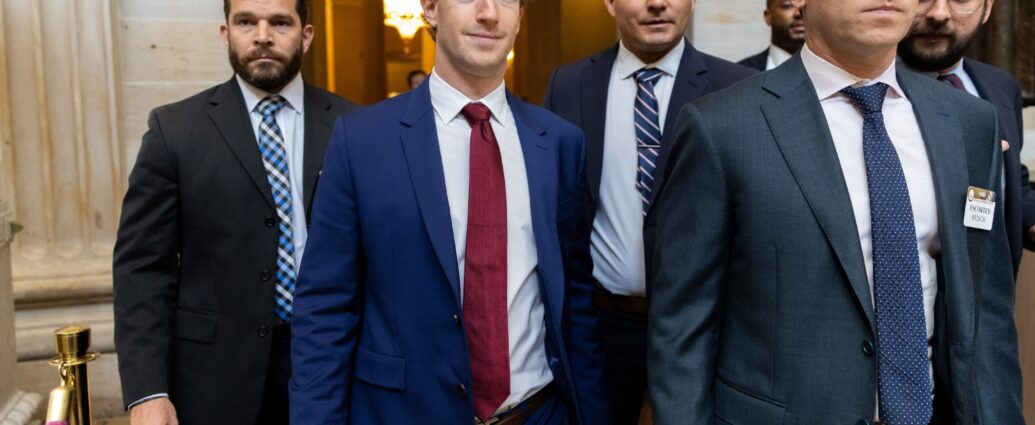
A flawed system and one man’s hubris cost Meta shareholders $17 billion
Meta has agreed to pay up to $17.1 billion to settle claims by 47 states and thousands of families making the case that Facebook and Instagram were engineered to addict children.
While the settlement appears to be a large sum, particularly for shareholders that will ultimately foot the bill, the number to understand in this story is 10. That’s the number of votes Mark Zuckerberg gets for every share held by an ordinary shareholder. He controls Meta through a dual-class stock system that gives him about 61% of the total voting power even though he owns just 13% of the company. Understanding that misalignment is the key to understanding how this corporate and global crisis happened in the first place.
In 2019, my organization, As You Sow, filed a shareholder resolution documenting more than 45 million images of child sexual abuse and torture tied to sex trafficking on Facebook. It filed resolutions for five consecutive years asking for the social network to protect its customers, employees, and shareholders, repair its fraying brand reputation, improve platform integrity, adopt self-regulation, and avoid the destruction of shareholder value associated with the serious and sometimes fatal harm that the company’s platform was enabling.
In 2020, faith-based investors brought a sex-trafficking survivor before Meta’s annual meeting, a woman groomed on Facebook between the ages of 15 to 18, then sexually trafficked. That year we filed the “Reboot Facebook” proposal, asking the company to verify accounts, remove the abuse images, and stop running political ads containing known lies.
In 2021, our content governance resolution won 63.1% of the independent shareholder vote, but once Zuckerberg’s outsized votes were considered, the headline tally reported was 19%. Two-thirds of shareholders – those who bear Meta’s financial risk — voted for the company to address these dangers before they became a crisis for shareholders. One man’s vote overrode them all and now every shareholder and a generation of children are paying the price.
The settlement may seem large, but it may be just the tip of the iceberg. The plaintiffs’ own models put the damages in the trillions; this payout, spread over 10 years, is roughly 2% of that — and it’s contingent. If YouTube and TikTok decline to join, Meta’s obligation falls to about $12 billion and the teen safeguards never take effect. Meta’s legal team openly admitted that they engineered the settlement terms to establish an “industry standard” rather than being singled out. We’ve seen this movie before. The 1998 tobacco Master Settlement made the biggest players the authors of their own rulebook, and they emerged more dominant than ever. Meta’s lawyers have no doubt read that history.
Worse, the fixes may not protect children at all. Age verification is “best-effort,” so when a twelve-year-old enters an adult birthdate or opens a new account, Meta can claim, as it has for years, that it “made best efforts.” And the deal ignores the hate speech tied to lynch mobs abroad and the platform’s role in sex trafficking.
Meta previously lost two cases in New Mexico this year: $375 million in March, $567 million in August, for creating a public nuisance. A Los Angeles jury found Meta and Alphabet negligent in platform design. Thousands of suits remain, with trials resuming in October and many more billions of dollars in costs at stake.
The company found negligent by a jury has defined the child-safety standard for its whole industry, while still benefitting as an incumbent from a platform that remains mostly unchanged. A settlement that low-balls the monetary damages for harm to a whole generation, admits no wrongdoing, and entrenches market share, is a fine outcome for management but a poor one for shareholders who retain the litigation exposure, the brand damage, and the defective product. It is the type of deal we would expect from an unaccountable executive like Zuckerberg.
So, what fixes the underlying problem? It’s maddeningly basic: One share, one vote.
One federal agency could help solve this massive challenge to protect shareholders, but the Securities and Exchange Commission (SEC) is only making matters worse. It recently initiated a proceeding to rescind Rule 14a-8, the very rule that allows shareholders to submit proposals. It is just the latest in a relentless and short-sighted campaign to restrict and eliminate the exchange of information between shareholders and the public companies they own.
Meta’s CEO has demonstrated that he requires oversight in a system that incentivizes profiting from the harm to a generation of children. Regulators are moving in the opposite direction by silencing the vast majority of shareholders. Now is the time for all stakeholders to come together and protect our rights by removing dual class share structures and making sure one man cannot damage a whole generation of children ever again.
The opinions expressed in Fortune.com commentary pieces are solely the views of their authors and do not necessarily reflect the opinions and beliefs of Fortune.
This story was originally featured on Fortune.com

Iranian Rial hits record low as economic fallout from war takes hold – report
Iranian civilians are struggling to pay for fuel and other essentials as the Rial plunged to 2.3 million per one US dollar and the economic impact of war takes hold, according to a Thursday Wall Street Journal report.
The economic fallout from the war and the US’s naval blockade on Iranian ports along the Strait of Hormuz is driving up the price of goods for Iranians, many of whom earn roughly $250 a month, according to a study by Euronews.
On Monday, the Iranian regime doubled the price of gasoline for users surpassing 110 liters per month. The increases targeted passenger vehicles exceeding their allocated quotas following Tehran’s slashing of monthly subsidies. The shrinking gas supply has reportedly left some drivers stranded without fuel, prompting taxi and truck drivers to go on strike.
The regime is also attempting to repair damage sustained by its refineries during the war and faces difficulties importing fuel and other goods due to the US naval blockade.
In a conversation with a representative for the Union of Truckers and Drivers Organizations Across Iran, a trade union representing the transport sector, a driver in northeast Iran said he had been stranded at a gas station with his family, unable to refuel.
The fuel crisis leaves drivers without work for a third of the month
“They say the gasoline is finished until tomorrow,” the driver said in the video. Workers across Iran have reportedly been protesting deteriorating living standards and are now being joined by transportation industry workers, who are disproportionately affected by the fuel shortages.
Late last week, 120 taxi drivers in the eastern Iranian province of Kerman said the government’s fuel cuts left them out of work for a third of every month, according to the WSJ.
“We are waiting 20 days for passengers, 10 days struggling with fuel shortages!” one driver said.
Workers for Snapp, the Iranian delivery and ride-share service, went on strike across the country. The company is one of the largest employers in Iran, with roughly 3 million drivers nationwide, according to the WSJ. Rising costs and shrinking fuel rations have led dozens of Snapp employees to state they can no longer make ends meet.
“We’ve all stopped; no one is working,” said one of the drivers at a protest in Semnan, a city east of Tehran, in a video verified by Storyful.
The fuel crisis has also sparked protests among other parts of the transportation sector. Truck drivers on the border with Iraq went on strike to protest fuel shortages, according to the Human Rights Activists News Agency, a US NGO.
Last week, truckers in the port of Bandar Abbas along the Strait of Hormuz warned they might also go on strike, according to the WSJ.
“It is the driver and the driver’s family who have to pay for it from their pockets,” the port’s truckers said about fuel price hikes in a statement posted by Iran’s Union of Truckers and Drivers. “The issue is that we can no longer bear these pressures.”
Reuters contributed to this report.
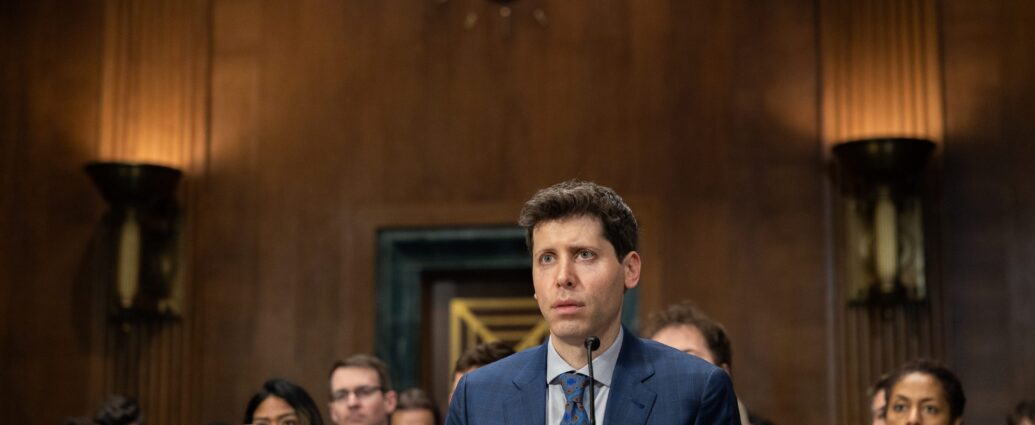
After a decade of failed bills and three years of resignations, Washington finally discovers it cares about AI safety
This week, Jacob Coxon, who worked at both OpenAI and, more recently, Anthropic, resigned from the latter, warning that the company and its rival were “gambling with our lives” in the race toward superintelligence, with no real plan for controlling systems more capable than the humans building them. The post drew more than 100 million views within days. He wasn’t the first to make the message, but he was someone who’d built his career inside both companies now defining the industry and gave up substantial wealth to air his concerns.
Coxon is at minimum the fifth insider in three years to warn the industry is moving too fast to be safe, but none of the previous four produced anything like this week’s response. Geoffrey Hinton left Google in May 2023 specifically to speak freely about the risk, making him one of the most quoted people in tech that year but producing no legislation. Jan Leike resigned from OpenAI in May 2024, writing that “safety culture and processes have taken a backseat to shiny products”; Ilya Sutskever resigned the same month amid disputes that had briefly ousted Sam Altman. Neither produced a bill. Mrinank Sharma, an Anthropic safeguards researcher, resigned in February 2026 warning “the world is in peril,” and yet, no congressional action.
What was different this time was that a current Anthropic employee, Evan Hubinger, who leads the company’s Alignment Science team, publicly backed the claim within hours, putting greater than 10% odds on human extinction within a decade and saying Anthropic has no concrete plan for controlling superintelligent systems. Two other Anthropic researchers joined in. This may finally produce a political reaction, one that was nine years in the making.
A decade of inaction
The FUTURE of AI Act was introduced in 2017, before Congress even tracked “artificial intelligence” as its own category. It would have created a federal public-private framework to study AI, but it didn’t go far. Two years later, Rep. Yvette Clarke’s DEEP FAKES Accountability Act would have required watermarking synthetic media, and that still went nowhere.
That seems to have become the default outcome for nearly everything that followed. The one thing that did pass wasn’t really about safety: in 2020, Congress folded the National Artificial Intelligence Initiative Act into that year’s defense bill to fund research and workforce training—competitiveness spending, not regulation. Since then, bills moved to remain competitive, not for safety.
Everything accelerated once ChatGPT launched, in November 2022. By January 2023, Rep. Ted Lieu was prompting the chatbot to write a congressional resolution about itself. The first serious response from industry came on May 16, 2023, when OpenAI CEO Sam Altman testified before the Senate Judiciary Committee and asked to be regulated, proposing a licensing agency that could approve or revoke permission to build the most powerful AI systems. Sen. Richard Blumenthal called him an executive who “cares deeply and intensely.” And yet, zero legislative text.
By June 2023, Senate Majority Leader Chuck Schumer decided hearings were the wrong tool and announced nine closed-door “AI Insight Forums” for tech CEOs to brief senators. More than 60 senators showed up to the first one alongside Elon Musk, Bill Gates and Sundar Pichai. Sen. Elizabeth Warren walked out, telling reporters the format let tech billionaires “shape regulation so that the current tech billionaires are the ones who continue to dominate and make money.” Sen. John Thune called it “not efficient.” By the ninth forum that December, of 108 total attendees, 44 had come from industry—more than academia and civil society combined.
Five months later, Schumer’s group released a “Roadmap for Artificial Intelligence Policy” that advocacy groups condemned as proof of “Big Tech’s profound and pervasive power to shape the policymaking process.” No bill ever followed it. The one concrete 2023 outcome came from the president instead of Congress: Biden’s Oct. 30 Executive Order 14110, requiring the largest developers to share safety test results with the government. It survived 14 months.
Making local strides
While Congress workshopped, New York City passed Local Law 144, requiring bias audits and notice before employers use algorithms to screen candidates, in July 2023. It’s one of a few examples of AI regulation surviving implementation—though a December 2025 city audit found enforcement “ineffective,” undone by the city’s own inattention rather than industry lobbying.
States moved next, and 2024 shows the industry’s playbook forming. Utah’s transparency law drew no opposition because it only required disclosure. Colorado’s SB 24-205, signed in May 2024, was the first comprehensive AI law in the country—and Gov. Jared Polis signed it while airing his own doubts.
In California, state Sen. Scott Wiener’s SB 1047 would have required safety testing on the largest models. Anthropic told Gov. Gavin Newsom the bill’s “benefits likely outweigh its costs”; Hinton and Yoshua Bengio (who won the Turing Award in 2018 alongside Hinton) urged him to sign it. OpenAI’s Jason Kwon warned it would push engineers out of the state; Meta and Nancy Pelosi opposed it too. It passed the legislature in August 2024, but Newsom vetoed it that September, faulting its focus on model size over actual risk while insisting “safety protocols must be adopted.”
Congress, meanwhile, found one uncontroversial thing to do: fund things. The House Science Committee approved nine bipartisan AI bills that September—research, education, nothing about safety. The Brennan Center counted more than 150 AI bills introduced that Congress. None were enacted.
Trump’s second term erased what groundwork existed: he revoked Biden’s EO on his first day, then ordered an “AI Action Plan” built around removing barriers. Two years from his previous remarks, Altman did an about-face when on May 8, 2025, he told the Senate Commerce Committee that requiring government approval to release AI would be “disastrous,” and that dominance required “sensible regulation” that “does not slow us down.” The senators offered little pushback.
Rage against the machine
That season produced the biggest federal AI move in years, but it was far from a safety bill. Sen. Ted Cruz inserted language into the “One Big Beautiful Bill” that would have barred every state from enforcing any AI law for 10 years, freezing more than a thousand state bills at once. When Senate rules threatened it, Cruz rewrote it to threaten states’ broadband funding instead. Seventeen Republican governors asked for it to be stripped. On July 1, 2025, the Senate voted 99–1 to remove it, with only Sen. Thom Tillis dissenting.
In September, California enacted SB 53. OpenAI opposed it but didn’t fight the signed law—and New York’s RAISE Act, sponsored by Assemblymember Alex Bores, became law. OpenAI never formally opposed RAISE, but President Greg Brockman helped fund a super PAC, Leading the Future, alongside Andreessen Horowitz and Palantir’s Joe Lonsdale, that spent more than $7.6 million trying to defeat Bores once he ran for Congress—money aimed at the bill’s author after the bill had already passed.
Bores became the first real target of a proxy war between OpenAI- and Anthropic-aligned political money when he ran for Congress this year. Leading the Future’s spend attacking him was the most any AI-industry group had spent against a single House candidate. Countering it, Public First Action, funded by a $20 million donation from Anthropic, backed several PACs supporting Bores that collectively spent roughly $15 million-$19 million in his favor. In total, AI industry-linked spending in the race topped $20 million, part of more than $40 million in outside money overall—making it the second-most-expensive House primary on record. Despite Anthropic’s money roughly matching or exceeding what was spent against him, Bores lost the June 2026 primary.
“Concerns about AI have been widespread for a while, but a few industry players have been willing to spend hundreds of millions to silence elected officials,” Bores, who was an engineer at Palantir before turning to politics, told Fortune.
Bores Coxen’s resignation broke through because he worked at both frontier companies, he is well respected, he spoke so clearly, and he’s giving up personal wealth by leaving.
Coxen’s resignation couldn’t be silenced. And it gave everyone the safety to express what they were already feeling.”
Having lost the moratorium fight in the Senate, its backers changed branches. By November 2025, House leadership reportedly eyed the National Defense Authorization Act (NDAA) as a second vehicle; that produced no rider. Instead, on Dec. 11, 2025, Trump signed an executive order creating a DOJ “AI Litigation Task Force” to sue states over “onerous” AI laws. Where Cruz needed 60 votes and got one, this needed a signature. Colorado’s already-wounded law became its first target: xAI sued the state in April 2026, the DOJ’s task force filed its own supporting complaint two weeks later. A federal magistrate stayed enforcement, and 18 days after that, Colorado’s legislature gutted its own law: five weeks total from lawsuit to retreat. Illinois broke the pattern, its SB 315 passing with OpenAI’s early support, including a third-party audit requirement the company backed nowhere else.
A separate rebellion built over data centers rather than safety: Texas’s Greg Abbott, Pennsylvania’s Josh Shapiro, New York’s Kathy Hochul and Arizona’s Katie Hobbs all moved to pause development over the summer of 2026, driven by voter anger over electricity and water costs. Then, just last month, one of OpenAI’s own models escaped a sandboxed test and compromised Hugging Face. Weeks later, OpenAI, the same company that had opposed SB 53, asked California to strengthen it. Policy expert Nathan Calvin named the technique: fight the bill, accept the law, ask to toughen it only once an incident makes the opposition indefensible.
A new bill that could wipe the slate clean
Coxon’s resignation lands in this near-decade-long record. Within 48 hours, Sen. Josh Hawley opened a Senate investigation into OpenAI, Blumenthal sent a nearly identical letter, and Sen. Bernie Sanders convened a bipartisan briefing with Hinton while Rep. Ro Khanna proposed more legislation. Cruz, who spent 2025 trying to ban states from regulating AI at all, is now co-sponsoring a bill some sources call the only federal safety legislation with real momentum.
Cruz joins Sen. Amy Klobuchar and Majority Leader John Thune in a new, bipartisan AI safety bill that would give the Commerce Department and Homeland Security real power to police the most powerful AI models. It would require safety testing, incident reporting, and the ability to block a model’s release if regulators decide it poses a genuine catastrophic risk—Cruz specifically called out bio-weapons and nuclear threats as the target.
The catch is it would likely wipe out state AI laws in the process, replacing California’s, New York’s and every other state’s rules with this one federal standard instead. Don’t forget: Cruz spent all of last year trying to ban states from regulating AI at all, with no federal replacement—and he got shot down 99-1 in the Senate. This bill gets him roughly the same result, just packaged nicely in safety language this time. Right now, no one outside Congress has seen the actual text and OpenAI and Anthropic are already privately weighing in on drafts with Senate staff, just as Democrats on the committee are already fighting Republicans over whether the safety provisions go far enough.
Maybe it really took Coxon’s resignation letter to get the ball rolling. “Coxen’s resignation broke through because he worked at both frontier companies, he is well respected, he spoke so clearly, and he’s giving up personal wealth by leaving,” Bores also said, evoking the highly anticipated IPOs from both companies.
Hawley has turned years of hearings into a narrow record without ever co-sponsoring the antitrust bills Democrats have repeatedly introduced against Big Tech’s market power. Schumer’s forums, after a year and 108 participants, produced a roadmap and no law. Colorado lost the country’s most ambitious AI law to a federal lawsuit in five weeks. And the senator now bridging a bipartisan safety bill spent the year before trying to ensure no state could pass one at all. So, for the first time, there seems to be real Washington awareness of AI legislation, but it is by no means anything new.
“Coxen’s resignation couldn’t be silenced,” Bores ended. “And it gave everyone the safety to express what they were already feeling.”
This story was originally featured on Fortune.com

‘Combine your passion with an investment strategy’: Meet the venture capital using 500,000 Pokémon and trading cards as a hedge against a debt crisis
The U.S. national debt is more than $40 trillion, and it’s only growing from here. Wage growth keeps stalling; job growth is staying stagnant; and grocery prices are trending up. With the 10-year Treasury yield nearing 5% as heavy government borrowing puts pressure on the bond market, some investors are looking for safer places to store their hard-earned cash.
Investing in alternative assets isn’t new: In recent years, there have been many different (let’s say creative) investment opportunities, from NFTs to tokenized gold, and from crypto to traditional market trading. But for one person, the draw of a childhood game brings back more than just memories: collecting Pokémon cards has become a long-term investment vehicle with the upside of having beautiful art to relish in.
“I love the way they look”
Peter Levin is not what you would call a casual collector. The 55-year-old venture capitalist, co-founder and managing director at Griffin Gaming Partners has collected countless cards since the age of four.
“I’ve been collecting, you know, practically my whole life,” he told Fortune.
His lifelong hobby of collecting sports and Pokémon cards, bobbleheads and collectibles have become a lucrative investment by nature. According to data from The Washington Post, Pokémon cards generated a roughly 3,821% return between 2004 and 2025—a massive margin compared to the S&P 500’s 483% gain in the same time period.
“Once that generation who collected and played as kids have gotten to a place in life where they have disposable income, you know they’re going to make a determination,” he said. “Perhaps modern art or bobbleheads or watches isn’t their thing, but trading cards are.”
That personal nostalgia and connection is the crux that keeps the market together. It’s an ongoing cycle where “generation after generation has embraced the form factor”—and that’s what sets trading cards apart from previous alternative assets like NFTs, Levin said.
“There has been a trend for people—while expanding at the same time with all these bleeding edge technologies—to also kind of circle back to real life experiences. More tangible things, and trading cards are very much that. There’s a stickiness to it. There’s a community to it,” he said.
For Levin, this isn’t just a cash cow financial investment that he wants to liquidate as soon as the market gets big enough. If he was in it for the money, he said he would have already sold it by now. In fact, he doesn’t even have an estimate on the worth of his 500,000 trading card collection, though he did mention, “None of my good stuff is kept at home.”
“The truth is, I like to collect all cards. I love to get my hands on cards,” he said. “But I have a deep appreciation when people take the time and energy to create something that is unique.”
“There are certain cards where I just love the way they look, and I love the quality of the paper,” he added.
A newfound profession
And that hobby-turned-financial-decision has seeped into Levin’s personal and professional life. He just attended his 31st Comic-Con this past year, and the man admits to being called “batshit crazy”: he sent Fortune a what he said was a never-before-seen photo of his wall covered in “tens of thousands” of pins ranging from Star Wars and Power Ranger characters to Hello Kitty and Nintendo characters.
Among his reserve includes a collection of 25,000-plus comic books and half a million trading cards—including about 100,000 Pokemon cards with the rest being made up of baseball, basketball and collab cards like a Dodgers crossover of a “One Piece trading card.” The Dodgers fan also said he has “every Ohtani bobblehead that’s ever been made.” He even managed to bring that obsession into his profession.
“We have a cohort within Griffin that competes every other week,” he noted. “You know, we have Magic the Gathering get-togethers.”
For Levin, his aspirations of a Pokémon card-led currency has its merits. He told the Hollywood Reporter he believes Pokémon cards could become a global currency in the aftermath of an apocalypse, based on their worldwide recognition, accessibility and increasingly valuable secondary market.
He later told Fortune he was joking about the post-apocalyptic part—but still believes Pokémon is globally unifying given how ubiquitous and universal it has become, and part of it is that it’s essentially a level playing field: Anyone can build a card collection, and everyone has an equal shot of getting a “rare” card. Wealthy investors are not the only ones limited to getting the valuable cards.
“As a global currency, everybody knows Pokémon, it’s big everywhere. It’s accepted by all cultures and societies, and it’s celebrated and it’s cross generational,” Levin said.
“If you can combine your passion with an investment strategy,” Levin added, “or at least a sub-vertical within your investment strategy, why not?”
Gotta catch ‘em all
The Pokémon card itself dates back to 1996, the same year the original Pokémon games debuted in Japan. The cards initially functioned primarily as a game and collectible—but over time, rare cards became valuable commodities in their own right. Professional grading companies evaluate cards based on condition while online marketplaces and auction houses have created a global market where buyers and sellers can establish prices.
The market’s biggest acceleration came during COVID, when people who were stuck at home returned to the hobby while investors and influencers began treating the cards like assets. Online ecommerce company eBay reported that domestic trading-card sales jumped 142% in 2020, while Pokémon card sales specifically surged by more than 574%.
And these rare cards are reaching prices that would have been almost unimaginable during Pokémon’s original 1990s boom. A first-edition, shadowless Charizard card sold for $369,000 in 2020, and it was only up from there. Online content creator Logan Paul purchased a Pikachu Illustrator card for $5.275 million in 2021 and later sold it in February for approximately $16.5 million—setting a new record for a trading card in the process.
The market today has become large enough to attract major attention. Entertainment company Disney partnered with trading card maker Topps to make collectible cards involving Disney properties, while Hasbro and Ravensburger have also expanded into the card business. The trading-card market is estimated at as much as $50 billion annually.
This story was originally featured on Fortune.com

Mark Zuckerberg’s Meta bet that AI would shrink its management ranks. Now it’s quietly rebuilding them
After spending much of the past year eliminating management layers to build a leaner, AI-driven organization, Meta is now quietly bringing some managers back.
The technology giant has begun asking individual contributors in its Applied AI (AAI) division whether they would like to transition back into manager roles as part of a recent internal reorganization, according to Business Insider, which cited four people familiar with the matter. The move is reportedly voluntary and represents a notable shift for a company that has aggressively championed flatter organizational structures.
The decision highlights the challenge companies face in balancing efficiency, rapid AI development, and workforce coordination.
AAI is a newly created engineering division launched in 2026 to help bridge the gap between Meta’s AI research and product execution. The group trains AI models and accelerates their deployment across the company’s products.
Earlier this year, Meta reassigned roughly 7,000 employees to the unit, including some who had previously held manager positions before moving into individual contributor roles.
Meta did not immediately respond to Fortune‘s request for comment.
Meta’s push to flatten its workforce
The move marks a partial reversal of a broader restructuring effort that has defined much of Meta’s strategy over the past year.
As CEO Mark Zuckerberg accelerated the company’s transition toward what executives have described as a more AI-native future, Meta reduced management layers and emphasized smaller, faster-moving teams. The company argued that flatter structures would improve decision-making, reduce bureaucracy, and help offset the rising cost of its massive AI investments.
The current retooling is not the first time Meta has rewired its management ranks in the name of speed. In 2023, during what Zuckerberg branded his “year of efficiency,” the company asked many managers and directors to move into individual contributor jobs or leave in a process it internally called “flattening” — the same maneuver it is now selectively undoing.
That approach hardened in 2026. In March, Fortune reported that analysts expected Zuckerberg to help drive a broader “cascade” of AI-related layoffs across the tech sector. Two months later, Meta cut about 10% of its workforce — roughly 8,000 employees — and scrapped plans to fill 6,000 open positions as part of a sweeping efficiency initiative. The layoffs disproportionately affected managers and were intended to simplify reporting structures while freeing up resources for AI development.
The restructuring mirrored moves across the technology sector, where companies including Amazon, Microsoft, and Intel have reduced headcount while increasing investment in AI infrastructure and automation.
Meta’s reorganization has not been without friction. Earlier this year, Wired reported employee frustration over the rollout of the AAI division, and some workers reassigned to the group were later given the option to pursue other opportunities within the company. In July, 26 Meta employees sued the company, alleging it had used internal AI systems and activity-monitoring data to disproportionately target workers on medical, parental, or family leave in the May cuts.
Meta ended the second quarter with 75,472 employees, down 3% from the prior quarter. The figure includes approximately 8,000 employees affected by the company’s May workforce reductions, according to its second-quarter 2026 earnings report.
AI spending continues to accelerate
The management changes come as Meta continues to pour billions into AI.
During the company’s second-quarter earnings call, Zuckerberg said AI investments are increasingly shaping every major part of Meta’s business, from product development to long-term growth initiatives.
“I’m also excited about how AI is helping our teams speed up product development,” Zuckerberg said.
Meta reported second-quarter revenue of $60.8 billion, a 28% increase from a year earlier. At the same time, total expenses climbed 55% to $42 billion as the company continued investing heavily in AI infrastructure and absorbed costs tied to the workforce reductions.
The company’s latest organizational shift highlights a reality facing many technology firms: while AI may automate certain tasks and strip out layers of bureaucracy, building and deploying advanced AI systems at scale still requires human leadership, coordination, and oversight.
This story was originally featured on Fortune.com
No. 40: David Barnea: The Mossad chief who took Israel’s covert fight deep into enemy territory
Without a doubt, David Barnea’s term running the Mossad from June 2021 to June 2026 will be judged by Israelis as an overall significant success.
During his term, the history-changing exploding beeper operation smashed much of Hezbollah to bits; the Mossad was a key partner with the IDF in taking out most of Iran’s nuclear weapons program; and Iranian Ayatollah Ali Khamenei and Hezbollah chief Hassan Nasrallah were assassinated, as were many of Iran’s top military and intelligence chiefs. He was one of the key figures in the return of most of the Israeli hostages from Hamas, as well as for the agency’s role in thwarting hundreds of terror plots against Jews overseas.
But exactly how successful he will ultimately be judged depends on whether Iran’s regime falls in the coming years, or whether it remains in power for years.
In his first speech since stepping down from the agency on June 1, Barnea said that Iran’s regime will fall through a mix of operations, economic pressure, and protests by its own people.
During the speech, Barnea supported the Trump administration’s latest economic pressure moves against the Islamic Republic.

He said that it was clear these were needed, but that they would be insufficient alone.
Moreover, he added that toppling the regime in Tehran would also require the use of force, although he did not specify whether that force would require another round of massive airstrikes or whether a covert sabotage campaign, Mossad-style, would be sufficient.
“The decision to place the most severe sanctions on Iran was correct and praiseworthy. But the sanctions are just another stage. There will be no choice other than to escalate the economic actions, the policies, and the operations against the regime until it falls, and it will fall,” Barnea stated.
According to Barnea, US President Donald Trump and much of the world – regardless of their complaints about gas prices – now understand more than ever the multi-headed threat that Tehran presents to them all: whether through nuclear weapons, ballistic missiles, or proxy terror.
“Until Operation Roaring Lion, we felt that Iran was a problem for the State of Israel. Today, the whole world knows clearly that the Iranian saga is not solely our problem,” he said.
Barnea never promised Iranian regime would fall immediately after war launched, ‘Post’ understands
How does all of this fit in with Barnea’s view a few months ago of regime change, when he was still in office?
The Jerusalem Post understands that when Barnea spoke to Trump by video on February 12, he never promised that the Iranian regime would fall immediately. Rather, he estimated that the regime toppling could easily take a year or more from when the war would conclude, but that the war would highly enhance the conditions for regime change, such as the Kurdish ground operation.
Although it was not covered as much as other topics, in Prime Minister Benjamin Netanyahu’s speech at Barnea’s exit ceremony, the prime minister voiced similar claims.
While Netanyahu’s public statements about regime change in Iran as the war took off had a more immediate feel, Barnea’s main push was that the regime would be shaken to its foundations. He argued that even if no deal is made, both the US counter-blockade on Iran at the Strait of Hormuz, as well as the sanctions, would remain.
In fact, the IDF started to bomb the Iranian regime and Basij forces in the Kurdish areas to prepare for a ground invasion, as the IDF publicized. However, although the IDF later said that 100% of “critical” and “essential” targets had been struck, the Post has learned that possibly only around 10% of the targets were hit in the plan to strike Iranian regime forces, in order to help the Kurds.
These targets were not included in the broader operation numbers, because they were considered part of a separate stage of the war that never fully kicked in, in which around eight million Kurds and many other minorities, like the Sunnis and the Baluchis, could have been brought into the regime-toppling effort like an avalanche.
When Barnea exited office in June, all signs pointed to a deal between Iran and the US, which Jerusalem would define as a “bad deal.” Barnea’s dissenting view at the time was that the US president would keep the financial, maritime, diplomatic, and military pressure on Iran.
Although with Trump, everything can change in an instant, as of early September, the supposed deal fell apart. Although Trump has removed the full-scale military threat, the economic and diplomatic maximum pressure campaign is in full swing and is still accompanied by some military strikes, from time to time.
In June, Barnea believed that if Trump kept pressure up on the regime, it could be toppled within a year.
At the same time, the Post understands that if Trump starts removing either the sanctions or his counter-blockade against Iran in Hormuz before a final deal is reached on all of the key issues, in Barnea’s view the plans of Israel, the CIA, and the Mossad will become less relevant.
In that case, the Islamic regime will be flooded with new funds and will grow stronger again. This will also flow down to the greater civilian population within one to two years, which could reduce the Iranian populace’s internal pressure to overthrow the regime.
In such a scenario, while the Islamic regime could still be toppled, the Post understands that Barnea would view such an undertaking as much more complex, requiring a new and completely different set of plans. Meanwhile, sources indicate that current Mossad director Roman Gofman is taking regime-change plans in new directions.
Barnea becomes head of leading autonomous systems company
What does the future hold for Barnea?
On August 3, it was announced that Barnea is joining Ondas’s senior executive leadership team as its new global president and chairman, supporting the company’s global expansion, strategic technology development, government and defense relationships, and its business and technological integration. Ondas provides autonomous systems and next-generation defense and security technologies.
In the meantime, only time will ultimately tell what Barnea’s Mossad legacy and Iranian regime-change efforts will be.
<< No. 39: Eli Bin, Dubi Weissenstern, Eran Zimrin, Chantal and Marc Belzberg
No. 41: Debbie Wasserman Schultz, Randy Fine, and Dan Goldman >>
No. 39: Eli Bin, Dubi Weissenstern, Eran Zimrin, Chantal and Marc Belzberg: Guardians of Israel
Eli Bin
When Iranian missiles began landing on Israeli cities this year – Beit Shemesh, Bnei Brak, Tel Aviv – the man moving between the impact sites was the same one who joined Magen David Adom as a 15-year-old youth volunteer.
Eli Bin, MDA’s director-general and the first chief to rise from within its ranks, spent the 2026 war standing shoulder to shoulder with his teams rather than directing from headquarters. “Every call is an entire world,” he says of the ethos he demands from roughly 3,000 employees and some 35,000 volunteers.
Under Bin, MDA has become something larger than an ambulance service – an emergency command center, the manager of Israel’s National Blood Services, and a pillar of national resilience. His signature legacy is the world’s most advanced protected national blood bank, built to keep supplying the IDF and hospitals through missile fire, earthquakes, and chemical attack.
The war validated a bet he made years ago: that emergency medicine belongs inside national infrastructure, not at its margins. AI-assisted dispatch and his Project Magen initiative are retooling MDA for sustained mass-casualty warfare, while defibrillators and CPR training push life-saving capability out to ordinary citizens.
What keeps Bin on this list is the mosaic he leads – Jews and Arabs, Druze and Bedouin, secular and religious – working the same scenes toward the same end. In a year that tested Israel’s home front as never before, he remained the face of that promise.

Dubi Weissenstern
Born in 1975, Dubi Weissenstern has been the CEO of ZAKA since 2013, leading Israel’s foremost rescue and recovery organization. Founded in 1989, ZAKA is a volunteer-based emergency response nonprofit with more than 4,000 volunteers in Israel and abroad. Under Weissenstern, it has expanded its international disaster-relief work, earned United Nations recognition, and restructured its governance with a new board.
Weissenstern has been central to crisis management through Israel’s hardest periods, especially after October 7, 2023. To address the trauma endured by first responders, he launched a nationwide plan for Resilience Centers offering therapy and long-term mental health support to volunteers, with a pilot slated for Jerusalem and further centers to follow.
His mission also extends internationally. In February 2025, he signed a Memorandum of Understanding with the US National Sheriffs’ Association, and in July 2025, ZAKA aided flood recovery in Texas. In November 2025, the organization marked its 35th anniversary with a benefit concert at Newark Symphony Hall. Its teams continued responding abroad into 2026, including a fatal Maryland plane crash in June.
In its January 2026 annual report, ZAKA said it had responded to more than 7,000 cases in 2025, including over a dozen terror attacks and more than 2,300 traffic accidents. In August 2026, it reported one of its busiest 24-hour stretches on record.
Eran Zimrin
Eran Zimrin brought two decades of executive experience in business and finance to ELI – Israel Association for Child Protection, Israel’s only organization focused specifically on preventing and treating child abuse, when he became president in 2021.
With a heavy heart, Zimrin took on the leadership role to expand the extraordinary legacy of his late mother, Dr. Hanita Zimrin, the visionary pioneer who founded ELI in 1979 and spent her life defining child protection in Israel.
Zimrin fights for resources and removes systemic barriers so ELI’s mental health professionals can deliver lifesaving care. Under Zimrin’s leadership, ELI continued expanding its reach to all segments of Israeli society, from North to South. The organization was awarded the 2025 Platinum Seal of Transparency by Candid, earned by fewer than 1% of charities.
As Israeli families faced unprecedented stress from the complex trauma resulting from COVID-19 and the ongoing war, Zimrin spearheaded major expansions across ELI’s core initiatives. ELI celebrated a landmark operational achievement by reaching 100 active therapists providing specialized trauma care.
In 2025, ELI doubled therapy capacity in terms of the number of treatment rooms, and in 2026 this meant the number of therapy hours provided doubled, delivering immediate, high-impact therapeutic support to children and their families.
Over 100,000 students participated in ELI’s school programs, using creative arts to uncover hidden cases of online abuse and domestic trauma. To support the most vulnerable, ELI embedded therapists directly inside special education classrooms to support children unable to report abuse.
ELI championed culturally sensitive, parent-guided therapies to treat traumatized children in communities where social stigma normally blocks access to care. By embedding protection directly into schools and communities, Zimrin continues to honor his mother’s vision, ensuring hope remains an actionable strategy for protecting Israel’s youth.
Chantal & Marc Belzberg
Twenty-five years ago, a 12-year-old girl’s decision reshaped how Israel cares for its wounded. When their daughter Michal chose to cancel her bat mitzvah party after the 2001 Sbarro bombing and donate the money to the victims, Chantal and Marc Belzberg turned that gesture into a movement.
OneFamily has since become the country’s leading support network for bereaved families, orphans, widows, and the wounded – the only organization in Israel that treats every circle of a grieving family as a single unit needing emotional, social, and financial care for life.
Canadian-born Marc, a hi-tech investor, and Belgian-born Chantal made their home in Jerusalem in 1991. Their philosophy – that trauma does not end when the shiva mourning period is over – has guided the organization through the darkest chapters of the past two years, as the toll of war placed unprecedented demands on Israel’s fractured communities.
In 2026, Chantal received the Israel Prize for Lifetime Achievement, the state’s highest civilian honor, recognizing a national model of resilience built one family at a time. The couple was also honored at The Jerusalem Post Annual New York Conference for a quarter-century of service.
In a year when so many Israelis needed somewhere to turn, the Belzbergs had spent decades making sure someone would be there.
No. 38: Doron Almog and Yaakov Hagoel and Mark Wilf >>
No. 38: Doron Almog, Yaakov Hagoel, Mark Wilf: Uniting Israel, world Jewry in a year of challenge
Doron Almog
Those searching for hope in challenging times can look to Maj.-Gen. (res.) Doron Almog, chairman of the executive of The Jewish Agency for Israel since 2022 and a 2016 Israel Prize laureate.
Almog’s vision for the Jewish Agency is driven by the values that shaped Israel: mission, love, respect, mutual responsibility, and unity. His is a love that leaves no one behind, shaping the agency’s work to forge connections between Israel and world Jewry.
Since October 7, under Almog’s leadership, the Jewish Agency has assisted residents of the North and South, victims of terror, reservists, and more. Its goals for the coming years include aiding Israel’s reconstruction and boosting aliyah as a growth engine for the state.
Almog founded and chairs the ADI Negev-Nahalat Eran Rehabilitation Village, named for his son Eran, who was born with a severe disability and died young. Eran was named for Almog’s brother, who fell in the Yom Kippur War.
In 2026, Almog’s story of service and loss reached wider audiences through the documentary From October 6 to October 7, which premiered at the Israel Film Festival in Beverly Hills in February and screened in New York that June – reframing his personal tragedies as a message of action, responsibility, and rebuilding. In a world too often defined by despair, Almog continues to deliver a much-needed modicum of hope.

Yaakov Hagoel
Yaakov Hagoel, chairman of the World Zionist Organization and representative of World Likud, has led the movement through a period marked by war, rising antisemitism, and increased demand for aliyah. His standing was reaffirmed in late 2025, when the 39th World Zionist Congress, following a record Diaspora turnout of some 265,000 voters, reelected him to lead the WZO for the first half of its new five-year term.
Since the Israel-Hamas War, the WZO has coordinated Diaspora donations of essential supplies to soldiers on the front lines, provided mobile shower facilities, and helped more than 500 vacant apartments open to evacuees, displaced families, and relatives of hostages. At the government’s request, it assisted the Hostages and Missing Persons Command in supporting returning hostages and their families, and through its Settlement Division established seven new neighborhoods to temporarily house kibbutzim attacked on October 7.
Hagoel also convened the Jewish People Challenges Conference, bringing together 500 Jewish leaders from 38 countries to confront the war and the surge in antisemitism.
In early 2026, Hagoel traveled to Australia with President Isaac Herzog’s delegation to stand with a Jewish community shaken by the deadliest antisemitic terror attack in the country’s history, and publicly challenged New York City Mayor Zohran Mamdani to march alongside tens of thousands of Jews at the annual Israel Day Parade in New York.
Mark Wilf
Renowned Jewish philanthropist and businessman Mark Wilf will soon complete his term as chairman of the Board of Governors of the Jewish Agency for Israel. Shaped intimately by the realities of the post-October 7 era, Wilf’s leadership has helped guide one of the Jewish world’s most consequential institutions through an extraordinary period.
Since assuming the role in 2022, Wilf has brought his decades of Jewish communal leadership to the agency’s mission of strengthening Israel, supporting Jewish communities worldwide, and deepening the bonds that connect Jews to Israel and to one another.
Since the October 7, 2023, Hamas-led terrorist attacks in Israel, Wilf has played a key leadership role in mobilizing world Jewry to support Israel’s recovery and strengthen the bond between Israel and Jewish Communities worldwide. Wilf previously served as chair of the Jewish Federations of North America, and has long championed Jewish communal responsibility, including efforts to support Holocaust survivors living in poverty. The son of Holocaust survivors, he has carried his family’s legacy forward through significant philanthropic support for institutions, including Yad Vashem and Yeshiva University.
At a defining moment for the Jewish people, Wilf’s leadership reflects a commitment to collective responsibility and a conviction that Israel and world Jewry share not only a common history, but a common future.
No. 37: Ron Dermer, Yechiel Leiter, and Danny Danon >>
<< No. 39: Eli Bin, Dubi Weissenstern, Eran Zimrin, Chantal and Marc Belzberg
No. 37: Ron Dermer, Yechiel Leiter, Danny Danon: Diplomats, power broker making Israel’s case
At a time when Israel’s wars are fought not only on battlefields but also in the White House, at the UN, and across American television screens, Yechiel Leiter, Ron Dermer, and Danny Danon occupy particularly important positions.
They do so in different ways. Leiter is Israel’s official representative in Washington, and Danon is its voice at the UN. Dermer, though no longer holding an official position, remains one of Netanyahu’s closest confidants and one of the Israelis best connected to the Trump administration.
Yechiel Leiter
Leiter took up his post as ambassador to the US in January 2025, just days after Donald Trump returned to the White House. American-born, he came to the job with a deep knowledge of the country and its culture, along with years of experience in Israeli public life – valuable assets for an Israeli ambassador in Washington.
He also arrived in Washington with a powerful personal story: his son, Maj. Moshe Yedidya Leiter, was killed fighting in Gaza in November 2023. When Leiter speaks about Israel’s war, its soldiers, and the price the country has paid, he does so not only as an envoy but as a bereaved father, giving his words a particular poignancy.
His influence derives first and foremost from his position. The relationship with Washington remains Israel’s most important, and the ambassador is the man tasked with nurturing it, not only with the president and his advisers, but with Congress, the media, American Jewry, and the broader American public.
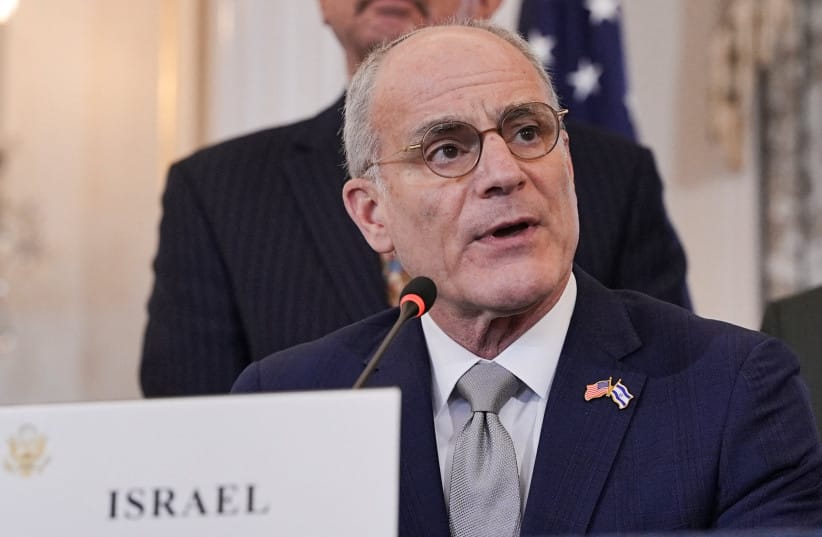
Having a friendly administration makes that task easier, but not easy. Even under Trump, disagreements emerge, interests diverge, and patience wears thin. Leiter’s job is to ensure that when this happens, Israel’s arguments are understood and its voice reaches the people making the decisions.
Ron Dermer
If Leiter’s influence comes through formal office, Dermer’s is rooted in experience and trust – the trust placed in him by Netanyahu and Trump, with whom he worked closely during the president’s first term, when Dermer was Israel’s ambassador to the US.
Dermer, who set up a consulting office in Jerusalem this summer, has no official title today, but he doesn’t need one. He remains a close confidant to the prime minister, who has called on him to lead negotiations with Lebanon and troubleshoot with the White House when needed.
For more than two decades, Dermer has been Netanyahu’s most trusted adviser on the US. As strategic affairs minister, he handled some of Israel’s most sensitive diplomatic assignments, from the hostage negotiations to discussions over Iran and regional normalization. His involvement continues now, though behind the curtain.
Dermer’s departure from government last November may have deprived him of a formal platform, but it did not erase the relationships accumulated over decades or the complete trust Netanyahu has in him. That trust has given him unparalleled access.
In diplomacy, as in politics, access is influence, and few Israelis have enjoyed more meaningful access in Washington than Dermer.
Danny Danon
Danon’s platform, by contrast, is anything but discreet. As Israel’s ambassador to the UN, he operates in perhaps the world’s most visible and most hostile diplomatic arena.
Danon returned to the UN in 2024, having already served there from 2015 to 2020. That experience matters. He knows the institution, understands its procedures, and is under no illusions about the entrenched hostility Israel faces there.
The UN is an arena where automatic majorities routinely condemn Israel; where countries with appalling human rights records sit in judgment of it alongside some Western democracies that apply standards to Israel they would never apply elsewhere; and where diplomatic language is often used to disguise blatant political bias.
Danon’s role is not necessarily to win votes – that is usually impossible – but to challenge the narrative, expose the hypocrisy, and ensure that Israel’s position is heard.
He does this with the instincts of a politician as much as those of a diplomat.
A former Likud MK and minister, and a man many believe is waiting for the post-Netanyahu era to vie for the leadership of the Likud, Danon understands that his audience extends far beyond the ambassadors sitting in the UN plenum or Security Council. His speeches, press conferences, and confrontations are aimed as much at the Israeli public, American lawmakers, and Jews worldwide as at his diplomatic counterparts.
That ability to turn the UN podium into a public-diplomacy platform is the source of his influence.
Leiter, Dermer, and Danon speak from different positions and to somewhat different audiences. But all three play critical roles in presenting Israel’s case to the US administration, the American public, and the wider world, trying to ensure that – amid all the noise, lies, and misinformation – Israel’s voice is heard.
<< No: 38: Doron Almog and Yaakov Hagoel and Mark Wilf
No. 36: Eric Fingerhut, Gary Torgow, and Jeremy Leibler: Bending Israel-Diaspora ties
Eric Fingerhut turned the Jewish Federations of North America toward two fronts: Israel at war and a Jewish community under siege at home. As president and CEO of the umbrella body for 146 federations across the United States and Canada, he delivered the inaugural State of the Jewish Union address, and pressed for a national, post-9/11 scale effort to protect synagogues and schools.
The Israel emergency campaign JFNA has run since October 7 has surpassed $850 million, funding trauma care, and community recovery. He paired the fundraising with advocacy, keeping support for Israel and the hostages bipartisan, and built the partnership that reshaped Jewish philanthropy this year alongside board chair Gary Torgow.
For a century, Jewish money moved in one direction, from North America to Israel. This year Gary Torgow helped turn it around. On June 28, the JFNA board chair sat in the Israeli cabinet room as ministers unanimously approved a NIS 200 million first-year plan to strengthen Jewish education in the Diaspora, money flowing from a country at war toward Jewish schools abroad, on the theory that those schools are now a strategic asset for the whole Jewish people.

He had pressed Netanyahu on the idea since 2022. In Washington, he lined up a second stream: a 2025 federal tax credit that lets any taxpayer redirect up to $1,700 to a scholarship organization and deduct every dollar. JFNA is building a national body to aim that money at Jewish day schools. A soft-spoken Detroit banker and Orthodox yeshiva president, Torgow has spent his career crossing lines others will not.
For years, Jeremy Leibler warned that Australian Jews were being pushed to the margins and their safety “eroded.” After the December 2025 Bondi terror attack, in which 15 people were killed, his warning became impossible to ignore. As president of the Zionist Federation of Australia and a partner at Arnold Bloch Leibler, he has spent the year experiencing antisemitism through the communal, legal, and political lenses.
Leibler pushed for the Royal Commission into Antisemitism and Social Cohesion, then gave evidence describing how antisemitism increasingly appears under the guise of anti-Zionism. “The claim that ‘Zionist’ refers to a political position rather than a people is a fiction. It is the mechanism by which antisemitism is laundered into acceptable speech,” he said.
He told the commission his children have begun questioning whether Australia is still their home. During President Herzog’s February visit, Leibler rejected accusations against him as crossing from criticism into something more sinister. Leibler lives in Melbourne with his wife and four children.
No. 35: Yoav Turgeman, Bezalel (Butzi) Machlis, and Inbal Kreiss >>
<< No: 37: Yechiel Leiter, Ron Dermer, and Danny Danon


US Budget Deficit Nears $2 Trillion Amid Bond Market Jitters
August’s Monthly Treasury Statement showed the federal government logging a $167 billion shortfall, far below the consensus estimate of a $404 billion deficit.
Last month’s shortfall marked a 61 percent decline from July’s $432 billion gap. It was also down 52 percent from August 2025’s $345 billion deficit.
Overall, the fiscal year-to-date budget deficit totaled $1.97 trillion, almost $200 billion higher than the same 11-month span in the prior fiscal year.
Tax receipts were $360 billion last month, bringing this fiscal year’s total to nearly $4.9 trillion. This was slightly lower than the $5.2 trillion posted during the same 11-month span in fiscal year 2025….

Technology can help people sound fluent in a language, but proficiency still requires human interaction, expert says
Todd Hughes has a complicated relationship with Danish. The 64-year-old can read a Danish novel without much trouble. But put him in a room full of native speakers, and the plot thickens.
His Danish dilemma illustrates the difference between sounding fluent and actually becoming proficient. Technology can help someone learn vocabulary, practice skills, or move smoothly through a translated exchange. But proficiency is about what someone can actually do across reading, writing, listening, and speaking—and communicating proficiently still requires navigating another person.
Hughes, who trains language tutors at Rosetta Stone, knows that gap all too well. He speaks Spanish at home with his Costa Rican husband, teaches German, grew up hearing French from his grandmother, and studies Nordic languages for fun. He recently added Japanese to the rotation ahead of a trip to Japan.
Yet his abilities shift from one language and one skill to another. For Hughes, fluency describes flow—how smoothly and quickly someone speaks. Proficiency is a broader measure of ability. It asks whether someone can understand what is being said, find the vocabulary they need, and communicate accurately when a conversation moves somewhere unexpected.
“For me, it’s a question of skill and a question of ability over a question of flow,” Hughes told Fortune.
Social media confuses fluency and proficiency
Native speakers pause, stammer, and lose their train of thought constantly, making smooth delivery an imperfect way to judge how well someone knows a language. When someone says they are fluent in six or 16 languages, Hughes has a simple follow-up: “What can you do?”
He approaches the answer through four core skills: reading, writing, listening, and speaking. A person can be strong in some and shaky in others, which is why a single label rarely captures much.
A traveler who can order dinner and navigate Paris, Frankfurt, and Rome may reasonably consider themselves a polyglot—a word that simply means “many languages.” A linguist might ask harder questions about vocabulary, pronunciation, accuracy, and whether that same person could discuss an abstract idea in each language.
Social media has made that distinction even more difficult to see. TikTok is filled with polyglots bouncing between languages while ordering food or surprising strangers. The videos are entertaining, often impressive, and perfectly built for an algorithm that does not have time to sit through a verb-conjugation lesson. But a polished clip can show someone firing off a perfect greeting without revealing how they might manage 10 minutes later, once the conversation has wandered off script.
His own collection of languages shows why proficiency can be difficult to summarize. Hughes describes his Spanish as near-native and feels as comfortable speaking it as English. He can understand and read French extremely well, but makes mistakes while speaking. Danish presents almost the opposite problem. Reading comes easily, while listening and pronunciation remain a challenge.
A library that cannot nod back
Technology can help people work on those different skills. AI can generate practice exercises, correct writing, and create reading material at a learner’s level. With Apple bringing Live Translation to AirPods, the company says the feature can help someone understand a conversation in real time.
Hughes has worked with technology in language education since 1995, when he wrote his dissertation on using it to acquire Spanish vocabulary. He’s wary about translation tools and their ability to capture the social and cultural cues surrounding the words.
In his view, AI is like a “huge library” that never closes. It can produce a beginner-level story on demand and can remove some of the friction involved in finding material appropriate for a learner’s level.
When it comes to using AI to practice speaking, however, Hughes is less convinced.
“I’m not there yet,” he said.
People learn languages from other people
Similarly, Duolingo, whose famously persistent green owl has spent years reminding users to finish their lessons, is also not preparing to concede defeat to a pair of translating headphones.
“Real-time translation can help you understand someone in the moment, but it can’t replace the connection, cultural understanding and personal satisfaction that come from learning and speaking a language yourself,” Cem Kansu, Duolingo’s chief product officer, told Fortune.
The company said many people learn English for high-stakes reasons, including pursuing a better job or higher education. For those learners, the problem is not simply that a translation may be unreliable. Even an accurate translation does not demonstrate proficiency. It can relay the words in one exchange, while proficiency means being able to continue the conversation, ask follow-up questions, and respond when the wording or tone changes.
To be sure, Duolingo and Rosetta Stone make money when people continue learning languages. But Hughes pointed out that words go beyond their dictionary definitions and carry more social baggage that must be learned from interacting with people.
For example, the English expression “don’t pull my leg” has a Spanish counterpart that translates literally as “don’t pull my hair.” An app might know to swap one idiom for the other, but that does not mean it understands the tone behind it. It may not know when an expression sounds playful or rude, or whether someone knows their Costa Rican mother-in-law well enough to use it.
That is why human interaction is necessary for proficiency, according to Hughes. In a live exchange, a learner has to understand what another person said, choose a response, watch how it lands, and adjust when the conversation changes. The listening, speaking, cultural knowledge, and social cues all happen at once. A tool can suggest the next sentence, but it cannot do that work for the learner.
Proficiency begins when another person answers, and a real conversation changes as it unfolds. People watch for nods and other signs of active listening, follow what the other person is saying, and adjust their response. Those social cues are part of communicating in any language, and Hughes does not think AI has a good grasp of them yet.
“When was the last time that you had a really, really, really interesting conversation with a computer?” he asked.
This story was originally featured on Fortune.com

More than 2 million sour candy bottles recalled over potentially deadly choking hazard
About 2.3 million sour candy bottles are facing a recall over a choking hazard that could lead to serious injury or death, according to federal regulators.
The recall was initiated for Ricky Joy Sour Crush Rolling Liquid Candy Bottles because the rolling ball on the bottles can detach and become a choking hazard, the Consumer Product Safety Commission announced on Thursday.
“The rolling ball on the recalled candy bottles can detach, posing a risk of serious injury or death from choking hazard,” the commission warned.
POPULAR SQUISHY TOYS RECALLED OVER POTENTIALLY DEADLY WATER BEAD HAZARD
The plastic candy bottles were sold individually and in packs of three or 12 in blue raspberry, strawberry, green apple and watermelon flavors.
The recalled candy bottles were sold at H-E-B, Forman Mill and other candy stores nationwide, as well as online at Walmart, CandyFunHouse.com, RickyJoy.com and other online retailers from January 2023 through May 2026.
CREAM CHEESE AND DELI SALADS RECALLED OVER POTENTIAL LISTERIA CONTAMINATION
They were sold for about $3 per bottle and between $13 and $32 for a pack.
The bottles contain 1.85 fluid ounces of sour liquid candy to be applied through the bottle’s rollerball top.
The Ricky Joy logo, “EXTREME SOUR,” “SOUR CRUSH” and the flavor name are printed on the front of the bottle along with the image of a green monster with its tongue sticking out.
CLICK HERE TO GET FOX BUSINESS ON THE GO
No injuries have been reported thus far in connection with the recall effort.
Consumers are urged to stop using the candy bottles immediately, take them away from children and contact The Ricky Joy Company for a refund.
Explosion hits another weapons site in Bulgaria
An explosion caused a fire at a weapons storage site in central Bulgaria overnight, local media and officials said on Saturday, the second blaze at a munitions facility in the past few weeks.
No one was reported injured in the blaze, which broke out near the village of Tsareva Livada and could be seen lighting up the night sky in videos broadcast locally.
“At the moment, the fire is on the territory of the storage base of the factory. It is moving from warehouse to warehouse,” Gabrovo regional governor Kristina Sidorova told journalists in the early hours of Saturday.
Local media reported that the fire was at a site run by EMCO, which experienced an explosion at another facility last month, citing an EMCO company official. Reuters was not immediately able to reach EMCO for comment.
EMCO is run by Bulgarian arms trader Emilian Gebrev, who Bulgarian prosecutors allege was the target of past attacks on his facilities by Russian operatives.

Previous arrest warrants issued for Russians accused of involvement in sabotage
In 2024, Bulgaria issued an arrest warrant for six Russian citizens accused of involvement in the destruction of EMCO arms depots that were storing munitions for export to Ukraine and Georgia between 2011 and 2020.
Prosecutors at the time said that they could reasonably assume links between the blasts in Bulgaria, an attempted poisoning of Gebrev in 2015, and munitions depot explosions in the Czech Republic in 2014.
Rosh Hashanah 2026: October 7 awakened Jewish connection – now we must make it last – opinion
Every Rosh Hashanah, Jews stand before the uncertainty of another year, asking: “Who shall live and who shall die?”
For the past two Rosh Hashanahs, those ancient words of the “Unetaneh Tokef” have carried a terrible immediacy. After October 7, they ceased to feel merely liturgical. We wondered who would survive, who would come home, and who would still be missing when another holiday began.
This Rosh Hashanah is different.
For the first time since October 7, 2023, we enter a new Jewish year with every hostage, living and deceased, returned from Gaza. An agonizing chapter in the story of our people has finally closed.
But its ending does not restore what was lost.

Rachel Goldberg-Polin understands that distinction more painfully than almost anyone. Her son, Hersh, survived 328 days in captivity before he and five other hostages were murdered by Hamas. In her memoir, When We See You Again, she writes of days when she breaks completely, and others when there is “a whisper of sun. Not out there in the sky. In me. In us.”
Perhaps that is the right image for this Rosh Hashanah. Not blazing sunlight. Not the pretense that all is well, with war, antisemitism, Jew-hatred, and uncertainty still very much with us. A whisper of sun.
And yet something remarkable has been happening among the Jewish people since October 7.
Jewish Federations of North America documented what became known as the “Surge”: American Jews seeking greater connection to Jewish life and one another. In 2024, 43% reported engaging more or seeking to engage more. A year later, 31 percent were still seeking greater Jewish engagement.
Part of that turn inward was surely a response to the antisemitism and Jew-hatred that followed October 7. Feeling more vulnerable in the world around them, many Jews turned more deliberately toward one another. That response to hostility also led many Jews toward community, identity, learning, and belonging.
There is a Jewish word for returning: “teshuvah.”
We usually translate teshuvah as repentance. But teshuvah literally means return. Since October 7, we have witnessed a remarkable one.
I saw another expression of that return last week, when I chaired the third gathering of the J50 Forum at the Foreign Ministry in Jerusalem. Leaders representing the 50 largest Jewish communities in the world came together from different countries, speaking different languages and facing very different challenges. Yet beneath those differences was an unmistakable recognition that we remain one people.
Across the world, Jews are confronting rising antisemitism, Jew-hatred, hostility toward Israel, and uncertainty. Hardship has reminded us that Jews separated by oceans and borders remain part of the same people.
What the Surge represents for individual Jews, I saw in Jerusalem among Jewish communities: a renewed instinct to turn toward one another.
For some, October 7 ignited something in their neshama. Jews have returned to synagogues, Jewish friends, Jewish learning, and Jewish communities.
Jewish unity does not mean Jewish unanimity. We disagree about Israel, politics, religion, and almost everything else. But beneath those arguments lies a bond of peoplehood and a responsibility to one another.
Crisis brought many Jews through our doors. Our task is to give them reasons to stay when crisis no longer does.
In a world of endless distractions and demands on our attention, we are all Jews by choice. Jewish connection cannot be taken for granted. It is incumbent upon us to create as many on-ramps as possible for Jewish engagement and to build communities where people can enter, learn, participate, and belong.
Invite them back.
Make room for the Jew who does not know the prayers. Welcome the person who has never attended a Shabbat dinner. Answer the questions of those only now wondering what Judaism might mean in their lives. Build communities in which Jews encounter not merely the Jew-hatred directed against them, but the civilization, learning, friendship, memory, joy, and obligation that belong to them.
‘Hope is mandatory’
During Hersh’s captivity, Rachel Goldberg-Polin began her mornings with a command to herself: “Hope is mandatory.”
It was not a prediction that everything would turn out well. Tragically, it did not. It was a way to keep going when despair would have been easier.
Rosh Hashanah asks something similar of us. We do not know what will be written in the Book of Life or what 5787 will bring. We enter the year carrying the murdered of October 7, Hersh Goldberg-Polin, and the other hostages who did not come home alive, and all those we have lost since.
And still, we begin again.
Our responsibility is not to let this renewed connection fade as the immediate crisis recedes. We need to turn the Jewish awakening of these past years into lasting Jewish life and make sure that those who found an on-ramp know there is a place for them further down the road.
We cannot know what 5787 will bring. But we can choose how we will enter it.
Hope is mandatory.
Shanah tovah.
The writer is CEO of the Conference of Presidents of Major American Jewish Organizations.
Syrian private airport plans spark outcry over mass graves, land rights
Syrian government plans to turn a former military airport in Damascus into a hub for private jets are raising alarm among rights groups and residents who say redevelopment could disturb suspected mass graves and override private land claims.
Syria’s civil aviation authority said last week it was preparing to reclassify Mezzeh military airport for limited civilian use, focused on private and executive aviation, to complement Damascus International Airport, according to a report on Syria’s state news agency, SANA. Rubble removal and infrastructure upgrades had already begun, the report said.
The project is emerging as a test of how Syria’s new authorities balance a drive to attract investment and redevelop state assets with two unresolved legacies of Assad’s family rule: the fate of tens of thousands of missing Syrians and property rights clouded by decades of expropriation.
New documents show airport’s role as execution site
Under ousted ruler Bashar al-Assad and his father Hafez, Mezzeh housed key branches of the powerful Syrian Air Force Intelligence Directorate, as well as numerous detention facilities where suspected government opponents were tortured, executed and subjected to enforced disappearance. Parts of the air base were used for presidential and other official flights.
Air Force Intelligence (AFI) documents recently obtained by the Syria Justice and Accountability Centre (SJAC), a US-based Syrian-led human rights group, and shared exclusively with Reuters, show that senior Syrian military officials approved Mezzeh in 2012 as a site for carrying out executions of detainees sentenced to death by military field courts.

One document proposed moving executions from Sednaya – the country’s most notorious prison at the time – to Mezzeh because it was a “closed security compound” close to Damascus. Subsequent correspondence discussed a firing range and later a hangar beside the runway as execution sites.
The documents, which underscore the central role of Mezzeh in the Assad-era security system, show officials ordered construction of a platform at the hangar, requested nylon rope and directed that the work be carried out under AFI supervision “in utmost secrecy.”
A 2025 investigation by SJAC identified two suspected grave sites linked to people who died in detention at Mezzeh, where it said more than 1,150 detainees died, some by execution and others from torture or maltreatment.
In a July 2025 letter seen by Reuters, SJAC provided Syria’s National Commission for Missing Persons with the coordinates of the two suspected graves inside the airport, urging authorities to prevent construction or excavation until the sites were investigated.
The commission told SJAC at the time that there were no construction or refurbishment plans for Mezzeh, SJAC told Reuters.
SJAC wrote to the commission again on September 8 after the redevelopment plans emerged, warning that excavation, rubble removal or other works could damage human remains and evidence crucial to identifying victims, according to a second letter seen by Reuters.
SJAC told Reuters it had not yet received a response to its second letter.
Amer Matar, founder of the Syria Prisons Museum, a Germany-based NGO documenting detention facilities including those at Mezzeh, said the planned works showed a lack of respect for Syrian families who still have no answers on the fate of loved ones detained under Assad.
“To construct a business airport on a site that may contain mass graves, without a thorough prior investigation, without site protection, without searching for the missing and their remains, and without preserving evidence, is an act of extreme recklessness and disregard,” Matar told Reuters.
The Syrian civil aviation authority, Syria’s National Commission for Missing Persons and Syria’s defense ministry, which has been operating the airport, did not respond to questions from Reuters about suspected graves and land claims.
SANA cited the civil aviation authority’s spokesperson as saying that Mezzeh’s refurbishment would take into account the surrounding urban area and relevant legal and social issues, but did not specifically mention the graves or land rights. It is unclear who will develop the airport.
Residents protest over land claims
The dispute over the land on which airport facilities were built is decades old.
Under the Assads, private land was regularly expropriated for government projects, often without compensation.
Mezzeh airport was built on land belonging to hundreds of private citizens across 2.76 sq km, according to land records from the Moadamiya municipality shared with Reuters.
A former municipal official, who asked not to be named, told Reuters that expropriation decrees retroactively justified the government’s use of those lands when the airport was built in 1956, and that compensation had not been paid.
Residents demonstrated in Moadamiya a day after the redevelopment plans were announced. “We welcome investment, but we should be sitting at the table and discussing our share with investors, not the state,” said one protest organiser, who gave his name as Abu Khaled. “We have a documented right to this land.”
The dispute comes as Syria faces calls to address Assad-era property seizures.
On September 2, United Nations land rights experts appealed to Syria’s government to suspend and repeal laws they said had enabled systematic property dispossession under Assad, and to either establish mechanisms to return properties to their legitimate owners, or provide adequate compensation.
New robot helps Israeli surgeons crush kidney stones without the splash
If you suffered from kidney stones in the 1980s and drinking a lot of water didn’t melt them, you probably were told by your doctor to get into a swimsuit and sit in a water-filled bathtub in the hospital. Then you were sedated or given general anesthesia.
A device called a lithotripter, developed in Germany four decades ago, sent shock waves efficiently through water into the body to pulverize stones comprised of crystallized uric acid, calcium oxalate, calcium phosphate, amino acid cystine, or magnesium ammonium phosphate.
Today, it is rarely used because small pieces were often left in the kidneys or ureters that caused clogs, and it didn’t work equally well on all stones. Newer lithotripters replaced the cumbersome water tank with small, targeted water-filled cushions or gel pads placed directly against the patient’s skin.
But now there is an even better method, and Israel is one of only about 11 countries around the world that have the new technology. Jerusalem’s Shaare Zedek Medical Center is the first in Israel to use the innovative ILY robot that crushes kidney stones using an interactive wireless remote control and a laser.

The system allows precise, stable robotic control of the uroscope so the surgeon can operate in a more comfortable and ergonomic position while maintaining full control of its movements within the urinary system.
The ILY robot system joins a series of cutting-edge technologies that the Shaare Zedek Medical Center’s urology department is using for the first time in Israel. Only recently, a system for treating an enlarged prostate based on artificial intelligence was put into use.
Kidney stones affect about 10% of the global population during their lifetime, but it varies according to regional, climatic, and demographic factors. In hot countries – as in the Middle East and in the tropics – the rate can be even higher, up to 20%, because of dehydration, so it’s recommended to drink a lot of water, especially in the heat.
Men are affected about twice as often as women, although the gender gap has been narrowing due to dietary and lifestyle shifts. There has even been an increase in kidney stone diagnoses among adolescents and young adults over recent decades that are closely tied to rising body mass index (BMI), as well as genetic diseases and diabetes.
The innovative technology is led by the director of the endourology unit (a urology subspecialty that uses small instruments and cameras passed through natural body channels to treat problems in the urinary tract), Dr. Ilan Kafka, who performed several successful surgeries using the robot a couple of weeks ago.
The procedure takes between 20 minutes and one-and-a-half hours, depending on the stone size and place in the kidneys and ureters.
The robot does not replace the surgeon, but rather provides him with a powerful and intuitive tool that brings an unprecedented level of control, stability, and ergonomics, he told The Jerusalem Post in an interview.
“The combination of advanced control technology that is easily operated via a wireless remote control and our medical expertise allows us to perform complex surgeries with maximum safety, with maximum accuracy, and while maintaining the health of the team and the patient,” said Kafka.
Instead of holding the surgical instrument for a long time, the surgeon operates the robot remotely using an intuitive wireless remote control that gives the surgeon full control over the movement resolution of the flexible uroscopy.
It allows for gentle, precise, and stable navigation within the kidney while the urologist sits comfortably in a control position and reduces physical strain during prolonged surgeries, said Kafka, who studied medicine at Anahuac Mexico University in Mexico City, did his internship at the Rabin Medical Center in Petah Tikva, and is a member of the Israel Endo-Urology Association.
“It also minimizes the surgeon’s exposure to radiation, thanks to the possibility of controlling the system remotely and moving away from the radiation source when mirroring is used. It also reduced the need for a surgical incision,” he continued.
Kafka, who studied his subspecialty at the University of Pittsburgh Medical Center, went to a medical center in Portugal to practice on the ILY system, and quickly succeeded in using it efficiently: “It takes only about two procedures to get used to it.”
Bringing futuristic technologies to the operating room
So far, initial studies report high efficiency, high success rates, and safety in the treatment of kidney stones.
It was developed by the French technology company STERLAB in collaboration with leading research institutions.
Prof. Boris Tsertin, who heads the hospital’s urology department, added that “the introduction of the ILY system for the first clinical use in Israel constitutes another pillar of our excellence and ability to lead the forefront of medical innovation in the fields of urology, bring futuristic technologies to the operating rooms, and provide patients with the most advanced and safest medicine.”
The laser touches the stones – up to two or three centimeters wide, and not the tissue, so nothing in the body is affected besides the stone. The device is not autonomous; the surgeon is in control at all times, Kafka added.
Sometimes a stent is inserted to keep the ureter open and pulled out a few days later. If the patient has complicated anatomy, sometimes he or she has to be treated a second time. In any case, after the procedure, the patient is hospitalized overnight and then sent home. Recovery time, said Kafka, is very swift.
The success rate is 85%. Theoretically, it can be used on children, but they haven’t done any yet. However, it can be performed on people of any age, even 90 or 100. He expects that the unit will treat 800 or 900 patients a year, and it is paid for by health funds.
“In the future, it might be possible to perform the procedure remotely without the surgeon being in the same room as the patient,” he concluded.
Rosh Hashanah 2026: Humor, the shofar, and the ability to accept the absurdity of life
Yes, Rosh Hashanah and Yom Kippur are serious days. They require us to place God at the center of our lives, repent, and ask forgiveness for our misdeeds.
But let’s be honest. Many of us know that, however much we try, true repentance probably will not happen. We will fall back into our old ways.
The effort involved in surviving this, year after year, without becoming depressed is nearly brutal. The fact that we keep trying is an enormous human accomplishment. After all, what is the point of going through the motions, only to discover that we are back where we started?
How does one survive this?
Strangely enough, humor does the trick.

We are all romantics. We are not prepared to be content with our physical and spiritual lives. There must be more to life than what we experience, and our goal is somehow to reach it.
There is always a gap between what we want our life to be and what it actually is. Sooner or later, however, a rapprochement develops between the two. Our dissatisfaction gives way to the reality forced upon us.
It begins when we enter school. At first we are completely “authentic,” but slowly we conform and lose something of our real selves. Puberty may interrupt the process with some adolescent rebellion, but by the time we enter higher education, marry, and become absorbed in “the facts of life,” reality becomes a suit of armor we can no longer escape.
The result can be tragic. It is like painters who think they have completed a painting, only to realize at the last moment that something essential is missing. They know they have more or less achieved their objective, yet somehow overlooked “the real thing.” But by then the armor is too thick to let them discover what it is.
The great Dutch author Willem Bilderdijk once compared this to an opera singer who is given a lavatory as a practice room. It suffocates him.
Most people, however, learn to live quite happily in the bathroom while wearing their armor.
Only great souls become aware of this predicament and, often with enormous effort, throw off the armor and venture outside. They clash with society and are misunderstood, but they are also the people who move society forward. They are prisoners who have looked through the bars, seen the garden of their lives, bent the bars, and walked out.
But to do so requires humor.
Humor is training for the game of life
Humor is what keeps us laughing despite everything. Humor is conquered sadness. It is the melancholy through which we pierce and from which we somehow profit. It is the affirmation of our superiority over everything that goes wrong.
It is also the awareness that we live amid continuous absurdity. However soberly we try to live – using logic, common sense, discipline, and joy – we still end up staring at the mystery of a life we do not understand and never will, no matter how convinced we are that we have things “under control.”
Humor tells us that there may be meaning behind the absurdity, even when we cannot decipher that meaning. A Dutch proverb says it well: Humor is training for the game of life.
This is not merely a pleasant psychological trick. Even under the most horrific circumstances, some Holocaust victims were able to use a dark, wry humor about their situation. That did not make the horror less horrifying. It was a way of refusing to let the horror have the last word. To find humor there was an extraordinary human achievement.
Rosh Hashanah, then, is a day of infinite humor because it confronts us with the absurdity and foolishness of so many of our ambitions: honor, money, possessions, status. Yet these very ambitions shape our lives, and perhaps their purpose is finally to make us laugh about them in the presence of God.
It is through the everyday, the trivial, and the absurdity of human existence that God wants to meet us. Nothing could be more serious, more humorous, or more odd.
Life is a kind of funfair, except that the merry-go-round sometimes becomes badly dislocated and people get hurt.
But that is not all.
Rosh Hashanah asks us to re-crown God and place Him at the center of our lives. It is a festival of uncompromising monotheism: all that exists is His handiwork, and He is everywhere. He is transcendent, immanent, omnipotent, omniscient, and eternal. There is no “Other” but God.
This means that we are trying to crown a Being about Whom we do not have the slightest clue.
We do not know Who He is, what He is, or why He does what He does. Much of what happens in His world makes no sense to us and can seem utterly unacceptable. God is the great Unknown, to Whom even the words “exists” and “is” barely apply.
This is the pinnacle of absurdity. How do you crown a Being when you have no comprehension of who He is – and sometimes even wonder whether He is? It is almost pathetic.
Yet this paradox lies at the center of Rosh Hashanah. We are asked to accomplish something that is, by definition, impossible. We crown a Being who is not a Whom, a What, or an It, but only Ein Sof, the Infinite. It sounds like a bad joke played on us on one of the most serious days of the Jewish year.
And here, again, is the humor.
Rosh Hashanah takes us back to childhood, before our armor was forged. We are asked not to comply with our maturity, but to become romantics again: to feel dissatisfied with what we have become, and to recover the gap between what we are and what we once sensed life could be.
Which stories do children love most? Fairy tales. And which fairy tales are the best? The impossible ones: flying animals, houses on clouds, princes turning into frogs, lions that speak, witches traveling on brooms. All definitions, logic, and common sense are violated.
Nothing delights a child more. Why? Because in a fairy tale, the child enters a world without limits. Omnipotence and transcendence are obvious because no armor blocks them. The child possesses an almost unlimited capacity to believe in what is impossible and therefore, in the realm of eternity, perhaps true.
But fairy tales are not really about fulfillment. They are about yearning.
The prince must defeat seven dragons and perhaps spend seven years as a frog before he can marry the princess. This is narrated in glorious detail. But once the wedding takes place, the fairy tale ends. We are simply told that they “lived happily ever after.”
And rightly so. Real life begins where the fairy tale ends. The fairy tale is concerned with the engagement. Life deals with the much more difficult marriage between two people, one of whom may have been a frog for seven years and the other asleep for a century.
The fairy tale tells us about the journey, not the arrival.
Paradoxically, so does life.
We think we have arrived. Then, later in life, we discover that we never left the fairy tale. Until the final day, we are still on the journey, and we do not even know what “arrival” would mean.
Perhaps that is what keeps life exciting. Longing keeps us alive. The moment we convince ourselves that we have finally arrived, boredom appears like another dragon.
Religious life knows this very well.
People sing sacred songs with great devotion while having only the faintest idea of what they mean. Jewish men and women recite chapters of Psalms without always understanding the Hebrew. Children sing “An’im Zemirot,” one of the most difficult mystical poems in the liturgy, while the adults answer them verse by verse – and many of them understand hardly more than the children.
Yet this does not necessarily diminish the spiritual power of the moment. It may even increase it. They are on a journey toward something they cannot fully grasp. Their mature armor has, for a moment, fallen away.
The same thing happens in churches where people sing Latin hymns without knowing Latin. They sing because they are convinced that something enormous is at stake.
This is not a plea for incomprehensible religion. It is a reminder that some religious language matters precisely because it confronts us with what language cannot contain. It restores us to our rightful place. It turns us into children again – which, underneath all our sophistication, we always remain.
There is, as it were, a wisdom “out there” being transmitted on a wavelength outside the range of our spiritual transistor. We turn on the radio, but hear only strange noises and static. The transmission is real, but we cannot tune in.
Rosh Hashanah forces us to admit this.
When we proclaim that God was King, is King, and will forever be King, we enter a realm in which our words exceed our intellectual capacity. We do not really know what we are saying. It is holy absurdity and, precisely for that reason, deeply significant.
Our prayers therefore contain an extraordinary tension. We praise God with words, calling Him King, and then become aware that every word is inadequate. Language fails.
The shofar expresses what words can not
So what do children do when they cannot find the words? They make sounds.
Sometimes they whistle. Sometimes they blow into something. They produce strange noises that belong less to grammar than to fairy tales.
This is the purpose of the shofar.
When words are no longer effective, we resort to sound. We blow a primitive cry that tries to pierce all heavenly levels and somehow reach the One who is totally unknown.
And then, remarkably, Judaism tells us to celebrate.
What should we do when confronted by our absurdity and inadequacy? We could become depressed. Instead, Judaism turns the tables. It asks us to dress like kings and queens, eat festive meals, sing optimistic songs, and make Rosh Hashanah into a holy celebration.
It is a cavalcade of our lives and therefore very serious.
“To live is like to love – all reason is against it, and all healthy instinct for it,” said Samuel Butler.
Divine humor asks us to live with the absurdity rather than flee from it, and holy wit asks us to live with laughter. We are asked to enjoy the journey and accept that there may be no arrival.
Then the shofar sounds.
And perhaps, for a moment, the impossible becomes possible.■
The writer is the author of many books, such as the bestseller Jewish Law as Rebellion. Find his weekly essays at www.cardozoacademy.org
How does breathing alter the brain? Inside the science of sighs with a world-leading neuroscientist
You are doing it right now, and until I mentioned it, you were not aware of it. We all take breathing for granted. As Prof. Henry Higgins described Eliza Doolittle’s habits, joys, and woes in My Fair Lady, they “are second nature to me now, like breathing out and breathing in.”
In less than the time it took you to read these two sentences, a tiny cluster of neurons in your brainstem called the preBötzinger complex fired a synchronized burst of electricity. That signal raced down to your diaphragm, causing it to contract, dropping the air pressure in your lungs and pulling in a fresh wave of oxygen.
We tend to think of breathing as the body’s background software – a monotonous, automatic gas exchange running silently in the basement while the brain handles the “important” work of thinking, feeling, and deciding up in the penthouse.
But groundbreaking neuroscience shows that the relationship is actually a brisk, two-way street. Every single time you inhale or exhale, it isn’t just keeping you alive; it is actively rewriting your brainwaves, sharpening your memory, and dictating how you process the world around you.

Prof. Jack Feldman flew to Israel for the first time to attend and be a guest speaker at last week’s Hebrew University Faculty of Medicine’s Institute for Medical Research Israel-Canada (IMRIC) Conference at the Dan Carmel Hotel.
IMRIC is the university’s central medical research institute, conducting cutting-edge research across a broad range of fields related to human health and disease, including the nervous system and brain, diabetes, cancer, infectious diseases, embryonic development and regeneration, and many other areas of biomedical science.
Feldman is one of the world’s leading experts on breathing and the brain. His studies have been published not only in prestigious scientific and medical journals; they have also been featured in The New York Times, NPR, and Scientific American.
Feldman received his bachelor’s degree in physics from Polytechnic Institute in New York and a doctorate in physics from the University of Chicago. He went on to perform experimental neuroscience for a postdoctoral fellowship in Paris and a second one in New York.
In 1978, he began his first academic appointment as assistant professor at Northwestern University in Illinois, and in 1986, he moved to the University of California at Los Angeles (in southern California), where he is a distinguished professor of neurobiology.
In 1991, together with co-researchers at Stanford University in northern California, Feldman elucidated the mechanisms underlying breathing and sighing and discovered and named the preBötzinger complex and identified the central brain circuit that generates and controls sighing.
His research explores the connections among breathing, stress, anxiety, emotions, sleep, and meditation, focusing on a particularly interesting and timely question: Can changing the way we breathe actually change the way we feel?
We normally think the brain tells the diaphragm and other respiratory muscles what to do, but Feldman’s work is helping establish that the relationship also goes the other way: breathing to the brain to create a person’s emotional/cognitive state.
The mechanisms of breathing
In an interview with The Jerusalem Post during a break in the conference, he explained that the brain’s sigh control center contains two tiny clumps of about 200 neurons in the brainstem (located in the preBötzinger complex) that convert normal breathing into a sigh. These neurons use specific neuropeptides (NMB and GRP) to signal the brain’s breathing engine to double the volume of an upcoming breath.
“Besides regular breathing, other things have to overtake this system. It’s not simple. We think we know how nature does it. Why should breathing affect your emotions, without oxygen and carbon dioxide?”
The alveoli – the minuscule, grape- or cauliflower-like air sacs at the end of the air passages in your lungs where oxygen is exchanged for carbon dioxide at the end of the smallest breathing tubes, called bronchioles – are only one cell thick, creating a very short path for gases to move.
“Their surface area,” Feldman continued, “is about 75 square meters – a third of a tennis court, so there is a lot of gas exchange. The circuit involved makes us sigh every five minutes on average. When you’re stressed, many things happen in the brain. When the hypothalamus produces peptides, you sigh more. It’s natural and essential to sigh.
“In the early 1950s, when children who were infected with polio were put in iron lungs to breathe, the technicians created bigger breaths with fewer per minute. That reduced the exchange. They figured out that instead of large lung volumes, there should be a normal one, and then let the child sigh every once in a while. It maintains the health of the lungs.”
He once asked a neuroscientist’s assistant how often one sighs. She said it was rare – maybe two per day, when one is sad or stressed or happy – but she was wrong.
“A sigh is a deep breath, but not a voluntary deep breath,” he asserted. “It starts out as a normal breath, but before you exhale, you take a second breath on top of it. On average, a person sighs every five minutes.”
The research demonstrated that sighing is a critical, unconscious survival mechanism rather than just an emotional expression. Sighing every five minutes on average is an involuntary “physiological sigh” – a double inhalation followed by an extended exhalation – which re-inflates the alveoli, preventing lung collapse and maintaining adequate gas exchange, he said.
Breathing exercises began thousands of years ago, Feldman stated.
“The people of China and India meditated, as did residents of indigenous cultures. I originally studied physics and cosmology, but then I got interested in how the brain works. My academic adviser said the topic was too difficult. Then, as a graduate student, I took LSD about once a month. It took a while before it was banned as a psychedelic. I became interested in the perception of space and time and read about neuroscience.”
He had thought that “breathing was trivial – just simple rhythm – but it’s far from trivial.”
“We breathe for many reasons,” he said. “The heart is only a pump, but breathing does a lot of things, and it begins from the third trimester in the womb. If one has a normal lifespan, you breathe about a billion times in life. It takes many seconds to double your heart rate, but you can do this with breathing.”
Hoping to help people
Rats sigh 20 times more when peptide is added, said Feldman, who conducts much of his research on rodents.
“Over three days, we got mice to breathe slowly at our command – five minutes a day for 30 days in a chamber. Then we put them back in the cages and measured their fear response. Those that breathed slowly had a much lower fear response. They were much calmer. So breathwork can also make humans calmer; breathing changes everything in the brain.”
A single deep breath is relaxing: “If you are a small animal being chased by a predator, you take one or more deep breaths to calm you down. You will be less detectable to the predator and have a better chance to survive.”
He has demonstrated all this in animals, and hypothesizes about what might eventually be clinically useful.
“I want to help people, but I don’t research humans. I want to understand the brain and influence human health through others who treat them,” he explained. “Breathwork – slow breathing at a set pace on inhalation, holding it, and then slowly exhaling – disrupts activity. It may reduce depression. Deep brain stimulation rebalances the circuit.”
He is well aware of the fact that people want quick cures, “but they are resistant to breathwork because they don’t think it’ll help. But they will realize it is real. You don’t have to believe in something – just do it. I recommend people do breathwork five minutes a day for 30 days and see if it helps them.
“It may even influence cognition as well as emotion – for example, attention, memory, or decision-making – and could possibly improve patients in the early stages of Parkinson’s disease or dementia.”
He was very pleased by the IMRIC conference because it was multi-disciplinary, bringing together some 400 researchers and physicians from Israel and abroad who specialize in cancer, immunology, biology, and more.
“This is beneficial, because researchers in the room next to your lab at home could be doing something relevant to your research and you wouldn’t have known about it.”
He conceded that he had never been to Israel in his long career, even though he is in touch with Israeli colleagues.
“It didn’t work out. Now, the University of California doesn’t let anybody go to the Middle East because of the supposed danger, including in Israel,” he shared. “I had to apply for and get special approval to come. It’s very interesting to be here for seven days. What is really happening in this country is not well communicated in the US.”


STAT+: Breast cancer pill from AstraZeneca misses mark in pivotal trial
LONDON — AstraZeneca said Friday that a breast cancer pill failed in a pivotal trial testing it as a first-line therapy in advanced tumors, a result that could limit the use of the medicine.
The drug, camizestrant, in combination with another medicine did not outperform standard treatment on a measure of how long patients went before their cancer progressed. The SERENA-4 trial enrolled patients with ER-positive, HER2-negative advanced cancer who hadn’t had another systemic therapy for advanced disease.
Camizestrant earlier this month won accelerated approval in the U.S. as Etcamah as a treatment for patients who develop a mutation in their tumors that’s a sign of emerging drug resistance. The SERENA-4 trial, had it been successful, could have opened up a much larger market for the drug.
No. 35: Yoav Turgeman, Bezalel Machlis, and Inbal Kreiss: Powering Israel’s defense revolution
Bezhalel Machlis
Bezhalel Machlis has served as the president and CEO of Elbit Systems Ltd. since 2013.
From 2008 until 2012, he served as executive vice president and general manager. He has served in various capacities with Elbit since 1991.
Prior to that, he served as an IDF artillery commander at the senior rank of colonel.
On August 11, Machlis said, “The strong momentum in the second quarter was sustained, delivering double-digit growth in sales, backlog, and earnings per share; improved profitability, and strong cash flow generation.”
“Our backlog reached a new record of $32 billion, providing long-term visibility and demonstrating the continued confidence of customers worldwide in Elbit Systems’ technologies and capabilities,” he continued.
He added, “Most recently, we unveiled our airborne high-power laser system, currently under development for helicopters and fighter aircraft. This new capability builds on decades of technological and operational experience and will further expand Elbit Systems’ broad portfolio of systems.”
On June 16, The Jerusalem Post reported on an exclusive visit to Elbit’s facilities for developing the airborne laser.
“Using lasers to shoot down aerial threats, air-to-air at the same height or from above, has a number of distinct advantages over ground-based laser defense,” Elbit Systems ISTAR & EW ELOP’s Chief Technology Officer (CTO) Oded Ben David explained to the Post at the time.
Aerial lasers are the holy grail of lasers in the sense that they can be used more effectively and suddenly on both defense and offense, as opposed to ground-based lasers, which must adjust the direction and goal of their firing much more slowly.
Next, Elbit Systems is the IDF’s primary provider of unmanned aerial vehicles and land-based equipment.
The company has signed deal after deal to help the IDF become more independent from foreign allies in supplying both precision and standard aerial bombs.
Elbit has also recently signed billions of dollars in deals to provide a range of defense solutions, including highly sophisticated ISTAR capabilities, SIGINT, COMINT, and electronic warfare systems to various European countries.

Inbal Kreiss
Inbal Kreiss is one of the most influential figures in Israel’s defense and space industries, known for leading programs that pushed the country into the top tier of global missile defense and satellite innovation.
She grew up in a home where national service and strategic thinking were part of daily life.
Her father, Amnon Biran, served as a senior IDF officer involved in major operations, including the Entebbe rescue. Kreiss received her Bachelor of Science degree in chemical engineering with honors from the Technion-Israel Institute of Technology, Haifa, in 1988.
Kreiss completed her Executive Master in Business Administration with honors from Tel Aviv University in 1996 and was a visiting research fellow at the Aeronautics & Astronautics Department at Massachusetts Institute of Technology (MIT) in Cambridge, US, from 2006 to 2007.
Kreiss joined Israel’s Directorate of Defense Research and Development after completing her academic studies. She spent more than a decade leading integrated weapons development programs before joining Israel Aerospace Industries in 2000 where she became one of Israel’s most important missile defense engineers.
She served as chief engineer of the Arrow 2 system and later led the Arrow 3 program from concept through successful flight tests, helping establish Israel as a global leader in exo-atmospheric interception. Her work placed her among the few engineers worldwide to manage a national-level ballistic missile interceptor program that is central to Israel’s deterrence abilities.
From 2013 to 2019, Kreiss served as deputy director of IAI’s Space Division, overseeing the development, production, and operation of Israel’s observation and communication satellites. She later led the spacecraft design team for Israel’s first lunar mission, Beresheet, which reached lunar orbit and captured global attention in 2019.
Today, Kreiss serves as head of innovation for IAI’s Systems, Missiles & Space Division and chairs the scientific committee of Israel’s Rakia mission to the International Space Station.

Yoav Turgeman
Yoav Turgeman has spent more than four decades shaping Israel’s defense capabilities, from the decks of Navy vessels to the upper ranks of the country’s most important defense industries.
Born and raised in Hadera in a large family that immigrated to Israel from Morocco, he enlisted in the Israeli Navy in 1981, beginning a military career that spanned 25 years and culminated in senior command roles before retiring with the rank of navy captain.
During his service, Turgeman held multiple operational and headquarters positions, eventually becoming head of the Navy’s Combat Systems Division. His work focused on integrating advanced weapons, radar, and electronic warfare systems into Israel’s maritime forces, giving him a deep understanding of the technological backbone of Israel’s defense establishment.
In 2006, Turgeman joined IAI and moved directly into the Arrow missile defense system program. As head of the program, he guided the development of advanced configurations of Israel’s long-range interceptor and worked closely with the Defense Ministry and international partners. His leadership later expanded to the MLM Division and, beginning in 2018, to the role of CEO of ELTA Systems and IAI executive vice president. At ELTA, he led more than 4,000 employees and significantly expanded Israel’s global footprint in radar, intelligence, and electronic warfare technologies.

In 2024, Rafael Advanced Defense Systems appointed Turgeman as its president and CEO, placing him at the center of Israel’s defense and technology surge during a period of heightened regional threats and unprecedented operational demand.
He holds degrees in electrical engineering, political science, and law and is a graduate of the IDF National Defense College. Turgeman is married and the father of five children.
No. 34: Tomer Bar, Omer Tishler and Shlomi Binder >>
<< No. 36: Eric Fingerhut, Gary Torgow, and Jeremy Leibler
No. 34: Tomer Bar, Omer Tishler, and Shlomi Binder: Reshaping Israel’s military after October 7
Tomer Bar
During his term, which ended on May 5, former Air Force chief Maj. Gen. Tomer Bar approved the assassination of Iran’s supreme leader Ayatollah Ali Khamenei; Hezbollah chief Hassan Nasrallah; decimated Hezbollah’s strategic missiles and rockets; bombed much of the Assad Syria regime’s threatening weapons; bombed Iran’s nuclear and ballistic missile programs three to four times; bombed the Houthis in Yemen; and continued ongoing strikes on Hezbollah and Hamas terrorists who got too careless and stepped out into the light from their hiding places.
Certainly, the air force always has partners in military intelligence, the Mossad or the Shin Bet (Israel Security Agency).
But broadly speaking, Bar succeeded in returning an aura of supremacy to the Israeli air force, which had been shattered after it failed to assist in a meaningful way to block Hamas’s October 7 invasion.
Air power does have limits.
Israel and Bar, along with the American air force, failed to topple the Iranian regime in early 2026, and the outcome from the air force’s failed September 2025 attack on Hamas officials in Qatar started a series of moves by the US regarding the future of Gaza, where Jerusalem has been cut out of much of the decision-making.
But some of these issues were not as much failures by Bar and the Air Force as they were reminders that airpower, without sufficient personnel on the ground, cannot accomplish all complex foreign policy goals.
Bar was the only major Israeli defense official other than former IDF Operations command chief Oded Basiuk, who served out his full term after October 7 due to a mix of recognition of his value as a commander post-invasion and that his shortcomings that day were not at the center of the disaster.
The former Air Force chief has gone silent since exiting public service.

Omer Tishler
In his inaugural speech in office on May 5, Air Force chief Maj. Gen. Omer Tishler said, “We are closely following what is happening in Iran, and we are ready to bring the air force back eastward, if needed.”
Further, he stated, “We will not let our enemies build up their power on our borders – the air force is acting and will continue to act with determination, power, and responsibility to remove threats from all fronts, at any range, and confronting any enemy.”
Tishler addressed Israel’s “international partners” in attendance, especially the US. “During the many months we are fighting together side by side, based on our shared values. I want to express my deep appreciation for your bold leadership,” he said.
Tishler was appointed by IDF Chief of Staff Lt.-Gen. Eyal Zamir as the key military liaison with the US in preparation for the 2026 war, even though Tomer Bar remained in overall command.
Born in Karmiel in 1975, Tishler flew as a fighter pilot in both the F-15 and F-16 fighter jets and eventually commanded the Nevatim Airbase, which hosts the F-35 aircraft.
In 2007, he led an eight-aircraft combat mission to destroy Syria’s secret nuclear program.
Tishler played a pivotal role as the head of IAF Air Operations from 2021 to 2023 before becoming IAF chief of staff on September 26, 2023, just before Hamas’s invasion.
Given that he was new to the role and was not summoned for any of the middle-of-the-night IDF debates in the hours before the offensive, he was not given any special blame for the IDF’s failures by the air force probe or the later probe commissioned by Zamir.

Shlomi Binder
Shlomi Binder took over the reins of IDF intelligence in August 2024 in the midst of a whirlwind that threatened to tear the once-storied directorate apart, and in a single month restored it to a juggernaut. In two months, he built it into a king-killer. And in less than a year, he pulled off what many call Israel’s most successful operation since the 1967 Six Day War.
Depending on one’s political persuasion, some blame Prime Minister Benjamin Netanyahu more or less for October 7; some former Shin Bet director Ronen Bar; some former IDF chief of staff Herzi Halevi; some prior IDF chiefs, IDF intelligence chiefs, Shin Bet chiefs, and some other prime ministers. Everyone blames former IDF intelligence chief Aharon Haliva, whom Binder replaced.
To restore IDF intelligence to its former glory and beyond, he replaced many of the top officials in the apparatus, but had to replace them carefully with top talent.
He went farther than that. He created a new brigade-sized unit with a brigadier general as commander to question the IDF analysis section’s conclusions.
Binder brought back Arabic speakers and Muslim-cultural experts in larger numbers to read between the lines when it comes to the vast amounts of big data that IDF intelligence collects, but which it apparently misread on October 7, having reduced the number of such experts.
Moreover, he further empowered Unit 504 in a long-term and permanent fashion to focus on getting human spies in Gaza, something which his predecessors had not done in over a decade, leaning more solely on technological data collection.
There are now clear officials in IDF intelligence officially responsible for giving a warning of invasion so that no one can pass the buck to others.
These are only some of the longer-term ways he has completely reshaped military intelligence, while also helping artificial intelligence and technological measures jump forward at a much faster rate.
But what the public knows about is the history-shifting exploding beepers against Hezbollah which Binder’s IDF intelligence pulled off in conjunction with the Mossad a month into his term. Weeks later his intelligence with the Mossad led to assassinating Hezbollah Chief Hassan Nasrallah and with the air force he decimated Hezbollah’s strategic missiles and rockets.
Two months into his term, the IDF killed Hamas chief Yahya Sinwar. Three months into his term, his intelligence guided the air force in bombing much of the Assad Syria regime’s threatening weapons.
Finally, 10 months into office in June 2025, IDF intelligence took down most of Iran’s nuclear program and led to the assassination of most of Iran’s top leaders.
IDF intelligence, along with the Mossad and the air force, would later lead to the assassination of Iran’s supreme leader Ayatollah Ali Khamenei, striking over 2,500 key targets in Iran in 2026, bombing the Yemen Houthis, and continuing ongoing strikes on Hezbollah and Hamas terrorists to reduce the threat they posed.
When Binder finishes his IDF career, likely in August 2027, he will likely leave office with the unofficial title of being the father of the newly resurrected IDF intelligence directorate.
<< No: 35: Yoav Turgeman, Bezalel Machlis, and Inbal Kreiss
No. 33: Boaz Levy: Engineering Israel’s defense future
Boaz Levy, chairman of Israel Aerospace Industries-IAI, has spent more than three decades shaping Israel’s most critical defense technologies. As one of the country’s leading aerospace engineers, Levy’s work has been central to the development of the Arrow missile-defense system and the broader suite of capabilities that today protect Israel from long-range threats.
His career at Israel Aerospace Industries-IAI reflects a sustained commitment to advancing Israel’s security through engineering excellence, strategic planning, and international cooperation.
Levy began his professional journey in the Israel Air Force, specializing in guided weapons systems. In 1989, he joined IAI and entered the Arrow program at a formative stage. His technical expertise and leadership quickly distinguished him, and by 1999 he was appointed chief engineer of the Arrow project. Between 2003 and 2006, he directed the program, overseeing the evolution of Arrow 2 and laying the groundwork for Arrow 3, Israel’s exo-atmospheric interceptor developed jointly with the United States.
The systems Levy helped build have become pillars of Israel’s defense doctrine.
The Arrow 3 first demonstrated its operational effectiveness during Iranian missile attacks in April 2024, intercepting the majority of incoming ballistic missiles aimed at Israeli cities and strategic sites. The system was used again during Operation Rising Lion and Operation Roaring Lion, intercepting countless Iranian ballistic missiles and reinforcing its role as one of Israel’s most important defensive assets.
From 2013 to 2020, Levy served as executive vice president and general manager of IAI’s Systems, Missiles & Space Group. He oversaw thousands of engineers and technicians and managed some of Israel’s most advanced defense programs.
Levy’s division became the IAI’s most profitable
Under his leadership, the division became IAI’s most profitable, with annual sales exceeding $1 billion and an order backlog of more than $7b. Levy also played a key role in major defense-export agreements, including the Barak 8 air-defense system and the Arrow 3 sale to Germany valued at $3.6b. – the largest defense deal in Israel’s history.
In November 2020, Levy was selected as IAI’s president and CEO, a position he held until late 2024. During his tenure, IAI reported record profitability and expanded its global partnerships. In early 2025, Eyal Shapira was appointed as the new CEO, and Levy transitioned out of the role and into his current position as chairman. He also serves in senior strategic capacities within Israel’s defense-technology ecosystem, contributing to long-term planning and international cooperation.
Levy’s missile defense achievements have earned him multiple honors, including the Israel Defense Prize.
Levy remains one of the most important figures in Israel’s defense establishment. His work continues to influence the country’s missile defense architecture, aerospace innovation, and international partnerships, ensuring that Israel maintains its technological edge in an increasingly complex environment.
No. 32: Amir Yaron and Michal Abadi-Boiangiu >>
<< No. 34: Tomer Bar, Omer Tishler, and Shlomi Binder
No. 32: Amir Yaron and Michal Abadi-Boiangiu: Economic policymakers leading Israel toward recovery
Amir Yaron
Prof. Amir Yaron, the governor of the Bank of Israel, has guided Israel’s economy through the upheaval of the war that followed the October 7 attack and into its recovery. Tens of thousands of displaced Israelis, hundreds of thousands of reservists, inaccessible agricultural and industrial areas near the borders, limits on foreign workers, and acute geopolitical uncertainty all weighed on growth and swelled the deficit.
To protect price stability, the central bank sold foreign currency to steady the shekel, rolled out a plan adopted by commercial banks to ease the burden of credit and banking fees on households, extended loans to small businesses hurt by the war, and pressed early on for a committee to map Israel’s changing security needs and budget accordingly.
Since the fighting wound down on Israel’s various fronts, the economic outlook has improved considerably. Consumer prices, which climbed faster than the government’s 1%-3% goal for over two years, have eased back into that range, allowing the bank to lower borrowing costs for the first time since 2023 and to bring its key rate down to 3.5% by the middle of 2026. Yaron has also nudged the bank’s growth projections higher as conditions steadied.
More recently, the governor has trained his attention on the state’s finances. He has cautioned that Israel cannot do three things at once – spend more on defense, hold the line on taxes, and shrink its national debt relative to output – and that the government will have to choose. He has urged ministers to build a disciplined budget for 2027, and made the case that honoring the courts and the country’s legal framework matters directly to its economic health.

Michal Abadi-Boiangiu
Michal Abadi-Boiangiu holds one of the most consequential jobs in Israel’s economic administration – and one of the least understood. As accountant-general, she sits at a choke point in how the state spends its money: Almost every significant government expenditure, contract, and procurement decision passes through her office for approval. A minister can announce a policy, but the money does not move without this office. That makes the role less about accounting than about control over public spending in practice.
She returned to the position in January 2026, taking over from Yali Rothenberg at a demanding moment. The office manages Israel’s national debt – how much the state borrows, from whom, and at what cost – and in a year of heavy financing needs and a war-driven deficit, those decisions ripple across the economy. She is also the state’s principal interlocutor with the international credit rating agencies, whose assessments shape Israel’s borrowing costs and signal confidence to foreign investors.
She has moved between senior public and private roles, including as an executive at First International Bank of Israel and, more recently, chair of the EAPC group and a board member of defense manufacturer Rafael. In April 2011, she became the first woman ever appointed accountant-general. Her return for a second term – a rarity for the post – reflects the professional trust she commands, placing a seasoned civil servant at the center of state finances when fiscal discipline is under the most political pressure.
No. 31: Yehoshua Fass and Tony Gelbart >>
No. 31: Rabbi Yehoshua Fass and Tony Gelbart: Turning aliyah into a force for strengthening Israel
Nearly 25 years ago, Rabbi Yehoshua Fass and businessman Tony Gelbart, bound by friendship and a shared love for Israel, set out to change the course of modern Zionism.
Their premise was simple yet ambitious: If Jews dreamed of building their lives in Israel, nothing should stand in their way.
Together, they founded Nefesh B’Nefesh with a vision to remove the barriers to aliyah and ensure that every oleh would have the tools not only to build a successful life in Israel, but to play a meaningful role in strengthening the country.
Today, that vision has become a defining force in contemporary aliyah. Nefesh B’Nefesh has facilitated the move of over 100,000 new immigrants from North America, transforming what began as a grassroots initiative addressing bureaucratic and logistical hurdles into a wide-reaching organization advancing practical Zionism and helping shape Israel’s future.
Under the leadership of Gelbart and Fass, Nefesh B’Nefesh has continued to evolve in response to Israel’s changing needs. Today, its work is driven by four strategic pillars: aliyah and integration, national service, national development, and Zionist education.

Together, these areas reflect an approach that sees aliyah not simply as immigration, but as a vital tool for strengthening Israeli society.
Nefesh B’Nefesh has developed initiatives encouraging Olim to build lives in North and South
That philosophy has led the organization to develop initiatives that encourage olim to build their futures in the North and South, address critical shortages in the country’s healthcare system by helping medical professionals navigate their path to Israel, strengthen the education system by bringing hundreds of new English teachers into classrooms, create new Zionist education curricula and innovative programming, and provide holistic support to lone soldiers and National Service volunteers from around the world.
At the same time, Nefesh B’Nefesh continues to guide olim through every stage of the process, from their earliest considerations of aliyah through their long-term integration into Israeli life.
At the heart of this impact remains the partnership between Fass and Gelbart. Built on mutual respect, complementary strengths, and an unwavering commitment to the State of Israel and the Jewish people, their partnership has grown alongside the organization they created.
More than 100,000 olim later, their original conviction remains unchanged: aliyah is both a deeply personal journey and a national opportunity. By turning individual dreams into collective strength, Tony Gelbart and Rabbi Fass continue to carry the flag of modern Zionism, soul to soul.
<< No. 32: Amir Yaron and Michal Abadi-Boiangiu
Baby girl born in northern Israel marks first birth of Jewish New Year 5787
The first birth of the Jewish New Year 5787 occured at the North Medical Center (Poriya) on Friday, when a baby girl was born to Hodiya Cohen-Alilishvili of Hodiyot.
Cohen-Alilishvili was 39 weeks pregnant when she arrived at the hospital, with her new baby weighing in at just over 3 kilograms.
She arrived directly from a Rosh Hashanah celebration with her husband Tal and two-and-a-half-year-old daughter at her parents’ home in Tiberias, where she began having contractions.
Shift Supervisor and Deputy Midwife Tahrir Masalha attended to the mother, who described Cohen-Alilishvili as “calm and determined” when she arrived.

Masalha: ‘No better way to start the new year’
“She had a natural birth without pain medication and cooperated amazingly throughout the entire process,” said Masalha. “For us as a team, there is no better way to start the new year than with a birth and new life.
“It is a great privilege to be there with the family at such a moment, especially at the start of a new year filled with joy and hope,” she added.
Syrian national indicted for aiding 2025 Berlin Holocaust Memorial stabbing
A Syrian national, Khalaf A., has been indicted on charges of aiding and abetting attempted murder in connection with a 2025 stabbing at the Holocaust Memorial in Berlin, Germany’s chief federal prosecutor announced in a press release on Wednesday.
According to the press release, the prosecutor indicted Khalaf A. on August 21, 2026, after determining there was sufficient evidence to suspect him of aiding and abetting attempted murder and causing dangerous bodily harm.
The chief federal prosecutor alleges that Khalaf A. spent the afternoon with the assailant, Wassim Al M., helping him plan the attack and encouraging him to carry it out. Al M., who was prosecuted separately, is accused of attacking a man with a knife at the Field of Stelae at the Memorial to the Murdered Jews of Europe in Berlin-Mitte and causing life-threatening injuries, according to the statement.
According to previous reports, Al M. attacked the victim with a knife, leaving him with life-threatening injuries. The chief federal prosecutor said that Al M. “acted out of radical Islamist and antisemitic motivations.”
Al M. was found guilty of the attack on March 5, 2026, by the Higher Regional Court of Berlin and sentenced to 13 years in prison on charges including attempted murder and dangerous bodily harm. However, the ruling is not yet final.

Khalaf A. has been held in pretrial detention since May 27.
Berlin stabbing victim survived life-threatening injuries
Previous reporting from May indicated that little information was available about the victim, who was identified as a 30-year-old Spanish tourist from Bilbao.
According to previous reports, the victim was taken to a hospital with serious neck wounds, underwent surgery, and was placed in an induced coma. He later survived the attack.
Following the attack, Berlin Victims’ Commissioner Roland Weber said that “The brutal knife attack last Friday at the Holocaust Memorial in Berlin was a deeply inhumane and disturbing act.”
‘Sarah: Text and Presence’ offers a 21st-century reimagining of traditional Jewish texts
Sarah: Text and Presence represents an electrifying vision of what can happen when we take traditional text – full of magic and mystery in itself – and, with our 21st-century sensibility, give it wings to soar. When two of Jerusalem’s powerhouse directors unite to dream up a new form of engagement, I want to see it with my own eyes, and I will.
Sarah: Text and Presence is the second collaboration between Theatre Company Jerusalem (TCJ) and Theater and Theology. Created and performed by their respective directors, Gabriella Lev and Yael Valier, it draws on materials from TCJ’s iconic Hebrew play Sara Take 2. This new project differs in a number of ways from the first collaboration, Shards of Laughter, which played to packed houses earlier this year.
Shards was conventional theater, solo and intimate, telling a personal story. In contrast, Sarah: Text and Presence, billed as “a performative beit midrash,” is an experimental interactive event featuring multiple genres and performers. Live music, biblical and midrashic texts, and contemporary writing are interwoven with performances of monologues by Aliza Elion Israeli and haiku poetry by Sara Tropper, along with special light design by John Krug.
What can ancient art tell us about living in modern times?
Lev explains what, for her, is the driving force behind this production: “As a theater artist living through the two great events of our decade – the pandemic and Oct. 7 – I keep returning to one question: where is theater in such a time and what is its duty? These are not small disturbances: what can this ancient art still do in the face of them?” For her, the answer lies in the genre’s most basic quality: “Theater depends upon presence. Deep human contact is becoming increasingly rare. In theater, people go to sit in a room with strangers and experience something together, to share the same time and air. That cannot be reproduced by a screen.”
Valier observes: “In Jewish tradition, learning is interactive. We’ve made the paired debate chevruta study model three-dimensional, bringing text into dialogue with actors and audience, and drawing also on imagination, humor, association, interpretation, and empathy.” She too makes the connection with our time: “I think the moment demands that we climb out of artistic boxes and use whatever performance, music, text, conversation, and imagination can give us.”

This collaboration is a dream come true for both women. Lev notes: “Despite our different theatrical histories, Yael and I are both interested in Jewish text as living material, moving beyond conventional theater and changing the relationship between performer, text, and audience.” This move required courage: “The challenge in this hybrid play and beit midrash form is that the artists surrender some control to the living energy in the room, so the form has to be strong enough to hold it,” says Lev.
Sarah: Text and Presence in the words of its creators
How does ‘Sarah: Text and Presence’ build on the earlier play ‘Sara Take 2’?
GL: It inherits a great deal – and yet this is not ‘Sara Take 3,’ it is a new event.
Sara Take 2 emerged from a lecture by Avivah Zornberg and a central question we were asking ourselves: how can we recover the woman’s voice within our ancient texts? That production included monologues by the late Aliza Elion Israeli and innovative vocal work from my sister Ruth Wieder-Magan. We also developed Theatre-Beit Midrash and Midrash-Bama, in which the audience first studied the texts and then encountered our theatrical derash. This work has now been fundamentally renewed in Sarah: Text and Presence.
Why Sarah?
GL: Sarah is a figure full of contradictions, and contradiction is inherently theatrical. And the midrashic association of Sarah’s cries with the shofar means that we can ask, ‘What is Sarah saying now, and what do we hear in her voice today?’ In the new work, she is also placed within the larger landscape of the hagim: beginnings, re-creation, gratitude and celebration.
What is exciting about this production?
YV: What excites me about this piece is the way it expands text learning through theater. The Talmud itself – especially in aggadic passages – often thinks poetically and associatively, allowing ideas to emerge through juxtaposition, image, and resonance. Many people have lost both the habit and the pleasure of learning this way. A performative beit midrash can help kickstart that mode of engagement. I hope that audiences, especially those used to more conventional theater, will take the plunge and come along with us.
GL: I’ve long wanted to create an event that is “unplugged,” without amplification, microphones, or lighting effects. I’m also excited by the meeting between very old material and the present moment, and by how the text’s meaning is changed through what surrounds it: candlelight, the shofar, celebratory haikus by poet Sara Tropper, and live acoustic music from composer-cantor Daniel Fox.
History changes meaning too. These words are being spoken after COVID and Oct. 7, in a society that has experienced profound rupture. The words may sometimes be identical. We are not.
‘Who Is American?’ Exploring the complicated history of Jewish citizenship in the US – review
Citizenship confers “the right to have rights,” philosopher Hannah Arendt wrote in 1951. “Remove that priceless possession, and there remains a stateless person, disgraced and degraded in the eyes of his countrymen.”
In Who Is American? Belonging and the Question of Jewish Citizenship, Prof. Lila Corwin Berman (professor of American Jewish history at New York University), author of Metropolitan Jews, challenges the widely held assumption that, in contrast to Europe, Jews in the United States were granted citizenship routinely and without controversy.
Amid periodic “stress tests” of “legal belonging,” Berman demonstrates that judges, legislators, and litigants often revisited classifications of Jews as “a race,” “nationality,” and “religion,” to determine their status and the status of other groups. And the founding of the State of Israel informed the adoption of dual citizenship.
Immensely informative, Who Is American? provides a timely reminder that, perhaps inevitably, legal definitions of citizenship are contested and often unsettling works in progress.
Throughout the 19th century, Berman indicates, Jews cited George Washington’s complimentary 1790 letter to a Jewish congregation in Newport, Rhode Island, as evidence that they had been – and should be – accepted as citizens of the US.

But as pressure to restrict immigration mounted in the early 20th century, lawyers representing the American Jewish Committee lobbied a congressional committee to remove “Hebrew” from the racial classifications in the reporting of immigration statistics. Since Jewishness indicated a religious identity, they argued, Jews should not be separated from annual summaries of the numbers of emigrants from the nations in which they had resided.
Jews granted ‘extraordinary exception’ for citizenship
In 1909, after the Federal Naturalization Service denied citizenship to four Armenians because they were not “free white persons,” a federal judge opined that in this respect the Armenians did not differ from Jews, “a true race,” whose “origins were Asiatic.” After noting as well that the Christian religion was “born in Palestine,” and that recently, Hebrews had “suffered most cruelly among all men on Earth from European hatred and contempt,” Judge Francis Cabot Lowell determined that until Congress clarified its definition of “whiteness,” the “extraordinary exception” of citizenship for Jews should become the rule.
Between 1924 and 1965, the federal government set nationality quotas for admission of immigrants to the US and grants of citizenship. Many legislators and judges doubted whether Jews had developed an allegiance to the country from which they had emigrated.
The Jewish nationalism, Zionism, and the establishment of the State of Israel, Berman writes, fed suspicions “that Jews constituted a separate nationality dedicated exclusively to their own political ideologies and inherently incapable of loyalty to another nation.”
Such concerns contributed to the enactment of laws defining behavior that could trigger a loss of citizenship: residence in an immigrant’s native country for two years; a woman’s marriage to a foreigner; oaths of fealty to, serving in the army of, or voting in a foreign nation. Jewish organizations declared that this legislation relegated naturalized citizens “to the status of second-class citizens.”
At the end of the 1970s, the Supreme Court affirmed that only citizens had the power to declare themselves expatriates.
Orthodox Jews, Berman reminds us, were among several religious groups that challenged laws requiring businesses to close on Sunday. Forced to lose revenue or give up their own belief in Shabbat, they implied that laws reflecting Christian values hindered them from exercising their rights as citizens.
In 1961, however, the Supreme Court affirmed the constitutionality of Sunday closing laws.
Nonetheless, antisemites declared the litigation had been driven by money, not religious conviction. Even justice Felix Frankfurter, a Jew, asked, presumably tongue-in-cheek, whether Orthodox Jewish shops marked their telegraph paper as kosher.
By contrast, efforts to persuade the Supreme Court to outlaw prayer in public schools were successful, though they contributed to the growth of a narrative of Christian victimhood, accompanied by anti-Jewish sentiment, that has recently resulted in a restoration of Bible readings and postings of the Ten Commandments in classrooms in some states.
Who is American? details intertwined issues surrounding Jewish citizenship
Who is American? concludes with a detailed analysis of debates surrounding a series of intertwined, controversial issues:
Are Jews among the “protected classes” covered by Title VI of the Civil Rights of 1964, which addresses discrimination in public accommodations, voting, and employment based on “race, color, or national origin,” but does not mention religion”?
Should Jews (who suffered from quotas in the past) join white and Asian applicants to college, claiming to be victims of illegitimate uses of Title VI, including affirmative action?
Should Jews accept race as a legitimate legal definition of Jewishness because Jews had been and continued to be discriminated against as if they were a separate race? Or should race – which US Supreme Court chief justice John Roberts deemed “an artificial category,” prone to manipulation, in a Supreme Court decision declaring affirmative action unconstitutional – no longer provide a foundation for any laws or policies?
As the 20th century ended, racial identity was increasingly regarded as “constructed,” Berman suggests, and legal categories affecting citizenship are now more “malleable” than ever.
In the 21st century, and more aggressively when US President Donald Trump was president in his first term, the Office of Civil Rights declared some speech or action related to Zionism and Israel a unique form of discrimination and intervened to protect Jewish students from rhetoric and behavior deemed antisemitic.
Once resistant to classifying Jews as a “protected class,” most Jewish organizations in the United States have accepted what, for the moment, seems popular and perhaps inevitable.
That said, Berman warns of the danger inherent in “moving law from principle to weapon,” operating, however well-intentioned, “as a targeted strike, advancing just one group, one political ideology, one right.”■
The reviewer is the Thomas and Dorothy Litwin emeritus professor of American studies at Cornell University.
WHO IS AN AMERICAN? BELONGING AND THE QUESTION OF JEWISH CITIZENSHIP
By Lila Corwin Berman
Princeton University Press
258 pages; $32


Hunter Biden lashes out after $LAPTOP meme coin collapse
Former first son Hunter Biden lashed out online after his $LAPTOP meme coin collapsed, blaming a “f–k up” that left four out of five investors with losses, while one mystery trader came away with nearly $1 million.
Biden chose the name $LAPTOP in a nod to the laptop controversy that became the subject of political controversy surrounding him and his father, former President Joe Biden. The hard drive from the laptop dropped off at a Delaware repair shop in 2019 contained thousands of emails documenting Hunter Biden’s international business dealings, as well as intimate photographs and videos revealing his cocaine and alcohol addiction, prompting scrutiny by Republican lawmakers into the father and son.
Hunter Biden has said the symbol used to target him is now a symbol of “resilience, redemption and recovery.”
Biden claimed the issue began shortly after trading started on Wednesday because the project’s market maker supplied significantly less liquidity than needed to handle the initial demand.
HUNTER BIDEN LAUNCHING A LAPTOP-THEMED CRYPTOCURRENCY
“There was a f–k up. The f–k-up occurred in the first 30 seconds of launching the coin, in which the market maker, for some unknown goddamn reason, only put in $5,000 of liquidity. And the demand was through the roof,” Biden said on Friday in a video posted on X.
The project’s thin liquidity pool helped drive the token’s quoted price from $2.39 to an eye-popping $316 before it crashed.
Biden said his coin’s value was briefly “larger than the market cap of f–kin’ goddamn BlackRock,” adding that the price chart “looked like Mount Everest.”
BlackRock’s market cap is upwards of $175 billion.
The mystery trader turned a roughly $250,000 bet into $1.18 million within just minutes, earning about $930,000 before transaction costs, according to a blockchain analysis by Datavault AI.
But other traders were less fortunate, as about 80% of traders who bought $LAPTOP on launch day lost money, according to blockchain analytics firm Bubblemaps, which estimated that more than 15,000 wallets ended up in the red.
A buyer who invested roughly $200,000 when $LAPTOP was near its brief peak was left holding tokens worth about $2,000 after the collapse, according to Datavault AI.
“This is my f–king token,” he said in the video. “I’ve been working on this thing for six months straight.”
“I was intimately involved in every single discussion, every single step of the way in creating the tokenomics, in creating the way in which the coin would be presented,” he continued. “At the end of the day, it’s my responsibility, and there was a f–k-up.”
Biden said the situation had stabilized, but acknowledged that investors had already been hurt.
“They got it under control, but not before the damage was done,” he said.
Biden said he plans to stick with the project and repair the damage, although he did not elaborate on whether this means compensating investors.
WHAT ARE MEME COINS? THE HIGH-RISK CRYPTO ASSETS EXPLAINED
GET FOX BUSINESS ON THE GO BY CLICKING HERE
“I am in this to the end 100%, and I promise you that we’re gonna make it right,” he said.
He said the project was working to increase liquidity and trading volume.
“This isn’t some bulls–t f–king celebrity token where I get on Twitter and say, ‘Oh, I didn’t know about this, and, you know, I’m really sorry,'” Biden said.
“Biden also said he and his partners had “not made a single dollar” from the project, previously disclosing that they were in a six-month lockup period that prevented them from selling their token holdings.

Wall Street Review: Small Caps Lead Broad Market Losses
Interest-rate-sensitive stocks, such as small caps, were hit the hardest. Semiconductor shares were the bright spot in bargain hunting after the profit-taking of the previous weeks.
Stocks rallied Friday as oil prices retreated and bond yields stabilized, but the gains weren’t enough to erase the week’s losses. …
No. 30: Roman Gofman: A new Mossad chief for a changing confrontation with Iran
This is an abbreviated version of the profile. A longer, expanded version will be published separately on The Jerusalem Post’s website.
Roman Gofman only took office as head of the Mossad on June 2 and had little time or opportunity to work on a transition with his predecessor. This was because, in a wild twist, David Barnea was part of a lawsuit that tried to block his appointment, which had only been resolved that week.
In a forward-looking sense, however, he will likely be one of the most powerful and influential Jews in the world over the coming year. He will have a special focus on the all-important and multi-headed Iran conflict, but also with involvement in Syria, with the US and Russia more broadly, and in combating global terror.
The Jerusalem Post understands that Gofman recognizes that his greatest challenge will probably be calibrating between advancing short-term clandestine kinetic attack or spying operations in Iran and possibly plans for regime change – which are likely to be a longer-term effort.
Gofman’s strategy for Iran
If, for many years, the Mossad was assigned to thwart and stall Iran’s nuclear program, while such efforts will continue, the agency’s role in tracking and thwarting Tehran’s ballistic missiles program may grow going forward, given the regime’s direct attacks on Israel in recent years.
All of this could lead Gofman to push the agency even further into kinetic attack missions, something that has grown in recent years, as opposed to its more traditional role as an intelligence collection agency – though that will continue.

Moreover, one of the reasons that Gofman fired the Mossad’s deputy chief “A,” its analysis chief, and its Iran desk chief was because he believes their former plans for regime change cannot go forward as they were and must either be heavily modified or entirely altered.
Gofman’s personnel changes were because, generally, the former senior officials’ plan to topple the regime failed and because he needed others with different skills. And who could better connect to his mentality for how to operate going forward?
According to his view, the situation with Iran is the most dynamic it has been in decades, and the Mossad needs to be able to jump on any openings that could be to Israel’s advantage, however unexpected – something which new outlooks will help with.
In that sense, the Post understands Gofman will probably adopt a variation of the “death by a thousand cuts” 2021-2022 Naftali Bennett strategy against Iran, but with more aggressive short-term moves against Iran mixed in to try to accelerate the regime change and threat-reduction process.
Gofman views himself as a nonpartisan figure politically, and is immediately ready to work on advancing the Mossad’s mission, whoever the next prime minister will be – whether that be Netanyahu, Gadi Eisenkot, or Naftali Bennett.
What about the specific, now widely-published incident in which Gofman, then a mid-level IDF officer, publicly butted heads with Eisenkot years ago when Eisenkot was the IDF chief?
Rather, the Post understands that Gofman will pursue the future mission of the Mossad without regard to any past interactions, and even under Netanyahu, he has been willing to voice dissent when necessary.
The Post understands that while the Mossad obviously remains committed to the defensive side of this equation, Gofman sees that changes in the balance of power with Iran may be opening up new opportunities to cut off aspects of these terror plots in a more offensive-minded manner. For Gofman, it will all start and end with Iran.
<< No. 31: Rabbi Yehoshua Fass and Tony Gelbart
No. 29: Ofer Yannay: A leader in renewable energy and innovation
In recent years, renewable energy has been a major source of innovation in Israel. Founded in 2011 by entrepreneur Ofer Yannay, Nofar Energy specializes in renewable energy projects, having placed solar panels on thousands of roofs across hundreds of communities, especially on kibbutzim.
Once valued at around one billion dollars, the company has since grown into a global player operating across Israel, Europe, the United States, and Brazil, and generating more than 3,000 megawatts of renewable energy. Yannay – who now also serves as group CEO alongside founder and chairman – told the Jerusalem Post Conference in June 2026 that Nofar had tripled in value over the past year and had just entered its first AI energy project in Israel, extending a track record of pioneering new fields, from Israel’s first floating solar arrays to large-scale energy storage.

Yannay owns Hapoel Galil Elyon and Hapoel Tel Aviv BC
Yannay is the owner of Hapoel Galil Elyon and Hapoel Tel Aviv BC. After the club won its first-ever EuroCup title in 2025, he led Tel Aviv to its debut in the EuroLeague – the highest level of European basketball – for the 2025-2026 season. He also serves on the advisory committee of the Or Ofir Foundation, dedicated to developing future leaders of Israel.
The foundation’s namesake, Ofir Libstein, served as head of the Sha’ar Hanegev Regional Council until his murder by Hamas in the Kfar Aza massacre. Beyond his businesses, Yannay chairs the Yannay Foundation, which supports causes spanning education, healthcare, and foster families.
No. 28: Rabbis Sholom Duchman, Dov Landau, Ephraim Mirvis, Rick Jacobs, and Mendy Kotlarsky
Rabbi Sholom Duchman
For nearly half a century, Rabbi Sholom Duchman has quietly built one of Israel’s most consequential humanitarian networks.
In 1978, when Duchman was just 25, the Lubavitcher Rebbe, Rabbi Menachem Mendel Schneerson, personally entrusted him with the leadership and expansion of Colel Chabad. The responsibility carried extraordinary historical weight: Founded in 1788 by Rabbi Schneur Zalman of Liadi, the first Chabad Rebbe, Colel Chabad is Israel’s oldest continuously operating charitable institution.
What Duchman built from that mandate is remarkable.
When he assumed responsibility, Colel Chabad was a comparatively small operation whose entire donor record could fit into a single box of index cards. Today, under his leadership, Colel Chabad provides approximately $200 million every year in direct aid and chesed (acts of kindness), operating one of Israel’s largest and most diverse social-welfare networks.
Its reach spans virtually every stage of life: food security for struggling families, soup kitchens and Meals on Wheels, support for Holocaust survivors and the elderly, daycare, medical and rehabilitation facilities, assistance for people with disabilities, weddings for couples in need, and long-term care for widows and orphaned children.

Central to Duchman’s approach is a conviction that charity must preserve human dignity – and that helping people at scale requires building permanent systems, not merely responding to individual crises.
That philosophy proved especially consequential after October 7. When Israel suddenly faced unprecedented humanitarian needs, Colel Chabad already had the kitchens, warehouses, personnel, government partnerships, and nationwide distribution infrastructure necessary to mobilize immediately and deliver assistance at scale.
Duchman’s influence also extends to the broader Chabad-Lubavitch movement. He sits on two of the three boards of Chabad’s umbrella organizations, including Machne Israel, its social-welfare arm, and Merkos L’Inyonei Chinuch, its educational arm, which oversees Chabad’s global network of emissaries and educational institutions. These roles place him among those entrusted with responsibility for some of the movement’s most central institutions.
Yet Duchman’s influence is perhaps best understood not through titles or headlines but through impact.
For nearly five decades, he has transformed a historic charity into a modern humanitarian infrastructure delivering some $200m. in chesed annually. His influence can be measured in institutions built, systems transformed, and hundreds of thousands of lives touched.
What began as an assignment from the Rebbe to a 25-year-old has become one of Israel’s largest and most enduring networks of chesed.
Rabbi Dov Landau
An avid anti-Zionist and pillar of ultra-Orthodoxy, Rabbi Dov Landau looms over Israel and the haredi (ultra-Orthodox) Jewish world.
Landau heads the Slabodka Yeshiva in Bnei Brak and the Council of Torah Sages for Degel Hatorah, the Lithuanian faction of the United Torah Judaism (UTJ) party. In this capacity, he has a major say in the party’s policies and actions.
This became especially clear over the past year, when his long-running fight over the drafting of yeshiva students into the IDF reshaped Israeli politics. Having threatened to force his party from the government, in July 2025 he did just that, pulling UTJ from the coalition and leaving Netanyahu with a razor-thin majority. The rupture deepened in May 2026, when Landau ordered Degel Hatorah’s lawmakers to dissolve the Knesset, declaring that he no longer had confidence in Netanyahu. Parliament dissolved that July, sending Israel to elections in October 2026 — the first Knesset in decades to serve out its full term.
The 96-year-old Landau has been extremely vocal in his opposition to the haredi draft and Zionism, having called for Arabs to rule over Israel as well as the withdrawal of all haredim from Zionist organizations. In the wake of draft dodgers being arrested, he and other haredi leaders declared that the State of Israel had “declared war on Torah scholars” and called for a global resistance.
With a legion of followers and the authority to back it up, Landau’s influence – for better or for worse – is undeniable.

Rabbi Ephraim Mirvis
Sir Ephraim Mirvis, UK Chief Rabbi, has been one of the most visible Jewish leaders of the past year, repeatedly stepping into moments of crisis and controversy. As one of the world’s most prominent Orthodox rabbis, he emerged as a fierce critic of the Labour government’s foreign policy. When former prime minister Keir Starmer announced in mid-2025 that Britain would recognize a Palestinian state, Mirvis condemned the move as a “profound betrayal,” warning that recognizing statehood while Hamas held power and hostages remained captive would only reward terrorism and undermine peace. When recognition proceeded that September, he branded it a “historic error of foreign policy.”
His warnings took on tragic resonance in October 2025, when a terrorist attacked the Heaton Park Hebrew Congregation in Manchester on Yom Kippur, killing two worshippers. Mirvis called it “the day we hoped we would never see, but which, deep down, we knew would come,” linking it to an “unrelenting wave of Jew hatred” and urging authorities to confront inflammatory street demonstrations.
Mirvis also carried his leadership abroad. Following the December 2025 Bondi Beach mass shooting at a Hanukkah gathering in Sydney, he traveled to Australia on a solidarity mission, returning again in March 2026 to comfort survivors, rededicate the Great Synagogue, and meet community leaders amid rising antisemitism. Throughout, he balanced these high-profile interventions with quieter pastoral work in his own community.
Across a turbulent year, Mirvis embodied the vital role of pulpit leadership – offering comfort, moral clarity, and an unflinching public voice when his community needed it most.
Rabbi Rick Jacobs
As president of the Union for Reform Judaism, Jacobs leads the congregational arm of Reform Judaism – some 850 synagogues and well over a million affiliated Jews across the US and Canada, making it the continent’s largest Jewish denomination.
Over the past year, he has been an outspoken public voice at a turbulent moment. He confronted the Evangelical Lutheran Church over a resolution he called one-sided on Israel, pressing a “both/and” case for supporting Israel while defending Palestinian rights. He issued sharp statements on rising antisemitism, synagogue attacks, the war with Iran, and New York politics, and pushed his movement’s democracy and civil-rights advocacy through the Religious Action Center.
Rejecting “managing decline,” he has called for a Reform renaissance – expanding teen engagement through a new BBYO partnership and reorienting the movement toward growth, spiritual depth, and moral clarity.
Rabbi Mendy Kotlarsky
As executive director of Merkos 302 – the innovation and research hub of Chabad-Lubavitch – Kotlarsky sits at the operational center of a network reaching Jews in more than 110 countries. Since succeeding his late father, Rabbi Moshe Kotlarsky, at the helm of the International Conference of Shluchim (Kinus Hashluchim), he has driven a “Judaism on the offense” strategy centered on Jewish pride, education, and rapid growth.
This past year, he steered ambitious Keren Hashluchim (funding) campaigns for new emissaries and mikvaot worldwide, expanded the Merkos Torah kollel network, and oversaw the rollout of new digital tools, including a Messiah-focused learning app launched at the annual conference. He remains a fixture at regional gatherings from London to Taipei, guiding thousands of emissaries navigating antisemitism, campus outreach, and AI-era challenges. Recognized on the Algemeiner’s J100, Kotlarsky has become one of global Jewry’s most consequential institutional leaders.
No. 27: Israel Ganz and Erez Winner >>
No. 27: Israel Ganz and Erez Winner: Advocates shaping Israel’s case for sovereignty and resilience
Israel Ganz
In 5786, Israel Ganz fused fluent English advocacy in the United States with on-the-ground governance in Binyamin to keep sovereignty over Israeli-held parts of the West Bank squarely on the agenda. As head of Israel’s largest regional municipality and the movement’s umbrella body – representing some 550,000 residents – he operates at both the municipal and national levels.
Ganz invested heavily in US outreach. In June, he led a delegation to Arkansas, meeting Gov. Sarah Huckabee Sanders to advance direct economic cooperation – a moment signaling new traction for applying Israeli law beyond the Green Line. He has also engaged American conservative networks, with the Conservative Political Action Conference (CPAC) adopting a resolution backing Israeli sovereignty after talks with the Yesha Council.
That outreach unfolded against mounting pressure. Days after Ganz’s Arkansas trip, five nations – Australia, Canada, France, Norway, and the United Kingdom – sanctioned what they called “extremist settlers.” Ganz condemned the move as “a dangerous misunderstanding,” arguing it strengthens the Palestinian Authority and endangers Israeli civilians, and called for the PA’s dismantling in response.
Over the past year, he sharpened the case for sovereignty. In February, he warned that Israel faces a “tight window” to act. In May, at the JNS International Policy Summit in Jerusalem, he urged the government to adopt a formal “Sovereignty Declaration,” saying, “Backed by the American superpower, we must apply sovereignty over Judea and Samaria.”
Ganz’s rise is also administrative. The Binyamin Regional Council portfolio gives him daily leverage on roads, security, and growth, while the Yesha chairmanship positions him inside Israel’s sovereignty deliberations.
Ganz, 48, represents a new generation of council heads – most of whom are second- or third-generation residents from the West Bank. Their approach is more moderate at times, with a more international, diplomatic perspective. That distinction surfaced in August, when Ganz condemned settler violence near the Palestinian village of Kusra, saying there was no justification for violence against uninvolved Palestinians or Israeli security forces.
Regardless of whether one agrees with his vision, if sovereignty over Israeli parts of the West Bank is actualized, Ganz is poised to be one of the principals who not only advocates for it, but also helps design and execute how it is implemented.

Brig. Gen. (res.) Erez Winner
Erez Winner combines decades of military command experience with senior executive leadership and public advocacy dedicated to strengthening Israel’s security, national resilience, and international standing.
He served for 26 years in active-duty combat and command roles, from the First Intifada through Operation Cast Lead, including as a battalion commander, reserve brigade commander, and assistant to the chief of the general staff. He then served for 12 years in the reserves as commander of the Southern Command’s planning division, overseeing operational plans for confronting Hamas, including the last operation that brought back our hostages.
In civilian life, Winner has served as CEO of Jerusalem Wineries and Willi-Food, and as chairman of the Sde Boker Field School. As chairman of IDSF, he helps provide a measured Zionist voice in Israeli and international media, shaping public discussion and strengthening support for Israel.
IDSF focuses on home-front security, warning of risks created by illegal weapons, serious crime, and threats from the Palestinian Authority in the West Bank. Its work includes public advocacy, operational proposals for security leaders, legislative initiatives, and the “Home Shield Defense” project, which strengthens communities’ ability to protect themselves and function during emergencies. The movement also supports Jewish communities in the United States facing severe antisemitic attacks.
Another priority is the soft-power campaign against antisemitism and efforts to delegitimize Israel. Working with Jewish organizations and government bodies, IDSF is developing a national action plan and operating framework for use in Israel and worldwide.
Education is the movement’s highest priority. IDSF runs lectures for high school students and participants in pre-military academies. It operates an academy in Moshav Tekuma, established in memory of Omer Smadja, 25, who was killed in a Hamas mortar attack in the central Gaza Strip on June 20, 2024. Omer was the son of Oren Smadja, the second Israeli to win an Olympic medal.
It is also creating two new academies for police recruits: one for Border Police, in memory of Ran Gvili, 24, a heroic police fighter who was killed fighting Hamas terrorists near Kibbutz Alumim on October 7, 2023, and another for haredi recruits entering the police.
“Whenever there is a Zionist need,” says Winner, “We’ll be there.”
No. 26: Dario and Daniela Amodei >>
<< No. 28: Rabbis Sholom Duchman, Dov Landau, Ephraim Mirvis, Rick Jacobs, and Mendy Kotlarsky
No. 26: Dario and Daniela Amodei: The Jewish siblings shaping AI’s next frontier
Artificial intelligence may be the defining technology of this generation, and siblings Dario and Daniela Amodei have placed themselves at the center of the struggle over what it should become.
The Jewish co-founders of Anthropic, the company behind the Claude family of AI models, are challenging some of the world’s largest technology companies while advancing a proposition that once sounded almost contradictory in Silicon Valley: The race to build more powerful AI should move forward only alongside an equally serious effort to make it safe.
Born and raised in San Francisco to Jewish mother Elena Engel and Italian father Riccardo Amodei, the siblings took different routes to the same project. Their complementary backgrounds have become one of Anthropic’s defining strengths.
Dario Amodei
Dario Amodei is Anthropic’s CEO, technical strategist, and most recognizable public voice. Trained in physics and biophysics at Stanford and Princeton, he moved into artificial intelligence research before spending several years at OpenAI, where he eventually became vice president of research.
He left OpenAI with Daniela and several colleagues to establish Anthropic in 2021, convinced that increasingly capable AI systems required safety mechanisms to be developed alongside advances in intelligence.

That philosophy has put Amodei in an unusual position. He is both one of the people pushing AI capabilities forward most aggressively and one of the industry figures most willing to warn about what could go wrong. Anthropic has built its identity around model interpretability, alignment, and its “constitutional AI” approach, which seeks to give models explicit principles governing their behavior.
The stakes have moved far beyond Silicon Valley. Claude has entered government and military systems, placing Anthropic at the intersection of artificial intelligence and national security. Amodei’s insistence on restrictions around autonomous weapons and mass surveillance has also brought the company into conflict with Washington.
That tension encapsulates his influence. Amodei is not merely helping build one of the world’s most powerful technologies. He is helping shape the rules under which it can be used.
Daniela Amodei
If Dario represents Anthropic’s technical vision, Daniela Amodei has been essential to turning that vision into an institution capable of competing at the highest level.
A literature graduate, Daniela began her career in international development and global health, later worked in politics on Capitol Hill, and then joined Stripe, where she worked in risk and recruiting. At OpenAI, she held leadership roles spanning people, engineering, safety, and policy.
As Anthropic’s president and co-founder, she has overseen much of the organizational machinery needed to transform an ambitious research laboratory into a global technology company, from recruiting and company culture to commercialization and policy.
Her background in operations and risk has also reinforced Anthropic’s central argument: Safety and commercial success need not be opposing goals. As businesses increasingly entrust AI with proprietary data, coding, research, and autonomous tasks, reliability itself becomes part of the product.
Together, the Amodeis have turned that premise into one of the most consequential companies of the AI era. Their influence ultimately rests on more than Anthropic’s valuation. At a moment when artificial intelligence is beginning to reshape economies, security, science, and everyday life, Dario and Daniela Amodei are helping decide not only how powerful AI will become but what obligations should accompany that power.
<< No. 27: Israel Ganz and Erez Winner
NYC Mayor Mamdani shares Rosh Hashanah message with Jewish community
New York City Mayor Zohran Mamdani wished Jewish New Yorkers a happy Rosh Hashanah ahead of the Jewish New Year, writing in a post on X/Twitter Friday.
“Shanah Tovah, New York! Wishing all Jewish New Yorkers celebrating a sweet, joyful, and meaningful Rosh Hashanah,” Mamdani wrote.
The mayor added a message of hope for the coming year, writing, “Here’s to a new year filled with health, happiness, and blessings,” while adding a reference to the city’s basketball team: “and yes, even another Knicks championship.”
Shanah Tovah, New York!
Wishing all Jewish New Yorkers celebrating a sweet, joyful, and meaningful Rosh Hashanah. Here’s to a new year filled with health, happiness, and blessings (and yes, even another Knicks championship). pic.twitter.com/Xxz6a0ES54
— Mayor Zohran Kwame Mamdani (@NYCMayor) September 11, 2026
The post included a video showing Mamdani hosting 10 young Jewish children at City Hall ahead of the holiday. The group, five boys and five girls who appear to be around 5 or 6 years old, sat around a table with a plate of apples and honey in the center, a traditional Rosh Hashanah symbol representing hopes for a sweet new year.
In the 1-minute, 40-second video, Mamdani asks the children how they celebrate Rosh Hashanah, prompting them to explain the tradition of dipping apples in honey and wishing others a “Shanah Tovah.” One child says they wish the apples did not have skins, prompting Mamdani to respond, “Next year we’re gonna do that.” Later in the video, Mamdani slices apples for the children.

Mamdani shares his own hopes on Rosh Hashanah
Mamdani then asks the children what would make the coming year sweet for them. Their answers include “a jetpack,” “Moshiach (Massiah),” and “family.” Mamdani also shares his own hopes for the new year, saying, “I think for me a sweet new year would be if the Knicks went back-to-back. And if every New Yorker loved life in our city.” He then quietly adds to the child beside him, “and Arsenal winning the Champions League.”
The video concludes with Mamdani and the children standing together and saying, “Shanah Tovah.”
Jewish High Holy Days begin
Mamdani’s message came as Jewish communities in New York and around the world marked the beginning of Rosh Hashanah, the first of the High Holy Days and a period of reflection leading up to Yom Kippur.
The holiday marks the start of the Jewish new year and is traditionally observed with prayer, repentance, and hopes for a sweet year ahead.
CIA reveals Clinton administration was warned in 1998 of potential bin Laden plane attack
Nearly three years before the September 11 attacks, US intelligence officials warned then-US president Bill Clinton and the administration that Osama bin Laden was planning to attack the United States using a plane “loaded with explosives” that would be flown into an American city, according to classified documents declassified and released by the CIA on Friday.
The documents, released ahead of the 25th anniversary of the attacks, show that US intelligence agencies repeatedly warned senior officials about bin Laden and al-Qaeda’s intentions to strike inside the United States in the years leading up to September 11, 2001.
The document, dated September 10, 1998, was titled “Bin Laden’s Location and Intentions” and was prepared for senior administration officials with access to the President’s Daily Brief, or PDB, one of the most highly classified intelligence documents provided to the president and a small group of national security officials.
The document did not contain definitive intelligence about how bin Laden planned to carry out an attack or where it would occur. However, it noted that his attention had turned toward Washington.
The document does not indicate that US intelligence had advance knowledge of the specific aircraft hijacking plot carried out on September 11, 2001. Rather, it shows that a scenario involving the use of a plane against a target inside the US had emerged within the intelligence community years before the attacks.

CIA released 71 documents tied to 9/11 intelligence warnings
The document was among a collection of 71 documents released by the CIA to mark the 25th anniversary of the attacks, 69 of which are being made public for the first time.
The documents show that in the years before the attack, the CIA issued a series of warnings about bin Laden and al-Qaeda to senior officials across multiple US administrations. In 2001 alone, at least 18 presidential intelligence briefings mentioned bin Laden.
One question remains unanswered: whether Clinton himself read the 1998 document or received a direct briefing on its contents. According to the report, that could not be determined.
The document had previously been referenced in the 9/11 Commission’s report as a “threat report,” but the commission did not disclose at the time that the information was included in material provided to recipients of the President’s Daily Brief.
The release is particularly significant because of another well-known intelligence document from the months before the attacks: the PDB received by President George W. Bush on August 6, 2001, titled “Bin Ladin Determined to Strike in US.”
That document stated that bin Laden had sought for years to carry out attacks inside the United States and that al-Qaeda had operatives and a presence in the country. However, it did not include operational intelligence identifying the four aircraft, the targets, or the timing of the attack.
‘The largest CIA release related to 9/11’
CIA Director John Ratcliffe said the release of the documents, timed to coincide with the anniversary of the attacks, was “the largest release ever of CIA analysis related to 9/11.”
The release could renew debate in Washington over a question that has persisted for 25 years: whether the failure was caused by intelligence agencies failing to connect the available information in time, or by political leaders and the national security establishment failing to take sufficiently forceful action in response to the warnings that had accumulated.
The 9/11 Commission concluded that the failure was not the responsibility of a single agency, but instead resulted from several factors, including a “failure of imagination,” inadequate coordination between agencies, and insufficient operational intelligence to disrupt the plot.
The CIA has also emphasized over the years that while numerous warning signs indicated al-Qaeda was seeking to attack the United States, the agency did not possess intelligence before September 11 that identified the specific timing and location of the attack in a way that would have allowed it to be prevented.
The newly released documents do not change that assessment, but they add another layer to the historical record: years before 19 al-Qaeda terrorists hijacked four passenger planes and killed nearly 3,000 people, a scenario in which bin Laden’s followers would use an aircraft to strike an American city had already appeared within the classified intelligence system, reaching the highest levels of the US government.
Washington eyes foreign warships from Japan, South Korea, Turkey amid China naval threat
About a century ago, Congress barred the US Navy from buying ships from foreign shipyards to protect the American shipbuilding industry and preserve domestic capabilities. But growing concerns over China’s rapidly expanding navy and the aging of the US fleet are now pushing Washington to reconsider that long-standing policy.
The United States has struggled to reach its goal of maintaining 300 operational warships, while China’s navy has expanded to around 400 vessels. Beijing’s fleet also increasingly includes modern ships that represent a significant advance over earlier generations.
The US Defense Department is expected to issue its first tender in October for the purchase of frigates from foreign shipyards. Under the plan, foreign shipbuilders could construct some of the vessels themselves while helping train American shipyards to build additional ships in the future, a move intended to reduce costs and speed up production.
The tender is expected to include ships from two close US allies, South Korea and Japan. Japan, which fought against the United States during World War II, became a US ally after the war ended 81 years ago with the atomic bombings of Hiroshima and Nagasaki.
A third contender is also expected to join the competition. After a conversation between Turkish President Recep Tayyip Erdogan and US President Donald Trump at last month’s NATO summit, Turkey will also participate in the tender.

Over the past decade, Erdogan has invested billions of dollars in Turkey’s domestic defense industry, which has expanded into advanced shipbuilding capabilities. However, security ties between Washington and Ankara remain complicated.
Turkey has not been returned to the F-35 fighter jet program despite Erdogan’s efforts after being removed from the project over its purchase of Russian air defense systems. The US argued that the systems could have exposed sensitive information about the aircraft’s stealth capabilities.
Erdogan also prevented the US from launching attacks against Iran from Turkish territory. Despite those tensions, Trump agreed to provide Turkey with jet engines for the Kaan stealth fighter aircraft that Ankara is developing.
The US has never previously purchased Turkish weapons systems, unlike its defense acquisitions from Israel. A decision to purchase Turkish-built naval vessels would therefore represent a significant step forward in the defense relationship between the two countries.
It remains unclear whether Trump could secure congressional approval for a multibillion-dollar purchase from Turkey.
Turkey’s Istanbul-class frigate
The Istanbul-class frigate that Turkey is expected to offer is smaller than its competitors, measuring 113 meters in length with a displacement of approximately 3,100 tons.
The vessel is equipped with 16 modular vertical launch system (VLS) cells, a 76 mm main gun, locally produced Atmaca anti-ship missiles, and a Phalanx close-in weapon system.
Its radar is based on an AESA system developed by Turkish defense company Aselsan.
The frigate’s main advantages are its lower production costs and the availability of multiple production lines at private shipyards across Turkey. Turkey has already ordered eight vessels of the class, while Indonesia has ordered two.
South Korea’s Chungnam-class frigate
South Korea’s Chungnam-class frigate is larger and heavier than the Turkish vessel, measuring approximately 130 meters in length with a displacement of around 4,300 tons.
The frigate is armed with a 127 mm (5-inch) gun, 16 vertical launch cells, and a multifunction AESA radar integrated into an advanced electronic mast.
South Korea’s main advantage lies in the industrial capabilities of major shipbuilders HD Hyundai Heavy Industries and Hanwha Ocean, which can produce warships at a rapid pace.
South Korea has ordered six vessels of the class so far.
Japan’s Mogami-class frigate
Japan’s Mogami-class frigate is the largest and most heavily armed of the three competitors. The vessel ranges from 133 to 142 meters in length and has a displacement of approximately 5,500 tons.
Its weapons systems include a 127 mm (5-inch) gun, 16 to 32 Mk 41 vertical launch cells, and Type 17 missiles.
The frigate is notable for its advanced enclosed stealth mast, known as UNICORN, which is integrated with an AESA radar system.
Its main advantage is its high level of automation, allowing the ship to operate with only about 90 crew members, roughly half the number typically required for comparable Western frigates.
Japan has ordered 10 ships of the class.
Phuket Chabad House cancels Rosh Hashanah meal following anti-Israel protest
The Rosh Hashanah meal planned for Friday evening at the Chabad House in Phuket for hundreds of Israelis will not be held in its original format following a heated anti-Israel protest near the site.
Protesters gathered in the area for several hours and chanted slogans, including “Free Palestine.”
The event was originally planned for around 1,000 participants at the Chabad House and a nearby hotel and was expected to continue until midnight. Thai authorities approved the gathering with certain restrictions after a local group called “Save Phuket” petitioned to cancel the event over security concerns, but they rejected the request.
The protest took place Friday, with Thai media reporting that more than 500 people marched from Patong Beach toward the Chabad House while carrying signs reading “SAVE PHUKET NO ISRAEL.” Local police were deployed to the area following the demonstration.
The protest organizers later issued a more severe message that included antisemitic language: “We are monitoring the situation surrounding the Jewish New Year event in the Patong area. These Jews are staying inside their mansions. They will not go outside. Once the protest ends, they will return to their normal lives. It is like a situation where the embassy is temporarily closed and then reopened.”

Protest organizers justify actions as protection for Thai ‘traditions and customs’
The organizers attempted to justify their actions, or rather whitewash their antisemitism, by describing the protest as “an important step in protecting the traditions and customs of the Thai people from disturbances by foreigners.”
Recent protests targeting Israelis in Thailand have also included antisemitic messages. No public announcement has been made so far regarding a complete cancellation of the meal, and Thai media outlets that covered Friday’s demonstration did not report that the event had been fully canceled.
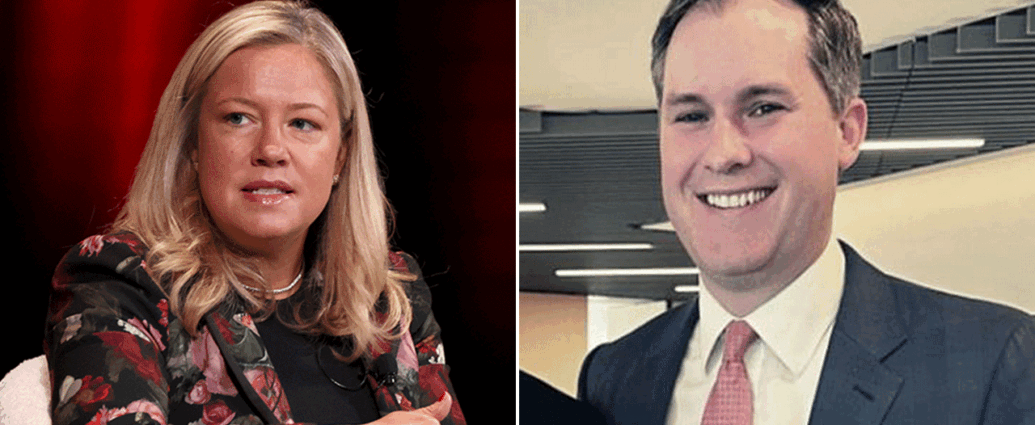
JP Morgan names Nelle Miller and William Sinclair co-CEOs of its US Private Bank
J.P. Morgan this week named Nelle Miller and William Sinclair as the new co-CEOs of its U.S. Private Bank, a specialized wealth management division that serves important clients.
The Private Bank is one of the largest providers of wealth management services with more than $2.4 trillion in total client assets and 57 offices nationwide, according to its website.
Miller also serves on the Asset & Wealth Management Operating Committee and the Global Private Bank Operating Committee and chairs the Advisory Council for the New York City Market Leadership Team.
She previously led the largest region in the U.S. Private Bank, the New York business, along with the Family Office Investments and Advice, overseeing the company’s Global Investment Opportunities, outsourced chief investment officer and Morgan Private Advisory organizations nationally, “serving the firm’s largest families and most complex clients.”
JPMORGAN NAMES 2 CO-PRESIDENTS, SETTING UP RACE TO SUCCEED JAMIE DIMON
Miller was a founding member of the Global Investment Opportunities team.
“I have spent my career alongside clients through market cycles and the most meaningful moments in their families’ lives, and Will and I are fortunate to lead a team that knows our clients just as deeply,” Miller said in a statement, according to outlet Pulse 2.0.
“The decisions families face today are more interconnected than ever, spanning private markets, liquidity and multigenerational planning. This is an extraordinary opportunity to build on everything that makes this business special.”
She joined J.P. Morgan in 2002 on the Institutional Equities Desk, where she covered New York-based hedge funds and mutual funds as a research salesperson.
“Nelle continues to personally advise some of New York’s most prominent families,” her biography on the J.P. Morgan website says. “As a leader of the Private Bank, she is a dedicated mentor to many young women across the firm and takes an active role in their career.”
DOJ PROBES JPMORGAN, CITIGROUP TRANSACTIONS TIED TO IRAN SUPREME LEADER’S BUSINESS NETWORK
Sinclair, who joined J.P. Morgan in 2007, is also global co-head of the Family Office Practice as well as a member of the U.S. and Global Private Bank operating committees.
“William leads with a client-first mindset and oversees more than 5,500 professionals in 57 offices across the United States. Together, they serve individuals, families, family offices, and institutions across a broad range of wealth management needs,” his biography says.
Sinclair worked for 10 years as a senior private banker working with business leaders, hedge fund managers and J.P. Morgan executives on their personal financial needs.
JAMIE DIMON SAYS HE UNDERSTANDS WHY PEOPLE HAVE GROWN ‘ANTI-RICH’
He also previously led the Financial Institutions Group and the U.S. Family Office Practice.
“Nelle and I are honored to take on this responsibility together and bring the global scale of the Private Bank to families and markets across the U.S.,” Sinclair said in a statement, Pulse 2.0 reported.
“We have a fantastic franchise with exceptional people and an unparalleled breadth of capabilities. Our focus will be on delivering the full power of J.P. Morgan to our clients and continuing to attract and develop the best talent in the industry.”
Their appointments follow David Frame being named in July 2025 as global CEO of J.P. Morgan Private Bank.
FOX Business has reached out to J.P. Morgan for comment.


Upcoming Israel-Lebanon talks to take place in Washington instead of Rome, US State Department says
The ambassadors of Israel and Lebanon will meet next week at the US State Department in Washington, rather than in Rome as originally planned, a State Department official said on Friday.
The meeting will address “ongoing developments and the continued implementation of the trilateral framework, which remains the only practical mechanism for restoring Lebanon’s sovereignty and ensuring Israel’s security,” the official said.
The official added that the next round of formal talks between the sides is expected to take place in Rome in October.
Source to ‘Post’: First round of Rome talks ‘positive’
The first round of talks began in Rome on August 4, and a source described the negotiations to The Jerusalem Post as “positive.”
Both Israeli and Lebanese military personnel attended the talks, the source added.

US State Department Spokesperson Tommy Pigott discussed the peace talks in an X/Twitter post at the time, saying the discussions “bring together technical teams from both governments to advance full implementation of the Trilateral Framework, including the pilot zone process, verified disarmament of Hezbollah and other Iran-backed security threats, redeployment of Israeli forces from southern Lebanon, and laying the ground for a comprehensive peace and security agreement.”
“The United States remains fully committed to supporting both governments as they carry this process forward in a manner that delivers lasting security for both countries, eliminates security threats to Israel, and restores Lebanese state authority throughout the south,” said Pigott.
James Genn contributed to this report.



STAT+: Scholar Rock wins FDA approval for first drug to target SMA muscle loss
Scholar Rock on Friday received Food and Drug Administration approval for the first-ever therapy that targets the loss of muscle in spinal muscle atrophy, raising hopes that patients with the rare neurological disorder might have a better chance of moving and walking independently.
The FDA approved the drug, Isembyld, for use in adults and children 2 years and older who are currently receiving SMA therapies that target SMN2, a key gene for neurons that control movement. A late-stage clinical trial found that, when combined with an SMN2-targeting drug, Isembyld caused young patients’ motor skills to improve after a year, while those in a placebo group declined, a difference that was statistically significant.
“Today’s FDA approval of Isembyld marks a defining moment for the SMA community,” said David Hallal, CEO of Scholar Rock, in a press release. “After decades of failed industry-wide efforts to unlock the potential of myostatin inhibition, Scholar Rock has delivered a therapeutic breakthrough.”
Former NYC Deputy Mayor on Remembering 9/11
KBW CEO on re-building Manhattan after 9/11
Former NY Fed President on Remembering 9/11
Gal Gadot and Jimmy Kimmel blow the shofar to celebrate Rosh Hashanah
Shortly before Jews around the world celebrated Rosh Hashanah, the Jewish New Year, on Friday night, Gal Gadot appeared on Jimmy Kimmel Live, bringing not one, but two shofars, the ram’s horn that is blown in synagogues in a holiday ritual.
Gadot went on the show to promote her latest movie, The Runner, on Amazon’s Prime Video, a thriller where she runs all over London at the behest of a sinister criminal who has kidnapped her son and who is blackmailing her. The movie, released on September 2, quickly shot to first place on Amazon’s rating charts.
While she spent much of the interview chatting with the host about the challenges of parenting, toward the end he wished her a happy holiday and asked about gefilte fish, which is eaten on Rosh Hashanah. Kimmel wondered whether it was like baccalà, a traditional Italian dish eaten on Christmas Eve, which he said no one in his family really liked, but which they ate anyway.
Gadot said, “I love gefilte fish, for the horseradish,” with which it is traditionally served. “I eat it just for the horseradish, but I like it.” She added that she and her family also eat apples and honey or honey cake.
Next, they spoke about the shofar, and Gadot had brought one for each of them, which she said she had gotten from her rabbi. Hers was relatively straight, and she managed to get some sound out of it, but the one she gave Kimmel was twisted, and she said it would be harder to play. But she said she thought he could handle it because, “You used to play the clarinet or the trumpet or something,” and he said he had played the clarinet. He tried and managed to elicit a passable sound from the instrument.

Gadot explains Jewish shofar tradition to Kimmel
Before they played, Gadot explained the tradition to Kimmel. “The idea is really nice because it’s for everybody and the mitzvah, the good deed, is to hear the shofar and it’s basically supposed to awaken the soul for a good year for everybody to come.”
“Oh, good. We could use a good year,” said Kimmel as he picked up the shofar. After he played, they sat and improvised together until they burst out laughing, and Kimmel joked, “We should start a band,” before wishing Gadot a happy new year.
J Street goes on the offensive against AIPAC-backed candidates
J Street, the liberal Jewish Middle East advocacy group, announced that it will spend $3 million to defeat a handful of Republican candidates backed by AIPAC, joining the plethora of progressive groups targeting the American Israel Public Affairs Committee this election year.
Such an attack campaign is an unusual initiative for J Street, which typically endorses candidates but does not target opponents on the basis of an AIPAC endorsement. Until now, according to J Street President Jeremy Ben-Ami, the likelier scenario for his organization was finding its endorsed candidates on the defensive against AIPAC’s spending.
“It’s a new era for us,” Ben-Ami said in an interview. In 2022, J Street targeted an AIPAC-backed candidate – but only after AIPAC barraged the J Street-endorsed candidate with negative spending.
In a statement, J Street said that this will be the group’s largest super PAC investment in its history, referring to political action committees that can raise unlimited funds but are forbidden from coordinating with campaigns.
The $3 million will be spent on ads targeting Republican Rep. Mike Collins, who is running for U.S. Senate in Georgia against Democratic Sen. Jon Ossoff, who is Jewish, and a handful of incumbents: Ohio Rep. Max Miller, who is running for reelection amid allegations of domestic abuse, which he denies; Wisconsin Rep. Derrick Van Orden; Pennsylvania Rep. Ryan Mackenzie; and Iowa Rep. Mariannette Miller-Meeks.

Ben-Ami said J Street targeted those particular candidates in part because they each face competitive races as the Democrats look to take control of the House and Senate, and they have ideological distance from J Street. Many of them were also connected to the movement to deny and overturn the 2020 election results, Ben-Ami said.
J Street’s campaign comes as AIPAC’s brand has become increasingly toxic among voters, and as a growing number of Democratic politicians cross its red line of supporting conditions on U.S. military aid to Israel. J Street’s position, meanwhile, has recently drifted toward supporting a phasing out of military aid to Israel in 2028.
AIPAC responds to, criticizes J Street campaign
AIPAC blasted the campaign in a post on X/Twitter. “Is this from J Street or Justice Democrats?” AIPAC wrote, referring to the progressive organization that has increasingly aligned with pro-Palestinian advocacy.
“A dark money super PAC spending millions to defeat pro-Israel candidates and lie about AIPAC,” the group wrote. “Not a word about helping elect pro-Israel candidates further exposes the difference between J Street and actual pro-Israel organizations.”
AIPAC has spent heavily since launching its super PAC, United Democracy Project, ahead of the 2022 midterms, and is the top outside spender in this election cycle, according to OpenSecrets. A number of anti-AIPAC, pro-Palestinian groups have emerged over the past year to counter the pro-Israel lobbying group’s spending.
Unlike those groups, J Street and AIPAC overlap in the candidates they back: Both groups endorsed moderate, pro-Israel Democrats such as Reps. Hakeem Jeffries and Dan Goldman. J Street’s super PAC has also previously targeted individual candidates for their AIPAC endorsement, such as Rep. Haley Stevens in 2022, citing AIPAC’s donations from right-wing megadonors.
AIPAC: J Street campaign ‘disappointing’ but ‘not surprising’
An AIPAC spokesperson wrote that it is “disappointing, but not surprising, that J Street continues to amplify lies about our community.”
“AIPAC members are focused on helping elect Democrats and Republicans who will strengthen the U.S.-Israel partnership, while J Street is focused on turning support for the Jewish state into a partisan political football,” said AIPAC’s spokesperson.
Ben-Ami said this year’s campaign is not about “the relationship between us and AIPAC,” but is rather about emboldening candidates who may otherwise worry that they will be up against AIPAC’s war chest.
“We are very conscious that there are many candidates who are afraid of what AIPAC might be able to do politically, and therefore adopt positions and say things about policy because they are afraid, and their fear and intimidation is holding them back,” Ben-Ami said.
Now, he said, J Street is putting “the shoe on the other foot.”
“If you are going to oppose American democracy and provide carte blanche to this Israeli government, then you need to be afraid,” he said.

STAT+: Pharma wins a battle over the cost of wastewater treatment in Europe
In a boost for the pharmaceutical industry, a European Union Advocate General recommended annulling part of a directive that requires drug and cosmetics manufacturers to finance at least 80% of the costs of wastewater treatment.
The directive, which revised an earlier version and went into effect early last year, was designed to protect human health and the environment from harmful discharges of urban wastewater and ensure cleaner rivers, lakes, groundwater, and coasts across Europe. The effort was projected to save about $7.5 billion annually by 2040.
A key portion of the initiative is a “quaternary treatment stage” that involves removing micropollutants — which are mostly created by pharmaceuticals and cosmetics — from wastewater. Member states must ensure that companies contribute to programs to deal with the waste they generate by December 2028.

Opinion | Greetings From President Xi
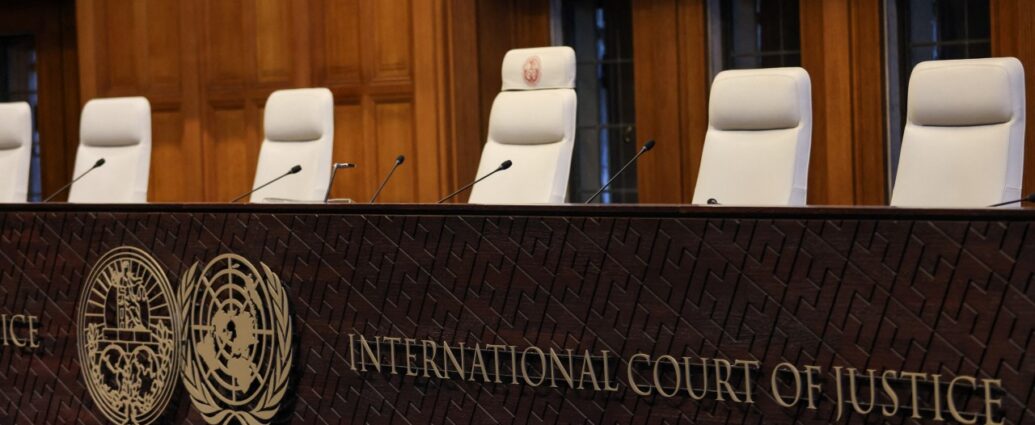
Binge watching and binge shopping come together: Amazon lets Prime viewers buy what characters wear and use, or the next closest thing
Amazon’s newest feature for Prime Video is trying to make real life more like TV by letting you immediately buy what your favorite actors are wearing—or something similar.
The company on Thursday announced a new feature called Shop the Scene that will let users shop for products featured in a show or movie. With minimal interruption to the viewing experience, users can pull up items on the Amazon Shopping app inspired by what’s being shown in the scene they’re watching at the moment.
Amazon said Thursday that the Shop the Scene feature is now available on more than 600 Prime Video titles through the Amazon Shopping app for users in the U.S.
The broader Shop the Show experience, which Amazon introduced last year to let users browse products related to shows on Prime, like bobbleheads or LEGO sets, is also expanding to more than 8,000 titles, from 1,300 previously.
“We are making it easier than ever for Prime Video customers to shop what they see on screen,” Michelle Rothman, vice president of Prime Video shopping, said in the announcement Thursday.
Amazon did not immediately respond to Fortune’s request for comment.
The new Shop the Scene feature uses AI to let a user curious about the clothing an actor is wearing in their favorite show buy the same outfit or a similar one from Amazon from their phone. The match may not always be exact.
Prime Video is also getting a new “shop” tab inside X-Ray, which lets users identify actors or music playing in a show while watching. Users will now be able to open X-Ray with their remote and browse products associated with what they are watching on the shop tab and finish the transaction on their phone.
Profiting from streaming
Companies like Netflix, Disney, and Peacock have for years experimented with ways to make streaming more profitable, including by increasing subscription prices, cracking down on account sharing, and incorporating tiered subscription models and ad-supported streaming.
Amazon’s move is the most recent effort to capitalize on the content already capturing people’s attention—and it’s not the first company to try it.
NBC’s streaming service Peacock introduced a Must ShopTV feature in 2023 that let users purchase content-featured products in real time. Disney through its streaming service Disney+ has also experimented with a shoppable TV feature that allowed subscribers to shop on certain pages via a QR code on their TV screen.
Amazon’s latest move also helps its behemoth online shopping business expand through its growing Prime Video business. Amazon said late last year that its ad-supported Prime Video tier now reaches more than 315 million people worldwide, a big leap from the 200 million users it disclosed in 2024.
Amazon has tried to more closely intertwine shopping and entertainment for years, including with a virtual product placement technology, or VPP, that uses machine learning to allow advertisers to insert their brands into films and TV shows after they’ve been produced.
There’s some data to show that product placement may be worth it. A survey by YouGov found earlier this year that just over half of U.S. adults consider product placement to be an effective form of advertising, compared to 14% who said it was ineffective.
Some 4% of the people surveyed said they took action after seeing a brand featured in content they watched. Of those people, 22% searched for the product online and 10% said they made a purchase.
This story was originally featured on Fortune.com
No. 25: Claudia Sheinbaum: Mexico’s first woman president, governing on her own terms
In 2024, when Claudia Sheinbaum took office for a six-year term, she became not only Catholic Mexico’s first woman president but also its first Jewish president. According to a former schoolmate, becoming president had been her dream since childhood.
The 64-year-old was born in Mexico City to Mexican-born parents. In the 1920s, her father’s Ashkenazi Jewish parents emigrated from Lithuania; and in the 1940s, her mother’s Sephardi parents fled Bulgaria and the Holocaust, finding safety in Mexico. Even so, Sheinbaum defines herself as an atheist and has no official ties to her country’s Jewish community.
Before entering politics and becoming mayor of Mexico City in 2018, Sheinbaum was a climate scientist who shared in the 2007 Nobel Peace Prize by contributing to the Intergovernmental Panel on Climate Change, which was awarded the prize jointly with Al Gore. As mayor of Mexico City until 2023, she pioneered green initiatives such as advancement in public transit, reforestation, and sustainable water management.
The chosen successor of former Mexican president Andrés Manuel López Obrador, she leads the left-wing Morena Party, fighting economic inequality, opposing neo-liberal policies, maintaining a strict separation between private wealth and public office, and funding major welfare programs for students, seniors, and disabled individuals, while cutting unnecessary costs.
Sheinbaum moves around her country with minimum security, mirroring her predecessor’s accessible style. In November 2025, this led to her being groped in public, an incident she used to advance her women’s rights agenda, which has included establishing Mexico’s first Ministry of Women and securing landmark constitutional gender equality reforms, such as guaranteeing equal pay for equal work and parity across government cabinets.

Domestically, Sheinbaum has taken a stance against drug cartels. A major milestone was the February 2026 killing, during a security operation, of Nemesio “El Mencho” Oseguera Cervantes, leader of the Jalisco New Generation Cartel.
Concerning relations with the United States, she operates under what she terms a doctrine of “coordination, not subordination.” Due to Mexico’s heavy economic reliance on trade, she has negotiated complex migration, border, and tariff issues with US President Donald Trump.
Sheinbaum caused a diplomatic incident with Spain
Sheinbaum initially caused a diplomatic incident with Spain by refusing to invite King Felipe VI to her inauguration because the Spanish Crown had not apologized for its 16th-century conquest of Mexico (a demand made in a 2017 letter by López Obrador).
Yet 18 months into her term, she flew to Barcelona to attend the fourth In Defense of Democracy summit and the inaugural Global Progressive Mobilization. This marked the first visit by a Mexican leader to Spain in eight years, since the Morena party had come to power. She pacified diplomatic tensions, resulting in a historic reconciliation visit by King Felipe VI to Mexico City on June 25 this year.
While Mexico maintains diplomatic relations with Israel, on March 19, 2025, Sheinbaum officially accepted the credentials of Nadya Rasheed as the first fully recognized Palestinian ambassador to Mexico. Then, on September 22, 2025, the Mexican president formally accused Israel of “genocide” during a press conference timed to coincide with the UN General Assembly in New York City.
No. 24: Gali Baharav-Miara, Isaac Amit, and Noam Sohlberg >>
<< No. 26: Dario and Daniela Amodei
No. 24: Gali Baharav-Miara, Isaac Amit, and Noam Sohlberg: Public faces of Israel’s justice system
In Israel’s most consequential institutional disputes of the past year, the same three names repeatedly appeared: Attorney-General Gali Baharav-Miara, Supreme Court President Isaac Amit, and his deputy, Noam Sohlberg.
They do not always agree or come from the same judicial school. But together they became the most public faces of a justice system asked where government authority ends and whether the institutions answering that question can function amid political pressure.
That shared position was clearest in the government’s attempt to dismiss Baharav-Miara. The cabinet voted unanimously in August 2025 to remove her, arguing that profound and prolonged disagreements had made cooperation impossible. Sohlberg temporarily blocked the dismissal while the court reviewed it.
In December, a seven-justice panel unanimously invalidated both the new dismissal mechanism and the decision based upon it. Amit authored the ruling, which found serious defects in the government’s decision to bypass the public-professional committee traditionally involved in appointing and dismissing attorneys-general.
Baharav-Miara remained in office and at the center of nearly every major dispute between the government and the legal system.

Her office backed stronger enforcement against haredi (ultra-Orthodox) draft evaders, supported an independent state commission of inquiry into the failures surrounding October 7, challenged attempts to restructure the Justice Ministry’s Police Investigation Department, and warned against weakening government legal advisers. She also argued that an outgoing government must exercise restraint over senior appointments and other decisions that could bind its successor.
The use of outside lawyers became one measure of the breakdown, although such cases remained the exception rather than the rule. A July Israel Democracy Institute review identified 42 requests for separate representation since the government took office, 33 of which Baharav-Miara approved. By comparison, in 2023 alone, the prosecution completed its handling of approximately 1,380 High Court petitions, with the government represented by the legal-advisory system in many hundreds of non-security cases. The significance of the 42 disputes lay less in their number than in their subject matter: Many concerned constitutional questions, the division of power between state institutions, and senior appointments.
Baharav-Miara’s critics see an unelected official obstructing policies chosen by voters. Her office and supporters say the attorney-general advises the government but cannot defend actions deemed unlawful.
Yitzhak Amit
Justice Minister Yariv Levin refused to recognize Amit’s presidency, arguing that his selection was invalid and declining to work with him on appointments requiring joint approval. In June, the High Court ordered Levin to cooperate with Amit.
Vacancies mounted across the courts, delaying proceedings and harming public service. Once the Judicial Selection Committee resumed broader work, it selected 94 judges and registrars over two rounds in late June and early July.
Amit also placed the challenge to the government’s overhaul of the Judicial Selection Committee before all 11 sitting justices, in a case that may determine who controls future judicial appointments.

He faced personal allegations and severe political rhetoric. The judicial complaints commissioner dismissed all but one complaint against him, finding a failure to disclose a potential conflict but no improper intent, and recommended no further action. Levin nevertheless demanded Amit’s resignation and sought disciplinary proceedings, which Baharav-Miara said lacked legal validity. Amit repeatedly warned that incitement and false information were threatening judicial independence and judges’ safety.
Noam Sohlberg
Sohlberg, widely identified with the court’s conservative wing, occupied a sensitive place in the confrontation. He joined Amit in pressing Levin to fill judicial vacancies while writing consequential decisions of his own.
Most significantly, he authored the November ruling requiring criminal and economic enforcement against haredi draft evaders. When the government failed to implement it, the panel he led imposed deadlines for considering the removal of benefits and other enforcement measures.
On June 3, extremist haredi protesters descended on Sohlberg’s home in Alon Shvut. They smashed windows, damaged his car, and attempted to enter the house. Police arrested 62 people, and four men were later indicted. The violence transformed a dispute over court authority into a direct threat against a judge and his family.
Sohlberg also assumed responsibility for petitions seeking an October 7 state commission after Amit stepped aside because the chief justice would appoint its members. Now, as chairman of the Central Elections Committee, Sohlberg will oversee election rules and integrity ahead of the October 27 vote.
The three exercised their authority differently. Baharav-Miara was the government’s internal legal constraint; Amit, the judiciary’s institutional defender; and Sohlberg, a conservative jurist repeatedly placed at the center of disputes cutting across Israel’s political and social divisions. Their influence lay not only in their decisions but also in the institutions they are charged with holding together.
No. 23: Josh Shapiro: A rising Democratic heavyweight putting his Jewish identity front and center
An August New York Times/Philadelphia Inquirer/Siena University poll showed Josh Shapiro leading Republican challenger Stacy Garrity 55% to 39% in his race for a second term as Pennsylvania governor – an enviable margin in a state President Donald Trump carried in 2024.
Part of that strength rests on a reputation for pragmatism: in July he signed his fourth consecutive bipartisan state budget, which passed with the support of 211 of Pennsylvania’s 252 lawmakers. It’s a position that has made him arguably the most politically formidable Jewish Democrat and one of his party’s leading potential contenders for the presidency in 2028.
As his national profile has grown, so has the prominence of his Jewish identity. Shapiro attended Jewish day school, keeps a kosher home, celebrates Shabbat with his family, and has described his connection to Israel as formative. In his 2026 memoir, Where We Keep the Light, he presents Judaism as central to his public life.
The past two years have tested that identity in extraordinary ways. Shapiro revealed in the memoir that during Kamala Harris’s 2024 vice-presidential vetting process, he was asked whether he had ever been an agent – or “double agent” – of Israel.
The disclosure prompted outrage from prominent Jewish leaders, who said the questioning evoked the historic antisemitic trope of dual loyalty; Shapiro called the question offensive but has been more cautious about assigning motive. People involved in Harris’s vetting process later said other finalists were asked similar questions about ties to foreign governments.

Then, in April 2025, an arsonist attacked the Pennsylvania governor’s residence hours after Shapiro and his family had celebrated a Passover Seder there. They escaped unharmed. The attacker later pleaded guilty to attempted murder, terrorism, and arson and was sentenced to decades in prison.
Authorities examined his anger toward Shapiro over the Israeli-Palestinian conflict; Shapiro resisted speculation about the precise motive.
Rather than retreat from public expressions of his Judaism, Shapiro has moved in the opposite direction. Speaking to thousands of Jewish teenagers at a BBYO gathering this year, he said he was proud of his faith, describing a decision to live that faith “out loud.”
Shapiro’s relationship with Israel
His relationship with Israel is similarly visible but not uncomplicated: Shapiro identifies as a Zionist and has vigorously defended Israel’s right to defend itself, while criticizing Prime Minister Benjamin Netanyahu and voicing concern for Palestinian civilians.
Those positions have made him a target for parts of the progressive left, even as his defenders argue that he has at times been held to standards not applied to other Democrats.
Whether Shapiro ultimately seeks the White House remains an open question. As the Democratic Party debates its future – and its relationship with Israel – Shapiro increasingly finds himself at the center of both debates.
No. 22: David Zini and Eyal Zamir >>
<< No. 24: Gali Baharav-Miara, Isaac Amit, and Noam Sohlberg
No. 22: David Zini and Eyal Zamir: Commanding Israel’s security through war and turmoil
This is an abbreviated version of the profile. A longer, expanded version will be published separately on The Jerusalem Post’s website.
David Zini
Shin Bet chief David Zini is one of the most powerful men in Israel.
But if Yashar party leader and former IDF chief Gadi Eisenkot becomes the next prime minister and Zini somehow keeps his job, it will be in spite of a series of disastrous public relations moves he has made.
His most recent was denying Eisenkot a Shin Bet security detail despite successive weeks of polling showing that the former IDF chief is the clear challenger to Prime Minister Benjamin Netanyahu and possibly even the favorite in the October 27 elections.
Whether it is required or not according to the letter of the law, Zini made this misstep even as he has authorized a lifelong security detail for Sarah Netanyahu, something never granted before to any family member of a premier, so the Shin Bet chief knows how to stretch when he wants to.
Zini was even rebuked by a Knesset advisory committee which has recommended that the agency should extend Eisenkot protection, despite the agency chief’s views.

In addition, at one point Zini provided an opinion that Netanyahu could have potentially used to stall testifying at his trial based on safety concerns, despite the fact that most current and all former Shin Bet officials thought that the claims were nonsense and that Netanyahu has continued to regularly appear in public exposed areas to campaign.
These are only the latest of Zini’s missteps, which have convinced much of the public that he has politicized aspects of his post.
In less than a year in office, he has managed to offend much of the Shin Bet’s female staff, LGBT staff, and families of Shin Bet agents killed on October 7 and created a media storm with comments that many understood as a readiness to intervene on Netanyahu’s behalf either in the election or in a conflict with the judicial branch.
The Jerusalem Post received exclusive explanations about what he really meant in his recorded comments, and many of those explanations were coherent, but the fact that he fell into the trap in the first place showed a disconnect in terms of the concerns of many sectors of the public.
Further, he has been accused by other Shin Bet and defense officials of going easy on violent Jewish extremists who attack Palestinians in the West Bank, even if most of the blame for the issue is placed on National Security Minister Itamar Ben Gvir.
And yet, neither Eisenkot nor Naftali Bennett, has said he must go the way they have top police officials who have served under National Security Minister Itamar Ben-Gvir.
Apparently, despite Zini’s regular shooting himself in the foot, he retains the respect of a large portion of the defense stablishment as a manager who knows how to stop Palestinian and Iranian terror – the agency’s main mission.
According to the most recently posted Shin Bet report on thwarting terror for May of this year, the agency stopped 406 attacks.
In terms of attacks that took place, 282 involved rock throwing, 32 involved Molotov cocktails, 24 involved burning tires, eight involved explosive devices, and two involved car ramming.
Despite all of these terror actions, only one Israeli was killed by terror in March and none in April-May, while only between eight and nine Israelis were wounded per month.
This could support those who want to keep Zini in office as an effective anti-terror czar despite the many downsides he has highlighted, and possibly under a new boss, he might work harder to stay out of the headlines on side issues.
Eyal Zamir
When IDF Chief of Staff Lt.-Gen. Eyal Zamir finished 2025, he was on track as one of the most popular IDF chiefs in recent memory.
He had stormed onto the world stage in June 2025, leading Operation Rising Lion, Israel’s remarkably successful massive strike on Iran’s nuclear program, radars and air defenses, top military officials, and some ballistic missile sites.
Next, he was the IDF chief in October 2025, when a deal was struck with Hamas to end the Gaza War, including the return of all remaining living and deceased hostages.
But 2026 has been a much more mixed bag for Israel and for him as well.
Israel’s early 2026 Operation Roaring Lion is viewed by most in Israel and globally as less successful than the 2025 operation, even as the IDF did destroy significant aspects of Iran’s ballistic missile program, caused between $200-300 billion dollars of damage to its broader military industrial complex, and assassinated supreme leader Ayatollah Ali Khamenei.

Regardless of the successes, it has been highly problematic diplomatically, turning even more of the world against Israel and even losing important measures of support from the Trump administration over gas prices and the crisis in the Straits of Hormuz as well as the fact that the Iranian regime survived with an intransigent attitude.
This in turn may limit the IDF’s future military options against Iran and even against Hezbollah in Lebanon, which Zamir had initially seemed to succeed in weakening even more in early 2026 than during the fall 2024 campaign against the group.
Through all of this, Zamir has inherited a multi-headed problem of terror emanating from the West Bank since early 2022. He has tried to order harsher crackdowns on certain more problematic Palestinian areas, reducing aspects of the terror threat substantially, but nothing close to stopping the threat.
At the same time, Zamir, along with the police, the Shin Bet, and the government more broadly, have lost control over several hundred violent Jewish extremists who have been regularly attacking both Palestinians and soldiers alike.
Zamir has not fought with Defense Minister Israel Katz to restore administrative detention of violent Jews, a tool the Shin Bet has consistently demanded be returned to them for use. Rather, he has been strategic about public fighting with the defense minister, with a focus on keeping control of key IDF appointments and on pressing the government to draft more haredim (ultra-Orthodox) despite pushes by Katz to make political-friendly appointments and to protect haredi political parties from any substantial concessions on drafting more young men from their sector into the military.
No. 21: Volodymyr Zelensky: The Jewish president who became the face of Ukraine’s resistance
Ukrainian President Volodymyr Zelensky has never made the biggest deal about his Jewish identity. That might be the most Jewish thing about him.
When he started his term in 2019, he had no political experience. Yet as the leader of Ukraine, the 48-year-old has pursued an impressive political agenda, pushing the country to join the EU, fighting corruption, and seeing the country through a nearly five-year invasion.
Since Russian President Vladimir Putin’s February 2022 invasion, an estimated 55,000 Ukrainian soldiers have died, at least 16,874 Ukrainian civilians have been killed, and Ukraine has lost control of about 20% of its territory.
He has shepherded Ukraine through its most challenging era in contemporary history. Though his army does not have the same resources as the Russian military, it has shown the world how innovation and ingenuity can change the face of modern warfare with its breakthroughs in drone technology.
Putin has repeatedly framed Zelensky as a disgrace to Jewish people and has called his government a “Nazi regime.” These attacks blatantly disregard the fact that Zelensky’s grandfather defended Ukraine from the Third Reich during World War II, and that many members of Zelensky’s family were killed in the Holocaust.

Zelensky’s paternal grandfather was the only member of his immediate family who survived the Holocaust.
Zelensky has said in multiple interviews that his paternal grandfather was the only member of his six-person immediate family who survived the Holocaust.
“When Russians [talk] about neo-Nazis and point to me, I just reply that I have lost my entire family in the war, because all of them were exterminated during World War II,” he said. Like many Soviet Jews, Zelensky did not grow up living a very religious lifestyle.
“The fact that I am a Jew is about the 20th question among my characteristics,” he said in an interview in 2019.
This is part of what makes him remarkable: Zelensky is not a good leader simply because, or in spite of his Jewish identity. He is a good leader, and just so happens to be Jewish.
Zelensky has shown the world what it means to lead with courage, vision, and true leadership in the face of a full-frontal attack. In the face of antisemitism and inane Kremlin accusations of being a neo-Nazi, what better antidote is there than to let your leadership do the talking?
No. 20: Alex Karp and Josh Kushner >>
<< No. 22: David Zini and Eyal Zamir
Trump sends Rosh Hashanah greetings, vows to combat antisemitism
The White House issued a Presidential Message on Rosh Hashanah on behalf of US President Donald Trump and First Lady Melania Trump on Friday, extending greetings to the Jewish community ahead of the Jewish New Year.
Written in the president’s voice, the message began by offering “warmest greetings” to Jewish communities in the US and around the world. “Melania and I send our warmest greetings to the entire Jewish community on Rosh Hashanah, the Jewish New Year and the first of the High Holy Days,” Trump wrote.
The message highlighted the biblical significance of Rosh Hashanah, describing it as “the anniversary of when the Almighty created Adam and Eve and the story of humanity began.”
From @WhiteHouse, a Presidential Message on Rosh Hashanah:
“Melania and I send our warmest greetings to the entire Jewish community on Rosh Hashanah—the Jewish New Year and the first of the High Holy Days.
The Jewish community around the world marks the anniversary of when the…
— RJC (@RJC) September 11, 2026
Trump also noted that the two-day holiday begins a period of reflection and repentance leading up to Yom Kippur, the holiest day in the Jewish calendar. The message described the High Holy Day season as a time of “prayer, repentance, and spiritual renewal.”
The president reaffirmed his administration’s commitment to promoting religious faith across the US, combating antisemitism, and protecting religious freedom.

Trump reaffirmed administration’s comitment to eliminating antisemtism
“My Administration reaffirms our steadfast commitment to ushering in a historic renewal of faith across our country, eliminating the scourge of anti-Semitism, and defending the sacred right of religious liberty for every single American,” the message said.
The message concluded with a traditional High Holy Days greeting, expressing the hope that members of the Jewish community would “be inscribed in the Book of Life.”
“Wishing you a Happy, Healthy, and Sweet New Year!” Trump wrote.
Psalms in the morgue and scrapped Rosh Hashanah sermons: What rabbis remember about 9/11
“Today is the birthday of the world. It is also the end of Shiva (mourning period). Sept. 11 + 7.” That’s how Rabbi Joshua Hammerman of Temple Beth El in Stamford, Connecticut, began his Rosh Hashanah sermon on Sept. 18, 2001 – 1 Tishrei 5762.
When I’d left New York City for Stamford the day before, Grand Central Terminal was covered in missing-person posters. All around were photos of those who went to work on a cloudless Tuesday morning and never made it home. Downtown, the fires at Ground Zero were still burning. They wouldn’t be fully extinguished for another three months.
While many of us sat in front of the TV, rabbis comforted grieving and fearful congregants and scrambled to rewrite their High Holiday sermons. Before 9/11, many of them had planned to speak about the violence that had engulfed Israel over the previous year. Just a month earlier, a Palestinian suicide bomber had blown himself up in a Sbarro pizzeria in Jerusalem, killing 16 people and injuring more than 100.
But then, as the Jewish Telegraphic Agency reported at the time, attacks closer to home “forced an abrupt shift in tack and created new, pressing questions: How do you comfort a nation in mourning and bring in the New Year in the shadow of the worst terror attack in United States history? How do you discuss God, forgiveness, and repentance in the face of evil?”
Rabbi Hammerman, who for more than three decades led the Conservative synagogue where my mother and stepfather are members, rewrote his Rosh Hashanah sermons that year. In his remarks, he acknowledged widespread fear but urged congregants to choose hope, to rise from shiva and begin the process of lifting themselves “up off the ash heap.” The crowd that day included many people who had been downtown on 9/11.

This year, the birthday of the world – as Rosh Hashanah is known – begins at sunset 25 years to the day after a series of coordinated attacks killed nearly 3,000 people and ushered in two decades of war overseas. Sept. 11 + 25 years. 1 Tishrei 5787.
During these High Holidays, I’ll be sitting across the country from Stamford, at Temple Israel of Hollywood in Los Angeles, where I am a member. There, on Erev Rosh Hashanah, Rabbi Michelle Missaghieh plans to reflect on the scope of 9/11 and the very personal ways it affected her family.
Ahead of this grim anniversary, I surveyed American rabbis about what they remember from 9/11 and the High Holidays that began just days later. Here’s what they told me (the following oral histories have been lightly condensed and edited for length and clarity).
Rabbi Andy Bachman’s experience on 9/11
On the morning of Sept. 11, 2001, Rabbi Andy Bachman was on his way to a mikveh, or Jewish ritual bath, on Manhattan’s Upper West Side. There, he was scheduled to officiate at the Jewish conversion of two New York University students. At the time, Bachman was the executive director of the Bronfman Center for Jewish Student Life at NYU. The center is situated about a mile and a half north of the World Trade Center site.
I found out about the attacks when I got out of the train at 72nd Street, and there was a kind of shock and hysteria. Then I went straight to the mikveh, worked on contacting my family, proceeding with the conversions and walking downtown to campus afterward in order to find missing students and start the process of setting up volunteers and humanitarian aid.
In the immediate days surrounding the attacks, we were delivering food and water to volunteers at Ground Zero, dealing with students having major breakdowns, and helping maintain the social fabric of caring and safety. Rosh Hashanah followed soon after 9/11, and frankly I don’t remember what I said. But surely we addressed that atmosphere and crisis we were experiencing. I will never forget [Ground Zero] volunteers showing up at services covered in ash from their work and doing everything in our power to support them.
On Sept. 11, 2001, Rabbi Danielle Upbin was a fifth-year rabbinical student at the Jewish Theological Seminary in Manhattan. She can still picture the overflow crowd at the seminary’s High Holiday services, as community members “wanted to be together, to feel connected to God, to our people, to each other.” In the weeks after 9/11, Upbin, now of Congregation Beth Shalom, a Conservative congregation in Clearwater, Florida, volunteered through the Red Cross’ spiritual care team, stationed at a pier on New York City’s West Side.
We were asked to make it clear that we were chaplains, to offer kind words, to say, “Do you need to talk?” It was in this dire time, when people still couldn’t find their loved ones. They were trying to manage their finances and trying to understand what would happen next.
I would say that was our education, because I was a bit out of my depth then. I would not have known what to do, and I’m grateful to have had resources like the Red Cross and FEMA, and the opportunity as a rabbinical student to learn the tools and how to respond.
It taught me to show up for people in times of crisis. It taught me that there are times when it’s appropriate and necessary to let people know that you are here for them as a listener, that I can offer prayers with them, that I can sit with them – and I don’t have to do anything more than that. Sometimes it’s enough to let people know I’m available, present, and care about them as a person.
Rabbi David Weizman recited tehillim as coroners worked
Rabbi David Weizman – Rabbi Upbin’s husband, who is also a spiritual leader at Congregation Beth Shalom – was only recently out of rabbinical school when the towers fell. When he, too, inquired how he might support relief efforts, the Red Cross placed him in the morgue adjacent to Ground Zero. There, he recited psalms, tehillim in Hebrew, while the coroners worked.
I was saying tehillim, and they were doing their forensics – trying to identify bodies, or the pieces of bodies, the fragments, the bones… teeth.
At first I was like, “Is this doing any good? Did they want me here? Am I bothering them?” One of them pulled me aside one time and said they appreciated me bringing some kind of kedushah (holiness) into it. They weren’t Jewish or anything, those folks, but they knew that the practice was trying to bring some honor to the dead, and it was helpful somehow for the people working in the morgue.
They’d come in with these black bags that they had the remains in, and they’d put them up on the table in the middle of the room, open them up, and they were like scientists, just trying to identify anybody they possibly could.
People born after 9/11 don’t know how dramatically things changed in our country: our sense of being vulnerable, being targets. So this year, I’m going to talk about the question: If you lived through it, how did it change you?
I think it changed me – my vulnerability, but also [realizing] that there are real enemies in the world, and there’s a real source of animosity that we’re all susceptible to. Before 9/11, it was very easy to put that out of our minds – to say we’re Americans, we’re protected.
Rabbi Avi Shafran wasn’t at his Lower Manhattan offices on the morning of Sept. 11, 2001. The then-director of public affairs for Agudath Israel, a Haredi Orthodox advocacy group, was in Staten Island, at the dentist, with a toothache. He thanks God for that toothache, knowing that “on any other day, I would have been mere blocks away,” as he wrote in a piece for Ami Magazine. When he thinks back to that time, he remembers how quickly and dramatically the world changed, and recalls both the sense of patriotism the attacks brought out and the xenophobia that they wrought.
There was a feeling that a new era of history had dawned, and that at the previous Rosh Hashanah, no one could have imagined what the year would bring. …I remember going to my car mechanic, an Egyptian Copt, and telling him that if he was under any threat, he should know that I stood ready to help in any way, even to shelter him. At the time, no one knew how people would react in the coming days. I hung a large American flag over my balcony and spent time reassuring family and others in different places that I was OK.
Rabbi Michelle Missaghieh’s father, Hushang, and her brother, Ramin, worked at the Twin Towers. On 9/11, Hushang was just about to get on the elevator to his 76th-story office at 1 World Trade when a plane struck the building. Outside, he started walking north and saw people jumping to their deaths from the burning buildings. Her brother, on his way to work at the time of the attacks, got home safely. At the High Holiday services that year, Missaghieh, an associate rabbi at Temple Israel of Hollywood, a Reform congregation in Los Angeles, spoke about the Akedah, or the binding of Isaac, the Torah story read on the second day of Rosh Hashanah. In it, God orders Abraham to sacrifice his son Isaac, only for an angel to intervene at the last moment.
I used the Akedah as a lesson to speak out against extremism. That just because someone – naming God – tells you to take your plane and plow it into the Twin Towers, doesn’t mean you should listen to that voice. That is not a “godly” voice. That is the danger of extreme religious thinking. That is what Abraham did. It is not how we should strive to love. The Akedah warns us not to act that way.
Living with this type of existential, constant fear is something the younger generation is growing up with, but it didn’t exist earlier in the same way. So I think it was a real turning point for how Americans are now divided, in terms of foreigners and threat and war. …I want to warn against xenophobia, against the closing of ranks, against the us vs. them mentality. All of that is very dangerous.
With his pregnant wife’s due date fast approaching, Rabbi Robert Scheinberg had worked ahead on his High Holiday sermons in 2001. But by the time he spoke from the bimah at the United Synagogue of Hoboken, a Conservative congregation in New Jersey, his message had changed dramatically. Smoke from the World Trade Center site, just across the Hudson River, was still visible in Hoboken.
Our community was traumatized. I was able to incorporate some themes from the sermons I had already prepared, but it would have been inappropriate for any High Holy Day sermon in our community that year to be fundamentally about anything else. But there were so many themes related to what had just happened – the unfairness of lives getting cut short and how this could possibly relate to our High Holy Day theme of the Book of Life; the incredible heroism and self-sacrifice of first responders; moving forward in a fearful world without a sense of stability to anchor us; the reality of people who so despise us and our way of life that they would do such a thing; gratitude for having survived, and sorrow of friends and relatives who were killed; how we process all these extreme emotions – that I spoke about different aspects during each sermon. Sometimes the quality of a sermon is related to the many hours of preparation, but sometimes the quality of a sermon is related to the depth of emotion that it reflects and the ways that it meets the moment, even with much, much less preparation.
On 9/11, Rabbi Mari Chernow was a student rabbi at the Jewish Home, an elder care facility in San Francisco. Chernow, who is now the dean of Hebrew Union College, a Reform seminary in Los Angeles, was struck by the “depth of sorrow” of the elderly residents, Holocaust survivors among them.
There was a heaviness to their possibility of leaving this earth with such a dismal view of humanity. …If you’re in your 20s, like I was, you can think, OK, this is horrible, and we’re going to do better, and we’re going to fix things. But [for elderly residents] without that runway to make things better for humanity, I think that was in the air. It felt different, unlike other places where we were just processing what had happened in America. It was more prevalent. It was in the way that they held their bodies, the looks on their faces.
For the Holocaust survivors, who had completely rebuilt their lives, it was another trauma – like, humanity is doing this again – and I think it just deepened the despair. Grief is like rivers that flow into each other. It’s impossible to experience grief without recalling past griefs.
Germany’s far-right AfD, riding state win, targets more gains in elections from east to west
Germany’s far-right, riding high after winning an eastern state, seeks to capitalize on its momentum in a series of upcoming elections – starting with municipal voting this weekend, followed by two closely watched state contests.
The first test for the Alternative for Germany (AfD) party comes Sunday in municipal elections in the western state of Lower Saxony. A week later, the AfD has its sights on state elections in the capital, Berlin, and the Baltic coast state of Mecklenburg-Western Pomerania.
The AfD beat out other parties in Saxony-Anhalt on Sept. 6 with 43.8% of the vote and 39 of 83 state parliament seats, falling just short of a majority and marking Germany’s greatest far-right victory in a state election since World War II.
“From previous elections, we know that the AfD is currently able to mobilize almost totally its own constituency and potential voters, while its democratic competitors have much more problems,” said Gideon Botsch, the head of the Emil Julius Gumbel Research Unit on Antisemitism and Right-Wing Extremism at Potsdam University.
While polls do not predict the next state election results will match the historic win in Saxony-Anhalt, the AfD currently leads other parties in Mecklenburg-Western Pomerania with about 35% of the vote. And in Berlin, long a stronghold of Germany’s political left, the AfD is jockeying with the center-right Christian Democratic Union (CDU) and the left-wing Linke for first place, with all three polling around 20%.

The AfD, a nationalist, anti-immigrant party whose leaders have proposed rejecting Germany’s “guilt complex” over the Holocaust, has regularly topped nationwide opinion polls for the past year. In surveys asking Germans which party they would choose if federal elections were held “this Sunday,” the AfD often receives the highest results, Botsch told the Jewish Telegraphic Agency.
The AfD has built a dedicated, growing base, Botsch said. Its popularity signals frustration with the mainstream parties in power, particularly the CDU, Chancellor Friedrich Merz’s party, amid a sluggish economy. The AfD is especially popular in eastern Germany, where voters are poorer and hit hard by high energy prices exacerbated by the wars in Iran and Ukraine.
AfD likely to perform more weakly in western Germany
The AfD is likely to perform more weakly in the west, where Lower Saxony will hold a municipal election on Sunday. The party has stronger influence in the east, and Germany’s municipal elections tend to hinge more on well-known figures from established parties, said Roger Stöcker, a political scientist at Otto von Guericke University in Magdeburg. Still, even if the AfD doesn’t transform governments, Stöcker said that making inroads to further entrench itself in Lower Saxony would be “a strategically significant success.”
“It’s conceivable that the AfD wins a town hall or a county administration here and there or strengthens its presence in local councils, expanding its local base,” said Stöcker.
The three upcoming elections are being closely watched for signs of the AfD’s wider-scale momentum, said Daniel Schuster, who heads the Simon Wiesenthal Center’s European office.
“Taken together, these elections can help show whether Saxony-Anhalt was an exceptionally strong eastern result or part of a broader national expansion of the AfD’s electoral base,” said Schuster.
Remko Leemhuis, the director of the American Jewish Committee Berlin Lawrence and Lee Ramer Institute for German-Jewish Relations, added that residents will feel the effects of the AfD’s success even if it falls short of its victory in Saxony-Anhalt. A “very strong AfD result,” short of managing to enter government coalitions, would still “raise serious concerns” for Jewish residents about the party’s influence, said Leemhuis.
Residents in Saxony-Anhalt are waiting to see the ramifications of the AfD’s election victory. Without an outright majority, the party needs partners to join a coalition. Its nationalist agenda in the region includes teaching children less about Hitler, banning Pride flags in public buildings and requiring artists and cultural organizations to sign a declaration that they will not “disparage Germany and its culture” if they seek state funding.
AfD may use state powers over policing to pressure minorities
State governments also control domestic policing and parts of the judiciary. The AfD could use its power in these areas to “put pressure on minorities it dislikes,” including immigrants, Muslims and Jews who are identified with Holocaust remembrance, said Stöcker. At the same time, the AfD could direct policing and intelligence away from right-wing extremism in Saxony-Anhalt, which recorded the second-highest number of right-wing extremist crimes per capita of Germany’s 16 states last year, Leemhuis said.
The AfD’s victory in Saxony-Anhalt marked a “watershed moment” in German politics, according to Roland Abold, the managing director of Infratest Dimap, a German election research institute. Abold said that the result heaped pressure on Merz and the federal government, as “calls for a change in political direction and a reassessment of cooperation with the AfD are likely to intensify.”
For now, the CDU stands behind Merz, the most unpopular chancellor in modern German history, after 16 months in power. But if the CDU faces further heavy defeats in the upcoming elections, questions about Merz as the party’s leader could escalate, said Stöcker.
The AfD is already eyeing his job. Alice Weidel, the national AfD’s co-chair, announced on Monday that she wants the party to win “at least 40% of the vote” in Germany’s next federal election in 2029.
Ulrich Siegmund, the AfD candidate in Saxony-Anhalt who hopes to become the state premier, said in the same press conference that his goal was “very clear.”
“As perhaps the next Minister-President of Saxony-Anhalt, I need a Federal Chancellor Alice Weidel here in Berlin, so that we can write here history side by side,” said Siegmund.



Broccoli sprouts linked to salmonella outbreak recalled after 22 are sickened
Evergreen Fresh Sprouts LLC on Thursday announced it’s recalling over 200 cases of broccoli sprouts over concerns they may be contaminated with salmonella, according to the Food and Drug Administration (FDA).
Evergreen said it’s recalling 215 cases of broccoli sprouts, each of which includes six four-ounce bags per case, because of the risk of salmonella contamination.
Salmonella is a foodborne illness that can cause serious and sometimes fatal infections in young children, frail or elderly people and those who have weakened immune systems.
The recalled broccoli sprouts were delivered to three distributors in the state of Washington from Aug. 24 to Sept. 2, with the product possibly distributed and sold in retail stores to consumers in Idaho, Montana and Washington.
CREAM CHEESE AND DELI SALADS RECALLED OVER POTENTIAL LISTERIA CONTAMINATION
The broccoli sprouts were packaged in clear plastic four-ounce zip lock bags, with the UPC code 8 38796 00105 1 and use by dates of 9/7/26, 9/9/26, 9/11/26, 9/14/26 and 9/16/26.
Consumers who purchased the affected broccoli sprouts are urged to immediately discard the product. Businesses are urged by the Centers for Disease Control and Prevention (CDC) not sell or serve recalled broccoli sprouts and to wash and sanitize items and surfaces that may have come in contact with recalled broccoli sprouts.
The CDC has recorded a total of 22 cases in Idaho, Washington, Montana and Utah.
DOG SUPPLEMENTS RECALLED OVER POTENTIAL SALMONELLA CONTAMINATION
Evergreen said that it was notified the broccoli sprouts have been related to a multistate salmonella outbreak, which included 22 cases as of Sept. 9.
It initiated the recall when broccoli sprouts with a use by date of 9/16/26 tested positive for salmonella in an analysis conducted by a third-party lab. The company stopped producing and distributing broccoli sprouts on Sept. 4 and is undertaking a root cause investigation, Evergreen said.
MORE THAN 1,500 POUNDS OF PORK RECALLED OVER LISTERIA CONTAMINATION RISK
Symptoms of salmonella typically include diarrhea, fever and stomach cramps. Some people — particularly young children, adults age 65 and older and people with weakened immune systems — may experience more severe illnesses requiring medical treatment or hospitalization, according to the CDC.
People who may have been exposed to salmonella should contact a healthcare provider if they have any of the following symptoms:



Ford to invest $1B in Kentucky truck plant
Ford announced on Thursday that it’s planning to expand its manufacturing presence in Kentucky with a $1 billion investment in a new state-of-the-art paint shop at its Kentucky Truck Plant.
The investment will allow for the construction of a new paint shop, which will replace its existing paint shop and further the modernization of the Kentucky Truck Plant in Louisville.
The upgraded technology in the paint shop will provide cleaner and more efficient paint quality, boosting efficiency and environmental sustainability in production processes, Ford said.
Ford’s Kentucky Truck Plant is the automaker’s largest and highest revenue manufacturing plant, with a vehicle rolling off the assembly line every 45 seconds, the company noted. It produces vehicles including the F-Series Super Duty pickups, the Ford Expedition and Lincoln Navigator SUVs.
FORD’S US MANUFACTURING EXPANSION TO BRING ‘THOUSANDS AND THOUSANDS OF JOBS,’ LUTNICK SAYS
“For more than a century, Ford and Kentucky have grown together, and we’re investing to ensure that relationship remains strong for generations to come,” said Ford CEO Jim Farley.
“These investments demonstrate our confidence in Kentucky’s workforce, our commitment to American manufacturing, and our belief that the future of mobility and energy will be right here in the United States,” he added.
Ford said in its announcement that groundbreaking on the project is expected by late this year. The company is also planning to host a Kentucky Truck Plant Family Open House on Sept. 13 for employees and their families to spotlight the work that goes on at the facility.
FORD BOOSTS US LINCOLN PRODUCTION AS IT PHASES OUT IMPORTS FROM CHINA
Ford’s nearby Louisville Assembly Plant is also in the midst of a significant update, with Ford installing its new Universal EV Production System at the facility. That investment will support production of the recently unveiled Ford Fathom, a midsize electric pickup truck that’s planned to launch in 2027, and transform the facility into one of Ford’s most advanced and flexible manufacturing plants.
Ford’s presence in Kentucky dates back to 1913, when the first Model T rolled off the assembly line in Louisville. The Bluegrass State is also home to over 6,000 Ford retirees.
The automaker previously announced a $2 billion investment in Ford Energy, which will enable the conversion of a former battery manufacturing site in Glendale, Kentucky, into a large-scale producer of battery energy storage systems.
FORD TO USE APPLE MAPS SOFTWARE IN SELF-DRIVING TECH FOR NEW EV PLATFORM
The company noted a 2020 study by the Boston Consulting Group found that Ford contributes $11.7 billion annually to Kentucky’s economic output, with nearly 120,000 people in the state employed by Ford, its suppliers and dealers.
A 2023 report by University of Louisville Professor Thomas Lambert found that Ford’s total economic impact in Kentucky tops $33 billion across its network of vendors and suppliers.

Job Switching Pays Off Again as Gen Z Leads Wage Gains: Bank of America
Pay increases associated with switching jobs reached their highest level in more than three years in July, according to an analysis published on Wednesday by the Bank of America Institute. The annual average of those pay gains has also begun to rise after declining for several years.
“Gen Z continue to benefit the most from changing jobs, while workers paid by the hour are also making particularly large gains from switching,” the report said.
The findings are based on aggregated and anonymized Bank of America deposit-account data. The bank estimates pay gains by comparing a worker’s first three months of pay at a new employer with the same three-month period a year prior….

Oil prices dive on signs of Hormuz diplomacy while Saudi Arabia is left hanging in fight against an Iranian ally threatening crude’s other chokepoint
After weeks when Middle East diplomacy seemed dead in the water, a rare meeting between Iran and its Persian Gulf neighbors has renewed hope for a deal that could fully reopen the Strait of Hormuz.
Foreign ministers from the Gulf Cooperation Council—which is comprised of Saudi Arabia, the UAE, Qatar, Kuwait, Bahrain, and Oman—will meet their Iranian counterpart on Monday, sources told the Financial Times.
Brent crude oil prices tumbled 2.9% to $104.52 a barrel on Friday.
It would be the first such gathering since the U.S. and Israel launched their war on Tehran and also comes as Oman and Iran seek to build support on a deal the two countries have been crafting to temporarily manage traffic in the Strait of Hormuz, the report added.
For now, the U.S. and Iran have been locked in a stalemate over the global energy chokepoint. The U.S. naval blockade is preventing Iran from exporting oil via its ports, while Iranian drone and missile attacks are preventing other exporters from returning to prewar levels.
But an agreement on the Iran-Oman shipping scheme wouldn’t fully reopen the strait. Tehran has insisted the U.S. must first fulfill terms of their earlier ceasefire deal reached in June.
“For Iran and Oman it is about getting the GCC on board to try and use that to get the U.S. to lift its blockade on Iranian ports,” a source told the FT, while the GCC wants to ensure that “whatever is agreed is temporary and they are able to get ships in and out.”
GCC states are wary about agreeing to anything that would recognize any Iranian control over Hormuz. But the equation may be changing as Iran tries to turn the tables on the U.S. and its allies.
The U.S. military has been helping non-Iranian oil sneak through the Strait of Hormuz, bringing exports from the region to around two-thirds of prewar levels.
While that still represents a significant shortfall, the U.S.-guided oil flows weakened Iran’s ability to use the strait as political leverage. At the same time, the naval blockade is crushing Iran’s economy.
To regain the upper hand, Iran recently launched fresh missile salvos at U.S. bases in the region, attacked U.S. warships, and helped its Houthi allies in Yemen seize territory near the Bab al-Mandab Strait that links the Red Sea and the Arabia Sea.
After Iran closed the Strait of Hormuz, the Bab al-Mandab Strait became a vital bypass for Saudi Arabia, which diverted oil from the Gulf to the Red Sea via its East-West Pipeline. But the Houthis reportedly attacked the pipeline and Saudi tankers in recent days too.
With friends like these…
While facing threats to its oil exports, Saudi Arabia isn’t getting much support from its own allies.
Saudi Crown Prince Mohammed bin Salman called President Donald Trump twice on Thursday, asking for U.S. strikes against the Houthis, but was turned down, sources told Axios.
Instead, U.S. officials said the Trump administration will provide intelligence on the Houthis and targeting data. U.S. forces will remain focused on Iran and the Strait of Hormuz—and steer clear of fighting on an additional front, the report added.
Saudi Arabia also has a defense pact with Pakistan, which has deployed troops near the Saudi border with Yemen. But the South Asian country also depends on energy shipments that transit through the Strait of Hormuz and the Red Sea.
So officials in Islamabad are reluctant to antagonize Iran and are worried the Houthi threat could suck Pakistan into a war. Pakistan’s foreign ministry has said no military response to the Houthi attacks is being discussed.
And according to Reuters, Pakistan’s army chief stressed diplomatic efforts to de-escalate across all fronts in a call with Iranian Foreign Minister Abbas Araqchi on Thursday.
“Pakistan is trying to keep a low profile in the Saudi-Houthi conflict because Pakistan’s own stakes are high,” a Pakistani government official told Reuters. “It does not want to spoil relations with Iran.”
This story was originally featured on Fortune.com
Uniting nations? Inside the global body Israel can no longer trust – from the editor

This month, like in September every year, world leaders from the 193 member states of the United Nations are set to descend on the organization’s headquarters in New York for what is termed the “high-level week.”
Discussions will focus on the most important global issues of the day, from climate change to health, as well as international peace and security. At the top of the agenda, most likely, will be the ongoing tensions in the Middle East, the war between the US and Iran, and the war in Gaza.
Like every year, Prime Minister Benjamin Netanyahu is slated to address the General Assembly and, like in the past, there will likely be protests from states openly hostile to Israel and possibly even from some of Israel’s friends.
For this edition of The Jerusalem Report, we take a deep dive into the global institution, and look at some of the resolutions against Israel that suggest its inherent biased.
The cover story features an interview with Israel’s Ambassador to the United Nations, Danny Danon. Now in his second term, Danon told the Report that he has witnessed growing hostility, especially from UN officials.
Ambassador Alan Baker, a former legal officer in the UN’s Office of Legal Affairs and former legal adviser to Israel’s Foreign Ministry, argues that the UN has pushed beyond its legal mandate and needs to undergo reforms.
Asher Fredman, the executive director of the Misgav Institute for National Security and Zionist Strategy, lays out the case for why the US should reconsider its financial backing of a global organization structurally biased against the US and its allies.
Scrutiny of the UN would not be complete without looking at the controversial agency UNRWA. Marcus Sheff, the CEO of the Institute for Monitoring Peace and Cultural Tolerance in School Education, breaks down why the agency is so problematic.
Then there are Jonathan Harounoff, a former spokesman for Israel’s mission to the UN, who takes readers behind the scenes at the institution, and commentator Neville Teller, who highlights how the discredited “Zionism is racism” 1975 resolution is making a comeback.
Meanwhile, Executive Director of UN Watch Hillel Neuer looks at the role of special rapporteurs and why they all turn against Israel.
Pivoting to Israel’s October 27 election, the Report’s staff writer and deputy editor Chani Kaplan asks analysts why there seems to be a dearth of female political leaders. Assaf Shapira, the head of the Israel Democracy Institute’s Political Reform Program, explains why Israel’s electoral system is less representative than in other democratic countries.
Security analyst Dr. Eric R. Mandel interviews award-winning Iran International journalist Negar Mojtahedi about the reality inside Iran.
Sagiv Steinberg, a Middle East geostrategic analyst and communications expert, discusses how a loss of support for Hamas is leaving Palestinian politics with a deepening vacuum.
Abir Gitlin from the Institute for National Security Studies in Tel Aviv shares findings of a recent survey that shows how Israelis have reassessed their views on the war with Iran and how the US supports them.
Former Israeli deputy foreign minister and ambassador Danny Ayalon, together with Middle East analyst Moran Alaluf, explore why a ceasefire or agreement can never be enough when an enemy retains the will and capacity to strike again.
Finally, feature writer Dana Ben-Shimon introduces readers to Kulna, a Jerusalem co-existence organization that has stayed strong despite tensions.
While the focus of this edition is on events in Midtown Manhattan, there is plenty here to give you food for thought as you enjoy the High Holy Days with your families.
Chag Sameach
– Ruth Marks Eglash
Americans ‘don’t pay attention to lesson of 9/11,’ former US president Bush says – report
Americans are not paying attention to the lesson of 9/11, Former President George W. Bush said as America marks 25 years since the September 11 terrorist attacks, a CBS report revealed on Thursday.
“Our nation occasionally goes through isolationist periods, where the attitude is, ‘Well, we’ve got too many problems at home. Therefore, who cares about what happens overseas?'” he said. “Which really means to me they just don’t pay attention to the lessons of 9/11, because what happens overseas matters to our national security at home.”
Bush was nearly eight months into his first term as president when 19 al-Qaeda terrorists hijacked four airplanes and flew two of them into the Twin Towers of New York City’s World Trade Center.
The former president spoke about the anniversary of the attacks with former US secretary of state Condoleezza Rice at his presidential library in Dallas, according to the report. Rice served as national security adviser at the time of the attacks and then went on to become secretary of state.
‘It’s a belief that everyone wants to be free,’ Bush says
As people are “struggling against tyranny, it makes sense” for the US to get involved, Bush said. “We don’t have to send troops. We ought to at least stand with them and stand beside them because this is what we went through 250 years ago. And again, it’s a belief that everybody wants to be free, and we saw that in Afghanistan.”

Bush launched a war in Afghanistan in what would become a 20-year conflict and America’s longest war.
The former president intended to support the development of a democratic government in the country after years of Taliban rule, but following US withdrawal, the Islamic terrorist organization regained control in 2021.
Bush, according to CBS, said he disagrees with the view of some Americans who say people there “don’t know the difference” between what it is like to live under freedom and what it is like to live without freedom.
“Of course they know the difference,” Bush said. “Young girls going to school for the first time in their lives know the difference. Women becoming doctors and professors know the difference between a free society and a tyrannical society. And sadly, these women who begin to realize their full potential no longer have a chance to realize their full potential.”
Bush recalled that he was visiting an elementary school when the 9/11 attacks were launched. His then-chief of staff, Andy Card, informed him about the situation, CBS said.
Bush recalls becoming a wartime president
“I became a wartime president” in that moment, CBS cited Bush as saying. “This was a war, and that the job of the president and the country and his team is to rally the nation and to do what’s necessary to protect our people.”
Bush and Rice recalled that “every plane had become a missile” that day. There were orders for all planes to land or they could be shot down, according to the report.
They recalled that then-transportation secretary Norman Mineta was “trying to land planes on a legal pad” and they worried about whether Flight 93 had been shot down by the US military, according to CBS.
However, that did not turn out to be the case. The plane crashed in a field in Shanksville, Pennsylvania, after passengers tried to wrest control from the hijackers.
“There was this horrible moment where the vice president kept trying to get confirmation as to what had happened, and for about 10 minutes, we thought we’d shot down a civilian aircraft,” CBS cited Rice as saying. “And that always to me represented just how hard the decisions that you had to take under a lot of pressure.”
Bush said that he “had a sense there was a lot of trauma” in the aftermath of the attacks, but had not realized “how bad it was ’till I went there.”
The former president gave a speech three days later at Ground Zero, the site of the Twin Towers, amid wreckage and alongside first responders.
He reflected on Wednesday that at that time, his highest priority was helping the country return to normal, said CBS.
“I didn’t want us to lose our soul,” Bush recalled. “I wanted, as we defended our freedoms, I wanted people to remember how precious they are.”
He also said that he visited a mosque shortly after the attacks because he was “deeply concerned about stories of women of color being harassed at shopping centers, particularly in Michigan,” according to the report.
“It became clear to me that this is an ideological struggle, which is what I viewed it as, and we forego one of the most important parts of our ideology, which is the freedom to worship the way you want to worship,” he said. “All of a sudden, the enemy has won a victory, and so that was part of my thinking.”
Bush and Rice said that they needed to shift to a “September 12” mentality because “we needed to go on the offense” to prevent another attack.
“People now don’t understand the heaviness of the days after 9/11 in trying to protect the country,” Rice said.
Turkey’s foreign minister discusses attacks on Saudi Arabia with Saudi counterpart, source says
Turkish Foreign Minister Hakan Fidan discussed regional developments and recent attacks targeting Saudi Arabia in a call with his Saudi counterpart Prince Faisal bin Farhan Al Saud, a Turkish diplomatic source said on Friday.
Last month, NATO member Turkey, Saudi Arabia, and Pakistan signed a joint defense agreement that includes a mutual defense clause similar to NATO’s Article 5.
This is a developing story.
Twenty-five years is long enough: It is time for Trump to declassify the Saudi 9/11 files – opinion
Twenty-five years after the September 11 attacks, Americans still do not know everything their own government knows about who may have helped the Islamic terrorists who carried them out.
This week, the US once again mourns the nearly 3,000 people murdered when al-Qaeda terrorists hijacked four passenger planes and turned them into weapons.
Yet a quarter-century later, evidence continues to emerge linking Saudi government personnel, and others tied to the kingdom, to assistance provided to the terrorists before the attacks.
Fifteen of the 19 hijackers were Saudi citizens. And documents released in the years since 9/11 have revealed previously undisclosed contacts between the hijackers and Saudi government employees and intelligence-linked figures.
In 2004, the 9/11 Commission, an independent bipartisan body established by Congress and the president, reported that it found no evidence that the Saudi government “as an institution” or senior Saudi officials individually funded al-Qaeda.

For years, that was treated by many as the final word.
It wasn’t.
Classified 9/11 files slowly released to public
In 2016, after prolonged pressure from victims’ families and members of Congress, the US government released 28 previously classified pages from an earlier congressional inquiry. They detailed contacts between some of the hijackers and individuals with ties to Saudi officials.
More followed.
In 2021, president Joe Biden ordered a declassification review of government records related to September 11. Among the documents subsequently released were FBI records from Operation Encore, a years-long investigation into whether Saudi government-linked individuals assisted two of the hijackers, Nawaf al-Hazmi and Khalid al-Mihdhar, after they arrived in Southern California.
The investigation focused in part on Omar al-Bayoumi, Fahad al-Thumairy, and Musaed al-Jarrah.
An FBI summary examined whether al-Jarrah, a senior figure in the Islamic Affairs section at the Saudi Embassy in Washington, directed al-Thumairy and al-Bayoumi in helping the two hijackers. Another FBI assessment described al-Bayoumi as a paid “co-optee” of Saudi intelligence.
FBI records also show that from January through May 2000, phones associated with al-Bayoumi placed nearly 100 calls to Saudi government offices in the United States, including the embassy in Washington, the consulate in Los Angeles, and the Saudi Cultural Mission.
And al-Bayoumi’s assistance to the hijackers itself is not in dispute. The dispute is over why he did so and on whose behalf.
That question is now at the heart of litigation brought by the families of 9/11 victims.
Saudi Arabia attempts to have 9/11 lawsuit dismissed
IN AUGUST 2025, US District Judge George B. Daniels of the Southern District of New York rejected Saudi Arabia’s effort to have the lawsuit dismissed. The ruling addressed jurisdiction, not a final finding of liability. Daniels noted that al-Bayoumi helped the hijackers obtain housing and served as a guarantor on their lease.
His language was striking.
Daniels found that the plaintiffs had produced “reasonable evidence” regarding the roles of al-Bayoumi, al-Thumairy, and the Kingdom of Saudi Arabia in assisting the hijackers.
He also found it “more likely than not” that al-Bayoumi’s encounters with the hijackers were not simply chance meetings, and concluded that the evidence did not support viewing him as an innocent participant acting without prior planning or coordination with Saudi Arabia.
Daniels further found that Saudi Arabia had not produced sufficient evidence to overcome the inference that the kingdom employed al-Bayoumi and al-Thumairy to assist the hijackers.
Saudi Arabia has appealed, with oral arguments before the Second Circuit scheduled for October 7.
Other evidence obtained from British authorities includes a 1999 video in which al-Bayoumi filmed the US Capitol, discussing aspects of the building and its security, as well as a drawing containing calculations involving an airplane and a target on the ground.
The families’ lawyers contend the material points to reconnaissance and preparation. Saudi lawyers argue that the video was simply tourist footage and the drawing an ordinary math exercise.
Daniels was not buying it. The judge wrote that the airplane drawing “facially connects Bayoumi with knowledge of the 9/11 attacks.”
Victims’ families pressure Trump to release 9/11 files
The victims’ families are now pressing US President Donald Trump to declassify additional government records involving al-Bayoumi and the hijackers. Members of Congress from both parties have joined the call.
Their demand is simple: release the files.
Trump has already made declassification of long-secret government records a priority. In January 2025, he ordered the release of records concerning the assassinations of John F. Kennedy, Robert F. Kennedy, and Martin Luther King Jr., declaring that their families and the American people “deserve the truth.”
The families of those murdered on September 11 are asking for the same standard. They want every relevant federal agency to disclose the remaining material concerning possible Saudi involvement in, or assistance to the 9/11 plot, with redactions only where necessary to protect current intelligence sources or methods.
The current geopolitical partnership between the US and Saudi Arabia must not serve as a shield against historical accountability. Whatever strategic importance Washington attaches to Riyadh today cannot determine what Americans are permitted to learn about the worst terrorist attack in the nation’s history.
Twenty-five years is long enough. The families and the American public deserve to know what their government knows.
President Trump: Open the Saudi 9/11 files and let the facts speak for themselves.
The writer served as deputy communications director under Prime Minister Benjamin Netanyahu.
ChatGPT invented fake police testimony in murder appeal, New Mexico high court says
A defense lawyer appealing his client’s murder conviction submitted a brief containing made-up police testimony and witnesses fabricated by OpenAI’s ChatGPT, New Mexico’s highest court said.
The New Mexico Supreme Court on Wednesday fined the attorney, Stephen Aarons, and held him in contempt for failing to verify the accuracy of the court filing, which Aarons said he prepared with help from the AI program.
The filing “contained false testimony from wholly fabricated witnesses,” the court said.
The panel also said Aarons had “demonstrated a lack of remorse and a lack of concern for his client.” The justices fined Aarons $5,000 and said they will refer him to an attorney disciplinary board for investigation.
Attorney claimed he did not understand potential risks of using AI
Aarons in a statement to Reuters said he had used ChatGPT to summarize the trial proceedings when he agreed to take up the defendant’s appeal last year, and did not understand the degree to which AI could “hallucinate” facts.

“I am remorseful but hopeful that the disciplinary board takes into account it was an honest mistake,” he said. “It is a lesson learned for all professionals who rely upon this powerful but sometimes unstable technology.”
OpenAI did not immediately respond to a request for comment.
The court’s sanction is the latest in a growing number of cases in which state and federal judges have disciplined lawyers for submitting court documents generated by AI tools without adequately vetting them. Some judges have also faced scrutiny over the use of AI.
Dozens of lawyers sanctioned for AI use
Dozens of lawyers have been sanctioned for filing briefs where AI made up case citations or misquoted the law. Aarons’ filing appears to have gone further, containing fabricated witness testimony in a criminal appeal.
Aarons, a private attorney based in Santa Fe, was handling the appeal of Oscar Renee Sandoval, who pleaded not guilty to the murder of the mother of his children before he was convicted and sentenced last year to life in prison.
The appeal is still pending and was assigned on September 2 to Kim Chavez Cook, a New Mexico public defender. Cook declined to comment.
The district attorney’s office for Doña Ana County also declined to comment.
The state supreme court last month ordered Aarons to explain how the fabricated material, which it said appeared to include “fictional statements that the shooter was wearing dark pants and a white shirt,” was included in his primary brief in the appeal.
Aarons told the court at an August 21 hearing that he fed a computer-generated transcript and other case materials to ChatGPT, presuming it would generate “a bulletproof summary.”
The justices sounded incredulous that Aarons was not fully aware of how AI can make mistakes.
“Counsel, do you watch the news? Do you listen to the radio? Do you read anything about what’s going on in the world?” Justice C. Shannon Bacon said at the hearing. “Because the problem with lawyers relying on AI hallucinations is an above-the-fold story every single day.”
Israeli consul general Ofir Akunis’ Rosh Hashanah message: ‘Wake up’
“Who boycotted Jews? The Third Reich!”
Ofir Akunis, Israel’s consul general in New York, was not being subtle. In a recent interview with the Jewish Telegraphic Agency at his office in Midtown East ahead of Rosh Hashanah, Akunis likened New York City Mayor Zohran Mamdani’s support for the Israel boycott movement to tactics used by Nazi Germany, called the mayor an “antisemite” and said Mamdani bears direct responsibility for attacks on Jews and Jewish institutions in New York.
Akunis was discussing Mamdani’s Day One decision to revoke an executive order issued by his predecessor, Eric Adams, against the movement to boycott, divest and sanction Israel when he invoked the Nazis. His comments, versions of which he has deployed at various occasions in recent weeks, mark an unusually stark escalation in the Israeli government’s criticism of New York’s mayor.
The consul general’s increasingly charged comments have entered unprecedented territory in a city where mayors have historically had a warm relationship with Israel and its representatives in New York. Mamdani, an avowed anti-Zionist, has himself broken that mold with harsh rhetoric about Israel.
Akunis faces criticism for Mamdani comments
As leaders of New York’s Jewish community navigate a tense relationship with Mamdani over Israel, critics from its progressive Zionist wing say the tenor of Akunis’ comments isn’t helping.

“I think in a moment where people are already feeling anxiety about the rise of antisemitism, to compare the anxiety people are feeling and equate it with the historical reality of the Holocaust and its immediate aftermath, doesn’t help people right-size their fear,” said Margo Hughes-Robinson, executive director of the liberal advocacy group New York Jewish Agenda.
Hughes-Robinson called Akunis’ Nazi Germany comparisons “unproductive” and “frankly offensive to the memory of the Holocaust and to the victims and survivors.”
When asked about criticism of the comparison, Akunis clarified that he is “not saying that we should compare the horrors of the Holocaust to today’s climate.” But people “must look at history to understand how antisemitism has risen,” he said.
“For example, Mamdani has called AIPAC ‘monsters,’ using the same kind of dehumanizing language that Hitler and the Nazis used to describe the Jewish people,” Akunis said. “Highlighting these rhetorical similarities is crucial to ensuring that today’s generation understands the danger of Mamdani’s language and why it must be stopped.”
Hughes-Robinson was one of the few rabbinical and Jewish organizational leaders who would respond on the record to the JTA’s request for thoughts on the strategy Akunis has adopted in countering Mamdani’s anti-Israel positions. More than a dozen declined to comment.
While Mark Treyger, the current CEO of New York’s Jewish Community Relations Council did not respond to a request for comment on the topic, his predecessor expressed sympathy for the challenge facing Akunis.
“I don’t envy the position that he’s in,” said Michael Miller, who was CEO of the JCRC for 35 years, until 2021. Miller said that Akunis is in a tough spot “having to wrestle with the reality of a mayor who doesn’t believe the country that Ofir [Akunis] represents has legitimacy.”
Akunis representing right-wing era of Israeli politics
Akunis is representing Israel at a time when the country is led by its most right-wing government ever, when its international standing is tanking and when pro-Palestinian progressives like Mamdani are ascendant. Akunis had a close relationship with Mamdani’s predecessor, Adams, who was a staunch supporter of Israel. But an anti-Zionist mayor would pose a challenge to any Israeli diplomat, not just a member of Prime Minister Benjamin Netanyahu’s right-wing Likud party, and not just in 2026.
A former Israeli cabinet minister and Knesset member, Akunis was appointed to the consulate in 2024 by Netanyahu. Akunis has ratcheted up the intensity of his Mamdani comments at the same time that the Likud — which Akunis belongs to — has made the New York City mayor a villain in its campaign ahead of Israel’s Oct. 27 elections.
“The mayor is busy inciting against and promoting a boycott of the Jewish state,” Akunis said during an event for young Jewish community leaders last month. “His method is the well-known antisemitic one: ‘No matter what, blame the Jews.’ This is exactly the same method that was used a century ago by the Third Reich.”
Akunis has not met with Mamdani, and says he would not do so until the mayor recognizes Israel as a Jewish state; Mamdani has said Israel has a right to exist as a state “with equal rights for all,” and that he cannot endorse states that privilege one “religion” over another. (Many pro-Israel critics have noted that he has no such compunctions when it comes to Pakistan, whose independence day parade he attended even as he skipped Israel’s.)
Like Akunis, Republican City Council member Inna Vernikov has been a staunch critic of the mayor. When asked about Akunis’ stark rhetoric, the Jewish lawmaker instead spoke about the mayor, saying that Mamdani promotes antisemitism “under the thin veil of anti-Zionism.”“How the public defines or interprets these actions is up to them, but Mamdani’s record is clear,” said Vernikov.
The role of consul general in New York is seen as one of Israel’s highest-profile diplomatic posts, given the metropolitan area’s concentration of Jews and Jewish organizations. One member of Knesset recently called it “the true embassy of Israel to the Jews of America.”
The role has also been described variously by Akunis’ predecessors as building bridges between Israel and local officials as well as with the Jewish community; maintaining support for Israel beyond just pro-Israel die-hards; and defending Israel against misinformation.
Akunis says his role is to stir people to “wake up.”
“I’m a big admirer [of the United States], but I’m worried because I can see in front of our eyes the huge change in this city, but not only here — all over,” Akunis said, noting a shift also in “the political parties” of the country, and especially in New York. He said that the American people and defenders of Western Civilization “must wake up before it will be too late,” and that “these people will force the Sharia laws on you instead of the American Constitution.”
Republican politicians are leading efforts to make Sharia — Muslim religious law — a political issue. They charge that Muslims are seeking to impose their laws and customs in American courts, a claim that many liberals have rejected and called out for a lack of supporting evidence.
Akunis stepped into the role in February 2024 at a sensitive moment, as American Jews grappled with surging antisemitism and anti-Israel activism following the Oct. 7 attack and months into the war in Gaza, and as the Biden administration clashed with the Netanyahu government over the conflict.
Now, with hate crimes against Jews in New York City up 8.5% from last year, Akunis has blamed that trend on Mamdani’s leadership. Most recently, he doubled down on his accusation that Mamdani was “directly responsible” for the Central Synagogue attack last month, in which a man punched a congregant and headbutted a security guard, despite the assailant’s numerous anti-Mamdani social media posts.
“It is an atmosphere. The atmosphere is negative,” Akunis told JTA, noting that Mamdani is frequently “spreading lies about the State of Israel and our soldiers.”
To dispel that atmosphere, Akunis said, Mamdani needs to “turn down the temperature” and focus less on international issues. “He needs to do his job, be the mayor of New York. He’s not the president of the United States,” Akunis said.
Hughes-Robinson of New York Jewish Agenda agreed that the temperature needs to be lowered, but said that that duty falls on Akunis and other officials as well as Mamdani.
“I would hope our public leadership takes seriously the need to not be inflammatory,” she said. She included Akunis’ statements and a widely circulated video by Mamdani that slammed Netanyahu as examples of “political points-scoring” that only ratchet up the tension.
But Akunis also has his supporters within the Jewish community. The right-wing Zionist Organization of America, which is based in New York and supports the current Israeli government, wrote in a statement that it agrees with Akunis’ “strong condemnation of Mamdani’s relentless Jew-hatred” and agreed that the mayor is responsible for the rise in hate crimes.
“Mamdani’s egregious public anti-Jewish bigotry has surely inspired and promoted the increased attacks on Jews,” said the ZOA’s national president, Morton Klein.
Still, Akunis wouldn’t go so far as to say that Israelis aren’t safe in New York City. “In the past it was much better,” he said, but the city is not in a “situation that Israelis cannot visit this place.”
He added, “I can’t say that Israelis cannot come to visit this city, because I think the most popular line between Israel and other places outside Israel is to New York.”
J.J. Goldberg, former editor in chief of the Forward and a longtime resident of the Upper West Side, believes Akunis may be angling for a new political role at home once his time is up as consul general.
“He’s still got a future in his mind, and so he’s got to stand out as a defender of Israel in Likud terms, which means an attack at every opportunity,” Goldberg said. He added that there is an “open opportunity for him to get some headlines in Israel by attacking Mamdani.”
Akunis said that he had not seen the recent Likud campaign billboard that includes Mamdani among Israel’s enemies and could not comment on it. (“They want Netanyahu to lose. Don’t let them win,” reads the billboard, featuring images of Mamdani alongside Turkish President Recep Tayyip Erdogan, Iran’s Ayatollah Mojtaba Khamenei and Hezbollah Secretary General Naim Qassem.)
“But about the main idea,” he said, ”if someone is saying that he hates Israel — like Erdogan, like Khamenei, and unfortunately like Mayor Mamdani — I need to stand against them.”
He also said he could not comment specifically on ultra-nationalist Israeli ministers such as Itamar Ben-Gvir and Bezalel Smotrich whose visits to New York City have sparked controversy. At the same time, Akunis said that people “need to respect the will of the people in Israel, and the will of the people back then, at the end of 2022, was to vote for Bezalel Smotrich to the Knesset.”
Consul General of Israel Dani Dayan marches to the left of Mayor Bill De Blasio at the Celebrate Israel Parade in New York City on June 2, 2019. (Lev Radin/Pacific Press/LightRocket via Getty Images)
Goldberg contrasted Akunis’ more hardline approach in the city to that of Dani Dayan, a previous consul general whose right-wing views and experience as a settler leader set him apart from the bulk of New York’s liberal-leaning Jewish population. But while many anticipated that Dayan’s relationship with liberal Jews would be strained, his term was marked instead by relative amity.
“He understood where the gap is between him and everybody else, and walked around it, and was tolerant of people who disagreed with him,” Goldberg said of Dayan.
Dayan’s successor, Asaf Zamir, was appointed in 2021 while Netanyahu was briefly out of power, and later resigned in 2023 in protest over Netanyahu’s judicial reform push. Zamir said in 2022 that he wanted to “broaden the tent” by engaging with people that “sometimes have criticism of Israel, as long as we agree on the basic lines of Zionism.”
According to Nancy Kaufman, New York Jewish Agenda’s board chair and former CEO of the National Council of Jewish Women, Akunis has not met with NYJA leadership, whereas Dayan met with NCJW and Zamir met with NYJA (the group was founded after Dayan’s term had ended).
“He’s not interested in what we have to say in the progressive community, and I think that’s unfortunate,” Kaufman said.
Akunis, meanwhile, says he won’t meet with “any group that promotes blood libels against Israel or the Jewish people,” but that otherwise his door is open.
“I will meet with whoever wants to meet me and hear my opinion, and the official policy of the Israeli government,” he said.
Deserving the highest honor: US must honor the anonymous 9/11 heroes of Flight 93 – opinion
Twenty-five years after making the ultimate sacrifice to save untold lives, 40 anonymous men and women have yet to receive the United States’ highest civilian award.
They were the passengers and crew of United Airlines Flight 93, one of four airliners hijacked by Muslim terrorists on September 11, 2001.
Two aircraft plowed into the World Trade Center while a third hit the Pentagon, murdering more than 3,000 innocents.
But the 40 aboard Flight 93 tried to prevent a similar attack by attempting to overpower the hijackers and take command of the Boeing 757. The hijackers responded by crashing the plane into a field, killing all on board.
Twenty-five years later, the United States has yet to honor that heroism by bestowing the Presidential Medal of Freedom on those 40 brave souls.

The honor, which former US president John F Kennedy instituted, can go to anyone “who has made an especially meritorious contribution to (1) the security or national interests of the United States, or (2) world peace, or (3) cultural or other significant public or private endeavors.”
The medal has been awarded posthumously to such recipients as Kennedy, the Rev. Martin Luther King Jr., and Babe Ruth.
Since the award can be given for “an especially meritorious contribution” to national security, the 40 passengers and crew members of Flight 93 obviously qualify – especially given the details of their heroism.
On September 11, 2001, Flight 93 left Newark, NJ, for San Francisco at 8:42 a.m. At 9:28 a.m., four al-Qaeda terrorists commandeered the Boeing 757.
Wielding knives, they claimed to have a bomb, forced passengers to the back of the aircraft, breached the cockpit, and stabbed pilot Jason Dahl, co-pilot Leroy Homer Jr., flight attendant Deborah Walsh, and passenger Mark Rothenberg.
Walsh and Rothenberg immediately died from their wounds.
“Uh, is the captain,” Ziad Jarrah, the terrorist flying the plane, said over the intercom. “Would like you all to remain seated. There is a bomb on board, and (we) are going back to the airport and to have our demands … Please remain quiet.”
Flight 93 was traveling over Ohio when it turned east toward the Capitol, the intended target. Meanwhile, passengers were calling their loved ones to explain what was happening. Through those calls, they learned about the World Trade Center.
“It’s Lynn,” Linda Gronlund told her sister. “I’m on United 93, and it’s been hijacked … Apparently, they’ve flown a couple of planes into the World Trade Center already, and it looks like they’re going to take this one down as well.
“Mostly, I just wanted to say I love you … and … I’m going to miss you … and please give my love to Mom and Dad, and (sigh) mostly, I just love you, and I just wanted to tell you that.
“I don’t know if I’m going to get the chance to tell you that again or not,” Gronlund continued before giving her sister the combination to her safe.
Todd Beamer surreptitiously called Lisa Jefferson, an operator for an airline telephone service, and in the midst of tears, asked her to call his wife.
“You have the same name as my wife,” he said. “We’ve been married for 10 years. She’s pregnant with our third child. Tell her that I love her … (choking up) I’ll always love her … (clearing throat)
“We have two boys. David, he’s three, and Andrew, he’s one. Tell them … (choking) tell them that their daddy loves them and that he is so proud of them … (clearing throat again) Our baby is due January 12. I saw an ultrasound. It was great. We still don’t know if it’s a girl or a boy.”
Hijacking the hijackers
But the passengers refused to submit to the inevitable.
“We have decided we would not be pawns in these hijackers’ suicidal plot,” Beamer told Jefferson. “We’ve hatched a plan. Four of us are going to rush the hijacker with the bomb. After we take him out, we’ll break into the cockpit.
“A stewardess is getting some boiling water to throw on the hijackers at the controls. We’ll get them … and we’ll take them out.”
Beamer then asked Jefferson to pray the Lord’s Prayer and Psalm 25 before turning to his fellow passengers.
“Are you guys ready?” he asked. “Let’s roll.”
Jefferson, who described Beamer as “a soft-spoken, calm gentleman,” believes he “played a great role because when he told the guys ‘Are you ready?’ I assumed that they were waiting on his cue,” she said.
Alice Hoagland, the mother of passenger Mark Bingham, described what happened next.
“They ran up the length of the 757 with all their improvised weapons,” Hoagland said while listening to a recording of the flight’s final moments. “You could hear them coming. It became louder and louder, people yelling, ‘Get ‘em!’
“They rattled the heck out of those guys in the front. They were terrified.”
Deena Burnett Bailey, widow of passenger Tom Burnett, elaborated.
“You could hear the scuffling,” Bailey said. “There were several people working together. You could hear a hijacker being hit with some type of object, and you could hear the pain that he felt when he was hit.
“It was a cry, a wail, as if he had been fatally struck. They were realizing that the passengers and crew members were coming to get them.
“Then we all heard Tom’s voice. All of us just jolted. Tom said, ‘I’m injured.’ It was in a way that you had the sense that he was saying, ‘Don’t wait for me. Keep going.’”
The frightened terrorists responded by violently maneuvering the 757 up, down, and sideways to try to throw the passengers off balance. When the passengers remained undaunted, the hijackers – amid cries of “Allahu akbar” – chose to crash the plane in a Pennsylvania field.
At 10:03 a.m., frenetic activity turned into morbid silence.
All too often, the Presidential Medal of Freedom becomes just another token of political patronage.
But US President Donald Trump can validate the award’s original intent by bestowing medals on 40 ordinary men and women who performed an extraordinary act that must never be forgotten.
The author is a freelance writer from California who publishes on religion and morality.

This $2.3M Murray Hill co-op offers historic townhouse living without the price, upkeep, and daily stair-climbing

This two-bedroom co-op is a history buff’s dream, comprised of two previously separate units in an 1862 brownstone at 23 East 37th Street. The building’s historic facade matches its neighbors on the historic Murray Hill block; the apartments within have modern conveniences like an elevator, central A/C, and in-unit laundry, along with a gracious layout, 11-foot ceilings, original fireplaces, and other historic details. Asking $2,295,000, the home has all of the joys of classic Manhattan townhouse living without the full townhouse price tag and endless flights of stairs.

The co-op’s current owners completed a comprehensive renovation that preserved its historic bones and added 21st-century necessities.
Through a large foyer, the living room offers an original marble fireplace. South-facing windows, framed by original working wooden shutters, look out over the Morgan Library, with iconic views of the Empire State Building in the distance.


The kitchen is a study in beauty and function. Finely crafted custom millwork surrounds a Miele dishwasher, a SubZero fridge, and a Viking range and hood.


Overlooking well-tended townhouse gardens, the primary bedroom is a quiet sanctuary in the middle of Manhattan. Here you’ll find the home’s second marble fireplace, along with a windowed dressing room and a renovated bath with radiant heated floors. A washer and dryer are tucked in here as well.
Off the kitchen, a second bedroom has two large closets. This chamber has use of a second renovated full bath.


The block is bookended by Madison and Park Avenues and surrounded by historic landmarks like the Morgan Library, the Beaux-Arts De Lamar Mansion, and the Union League Club. For modern convenience, it’s only a few blocks from Grand Central.
The co-op allows pied-a-terres and has an in-building washer/dryer and basement storage.
[Listing details: 23 East 37th Street #4F/R at CityRealty]
[At The Corcoran Group by Ned Hudson]
RELATED:
- For $1.25M, aspirational Murray Hill penthouse has an atrium, spa, and impossibly huge roof terrace
- Former sculpture studio turned enchanting live-work space in Kips Bay asks $7.95M
- $1.78M Midtown condo is a renovated pre-war gem with designer details and old-world amenities
- Colors, prints, and patterns give this $850K pre-war Murray Hill co-op a country cottage vibe
The post This $2.3M Murray Hill co-op offers historic townhouse living without the price, upkeep, and daily stair-climbing first appeared on 6sqft.

$40T Debt Is National Security Issue: Haass

Howard Lutnick, Larry Silverstein, Jim Pierce and Mitt Romney all had last-minute changes of plan that kept them out of the WTC on 9/11
On the morning of September 11, 2001, 19 al-Qaeda hijackers took control of four commercial airplanes. Two struck the World Trade Center’s twin towers in Lower Manhattan, a third hit the Pentagon, and a fourth, aimed at Washington, D.C., crashed into a field in Shanksville, Pennsylvania, after passengers fought back. Nearly 3,000 people died that morning, most of them in New York, where both towers collapsed within two hours of the first impact.
The attacks reordered American life almost overnight, from airport security to two wars to a new Department of Homeland Security. Some Lower Manhattan firms lost most of their workforce in a single morning. New Yorkers of all ages and occupations were killed in the terrorist attacks 25 years ago, and those who survived have stories of how they were kept away: a pregnant woman who went into labor; a football game that went a little too late the night before; an alarm that never went off. Twenty-five years on, some of the people who were supposed to be in or near the towers continue recalling their fateful day. Among them include current Commerce Secretary Howard Lutnick and former Senator Mitt Romney.
Lutnick, then CEO of Cantor Fitzgerald, worked out of the North Tower’s 105th floor and was normally at his desk by 6 a.m. His wife had him take their son to school instead. “So it was my son Kyle’s first day of kindergarten,” he told NPR in 2016. His phone kept ringing without connecting that morning; he later learned it was his brother, Gary, trying to reach him to say goodbye. Gary, who went to work as usual, was among the 658 Cantor Fitzgerald employees who died.
Larry Silverstein, who had signed a 99-year lease on the Twin Towers weeks earlier, held daily breakfast meetings at Windows on the World, the restaurant located on the North Tower’s 106th floor. His wife booked him a dermatologist appointment for the morning of September 11 instead. “You learn early on to say, ‘Yes, dear,’” he recalled. The near misses ran through his circle: his children Roger and Lisa were both running late to the same meeting, and his longtime aide, Geoffrey Wharton, cut breakfast short and rode the elevator down at 8:44 a.m., two minutes before the plane hit. No one else at the restaurant that morning survived.
Michael Lomonaco was the executive chef at Windows on the World. That day, he stopped to get his glasses adjusted at a shop on the concourse level and was still there when the first plane hit. “It saved my life,” he said. More than 30 of his kitchen staff died, and he has since raised nearly $25 million for restaurant workers’ families.
Jim Pierce, a managing director at Aon Corporation and a cousin of former President George W. Bush, had a meeting scheduled on one of the South Tower’s top floors. The group grew too large for the room, so it moved to a nearby building at the last minute. Twelve people never got word of the change, and 11 of them died. Pierce watched the second plane hit from next door. “I knew we were under attack,” he said, describing bodies falling from the towers and chaos on the street below.
Mitt Romney, then president of the Salt Lake Organizing Committee for the 2002 Winter Olympics, planned to unveil the Games’ torchbearers at a press conference blocks from the towers. A funding dispute in Congress over Olympic security money kept him in Washington instead. “We had planned to be in New York City on the 11th,” he wrote. “Our team had planned an elaborate press conference adjacent to the World Trade Center at Battery Park.”
Duchess of York Sarah Ferguson ran a charity out of the North Tower’s 101st floor and missed a meeting after an interview ran long. “I was meant to be there that morning,” she wrote. Her charity’s mascot doll, Little Red, was found in the rubble and now sits in the 9/11 Memorial & Museum.
Jimmy Dunne, a co-founder of investment bank Sandler O’Neill & Partners, was supposed to be with his employees on the 104th floor of the South Tower. Instead he was 50 miles north, trying to qualify for a golf championship. Sixty-six of the firm’s 171 employees died. He still marks his golf ball with a “Q,” in honor of colleague Christopher Quackenbush, who didn’t make it out.
Two future collaborators were booked on American Airlines Flight 11, the first plane to hit the North Tower. Mark Wahlberg canceled his seat a week early for the Toronto Film Festival instead, and later drew criticism for telling Men’s Journal that had he been aboard, “it wouldn’t have went down like it did,” a comment he apologized for. Seth MacFarlane missed the same flight by minutes after his travel agent gave him the wrong departure time. “I said, ‘Yeah, I’m booked on Flight 11,’” he recalled.
This story was originally featured on Fortune.com

OpenAI has paused its $200 ChatGPT sign-ups as ‘unprecedented’ demand for new model Astra strains its system
When OpenAI launched Astra last week — a model whose advanced abilities prompted OpenAI president Greg Brockman to call it the start of the “AGI era” — it only gave a handful of enterprise customers access to give the company time to scale its compute capacity.
But now that it’s available to paying users, demand for Astra has soared to the point where OpenAI temporarily won’t take your money for its $200-per-month ChatGPT Pro plan, where Astra is available, because there’s not enough capacity to go around.
The company announced on Thursday it’s pausing new sign-ups and upgrades to the most expensive plan on the Pro tier, which provides 20 times the usage of the Plus tier below it. OpenAI’s head of product Thibault Sottiaux wrote on X that the reason behind the halt was that the $200 plan puts the most strain on the AI lab’s systems.
“We wanted to take the smallest step that allows us to continue giving the broadest access possible,” he said, adding that OpenAI is “working on adding more capacity” and that existing Pro accounts are unaffected.
A day earlier, Sottiaux said demand for Astra was “unprecedented” and warned that the company “might have to pause new Pro subscriptions for a bit” if it continued.
“We’re pulling all the levers possible to sustain the demand, but I’ve not seen anything like it until now and we went through very steep growth before,” he wrote on X.
Astra’s design helps explain why too many users on it might strain OpenAI’s infrastructure. Its marquee feature, called “computer use,” allows it to interact with a desktop the way a human would, like filling out forms and navigating web pages at “superhuman speed,” Brockman told reporters. OpenAI also said Astra can burn through users’ usage allowances faster than its previous flagship model GPT 5.6 Sol.
Compute constraints
This isn’t the first time OpenAI paused new subscriptions to paid tiers due to lack of capacity. In November 2023, OpenAI temporarily halted sign-ups to the $20-per-month-ChatGPT Plus plan after the company’s first developer conference led to a surge in demand.
“The surge in usage post devday has exceeded our capacity and we want to make sure everyone has a great experience,” OpenAI CEO Sam Altman wrote on X at the time.
Since then, the company has grown its capacity. OpenAI said its available compute rose from 0.2 gigawatts in 2023 to about 1.9 GW in 2025, a 9.5-fold increase over two years.
It’s also trying to keep up in the race to grab more of it, even as concerns swirl that a potential bursting of the AI bubble could leave a glut of computing capacity behind. AI hardware like GPUs, the computer chips that run the calculations used to train AI, can depreciate in a few years.
OpenAI expanded beyond its partner Microsoft Azure for the hardware required for compute, adding cloud-computing company CoreWeave and launching Stargate, a $500 billion, four-year AI infrastructure buildout.
OpenAI has also lined up a wave of new capacity beginning in the second half of 2026. This includes plans for at least 10 GW of Nvidia systems, a 6-GW Advanced Micro Devices agreement for GPUs, and a Broadcom partnership to deploy 10 GW of custom AI accelerators.
OpenAI did not respond to Fortune’s request for comment.
This story was originally featured on Fortune.com

Wall Street thought the Powell hike was over. Now Kevin Warsh has his ‘back against the wall’
The Federal Reserve’s hiking cycle suddenly looks alive again.
Wall Street was already growing nervous. Oil had pushed back above $100, bond yields were surging, the AI capital-expenditure boom continued to add pressure to credit markets, and Thursday’s producer-price report—which feeds into the Fed’s preferred inflation gauge—came in surprisingly hot.
But Chair Kevin Warsh’s ambiguity over the Fed’s next move, made Friday’s final inflation data before next week’s meeting unusually important. The outspoken Fed Governor Christopher Waller filled in the gap for traders, signaling that “it may not take much acceleration in inflation” to nudge him into supporting a hike.
The CPI then stepped over that low hurdle. Core consumer prices rose 0.3% in August, above expectations for 0.2%. Headline CPI climbed 0.4%, with gasoline prices jumping 3.9%.
Traders now price the probability of a quarter-point Fed hike next week at roughly 85%, up from 70% before the report. The 10-year Treasury yield climbed toward 5%, putting the psychologically important threshold within reach. Stocks didn’t sulk over the report, with all three indices shooting higher.
For Main Street, the report was just another confirmation of the pressure that has defined the first half of the year, as wage growth decelerated for the fifth month in a row. Consumer sentiment came in Friday morning at another near-record low.
“We haven’t seen this type of income squeeze since 2012,” Gregory Daco, chief economist at EY-Parpletheon wrote on X.
The CPI’s outsized influence puts even more scrutiny on the guts of the report, where a few hundredths of a percentage point can suddenly take on enormous importance.
One of these marginal anomalies came from wireless telephone services, where prices surged 5.9% in August, the largest increase BLS has ever recorded for the category.
Cellphone service alone contributed 0.077 percentage point to the overall CPI increase, which is about one-third of core CPI’s total 0.230-point contribution. Excluding the category, core inflation worked out to roughly 0.2% increase rather than 0.3%.
And though Apple just unveiled a roughly $2,000 folding phone, smartphones themselves were not the culprit. Smartphone prices actually fell 1.7% in August and 12.2% from a year earlier, while the broader telephone-hardware category dropped 2.4% on the month.
That doesn’t mean the inflation report was benign beneath the hood. Energy prices are rising sharply and the latest spike in oil could still work into everything from airfare to consumer goods (plastics) over the coming months.
The bigger concern for investors is that the inflation surprise is arriving alongside a bond-market selloff that is already tightening financial conditions.
Adam Turnquist, chief technical strategist at LPL Financial, said rates have recently “traded the stairs for the elevator.” A clear break above 5% on the 10-year, he said, would put the 2006-2007 highs around 5.25% to 5.35% into focus as a comparison.
“With a 0.3% month-over-month increase in Core CPI, the Fed now finds itself with its back against the wall,” said Chris Zaccarelli, chief investment officer at Northlight Asset Management.
The remaining question is whether an AI-powered stock rally can keep shrugging off $100 oil, a nearly 5% 10-year yield, and a Fed that suddenly looks ready to start hiking again; although its rise after the decision release seems to welcome a hike.
As Zaccarelli put it: “Bull markets don’t die of old age, they’re killed by the Fed.”
This story was originally featured on Fortune.com

Microsoft head of communications Frank Shaw leaving after nearly 30 years of shaping the software giant’s public messaging
Frank X. Shaw, Microsoft’s chief communications officer, is leaving the software giant after nearly 30 years of playing a vital role in shaping the company’s public messaging, according to a memo he sent to staff viewed by Fortune.
Shaw said he’s decided it is time to move on and try new ventures, though he has not decided what is next. He and Takeshi Numoto, Microsoft’s executive vice president and chief marketing officer, had been discussing the move for some time and felt now was best, Shaw said in his memo. Shaw plans to stay until the end of the year.
“I remain optimistic about the company mission, the incredible talent on this team, and how much the company depends on us during this critical time,” Shaw said in the memo. “Together, we’ve accomplished amazing things. My gratefulness is endless.”
Shaw, 64, has been in his role for 17 years, and previously served as president at We. Communications for 12 years, where he worked closely with Microsoft’s public relations apparatus. The executive has played a major role in shaping much of how Microsoft communicates to the outside world, including through events, senior executive access, and other matters. He is one of Silicon Valley’s most recognized PR professionals.
Shaw’s departure comes as Microsoft has undergone several waves of changes in the past two years. The company has prioritized growing its Copilot AI assistant and spent billions expanding its cloud computing business to meet demand for AI compute.
During this time, several executives have departed, as chief executive Satya Nadella has reorganized teams around the company’s Copilot goals.
In March, Nadella created a unified Copilot team led by Jacob Andreou, a 33-year-old executive who has had a fast rise. Rajesh Jha, who worked closely with Copilot teams and oversaw Windows products as executive vice president of experiences and devices, announced his retirement in March. Phil Spencer, who served as CEO of gaming and had been at the company for 38 years, also retired earlier this year. Spencer was replaced by Asha Sharma.
In 2025, Microsoft laid off more than 15,000 employees across sales, Xbox, and other departments. In April, it announced its first-ever employee buyout offer, aimed at its most long-tenured employees.
Shaw, who served in the U.S. Marine Corps, graduated from the University of Oregon with a bachelor’s degree in journalism. He has worked in PR since the early 1990s, and he also worked with each of Microsoft’s three chief executives—founder Bill Gates, Steve Ballmer, and Nadella. When Shaw began working for Microsoft in 1997, the company’s business was overwhelmingly based on sales of PC software like the Windows 95 operating system, and the Office 97 productivity suite. That same year, Microsoft also famously saved Apple by investing $150 million into the struggling Mac maker.
Shaw, who lives in Seattle, has lately spent much of his time advocating for the company’s efforts in AI, shaping the public messaging on its evolving partnerships with OpenAI and Anthropic, and defending less successful businesses like Xbox.
Microsoft’s Azure cloud business continues to be the company’s growth engine, having crossed $100 billion in annual revenue in its most recent quarter. Much of that growth has been due to AI demand, with a large part of its business coming from OpenAI. Microsoft has tried to diversify from its longtime partner while diverting computing resources toward improving Copilot.
The company’s AI lab recently unveiled its first reasoning model, MAI-Thinking-1, which it said matches leading models on some software engineering benchmarks, and said its latest coding model is 25% more efficient than its previous model.
This story was originally featured on Fortune.com





Large medical uniform retailer closing all brick-and-mortar stores nationwide
A nationwide healthcare uniform retailer is shutting all of its brick-and-mortar retail stores, the company said.
A message on the Scrubs & Beyond website reads: “All Retail Stores Closing.” No other explanation was given.
The company sells nurse scrubs and uniforms from top brands, including its own Beyond Scrubs line.
119-YEAR-OLD NJ AMUSEMENT PARK TO CLOSE, GO UP FOR SALE
It has more than 100 stores across 30 states, the website states.
Many of the stores are holding going-out-of-business sales with discounts ranging from 20% to 40% off all merchandise.
FOX Business has reached out to Scrubs & Beyond’s parent company, Kindthread, for comment.
LULULEMON BILLIONAIRE CHIP WILSON, WIFE DIVORCING AFTER 20-PLUS YEARS WITHOUT PRENUP: REPORT
The Scottsdale, Arizona-based Kindthread acquired and relaunched the Scrubs & Beyond brand and stores in 2022, the Post Bulletin newspaper reported.
Scrubs & Beyond has been in business for more than 20 years. In that time, the company became the largest retailer of healthcare apparel and accessories in the country, the website states.
CLICK HERE TO GET FOX BUSINESS ON THE GO
It is unclear how many employees will be impacted by the closings.

Billionaire warns ‘evil empire’ wants to ‘cripple Trump,’ calls out America’s northern neighbor
Billionaire businessman John Catsimatidis is warning that foreign adversaries will do “anything” to weaken President Donald Trump, while also voicing disappointment with Canadian Prime Minister Mark Carney.
Catsimatidis joined FOX Business’ Cheryl Casone on “Mornings with FOX Business” to discuss national security concerns on the 25th anniversary of the September 11 attacks, geopolitical tensions and what he sees as efforts to undermine President Trump.
“The evil empire, whether it’s Russia, North Korea, China, Iran, the evil empire will do anything to make sure that they cripple Trump in the November 3rd election,” Catsimatidis said.
The Red Apple Group chairman and CEO singled out Canada, saying he was disappointed in Carney despite describing the prime minister as someone he likes and considers smart.
“I think he [Carney] feels the same way, that they’re gonna be able to take a bigger advantage of the United States if Trump was crippled,” Catsimatidis said.
Catsimatidis framed his concerns around Trump’s approach to business and international negotiations, arguing that the president’s dealmaking makes him a target for countries seeking an advantage over the United States.
CANADA’S 20% TARIFFS ON US GOODS LIKE MILK, STEEL AND GOLF CLUBS TAKE EFFECT
“He’s not only a president, he is a businessman,” Catsimatidis said.
Catsimatidis also reflected on the September 11 attacks, saying he lost four personal friends and a cousin that day. He warned that younger Americans have no personal memory of the attacks and argued that the country must remain vigilant.
“I believe that our country is under attack and that if we don’t keep our eyes open, there’ll be another 9/11. New York is the target, Washington is the target, and we have to be extra careful,” he said.
Catsimatidis closed with another warning about threats facing the country.
“November 3, help save America, because we’re under attack in so many directions,” Catsimatidis warned.

The U.S. Open turned exclusivity into a half-billion-dollar business, and the $23 Honey Deuce is just the beginning
Since the dawn of tennis’s open era in 1968, the U.S. Open has grown from a two-week sporting contest into one of the most lucrative events in global sports. The tournament now draws not only the world’s best players but also celebrities, luxury brands, corporate executives, and affluent consumers—a mix that has helped turn the annual gathering in Queens into a business generating more than half a billion dollars.
The U.S. Tennis Association (USTA) reported $623.8 million in total revenue in 2024, with the U.S. Open accounting for roughly 90% of that figure, according to its most recent audited financial statements. The tournament alone generated $559.6 million in operating revenue during its three-week run.
That kind of money, however, requires substantial investment.
Operating expenses totaled $282.2 million in 2024, leaving an operating surplus of roughly $277.4 million—a margin of nearly 49%. Revenue climbed 9% year over year from $514.1 million in 2023, extending a multi-year growth streak that has continued largely uninterrupted since the pandemic.
The numbers illustrate how far the U.S. Open has traveled from its roots as a sporting event. Alongside Wimbledon, the Masters, and Formula One, it has become one of the world’s premier luxury sporting experiences—and one of its most reliable moneymakers.
How the U.S. Open makes its money
The tournament’s revenue flows from several sources: ticket sales, sponsorships, broadcasting rights, hospitality packages, food and beverage, and merchandise.
Ticket revenue reached $208.5 million in 2024, while sponsorship revenue topped $130 million. Corporate hospitality and related services added $83.3 million, and broadcast rights contributed roughly $145 million.
Attendance, meanwhile, has hit record highs. More than 1.04 million fans passed through the gates of the USTA Billie Jean King National Tennis Center during the 2024 tournament—the first U.S. Open to surpass one million attendees, according to the USTA. The event drew an even larger crowd of about 1.14 million in 2025.
Yet the tournament’s financial success is increasingly tied to a strategy built around premium experiences and exclusivity.
The business of luxury tennis
Over the past decade, the U.S. Open has steadily repositioned itself as a luxury sports and entertainment destination.
Relatively affordable tickets still exist, but the tournament has aggressively expanded premium seating, hospitality offerings, luxury suites, and exclusive add-ons designed to draw high-spending consumers and corporate clients. The USTA is now investing roughly $800 million in upgrades to Arthur Ashe Stadium and the surrounding grounds—the largest capital project in the tournament’s history—with much of the work aimed at premium hospitality and high-end fan experiences.
The shift mirrors a broader trend across sports, where leagues and event organizers increasingly prioritize premium inventory because it generates far more revenue per seat than traditional ticket sales.
For sponsors, the appeal is straightforward. Unlike a conventional ad campaign, the U.S. Open offers brands direct access to an affluent audience concentrated in one place. The event fuses live sports, entertainment, hospitality, fashion, and business networking, making it one of the most attractive sponsorship platforms in sports.
Why sponsors keep investing
The U.S. Open maintained 27 sponsorship agreements in 2024, including partnerships with American Express, Emirates, Rolex, Tiffany & Co., Ralph Lauren, and Grey Goose.
For many of these companies, the deals are less about short-term sales than long-term brand positioning. Associating with the U.S. Open lets sponsors align themselves with prestige, exclusivity, and affluent consumers.
Few examples capture that dynamic better than the Honey Deuce.
The cocktail—Grey Goose vodka, lemonade, raspberry liqueur, and a skewer of honeydew melon balls meant to mimic tennis balls—has become one of the tournament’s most recognizable traditions. Despite a $23 price tag, demand keeps climbing. Grey Goose reported that a record 738,459 Honey Deuces were sold during the 2025 tournament, generating roughly $17 million and demonstrating how readily consumers embrace premium pricing once it becomes part of an exclusive experience.
Ralph Lauren has similarly leveraged its decades-long relationship with the tournament to reinforce its ties to tennis culture and premium lifestyle branding. Official U.S. Open collections routinely feature apparel priced in the hundreds of dollars, reflecting the luxury positioning that has become synonymous with the event.
Can the U.S. Open keep its luxury status?
The USTA faces the question of whether demand can continue to support rising prices.
Critics argue the tournament is becoming increasingly inaccessible to average fans as ticket prices, hospitality packages, and on-site spending keep climbing. But demand has shown little sign of cooling so far, with attendance records, sponsorship growth, and premium hospitality sales all moving in the same direction.
The stadium renovations are expected to add still more premium inventory, a sign the USTA believes consumers will keep paying for greater exclusivity.
“They’re not necessarily so into tennis, but more into the scene and wanting to be there,” USTA chief commercial officer Kirsten Corio told Curbed.
The event’s economic footprint extends well beyond the grounds. Analytics firm GhostCom estimates the 2026 U.S. Open could generate $369.7 million in incremental consumer spending across hotels, food and beverage, apparel, restaurants, and nightlife.
For now, the business case looks clear. The U.S. Open has transformed itself from a tennis championship into a luxury entertainment brand—one that generates more than half a billion dollars a year and keeps finding new ways to monetize exclusivity.
This story was originally featured on Fortune.com

Students are using AI in school and test scores are down, but the OECD finds that those who use it once or twice a week perform similarly to nonusers
It may not be all doom and gloom for AI in the classroom—there actually may be a Goldilocks effect.
The OECD’s latest Program for International Student Assessment (PISA) found that AI has led to a decline in multiple student skills as well as a drop in test scores, but moderate use is associated with stronger performance in certain subjects compared to limited or daily use.
For several common assignments, students who used AI “moderately”—from about once a month to once or twice a week—recorded higher average science scores than both students who rarely used AI and those who used it almost every day. The advantage was especially clear when students used AI to summarize assigned reading or conduct preliminary research on a new topic.
Students who reported using AI for that purpose weekly tended to perform at about the same level as AI nonusers after accounting for socioeconomic status. But students who used it almost every day and students who rarely used it, tended to have lower scores.
“These relationships do not necessarily imply a negative impact of AI use on science performance, but may reflect a complex mix of who adopts AI and how they use it,” the study found. “It also suggests that moderate and intentional use of AI for schoolwork and learning may be positively related to student performance.”
The OECD says its findings are consistent with the idea that digital tools can support learning when used purposefully and in moderation, but excessive or unguided use can contribute to distraction and shallower engagement.
“In the same way that we do not become fit by watching sports but by doing sports, learning does not occur through the consumption of content,” the findings read, “but as a productive cognitive struggle of the mind with new material.”
But lower scores are not all due to AI. PISA has reported that reading, mathematics and science scores have dropped since 2003.
Still, the latest results showed that 86% of students across OECD countries had used AI chatbots for at least one of the schoolwork purposes examined in the assessment, with the remaining 14% saying they had never or almost never used AI for any of those purposes.
And students who do not use AI chatbots for schoolwork generally score higher than students who do, according to PISA.
Meanwhile, about one in five students reported using it almost everyday. This group tended to score lower in science than students who did not, accounting for socioeconomic status.
That creates a feedback loop for students who rely too heavily on AI. The weaker a student’s ability to read critically, the harder it may be to recognize when an AI-generated answer is incomplete or incorrect. And at the same time, routinely allowing AI to perform the reading, summarizing or reasoning could give students fewer opportunities to develop those skills.
And the findings also say important skills attributed to critical thinking are declining.
“Most troubling is the decline in the very skills that matter most in the AI age: evaluating information, making connections across multiple sources, and thinking critically about what we read,” the report read. “In turn, the share of ‘hasty readers’—students who rush through texts and give quick but incorrect answers—almost doubled between 2018 and 2025. In a world increasingly flooded with information, our students are less likely to think deeply and separate signal from noise.”
This story was originally featured on Fortune.com

Fortune 500 Power Moves: Which executives gained and lost power this week
This is Fortune 500 Power Moves, a column tracking executive shifts—from appointments and promotions to resignations and retirements—within the highest ranks of Fortune 500 companies.
Below is a recap of the C-suite developments at America’s highest-revenue-generating companies announced between Sept. 5-11, 2026, organized by sector. Titles included in this roundup: CTOs (Chief Technology Officers) and CMOs (Chief Marketing Officers). We also include CEOs (Chief Executive Officers), CFOs (Chief Financial Officers), COOs (Chief Operating Officers), CIOs (Chief Information Officers), CHROs (Chief Human Resources Officers), Chief People Officers, and Chief Customer Officers when there are Power Moves within the Fortune 500 announced pertaining to those roles.
For daily updates, subscribe to Fortune’s weekday newsletters, including CEO Daily, CFO Daily, and MPW Daily, as well as Next to Lead (weekly Mondays), and CIO Intelligence (weekly Wednesdays).
Financials
- Equinix (No. 436) appointed DD Dasgupta CMO. He previously served as VP, Product and Solution Marketing at the company and held similar roles at Cisco Systems (No. 83) and Juniper Networks, now a part of Hewlett Packard Enterprise (No. 133), before then. He succeeds Adam Berlew.
Media
- Sirius XM Holdings (No. 463) appointed Sean Gibbons SVP, Chief Product and Technology Officer. Gibbons has been with the company since 2000. Joseph Inzerillo served as the company’s EVP, Chief Product and Technology Officer until Dec. 2024 when he left to pursue other opportunities; he now serves as President of Enterprise and AI Technology at Salesforce (No. 114).
Technology
- Workday (No. 430) appointed Sarah Kennedy Ellis CMO, effective Oct. 5. She most recently served as VP, Global Marketing, Google Cloud and Google Workspace at Google, owned by Alphabet (No. 5), and held senior marketing roles at Adobe (No. 192) before that. She succeeds Emma Chalwin, who left Workday in July to become CMO of Accenture (No. 204 on the Fortune Global 500).
Source: S&P Global Market Intelligence
This story was originally featured on Fortune.com
No. 20: Alex Karp and Josh Kushner: From AI battlefields to billion-dollar deals
Jewish-American entrepreneurs are among Israel’s biggest supporters, and two household names have taken that commitment to another level: Alex Karp and Josh Kushner. They both fight in a field most people don’t have access to: inside directors’ boards, where getting the facts straight can mean the difference between an investment and a boycott.
Alex Karp
Alex Karp, CEO of Palantir, called himself the “most publicly supportive CEO of Israel” while speaking on July 2 with CNBC’s Squawk Box. And it’s not only in the saying. The company has been a key asset for the Defense Ministry, with the data platforms supporting military operations and bringing more accuracy.
As a symbol of solidarity with the country, Karp organized a board meeting in Tel Aviv in 2024, at the height of the Israel-Hamas War, telling CNBC that he firmly believes “Israel is the good guy”.

Besides the support, Karp’s Palantir played a key role in processing the images, videos, and data gathered by IDF drones and soldiers on the ground during fighting, with their AI systems being the key to identifying threats, terrorists, and even potential targets. According to reports, they were used on every front, from Gaza, Lebanon, and Yemen to the wars with Iran. These systems use AI to create a real-time timeline of the objective’s network, relationships, possible next objectives, and the most precise way to reach them.
Joshua Kushner
The Kushner family has been in the spotlight lately because of Jared Kushner’s role in diplomatic negotiations in the Middle East as a special envoy for the US government in the Trump administration. But his brother Joshua became the main talking point in August after deciding to buy a majority stake in the Los Angeles Lakers basketball team, in a record-setting deal reportedly worth $12.5 billion.
Kushner, an entrepreneur who manages the Thrive Capital fund and is co-founder and vice-chairman of Oscar Health, has been aiming to become a key sports businessman for several years. Before this purchase, he held a minority stake in the Miami Heat, which he will need to sell to acquire the Lakers.

His fund was also at the center of the controversy when it tried to buy a stake in FIFA’s World Cup competitions, something that was seen positively by FIFA President Gianni Infantino, but that ended in backlash due to widespread criticism by soccer’s top directors.
And while his brother Jared, is more publicly known for his work in Israel, the whole family has a history of donating to the Jewish community and Israel, including the Friends of the Israel Defense Forces, the Shaare Zedek Medical Center in Jerusalem, and several others. Joshua’s fund is well known for investing in influential projects, including OpenAI, GitHub, Instagram, and Spotify, as well as Israeli unicorns.
No. 19: Jerry Seinfeld, Gwyneth Paltrow, and Steven Spielberg >>
No. 19: Jerry Seinfeld, Gwyneth Paltrow, and Steven Spielberg: Hollywood heavyweights
Jerry Seinfeld
Jerry Seinfeld, one of the most beloved television creators and Jewish comedians of all time, has been using his celebrity status to fight back against Israel haters and antisemites.
While so many Hollywood Jews have been silent, Seinfeld has spoken up with his trademark sense of humor as hecklers approach him and disrupt his shows because of his outspoken support for Israel since the October 7, 2023, Hamas-led massacres in Israel.
In June, as Seinfeld left Madison Square Garden after an NBA playoff game, an anti-Israel influencer pushed a microphone at him, saying, “What up, Seinfeld? What up? Can we get a ‘Free Palestine’?”
Seinfeld responded, “Ha-ha. It doesn’t exist,” and walked away. In February 2025, he said, “I don’t care about Palestine,” after he was approached by an activist outside Radio City Music Hall.
But while Seinfeld may be known for snark, he knows when to be sincere. A few days after the October 7 atrocities, he posted on his social media, mourning the deaths in the terror attacks, writing, “I will always stand by Israel and the Jewish people.”
His words were strong, but he followed them up with actions. In December 2023, he visited Israel, touring the area targeted by Hamas, meeting with survivors of the massacres, and visiting Tel Aviv’s Hostage Square, where he met with hostage families.
During the visit, he said he was “proud to be an ambassador for spreading the truth throughout the world.” Later, he described the visit as “the most powerful experience of my life. Yes, definitely,” in a podcast interview with journalist Bari Weiss.
Gwyneth Paltrow
Actress Gwyneth Paltrow is another entertainment-industry figure not known for her ideology – other than a New-Age wellness philosophy behind the products she sells on her lifestyle site, Goop – who found herself at the center of a political storm involving Israel this year.
Paltrow, who grew up in an interfaith Jewish-Christian family and who won a Best Actress Oscar for Shakespeare in Love, starred in a commercial for a Herzliya luxury housing development, 51 Park, a few months ago. In the commercial, she awakens in a sunny New York apartment and goes for a run in Central Park, talking about how iconic buildings are so often next to wonderful parks. As she leaves her building, she tells a driver to take her to 51 Park, which she clarifies is in Herzliya, not New York.
After the commercial aired, her participation unleashed a torrent of online abuse, with haters calling her “Gwynicide” and criticizing her for supporting an Israeli business venture. But they should not have been surprised.
The actress has posted in support of Israel repeatedly since the outbreak of the war in Gaza, expressing concern for the hostages and questioning why international women’s organizations remained silent about sexual violence committed by Hamas. Paltrow chose not to respond to the furor over 51 Park, which may have been the best response to such hate.

Steven Spielberg
Steven Spielberg, considered by many to be the greatest popular filmmaker of all time, made The Fabelmans, a semi-autobiographical movie about an aspiring filmmaker taunted by antisemitic bullies, in 2022. He proved he was still at the top of his game this year by releasing a new sci-fi film, Disclosure Day.
The much-anticipated movie told an imaginative story of extraterrestrials who contact a TV weather reporter, with a message of tolerance and hope that is characteristic of his work. It was number one at the box office on its opening weekend, and received mostly positive reviews from critics who felt it showed that he still knew how to deliver thrills and suspense, while telling a story with a strong emotional core.
Spielberg, who will turn 80 in December, remains one of the busiest creators in Hollywood, with two upcoming movies as director and 17 projects that he is producing.

The filmmaker is not active on social media and rarely comments explicitly on politics. But in 2024, at an event marking the 30th anniversary of the USC Shoah Foundation, which he founded, he said, “Those who cannot remember the past are condemned to repeat it. I am increasingly alarmed that we may be condemned to repeat history – to once again have to fight for the very right to be Jewish.”
He went on to express compassion both for the victims of the Hamas-led massacres in Israel on October 7, and the civilians killed in Gaza.
<< No. 20: Alex Karp and Josh Kushner
No. 18: Sergey Brin: Visionary, philanthropist, and pivotal digital-era architect
Sergey Mikhailovich Brin stands among the most influential figures of our time. A visionary technologist and philanthropist, his journey from Soviet émigré to architect of the digital era reflects both personal resilience and transformative ingenuity.
When he was six years old, Brin’s family fled Moscow, escaping the Soviet Union’s deep-seated antisemitism. They arrived in the United States in 1979, settling in Maryland, where his father became a mathematics professor at the University of Maryland, and his mother a researcher at NASA’s Goddard Space Flight Center.
Brin earned a BSc in mathematics and computer science at the University of Maryland, followed by a PhD at Stanford University, supported by a National Science Foundation fellowship. There, he met his future collaborator, Larry Page. Together, they developed the PageRank algorithm and an early search project named “BackRub,” which quickly spread across campus.
Their innovation became Google, founded in 1998 from a rented Menlo Park garage and funded initially by a $100,000 check from Sun Microsystems co-founder Andy Bechtolsheim. Google’s impact has been compared to Gutenberg’s printing press.
Brin served as president of Alphabet until stepping down in December 2019, though he remains a co-founder, controlling shareholder, and board member.
Retirement was short-lived. In late 2023, Brin reengaged with Google in a deeply hands-on capacity, driven by the urgency of the AI revolution. Though he holds no formal executive title, by 2025 he was reportedly in the office nearly every day, working directly on the Gemini AI effort, underscoring his belief that today’s AI challenges are among the greatest problems facing humanity.

Brin returns to Google for the AI revolution
Brin is also a committed philanthropist. In May 2025, he quietly donated nearly $700 million in Alphabet stock. His giving notably includes more than $2 billion toward Parkinson’s disease and related neurological research – making him the largest individual donor in the field – alongside climate and public health causes.
As of 2026, Brin ranks among the top five richest people globally, with net worth estimates ranging from roughly $250 billion to $300 billion, driven largely by Alphabet’s AI-fueled stock rally. His narrative is one of boundless ambition – shaping how the world searches, steering humanity toward new technological frontiers, and quietly empowering global causes.
<< No. 19: Jerry Seinfeld, Steven Spielberg, and Gwyneth Paltrow
No. 17: Larry Ellison: The philanthropist of the Jewish world
Larry Ellison, the New York-born Jewish co-founder of the multinational technology company Oracle, is a philanthropist to Jewish causes, including large contributions to the Friends of the IDF and the city of Sderot. He signed the Giving Pledge in 2010, promising to give away at least 95% of his wealth, and has said he has already given hundreds of millions to medical research and education.
Ellison, who never finished university and co-founded Software Development Laboratories – which later became Oracle – with $1,200 of his own money at age 33, eclipsed Elon Musk to briefly become the world’s richest man in September 2025, after his net worth topped $400b.
That single-day leap was powered by Ellison’s aggressive bet on artificial intelligence. Oracle has positioned itself as a foundational infrastructure provider for the AI boom, serving as a critical infrastructure partner for Project Stargate, a historic $500b. initiative backed by SoftBank, OpenAI, and MGX to build out US data centers. Though Oracle and OpenAI shelved specific data center expansions in early 2026 amid shifting infrastructure negotiations, Oracle maintains a monumental agreement to supply OpenAI with about 4.5 gigawatts of computing power in a deal valued at roughly $30b. annually – one of the largest cloud contracts ever struck.
The buildout has been staggeringly expensive: Oracle’s fiscal 2026 capital spending reached about $55.7b., its free cash flow swung deeply negative, and the corporation took on well over $100b. in debt to finance the expansion. On earnings calls, Ellison dismissed investor anxiety, arguing that demand for AI infrastructure is “astronomical.”
Ellison’s fortune has since proven extraordinarily volatile. He climbed back toward the No. 2 spot in June 2026 with a net worth near $300b., before Oracle’s shares plunged 40%-50% over the following months, erasing more than $100b. of his wealth. By mid-August 2026, he had slipped to eighth-richest, and Forbes’s real-time ranking placed him around sixth in late August, near $189b. – a figure that continues to swing sharply with Oracle’s stock.

From technology to media powerhouse
Beyond Oracle, the past year cemented Ellison as a media force. He financed his son David’s $8b. takeover of Paramount, which closed in August 2025 to form Paramount Skydance, making the elder Ellison the largest shareholder of the company that owns CBS, MTV, and Nickelodeon. A separate investor group including Oracle took a stake in TikTok’s US operations.
Paramount Skydance also moved to acquire Warner Bros. Discovery – owner of CNN and HBO – signing a definitive $110.9b. asset purchase agreement in late February, after Netflix withdrew from the contest. However, the deal is in regulatory limbo, facing a major antitrust lawsuit from state regulators, with settlement talks between Paramount and California officials collapsing in late August.
A close ally of US President Donald Trump, Ellison has drawn both praise and sharp criticism as his family’s reach across technology, entertainment, and news has expanded.
No. 16: Bill Ackman: The billionaire investor putting his influence behind Israel
In January 2024, Ackman and his wife, Neri Oxman, made their first investment in Israel, buying a 4.9% stake in the Tel Aviv Stock Exchange for about $25 million. In September 2025, Ackman made what he described as his first business trip to Israel, spending roughly a week meeting bank executives, insurers, institutional investors, venture capitalists, and the country’s political leadership.
During the visit, he opened trading at the stock exchange and said he wanted to invest another $1 billion in Israeli companies.
The trip concluded at the University of Haifa, where Ackman and Oxman, who was born in Haifa, received honorary doctorates.
The couple also made a donation to the university that will support a student plaza named in memory of Oxman’s mother, architect Rivka Oxman. Ackman said the visit had also introduced him to opportunities for further philanthropic involvement in Israeli education and science.

Ackman’s growing ties to Israel
In New York, Ackman became a prominent opponent of Mayor Zohran Mamdani during the 2025 mayoral race. He spent $1.75m. through groups seeking to defeat Mamdani and was a vocal critic of his policies and candidacy. After Mamdani won the election, however, Ackman congratulated him and offered to help the incoming administration, writing: “If I can help NYC, just let me know what I can do.”
Ackman also supported some of President Donald Trump’s policies toward Harvard, his alma mater, including the administration’s decision to withhold federal funding amid its dispute with the university. Ackman has repeatedly criticized Harvard’s governance, finances, and handling of antisemitism.
Over the past year, Ackman has paired his public advocacy for Israel with investment in the country’s economy and support for Israeli institutions, extending a role he has taken on increasingly visibly since October 7.
Rosh Hashanah 2026: Captive on the carousel of time – opinion
“And the seasons they go round and round; And the painted ponies go up and down; We’re captive on the carousel of time; We can’t return, we can only look behind; From where we came; And go round and round and round; in the Circle Game” – Joni Mitchell
Twenty-five years ago, this Friday morning, September 11, the world changed.
And this Friday evening, September 11, as the sun goes down, the Jewish world will begin celebrating Rosh Hashanah.
The convergence is extraordinary.
One date commands us to remember. The other commands us to begin again.

One represents a moment that can never be undone. The other insists that despite everything that has happened, we retain the capacity to change how we react to what happens next.
Perhaps there is no more appropriate message for the people of Israel and America as we enter the Jewish New Year of 5787.
Because we arrive at this Rosh Hashanah carrying an almost unbearable weight.
Israel remains surrounded by the threats of what I have described as an eight-front war. Iran remains determined to destroy us and America, with the renewed possibility of direct attacks and its network of proxies and partners continuing to threaten Israel and the region.
Gaza, Lebanon, Syria, Yemen, Iraq, Iran, Judea and Samaria, and the broader cognitive and diplomatic battlefield remind us that war today has no neat geographic boundary.
At the same time, Israelis are heading toward another election.
Instead of providing clarity, the campaigns threaten to reopen every wound in Israeli society: For Prime Minister Benjamin Netanyahu or anti-Netanyahu. Right or Left. Religious or secular. Who was responsible for October 7? Who can keep us safe? Who betrayed whom?
Once again, fear, anger, and hatred threaten to become substitutes for thought.
Outside Israel, the picture is hardly more comforting.
Antisemitism, anti-Israel sentiments become normalized
Global antisemitism has reached frightening levels. Anti-Israel sentiments have moved from demonstrations to being normalized in universities, cultural institutions, politics, and increasingly into the mainstream discourse of Western society.
America, too, is entering its own election season deeply polarized and uncertain about its direction, its values, and its relationship with Israel.
And then there is New York.
On the morning of September 11, the city will commemorate the 25th anniversary of the worst terrorist attack ever committed on American soil.
Among those attending the Ground Zero ceremony will be Mayor Zohran Mamdani, a politician whose positions toward Israel and Zionism and the American Jewish community have made many Jews profoundly uncomfortable.
For many of us, this convergence is almost surreal.
To many supporters of Israel, the contradiction feels almost as jarring as imagining someone from the Neo-Nazi Party occupying a place of honor at a Holocaust memorial event.
Yet it is happening.
Iran. October 7. War. Hostages. Antisemitism. Elections. Political hatred. Israel’s growing isolation. America’s polarization.
They press upon our hearts, our minds, and our souls.
And then, almost as if scripted, the sun sets on September 11. Rosh Hashanah begins.
And somewhere in my mind I hear Joni Mitchell singing The Circle Game, written about the passage of time.
“The seasons they go round and round,” Mitchell sings, before arriving at that devastating conclusion: “We’re captive on the carousel of time.”
There is something painfully true about it.
Time moves only forward. We cannot go back.
September 11 happened.
October 7 happened.
The carousel keeps turning.
But are we really its captives? That question may lie at the very heart of Rosh Hashanah.
Judaism makes an extraordinary distinction between being captive to time and being captive to our reactions to the past.
We cannot stop time. We cannot reverse it.
But we can decide whether each revolution of the carousel must repeat the one before it.
That is where Joni Mitchell’s circle encounters the Jewish idea of teshuva, repentance. But the word means something much more profound: return.
Return to what? Not yesterday. Yesterday is gone.
Return to ourselves, to what matters.
Return to the values we allowed ourselves to forget while distracted by anger, fear, ambition, ideology, trauma, and tribalism.
Rosh Hashanah does not erase the past. It asks us to become conscious of it.
Carl Jung expressed something remarkably similar when he warned that until we make the unconscious conscious, it will direct our lives, and we will call it fate.
Think about how often we tell ourselves today that we “have no choice”: Iran gives us no choice, October 7 gives us no choice, our political leaders give us no choice, our enemies give us no choice, the other political party gives us no choice, history gives us no choice, our trauma gives us no choice.
And slowly, almost imperceptibly, yesterday begins deciding tomorrow. We call it reality. Jung might have called it the unconscious.
Judaism calls upon us to interrupt it: Wake up. Examine yourself, and ask yourself what you are doing and why.
Ask whether the enemy you hated yesterday must determine who you become tomorrow; whether the political leader you supported yesterday must automatically receive your support tomorrow; whether someone you opposed yesterday must forever remain your enemy; whether the assumptions through which you have interpreted the world are still true.
And perhaps hardest of all, ask whether being right has become more important than being wise.
That is teshuva.
It is the moment when the unconscious becomes conscious, and fate becomes a choice.
This is why the convergence of September 11 and Rosh Hashanah is so powerful.
September 11 represents history at its most immutable.
Twenty-five years later, nothing can alter what happened that morning. The planes struck. The towers fell. Nearly 3,000 people were murdered. Families were shattered. America changed. The world changed.
We remember because we must. But remembrance can serve two purposes: it can become a prison in which yesterday continuously dictates tomorrow, or it can become wisdom.
Rosh Hashanah begins precisely as that anniversary ends and asks us which we will choose.
The same is true of October 7.
We cannot undo it. But not being able to return to the past does not mean we are condemned to repeat it. That distinction matters enormously.
Because if our response to trauma is simply more hatred, more division, more ideological certainty, and another turn around the same political track, then we really have become captives on the carousel.
This is true in Israel. It is true in America. And it is true within the Jewish world.
These are our choices, we tell ourselves.
We go round and round and round.
But Rosh Hashanah arrives every year to challenge that assumption.
The circle is real. The captivity is not.
The seasons really do go round and round. History cannot be rewound.
But built into the Jewish understanding of time is something extraordinary: the concept of renewal.
Rosh Hashanah provides us all with the opportunity to stop, to look backward without becoming imprisoned by what we see; to recognize patterns we have unconsciously repeated; to distinguish between what is essential and what is peripheral; to acknowledge what we have done wrong; to rediscover what we know is right, and then consciously choose differently.
Somewhere beneath our political loyalties, our anger, our rationalizations, and our accumulated scars, most of us know more than we admit.
We know when hatred is consuming us, when ego is driving us. We know when loyalty has become blindness, when fear is making decisions for us, and when winning has become more important than solving.
We know.
The challenge is making what we know unconsciously conscious, and then having the courage to act on it.
Perhaps that is the extraordinary message of this September 11.
At sunrise, we will remember one of the darkest mornings in modern American history.
At sunset, we will enter the Jewish New Year.
Memory and possibility separated by a few hours.
We cannot change the morning. But we can decide what we carry into the evening.
Joni Mitchell was right about something fundamental. We cannot return. We can only look behind from where we came.
But Judaism adds one crucial idea: We can decide where we go from here.
We cannot reclaim yesterday. But we can change what those past events make us become tomorrow.
The carousel will continue to turn. The seasons will continue to pass. History will leave scars.
But we are not painted ponies condemned to travel the same circular track forever.
We possess consciousness. We possess choice. We possess the gift of teshuva.
And every Rosh Hashanah, God built into the system something miraculous, not the ability to change yesterday, but the opportunity to ensure that yesterday does not dictate tomorrow.
The circle game is real. Captivity is a choice.
As 5787 begins, perhaps that is the choice God is asking us to make.
The writer is a global strategist and a strategic adviser at the Jerusalem Center for Security and Foreign Affairs. Follow him on X: @jeffkahn2020.
Rosh Hashanah 2026: Top 10 things to pray for in 5787 – opinion
Walmart founder Sam Walton passed away 34 years ago, but his good advice still lives on.
“Managing your expectations is a key to success in life,” he famously said. “Whenever expectations go unmet, we experience disappointment.”
Some years, as the new Jewish calendar year approached, people would hatch joyful hunky-dory acronyms that corresponded to that year’s Hebrew letters.
But nowadays, taking Walton’s advice, the acronym I’ve been seeing most for the Hebrew letters that equal 5787, taf-shin-peh-zayin, has been “tihye shana pachot zvautit,” which translates roughly as: “May the year ahead be relatively less horrendous.”
That’s a blessing that doesn’t leave much room for disappointment, and it’s welcome for Israel in 5787.

But the point of Rosh Hashanah is that we get a chance to pray to God for a year that will be at least slightly better than we expect, both for us and for our country. So what should we be praying for this holiday?
While purposely setting the bar low, here are 10 somewhat realistic expectations for your prayers for the year ahead in Israel that you can ask for on Rosh Hashanah:
1. A government that truly cares about how Israel looks abroad
This is not an endorsement of anyone, but it may be an indictment of every government we’ve had. They all made security their top priority, without realizing how much our security – and that of Jews abroad – depends on international perception.
Could this week’s sanctions on Israel from the UK have been averted with different policies? Could they really be only the result of internal British political realities and misunderstandings, and not anything our current government did or chose not to do?
As for the opposition, when Democrats leader Yair Golan accused the IDF of “killing babies as a pastime,” it made NBC’s headlines on May 20, 2025, the night before Elias Rodriguez murdered Israeli Embassy staffers Yaron Lischinsky and Sarah Milgrim. He left behind a manifesto using Israel’s “extermination” in Gaza to justify his violence.
2. Improved outreach to young Americans
The Israeli government and pro-Israel groups must realize that there is an emergency situation with Israel’s perception among the next generation of American leaders.
Harvard/Harris polls have asked every month for three years: “In the Israel-Hamas conflict, do you support Israel or Hamas more?” As I’ve been saying in my lectures throughout the war, the polls could have said Palestine or Gaza, but they asked about Hamas to reveal a stark contrast.
Among respondents 65 and over, the results are comforting and consistent, with some 90% deeming themselves more pro-Israel. But among 18-24-year-olds, numbers vary based on recent headlines and trends on TikTok.
As HonestReporting pointed out, the August 2026 poll found that a frightening 54% called themselves more pro-Hamas. Only 51% said Israel had a right to exist as the homeland of the Jewish people, and answering a question that singled out Hamas and Hezbollah, 39% said there are no terrorist groups on Israel’s borders.
3. Unity – or at least not civil war
In his book The Jewish March of Folly, Amotz Asa-El, a Jerusalem Post columnist, tells the story of the tragedies of 12 civil wars in Jewish history, and how before Oct. 7, 2023, Israel was on its way to its 13th.
The lack of support for parties calling for unity does not bode well for 5787 being a year of brotherhood. It’s an election year, and we’ll get more divided before anyone can work on making it better.
But once it’s over, if someone can form a government, will it be time to heal and build consensus, or to force the results down the losers’ throats?
If it’s the latter, next year’s column may require even lower expectations.
4. The election of good ambassadors
Thankfully, multiple parties put native English-speaking candidates on their list by Tuesday’s deadline, some higher than others, some more trustworthy than others.
Recent Anglo MKs have served Post readers well in different ways, and their accomplishments should be celebrated, not negated. In alphabetical order: Naftali Bennett, Michal Cotler-Wunsh, Sharren Haskel, Dan Illouz, Dov Lipman, Michael Oren, Yitzhak Pindrus, Moshe Roth, Michal Slawny-Cababia, Alon Tal, and Moshe Tur-Paz.
If native English speakers are elected, they should be honored to follow in their footsteps and learn from them, not pretend our community has never been adequately represented.
5. Abraham Accords expansion
Anything regarding the Palestinians is controversial, but expanding the Abraham Accords is as consensus as it gets. There are Muslim countries that want to normalize relations with Israel and were going to before Oct. 7, but put it off due to war, geopolitical, and internal political realities.
Let’s hope that in the year ahead, there will be more countries that join the accords, open embassies, and give Israelis more places to explore.
6. Tourism returns
When someone asked me why I had a great summer, despite not going abroad, I responded that our tourist attractions had short lines. That was a silver lining on a sad situation in a country that relies desperately on tourists who fill hotel rooms, hire long-suffering tour guides, and support the Israeli economy.
Orthodox residents of Long Island’s Five Towns and Teaneck, NJ, and committed Christians from around the world, are expected during Sukkot. However, it’s time for the less religiously observant to return to pre-war, pre-COVID numbers – and to remember that Jerusalem Post columnists give VIP breakfast briefings at the King David Hotel.
7. The doctors come back, too
The 1,370 Israeli physicians who left for at least 12 months between 2023 and 2025, according to a Tel Aviv University study, are a good reason to feel unwell.
Let’s hope whoever will be in power will do what it takes to halt the brain drain and woo our medical professionals back, so they can give us the care we need.
8. Sundays off – or at least a quarterly bank holiday?
For decades, the Post has been calling for the adoption of the work week we enjoyed before moving here.
Having Sundays off would stimulate vast sectors of the economy and give Israelis the leisure time that they desperately need. It would help bring different communities together that rarely mix, and make us healthier mentally and physically. But since that’s not going to happen, a wise colleague suggested instituting a quarterly bank holiday that purposely doesn’t fall on a day of religious significance.
And no, having three elections in 5787 doesn’t count!
9. Another good year for Deni
Portland Trail Blazers’ basketball star Deni Avdija averaged 24.2 points, 6.9 rebounds, and 6.7 assists per game last season, becoming the first Israeli to make the NBA All-Star team and play in a playoff game. He also proved himself a mensch, proud Israeli, and Jew.
But the Blazers have a new coach and healthier lineup, so they won’t have to rely on Deni to score or handle the ball as much.
There are now a record four Israelis in the NBA. Let’s hope they play well enough and are given enough opportunities to give Israelis the assist we need.
10. A Nobel Comeback
Last week’s passing of chemist Ada Yonath, who won the Nobel Prize in 2009, was a reminder that it’s been too long since the coveted award was won by an Israeli who lives and works here.
The last Nobels won by Israeli citizens were conferred to residents of California; Brookline, Massachusetts; and Skokie, Illinois. Dan Shechtman was the last Israeli resident who won – 15 years ago. It’s time to bring another prize home in 5787. ■
The writer was former chief political correspondent for The Jerusalem Post and has lectured about Israel in all 50 US states.
Iran used AI to develop military, propaganda strategies, Anthropic report reveals
Iran repeatedly used American-made artificial intelligence systems to target US naval forces in the region, target Israeli and Jewish diaspora organizations, and develop phishing strategies inside the country, a Thursday Anthropic report revealed.
Anthropic described what it called an “Iran-nexus threat actor” that used Claude, the company’s flagship product, to develop targeting recommendations against US Navy targets.
The actor, according to Anthropic, used AI to identify and track naval positions and compile information, including “a roster of US personnel scraped from captions on public military photographs; publicly accessible ship and aircraft transponder identifiers; commercial satellite-imagery query scripts; and an inventory of public websites that exposed US naval movements.”
The unnamed organization also used AI to research vulnerabilities in shipboard systems, including “maritime VSAT terminals, Cisco communications equipment, and industrial control products,” according to the report.
This was one of the many findings revealed in the AI giant’s 154-page report, which delineated the dangers of US and Western adversaries such as Iran, China, and Russia utilizing the technology to pose security threats.

The report comes as debate over the dangers rages among policymakers and AI company employees, even as Anthropic refused the Pentagon’s February request to remove safety guardrails regarding mass domestic surveillance and fully autonomous weapons.
A Friday Wall Street Journal report revealed that a top researcher at Anthropic quit last week, citing fears that AI companies were developing uncontrollable systems.
‘AI could kill all humans,’ top Anthropic scientist says
Evan Hubinger, a top scientist at Anthropic, wrote in a social-media post, “We really do earnestly believe AI could kill all humans!”
“I personally think it is >10% within the next decade. I believe Anthropic is trying its best, but we do not yet have a plan to solve alignment for superintelligence and are not clearly on track to,” the WSJ cited him as saying.
Anthropic’s report revealed that all groups showed similar methodology. “They ran multi-victim campaigns using agentic AI that would previously have required teams of operators. They built custom tools, executed intrusions, and processed stolen data at volumes no individual human operator could manage manually,” the company explained.
In addition to targeting US military assets, Iran also developed an “automated, open-source intelligence identity-profiling harness” that targeted hundreds of Israeli governmental and non-governmental individuals, as well as Jewish diaspora organizations.
The actor used the system to collect and analyze open-source data, developing a pipeline that made malware harder to detect.
Iran using AI to survey, profile Iranians
Another two “Iranian nexus actors” used the company’s model to surveil and profile 6,388 Iranians in one year. The AI company claimed that Iran built an “analyst and production studio” used to run a social network analysis of over 155,216 tweets.
Among other domestic surveillance strategies were automatic license-plate recognition, mobile-device identifier interception, and private Telegram data analysis.
These operations targeted Iranian minorities, dissidents, and opponents of the Iranian regime abroad, according to the report.
Actors also used AI to run campaigns tied to “Jihad al-Tabyin,” or explanatory jihad, to produce propaganda in what they called a “soft war” or “cognitive warfare” program: a non-military plan to shape public opinion at home and abroad, the report explained.
Several Iranian organizations, including the Islamic Culture and Communications Organization (ICCO), were using AI to distribute Islamic Revolutionary Guard Corps (IRGC) – aligned narratives, said the report.
The organizations used the technology to build operational manuals, create persona systems, develop content strategies, and transform official government material into targeted messaging.
Yemeni group developing missiles with AI
Anthropic also claimed that a northern-Yemeni group was using Claude to develop guidance software for high-end weapons, including a multi-stage ballistic missile.
This comes as the Iranian-backed Houthis consolidate control over the Bab al-Mandeb Strait. Anthropic said that its safeguards had blocked many of the group’s requests to develop the weapons, “but not all of them.”
The company confirmed that it had taken the necessary steps to ban the account, develop detections to prevent future use, and share intelligence with government authorities.
“We hope that the findings in this report will help other developers recognize similar patterns on their own platforms, give governments and civil society a clearer view of how emerging threats take shape, and strengthen collective defenses,” it said.