




Large medical uniform retailer closing all brick-and-mortar stores nationwide
2026-09-11
A nationwide healthcare uniform retailer is shutting all of its brick-and-mortar retail stores, the company said.
A message on the Scrubs & Beyond website reads: “All Retail Stores Closing.” No other explanation was given.
The company sells nurse scrubs and uniforms from top brands, including its own Beyond Scrubs line.
119-YEAR-OLD NJ AMUSEMENT PARK TO CLOSE, GO UP FOR SALE
It has more than 100 stores across 30 states, the website states.
Many of the stores are holding going-out-of-business sales with discounts ranging from 20% to 40% off all merchandise.
FOX Business has reached out to Scrubs & Beyond’s parent company, Kindthread, for comment.
LULULEMON BILLIONAIRE CHIP WILSON, WIFE DIVORCING AFTER 20-PLUS YEARS WITHOUT PRENUP: REPORT
The Scottsdale, Arizona-based Kindthread acquired and relaunched the Scrubs & Beyond brand and stores in 2022, the Post Bulletin newspaper reported.
Scrubs & Beyond has been in business for more than 20 years. In that time, the company became the largest retailer of healthcare apparel and accessories in the country, the website states.
CLICK HERE TO GET FOX BUSINESS ON THE GO
It is unclear how many employees will be impacted by the closings.

Billionaire warns ‘evil empire’ wants to ‘cripple Trump,’ calls out America’s northern neighbor
2026-09-11
Billionaire businessman John Catsimatidis is warning that foreign adversaries will do “anything” to weaken President Donald Trump, while also voicing disappointment with Canadian Prime Minister Mark Carney.
Catsimatidis joined FOX Business’ Cheryl Casone on “Mornings with FOX Business” to discuss national security concerns on the 25th anniversary of the September 11 attacks, geopolitical tensions and what he sees as efforts to undermine President Trump.
“The evil empire, whether it’s Russia, North Korea, China, Iran, the evil empire will do anything to make sure that they cripple Trump in the November 3rd election,” Catsimatidis said.
The Red Apple Group chairman and CEO singled out Canada, saying he was disappointed in Carney despite describing the prime minister as someone he likes and considers smart.
“I think he [Carney] feels the same way, that they’re gonna be able to take a bigger advantage of the United States if Trump was crippled,” Catsimatidis said.
Catsimatidis framed his concerns around Trump’s approach to business and international negotiations, arguing that the president’s dealmaking makes him a target for countries seeking an advantage over the United States.
CANADA’S 20% TARIFFS ON US GOODS LIKE MILK, STEEL AND GOLF CLUBS TAKE EFFECT
“He’s not only a president, he is a businessman,” Catsimatidis said.
Catsimatidis also reflected on the September 11 attacks, saying he lost four personal friends and a cousin that day. He warned that younger Americans have no personal memory of the attacks and argued that the country must remain vigilant.
“I believe that our country is under attack and that if we don’t keep our eyes open, there’ll be another 9/11. New York is the target, Washington is the target, and we have to be extra careful,” he said.
Catsimatidis closed with another warning about threats facing the country.
“November 3, help save America, because we’re under attack in so many directions,” Catsimatidis warned.

The U.S. Open turned exclusivity into a half-billion-dollar business, and the $23 Honey Deuce is just the beginning
2026-09-11
Since the dawn of tennis’s open era in 1968, the U.S. Open has grown from a two-week sporting contest into one of the most lucrative events in global sports. The tournament now draws not only the world’s best players but also celebrities, luxury brands, corporate executives, and affluent consumers—a mix that has helped turn the annual gathering in Queens into a business generating more than half a billion dollars.
The U.S. Tennis Association (USTA) reported $623.8 million in total revenue in 2024, with the U.S. Open accounting for roughly 90% of that figure, according to its most recent audited financial statements. The tournament alone generated $559.6 million in operating revenue during its three-week run.
That kind of money, however, requires substantial investment.
Operating expenses totaled $282.2 million in 2024, leaving an operating surplus of roughly $277.4 million—a margin of nearly 49%. Revenue climbed 9% year over year from $514.1 million in 2023, extending a multi-year growth streak that has continued largely uninterrupted since the pandemic.
The numbers illustrate how far the U.S. Open has traveled from its roots as a sporting event. Alongside Wimbledon, the Masters, and Formula One, it has become one of the world’s premier luxury sporting experiences—and one of its most reliable moneymakers.
How the U.S. Open makes its money
The tournament’s revenue flows from several sources: ticket sales, sponsorships, broadcasting rights, hospitality packages, food and beverage, and merchandise.
Ticket revenue reached $208.5 million in 2024, while sponsorship revenue topped $130 million. Corporate hospitality and related services added $83.3 million, and broadcast rights contributed roughly $145 million.
Attendance, meanwhile, has hit record highs. More than 1.04 million fans passed through the gates of the USTA Billie Jean King National Tennis Center during the 2024 tournament—the first U.S. Open to surpass one million attendees, according to the USTA. The event drew an even larger crowd of about 1.14 million in 2025.
Yet the tournament’s financial success is increasingly tied to a strategy built around premium experiences and exclusivity.
The business of luxury tennis
Over the past decade, the U.S. Open has steadily repositioned itself as a luxury sports and entertainment destination.
Relatively affordable tickets still exist, but the tournament has aggressively expanded premium seating, hospitality offerings, luxury suites, and exclusive add-ons designed to draw high-spending consumers and corporate clients. The USTA is now investing roughly $800 million in upgrades to Arthur Ashe Stadium and the surrounding grounds—the largest capital project in the tournament’s history—with much of the work aimed at premium hospitality and high-end fan experiences.
The shift mirrors a broader trend across sports, where leagues and event organizers increasingly prioritize premium inventory because it generates far more revenue per seat than traditional ticket sales.
For sponsors, the appeal is straightforward. Unlike a conventional ad campaign, the U.S. Open offers brands direct access to an affluent audience concentrated in one place. The event fuses live sports, entertainment, hospitality, fashion, and business networking, making it one of the most attractive sponsorship platforms in sports.
Why sponsors keep investing
The U.S. Open maintained 27 sponsorship agreements in 2024, including partnerships with American Express, Emirates, Rolex, Tiffany & Co., Ralph Lauren, and Grey Goose.
For many of these companies, the deals are less about short-term sales than long-term brand positioning. Associating with the U.S. Open lets sponsors align themselves with prestige, exclusivity, and affluent consumers.
Few examples capture that dynamic better than the Honey Deuce.
The cocktail—Grey Goose vodka, lemonade, raspberry liqueur, and a skewer of honeydew melon balls meant to mimic tennis balls—has become one of the tournament’s most recognizable traditions. Despite a $23 price tag, demand keeps climbing. Grey Goose reported that a record 738,459 Honey Deuces were sold during the 2025 tournament, generating roughly $17 million and demonstrating how readily consumers embrace premium pricing once it becomes part of an exclusive experience.
Ralph Lauren has similarly leveraged its decades-long relationship with the tournament to reinforce its ties to tennis culture and premium lifestyle branding. Official U.S. Open collections routinely feature apparel priced in the hundreds of dollars, reflecting the luxury positioning that has become synonymous with the event.
Can the U.S. Open keep its luxury status?
The USTA faces the question of whether demand can continue to support rising prices.
Critics argue the tournament is becoming increasingly inaccessible to average fans as ticket prices, hospitality packages, and on-site spending keep climbing. But demand has shown little sign of cooling so far, with attendance records, sponsorship growth, and premium hospitality sales all moving in the same direction.
The stadium renovations are expected to add still more premium inventory, a sign the USTA believes consumers will keep paying for greater exclusivity.
“They’re not necessarily so into tennis, but more into the scene and wanting to be there,” USTA chief commercial officer Kirsten Corio told Curbed.
The event’s economic footprint extends well beyond the grounds. Analytics firm GhostCom estimates the 2026 U.S. Open could generate $369.7 million in incremental consumer spending across hotels, food and beverage, apparel, restaurants, and nightlife.
For now, the business case looks clear. The U.S. Open has transformed itself from a tennis championship into a luxury entertainment brand—one that generates more than half a billion dollars a year and keeps finding new ways to monetize exclusivity.
This story was originally featured on Fortune.com

Students are using AI in school and test scores are down, but the OECD finds that those who use it once or twice a week perform similarly to nonusers
2026-09-11
It may not be all doom and gloom for AI in the classroom—there actually may be a Goldilocks effect.
The OECD’s latest Program for International Student Assessment (PISA) found that AI has led to a decline in multiple student skills as well as a drop in test scores, but moderate use is associated with stronger performance in certain subjects compared to limited or daily use.
For several common assignments, students who used AI “moderately”—from about once a month to once or twice a week—recorded higher average science scores than both students who rarely used AI and those who used it almost every day. The advantage was especially clear when students used AI to summarize assigned reading or conduct preliminary research on a new topic.
Students who reported using AI for that purpose weekly tended to perform at about the same level as AI nonusers after accounting for socioeconomic status. But students who used it almost every day and students who rarely used it, tended to have lower scores.
“These relationships do not necessarily imply a negative impact of AI use on science performance, but may reflect a complex mix of who adopts AI and how they use it,” the study found. “It also suggests that moderate and intentional use of AI for schoolwork and learning may be positively related to student performance.”
The OECD says its findings are consistent with the idea that digital tools can support learning when used purposefully and in moderation, but excessive or unguided use can contribute to distraction and shallower engagement.
“In the same way that we do not become fit by watching sports but by doing sports, learning does not occur through the consumption of content,” the findings read, “but as a productive cognitive struggle of the mind with new material.”
But lower scores are not all due to AI. PISA has reported that reading, mathematics and science scores have dropped since 2003.
Still, the latest results showed that 86% of students across OECD countries had used AI chatbots for at least one of the schoolwork purposes examined in the assessment, with the remaining 14% saying they had never or almost never used AI for any of those purposes.
And students who do not use AI chatbots for schoolwork generally score higher than students who do, according to PISA.
Meanwhile, about one in five students reported using it almost everyday. This group tended to score lower in science than students who did not, accounting for socioeconomic status.
That creates a feedback loop for students who rely too heavily on AI. The weaker a student’s ability to read critically, the harder it may be to recognize when an AI-generated answer is incomplete or incorrect. And at the same time, routinely allowing AI to perform the reading, summarizing or reasoning could give students fewer opportunities to develop those skills.
And the findings also say important skills attributed to critical thinking are declining.
“Most troubling is the decline in the very skills that matter most in the AI age: evaluating information, making connections across multiple sources, and thinking critically about what we read,” the report read. “In turn, the share of ‘hasty readers’—students who rush through texts and give quick but incorrect answers—almost doubled between 2018 and 2025. In a world increasingly flooded with information, our students are less likely to think deeply and separate signal from noise.”
This story was originally featured on Fortune.com

Fortune 500 Power Moves: Which executives gained and lost power this week
2026-09-11
This is Fortune 500 Power Moves, a column tracking executive shifts—from appointments and promotions to resignations and retirements—within the highest ranks of Fortune 500 companies.
Below is a recap of the C-suite developments at America’s highest-revenue-generating companies announced between Sept. 5-11, 2026, organized by sector. Titles included in this roundup: CTOs (Chief Technology Officers) and CMOs (Chief Marketing Officers). We also include CEOs (Chief Executive Officers), CFOs (Chief Financial Officers), COOs (Chief Operating Officers), CIOs (Chief Information Officers), CHROs (Chief Human Resources Officers), Chief People Officers, and Chief Customer Officers when there are Power Moves within the Fortune 500 announced pertaining to those roles.
For daily updates, subscribe to Fortune’s weekday newsletters, including CEO Daily, CFO Daily, and MPW Daily, as well as Next to Lead (weekly Mondays), and CIO Intelligence (weekly Wednesdays).
Financials
- Equinix (No. 436) appointed DD Dasgupta CMO. He previously served as VP, Product and Solution Marketing at the company and held similar roles at Cisco Systems (No. 83) and Juniper Networks, now a part of Hewlett Packard Enterprise (No. 133), before then. He succeeds Adam Berlew.
Media
- Sirius XM Holdings (No. 463) appointed Sean Gibbons SVP, Chief Product and Technology Officer. Gibbons has been with the company since 2000. Joseph Inzerillo served as the company’s EVP, Chief Product and Technology Officer until Dec. 2024 when he left to pursue other opportunities; he now serves as President of Enterprise and AI Technology at Salesforce (No. 114).
Technology
- Workday (No. 430) appointed Sarah Kennedy Ellis CMO, effective Oct. 5. She most recently served as VP, Global Marketing, Google Cloud and Google Workspace at Google, owned by Alphabet (No. 5), and held senior marketing roles at Adobe (No. 192) before that. She succeeds Emma Chalwin, who left Workday in July to become CMO of Accenture (No. 204 on the Fortune Global 500).
Source: S&P Global Market Intelligence
This story was originally featured on Fortune.com
No. 20: Alex Karp and Josh Kushner: From AI battlefields to billion-dollar deals
2026-09-11
Jewish-American entrepreneurs are among Israel’s biggest supporters, and two household names have taken that commitment to another level: Alex Karp and Josh Kushner. They both fight in a field most people don’t have access to: inside directors’ boards, where getting the facts straight can mean the difference between an investment and a boycott.
Alex Karp
Alex Karp, CEO of Palantir, called himself the “most publicly supportive CEO of Israel” while speaking on July 2 with CNBC’s Squawk Box. And it’s not only in the saying. The company has been a key asset for the Defense Ministry, with the data platforms supporting military operations and bringing more accuracy.
As a symbol of solidarity with the country, Karp organized a board meeting in Tel Aviv in 2024, at the height of the Israel-Hamas War, telling CNBC that he firmly believes “Israel is the good guy”.

Besides the support, Karp’s Palantir played a key role in processing the images, videos, and data gathered by IDF drones and soldiers on the ground during fighting, with their AI systems being the key to identifying threats, terrorists, and even potential targets. According to reports, they were used on every front, from Gaza, Lebanon, and Yemen to the wars with Iran. These systems use AI to create a real-time timeline of the objective’s network, relationships, possible next objectives, and the most precise way to reach them.
Joshua Kushner
The Kushner family has been in the spotlight lately because of Jared Kushner’s role in diplomatic negotiations in the Middle East as a special envoy for the US government in the Trump administration. But his brother Joshua became the main talking point in August after deciding to buy a majority stake in the Los Angeles Lakers basketball team, in a record-setting deal reportedly worth $12.5 billion.
Kushner, an entrepreneur who manages the Thrive Capital fund and is co-founder and vice-chairman of Oscar Health, has been aiming to become a key sports businessman for several years. Before this purchase, he held a minority stake in the Miami Heat, which he will need to sell to acquire the Lakers.

His fund was also at the center of the controversy when it tried to buy a stake in FIFA’s World Cup competitions, something that was seen positively by FIFA President Gianni Infantino, but that ended in backlash due to widespread criticism by soccer’s top directors.
And while his brother Jared, is more publicly known for his work in Israel, the whole family has a history of donating to the Jewish community and Israel, including the Friends of the Israel Defense Forces, the Shaare Zedek Medical Center in Jerusalem, and several others. Joshua’s fund is well known for investing in influential projects, including OpenAI, GitHub, Instagram, and Spotify, as well as Israeli unicorns.
No. 19: Jerry Seinfeld, Gwyneth Paltrow, and Steven Spielberg >>
No. 19: Jerry Seinfeld, Gwyneth Paltrow, and Steven Spielberg: Hollywood heavyweights
2026-09-11
Jerry Seinfeld
Jerry Seinfeld, one of the most beloved television creators and Jewish comedians of all time, has been using his celebrity status to fight back against Israel haters and antisemites.
While so many Hollywood Jews have been silent, Seinfeld has spoken up with his trademark sense of humor as hecklers approach him and disrupt his shows because of his outspoken support for Israel since the October 7, 2023, Hamas-led massacres in Israel.
In June, as Seinfeld left Madison Square Garden after an NBA playoff game, an anti-Israel influencer pushed a microphone at him, saying, “What up, Seinfeld? What up? Can we get a ‘Free Palestine’?”
Seinfeld responded, “Ha-ha. It doesn’t exist,” and walked away. In February 2025, he said, “I don’t care about Palestine,” after he was approached by an activist outside Radio City Music Hall.
But while Seinfeld may be known for snark, he knows when to be sincere. A few days after the October 7 atrocities, he posted on his social media, mourning the deaths in the terror attacks, writing, “I will always stand by Israel and the Jewish people.”
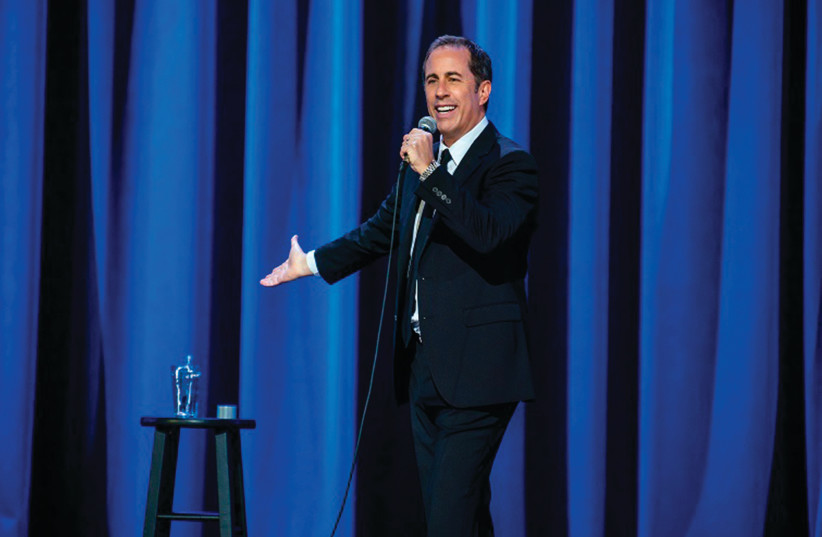
His words were strong, but he followed them up with actions. In December 2023, he visited Israel, touring the area targeted by Hamas, meeting with survivors of the massacres, and visiting Tel Aviv’s Hostage Square, where he met with hostage families.
During the visit, he said he was “proud to be an ambassador for spreading the truth throughout the world.” Later, he described the visit as “the most powerful experience of my life. Yes, definitely,” in a podcast interview with journalist Bari Weiss.
Gwyneth Paltrow
Actress Gwyneth Paltrow is another entertainment-industry figure not known for her ideology – other than a New-Age wellness philosophy behind the products she sells on her lifestyle site, Goop – who found herself at the center of a political storm involving Israel this year.
Paltrow, who grew up in an interfaith Jewish-Christian family and who won a Best Actress Oscar for Shakespeare in Love, starred in a commercial for a Herzliya luxury housing development, 51 Park, a few months ago. In the commercial, she awakens in a sunny New York apartment and goes for a run in Central Park, talking about how iconic buildings are so often next to wonderful parks. As she leaves her building, she tells a driver to take her to 51 Park, which she clarifies is in Herzliya, not New York.
After the commercial aired, her participation unleashed a torrent of online abuse, with haters calling her “Gwynicide” and criticizing her for supporting an Israeli business venture. But they should not have been surprised.
The actress has posted in support of Israel repeatedly since the outbreak of the war in Gaza, expressing concern for the hostages and questioning why international women’s organizations remained silent about sexual violence committed by Hamas. Paltrow chose not to respond to the furor over 51 Park, which may have been the best response to such hate.

Steven Spielberg
Steven Spielberg, considered by many to be the greatest popular filmmaker of all time, made The Fabelmans, a semi-autobiographical movie about an aspiring filmmaker taunted by antisemitic bullies, in 2022. He proved he was still at the top of his game this year by releasing a new sci-fi film, Disclosure Day.
The much-anticipated movie told an imaginative story of extraterrestrials who contact a TV weather reporter, with a message of tolerance and hope that is characteristic of his work. It was number one at the box office on its opening weekend, and received mostly positive reviews from critics who felt it showed that he still knew how to deliver thrills and suspense, while telling a story with a strong emotional core.
Spielberg, who will turn 80 in December, remains one of the busiest creators in Hollywood, with two upcoming movies as director and 17 projects that he is producing.

The filmmaker is not active on social media and rarely comments explicitly on politics. But in 2024, at an event marking the 30th anniversary of the USC Shoah Foundation, which he founded, he said, “Those who cannot remember the past are condemned to repeat it. I am increasingly alarmed that we may be condemned to repeat history – to once again have to fight for the very right to be Jewish.”
He went on to express compassion both for the victims of the Hamas-led massacres in Israel on October 7, and the civilians killed in Gaza.
<< No. 20: Alex Karp and Josh Kushner
No. 18: Sergey Brin: Visionary, philanthropist, and pivotal digital-era architect
2026-09-11
Sergey Mikhailovich Brin stands among the most influential figures of our time. A visionary technologist and philanthropist, his journey from Soviet émigré to architect of the digital era reflects both personal resilience and transformative ingenuity.
When he was six years old, Brin’s family fled Moscow, escaping the Soviet Union’s deep-seated antisemitism. They arrived in the United States in 1979, settling in Maryland, where his father became a mathematics professor at the University of Maryland, and his mother a researcher at NASA’s Goddard Space Flight Center.
Brin earned a BSc in mathematics and computer science at the University of Maryland, followed by a PhD at Stanford University, supported by a National Science Foundation fellowship. There, he met his future collaborator, Larry Page. Together, they developed the PageRank algorithm and an early search project named “BackRub,” which quickly spread across campus.
Their innovation became Google, founded in 1998 from a rented Menlo Park garage and funded initially by a $100,000 check from Sun Microsystems co-founder Andy Bechtolsheim. Google’s impact has been compared to Gutenberg’s printing press.
Brin served as president of Alphabet until stepping down in December 2019, though he remains a co-founder, controlling shareholder, and board member.
Retirement was short-lived. In late 2023, Brin reengaged with Google in a deeply hands-on capacity, driven by the urgency of the AI revolution. Though he holds no formal executive title, by 2025 he was reportedly in the office nearly every day, working directly on the Gemini AI effort, underscoring his belief that today’s AI challenges are among the greatest problems facing humanity.

Brin returns to Google for the AI revolution
Brin is also a committed philanthropist. In May 2025, he quietly donated nearly $700 million in Alphabet stock. His giving notably includes more than $2 billion toward Parkinson’s disease and related neurological research – making him the largest individual donor in the field – alongside climate and public health causes.
As of 2026, Brin ranks among the top five richest people globally, with net worth estimates ranging from roughly $250 billion to $300 billion, driven largely by Alphabet’s AI-fueled stock rally. His narrative is one of boundless ambition – shaping how the world searches, steering humanity toward new technological frontiers, and quietly empowering global causes.
<< No. 19: Jerry Seinfeld, Steven Spielberg, and Gwyneth Paltrow
No. 17: Larry Ellison: The philanthropist of the Jewish world
2026-09-11
Larry Ellison, the New York-born Jewish co-founder of the multinational technology company Oracle, is a philanthropist to Jewish causes, including large contributions to the Friends of the IDF and the city of Sderot. He signed the Giving Pledge in 2010, promising to give away at least 95% of his wealth, and has said he has already given hundreds of millions to medical research and education.
Ellison, who never finished university and co-founded Software Development Laboratories – which later became Oracle – with $1,200 of his own money at age 33, eclipsed Elon Musk to briefly become the world’s richest man in September 2025, after his net worth topped $400b.
That single-day leap was powered by Ellison’s aggressive bet on artificial intelligence. Oracle has positioned itself as a foundational infrastructure provider for the AI boom, serving as a critical infrastructure partner for Project Stargate, a historic $500b. initiative backed by SoftBank, OpenAI, and MGX to build out US data centers. Though Oracle and OpenAI shelved specific data center expansions in early 2026 amid shifting infrastructure negotiations, Oracle maintains a monumental agreement to supply OpenAI with about 4.5 gigawatts of computing power in a deal valued at roughly $30b. annually – one of the largest cloud contracts ever struck.
The buildout has been staggeringly expensive: Oracle’s fiscal 2026 capital spending reached about $55.7b., its free cash flow swung deeply negative, and the corporation took on well over $100b. in debt to finance the expansion. On earnings calls, Ellison dismissed investor anxiety, arguing that demand for AI infrastructure is “astronomical.”
Ellison’s fortune has since proven extraordinarily volatile. He climbed back toward the No. 2 spot in June 2026 with a net worth near $300b., before Oracle’s shares plunged 40%-50% over the following months, erasing more than $100b. of his wealth. By mid-August 2026, he had slipped to eighth-richest, and Forbes’s real-time ranking placed him around sixth in late August, near $189b. – a figure that continues to swing sharply with Oracle’s stock.

From technology to media powerhouse
Beyond Oracle, the past year cemented Ellison as a media force. He financed his son David’s $8b. takeover of Paramount, which closed in August 2025 to form Paramount Skydance, making the elder Ellison the largest shareholder of the company that owns CBS, MTV, and Nickelodeon. A separate investor group including Oracle took a stake in TikTok’s US operations.
Paramount Skydance also moved to acquire Warner Bros. Discovery – owner of CNN and HBO – signing a definitive $110.9b. asset purchase agreement in late February, after Netflix withdrew from the contest. However, the deal is in regulatory limbo, facing a major antitrust lawsuit from state regulators, with settlement talks between Paramount and California officials collapsing in late August.
A close ally of US President Donald Trump, Ellison has drawn both praise and sharp criticism as his family’s reach across technology, entertainment, and news has expanded.
No. 16: Bill Ackman: The billionaire investor putting his influence behind Israel
2026-09-11
In January 2024, Ackman and his wife, Neri Oxman, made their first investment in Israel, buying a 4.9% stake in the Tel Aviv Stock Exchange for about $25 million. In September 2025, Ackman made what he described as his first business trip to Israel, spending roughly a week meeting bank executives, insurers, institutional investors, venture capitalists, and the country’s political leadership.
During the visit, he opened trading at the stock exchange and said he wanted to invest another $1 billion in Israeli companies.
The trip concluded at the University of Haifa, where Ackman and Oxman, who was born in Haifa, received honorary doctorates.
The couple also made a donation to the university that will support a student plaza named in memory of Oxman’s mother, architect Rivka Oxman. Ackman said the visit had also introduced him to opportunities for further philanthropic involvement in Israeli education and science.

Ackman’s growing ties to Israel
In New York, Ackman became a prominent opponent of Mayor Zohran Mamdani during the 2025 mayoral race. He spent $1.75m. through groups seeking to defeat Mamdani and was a vocal critic of his policies and candidacy. After Mamdani won the election, however, Ackman congratulated him and offered to help the incoming administration, writing: “If I can help NYC, just let me know what I can do.”
Ackman also supported some of President Donald Trump’s policies toward Harvard, his alma mater, including the administration’s decision to withhold federal funding amid its dispute with the university. Ackman has repeatedly criticized Harvard’s governance, finances, and handling of antisemitism.
Over the past year, Ackman has paired his public advocacy for Israel with investment in the country’s economy and support for Israeli institutions, extending a role he has taken on increasingly visibly since October 7.
Rosh Hashanah 2026: Captive on the carousel of time – opinion
2026-09-11
“And the seasons they go round and round; And the painted ponies go up and down; We’re captive on the carousel of time; We can’t return, we can only look behind; From where we came; And go round and round and round; in the Circle Game” – Joni Mitchell
Twenty-five years ago, this Friday morning, September 11, the world changed.
And this Friday evening, September 11, as the sun goes down, the Jewish world will begin celebrating Rosh Hashanah.
The convergence is extraordinary.
One date commands us to remember. The other commands us to begin again.

One represents a moment that can never be undone. The other insists that despite everything that has happened, we retain the capacity to change how we react to what happens next.
Perhaps there is no more appropriate message for the people of Israel and America as we enter the Jewish New Year of 5787.
Because we arrive at this Rosh Hashanah carrying an almost unbearable weight.
Israel remains surrounded by the threats of what I have described as an eight-front war. Iran remains determined to destroy us and America, with the renewed possibility of direct attacks and its network of proxies and partners continuing to threaten Israel and the region.
Gaza, Lebanon, Syria, Yemen, Iraq, Iran, Judea and Samaria, and the broader cognitive and diplomatic battlefield remind us that war today has no neat geographic boundary.
At the same time, Israelis are heading toward another election.
Instead of providing clarity, the campaigns threaten to reopen every wound in Israeli society: For Prime Minister Benjamin Netanyahu or anti-Netanyahu. Right or Left. Religious or secular. Who was responsible for October 7? Who can keep us safe? Who betrayed whom?
Once again, fear, anger, and hatred threaten to become substitutes for thought.
Outside Israel, the picture is hardly more comforting.
Antisemitism, anti-Israel sentiments become normalized
Global antisemitism has reached frightening levels. Anti-Israel sentiments have moved from demonstrations to being normalized in universities, cultural institutions, politics, and increasingly into the mainstream discourse of Western society.
America, too, is entering its own election season deeply polarized and uncertain about its direction, its values, and its relationship with Israel.
And then there is New York.
On the morning of September 11, the city will commemorate the 25th anniversary of the worst terrorist attack ever committed on American soil.
Among those attending the Ground Zero ceremony will be Mayor Zohran Mamdani, a politician whose positions toward Israel and Zionism and the American Jewish community have made many Jews profoundly uncomfortable.
For many of us, this convergence is almost surreal.
To many supporters of Israel, the contradiction feels almost as jarring as imagining someone from the Neo-Nazi Party occupying a place of honor at a Holocaust memorial event.
Yet it is happening.
Iran. October 7. War. Hostages. Antisemitism. Elections. Political hatred. Israel’s growing isolation. America’s polarization.
They press upon our hearts, our minds, and our souls.
And then, almost as if scripted, the sun sets on September 11. Rosh Hashanah begins.
And somewhere in my mind I hear Joni Mitchell singing The Circle Game, written about the passage of time.
“The seasons they go round and round,” Mitchell sings, before arriving at that devastating conclusion: “We’re captive on the carousel of time.”
There is something painfully true about it.
Time moves only forward. We cannot go back.
September 11 happened.
October 7 happened.
The carousel keeps turning.
But are we really its captives? That question may lie at the very heart of Rosh Hashanah.
Judaism makes an extraordinary distinction between being captive to time and being captive to our reactions to the past.
We cannot stop time. We cannot reverse it.
But we can decide whether each revolution of the carousel must repeat the one before it.
That is where Joni Mitchell’s circle encounters the Jewish idea of teshuva, repentance. But the word means something much more profound: return.
Return to what? Not yesterday. Yesterday is gone.
Return to ourselves, to what matters.
Return to the values we allowed ourselves to forget while distracted by anger, fear, ambition, ideology, trauma, and tribalism.
Rosh Hashanah does not erase the past. It asks us to become conscious of it.
Carl Jung expressed something remarkably similar when he warned that until we make the unconscious conscious, it will direct our lives, and we will call it fate.
Think about how often we tell ourselves today that we “have no choice”: Iran gives us no choice, October 7 gives us no choice, our political leaders give us no choice, our enemies give us no choice, the other political party gives us no choice, history gives us no choice, our trauma gives us no choice.
And slowly, almost imperceptibly, yesterday begins deciding tomorrow. We call it reality. Jung might have called it the unconscious.
Judaism calls upon us to interrupt it: Wake up. Examine yourself, and ask yourself what you are doing and why.
Ask whether the enemy you hated yesterday must determine who you become tomorrow; whether the political leader you supported yesterday must automatically receive your support tomorrow; whether someone you opposed yesterday must forever remain your enemy; whether the assumptions through which you have interpreted the world are still true.
And perhaps hardest of all, ask whether being right has become more important than being wise.
That is teshuva.
It is the moment when the unconscious becomes conscious, and fate becomes a choice.
This is why the convergence of September 11 and Rosh Hashanah is so powerful.
September 11 represents history at its most immutable.
Twenty-five years later, nothing can alter what happened that morning. The planes struck. The towers fell. Nearly 3,000 people were murdered. Families were shattered. America changed. The world changed.
We remember because we must. But remembrance can serve two purposes: it can become a prison in which yesterday continuously dictates tomorrow, or it can become wisdom.
Rosh Hashanah begins precisely as that anniversary ends and asks us which we will choose.
The same is true of October 7.
We cannot undo it. But not being able to return to the past does not mean we are condemned to repeat it. That distinction matters enormously.
Because if our response to trauma is simply more hatred, more division, more ideological certainty, and another turn around the same political track, then we really have become captives on the carousel.
This is true in Israel. It is true in America. And it is true within the Jewish world.
These are our choices, we tell ourselves.
We go round and round and round.
But Rosh Hashanah arrives every year to challenge that assumption.
The circle is real. The captivity is not.
The seasons really do go round and round. History cannot be rewound.
But built into the Jewish understanding of time is something extraordinary: the concept of renewal.
Rosh Hashanah provides us all with the opportunity to stop, to look backward without becoming imprisoned by what we see; to recognize patterns we have unconsciously repeated; to distinguish between what is essential and what is peripheral; to acknowledge what we have done wrong; to rediscover what we know is right, and then consciously choose differently.
Somewhere beneath our political loyalties, our anger, our rationalizations, and our accumulated scars, most of us know more than we admit.
We know when hatred is consuming us, when ego is driving us. We know when loyalty has become blindness, when fear is making decisions for us, and when winning has become more important than solving.
We know.
The challenge is making what we know unconsciously conscious, and then having the courage to act on it.
Perhaps that is the extraordinary message of this September 11.
At sunrise, we will remember one of the darkest mornings in modern American history.
At sunset, we will enter the Jewish New Year.
Memory and possibility separated by a few hours.
We cannot change the morning. But we can decide what we carry into the evening.
Joni Mitchell was right about something fundamental. We cannot return. We can only look behind from where we came.
But Judaism adds one crucial idea: We can decide where we go from here.
We cannot reclaim yesterday. But we can change what those past events make us become tomorrow.
The carousel will continue to turn. The seasons will continue to pass. History will leave scars.
But we are not painted ponies condemned to travel the same circular track forever.
We possess consciousness. We possess choice. We possess the gift of teshuva.
And every Rosh Hashanah, God built into the system something miraculous, not the ability to change yesterday, but the opportunity to ensure that yesterday does not dictate tomorrow.
The circle game is real. Captivity is a choice.
As 5787 begins, perhaps that is the choice God is asking us to make.
The writer is a global strategist and a strategic adviser at the Jerusalem Center for Security and Foreign Affairs. Follow him on X: @jeffkahn2020.
Rosh Hashanah 2026: Top 10 things to pray for in 5787 – opinion
2026-09-11
Walmart founder Sam Walton passed away 34 years ago, but his good advice still lives on.
“Managing your expectations is a key to success in life,” he famously said. “Whenever expectations go unmet, we experience disappointment.”
Some years, as the new Jewish calendar year approached, people would hatch joyful hunky-dory acronyms that corresponded to that year’s Hebrew letters.
But nowadays, taking Walton’s advice, the acronym I’ve been seeing most for the Hebrew letters that equal 5787, taf-shin-peh-zayin, has been “tihye shana pachot zvautit,” which translates roughly as: “May the year ahead be relatively less horrendous.”
That’s a blessing that doesn’t leave much room for disappointment, and it’s welcome for Israel in 5787.

But the point of Rosh Hashanah is that we get a chance to pray to God for a year that will be at least slightly better than we expect, both for us and for our country. So what should we be praying for this holiday?
While purposely setting the bar low, here are 10 somewhat realistic expectations for your prayers for the year ahead in Israel that you can ask for on Rosh Hashanah:
1. A government that truly cares about how Israel looks abroad
This is not an endorsement of anyone, but it may be an indictment of every government we’ve had. They all made security their top priority, without realizing how much our security – and that of Jews abroad – depends on international perception.
Could this week’s sanctions on Israel from the UK have been averted with different policies? Could they really be only the result of internal British political realities and misunderstandings, and not anything our current government did or chose not to do?
As for the opposition, when Democrats leader Yair Golan accused the IDF of “killing babies as a pastime,” it made NBC’s headlines on May 20, 2025, the night before Elias Rodriguez murdered Israeli Embassy staffers Yaron Lischinsky and Sarah Milgrim. He left behind a manifesto using Israel’s “extermination” in Gaza to justify his violence.
2. Improved outreach to young Americans
The Israeli government and pro-Israel groups must realize that there is an emergency situation with Israel’s perception among the next generation of American leaders.
Harvard/Harris polls have asked every month for three years: “In the Israel-Hamas conflict, do you support Israel or Hamas more?” As I’ve been saying in my lectures throughout the war, the polls could have said Palestine or Gaza, but they asked about Hamas to reveal a stark contrast.
Among respondents 65 and over, the results are comforting and consistent, with some 90% deeming themselves more pro-Israel. But among 18-24-year-olds, numbers vary based on recent headlines and trends on TikTok.
As HonestReporting pointed out, the August 2026 poll found that a frightening 54% called themselves more pro-Hamas. Only 51% said Israel had a right to exist as the homeland of the Jewish people, and answering a question that singled out Hamas and Hezbollah, 39% said there are no terrorist groups on Israel’s borders.
3. Unity – or at least not civil war
In his book The Jewish March of Folly, Amotz Asa-El, a Jerusalem Post columnist, tells the story of the tragedies of 12 civil wars in Jewish history, and how before Oct. 7, 2023, Israel was on its way to its 13th.
The lack of support for parties calling for unity does not bode well for 5787 being a year of brotherhood. It’s an election year, and we’ll get more divided before anyone can work on making it better.
But once it’s over, if someone can form a government, will it be time to heal and build consensus, or to force the results down the losers’ throats?
If it’s the latter, next year’s column may require even lower expectations.
4. The election of good ambassadors
Thankfully, multiple parties put native English-speaking candidates on their list by Tuesday’s deadline, some higher than others, some more trustworthy than others.
Recent Anglo MKs have served Post readers well in different ways, and their accomplishments should be celebrated, not negated. In alphabetical order: Naftali Bennett, Michal Cotler-Wunsh, Sharren Haskel, Dan Illouz, Dov Lipman, Michael Oren, Yitzhak Pindrus, Moshe Roth, Michal Slawny-Cababia, Alon Tal, and Moshe Tur-Paz.
If native English speakers are elected, they should be honored to follow in their footsteps and learn from them, not pretend our community has never been adequately represented.
5. Abraham Accords expansion
Anything regarding the Palestinians is controversial, but expanding the Abraham Accords is as consensus as it gets. There are Muslim countries that want to normalize relations with Israel and were going to before Oct. 7, but put it off due to war, geopolitical, and internal political realities.
Let’s hope that in the year ahead, there will be more countries that join the accords, open embassies, and give Israelis more places to explore.
6. Tourism returns
When someone asked me why I had a great summer, despite not going abroad, I responded that our tourist attractions had short lines. That was a silver lining on a sad situation in a country that relies desperately on tourists who fill hotel rooms, hire long-suffering tour guides, and support the Israeli economy.
Orthodox residents of Long Island’s Five Towns and Teaneck, NJ, and committed Christians from around the world, are expected during Sukkot. However, it’s time for the less religiously observant to return to pre-war, pre-COVID numbers – and to remember that Jerusalem Post columnists give VIP breakfast briefings at the King David Hotel.
7. The doctors come back, too
The 1,370 Israeli physicians who left for at least 12 months between 2023 and 2025, according to a Tel Aviv University study, are a good reason to feel unwell.
Let’s hope whoever will be in power will do what it takes to halt the brain drain and woo our medical professionals back, so they can give us the care we need.
8. Sundays off – or at least a quarterly bank holiday?
For decades, the Post has been calling for the adoption of the work week we enjoyed before moving here.
Having Sundays off would stimulate vast sectors of the economy and give Israelis the leisure time that they desperately need. It would help bring different communities together that rarely mix, and make us healthier mentally and physically. But since that’s not going to happen, a wise colleague suggested instituting a quarterly bank holiday that purposely doesn’t fall on a day of religious significance.
And no, having three elections in 5787 doesn’t count!
9. Another good year for Deni
Portland Trail Blazers’ basketball star Deni Avdija averaged 24.2 points, 6.9 rebounds, and 6.7 assists per game last season, becoming the first Israeli to make the NBA All-Star team and play in a playoff game. He also proved himself a mensch, proud Israeli, and Jew.
But the Blazers have a new coach and healthier lineup, so they won’t have to rely on Deni to score or handle the ball as much.
There are now a record four Israelis in the NBA. Let’s hope they play well enough and are given enough opportunities to give Israelis the assist we need.
10. A Nobel Comeback
Last week’s passing of chemist Ada Yonath, who won the Nobel Prize in 2009, was a reminder that it’s been too long since the coveted award was won by an Israeli who lives and works here.
The last Nobels won by Israeli citizens were conferred to residents of California; Brookline, Massachusetts; and Skokie, Illinois. Dan Shechtman was the last Israeli resident who won – 15 years ago. It’s time to bring another prize home in 5787. ■
The writer was former chief political correspondent for The Jerusalem Post and has lectured about Israel in all 50 US states.
Iran used AI to develop military, propaganda strategies, Anthropic report reveals
2026-09-11
Iran repeatedly used American-made artificial intelligence systems to target US naval forces in the region, target Israeli and Jewish diaspora organizations, and develop phishing strategies inside the country, a Thursday Anthropic report revealed.
Anthropic described what it called an “Iran-nexus threat actor” that used Claude, the company’s flagship product, to develop targeting recommendations against US Navy targets.
The actor, according to Anthropic, used AI to identify and track naval positions and compile information, including “a roster of US personnel scraped from captions on public military photographs; publicly accessible ship and aircraft transponder identifiers; commercial satellite-imagery query scripts; and an inventory of public websites that exposed US naval movements.”
The unnamed organization also used AI to research vulnerabilities in shipboard systems, including “maritime VSAT terminals, Cisco communications equipment, and industrial control products,” according to the report.
This was one of the many findings revealed in the AI giant’s 154-page report, which delineated the dangers of US and Western adversaries such as Iran, China, and Russia utilizing the technology to pose security threats.

The report comes as debate over the dangers rages among policymakers and AI company employees, even as Anthropic refused the Pentagon’s February request to remove safety guardrails regarding mass domestic surveillance and fully autonomous weapons.
A Friday Wall Street Journal report revealed that a top researcher at Anthropic quit last week, citing fears that AI companies were developing uncontrollable systems.
‘AI could kill all humans,’ top Anthropic scientist says
Evan Hubinger, a top scientist at Anthropic, wrote in a social-media post, “We really do earnestly believe AI could kill all humans!”
“I personally think it is >10% within the next decade. I believe Anthropic is trying its best, but we do not yet have a plan to solve alignment for superintelligence and are not clearly on track to,” the WSJ cited him as saying.
Anthropic’s report revealed that all groups showed similar methodology. “They ran multi-victim campaigns using agentic AI that would previously have required teams of operators. They built custom tools, executed intrusions, and processed stolen data at volumes no individual human operator could manage manually,” the company explained.
In addition to targeting US military assets, Iran also developed an “automated, open-source intelligence identity-profiling harness” that targeted hundreds of Israeli governmental and non-governmental individuals, as well as Jewish diaspora organizations.
The actor used the system to collect and analyze open-source data, developing a pipeline that made malware harder to detect.
Iran using AI to survey, profile Iranians
Another two “Iranian nexus actors” used the company’s model to surveil and profile 6,388 Iranians in one year. The AI company claimed that Iran built an “analyst and production studio” used to run a social network analysis of over 155,216 tweets.
Among other domestic surveillance strategies were automatic license-plate recognition, mobile-device identifier interception, and private Telegram data analysis.
These operations targeted Iranian minorities, dissidents, and opponents of the Iranian regime abroad, according to the report.
Actors also used AI to run campaigns tied to “Jihad al-Tabyin,” or explanatory jihad, to produce propaganda in what they called a “soft war” or “cognitive warfare” program: a non-military plan to shape public opinion at home and abroad, the report explained.
Several Iranian organizations, including the Islamic Culture and Communications Organization (ICCO), were using AI to distribute Islamic Revolutionary Guard Corps (IRGC) – aligned narratives, said the report.
The organizations used the technology to build operational manuals, create persona systems, develop content strategies, and transform official government material into targeted messaging.
Yemeni group developing missiles with AI
Anthropic also claimed that a northern-Yemeni group was using Claude to develop guidance software for high-end weapons, including a multi-stage ballistic missile.
This comes as the Iranian-backed Houthis consolidate control over the Bab al-Mandeb Strait. Anthropic said that its safeguards had blocked many of the group’s requests to develop the weapons, “but not all of them.”
The company confirmed that it had taken the necessary steps to ban the account, develop detections to prevent future use, and share intelligence with government authorities.
“We hope that the findings in this report will help other developers recognize similar patterns on their own platforms, give governments and civil society a clearer view of how emerging threats take shape, and strengthen collective defenses,” it said.

U.S. officials declare an end to record-setting cyclospora outbreak, but its origin is still unknown
2026-09-11
NEW YORK — The largest cyclospora food poisoning outbreak in U.S. history is over, U.S. health officials said Friday.
U.S. Food and Drug Administration officials said they are confident that all recalled iceberg lettuce related to this specific outbreak is off the market.


Even low-ranked colleges can be a ticket to six figures: Graduates earn $100K+ a decade later—more than twice as much as high school grads
2026-09-11
As the new school year gets well underway, Gen Z is once again facing a daunting question: Is the degree they’re pursuing actually going to be worth it? A new ranking of America’s top 500 colleges is offering a helpful insight: they don’t necessarily need an elite name on their diploma to land a six-figure salary.
The list, compiled by Forbes, is unsurprisingly dominated at the top by Ivy League-level institutions like MIT, Princeton and Harvard, where graduates are expected to earn median salaries of more than $120,000 a decade after receiving their diploma. Graduates of the University of Pennsylvania, ranked No. 5, come out even higher, with median 10-year earnings of $151,328.
But the more surprising finding comes at the other end of the list: Most of the lowest-ranked schools put six-figure salaries well within reach.
Marietta College, a private liberal arts college in rural Ohio ranked No. 500, has median 10-year earnings of $105,837.
In fact, nearly every school on the list has median earnings of over $90,000, meaning the earnings gap between a prestigious college and those lesser-known can be considerably narrower than students might expect.
For comparison, the median annual earnings of full-time workers ages 25 to 34 with only a high school diploma is $41,800, according to the U.S. Department of Education. The two datasets measure different populations and timeframes, but the figures still underscore the earnings premium associated with a college degree—even one from a lower-ranked school.
The college decision is about more than just salary
Post-graduation salaries are just one factor for students to consider when deciding where to go to college. Schools that repeatedly appear at the top of college rankings typically offer advantages that don’t show up in a 10-year salary figure, including expansive alumni networks, access to prominent faculty and research opportunities, and name recognition.
But any benefits come with risks and costs of their own, particularly as colleges across the country grapple with falling enrollment and mounting financial pressures.
Marietta, for example, has faced budget shortfalls that have forced it to eliminate academic programs and lay off faculty in recent years (a school’s financial health was also a factor in the Forbes ranking). In total, some 442 of the nation’s 1,700 private, nonprofit four-year colleges and universities are at risk of closing or having to merge within the next decade, according to a forecast by Huron Consulting Group.
At the same time, schools have faced growing criticism over rising tuition costs and whether degrees are delivering enough of a return on investment. The average cost of college has more than doubled over the last two decades, totaling $39,406 per student per year, including books, supplies, and daily living expenses, according to the Education Data Initiative. This has contributed to the average student now borrowing more than $35,000 to pursue a bachelor’s degree.
And for many graduates, the payoff isn’t immediate. In 2015, the unemployment rate for recent college graduates surpassed that of all workers for the first time, and since then, the gap has worsened. The unemployment rate among recent college rates currently sits at 5.7%, compared with 4.1% for all workers.
Americans’ confidence in the value of a college education has fallen alongside those concerns. In 2010, about 75% of Americans said college was “very important.” A decade and a half later, that figure has fallen to a record low of 35%, according to Gallup.
Having a degree isn’t necessarily an indicator of future success, according to CEOs like Jamie Dimon and Marc Benioff
The growing skepticism around higher education isn’t limited to students and parents. Some of America’s most prominent business leaders have also questioned whether a traditional college degree is still the best path to a successful career.
Mark Zuckerberg, who famously dropped out of Harvard University to launch Facebook (now Meta), has said college remains valuable for building relationships but questioned whether higher education is adequately preparing young people for the modern workforce.
“I’m not sure that college is preparing people for the jobs that they need to have today. I think that there’s a big issue on that, and all the student debt issues are…really big,” Zuckerberg said in an interview with podcaster Theo Von last year.
“There’s going to have to be a reckoning…and people are going to have to figure out whether that makes sense. It’s sort of been this taboo thing to say, ‘Maybe not everyone needs to go to college,’ and because there’s a lot of jobs that don’t require that…people are probably coming around to that opinion a little more now than maybe like 10 years ago,” Zuckerberg added.
JPMorgan Chase CEO Jamie Dimon, who graduated from Tufts University and Harvard Business School, has similarly argued that elite education isn’t necessarily a predictor of success on the job.
“I don’t think necessarily because you go to an Ivy League school or have great grades it means you’re going to be a great worker or great person,” Dimon said in 2024.
Skills, he added, are “far more important” than having a college degree for many jobs: “If you look at skills of people, it is amazing how skilled people are in something, but it didn’t show up in their resume.”
Salesforce CEO Marc Benioff, a University of Southern California alumnus, has gone even further, arguing that a college degree isn’t a prerequisite for creating value.
“Everybody thinks that if you don’t have a college degree, you can’t be successful in the United States, and it’s not true,” he told NBC in 2021. “You can create incredible value for the world without a college degree.”
This story was originally featured on Fortune.com
Elizabeth Holmes’ handwritten note says a lot about how she believed she had to present herself as a CEO
2026-09-11
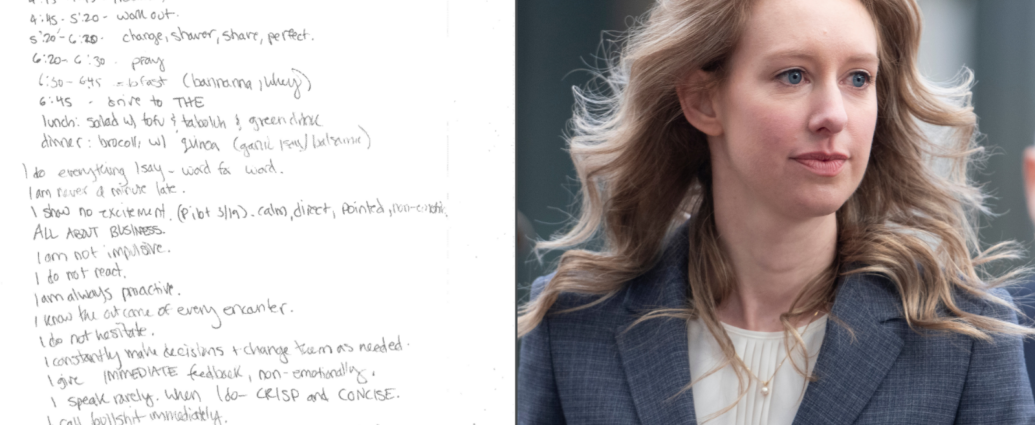
“I do everything I say—word for word. I am never a minute late. I show no excitement,” wrote Elizabeth Holmes. The line is part of an extensive handwritten note the former Theranos CEO wrote to herself when she was leading the company.
Holmes took the stand in 2021 during the criminal fraud trial against her, and testified in court her former boyfriend and business partner Ramesh “Sunny” Balwani emotionally and sexually abused her. Part of the evidence her lawyers submitted, multiple outlets reported, included a note drawn up by Holmes detailing her schedule for the day, which began before sunrise. It appears to have been written on stationery for Raffles, a Singapore-based hotel.
Balwani’s lawyer Jeffrey Coopersmith denied Holmes’ allegations of abuse, multiple outlets reported. Coopersmith did not return Fortune’s request in 2021 for comment after Holmes’ testimony.
In 2022, a jury ultimately convicted Holmes on four counts of wire fraud and conspiracy, and she is currently serving a roughly decade-long sentence in prison. In 2025, she reportedly asked President Donald Trump for clemency to shorten her prison stay.
A new documentary is bringing renewed attention to Holmes. You Can See Everything, directed by comedian and Canadian filmmaker Nathan Fielder and American filmmaker Lance Oppenheim, premiered as a surprise screening at the Telluride Film Festival over Labor Day weekend and will be released in theaters by A24 on Oct. 16.
Filmed over about a month before Holmes reported to prison in 2023 at a beachside home in Del Mar, Calif., and continuing over three years, the nearly three-hour film follows the former Theranos CEO as she granted the crew extensive access in an apparent effort to clear her name. In it, Holmes maintains she did nothing wrong.
In some scenes, she and her partner, Billy Evans—a California hotel heir with whom she has two children—are reportedly shown making calls to prospective partners about launching a “Theranos 2.0” venture that Evans said he intended to build while Holmes served her sentence. Fielder has reportedly said Evans tried to exert significant control over the filming near the end—a dynamic some reviewers have compared to Holmes’s account of Balwani’s control over her.
Elizabeth Holmes’ mantra as a CEO
The schedule begins with a 4:00 a.m. wake up time to “rise & thank God” and ends with her lunch and dinner menus, which included broccoli, quinoa and a green drink. But what may be most notable about the schedule is what’s written below it.
“ALL ABOUT BUSINESS.”
“I am not impulsive.”
“I do not react.”
“I am always proactive.”
“I know the outcome of every encounter.”
“I do not hesitate.”
“I speak rarely. When I do—CRISP and CONCISE. I call bullshit immediately. My hands are always in my pockets or gesturing,” the last few lines of the note read.
Elizabeth Holmes’s daily schedule
Circa 2005–2009 pic.twitter.com/hhWUBHhpbe
— Internal Tech Emails (@TechEmails) November 30, 2021
Holmes said they were Balwani’s rules and advice, The Verge reported.
“He told me that I didn’t know what I was doing in business, that my convictions were wrong, that he was astonished by my mediocrity and that if I followed my instincts I was going to fail,” Holmes testified, according to The New York Times.
A version of this story was originally published on Fortune.com on Dec. 2, 2021.
This story was originally featured on Fortune.com

50 multimillionaire Gen Zers went on a two-week Goldman Sachs bootcamp—they learned how to read the news, invest in art, and communicate better
2026-09-11
Goldman Sachs just brought together around 50 Gen Zers from ultra-rich families for a deep-dive on investing, wealth management, and leadership.
Over the course of the two-week wealth bootcamp in July, the multimillionaire 18- to 23-year-olds attended workshops led by senior Goldman Sachs leaders and industry experts in coaching and luxury.
One morning, the Gen Zers spent nearly an hour learning how to digest Wall Street Journal articles, strengthening their confidence in reading market news and pinpointing what to take away. And in the afternoons, they’d go through a whole host of crash courses; learning the role of an equity trader from one of Goldman’s own managing directors; touring trading floors, where they got a firsthand look at deals and trades; and studying hedge fund basics and ways to create diverse portfolios.
It was all part of Goldman’s third annual NextGS Investment Intensive Program in New York City. And learning how to understand markets and communicate effectively will come in handy as they step into generational fortunes; much of the Gen Z cohort are kids of the members of Goldman’s private wealth management division, which boasts an average account size of over $90 million, and services clients with fortunes ranging from $10 million to more than $1 billion in assets.
“A fundamental reason we created this program was to allow the young adult children of our families the opportunity to become more confident,” Brittany Boals Moeller, region head of Goldman Sachs’ San Francisco PWM division, tells Fortune. “Many of the participants are not finance majors. They have vastly different academic backgrounds and career ambitions.”
The wealthy Gen Z cohort learned confidence, leadership, and communication skills
The programming goes far beyond the ins-and-outs of finance. With 20-something professionals often getting flak for their workplace unpreparedness, this program has made sure they’re ready to step into high-powered roles.
The multimillionaire attendees spent an entire day sharpening their communication, presence, and leadership skills with coaching company LifeHikes CEO Bill Hoogterp.
Over the course of one eight-hour session, the Gen Zers were split up into pairs and told to act out scenarios in work and school, strengthening their confidence in situations like job interviews and group projects.
Rob Kaplan, the vice chairman of Goldman Sachs, even led a session on how to reach their leadership potential, which Fortune attended exclusively—discussing ownership, ambition and personal growth.
“They’re thinking about their first jobs. They’re thinking about how their careers are going to start, and so I actually think these concepts of leadership and communication and presence are super important for them,” Boals Moeller says. “They’re not always what you learn in school.”
The investments catching Gen Z’s eye: sports teams, crypto, and AI
The NextGS Investment Intensive Program went into all corners of the wealth basics, teaching attendees about economic cycles, fixed income, credit scores, and budgeting. But beyond traditional investing, the Gen Zers also had the chance to engage with the wealth flooding their TikTok timelines—sprawling mansions, luxury accessories, and sports ownership.
At the tail end of the first week, the Gen Zers were introduced to arts and collectibles. They learned about major players in the art and collectibles markets, and received guidance on best practices for buying what catches their eye. The program even brought on legendary auction house Christie’s for a session on luxury watches, jewelry, and handbags.
In week two, the cohort learned about real estate and infrastructure, exploring the market’s evolution and how to diversify their property assets.
Investing in sports was another popular session. Pouring money into soccer and football leagues has become a popular investing strategy for the ultra-rich; Jeff Bezos recently became a minority stakeholder in Liverpool F.C., and others, like Ryan Reynolds, Mark Cuban, Steve Ballmer, and Bernard Arnault have all invested in sports teams. During the session, Goldman’s young attendees explored the industry’s economics as well as ownership dynamics.
“It’s meant to allow them a glimpse into a particular industry, and I’m sure that some of our client families will be going back wanting to have a career that interlinks between investing in sports,” Boals Moeller explains. “I can definitely see that coming through.”
Aside from premier teams and Hermès pursues, Boals Moeller explains that the college-aged attendees are especially interested in private markets and alternative investments. Raised in the internet era, they grew up trading and coming across digital assets.
Now, they’re looking to build a strong stock portfolio, invest in cryptocurrency, and ride the wealth wave of AI. Boals Moeller said that AI came up in almost every single session—not only in seeking how to decode the tech sector and the geopolitics that play into it, but also how to navigate it as a human being.
This story was originally featured on Fortune.com

Women hold more U.S. jobs than men—but still earn far less starting the day they graduate
2026-09-11
For only the third time in American history, women hold more payroll jobs than men—and that trend isn’t likely to reverse anytime soon. Yet even as women pull ahead on job counts, men continue to out-earn them at nearly every stage of their careers, starting the day they leave campus.
A new study by the National Association of Colleges and Employers (NACE) found that women who graduated with a bachelor’s degree in the class of 2023 earned an average starting salary of $59,778, while men with the same degree earned $72,190. That works out to women taking home roughly 83 cents for every dollar their male classmates made—before their careers have even begun.
Women last held a payroll majority only twice before—briefly during the Great Recession around 2010, and again just before the pandemic in early 2020. Both times a downturn had wiped out male-dominated jobs in construction and manufacturing. What makes this crossover different is that it arrived without a recession.
Women have long been paid less, but they now dominate the raw number of jobs held, particularly in the post-pandemic era, when men’s employment failed to bounce back the way women’s did. Over the past 12 months, according to the Bureau of Labor Statistics, the number of employed women grew by more than 870,000, while men shed nearly 1.5 million jobs.
In a tight labor market, female-dominated fields such as health care, education, and hospitality have logged consistent gains. Men accounted for just 2% of the jobs added in August’s report, with women making up 158,000 of the 162,000 total positions created.
The imbalance has intensified concern about men’s declining presence in the workplace. Roughly 7 million fewer men are employed today than in the 1990s, and the labor force participation rate for men aged 20 and older slipped to 69.4% as of August 2026, down from 75.8% in August 2006.
Explanations vary. Some argue that video games amount to “the crisis of the American male” and are driving the retreat. Other economists, including the University of Connecticut’s Remy Levin and Daniela Vidart, contend that young men who come of age in a market defined by high unemployment and weak wages grow pessimistic about their prospects and opt out of work altogether.
Whatever the cause, the decline appears to be structural—a lasting reshaping of who fills American workplaces rather than a temporary swing tied to recession. “This seems to be more of a long-term decline that’s led to a more permanent shift going forward, or at least a semi-permanent,” Laura Ullrich, director of economic research at the Indeed Hiring Lab and a former senior regional economist at the Federal Reserve Bank of Richmond, told Fortune.
Women may be commanding workplaces, but they still aren’t commanding paychecks. They earn just 81 cents for every dollar men make, and the gap widens with age. Over a typical 40-year career, women will earn $542,800 less than men—with women of color bearing the heaviest burden, losing more than $1 million over the same span.
Why the gender pay gap persists
The very fields where women dominate—education, nursing, and care work—are the ones propping up monthly job reports, and they tend to pay less. Women make up two-thirds of workers in low-wage jobs, a concentration that widens the overall wage gap. They outnumber men in teaching by 3 to 1 and in nursing by 8 to 1, while remaining underrepresented in more lucrative fields such as finance, construction, and STEM, where they account for less than a third of the science and engineering workforce.
Parenthood, though, is the single biggest driver of the gap, especially as women get older. In the research that earned her the Nobel Prize, economist Claudia Goldin found that early-career pay gaps are relatively small—until a woman has her first child. From that point, her earnings fall and never climb at the same rate as those of men who become fathers, even when the two share identical professions and levels of education.
Men, as a rule, still shoulder less of the child-rearing. Women more often step away from work to care for children, stalling or halting their career progression, and post-pandemic return-to-office mandates have disproportionately hit the mothers who serve as primary caretakers.
So the milestone comes with an asterisk. “You could look at it and say, ‘Yay, women.’ But I don’t think it’s necessarily a positive story for women overall,” Ullrich said of August’s hiring spree.
This story was originally featured on Fortune.com
Your Taxes: Israeli property flip ends with a costly VAT lesson
2026-09-11
There has been a recent flurry of important real estate tax cases in Israel. They relate to hotel companies, property flips, and transparent house property companies. Below, we review a problematic VAT case involving a property flip (quick onward sale of the property).
VAT case:
The Israeli District Court recently ruled that a taxpaying entity could not change its mind. The taxpayer wanted to refund VAT it incorrectly recovered on the purchase of a residential property in order to avoid a much higher VAT bill on the sale of that property. This case is potentially relevant to many investors in Israeli homes. (Twenty Four Seven International Holdings LLC v. Central Tel Aviv VAT Director 18654-10-22 of 25.6.26, Judge H. Kirsch).
Background:
The taxpayer was an American limited liability company (LLC) which was an Igud Mekarka-in (Hebrew legal term for a real estate association or entity) for Israeli tax purposes. This is an entity in which all the assets are rights to Israeli real estate. Taxes potentially include corporate income tax and sometimes VAT.
The LLC in this case owned an old building in Tel Aviv, consisting of residential apartments (89% of the floor space) and shops (11% of the floor space). The taxpayer purchased its interest in 2008 for NIS 3.7 million plus VAT at 15.5% (then around NIS 574,000).
The VAT office allowed the taxpayer to recover the input VAT on the purchase, as it said it intended to do a flip.
![House and calculator [Illustrative]. (credit: INGIMAGE)](https://images.jpost.com/image/upload/f_auto,fl_lossy/c_fill,g_faces:center,h_537,w_822/252626 "House and calculator [Illustrative]. (credit: INGIMAGE)")
Subsequently, the taxpayer retained and rented out the apartments and shops for a good rent. It only sold the property eight years later, in 2016, for the much higher amount of NIS 33.34m.
So did VAT of around NIS 5.7 million apply to the sale price at the prevailing rate (then 17%, now 18%) as the taxpayer waited eight years before selling?
The taxpayer claimed it had incorrectly recovered VAT on the purchase and should be allowed to change its mind in order to avoid VAT on the sale. The Court disagreed.
Court judgment:
The Court ruled that full VAT applied to the sale price of NIS 33.4m. and the taxpayer could not change its mind.
What are Israel’s VAT rules for real estate?
A business can recover VAT on its purchases but only if the purchases are used to generate sales liable to VAT (VAT Law Sec. 41).
In the case of Israeli residential real estate, a VAT exemption applies to rental income if the lease does not exceed 25 years (VAT Law Sec 31(1)). Therefore, people who rent their homes in Israel do not pay VAT to their landlord.
And when selling a home in Israel, a VAT exemption applies to the sale if, “by law,” it was not possible to recover input VAT applicable at the time of the purchase.
However, if it was determined that part or all the input VAT on the purchase was recoverable, a pro rata VAT charge then applies upon sale (VAT Law Sec 31(4)).
In this case, the taxpayer had purchased the property and recovered all the VAT on the purchase price in order to limit its immediate cash outlay.
Eight years later, in 2016, the taxpayer sold the property and wanted a full exemption on the entire NIS 33.4m. sale price in order to reinvest in US real estate. The taxpayer claimed that “by law” the VAT office should never have allowed it to recover input VAT on 89% of the purchase price of NIS 3.7m. in 2008.
The Court ruled you can’t have it both ways by changing your mind. The residential apartments were rented out for eight years, and input VAT on the purchase should not have been recovered. But since the input VAT on the purchase was recovered, full VAT applied to the sale.
The Court denied the taxpayer permission to pay back the input VAT on the purchase to the Tax Authority.
Comment:
If you are contemplating investment in Israeli real estate, it is critical to check out the long-term implications in all countries. That includes checking out the structure and anticipated VAT implications upon purchase, upon renting out, and upon eventual sale of the real estate concerned. And if you commit to a quick flip, check the consequences if you change your mind and keep the property for a few years.
Wishing readers a happy and prosperous new year.
As always, consult experienced professional advisors in each country concerned at an early stage in specific cases.
leon@hcat.co
The writer is a certified public accountant and tax specialist at Harris Consulting & Tax Ltd.
What remains of America’s 9/11 memory – and what is disappearing
2026-09-11
History, as Israelis know all too well from our own challenged historical accounts, is fungible. As politics change and stories pass from one generation to the next, and feelings are considered, even the basic facts can be reinterpreted. The story of 9/11 is no different.
And while September 11 is not being scrubbed from the record, demography, schoolhouse inconsistency, partisan fights over marking the anniversary, and a shift in public language all point to fading lived memory – and, in some institutions, a softer or redirected story. Memorials still stand, names are still read, and most adults still say the day remade the country. What has changed is the kind of memory. In some circles, the retelling of the event has shifted from shared shock to contested history.
The initial reason 9/11 may feel different 25 years later is because of who is alive to remember it. More than 100 million Americans were born after 2001 or were too young to form a memory of that morning.
History vs lived experience
“We’re teaching a generation of students now for whom 9/11 is history, and for some, it’s ancient history like the Vietnam War or the Korean War or World War II,” Joshua Rovner, an associate professor of foreign policy and global security at American University’s School of International Service in Washington, who has taught courses on 9/11 since 2001, said in USA Today in September 2025.
YouGov, a British-founded public-opinion and market-research firm that runs online polls, conducted an August 2026 survey of 1,098 US adults and found that 46% first learned of 9/11 from the news – but among 18- to 29-year-olds, 37% learned it in school, and 6% said they had not heard anything about it. Older Americans still carry “where I was” memories. Younger ones often do not. For many, it is an annual date, not a constant presence.

Politics and war have taken a toll on 9/11 memories. The attacks are now bound up with two long wars, trillions of dollars, thousands of soldiers dead, and security that was never totally achieved. Pew’s 2021 review found 69% saying the US mostly failed to achieve its goals in Afghanistan. A Washington Post-ABC poll that same anniversary year found more Americans saying 9/11 changed the country for the worse (46% ) than for the better (33% ). The brief post-attack unity, “trust in government at 60% in October 2001,” per Pew, collapsed to 24% by 2021.
On the 20th anniversary of 9/11, Newsweek quoted University of Florida political scientist Stephen Craig. “Today, 9/11 is ‘a source of substantial political tensions,’ not the rally it was when [president George] Bush hit ~90% approval,” Craig said. “The post-9/11 ‘rally round the flag’ was short; the longer polarization predates and outlasted it.”
Schools have not filled the gap with a national story. There is no uniform curriculum assigned to teach about 9/11. Only 14 states, including New York, Texas, Illinois, and California, explicitly require September 11 in social-studies standards. In the other 36, the topic is discretionary – left to districts and teachers. An article by Jeremy Stoddard and Diana Hess, professors at the University of Wisconsin, Madison, in The Conversation’s September 2021 issue, describes an “anniversary-only” pattern.
“Teaching 9/11 as a memorializing event on the anniversary also generally avoids deeper inquiry into the historic US role in the Middle East and Afghanistan. This includes, for example, arming mujahedeen fighters against the Soviets in Afghanistan in the 1980s and aiding Iraqi president Saddam Hussein in the war against Iran also in the ’80s.”
They suggest teachers take a more “in-depth approach to explore how US actions contributed to the formation of al-Qaeda, which bombed the World Trade Center in 1993 and later carried out attacks on US embassies in East Africa as well as on the USS Cole, a Navy ship fueling in Yemen, in the years leading up to 9/11.”
In some schools, 9/11 lessons have taken a progressive spin, tilting towards Islamophobia, the Patriot Act, and American foreign-policy guilt. The result is inconsistency – and a vacuum in which conspiracy content and social-media fragments can stand in for a shared account.
Changed media reporting
Anniversary journalism in 2026 illustrates the same split over emphasis. While most high-profile news still calls 9/11 a terrorist attack and still cites the death toll, a smaller set of prominent pieces treats the attacks mainly as the opening of a story about Muslims, surveillance, and civil liberties.
Asma Khalid’s August 18 Atlantic essay, “Islamophobia has corroded American values,” links the 25th anniversary to America’s 250th and moves quickly from 2,977 dead to the Transportation Security Administration, watchlists, and current anti-Muslim rhetoric. PBS NewsHour’s September 1 “Settle In” episode with Rozina Ali, timed to the anniversary, centers on the FBI and post-9/11 surveillance of Muslim families.
The Washington Post reported on August 28 that Canada’s CBC had a policy of not labeling specific attacks as terrorism and made an exception for 9/11 only after public criticism. USA Today’s Susan Page package still named 9/11 the worst terrorist attack in US history, then devoted a major section to liberty versus security – the Patriot Act, Section 702, Snowden.
The New York Daily News asked whether the country is safer and quoted critics of a sprawling surveillance architecture. CNN’s coverage of the fight over Mayor Zohran Mamdani at Ground Zero put families’ objections beside the mayor’s account of post-9/11 surveillance of Arab American communities. While none of these pieces deny the dead, some “soft-soap” the language, referencing “those who lost their lives” versus “those who were killed.” Several relocate the moral center of the anniversary from the hijackings to the response.

Agreement that the day mattered does not produce agreement about how to mark it. Thirteen percent of Democrats said Americans focus too much on 9/11; 43% of Republicans said the country focuses too little. Republicans backed a national 9/11 holiday 62-43 over Democrats. Democrats said Muslims have been treated worse than people of other religions since 9/11 by 72-28 over Republicans.
Threat perception has cooled even while the “changed us completely” number holds. Gallup’s October 2025 crime poll finds Americans worry about identity theft (69%) and scams (53%), while 41% of parents in August 2025 feared for a child’s safety at school, numbers well above the 36% who in 2021 said they worried about becoming a terror victim (down from 58% recorded in a Gallup flash poll on the night of September 11, 2001) and unlike fall 2001, when nearly half said they were less likely to fly and about a third were less willing to enter skyscrapers or large crowds.
Language and media play a huge part in how this story is told. Commemorative and official speech often prefers “lost their lives,” “died,” or “lives were stolen” to “killed in attacks.” King Charles and Queen Camilla’s April 2026 note at the New York memorial, as quoted by the BBC, read: “We honour the memory for those who so tragically lost their lives on 11th September 2001. We stand in enduring solidarity with the American people and in the face of their profound loss.” Mamdani, quoted in USA Today’s August 25 identification story, said, “We honor the nearly 3,000 people whose lives were stolen that day.”
Memorial English is not a conspiracy, but over time, using only the softer verbs, plus curricula that skip perpetrators and ideology, can leave students with tragedy without agency: a disaster that “happened,” not an attack that was planned.
Outsourcing memory
So, the accurate charge is not that America has erased 9/11; it is that the country is outsourcing memory to an anniversary ritual while arguing over the caption. The dead are still named. The towers have been rebuilt. What is at risk is the harder sentence: that nearly 3,000 people were murdered in a terrorist attack by al-Qaeda, that the ideology did not vanish, and that remembering the victims and ensuring that America remains vigilant and secure are lessons we can’t afford to forget, erase, or hijack with conspiracy theories.
What is worthy of a school assembly in September, what gets a curriculum unit on wars and the dangers of unchecked and well-funded terror, and which verb a generation hears first – that’s what will keep the memory intact. As will telling our personal memories, which you, our readers, have shared to help preserve the history of that infamous day.
The writer’s memories of that tragic day: America must never forget
Tears streaming down our faces, my friend Anita and I met at the supermarket in Dobbs Ferry, New York. Food shopping seemed like the logical thing to do on a bright September morning with the sky so blue it looked like a painting and your world was falling apart.
The only planes overhead were teams of fighter jets – an unlikely sight in the Westchester suburb north of Manhattan. We shopped as though we were expecting a winter storm, but in truth we didn’t know what we were expecting. Communications were down – we couldn’t reach our husbands who worked in lower Manhattan by phone, and we were worried.
Anita’s husband worked on Wall Street near the Trade Center. Mine was an accountant at St. Vincent’s hospital. The newscasters on TV and radio were no help, being at a loss for putting the news puzzle together. We only knew that it appeared someone was attacking America using large jetliners as missiles.
At first it seemed like an accident – a plane somehow flew into a building, but by the time the second Trade Center building had been struck, it was clearly something more. The building of the World Trade Center, where I had once worked on the 62nd floor in the New York State Tax Department, was burning top-down like a cigarette.
Were our husbands alive? Were we to be the next target?
I filled my tank with gas in case I needed to drive to Canada with the two younger children. I spent time saying Psalms. It soothed my soul just enough to try and think clearly. My eldest son, at Yeshiva University High School in Manhattan, managed to get an open line. He told me he was stuck in New York. Public transportation, trains, buses, everything had stopped. Cars were gridlocked. Ash was blowing across the East River and into the Hudson, and as we watched, the news went from horrific to horrendous.
The first building came down, shooting debris through the streets, sending chunks of building into revolving doors of lower Manhattan, trapping my brother and many others in buildings nearby and covering everyone within miles with ash. Firefighters stood helplessly at the scene.
Like most news stories, the attacks on 9/11 unfolded in layers. Layers that affected every person in the US. But especially those of us in New York. Life simply stopped.
My ex-husband got stuck overnight on emergency duty in the hospital, an accountant on emergency duty, waiting for victims of the mass casualty, victims that never came. We were scheduled to sell our house – the closing set for September 13. The buyer, Rodolfo (Rudy) Hermano, was the catering manager for Windows on the World, the famous restaurant on top of Tower One.
It took a day or two to get the courage (and the phone lines) to call our lawyer. How does one even ask the question – did our buyer survive the blast that killed approximately 170 staff and patrons reported to be in the restaurant that day? His story is below.
On Friday, I baked challah and brought some to the shiva home of Rena Speisman, the mom of Hayley, who was in my son’s class. Her husband, Bob, a 48-year-old diamond industry executive, was a passenger aboard American Airlines Flight 77, the hijacked aircraft that was flown into the Pentagon.
While I was not directly affected, there were very few degrees of separation for my family from the tragedy that hit America just 23 miles down the Hudson from where we lived. My school chum Devorah suffered the loss of her uncle Abraham Zelmanowitz, known by the family as Avreymel.
Although he worked in the North Tower on Floor 27 for Blue Cross/Blue Shield and could have made it out alive with the rest of his colleagues, he chose to stay behind and try to help his co-worker and friend Ed Beyea, a paraplegic confined to a wheelchair. He sent Ed’s aide Irma Fuller out of the building to safety and assumed his care. FDNY Capt. William Francis Burke Jr. stayed to try to help the men in the stairwell, but the three men perished together when the building collapsed.
Abe Zelmanowitz’s DNA was identified in August 2002 – almost a year after 9/11. I attended the funeral on August 5, 2002. The casket, covered by a small parochet, was the size of a shoebox. Avreymel was buried in the Mount of Olives Jewish Cemetery, near his parents’ graves.
This selfless man, Avreymal Zelmanowitz is just one of so many who are being remembered on this 25th anniversary.
The morning the windows went dark: Rudy’s story
Rodolfo “Rudy” Hermano and his wife, Cathy, both worked busy jobs in hospitality. Rudy was in catering sales at Windows on the World, the acclaimed restaurant on floors 106 and 107 of the World Trade Center. Cathy was assistant director of catering at Hilton New York.
Parents of two young children, the dual-career couple had a “commuter date” each morning on the 6 a.m. Metro-North train from Irvington to Grand Central Station, where they caught up on events of the week. But on September 11, 2001, Rudy – usually perpetually early – was late.
He skipped the commute that would have put him on the 107th floor with his catering team and drove instead, planning to visit his mother in a Brooklyn hospital after work.
Jackie Sayegh, a bubbly colleague one desk away, used to tease him: “Rudy, this is not a hotel. Stop coming early.” That day she came in early anyway, so she could take Friday off to see her new husband in Atlanta.
Driving down the West Side Highway, Rudy reached the 168th Street exit when traffic stopped dead, and cars were forced off the road. Only emergency vehicles were waved through. He pulled into a neighborhood coffee shop and stood at the counter as a television behind it showed the first tower fall.
“To my left was a postman,” Rudy recalls. “He was in uniform, and I was in a suit. People were dressed casually, and I wasn’t. Then when I saw the towers on fire, and the first one collapsed, the man looked me up and down and said, ‘Do you know anyone there?’ And I said, ‘That’s where I work. Up there.’ The postman just looked at me with big eyes, and I really didn’t know what to say. We were buying a house. Did I still have a job?”
He tried to reach Cathy, who had taken their usual train, and left a voicemail she saved until very recently: “Something’s happening in the World Trade Center. I’m listening to 1010 WINS news. Airplane hit. I’m calling the office, it’s busy. It must be my building. I am not there.”
Hermano had been at Windows only about 10 months.
“The office was a family,” he said in a recent interview with the Magazine. Jennie Emil – whose brother David’s company, Night Sky, operated Windows and other restaurants – was not there that day. Jay Magazine, the catering sales manager, had booked that morning’s risk management client seminar for 100 attendees and was upstairs. An NYU nutrition intern, Orasri Liangthanasarn, newly hired as a second assistant, had come in early to catch up on her work. The captain, banquet manager Jupiter Yambem, and two or three servers were on the floor.
“Within our catering family, Jay, Jackie, Orasri, Jupiter, our servers, and so many others did not make it out. They were among some 75 staff who were trapped.”
A YouTube video, “Windows on the World, 9/11 Untold Story,” tells the behind-the-scenes story of that day. According to the video, around 8,000 people were inside the North Tower when the plane struck. The vast majority managed to escape, but not the 1,344 people above the impact zone.
Ken Womack, author of The Restaurant at the End of the World, said, “One of the great miracles of 9/11 is how many people survived and were able to get out of the Trade Center. But that wasn’t the case if you were on the 92nd floor or above in the North Tower. During the initial attack, sheetrock and other wreckage collapsed in the stairwells, virtually cutting them off.”
In one heartbreaking scene in the video, using real audio from that day, assistant general manager Christine Olendar begs the police for help. “What are we going to do for air?” she cries. The police assured her help was on the way. It wasn’t.
According to Rudy, within a week the small group of Windows on the World survivors gathered at Jennie’s apartment and hugged everyone who walked in the door. Rudy went to memorials and house prayers for immigrant families he had barely had time to know.
Greg Hein, who had referred Rudy for the job and was director of catering, was on his way in. When he came up from the subway into the concourse, people were running out, shouting, “Go out!” He didn’t know what was happening. He ran outside, looked up, saw the fire – and then the explosion as the second plane hit. Debris came down. He ran across the street to St. Peter’s [church] and huddled by the fence with his briefcase over his head, watching pieces of the aircraft fall around him.
He kept going back to Ground Zero to help. The dust wrecked his lungs. He died two years ago of those breathing complications. He was younger than Rudy.
“Fortunately, within a few months, I was working again,” Rudy recalls. “At the time, if you remember, the world stopped. There were no jobs in New York. I was lucky. In January, I bumped into an executive chef at the Regency I used to work with. He said, ‘So what are you doing?’ I said, ‘I really don’t know.’ Then he said, ‘I’m going to arrange for you to work with us at the Marriott in Stamford.’”
The Hermanos are moving again – this time to Santa Fe. Before Rudy left New York, he extended his stay for a reunion on September 11 with the surviving catering staff of Windows on the World. Twenty-five years later.
The ‘Magazine’ shares: Where were YOU when America was attacked?
No matter what country they lived in, people who lived through September 11, 2001, have deep and disturbing memories of exactly where they were and what they were doing on that crisp, beautiful morning when America was attacked.
Jennifer Abrahamsen, teacher, Sloatsburg, New York:
“I left school on my prep period to make a deposit at the bank. When I got to the bank, there was video of the towers burning on the television screen. I returned to school, and nobody in the building knew what was happening. You would be surprised how cut off from the outside world schools can be. I told the women in the main office what I had seen on TV. A television was turned on in the school library.
More and more teachers found out, and finally children of parents who worked in the Trade Center were called individually to the guidance office, and a family member was located to bring them home. Once all of those students were with family, an announcement was finally made during the last period of the day to tell the students about the attack on the World Trade Center. The principal at the time likened it to when US president John F. Kennedy was shot (on November 22, 1963).
One of my eighth-grade students raised his hand at the end of the announcement and told me he was scheduled to be at a party at Windows on the World that weekend. He asked if there would still be a party.”
Major “A.” in the IDF combat reserves, drafted since Oct. 7 (aliyah in 1984):
“I was working in Rochester, New York, at a tech firm, sitting at my desk. Every single person in the office got up from their desk and went into the break room to watch it on television. I saw it was a terrorist attack, watched for about 15 minutes, and went back to work. Because as an Israeli and an IDF veteran, I knew the only way to deal with terrorism on a community level is to clean up and get back to work; otherwise, the entire society is permanently paralyzed in trauma.
Meanwhile, for the next several months, people came to work and watched television all day long and didn’t get anything done; then they would rush home and sit in front of the television and watch… Exactly the opposite of what we are trained to do here in Israel. I ended up having to do the jobs of most of my coworkers while they sat in the break room all day long for months on end. They were frozen and addicted to witnessing the trauma over and over again. This is why we Israelis continue to thrive despite the horrific things that our enemies do to us.
Rachelle Ben David, Karnei Shomron resident (aliyah in 1982):
“I had been teaching in Kedumim, and when I got home, my friend called me and told me to turn on the TV. I watched as the second plane flew into the World Trade Center Tower. I knew people who lost friends and neighbors in the towers. A friend I taught with in Kedumim had a brother who was in the towers on the 70th floor when he heard a boom. Being Israeli, as soon as he heard a boom, he ran for the stairwell and flew down all the stairs. He survived.”
Edna Krausz, Jerusalem (aliyah in 2025)
“I had no idea anything had happened at 9:30 a.m. on September 11. Before opening my gift store in New Rochelle/Scarsdale, New York, I ran to grab a coffee at Starbucks. The grim faces around me told the story that was unfolding on the radio, and I listened with horror to what was transpiring. As I opened my shop, Inspiration Gallery, suddenly streams of people came through the door – apparently looking for inspiration… and hugs.”
Edna summarized, saying she gave out a lot of hugs that day. “It was solid comfort,” she continued. “I was amazed at how people reach out to other people. We don’t know what to do – so we seek God’s comfort in whichever way we can get it.”
She recalled, “A friend of mine had a daughter working on a high floor in the towers. The employees were told to stay in place. This girl, Lisa, said, no. She was familiar with terrorism and had been in the building during the first World Trade Center bombing. She ran for the stairwell and made her way out. I believe that people like this were getting a message. God communicated directly to their souls. As we say each day in the Amida (silent prayer) – ‘You grant our soul knowledge.’”
Elaine Strasberg, Karnei Shomron (aliyah in 2013):
“Tuesday morning, heading to my Israeli dance class on the Lower East Side, I was driving into Manhattan from Queens, going over the Williamsburg Bridge at 8:45 a.m., listening to the Nachum Segal music show on the radio. Traffic was exceptionally slow. When the program ended at 9 a.m., I switched to the WINS news station and heard about an explosion at one of the Twin Towers. I looked out the window and saw the smoke coming out of the tower. As I kept listening to the theories of what was happening, I saw the second plane hit the second tower!
Then I understood why traffic was hardly moving. We were not allowed to enter Manhattan and were diverted back into Brooklyn. When I got home and turned on the TV, I saw the collapse of the second tower. Of course, we stayed glued to the TV, hearing of the Pentagon and the plane crash in Pennsylvania.
My friends who had already gotten into Manhattan for the class were stuck there for the entire day and didn’t get home until late that night.”
Nahum Zak, Boca Raton, Florida:
“I was at the post office in Kew Gardens Hills, New York City, picking up the Palm Pilot I bought on eBay when I heard the radio report behind the teller saying a small plane (that was the first report) flew into one of the towers. The teller and reports seemed to think it was an accident.
“I remember thinking there’s no way someone flies by accident over NYC airspace into the No. 1 terrorist target in the state.
“It was the worst day of my life.
Yael Harris Resnick, Karnei Shomron (aliyah in 2013):
“Everyone has their own memories of that tragic day 25 years ago. Mine started early that morning around 6:45 a.m. when I woke up to my own tower falling, an eerie foreboding of what was about to happen in NYC about two hours later. I was very newly pregnant with my first baby, and I was bleeding. A lot.
“It was also my first day as a kindergarten teacher in New Jersey, just across the bridge from NYC, in a new school. There were kids counting on me. Little did I know at the time just how much they would need the loving support of their teachers. I put my own dread aside and promised that as soon as my obstetrician’s office opened, I would call to make an emergency appointment.
“You know how the rest of the day went for NYC and the world. I don’t need to describe the horror, the confusion, the relief, the pain. Despite the urgency of global catastrophe, personal catastrophes do not cease to exist. It was difficult due to traffic jams and the chaos of the day, but I managed to be squeezed in for an appointment. It was my first. The one where they check for a heartbeat. Miraculously, there was one. There was also one extra sac that was empty. No heartbeat. One tower down.
“I cannot describe the emotions of a moment like that. Lumped together with that devastating day, all I could do was be thankful, so thankful for that one strong little heartbeat fluttering inside me.
“Twenty-five years later, that little heartbeat has grown into a beautiful young lady. This summer she married the love of her life and was the most beautiful bride. It can’t be a coincidence that she is obsessively connected to all things 9/11 (especially the musical Come from Away) even though she hadn’t yet been born. And that she is now studying on the mother/baby and ultrasound ward at Shaare Zedek hospital to be a nurse, a gentle, old soul, present and nurturing when mothers receive news just like I did on that September 11, 25 years ago.”
Tsivya Fox-Dobuler, Ramat Beit Shemesh (aliyah in 2002):
“We lived in Far Rockaway, Queens. My ex-husband was on a train heading into Manhattan when he saw the first plane hit the Twin Towers. After years in Israel, he knew instantly it was terror, not an accident, so he got off, crossed the platform, and came straight home.
“I was teaching five-year-old boys at yeshiva that morning. My assistant walked in late and white as a ghost; a few minutes later the vice principal canceled playground on the most beautiful day of the year. I still didn’t understand until Mrs. Katz, whose kohanim sons were members of Hatzalah, looked like she’d seen death itself. After school I walked to the bay in Bayswater. People were lined up watching the towers burning in the distance, and Israelis who had lived nearby for years were suddenly saying they wanted to go home to Israel.
“The silence for weeks afterwards was almost worse. We lived 15 minutes from JFK Airport; for five days no civilian planes moved, only F-16s circling. My ex-husband had always said one day we would want to leave America and wouldn’t be able to. That week we believed him. A week later, we walked through Ground Zero. Clothes in a Gap store were still perfectly folded under thick ash. The smoke rose in straight pillars for months.
“A neighbor was saved because her elderly father, who never asked her to stay home, begged her not to go to work that morning. Our hazan (cantor) from shul was in Tower Two – obediently staying in place as he was advised to do – when a coworker grabbed his hand and forced him down hundreds of steps; they stepped outside seconds before the tower collapsed.
“On Yom Kippur, when he reached the words ‘who by fire,’ he collapsed on the floor, and the whole shul stood in silence, sobbing with him. For weeks, no one in Far Rockaway left their houses until NYC mayor Rudy Giuliani got on television and said it was time to start living again.”
Matti Led, Fair Lawn, New Jersey:
“I was at my desk in Brooklyn, a high school student, staring out the window, wondering why the clouds over Manhattan were so dark. Our principal interrupted class to break the news to us. We thought he was pranking us. A bunch of students ran down to the pay phone to call their parents who worked at the World Trade Center. Lots of kids were crying as they waited and tried to call their parents.
Later, as I took the B68 home through “Little Pakistan” (a Muslim neighborhood on Brooklyn’s Coney Island Avenue), I looked at the passengers on the bus and wondered if any of them were terrorists. Walking home from the bus stop, there were tiny shreds of paper (from the WTC blast) all around me.
“The reality only hit me when I actually saw videos of the planes hitting the towers.”
Tania Hammer, Talpiot, Jerusalem (aliyah 10 years ago):
“I was living in Far Rockaway and could see the Twin Towers across the way. I taught at Hebrew Academy of the Five Towns, and ran to a shop to pick up some supplies when I saw the first plane hit. We thought it was a terrible accident, so I went back to school. When the second plane hit, parents went berserk and converged on the school to grab their children. It was very chaotic, but the teachers couldn’t leave, and we tried to do some therapy with the children that stayed.
“Then we heard the Pentagon was hit, and I became anxious. My sister, a tax lawyer, was scheduled to work at the Pentagon that week. I had to call my sister. I tried and I tried but I couldn’t reach her. Nobody knew what exactly was happening. Eventually my sister picked up. I asked if she was okay, and she said, ‘Yes, why?’ She said she had stayed home to let a plumber in. That’s when I burst into tears.
“She said, ‘Why are you crying?’ and I said, ‘Turn on the radio.’ She turned on the radio and screamed, ‘Oh my gosh.’ There was no way she would have stayed home ordinarily. I told her, ‘Do you know what’s happening? Hashem saved you by sending a faulty toilet!’
“I had a cousin who worked on Wall Street, but every road was closed. He was covered in asbestos and dust from head to toe. He lived in Queens and couldn’t reach his wife or children, so he just followed the crowd and ended up on the Staten Island Ferry to his wife’s cousin’s home. She opened the door and screamed when she saw him. He told her, ‘It’s me, Jeff!’ She thought he was a monster. She was able to reach his wife. And then he had to find his way home. On foot. He must have walked a billion miles that day.
“Last time I went to New York, I visited the Ground Zero Memorial. It’s very well protected, and it offers different things to view, to see, a place to pray.”
Chaim Lauer, Arnona, Jerusalem (aliyah in 2021):
“I was getting on a bus to come into Manhattan. I heard about the first crash while waiting for the bus. On the bus, another passenger had a radio and said the second tower was hit. I said out loud, ‘We are at war!’ The other passengers looked at me as if I were crazy. Most did not understand that we were… and still are… at war.”
Florence Schleifer, Karnei Shomron (aliyah in 2011):
“I lived in Baltimore, Maryland, and was working as a kindergarten teacher in a boys’ yeshiva. My daughter Chanina lived on the Lower East Side. She was taking her two- and three-year-old to play group when they heard a huge boom. They were able to see the Twin Towers from where they were standing – the smoke, the fire, everything.
“My daughter stood on the street as people looked in shock, screaming, ‘Oh my God, a plane just accidentally flew into the World Trade Center!’ Chanina looked at the crowd and exclaimed, ‘That’s no accident. That’s terrorism.’
“Chanina called my husband, who contacted me at school, and then we found out about the plane that flew into the Pentagon. The principal announced, ‘Everybody’s getting picked up.’ As far as we knew, we were sitting ducks. Planes are flying, we’re near Washington, and we’re a boys’ school with hundreds of little Jewish boys.
“Meanwhile, in Israel, our daughter Shira, who lives in Jerusalem’s Har Nof, was having her first baby and was in the hospital. Suddenly the medical staff came into their room and said, ‘You’re American?’ They said, ‘Yeah. They said, “There’s an attack in America,” and they turned on the TV. Our grandson was born after a while. His birthday is 9/11.
“My two granddaughters, after witnessing the crashes firsthand in New York, worked with therapists to process what they had seen. They had them drawing pictures of big buildings on fire and planes flying into buildings.”
Schleifer ends her recollection on a positive note: “And after they made aliyah and grew up – both girls became soldiers in the IDF!”
Your Investments: Turning Rosh Hashanah reflection into financial action
2026-09-11
The summer is over, the children are back in school, and suddenly we are confronted with the reality that another year has passed.
For many, Rosh Hashanah is primarily about honey cake, apples and honey, synagogue, and family. But there is also another theme that runs through the day and deserves our attention: accountability.
Rosh Hashanah is the Day of Judgment. One of the most powerful descriptions of this appears in the Unetaneh Tokef prayer that we recite during the Musaf service.
The prayer describes God as reviewing the actions of every individual: “You cause to pass, count, reckon, and are mindful of” every living soul.
It then famously declares: “On Rosh Hashanah it is inscribed, and on Yom Kippur it is sealed.”

Count, reckon, mindful
The prayer goes on to ask who will live and who will die, who will be wealthy and who will be poor, who will enjoy tranquility and who will suffer.
The language is striking. “Count.” “Reckon.” “Mindful.” There is an accounting taking place. That should sound familiar to anyone who has ever sat down to review a financial plan.
At the end of each year, businesses analyze what occurred over the previous 12 months. They look at revenue, expenses, profits, losses, assets, and liabilities. Investors review their portfolios. They examine what worked, what didn’t, and whether their investments are still aligned with their goals.
Why shouldn’t individuals do the same with their personal finances? The run-up to Rosh Hashanah provides a perfect opportunity for financial reckoning.
The Rambam makes the connection between Rosh Hashanah and accounting even more explicit. In Hilchot Teshuvah 3:4, he explains that a person should view himself throughout the year as if his merits and sins are equally balanced. One additional sin can tip the balance toward guilt, while one mitzvah can tip it toward merit. The Rambam describes the shofar as calling to “inspect your deeds, repent, remember your Creator” and improve our ways.
Of course, Judaism’s accounting system is not the same as a brokerage account. We can’t put our acts of kindness into an Excel spreadsheet and assign them a dollar value. But the underlying message is powerful: We are expected to take stock.
Before making financial resolutions for the coming year, take a few minutes to look backward.
What was your income? Expenses? Did you take on debt? Did you save enough for retirement? Did you invest according to a plan, or just chase hot stocks? And perhaps most importantly: Did your money actually help you accomplish what matters most to you?
That last question is often overlooked.
Money as a tool
Financial planning isn’t simply about making as much money as is humanly possible. Money is a tool. It is supposed to help us provide for our families, educate our children, retire with dignity, give charity, and live according to our values.
Think about someone who has a great salary but spends every dollar. On paper, the income looks impressive. In reality, the person may be moving backward. Conversely, someone who earns less but consistently saves, avoids unnecessary debt, invests prudently, and gives generously may be building a much stronger financial future.
That is why an annual financial review is so important. These are the financial equivalents of examining our deeds.
There is another important lesson in the Rosh Hashanah message. The purpose of the accounting is not simply to look backward. It is to change the future.
The Unetaneh Tokef concludes its frightening description of judgment with the famous words: “But repentance, prayer, and charity avert the severity of the decree.”
That is a remarkably optimistic message. We are not being told that the past is irrelevant. Rather, we are being reminded that the future is still in our hands. The same is true with our finances. Maybe, last year, we spent too much, didn’t save enough, and took way too much investment risk. The good news is that we can change. Financial accountability isn’t about beating ourselves up over past mistakes. It is about learning from them.
Let’s use the opportunity of the new year to get back on track financially. Take out statements. Look at the numbers. Review the goals. Examine the spending. Check the investments. Discuss the coming year’s major expenses. Decide how much will be saved and how much will be given to charity. And then make a plan.
Rosh Hashanah reminds us that every year matters. We don’t know what the coming year will bring. But we do have an obligation to make responsible decisions with the opportunities and resources we have.
The goal of an annual financial review isn’t to predict exactly what will happen in the markets or in life. Nobody can do that. The goal is to make sure that when we look back a year from now, we can say that we made thoughtful decisions, followed our plan, and used our resources wisely. That may be one of the most practical ways to translate the message of Rosh Hashanah into our everyday lives.
Shana tova! May we all be blessed with a year of health and happiness, and may our prayers be answered with mercy and favor.
The information in this article reflects the writer’s opinion and not necessarily that of Portfolio Resources Group Inc. or affiliates.
The writer is author of Retirement GPS: How to Navigate Your Way to A Secure Financial Future with Global Investing and a licensed financial professional in the US and Israel. For more information: (02) 624-0995, www.aaronkatsman.com, aaron@lighthousecapital.co.il.




Federal budget deficit reaches $2T in first 11 months of fiscal year 2026, CBO reports
2026-09-11
The federal government’s annual budget deficit reached $2 trillion after the first 11 months of fiscal year 2026, the nonpartisan Congressional Budget Office (CBO) reported.
The CBO’s monthly budget update for August noted that the 11-month deficit total was $6 billion lower than the same period last year, though it explained that the difference was caused by shifts in the timing of certain payments around Labor Day in 2025 and that the current deficit would’ve been $82 billion more than last year’s shortfall if not for those shifts.
Federal spending has risen by $147 billion, or 2%, compared with last year, though CBO noted that figure would be an increase of $235 billion, or 4%, after accounting for those timing adjustments. Tax receipts are up $154 billion compared with the same period last year.
The increase in spending was driven mainly by mandatory spending programs – including Social Security, Medicare and Medicaid – as well as interest expenses incurred from servicing the national debt.
TRUMP’S $5,000 DIVIDEND PROPOSAL COULD ADD $1.2T TO FEDERAL DEFICIT, ANALYSTS SAY
Spending on Social Security benefits rose by $78 billion, or 5%, from last year due to increases in average benefit amounts and the number of beneficiaries. Medicare spending rose $73 billion, or 8%, due to increased enrollment – while Medicaid outlays increased $47 billion, or 8%, due to higher costs per enrollee.
Interest expenses on the national debt increased by $111 billion, or 12%, because of the larger national debt relative to a year ago and because of higher long-term interest rates. Declines in short-term interest rates partially mitigated the overall rise in interest payments.
Other notable spending increases occurred within the Department of Veterans Affairs, which saw a rise of $41 billion, or 14%, due to more people receiving veterans’ benefits and higher spending per person; while the Department of Defense’s spending rose by $41 billion, or 5%, from a year ago due to higher spending on military personnel and research and development.
AMERICA’S $40T NATIONAL DEBT IS ‘STEALING FROM OUR NEXT GENERATION,’ ECONOMIST WARNS
Spending by the Department of Education decreased by $79 billion, or 56%, though this was largely due to a reduction of $53 billion being recorded in the estimated costs of outstanding student loans in June 2026 after a $24 billion increase was recorded in July 2025.
CBO reported that tax receipts have risen 3% in FY2026, up $154 billion from a year ago. Individual income tax receipts rose $189 billion, or 8%, while payroll taxes increased $50 billion, or 3%, in the first 11 months of the fiscal year. Customs duties, including tariffs, were up $1 billion, or 1%, in that period.
Those tax revenue gains were partially offset by a decline of $96 billion, or 25%, in corporate income taxes due to 2025 tax reforms under the One Big Beautiful Bill Act.
US NATIONAL DEBT HITS $40 TRILLION MILESTONE FOR FIRST TIME EVER
Maya MacGuineas, president of the nonpartisan Committee for a Responsible Federal Budget, said in a statement that the federal government’s borrowing this year has surpassed what was borrowed in the entirety of last year, and may rise further in September, the final month of FY2026.
“Such extraordinarily high deficits are just one piece of our fiscal situation that is falling apart. The gross national debt recently hit the sobering milestone of $40 trillion; we’re now spending more on yearly interest costs than on our national defense; debt held by the public exceeds the size of our entire economy; and trust funds for programs that tens of millions of Americans rely on face insolvency in less than a decade,” MacGuineas said.
GET FOX BUSINESS ON THE GO BY CLICKING HERE
“It is clear that we have delayed the hard choices for far too long,” she added. “If lawmakers want to fix our laundry list of issues, they should come together and agree to a plan to target reducing deficits to 3% of GDP – half their current level – and get to work on shoring up our trust funds,” MacGuineas said. “If not, we risk leaving future generations with damage that can’t be undone.”

NYSE president touts Texas’ ‘pro-business environment’ as stock exchange competition grows
2026-09-11
Texas is emerging as the newest battleground in the fight for corporate America.
As the Texas Stock Exchange lands commitments for its first major corporate listings, New York Stock Exchange President Lynn Martin is pointing to the Lone Star State’s “pro-business environment” as a major reason companies continue to flock there.
Martin joined FOX Business’ Cheryl Casone on “Mornings with FOX Business” to discuss the growing competition in Texas and the strength of U.S. capital markets.
GOLDMAN SACHS EXEC TOUTS DALLAS’ ‘REALLY BRIGHT FUTURE’ AS NEW CAMPUS TAKES SHAPE
The NYSE recently opened its NYSE Texas headquarters in Dallas, expanding its presence in a state where Martin said the exchange already has roughly 130 listed companies.
“We have about 130 listed companies with us, we’re extraordinarily excited about the opportunity in Texas as well as… The general pro-business environment that has really been created and fostered by Governor Abbott,” Martin said.
CALIFORNIA LOSES FORTUNE 500 CROWN TO TEXAS AS BILLIONAIRE TAX THREAT LOOMS
The expansion comes as the newly launched Texas Stock Exchange begins landing major corporate listing commitments, adding another player to a market long dominated by established exchanges. The development puts Texas at the center of a growing competition for public companies and capital.
Martin’s comments also come amid renewed momentum in U.S. capital markets, with more companies looking to tap public markets for funding.
“There’s a sense of optimism, there’s a sense of optimism that our markets are open. Our markets are incredibly strong, resilient, deep liquid, and there are more and more companies that are looking to tap the best form of capital, which is the form of capital that is available uniquely in our U.S. capital markets,” Martin said.
GET FOX BUSINESS ON THE GO BY CLICKING HERE
For the NYSE, the push into Texas positions the exchange to capitalize on the state’s growing corporate footprint while competing directly in an increasingly crowded market.

LIZ CLAMAN: I covered 9/11 live. Twenty-five years later, I still remember every moment
2026-09-11
I think I speak for a lot of women when I say that when you’re eight months pregnant, all you want to do is sleep.
And when you work the hours that I was working on the morning of Sept. 11, 2001, you dream about sleep.
At the time, I was an anchor at CNBC working a split shift. I would get up at 3 a.m. ET, anchor the 5 a.m. to 7 a.m. premarket show, go home at 7:30 a.m., try to sleep for a few hours, then return to the studio in Ft. Lee, New Jersey, to anchor the 4 p.m. market wrap-up broadcast. Insane hours, I know.
But about a year earlier, when I was only helming the early morning gig, I jumped at the offer to reach a broader audience in the afternoon. The catch was that I could only have the 4 p.m. if I continued to work the pre-dawn show as well.
AMERICA MARKS 25TH ANNIVERSARY OF 9/11 ATTACKS
Just getting used to the crazy sleep schedule was hard enough, but when I got pregnant with my first child, it quickly became way more difficult. But I gamely plowed ahead. On Sept. 11, 2001, I was a month and a few weeks from giving birth.
After finishing the morning show on that sparkling September day, I headed home, lumbered into my apartment in Edgewater, New Jersey, right on the Hudson River, just a town away from the studio, closed the blackout curtains and was just drifting off when my then-husband, a senior producer at MSNBC, called me. “Turn on Channel 4,” he said. He sounded anxious.
I flipped on the TV and saw smoke pouring out of the North Tower of the World Trade Center. It looked like some idiot had flown a small plane right into the side of the building. “What the hell happened?” I asked. With a more urgent tone he said, “I don’t know, but I’ve gotta go,” and hung up.
25 YEARS LATER, 9/11 MEMORIES ENDURE AS NATION GATHERS TO HONOR NEARLY 3,000 LIVES LOST
I stared at the screen. The shot was from a live, unmanned camera affixed atop another downtown building. The towers bisected a crystal blue sky. Zero clouds. What happened?
Being a business news journalist, I knew a lot of my show guests worked in that tower. I was mentally ticking off who worked on which floor when suddenly a second plane, clearly a large passenger jet, plowed into the South Tower. Instinctively, my right hand flew to my belly and my left hand covered my mouth. I grabbed the phone and woke up my father on the West Coast. “Dad, turn on the news. NOW.”
My father, a surgeon and fully aware his daughter was eight months pregnant, took one look at the TV and immediately adopted his reassuring “doctor” voice. “Liz, I’m sure there’s an explanation for this. Whatever it is, I need you to be really calm, OK?”
“I am calm, Dad. But I’ve got to get back to the studio.” The newswoman in me was kicking in. I hung up and jumped back into my clothes, into the car and sped back to the office.
When I walked in, people looked shocked. Glancing surreptitiously at my stomach, my manager said, “Liz, if you want to go home, we understand. We’ll get someone else to do the show.” I was perplexed. We’re in the news business. The thought of not doing my job at a time like this literally never occurred to me. I thanked him and said, “No, I’m here. Have we figured out which Wall Street firms are on which floors?”
But I already knew the answer. Cantor Fitzgerald occupied the top floors of the North Tower. Huge staff. Fund giant Fred Alger Management was right below them on the 93rd floor. My chest tightened. My dear friend David Alger was their CEO. I silently begged. Please, PLEASE, David, tell me you’re not there.
Sandler O’Neill Partners was on the 104th floor of the South Tower. Co-founder Herman Sandler was a Wall Street legend. He’d be fine, right? Marsh & McLennan. Keefe, Bruyette & Woods. Euro Brokers. I knew people in both towers.
LIZ PEEK: WE CANNOT LET THE LEFT REWRITE WHAT HAPPENED ON 9/11
Whatever hope we had that friends had survived disappeared when both towers collapsed, enveloping lower Manhattan in that awful, sickening gray ash.
But I kept thinking, “Surely David Alger had led his troops down the stairwell before the collapse. That’s David.”
I envisioned him gripping a bullhorn, marching north on Broadway. He was larger than life with the best smile ever. I’d seen him just two weeks earlier when he had been a guest on the network.
I ran into him after that interview. “Liz!” he boomed, flashing that high-wattage smile. He looked down at my belly, put his hand gently on it, looked directly in my eyes and said, “You’re going to be the best mom.” David was the proud father of two daughters, so he knew from whence he spoke.
I would never see David again. He died on 9/11 along with 2,977 others in the towers, at the Pentagon and in Shanksville, Pennsylvania – all victims of the coordinated attack by the Al Qaeda terrorist group. I attended David’s funeral. His daughters were drenched in grief.
GET FOX BUSINESS ON THE GO BY CLICKING HERE
A month and two weeks later, still mourning him, Herman Sandler, and so many others, including the 658 innocent souls who worked at Cantor Fitzgerald, I felt contractions. My obstetrician’s office told me to come in. My doctor’s practice was in the city. They quietly ushered me past a pregnant woman staring blankly in the corner of the waiting room. I later learned her husband had been killed in the World Trade Center attacks. Twenty-five years later, I can still remember thinking, “How can I be happy right now? What kind of world am I bringing this child into?” Any joy felt inappropriate.
That night I gave birth to a healthy baby girl. Of course, I felt happiness, but it was tinged by an unseen gray veil of sadness. Trust me, all of us who were there on 9/11 felt the same way. I took comfort in knowing that all the letters in David’s last name – A, L, G, E and R are woven within the name we chose for our newborn: Gabrielle.
The darkness in the rotted hearts of those who stole lives and futures on 9/11 will never be understood, nor does that kind of evil deserve the effort. What does deserve effort is carrying on, reaching for the stars and living a good life while holding tight the memories of the 2,977 who didn’t get to continue theirs.
Former Fed Chair Jerome Powell sells Maryland waterfront estate for $7.2M: report
2026-09-11
Former Federal Reserve Chair Jerome Powell has reportedly sold a waterfront Maryland estate for $7.2 million.
The six-bedroom, eight-bathroom home on Gibson Island changed hands in an off-market sale on Aug. 4, less than three months after Powell concluded his eight-year term as chair of the Federal Reserve, Realtor.com reported, citing public property records.
The 7,155-square-foot home sits on a two-acre waterfront lot overlooking the Magothy River, the outlet reported.
FED POLICYMAKERS’ INFLATION WORRIES WEIGHED ON RATE CUT OUTLOOK AT WARSH’S FIRST MEETING
The home was not publicly listed on a multiple listing service, with the Baltimore Business Journal first reporting the sale.
Built in 2004, the shingle-style mansion features water views from nearly every main room, along with a waterfront swimming pool, stone terraces, a private pier with a boat lift and landscaped grounds, according to Realtor.com.
Powell purchased the property for $3.86 million in 2006.
FEDERAL RESERVE LEAVES INTEREST RATES UNCHANGED AS WARSH ERA BEGINS
The former Fed chair and his wife, Elissa Leonard, continue to own another home on Gibson Island that they purchased for about $3 million, Realtor.com reported.
The couple’s primary residence is in Chevy Chase, Maryland.
Powell concluded his tenure as Fed chairman in May, with Kevin Warsh succeeding him.
POWELL SAYS HE’LL STAY ON FED BOARD AFTER CHAIRMANSHIP ENDS BUT WON’T BE A ‘SHADOW FED CHAIR’
GET FOX BUSINESS ON THE GO BY CLICKING HERE
During his time leading the central bank, Powell frequently clashed with President Donald Trump over interest rate policy.
FOX Business reached out to Powell and Gibson Island Real Estate for more information.

Current price of oil as of September 11, 2026
2026-09-11
At 9:15 a.m. Eastern Time today, oil was priced at $105.82 per barrel with Brent serving as the benchmark (we’ll explain different benchmarks later in this article). That’s an increase of 62 cents compared with yesterday morning and around $39.25 higher than the price one year ago.
Will oil prices go up?
It’s impossible to forecast oil prices with detailed precision. Many different elements affect the market, but ultimately it boils down to supply and demand. When worries about economic recession, war, and other large-scale disruptions increase, oil’s path can shift fast.
How oil prices translate to gas pump prices
Gas prices at the pump don’t only track crude oil. They also include what it takes to refine and move that fuel, the taxes layered on top, and the extra markup your local station adds to stay in business.
Since crude oil generally makes up a majority of the per-gallon cost, changes in its price have an outsized impact. When oil surges, gas prices typically rise in tandem. But when oil retreats, gas prices often lag on the way down, a trend sometimes described as “rockets and feathers.”
The role of the U.S. Strategic Petroleum Reserve
In case of emergency, the U.S. has a store of crude oil known as the Strategic Petroleum Reserve. Its primary purpose is energy security in case of disaster (think sanctions, severe storm damage, even war). But it can also go a long way toward softening crippling price hikes during supply shocks.
It’s not a long-term answer and is more meant to provide temporary relief, assisting consumers and keeping critical parts of the economy running, like key industries, emergency services, public transportation, etc.
How oil and natural gas prices are linked
Both oil and natural gas are key sources of the energy we use every day. Because of this, a big change in oil prices can affect natural gas. For example, if oil prices increase, some industries may swap natural gas for some segments of their operations where possible, which increases demand for natural gas.
Historical performance of oil
To gauge oil’s performance, we often turn to two benchmarks:
- Brent crude oil, the main global oil benchmark.
- West Texas Intermediate (WTI), the main benchmark of North America
Between these two, Brent better represents global oil performance because it prices much of the world’s traded crude. And, it’s often the best way to track historical oil performance. In fact, even the U.S. Energy Information Administration now uses Brent as its primary reference in its Annual Energy Outlook.
Looking at the Brent benchmark across several decades, oil has been anything but steady. It’s seen spikes due to factors such as wars and supply cuts, and it’s also seen crashes from global recessions and an oversupply (called a “glut”). For example:
- The early 1970s brought the first big oil shock when the Middle East cut exports and imposed an embargo on the U.S. and others during the Yom Kippur War.
- Prices dropped in the mid-1980s for reasons such as lower demand and more non-OPEC oil producers entering the industry.
- Prices spiked again in 2008 with increased global demand, but it soon plummeted alongside the global financial crisis.
- During the 2020 COVID lockdown, oil demand collapsed like never before—bringing prices below $20 per barrel.
All to say, oil’s historical performance has been anything but smooth. Again, it’s hugely affected by wars, recessions, OPEC whims, evolving energy initiatives and policies, and much more.
Energy coverage from Fortune
Looking to stay up-to-date regarding the latest energy developments? Check out our recent coverage:
- $9.999 and maxed out: California diesel prices overwhelm pump displays
- Cheap European flights may not last if oil remains above $100 a barrel into next year
- Chinese car exports are increasingly flooding the world despite the west’s efforts
Frequently asked questions
How is the current price of oil per barrel actually determined?
The current price of oil per barrel depends largely on supply and demand, including news about potential future supply and demand (geopolitics, decisions made by OPEC+, etc.). In the U.S., prices also move based on how friendly an administration is to drilling, as it can affect future supply. For example, 2025 saw the Trump administration move to reopen more than 1.5 million acres in the Coastal Plain of the Arctic National Wildlife Refuge for oil and gas leasing, reversing the Biden administration’s policy of limiting oil drilling in the Arctic.
How often does the price of oil change during the day?
The price of oil updates constantly when the “futures” markets are open. A futures market is effectively an auction where people agree to buy or sell oil in the future. As long as people and companies are trading contracts, the oil price is changing.
How does U.S. shale oil production affect the current price of oil?
In short, shale is rock that contains oil and natural gas. Think of shale as energy yet to be tapped. The more shale the U.S. accesses, the more energy we’ll have—and the more easily oil prices can keep from spiking as much thanks to a greater supply.
How does the current price of oil impact inflation and the broader economy?
When oil is expensive, it tends to make everyday items cost more. This can be related to energy (your heating, gas utilities, etc.), but it’s also due to the logistics involved with making those items accessible to you. Shipping, for example, can affect the price of things at the grocery store, as it’s more expensive to get those products from warehouses and farms onto the shelf.
This story was originally featured on Fortune.com

Medicaid will let states use ‘tiers’ to determine medical frailty
2026-09-11
WASHINGTON — The Centers for Medicare and Medicaid Services this week released guidance for states allowing them to use a “tier system” to determine which Medicaid recipients are too ill to work or volunteer at least 20 hours per week.
The decision, discussed internally with state Medicaid leaders in recent days, was made public via a document earlier this week. It came as a small relief to patient advocacy groups and some medical associations that had criticized “medical frailty” exemptions as confusing and potentially burdensome for patients and medical providers.
Medicaid will let states use ‘tiers’ to determine medical frailty
2026-09-11
WASHINGTON — The Centers for Medicare and Medicaid Services this week released guidance for states allowing them to use a “tier system” to determine which Medicaid recipients are too ill to work or volunteer at least 20 hours per week.
The decision, discussed internally with state Medicaid leaders in recent days, was made public via a document earlier this week. It came as a small relief to patient advocacy groups and some medical associations that had criticized “medical frailty” exemptions as confusing and potentially burdensome for patients and medical providers.


STAT+: Pharmalittle: We’re reading about anxious Novartis investors, patent expirations for biologics, and more
2026-09-11
And so, another working week will soon come to a close. Not a moment too soon, yes? This is, you may recall, our treasured signal to daydream about weekend plans. Our agenda is rather low key as we devote much of the time to observing ancient rituals, but also spend a few moments with a family member or two. As usual, though, we will promenade the official mascots and squeeze in an end-of-weekend listening party, where the rotation will likely include this, this, this, this, and this. And what about you? This remains a fine time to enjoy the great outdoors or, if the weather fails to cooperate, you could take in a moving picture show, stop by a favorite eatery, or browse the aisles of a temple of consumption and stock up on winter gear. Or simply plan the rest of your life, before AI does it for you. Well, whatever you do, have a grand time. But be safe. Enjoy, and see you soon. …
Novartis investors are set to step up scrutiny of the company’s dealmaking strategy after setbacks to drugs it acquired through mergers and acquisitions hit its shares, raising concerns about its pipeline, Reuters tells us. Eight shareholders said that the failure of a muscle-wasting disorder drug, called del-desiran, in a late-stage study, the second major trial setback for Novartis in days, raised questions over last year’s $12 billion Avidity purchase and other acquisitions. Novartis shares slumped 11% in one day this week, wiping nearly $30 billion off its market value and all the gains made since the start of the year after the del-desiran results.
Ninety percent of the expensive, widely used biologics facing patent expiration by 2034 have no lower-cost alternatives in development, The Wall Street Journal writes, citing a report by the Association for Accessible Medicines, a trade group representing generic drugmakers. This means Americans could miss out on nearly $200 billion in health care savings over the next decade with 118 popular biologic drugs going off patent, according to the association’s estimates. These drugs are highly complex medicines manufactured inside living cells and often end up being multibillion-dollar blockbusters for drug companies. Market uptake for newly launched biosimilars has suffered a steep decline in recent years, dimming excitement among drugmakers about developing them.

Exclusive: Latitude, founded by Stripe and Uber alums, raises $35 million to turn stablecoins into local payments
2026-09-11
Stablecoins have made it exceptionally easy to move money across borders instantaneously. The problem that remains for users, especially those in emerging markets, is getting those funds to their preferred local payment methods. Texas-based global payments infrastructure company Latitude aims to change this by giving businesses the infrastructure to use stablecoins to send local currency through familiar methods, such as bank accounts and mobile wallets.
Cofounded by industry veterans Cyril Mathew, Brian Wrightson, and Vivek Morzaria—their collective resumés include stops at well-known names like Stripe, Uber, Coinbase and Meta—Latitude announced Wednesday that it raised $35 million in a Series A round. Oak HC/FT, a venture and growth equity firm, led the round, with participation from NEA, Coinbase, Lightspeed Faction, and OpenFX. The Series A follows Latitude’s $8 million seed round. Mathew, the startup’s CEO, did not disclose the company’s valuation in an interview with Fortune.
“There’s a number of neobanks that are trying to build financial services apps for users across the world. Those end users need ways to get in and out of stablecoins. That neobank can try to do that in 80 countries, or they can plug into Latitude,” Mathew said.
Besides neobanks, Latitude serves businesses including payroll platforms, marketplaces, and financial firms that need to move money across borders. It aims to expand beyond the U.S. by obtaining its own regulatory licenses in Southeast Asia, Latin America and Africa, where many stablecoin companies have yet to establish a presence.
The payout problem
Mathew’s passion for cross-border payments began during his decade in Europe, where he led international payments at Uber. The experience that stuck with him was a conversation he had with an Uber driver in London who was trying to remit his wages to Morocco. When Mathew asked how he did it, the driver said he handed a bag of cash to a middleman and that, after a 20% cut, the money would arrive in Morocco.
Later, when Mathew joined Stripe, his team launched stablecoin payouts in 100 countries, but adoption was limited. Users in markets including Vietnam and countries across Africa said they needed money they could spend locally, not stablecoins. Many also balked at downloading crypto wallets and managing seed phrases. He realized stablecoins would have limited use unless recipients could easily convert them into local currency in bank accounts or digital wallets.
In late 2024, while taking a short break from the industry to figure out his next move, Mathew pitched the idea of Latitude to Wrightson, who was still working at Stripe. He then did the same with Morzaria. By January 2025, the three had begun raising Latitude’s seed round.
Today, the company has a 15-person team, with shared office spaces in New York, San Francisco, and London.
Latitude plans to use the latest funding to hire in compliance, engineering, legal, and sales. It also intends to maintain its licenses across 45 U.S. markets and pursue direct licensing globally.
“When you talk to these large enterprises, they want to work with players that are regulated in the U.S. because it provides a level of certainty and trust,” Oivind Lorentzen, a partner at Oak HC/FT, told Fortune. “That’s really important when you’re moving money.”
This story was originally featured on Fortune.com


IDF’s war on all fronts: How Eyal Zamir is managing threats from Iran, Lebanon, Gaza, and West Bank
2026-09-11
When IDF Chief of Staff Lt.-Gen. Eyal Zamir finished 2025, he was on track as one of the most popular IDF chiefs in recent memory.
He had stormed onto the world stage in June 2025 leading Operation Rising Lion, Israel’s remarkably successful massive strike on Iran’s nuclear program, radars and air defenses, top military officials, and some ballistic missile sites.
Next, he was the IDF chief in October 2025 when a deal was struck with Hamas to end the Gaza War, including the return of all remaining living and deceased hostages.
But 2026 is still a work in progress, with some of Zamir’s legacy in the balance.
Iran is weaker, but the threat is far from gone
Israel’s early 2026 Operation Roaring Lion is viewed by most in Israel and globally as less successful than the 2025 operation. This is true even as the IDF did destroy significant aspects of Iran’s ballistic missiles program, caused between $200-300 billion dollars of damage to its broader military industrial complex, and assassinated Ayatollah Ali Khamenei.

Regardless of the military successes, it has been highly problematic diplomatically, turning even more of the world against Israel. Also, Israel has lost additional important measures of support from the Trump administration over gas prices and the crisis in the Straits of Hormuz as well as over the fact that the Iranian regime survived and with an intransigent attitude.
So what is the overall strategic and specific threats picture?
In the view of the IDF high command, which Zamir directs, The Jerusalem Post has learned that biggest strategic win for Israel and which has been ignored by much of the global media, is Israel’s advantage over Tehran after the 2026 war both in learning and advancing the other side’s tactics and regarding capabilities, meaning gaining an upper hand in resupplying weapons and the ongoing arms race.
Much of the global media has focused on the US’s using up significant amounts of its air defense interceptors and attack bombs, which may leave it less able to block a theoretical Chinese move to take over Taiwan.
While this is a critical debate for the US, Israel has no such disconnected second front where it would need to defend against an imminent and massive aerial enemy attack.
Rather, Israel only needs to “race” against the Islamic Republic when it comes to the volume of offensive and defensive weapons needed to prosecute an extended new offensive or defensive war.
In numbers, the Post understands that in the view of Israeli intelligence, this means that Israel has been racing ahead with new military surprises and tactics to unleash against Tehran in any potential future new conflict.
In contrast, Iran’s ability to embrace and prepare new tactics is limited two-fold. It is limited by its lack of funds and preoccupation with trying to stay above water militarily after having been so severely battered. Further, it is limited by the absence of any near-term horizon or moment in which it will be economically saved and be able to fully reopen up a process for recovery and for developing new projects.
The Post understands that Zamir and the IDF high command view Israel as jumping years ahead in these areas, even if there are some other specific select areas where Iran may be able to remain more formidable.
There is another crucial development in holding Iran back from restoring its former ballistic missiles and other sources of threat power. It is a mix of the 2026 war’s destruction of Iran’s future production capabilities in tandem with the US’s stronger than expected post-war success in blocking China from resupplying ballistic missile technology and supplies to the Islamic Republic.
The Post learned back in April that one of the greatest concerns of Israeli intelligence was to what extent China might hand over critical items to restore Iran’s ballistic missile threat capabilities on a more wholesale basis.
If without Beijing, Iran was viewed as being pushed back years backward, Israeli intelligence worried that China could hand over enough ballistic missile items rapidly enough to jumpstart the recovery process forward much faster.
Although Israel does maintain that China has helped Iran recover some capabilities in this area, Zamir and the high command’s view is that Washington has succeeded in blocking the vast majority of this assistance through its counter-blockade of the Straits of Hormuz. This is something which in April, no one expected would last into September or beyond.
This means that after Israel destroyed Iran’s planetary mixers in 2026, which were viewed as the key to rapid mass production of ballistic missiles, that the Islamic Republic could be left with trough mixers or other slower and inferior production processes.
In contrast, if China had provided new planetary mixers and other items directly to Iran, the situation could have been much more dangerous.
Due to the damage to ballistic missile production and the US success so far with the Chinese, the IDF expects Iran to remain under 2,000 missiles even at the end of 2026, the Post has learned.
On one hand, that almost 2,000 number is very disturbing.
There were earlier hopes that Iran could be held under or around 1,000 for a longer period, and Iran has shown impressive resiliency to rebuild aspects of its missile production in a very short time after the 2026 war.
But in another sense, this is a significant near and medium term win for Zamir and Israel.
All of this comes after Tehran had somewhere between 2,500-3,000 such missiles prior to the June 2025 war.
It means that more than 18 months after that war, Iran will still have significantly fewer missiles than it had at the time.
This is even more significant when one takes into account that the pace at which Iran was moving with ballistic missile production prior to June 2025 was expected to get it to over 6,000 missiles at an earlier point in 2026 and 8,800 missiles by August 2027.
The existential ballistic missile threat has not been removed.
But it has been delayed already more than two years, and by some estimates given to the Post by as many as four years, though those most optimistic estimates make certain assumptions which could evolve.

Hezbollah is weaker, but Israel has no clear exit from Lebanon
If after the 2023-2024 war, Hezbollah was down from 150,000 rockets and mortars to 30,000-50,000, the Post has learned that it is now as low as 10,000 following the IDF’s war on it in 2026.
That means Hezbollah’s current arsenal is weaker than Hamas’s was on October 7, 2023, when once the Lebanese terror group dwarfed the Gazan terror group in power (Hamas meanwhile has almost no rockets and has not succeeded in firing a rocket to harm Israelis in years, with its last major effective attack coming in January 2024.)
The IDF also has made it currently impossible for Hezbollah to invade Israel by seizing an approximately 10 kilometer deep security zone in southern Lebanon.
This does not mean Israel is safe from Hezbollah. There is currently no real process to disarm the group unlike in Gaza where there may be such a process with Hamas.
The Lebanese army is still terrified of having a direct conflict with Hezbollah and the Post understands that as long as the army views the 1970s Lebanese civil war as its low point, and not the recent round of fighting with Israel, this is unlikely to change.
Long-term this could leave Israel stuck in Lebanon like it was 1982-2000, something it does not want, due to military vulnerabilities and diplomatic harm from an extended occupation, and with no apparent exit strategy.
Earlier hopes that the positive relations between the Lebanese and Israeli governments might be enough to pressure Hezbollah into even partial disarmament currently look like pipedreams in the eyes of Zamir and the IDF high command, the Post understands.
But the IDF can only manage the military playing field, and converting military wins into strategic diplomatic gains, is the role of the civilian government.
In Gaza, military gains collide with political limits
This same issue is present in Gaza where the IDF has done its best to keep Hamas from making a comeback, but has no ability to force Israel’s government to allow other Palestinian or international authorities into the Strip to try to replace Hamas.
If the Netanyahu government does eventually allow the International Stabilization Forces (ISF) peacekeepers and the NCAG Palestinian technocratic committee into Gaza after months of delay (by both him and Hamas), it will be only due to pressure by the Trump administration.
In the meantime, Zamir has warned that if Hamas’s threat is not reduced either by diplomatic-political means or by a new major operation, the group could eventually start to reconstitute itself as a threat to Israel after years on the run.

Eyal Zamir faces a two-front battle in the West Bank
Through all of this, Zamir has inherited a multi-headed problem of terror emanating from the West Bank since early 2022.
He has tried to order harsher crack downs on certain more problematic Palestinian areas, reducing aspects of the terror threat substantially – by some estimates as much as 80% – but nothing close to stopping the threat.
At the same time, Zamir, along with the police, the Shin Bet, and the government more broadly, have lost control over several hundred violent Jewish extremists who have been regularly attacking both Palestinians and soldiers alike.
Zamir has not fought with Defense Minister Israel Katz to restore administrative detention of violent Jews, a tool the Shin Bet has consistently demanded be returned to them for use.
Rather, he has been strategic about public fighting with the defense minister, with a focus on keeping control of key IDF appointments and on pressing the government to draft more haredim. This has been despite pushes by Katz to make political-friendly appointments and to protect haredi political parties from any substantial concessions on drafting more young men from their sector into the military.
Possibly Zamir’s most dramatic moment was a leak in March of a private speech he made to the cabinet about the need to draft more haredim in which he said, “I am raising 10 red flags before the IDF collapses into itself.”
More recently, he has also been more public lately about demanding government backing for combating Jewish extremist violence.
On August 27, Zamir announced that he was expanding the Israeli forces being used to maintain public order in the West Bank leading into the upcoming fall Jewish holidays.
The Post understands that the volume of forces will be more than double the pre-October 7 force size of around 11 battalions, which at times has grown to 15-20 battalions, but will temporarily grow even more.
Zamir warned the government that Jewish extremist violence has run out of control and that greater backing is needed from the government, including Prime Minister Benjamin Netanyahu and others actively restraining political officials from provocative actions.
All of this takes place as IDF officials have said Jewish extremist violence has reached new levels, with hundreds of extremists recently drawing out a conflict with the IDF at the Palestinian village of Kusra for multiple weeks.
It also takes place as IDF and Shin Bet officials say that the police, after three years under Itamar Ben-Gvir, have reached highly problematic lows in terms of arresting and helping indict Jewish extremists in the West Bank.
None or almost none (the police have been at a low also in terms of transparency) of those involved in the Kusra actions were arrested.
Accordingly, Zamir has brought in the Golani Brigade and the Paratroopers Brigade to supplement the standard forces in the area, some of which have appeared too sympathetic to Jewish extremists attacking Palestinian villages.
However, without more backing from the government, Zamir has warned that even increased military forces will be insufficient.
Looking into 2027, in some ways, Zamir has succeeded in making Israel more secure than it was in the 2023-2025 period. But almost every front remains a challenge, such that he will continue to have his work cut out for him.
For a shorter version of this profile as it appears in The Jerusalem Post‘s 50 Most Influential Jews 2026 list, click here to read Zamir’s entry.
Supermarket aisles seen quieter than expected ahead of Rosh Hashanah, despite NIS 500m. spent
2026-09-11
Shoppers spent nearly NIS 459 million on card payments during Friday morning ahead of Rosh Hashanah, but supermarkets remained unusually quiet compared with previous holiday eves, with retailers attributing the trend to earlier shopping, overseas travel, and economic pressures.
While people expected the heavy crowds typically seen on the morning before the Jewish New Year, with checkout lines stretching to the entrance of stores, the reality was completely different: Traffic at supermarket chains was especially light, even compared with a regular Friday.
“I have never seen anything like this,” a branch manager at one of the retail chains told Walla. “We were just talking about it as a team, that there are barely any people. Either everyone already did their shopping earlier, or everyone flew abroad. They said Ben-Gurion Airport is crowded.”
According to data from Shva, Israel’s Automated Banking Services company, Israelis made NIS 459.06 million in credit card purchases between 8 a.m. and 11 a.m. This marked a slight 2.7% increase compared with the same period before Rosh Hashanah last year, when spending totaled NIS 446.77 million.
The peak minute was recorded at 10:56 a.m., when more than NIS 3.44 million was spent through 18,000 transactions in a single minute.

Higher prices drive spending despite quieter stores
However, the slight increase in spending does not appear to reflect a surge of consumers filling stores. Instead, it likely stems mainly from price increases in major holiday products.
The surprising quiet on the morning before the holiday capped a trend seen throughout recent weeks, as traditional holiday shopping waves were barely noticeable due to a combination of low national morale, the timing of the holiday falling across the weekend, and the heavy financial burden of the summer vacation period.
The sparse activity in supermarket aisles was accompanied by fewer deep discounts from retailers seeking to protect profit margins. An examination by the Institute for Retail Research found that while the overall shopping basket did not rise across the board, key products for the holiday table became significantly more expensive compared with the same period last year.
Avocado prices jumped by 44.3%, dry onions rose by 39.3%, fresh chicken liver increased by 21.3%, and packaged carrots became 19.6% more expensive. Overall, fruit and vegetable prices rose by an average of 7.3%, while wine prices increased by 6.3%.
Large price gaps found between supermarket chains
The examination also found major price gaps of around 40% between different retail chains for products such as whole fresh chicken and fresh chicken schnitzel.
As a result, Israelis who reached the checkout counters faced weaker competition and higher prices on key products, better explaining the rise in total spending despite the unusually empty supermarkets.
Norway’s Princess Astrid dies, aged 94, two days after king’s funeral
2026-09-11
Norway’s Princess Astrid, an older sister of the late King Harald, died on Friday at the age of 94, the royal palace said in a statement.
Astrid’s brother Harald died last month, aged 89, after more than 35 years on the throne, and the princess made her last public appearance at his funeral on Wednesday.
“Throughout her long life, Princess Astrid represented the Royal House in a warm and dutiful manner,” King Haakon VIII said in the statement.
This is a developing story.
Germany charges seven men for Hamas terror plot, weapons procurement
2026-09-11
Germany’s federal prosecutor charged seven men accused of being Hamas terrorists on Friday for procuring weapons and planning an attack against the Jewish community and Israel-linked individuals in Germany or Austria.
According to a statement released by the prosecutor, the suspects were tasked by high-ranking Hamas terrorists with gathering weapons and ammunition in preparation for the attack.
The suspects were identified as German national Abed Al G., Danish national Yousif C., Lebanese-born Borhan El-K., Lebanese-born Wael FM, German national Ahmad I., Lebanese-born Kamel M., and Bulgarian national Mohammad S.
At the time of the arrests of Abed Al G., Wael FM, and Ahmad I. in October 2025, the suspects had already acquired over 700 rounds of ammunition, a fully automatic rifle, and 13 pistols for use in the planned attack.
This is a developing story.

STAT+: Cancer drug shortages keep disrupting patient care
2026-09-11
Want to stay on top of the science and politics driving biotech today? Sign up to get our biotech newsletter in your inbox.
Today: Cancer centers are grappling with persistent drug shortages, drug reps remain surprisingly entrenched in medical practice, and researchers find that platinum chemotherapy can leave lasting genetic scars in children.
It’s the 25th anniversary of 9/11. Surreal and solemn feelings come to mind.

LinkNYC kiosks share stories of New Yorkers who helped 9/11 rescue and recovery efforts
2026-09-11

LinkNYC kiosks across New York City will share the inspiring stories of New Yorkers who aided in rescue and recovery efforts on 9/11, right from the locations where they sprang into action. Mayor Zohran Mamdani on Wednesday announced “Memory Markers: 9/11,” a citywide initiative that turns streets into “walking tributes” with geolocated stories about people who helped on 9/11. The interactive map highlights sites including the Fresh Kills landfill, where 1.5 million tons of debris were sifted by hand, and an Upper West Side police precinct and fire station, where an MTA bus driver suddenly became a transporter for police officers, firefighters, and medical supplies headed to Ground Zero.

The campaign features 27 participating kiosks at locations across all five boroughs where the people featured in the stories took part in rescue and recovery efforts, not only on the day of the attacks but in the days, weeks, and months of uncertainty that followed.
Included in the tribute are health facilities such as the lobby of the NYC Department of Health, which became a makeshift medical center, and a makeshift tent outside Bellevue Hospital where survivors were treated.
In Murly Square in the West Village, a kiosk will tell the story of artist Lorrie Veasey, who hung painted tiles of doves, angels, and American flags outside St. Vincent’s Hospital, where patients could see them. Her display inspired ceramic artists from across the country to add to the tapestry.
At Bill Brown Playground in Sheepshead Bay, a kiosk will honor Ray Fiore, who painted a 22-foot American flag across a handball court at the park for six days and nights following the attacks. When darkness fell, a neighbor pointed his car toward the mural, allowing Fiore to keep working through the night. The mural still stands today.

In the South Bronx, a kiosk will similarly pay tribute to artist collective Tats Cru, which watched the towers fall from its studio. Months later, while painting a memorial mural on 207th Street, city workers stopped by, wanting to be a part of it. As they shared their stories, Tats Cru listened and painted each of them into the mural.
A road milling crew in Brownsville will be honored for its selfless act of driving through the dust-filled, pitch-black Brooklyn-Battery Tunnel toward Manhattan. For three months after the attacks, the crew rotated between clearing debris from Ground Zero and repairing the city’s streets.
“In the days, weeks, and months after the horrific terror attacks of September 11, 2001, New Yorkers came together in ways big and small to help our city recover,” Mamdani said. “A sanitation worker sang for first responders resting after a long day at Ground Zero. Environmental workers cleaned rooftops and building facades, block by block.”
“We recovered together then, and we will remember together now—by telling the stories of the everyday heroes we lost, honoring the heroes who remain and recognizing that 9/11 was a day that never ended, with consequences that continue to shape us today.”
The tribute is part of the Mamdani administration’s broader efforts to commemorate the 25th anniversary of 9/11, which the city will mark Friday.
Earlier this week, Mamdani secured the release of more than 170,000 pages of records, shedding new light on what government officials knew about the dangers posed by toxic air around Ground Zero and what information was withheld from the public.
The release settled two Freedom of Information Law requests over access to the records and includes the “Harding Memo,” a 2001 internal city document that warned the city could face as many as 35,000 potential liability claims related to the aftermath of 9/11.
First responders, elected officials, and victims’ families had urged the city for years to make the documents public as those affected by the attacks continue to face long-term health problems.
“For the FDNY, September 11 was a day that didn’t end,” Fire Commissioner Lillian Bonsignore said. “The heroism and courage displayed by our members that day continues to inform our Department, and teaching the public about that is critically important to our mission of Never Forgetting.”
RELATED:
- Mamdani releases 170,000 pages of long-shielded records on Ground Zero air quality after 9/11
- New memorial honors Port Authority workers killed in attacks on World Trade Center
- New York Public Library acquires archive of never-before-shared 9/11 footage
The post LinkNYC kiosks share stories of New Yorkers who helped 9/11 rescue and recovery efforts first appeared on 6sqft.

DeSantis issues warning on Trump $5K dividend
2026-09-11
Asked about President Donald Trump’s proposal to dole out $5,000 to every adult American if Republicans win both chambers of Congress during the midterm elections, Florida Gov. Ron DeSantis warned that borrowing to spend would cause more inflation.
“What I would say is, if you are getting surplus revenue, you should cut people’s tax and return it to the people,” DeSantis said on Thursday. “What I don’t think you wanna do is borrow another … trillion and a half dollars and then just try to flood that into the economy, because that will lead to more inflation. That will lead to more debt,” he said, “and more inflation.”
With the election on the horizon, President Donald Trump declared during remarks at the Republicans’ midterm convention on Wednesday that “because of our tremendous strength and success economically, I will issue a dividend to every adult citizen in the United States of America for $5,000” if the GOP wins the House and Senate.
TRUMP’S $5,000 DIVIDEND PROPOSAL COULD ADD $1.2T TO FEDERAL DEFICIT, ANALYSTS SAY
“The only caveat I have is that the dividend that we’re making must be spent in the United States of America,” Trump said. “So if the Republicans win, you win with us and you get $5,000. It will be called the Trump dividend,” he declared.
The U.S. national debt recently surpassed the $40 trillion mark.
AMERICA’S $40T NATIONAL DEBT IS ‘STEALING FROM OUR NEXT GENERATION,’ ECONOMIST WARNS
DeSantis noted that it is becoming increasingly costly to service the U.S. national debt, predicting that the issue will “lead … to some upheavals, unfortunately,” adding, “I hope I’m wrong.”
The governor advocated for a Constitutional amendment to require a balanced federal budget.
‘NONE OF THE GOVERNMENT’S DAMN BUSINESS’: DESANTIS PUSHES BACK ON HIGHWAY SURVEILLANCE
GET FOX BUSINESS ON THE GO BY CLICKING HERE
“But the way it works now in Congress, their incentives are to add debt for short-term political benefit,” DeSantis said. “They never have to make tough decisions.”
Fox News Digital reached out to the White House for comment on Friday.

Nike Lost $200 Billion. On 9/11, It’s Time to Own Up, Apologize for Kaepernick and Respect the American Flag
2026-09-11
By Duvi Honig
Founder & CEO, Orthodox Jewish Chamber of Commerce – JbizNews Editor
Nike, how did this work out for you?
You took one of the most powerful brands in America and tied it to Colin Kaepernick after his decision to kneel during the national anthem had already become one of the most divisive symbols in the country.
Millions of Americans saw that as disrespect toward the flag. Nike chose to make that controversy part of its brand.
Today, more than $200 billion in market value has been erased from Nike’s peak, and the stock has fallen to levels not seen in roughly 12 years.
No serious person should claim one advertising campaign caused all of that. Nike has real business problems — stronger competition, strategic mistakes, weakness in China, retail troubles and changing consumer habits.
But the lesson is still impossible to ignore.
Corporate America should look at Nike and ask a simple question:
What happens when you use your marketing power to divide the very people who built your success?
On September 11, that question carries more weight.
Twenty-five years ago, nearly 3,000 innocent people were murdered by terrorists on American soil. We remember the firefighters and police officers who ran into those buildings while everyone else was running out. We remember the families who never got to say goodbye.
We also remember what happened afterward.
The American flag was everywhere — on homes, businesses, fire trucks, bridges and in windows. For a moment, Americans who disagreed about almost everything remembered what united us.
We were Americans.
That is why today is the right day for Nike to look back.
Kaepernick said his protest was about racial injustice and police brutality. He had every right to say that.
Millions of Americans also had every right to feel insulted by kneeling during the national anthem.
Nike chose to make that controversy part of its brand. Millions of Americans saw it as disrespect for the flag and for the country that gave Nike the freedom to become Nike.
That was a mistake.
Not because companies should never have opinions. Not because Americans must agree.
It was a mistake because there is a difference between standing for something and using a brand to deepen division.
And that lesson is much bigger than Nike.
A company is not just a logo. It is trust.
It is the relationship between a business and the people who walk into the store, buy the shoes, own the stock and recommend the brand to their children.
When that trust is broken, customers have a voice.
Sometimes Americans speak at the ballot box.
Sometimes they speak publicly.
And sometimes they speak at the cash register.
That is the power of a free market.
At the Orthodox Jewish Chamber of Commerce, our mission has always been to unite people through commerce.
Business should build bridges. It should create jobs and opportunities. It should bring together people from different backgrounds, religions, communities and political views.
People who may never agree at a political rally can still sit across a conference table, do business together and build something.
That is the power corporate America should be using.
Not division.
Unity.
Nike now has an opportunity.
Own up.
Acknowledge that millions of Americans felt disrespected.
Apologize.
Then use the enormous platform Nike still has to do something meaningful.
Put real money behind bringing Americans together. Use your athletes, advertising dollars, stores and influence to honor the people who represent the best of this country.
Honor the firefighters who climbed those stairs on September 11.
Honor our police officers and first responders.
Honor our military families.
Honor the immigrants who came here with almost nothing and built lives, businesses and futures.
And honor the American flag.
Not because America is perfect, but because that flag represents the freedom to protest, the freedom to disagree, the freedom to build a business and the freedom to become one of the biggest companies in the world.
America gave Nike that opportunity.
Nike should remember it.
And every boardroom in America should be paying attention.
We are a strong nation. We are proud of our heritage, proud of our flag and proud of what the United States of America stands for.
Companies are free to take positions.
The American people are free to take positions too.
And when consumers believe a company has crossed the line, they can answer with their wallets.
That is not hatred.
That is the marketplace.
So on this 9/11, I am not calling for revenge against Nike.
I am calling for accountability.
Own the mistake. Apologize for the Kaepernick campaign. Respect the flag. Then use the same enormous marketing power that once helped divide Americans to bring them together.
That would send a message far beyond Nike: America is still proud of its flag, proud of its freedoms and proud of what this country makes possible.
Sometimes Americans speak at the ballot box. Sometimes they speak at the cash register. Corporate America would be wise to listen to both.
Never forget. 🇺🇸
JBizNews Desk | New York
© JBizNews.com. All rights reserved. This article is original reporting by JBizNews Desk. Unauthorized reproduction or redistribution is strictly prohibited.

The latest Bitcoin mystery: Who is behind the tiny non-profit buying a $2 million ad campaign in the Wall Street Journal?
2026-09-11
Over the past three weeks, a pro-Bitcoin group called the Nakamoto Project has been using a decidedly old-school form of outreach to promote the digital currency: A series of print ads in the Wall Street Journal. Photos of the ads have appeared prominently on social media—perhaps proving the campaign to be effective—but they have also given rise to a mystery: Who is picking up the tab for placing ads in a national newspaper whose circulation is estimated to be more than half a million copies?
The ads in question first appeared in late August and, according to the Nakamoto Project, will run weekly for 12 weeks. The ads, a sample of which you can see below, feature messages like “read the fine print on the world’s most argued-about asset.”
Today’s ad in the WSJ. pic.twitter.com/Muva13Hmax
— The Nakamoto Project (@NakamotoProjct) August 26, 2026
The organization’s initiative includes an educational website, a series of six essays by “leading thinkers in Bitcoin,” six full-page print ads and 24 quarter-page print ads in the Wall Street Journal, according to one of the Nakamoto Project’s recent social media posts.
The Nakamoto Project’s ads could carry a standard, pre-discount price of about $2.17 million, based on The Wall Street Journal’s 2026 advertising rate card, which was reviewed by Fortune. That estimate includes roughly $181,000 for each of the six full-page color ads and $45,200 for each of the 24 quarter-page color ads. The rate card did not list prices for sponsored content, so the cost of the essays is unclear.
A representative for Dow Jones, the parent company of the Journal, said the newspaper could not disclose the terms of any specific advertising agreement. Still, the rate card suggests the project’s costs would be substantial even before any discounts are applied.
This price tag raises the question of how the Nakamoto Project, a little-known nonprofit founded in 2023 with three board members, was able to finance an initiative of this scale.
In a conversation with Fortune, the organization’s leaders said that the project’s purpose was to clear up misunderstandings about an asset that has become part of mainstream finance in recent years.
“We thought it was really important to create an honest… engagement with people that maybe are at the precipice of knowing Bitcoin by name, but can’t engage much more than that with their level of understanding,” said Nakamoto Project president Colin Brown, who cofounded the nonprofit with Troy Cross, the chief editor.
Bitcoin, a decentralized protocol, has no company or formal marketing budget behind it. But advocates with financial stakes in the cryptocurrency’s growth have long created groups and campaigns to influence how the public and policymakers see it.
The Nakamoto Project is the latest organization to launch such an effort focused on public awareness of Bitcoin.
The print initiative comes as the Nakamoto Project has maintained a limited social media presence. Its X account has just over 2,000 followers and has posted less than 10 times since its creation in July 2023.
Brown and Cross initially spoke with Fortune about the campaign’s educational mission, but did not respond to later questions about the project’s finances and operations.
Funding questions
The Nakamoto Project was founded in 2023 and is registered in Sheridan, Wyoming, as a tax-exempt 501(c)(3) organization. According to ProPublica’s Nonprofit Explorer database, the organization is classified under “educational institutions and related activities.”
Before founding the Nakamoto Project, Brown worked on national and global advertising campaigns for brands including Nike and 20th Century Fox. Cross, a longtime Bitcoin advocate, is a fellow at the Bitcoin Policy Institute, a research and advocacy think tank, and a philosophy professor at Reed College. Andrew Perkins, the project’s head of research, is also a professor of marketing and international business at Washington State University.
During its first year of operations, the project reported receiving $275,000 in contributions. While the IRS requires public charities to report certain major donors, federal law allows them to redact contributors’ names and addresses from public copies of the filing.
However, the public filing reviewed by Fortune lists just one contributor for 2023, suggesting the project’s initial funding came from a single source.
In the interview with Fortune, Brown said the initiative was “funded by the generosity of Bitcoiners at large,” claiming the nonprofit received “generous donations, both large and small, from people that are mission-aligned.”
Across 2023 and 2024, the organization reported spending more than $204,000. Of that, $180,457—more than 88%—went toward executive compensation and “contract labor,” while $12,313, or 6%, went to advertising and promotion.
Since then, the Nakamoto Project has reported no additional grants or donations in its publicly available filings, although its 2025 filing has not yet been made public.
Notably, the project’s tax return was prepared by Satoshi Pacioli Accounting Services, a Bitcoin-focused accounting firm named after Bitcoin’s pseudonymous creator, Satoshi Nakamoto, and Luca Pacioli, a Renaissance-era figure often called the father of accounting.
This story was originally featured on Fortune.com

Diesel Prices Hit All-Time High Above $6 Amid Global Supply Woes
2026-09-11
The national average price of a gallon of diesel hit a record high on Friday, exceeding $6 for the first time as tensions in the Middle East continued to disrupt oil shipments.
Diesel powers much of the country’s trucking, freight, farming, and delivery networks, with higher fuel prices raising the cost of transporting everyday goods.
The national average price of diesel hit $6.06 a gallon on Sept. 11, according to the American Automobile Association (AAA), up from $5.98 the previous day and $5.85 a week earlier.
While the $6 level is largely a psychological milestone, it signals mounting pressure on businesses and consumers alike.
“Not every day are new all-time records set, and this will be a particularly painful one for the economy that may not even be immediately felt, but record diesel prices will impact every cargo, shipment, every delivery Americans are taking, and are likely to reignite inflation up and down the supply chain,” Patrick De Haan, head of petroleum analysis at GasBuddy, said in a statement….
Diesel powers much of the country’s trucking, freight, farming, and delivery networks, with higher fuel prices raising the cost of transporting everyday goods.
The national average price of diesel hit $6.06 a gallon on Sept. 11, according to the American Automobile Association (AAA), up from $5.98 the previous day and $5.85 a week earlier.
While the $6 level is largely a psychological milestone, it signals mounting pressure on businesses and consumers alike.
“Not every day are new all-time records set, and this will be a particularly painful one for the economy that may not even be immediately felt, but record diesel prices will impact every cargo, shipment, every delivery Americans are taking, and are likely to reignite inflation up and down the supply chain,” Patrick De Haan, head of petroleum analysis at GasBuddy, said in a statement….

‘If the Bloomberg Terminal bros are unhappy with what I’m doing, that’s too bad’: Bessent says he’ll continue ‘ignoring the noise’
2026-09-11
Scott Bessent has had to get used to disapproval from his former Wall Street peers during his time in D.C.—but the Treasury Secretary offered some pointed feedback in an interview at the Republican Party midterm convention last night.
Bessent, formerly a partner at Soros Fund Management and the CEO of his own macro hedge fund, Key Square Capital Management, has been criticized for Capitol Hill’s economic policies, including tariffs and, more recently, an intervention to prop up the yen and a series of extra Treasury buybacks intended to bring down the yield on U.S. bonds.
Objections to Bessent’s most recent moves have even come from famed investor Stan Druckenmiller, a friend and mentor of the Treasury Secretary.
But Bessent was sharp in his rebuttal to naysayers. Asked about tariffs and the impact of the policies on America’s working class by former White House strategist Steve Bannon last night, Bessent responded broadly: “If some of the Bloomberg Terminal bros are unhappy with what I’m doing, well, that’s too bad.”
“We have the best-performing bond market in the world, and if you look, bond yields have never been more correlated to the energy price, and that’s my point here. We have a supply shock, and we will get to the other side of this. We’ve had two very strong Treasury auctions, and the U.S.A. is in very good shape; the Treasury market is in very good shape.”
Criticism of Bessent’s recent Treasury buyback scheme stems from the fact that the department is attempting to artificially keep yields low after 10- and 30-year bond yields hit a two-decade high. (Increasing yields indicate that investors are demanding more money for the risk of holding them.) The Treasury benefits if yields are lower, as borrowing costs theoretically come down at a time when the government is running a $2 trillion budget deficit.
In buying back bonds, the Treasury reduced supply and temporarily pulled down yields. But the effect was short-lived. Inflation expectations pushed higher due to supply shocks like the situation in Iran and tariffs, and the yields on the 10- and 30-year bonds are now higher than before Bessent intervened. At the time of writing, 30-year treasuries have hit a 52-week high at 5.35%, while 10-year treasuries are also up to 4.94%.
As Druckenmiller said in his Wall Street Journal op-ed: “The U.S. shouldn’t put itself on the wrong side of that trade, not with the most important price in the world, and not when that price is trying to say the one thing Washington most needs to hear: Let the bond market speak.”
While Druckenmiller said governments defying market fundamentals “always lose,” Bessent doubled down, saying of his Japanese yen intervention: “I am the house.”
Where’s the beef?
Bessent suggested that term premiums for holding longer-dated bonds aren’t significantly elevated compared to shorter-term assets, adding: “That is telling you that investors are not demanding a premium for longer-term U.S. debt, so I’m not sure where the beef is.”
The Treasury Secretary also suggested that the fact his team received a reduced number of offers to buy back longer-dated bonds suggested investors wanted to hold onto them: “It’s a bunch of noise, and in my career I’ve made money ignoring the noise.”
Bond investors seem to be sticking to their own signals. At the time of writing, 30-year treasuries have hit a 52-week high at 5.35%, while 10-year treasuries are also up to 4.94%.
Despite concern this week about the country’s deficits, UBS’s Paul Donovan suggests bond markets are rather more focused on the inflation issue. He wrote in a note to clients this morning: “Bond markets are clearly concerned by the rapid rise in crude oil prices (U.S. gasoline and diesel prices are also shooting higher). The hope that the political cost of higher fuel prices would encourage the U.S. administration to seek reconciliation with Iran seems to have faded from markets. U.S. Treasury Secretary “House” Bessent’s bond buyback plan has had no discernible impact.”
This story was originally featured on Fortune.com

Work-life balance is a luxury. Buy it later.
2026-09-11
At 23, I’ve become a multi-millionaire and built two $20 million dollar companies by refusing to believe in work-life balance. This is the only truth I live by: your 20s are the cheapest years you’ll ever have to buy your 40s.
Career advisors, HR departments, and most of the internet will tell a twenty-something to protect their work-life balance at all costs. It’s framed as the mature, responsible choice, when it’s really the mechanism that keeps a person standing in the same place at 40 that they occupied at 25, because every hour spent protecting a comfortable life is an hour that didn’t go toward building a different one.
I started college at 17 and built a seven-figure social media marketing agency out of my dorm room by 18 that worked with presidential candidates and celebrities. That very company, Step Up Social, would eventually merge with online marketing agency The Candid Network. By 19, I was operating on a philosophy most people around me considered insane: say no to almost everything now, so you get to say yes to anything later.
There’s a reason this only works when you’re this young. Your twenties are the one decade where you’re at your physical and cognitive peak at the exact moment you have the fewest people depending on you: no spouse’s career to weigh against your own, no children’s school district, no aging parents who need you nearby yet. That window closes on its own, whether you use it or not.
I’m 23 now, and this is the truth I live by. Every sacrifice I make now is buying me the right to stop negotiating my life back one weekend at a time later on in life.
What saying “no” actually buys you
I once turned down an internship that would have paid roughly $5,000 a month, because the same hours poured into my own company were worth an order of magnitude more on a longer curve. I went out twice in college. A $100 night out was real money against what I had then, but now I don’t even register a $500 restaurant bill that’s less than 0.002% of my net worth.
To the concern of my girlfriend, I rejected sleep almost entirely. But by averaging 3.5 hours a night, I was able to spend more time growing my businesses. It messed up my health in the short-term, but I would gladly do it all over again today.
Most people treat “no” as a feeling, but I prefer to run the actual numbers. Skipping three years of family holidays cost me almost nothing against being able to fully cover a parent’s medical care later without blinking — a trade that bought both more time with the people I love and a far higher quality of it.
Quality is important to me. I want the top 1% of experiences, on my own and with the people who matter to me: a stake in a Formula 1 team, not a ticket to watch one; the best hotel in the world, not a Marriott or a youth hostel.
A mentor once told me to aim for a $100 million outcome instead of a $1 million one, since hitting 10% of the bigger number beats fully hitting the small one. The same logic applies on the way in: the road to the top 1% runs through saying no to the mediocre version first.
Everyone wants the destination. Nobody wants the path.
Gen Z is being handed two instructions at once: reject traditional employment and build something of your own, but also protect your peace and “quiet-quit” whatever drains you.
Those are opposite paths: one trades comfort for ownership, the other doesn’t leave room for ownership at all.
94% of Gen Z are so afraid of burnout that they forgo leadershipcompletely as a top career goal, yet 76% of us still say we want to be executives eventually and 43% of Gen Z plan to start a business this year. Read that twice: the majority of my generation wants the title and the power, just not the grind it’s always taken to earn either one. You can’t want the destination that badly and refuse every path that leads there.
Plus, there’s no alpha in conformity. If you’re doing what everyone else in your graduating class is doing, it’s hard to end up with an outlier result. Schools and mainstream media preach balance because it’s the safe, defensible advice to give a room of 20-year-olds, but it’s also why economic inequality keeps concentrating.
Balance protects the floor you’re already standing on, but it can never build you a new one.
Comfort is the real risk
With AI already reshaping which roles even exist, the twenty-somethings still optimizing for a comfortable middle are optimizing for a floor that may not hold much longer anyway.
Building a business no algorithm can fire you from is the only real job security left, and my generation can’t afford to ignore what that costs. You don’t get equity, leverage, or a business that outlives a layoff notice by staying comfortable, but by sacrificing what’s comfortable to protect what matters.
That means treating your capacity like capital: spend it where it compounds, and cut whatever quietly drains it. Showing up sharp for the meetings that actually move the needle takes real capacity, which is why I’ve cut out anything that drains it: a driver for anything over 30 minutes, a private chef who builds meals for energy instead of an afternoon crash, even training myself out of getting carsick so a routine drive doesn’t cost me a working hour. It sounds excessive until I run the math on what an hour of my best thinking is worth, and then it’s the easiest choice in the world.
However you spend your youth, you’re deciding which version of your life you’ll be negotiating with at 40: the one you built, or the one you protected.
The opinions expressed in Fortune.com commentary pieces are solely the views of their authors and do not necessarily reflect the opinions and beliefs of Fortune.
This story was originally featured on Fortune.com

A four-time Fortune 500 CFO makes a huge career bet—on joining Polymarket
2026-09-11
Good morning. Polymarket makes a business out of uncertainty. Now it’s bringing some certainty to its own finances by hiring seasoned CFO Warren Jenson as its first finance chief.
Jenson, who has served as CFO of Amazon, Electronic Arts, Delta Air Lines, and NBC (then a General Electric business) as well as Nielsen, will lead Polymarket’s finance organization, set financial and capital strategy, strengthen planning, and build infrastructure for its next phase, the company announced Thursday.
Shayne Coplan, founder and CEO of Polymarket, said Jenson led finance at “some of the most consequential companies in the world, and his experience will be critical to everything we build from here.”
Jenson’s hire also lands at a pivotal financial moment: Polymarket is raising about $1 billion led by the venture firm where Donald Trump Jr. is a partner, 1789 Capital, at a valuation of roughly $21 billion, which is a 40% jump from the $15 billion mark it garnered just months ago.
Jenson’s most recent CFO role was at Nielsen, where he also served as president and led the company’s modernization and analytics business. Before that, he was president at LiveRamp, where he led finance and international efforts.
“I’m joining Shayne and the leadership team to put the capital strategy and operating discipline in place to move quickly at scale and continue to push the frontier of this industry,” Jenson said in a statement.
Polymarket is a six-year-old crypto-native prediction market. The company announced in March that it was acquiring Brahma, a startup specializing in crypto and DeFi infrastructure for businesses and individuals managing digital assets, Fortune previously reported.
Instead of hiring someone from crypto or fintech, Polymarket tapped Jenson, with extensive experience at established large companies. But Shawn Cole, president and co-founder of Cowen Partners Executive Search, said he sees some synergy in Jenson’s background.
Nielsen and Polymarket share some similarities, Cole told me. “Both are data-driven businesses built around measuring, interpreting, and monetizing information at scale, with significant technology, regulatory, and institutional-market complexity,” he said.
Polymarket is working to scale its CFTC-regulated U.S. exchange and expand its global platform. It’s also hiring compliance roles that reference SEC regulatory experience, potentially signaling future filings, Cole said. “A CFO like Jenson adds credibility, public-market experience, and potentially valuable market relationships,” he said.
But Cole points out that Polymarket differs sharply from Nielsen in terms of risk. It’s operating in relatively new and evolving regulatory territory, with the potential for extensive scrutiny that could become political and involve agencies such as the Justice Department.
“That makes this a much heavier lift than stepping into an establishment like his past employers,” Cole said.
Polymarket, Kalshi, and other prediction markets allow participants to wager on probable outcomes, with contracts typically priced between 1 and 99 cents. The sector has certainly grown in popularity. Four-time NBA champion LeBron James has partnered with Polymarket on a campaign focused primarily on football.
Election-season trading, including this fall, is surging. But losses can be costly. A recent BadCredit.org study found that 79% of prediction-market users lost money in the past year, while 51% used credit cards, personal loans, or other borrowed funds to place bets.
That math is the real bet here: investors are pricing in Jenson’s ability to manage the regulatory risk, not just the accounting.
Sheryl Estrada
Sheryl.Estrada@fortune.com
This story was originally featured on Fortune.com
No. 15: Netanyahu’s key partners and challengers shaping Israel’s future
2026-09-11
As dynamics in Israel’s political sphere continue to shift rapidly, several key figures in Prime Minister Benjamin Netanyahu’s coalition and the opposition bloc have played significant roles.
Following the October elections, the influence of these figures could change dramatically, depending on the balance of power between Netanyahu’s camp and the opposition bloc, as they battle to form the next government.
Netanyahu’s coalition bloc
From within Netanyahu’s coalition, two far-right figures have held highly influential roles in the government while continuing to make international headlines: Finance Minister Bezalel Smotrich and National Security Minister Itamar Ben-Gvir.
Bezalel Smotrich
Bezalel Smotrich is the leader of the Religious Zionist Party and has voiced his commitment to remaining in Netanyahu’s bloc.
Smotrich has pushed to expand Israeli settlements in the West Bank, with over 100 initiated during his tenure, creating tension for Israel’s diplomatic efforts, and leading him to also be declared persona non grata by several European countries.

He serves as the head of the Settlements Administration, a Defense Ministry body that manages matters in West Bank settlements and advances construction and housing in the area.
The far-right minister’s statements calling for West Bank annexation often drew sharp international condemnation, as well as criticism for harming Israel’s global standing.
As finance minister, Smotrich had also faced criticism over state budgets approved during the government’s term, which allocated significant amounts of funding to the haredi (ultra-Orthodox) sector.
Smotrich pushed for sweeping reforms in the country’s dairy sector, calling for lower milk and cheese prices by addressing monopolies that dominate the market. The government did not pass the reforms during its term because of opposition within the coalition.
Smotrich has aimed for continued efforts to advance the reforms and called for addressing the high cost of living by increasing free market competition.
Itamar Ben-Gvir
Itamar Ben-Gvir, leader of the far-right Otzma Yehudit party, has also been a controversial and highly influential figure.
Internationally, Ben-Gvir’s statements and actions, including repeated trips to the Temple Mount with calls to break the status quo, have led multiple European countries to declare him persona non grata.
One condition of Otzma Yehudit’s coalition agreement with Netanyahu was a law mandating the death penalty for terrorists. The controversial legislation, which is largely aimed at Palestinians convicted of terror offenses, was passed in March 2026.

As national security minister, Ben-Gvir also led reforms in Israel’s prison service, significantly worsening conditions for Palestinian inmates, arguing that both the death penalty and harsher prison conditions create deterrence.
Otzma Yehudit had repeatedly pushed against hostage deals during the Israel-Hamas war. In January 2025, the party briefly left Netanyahu’s coalition over disagreements on a ceasefire deal.
Ben-Gvir, who oversees the police, has been criticized for the spike in crime during the government’s term, specifically in the Arab sector.
He remains a key Netanyahu ally, pushing for a far-right stance and the formation of another right-wing government. His party has been polling at approximately eight seats in most recent polls.
Arye Deri
Another key figure is Arye Deri, who leads the haredi Shas party and is one of Netanyahu’s most vital coalition partners.
Deri has been sharply criticized for his position regarding haredi conscription to the IDF amid the IDF’s severe manpower crisis.
He visited arrested haredi draft evaders in military prison in June. Shas stated that he “sought to encourage the detainees,” emphasizing that the party supports them and was working for their swift release and the regulation of their status.
The Sephardic haredi party was able to make numerous demands throughout the government’s term while threatening to halt coalition voting when haredi-backed bills were not advanced rapidly enough.

Two of the contentious bills supported by Shas, which passed in the Knesset recently, were a bill to enshrine Torah study as a fundamental value in the country’s Basic Law, along with a bill to temporarily freeze arrests of haredi draft evaders.
Shas also resigned from the government in July 2025 following the fallout in negotiations when developing a bill to enforce conscription to the IDF.
Deri has been a fierce critic of Attorney-General Gali Baharav-Miara and the decisions made by the High Court ordering the state to take concrete steps to revoke key financial benefits from draft evaders and to move toward criminal enforcement against them.
The alliance between Netanyahu and Shas is expected to continue. Prime ministerial candidate Gadi Eisenkot, who heads the Yashar party and is part of the opposition bloc, has also indicated that he would be willing to form a coalition with Shas.
Meanwhile, most opposition party leaders have vowed not to sit in a government with the haredi parties.
Gideon Sa’ar
Foreign Minister Gideon Sa’ar has held the crucial role of managing the country’s international diplomacy and external relations. He continues to be an ally of Netanyahu and sits in his government, despite previously refusing to be part of it.
Sa’ar resigned from the Likud in 2020 after heavily criticizing Netanyahu. He then formed his own party, which merged with Benny Gantz’s political alliance, before ultimately splitting from Gantz and forming his current New Hope-United Right party.
However, in 2025, Sa’ar announced that he would return to the Likud ahead of the elections.
Before the Likud primaries in August, it was decided in a controversial move that Netanyahu would have the ability to reserve eight slots for his own picks. Sa’ar was one of three ministers to receive a reserved slot.

As foreign minister, Sa’ar has taken on countries after they adopted an anti-Israel approach, such as Spain, Ireland, and Turkey.
He has also urged the European Union to designate the Islamic Revolutionary Guard Corps (IRGC) as a terrorist organization.
The government voted in June to formally recognize the Armenian genocide, following a resolution proposal put forth by Sa’ar.
Sa’ar has consistently held diplomatic meetings with foreign leaders throughout the world. In January, he met with the president of Somaliland, Abdirahman Mohamed Abdullahi, after Israel was the first country to recognize Somaliland as an independent state.
Opposition bloc and anti-Netanyahu camp
Two key figures in the opposition bloc seeking to replace Netanyahu in the upcoming elections have played prominent roles in challenging the government: opposition leader Yair Lapid and Yisrael Beytenu chairperson Avigdor Liberman.
Yair Lapid
Yair Lapid has led the centrist Yesh Atid party, which currently has 24 Knesset seats. As opposition leader, he has consistently rallied against the government and pushed against it on many issues.
He has held Netanyahu responsible for the October 7 Hamas massacres, calling for him to be removed from office and demanding the establishment of a state commission of inquiry to probe government failures surrounding the attacks.
Lapid has also accused Netanyahu of falsifying official security protocols to deflect blame during investigations into the government’s handling of the attacks.

The Yesh Atid party merged with prime ministerial candidate Naftali Bennett’s B’yachad party in April, with Lapid agreeing to the number two slot in the party. Yesh Atid now has a limited slate of candidates on the B’Yachad Knesset list.
Lapid has stated that he was putting his ego aside and taking the second slot due to the importance of uniting the political camps in the opposition bloc.
He briefly served as prime minister while in a rotation government with Bennett, which was formed in 2021.
Avigdor Liberman
Avigdor Liberman, another fierce critic of Netanyahu and his government, has been open about his aim of becoming prime minister in the upcoming election.
He served in key security and diplomatic positions in previous governments, including as defense minister, foreign minister, and finance minister. He has been in the political sphere for over three decades.
Liberman holds a hawkish security stance and advocates for expanding settlements in the West Bank. He also strongly advocates for a separation of religion and state.
Throughout the Israel-Hamas war and the most recent rounds of conflict with Iran, Liberman has sharply criticized Netanyahu’s military approach, arguing that it was indecisive and failed to eliminate the threats facing the country on multiple fronts.
Liberman has taken a hard-line stance on haredi conscription to the IDF, making the issue a key part of his party’s platform.
He has called for legislation that would ensure there are no exemptions from IDF service and that those who evade service would be barred from receiving financial assistance from the state.
Yuli Edelstein
While former Likud MK Yuli Edelstein was part of the ruling party throughout the government’s term, he was consistently a fierce critic of Netanyahu’s coalition and the legislation it advanced.
Edelstein initially served as chairman of the Knesset Foreign Affairs and Defense Committee, but was ousted from the position last July after leading efforts to advance legislation on haredi conscription.
Edelstein was then part of the small group of lawmakers in Netanyahu’s coalition to speak out and vote against the series of legislation that was later advanced by the haredi parties – with government backing – which critics argue encouraged draft evasion.

He stated in July that he was leaving Likud to forge a new political path, subsequently announcing that he was running in the elections with former Israeli ambassador to the UN Gilad Erdan’s Unity party.
The former Likud members sought to provide an alternative to right-wing voters dissatisfied with Likud and Netanyahu’s coalition partners. They vowed to uphold right-wing principles and fight for universal IDF conscription.
Recently, the party ultimately dropped out of the election race, when polling indicated that it would not pass the electoral threshold.
Amid the instability of Israeli politics, particularly during elections, it will soon become clear how the political influence of Netanyahu’s various challengers and partners will shift.
No. 14: President Isaac Herzog: A steady presidential voice through years of war and upheaval
2026-09-11
There is no real job description for the president of Israel. It’s not a 9-5 profession. Nor can it be fully planned on a daily or weekly basis. There are always surprises that were not anticipated in advance.
In addition to all the duties inherited from his 10 predecessors, President Isaac Herzog has dedicated much of his time over the past three years to visiting kibbutzim, moshavim, villages and urban areas that suffered heavy losses of life and severe property damage resulting from Hamas and Hezbollah attacks. While hostages languished in Gaza, Herzog met frequently with their families, and when hostages were released, he also met with them. He visited hospitals to boost the morale of wounded soldiers, and met several times with ambassadors of countries whose citizens had been abducted from Israel by Hamas.
“I meet thousands of Israelis each week from all walks of life, and they never cease to inspire me and fill me with hope for the future for our wonderful nation.”
During his ongoing presidency, Israel has faced unprecedented challenges ranging from the coronavirus epidemic to the societal rift over judicial changes, plus the October 7 massacre and the war that followed. “The war brought out the very best in Israelis who have demonstrated heroism, resilience, and love of our country. It has also had a devastating impact on so many people, families and communities. My wife Michal and I have met with over 2,000 bereaved families.”
To Herzog, one of the most moving moments of the past year was the wedding of Sasha Troufanov and Sapir Cohen, who were kidnapped by Hamas from his family’s home in Nir Oz. “The incredible sight of seeing the triumph of life and love under the huppah after all they and their families had been through was a powerful moment that epitomized the exceptional strength and character of the Israeli people,” says Herzog.

Turning to antisemitism, Herzog emphasizes that as president of the world’s only Jewish state, “I care for every Jew everywhere. Where one Jew is harmed – whether in Jerusalem, Sydney or New York – we all feel a shared pain. My visit to Australia after the Bondi Beach terror attack was one of the most moving moments of the past year.”
Before taking office in July, 2021, Herzog served as cabinet secretary, legislator, minister, chairman of the Labor Party and chairman of the Jewish Agency. Unlike Israel’s fifth president Yitzhak Navon, he has no intention of returning to politics at the conclusion of his term. Instead, he hopes to become a teacher and to join in shaping Israel’s next generation.
He noted that his term will conclude just after Israel celebrates its milestone 80th anniversary of Independence. His hope is that by then “Israel will be more secure and more united than ever.”
On September 22, Herzog will celebrate his 66th birthday. The fourth Israel-born president, he is the first to be born after the establishment of the state. He is also the first and only second-generation president. His father, Chaim Herzog, was Israel’s sixth president.
No. 13: Stephen Miller: The architect of Trump’s White House agenda
2026-09-11
Few people who held senior positions during US President Donald Trump’s first term have remained in similarly influential roles during his second. Fewer still wield as much influence over the direction of the administration as Stephen Miller.
Miller, Trump’s deputy chief of staff for policy and homeland security, has evolved from a young, uncompromising immigration adviser into one of the president’s most powerful aides – and perhaps one of the central architects of Trump’s agenda in his second term.
One of Miller’s greatest sources of power is his longstanding proximity to Trump. He first emerged as a prominent speechwriter and policy adviser during Trump’s initial campaign and first administration. Unlike many of his former colleagues, Miller has remained a constant presence in Trump’s inner circle, helping translate the president’s political instincts into government policy.
Raised in a Jewish family in Santa Monica, California, Miller embraced conservative politics as a teenager, later worked for then-sen. Jeff Sessions, and joined Trump’s first presidential campaign in 2016. After leaving the White House in 2021, he co-founded America First Legal, using litigation to challenge Biden administration policies, before returning with a broader mandate.
In May 2025, Miller and then-Homeland security secretary Kristi Noem told ICE leaders to aim for at least 3,000 arrests a day – roughly triple the early-term pace, underscoring Miller’s authority in the White House. The administration’s broader immigration campaign has targeted both illegal and aspects of legal immigration, including visa policies, asylum procedures and birthright citizenship – reflecting Miller’s longstanding view that the US immigration system has been far too permissive. But while Miller is best known for advancing Trump’s mass deportation agenda, his influence extends well beyond immigration.

Reporting in 2025 and 2026 placed him among the senior officials helping shape the administration’s approach to Venezuela and to drug cartels in Latin America; in March, Miller argued publicly that the cartels could be defeated only through military power.
In his White House role, Miller has also been deeply involved in domestic policy and in the administration’s efforts to exercise presidential authority more aggressively. He is no longer simply an immigration specialist. Miller has become a senior administration official helping shape its broader governing philosophy: a powerful presidency, extensive use of executive authority and a willingness to challenge institutional constraints that have been accepted for decades.
In a January 2026 Bloomberg Businessweek profile, former House speaker Newt Gingrich – described as a close Trump adviser – said Miller “seems comparable to a cabinet member,” adding that the president treats him as a journeyman able to play “six or seven different positions.”
Some later accounts described a partial shift of day-to-day immigration operations away from Miller after changes at the Department of Homeland Security. Still, he has remained a principal center of policy power in the West Wing.
His critics view his influence with concern, arguing that Miller’s hard-line approach is pushing the administration toward policies that threaten constitutional protections and civil rights. His supporters, by contrast, see him as one of the few advisers capable of turning Trump’s broad political promises into concrete government policy.
Miller’s Jewish identity has itself become part of the debate around him. He has described himself as a practicing Jew and an American Jew. Jewish organizations and rabbis have sharply criticized immigration policies associated with him, invoking Jewish values and American Jewry’s long history of advocacy for immigrants and refugees.
And that may be Miller’s greatest significance. Trump makes clear what he wants to happen. Miller helps turn those instincts into policy.
No. 12: Jessica Tisch and Julie Menin >>
No. 12: Jessica Tisch and Julie Menin: Jewish power in New York, from the NYPD to City Hall
2026-09-11
At a time when New York’s Jewish community is navigating rising antisemitism and an increasingly polarized political landscape, Jessica Tisch and Julie Menin occupy two of the city’s most powerful positions: one overseeing its police force, the other its City Council.
Jessica Tisch
Tisch, the New York Police Department commissioner, and Menin, the first Jewish speaker of the New York City Council, are both prominent Jewish figures in a city with one of the largest Jewish populations outside Israel. Their influence has become particularly significant as concerns over Jewish safety have moved to the center of New York’s political debate.
Tisch became the second woman to lead the NYPD in November 2024. Protecting Jewish New Yorkers has been a visible feature of her tenure. The NYPD has mounted extensive security operations around major Jewish events, including the annual Israel Day Parade, while Tisch has repeatedly spoken publicly about the threat posed by antisemitism.
A longtime member of Manhattan’s Central Synagogue, Tisch addressed the congregation following an August attack during a Shabbat service, describing herself as a “proud Jew” with a “deeply personal” commitment to keeping her community safe. Earlier this year, she installed a mezuzah on her office at NYPD headquarters, calling it a symbol of “faith and resilience.”

Julie Menin
Menin, meanwhile, made history in January when she was unanimously elected the first Jewish speaker of the City Council. A veteran of New York government and a centrist Democrat, she has emerged as an important Jewish voice in the city’s new political landscape, particularly following the election of Mayor Zohran Mamdani.
Menin’s own Jewish history has shaped her politics. Her mother and grandmother survived the Holocaust in Budapest, while her grandfather was murdered. She has on many occasions emphasized the importance of confronting antisemitism and preserving Holocaust memory, while seeking to maintain political dialogue across an increasingly divided New York.
Together, Tisch and Menin represent two very different forms of Jewish power in New York: one through law enforcement and public safety, the other through political leadership. At a moment when Jewish New Yorkers are asking whether they can continue to live openly and confidently in the city, both have become increasingly important figures in answering that question.
No. 11: Larry Fink: The Jewish power broker at the center of global finance
2026-09-11
Larry Fink was born and raised in Van Nuys, California, to a Jewish family that emphasized identity, responsibility, and participation in communal life. Those early influences have remained central throughout his career and have shaped both his philanthropic priorities and his engagement with Jewish and Israeli institutions.
After earning a BA in political science from UCLA and an MBA from the UCLA Anderson School of Management, Fink began his career at First Boston, becoming one of the early pioneers of mortgage-backed securities. A major trading loss pushed him toward a deeper focus on risk management, which defined his next chapter. Two years later, he co-founded BlackRock under The Blackstone Group.
When BlackRock became independent in 1994, he remained CEO and later chairman, guiding the firm into becoming the world’s largest asset-management company, with more than $10 trillion under management. As he built the company, Fink also became one of the most visible Jewish figures in global finance, with a public profile that extends across markets, governments, and Jewish communities worldwide.
Fink’s connection to Israel has been expressed through philanthropy, institutional involvement, and sustained engagement with Israeli leaders and business sectors. Over the years, he has supported Jewish educational initiatives, communal organizations, and programs aimed at strengthening Israel diaspora ties.

His participation in global Jewish forums and his presence on the boards of major Jewish and international institutions have positioned him as a bridge between financial power centers and the broader Jewish world.
BlackRock’s investment posture under Fink has had significant implications for Israel’s economy. The firm holds major positions in Israeli technology and pharmaceutical companies, and has maintained investments in Israeli-related securities even when activist shareholders have pushed for divestment. With Fink’s pro-Israel standing, BlackRock has also opposed anti-Israel BDS-aligned resolutions, reinforcing its stance against politically motivated divestment campaigns.
At the same time, Fink’s role requires navigating complex geopolitical realities. BlackRock manages assets for governments and sovereign wealth funds across the Middle East, including states historically hostile to Israel. His ability to maintain BlackRock’s commercial relationships while sustaining personal and institutional connections to the Jewish world illustrates the balancing act required of global financial leaders operating across diverse political landscapes.
With a net worth estimated at $1.2 billion as of April 2024, Fink is one of the most prominent Jewish business leaders in the world. Through BlackRock’s investments, board-level involvement in major Jewish and international institutions, and his visibility as a global Jewish leader, Fink has become a central figure linking the world’s largest financial networks with the priorities and resilience of the Jewish community.
<< No. 12: Jessica Tisch and Julie Menin

Trump administration to sanction unnamed ‘large’ bank on Monday, Bessent says
2026-09-11
US Treasury Secretary Scott Bessent said on Thursday the Trump administration will sanction a large bank next week as it continues to apply economic pressure on Tehran to end a more than six-month US conflict with Iran.
He named neither the financial institution nor its country during his appearance on “Real America’s Voice,” but said the move would happen on Monday.
Bessent said the move was originally scheduled for Friday but was postponed because of the ceremonies marking the 25th anniversary of the September 11, 2001, attacks, the deadliest assault on US soil.
“We are just going to continue with this process until everyone stops dealing with this regime,” he said.
“We will make it so unprofitable that if you want to risk an extinction-level event for your company or for your person, your personal finances, then have at it. But we are coming for you.”

US launches Operation Economic Outcast
The United States has imposed a range of economic measures against Iran since the conflict began in February, targeting oil exports, shipping networks, weapons procurement channels, financial intermediaries, digital asset exchanges and aviation links.
The Trump administration escalated its campaign last month with what Bessent called “Operation Economic Outcast,” imposing sanctions on nearly 60 entities, individuals and vessels and expanding the scope of secondary sanctions on those doing business with Iran in sectors including shipping, aviation, technology, gold and digital assets.
Despite the increasing pressure on Iran, US President Donald Trump predicted on Wednesday that the war will not end until after November’s US midterm elections.


Consumer prices remained elevated in August ahead of Fed’s next meeting
2026-09-11
Inflation remained elevated in August even as the pace of consumer price growth from a year ago remains elevated, as the Federal Reserve considers a potential interest rate hike next month.
The Bureau of Labor Statistics (BLS) said on Wednesday that the consumer price index (CPI) – a broad measure of how much everyday goods like gasoline, groceries and rent cost – increased 0.4% on a monthly basis and is up 3.4% from a year ago.
Those figures were in line with the estimates of economists polled by LSEG. The monthly data follows a reading of 0.1% in July, while the annual figure is unchanged from last month’s reading.
So-called core prices, which exclude volatile measurements of gasoline and groceries to better assess price growth trends, were up 0.3% from a month ago and are 2.4% higher year over year. The monthly figure was slightly hotter than the LSEG estimate, while the annual figure was in line with expectations.
The monthly figure represents a slight uptick after price growth was up 0.2% in July, while the annual figure is slightly cooler than last month’s 2.5% reading.
INFLATION COOLED IN JULY BUT REMAINED ELEVATED AS FED WEIGHS RATE HIKES

They built exoskeletons for stroke patients. Now, their robots can do eyelash extensions
2026-09-11
Amanda Gerut here, pinch hitting for Allie. I was born into a family of sparse eyelashes. Some people have thick, natural doe eyes; for others it’s Maybelline; but for me nothing really worked. Mascara makes me look like spiders are climbing out of my eyeballs, but without darkened lashes, I don’t look particularly alive. I discovered lash extensions after I moved to Los Angeles in 2011 and I’ve been paying for them in hours and dollars on a biweekly basis ever since.
Enter the robot, made by a startup called Luum. Before Nathan Harding co-founded Luum, he co-founded Ekso Bionics, which built wearable robots that got stroke and spinal-cord patients rehabbing and relearning how to move after a disability. In that world, the wrong kind of robot can kill someone, said Luum CEO Jo Lawson.
Harding turned a gimlet-eyed focus on lashes after a mentor bought an extension franchise business and described the service to Harding—high-margin, addictive, and applied one hair at a time. Harding watched lash artistry on YouTube, and decided it sat right at the edge of human capability, and concluded it would be a great job for a robot, said Lawson. She joined Luum as president in 2023 after more than 15 years in marketing and product roles at Apple, PayPal, and Movado, and was named CEO in 2024, which allowed Harding to step back into the CTO seat. What sold her on the job, she said, was getting to work on something “magically weird”—a phrase used by Long Journey Ventures, the fund that led Luum’s Series A.
That round closed in 2024 and brought capital raised to $30 million, co-led by Artifact Capital and Boardman Bay Capital Management, with Ulta Beauty among Luum’s earlier backers. A convertible round since has brought the total to $36 million, said Luum CFO Tai Hsia. Gordie Nye—former CEO of the company that developed a fat-freezing procedure known as CoolSculpting—chairs the board.
The exoskeleton background, with a focus on safety, shows up in the way Lawson described the hardware. That’s when I went from curious to very intrigued. The arm is built so it physically can’t touch your closed eyelids, said Lawson, and the wands that tend to your lashes are flexible and featherlight, attached by magnets weak enough that if you flinch or someone bumps the machine, the wands pop off and the lash artist working with the robot can swap in a fresh pair and keep going.
“It feels like somebody is brushing your lashes,” Lawson said.
A full set of lashes in a salon with a human lash artist takes an hour and a half to two hours. Sometimes it’s even longer if you’re going for full-volume glam. Luum’s robot now works on both eyes simultaneously and can wrap it up in about an hour, said Lawson, so about half the time. A lash artist preps you, loads you in, consults you on the look, and does the finishing touches. Luum has about 150 terabytes of session data to train on, with the network getting faster as volume grows. The company continues to train its AI and aims to cut the appointment time to about a half an hour eventually. Luum has studios in Dallas, Newport Beach, and Oakland, and runs machines inside some Nordstrom and Ulta stores. The company employs three or four lash artists per robot, so the machine can run all day. (Lawson and Hsia declined to share revenue and financial figures.)
McKinsey pegs the core global beauty market—skin care, cosmetics, hair care, and fragrance—at $590 billion by 2030, growing 5% annually from $441 billion in 2024. Outside the core four, you’ve got spa services, injectables, men’s shaving, sun care, and supplements that add another $820 billion on top. Lawson says Luum is building a new category she calls “intelligent beauty services,” that ultimately won’t stop at lashes. There’s eyebrow threading and shaping, microneedling, and other services that could help whip your pores into shape, said Lawson.
“Lashes are our beachhead,” said Lawson. “We envision a world where anything that needs to be done in this space can be something that we automate, speed up, simplify and do safer, faster, more effectively, and more consistently.”
I had to consult an expert, my longtime lash artist, Julianna Crisafuli. (Full disclosure, she’s never used the Luum robot, and neither have I.) We discussed the possibilities during my regular appointment. She wondered about hooded eyes, monolids, and almond-shaped eyes that require some design to bring someone’s aesthetic goal to fruition. Crisafuli customizes lash designs as needed so that someone with hooded eyes (me) can still get cat-eye lash extensions without them feeling heavy and droopy.
She mostly worried about how safe it could be and pointed out that the prices online were higher than what she charges. Could she ever see herself investing time or resources in a robot?
“I’d be holding my breath the whole time,” she said, “wondering how it’s going to look, all the mistakes that could possibly be in there, and the lack of personalization to it.”
I’m keeping my standing two-week appointments for now, but I’m really curious about what these robots can do for my pores.
See you next time,
Amanda Gerut
amanda.gerut@fortune.com
Submit a deal for the Term Sheet newsletter here. Subscribe here.
This story was originally featured on Fortune.com

NVP’s Vaughn Crowe on how manufacturing and industrials hit their venture moment
2026-09-11
For Vaughn Crowe, the world of manufacturing and industrials isn’t theoretical. It’s innate. Now a VC, he grew up in Newark, historically an American industrial powerhouse.
“I was in the same neighborhood as the airport and the port,” said Crowe. “Before I knew what being a financier was, there was the thought that being a longshoreman wasn’t a bad idea. It’s a good living and I had friends who went down that path. When you’re from that environment, you can apply some critical thinking and understanding that there’s value to be created.”
Crowe, who cofounded VC firm NVP Capital with Dan Borok, has been investing in manufacturing and industrials since the firm’s beginnings in 2020. In the years since, “reindustrialization” has become something between buzzword and reality, with private capital and venture dollars flowing into the industrial base, from manufacturing to defense to energy. For a long time, those sectors weren’t seen as venture-ready. I asked Crowe: What changed?
“COVID put a spotlight on supply chain, travel, logistics, energy, power,” he said. “Healthcare is mission-critical for our country, but guess what else is? Manufacturing, shipping, and receiving. So, we were seeing where the U.S. economy was affected at scale, and that flashlight shined brightly on nursing and healthcare, of course, but also on the supply chain. Then, with geopolitical challenges around aerospace and defense, the government shifted to support mission-critical industries to help them be more self-reliant. It was a moment in time where we were recognizing these things as critical.”
AI has, of course, accelerated all of this, too. As Crowe told Fortune: “We’re at the intersection of where AI meets the physical world, and it’s impacting everything, including space, robotics, and manufacturing. We’re at the precipice of something truly revolutionary in the physical world.”
NVP has backed a wide range of companies, including Vulcan Elements, Reaxiomatic, Laborup, Outlast Power, Human Archive, Haptica Robotics, Class8, Optimal Dynamics, and Upwell. Exits, he said, will likely involve some combination of IPOs and M&A.
“We’ll see how this plays out,” said Crowe. “For some of these legacy manufacturers, there could be a roll-up play… The options become real as you demonstrate how critical these industries are and how well they can perform. The public realm and commercial markets will also open up, and there will be enhanced chances for IPOs. There are multiple ways to create venture-like returns in this space.”
NVP closed its second fund of $80 million in 2025, and the firm is now competing in a space that’s gotten hot. (The firm was an early backer of rare earths startup Vulcan Elements, now valued at about $2 billion.) But Crowe’s gotten there early, in part because he’s been connected to it all along.
“Our firm today is in New York and San Francisco, but my experience of seeing all this live, this unique moment in time, and layering on some of my experiences growing up in an old industrial city, we know enough to be dangerous,” he said. “We can speak the language.”
A note… It’s the 25th anniversary of 9/11 today, and I’ve been thinking a lot about New York, reading stories like this with interest. I moved back in December of last year, and I’m always in our offices in Lower Manhattan. It is thriving, and I’m grateful to be here on this solemn day of commemoration—and every day.
See you Monday,
Allie Garfinkle
X: @agarfinks
Email: alexandra.garfinkle@fortune.com
Submit a deal for the Term Sheet newsletter here.
Joey Abrams curated the deals section of today’s newsletter. Subscribe here.
This story was originally featured on Fortune.com

NVP’s Vaughn Crowe on how manufacturing and industrials hit their venture moment
2026-09-11
For Vaughn Crowe, the world of manufacturing and industrials isn’t theoretical. It’s innate. Now a VC, he grew up in Newark, historically an American industrial powerhouse.
“I was in the same neighborhood as the airport and the port,” said Crowe. “Before I knew what being a financier was, there was the thought that being a longshoreman wasn’t a bad idea. It’s a good living and I had friends who went down that path. When you’re from that environment, you can apply some critical thinking and understanding that there’s value to be created.”
Crowe, who cofounded VC firm NVP Capital with Dan Borok, has been investing in manufacturing and industrials since the firm’s beginnings in 2020. In the years since, “reindustrialization” has become something between buzzword and reality, with private capital and venture dollars flowing into the industrial base, from manufacturing to defense to energy. For a long time, those sectors weren’t seen as venture-ready. I asked Crowe: What changed?
“COVID put a spotlight on supply chain, travel, logistics, energy, power,” he said. “Healthcare is mission-critical for our country, but guess what else is? Manufacturing, shipping, and receiving. So, we were seeing where the U.S. economy was affected at scale, and that flashlight shined brightly on nursing and healthcare, of course, but also on the supply chain. Then, with geopolitical challenges around aerospace and defense, the government shifted to support mission-critical industries to help them be more self-reliant. It was a moment in time where we were recognizing these things as critical.”
AI has, of course, accelerated all of this, too. As Crowe told Fortune: “We’re at the intersection of where AI meets the physical world, and it’s impacting everything, including space, robotics, and manufacturing. We’re at the precipice of something truly revolutionary in the physical world.”
NVP has backed a wide range of companies, including Vulcan Elements, Reaxiomatic, Laborup, Outlast Power, Human Archive, Haptica Robotics, Class8, Optimal Dynamics, and Upwell. Exits, he said, will likely involve some combination of IPOs and M&A.
“We’ll see how this plays out,” said Crowe. “For some of these legacy manufacturers, there could be a roll-up play… The options become real as you demonstrate how critical these industries are and how well they can perform. The public realm and commercial markets will also open up, and there will be enhanced chances for IPOs. There are multiple ways to create venture-like returns in this space.”
NVP closed its second fund of $80 million in 2025, and the firm is now competing in a space that’s gotten hot. (The firm was an early backer of rare earths startup Vulcan Elements, now valued at about $2 billion.) But Crowe’s gotten there early, in part because he’s been connected to it all along.
“Our firm today is in New York and San Francisco, but my experience of seeing all this live, this unique moment in time, and layering on some of my experiences growing up in an old industrial city, we know enough to be dangerous,” he said. “We can speak the language.”
A note… It’s the 25th anniversary of 9/11 today, and I’ve been thinking a lot about New York, reading stories like this with interest. I moved back in December of last year, and I’m always in our offices in Lower Manhattan. It is thriving, and I’m grateful to be here on this solemn day of commemoration—and every day.
See you Monday,
Allie Garfinkle
X: @agarfinks
Email: alexandra.garfinkle@fortune.com
Submit a deal for the Term Sheet newsletter here.
Joey Abrams curated the deals section of today’s newsletter. Subscribe here.
This story was originally featured on Fortune.com

Everyone agrees AI could kill us all. Congress is thinking about maybe doing something about it.
2026-09-11
Good morning. On Fortune’s radar today:
- Everyone agrees that AI could kill us all. But will Congress do anything about it?
- The leaders made by September 11—and the ones it took.
- Scott Bessent picked a fight with the bond vigilantes—it’s unlikely he will win.
- Low-paid workers are getting better pay raises.
- The AI boom has already far eclipsed the dot-com boom.
- The price of Princess Diana’s off-the-shoulder “revenge” dress.
- RIP, Pumpkin Spice Latte. It’s not your season anymore.
➡️ Did someone forward this email to you? If you would like to receive this information directly, every morning before the markets open in New York, sign up here.
This story was originally featured on Fortune.com

Everyone agrees AI could kill us all. Congress is thinking about maybe doing something about it.
2026-09-11
Good morning. On Fortune’s radar today:
- Everyone agrees that AI could kill us all. But will Congress do anything about it?
- The leaders made by September 11—and the ones it took.
- Scott Bessent picked a fight with the bond vigilantes—it’s unlikely he will win.
- Low-paid workers are getting better pay raises.
- The AI boom has already far eclipsed the dot-com boom.
- The price of Princess Diana’s off-the-shoulder “revenge” dress.
- RIP, Pumpkin Spice Latte. It’s not your season anymore.
➡️ Did someone forward this email to you? If you would like to receive this information directly, every morning before the markets open in New York, sign up here.
This story was originally featured on Fortune.com
After a wave of delistings, can London’s stock market reverse the decline?
2026-09-11
London’s stock market has endured a difficult few years, marked by a wave of delistings and IPO snubs. The number of companies listed on the London Stock Exchange (LSE) has fallen from 2,429 in 2015 to 1,534 in May 2026—a decade low —according to LSE data compiled by Statista. More than 30 have left, or are planning to leave this year, including the asset manager Schroders and easyJet, which have both agreed to U.S. takeovers.
U.K. markets suffer from a smaller domestic investor base and shallower pools of capital than the U.S. Meanwhile years of relative underperformance have depressed valuations of London-listed companies, making them increasingly attractive for foreign buyers and private equity takeovers.
Some business leaders are pointing the finger at the exchange itself. Octopus Energy founder Greg Jackson has said the exchange needs more “hustle” to win IPOs back.
It’s a narrative Julia Hoggett, chief executive of the London Stock Exchange, is determined to push back on. Talk of the exchange’s decline, in her view, is overstated.
Since joining LSE in 2021, Hoggett has driven a sweeping reform agenda designed to reverse the decline in flotations and boost capital market growth. In 2024, the U.K. rewrote its listing rules so that companies no longer need a shareholder vote for most acquisitions and gave founders more control after listing. The exchange has also reduced regulatory burdens on AIM, its junior market, to make it more attractive to international listings and has created Pisces, a new secondary market for trading existing shares.
Hoggett says the reforms are already changing behavior. “There’s been a rise in acquisitions since the shareholder-vote rules were scrapped, and smaller companies are already using AIM’s revised rules,” she says. Total U.K. M&A value more than doubled to £124.2 billion ($167.8 billion) in the first half of 2026, according to PwC’s U.K. M&A Mid-Year Outlook, though the number of deals fell.
The clearest sign of recovery, in Hoggett’s view, is the growing list of companies planning to list in London pipeline. “We have the largest pipeline for IPOs since 2005,” she says. “We do not have a shortage of great companies or capital. We need to stop throwing shade at ourselves as a nation, then be surprised if it’s a bit chilly and damp. We have a habit of talking ourselves down, rather than recognizing that we create world-leading companies here.”
Britain produces more billion-dollar startups than any country besides America and China, according to the Hurun Research Institute, and topped the inaugural measuresHE Country 100 ranking in 2026, which rates national research ecosystems.
U.K. IPO proceeds more than tripled in the first half of 2026 versus the same period last year, according to EY data. London remains Europe’s dominant capital market, recording more than twice the number of equity offerings of the next most active European exchange in the first half of 2026.
“It [London] has long served as a gateway well beyond the continent,” Hoggett adds. London gives companies from India, China, and the Middle East a route into international capital that few other exchanges can match.
The Uzbekistan’s National Investment Fund’s decision to begin trading on the London Stock Exchange earlier this year is one example of this. The IPO raised around $603 million and marked the first international equity offering from Uzbekistan.
However, the Uzbekistan’s National Investment Fund listing was one of only seven London IPOs in the first half of this year. Hoggett attributes this to a broader decline in the number of companies going public. Between 1980 and 2000, an average of more than 300 companies a year went public in the U.S; in 2025, there were 90 IPOs. “The U.K. was the last major market to make that shift. I suspect that’s why commentators have mistaken a global structural shift for a specifically British problem.”
Still, the numbers invite an unflattering comparison. The U.S. completed 72 IPOs in the first half of this year, raising $128 billion, London’s seven listings were worth $780 million. “We need to stop creating these false binaries,” Hoggett says, “especially since many U.K. companies that moved their listings to the U.S. have underperformed or failed outright.”
Of the 21 U.K. companies that have floated in the U.S. since 2014, four are trading up, 13 have delisted, and the remaining 4 are trading down by 71% on average, according to LSE data shared with Fortune.
“In London, even a mid-sized company can land in a major index almost as soon as it lists,” Hoggett says, triggering automatic demand from pension funds and ETFs required to hold the stock regardless of performance. In New York, that cushion is reserved for the largest companies, she adds.
Reducing markets to “basis points, bid-cover ratios, and league tables,” in Hoggett’s view, misses the point. “Capital markets are a vital, direct driver of growth, jobs, and national prosperity that most countries treat as a matter of economic sovereignty.”
Successive U.K. governments have explored ways to encourage greater public investment in the stock market. This is a move that Hoggett backs. “We need to incentivize U.K. investors to invest in the country,” she says.
Stamp duty still applies to buying British shares, and pension and ISA tax reliefs—worth roughly £50 billion and £9 billion a year—carry no requirement that any of the capital be invested domestically. “If we are going to give you fiscal incentives to invest, we’d like at least a portion of that to be backing Britain.”
The U.K. and Europe have historically over-indexed on holding wealth in cash accounts and housing rather than equities and higher-risk investments, Hoggett adds. “We have a culture focused on protecting people from downside risk rather than exposing them to upside potential.”
Hoggett is betting that modernizing the exchange’s infrastructure can help London retain its competitiveness over the next decade. It is planning to let people trade digital versions of stocks through a new 24-hour platform, LSE 24, serving both institutions, who prefer the traditional 8am–4:30pm window, and retail investors, who expect to trade any time of day.
The initiative works in tandem with a newly announced Digital Securities Depository, infrastructure built for digital shares. LSE has struck a deal with crypto exchange Kraken to explore trading digital securities alongside traditional stock. Client testing begins by the end of this year and LSE 24 is expected to go live in the first half of 2027.
“Most founders put their money, their mortgage, and quite often their marriage on the line to create great companies,” Hoggett says. “We as a society should respect the fact that they’re taking that risk. My job is to continue to make the U.K. ecosystem as effective as possible to make it more straightforward for them to achieve those aspirations.”
For the latest coverage and updates from Fortune CEO Forum, as well as insights into the companies on our list, visit this page.
This story was originally featured on Fortune.com
After a wave of delistings, can London’s stock market reverse the decline?
2026-09-11
London’s stock market has endured a difficult few years, marked by a wave of delistings and IPO snubs. The number of companies listed on the London Stock Exchange (LSE) has fallen from 2,429 in 2015 to 1,534 in May 2026—a decade low —according to LSE data compiled by Statista. More than 30 have left, or are planning to leave this year, including the asset manager Schroders and easyJet, which have both agreed to U.S. takeovers.
U.K. markets suffer from a smaller domestic investor base and shallower pools of capital than the U.S. Meanwhile years of relative underperformance have depressed valuations of London-listed companies, making them increasingly attractive for foreign buyers and private equity takeovers.
Some business leaders are pointing the finger at the exchange itself. Octopus Energy founder Greg Jackson has said the exchange needs more “hustle” to win IPOs back.
It’s a narrative Julia Hoggett, chief executive of the London Stock Exchange, is determined to push back on. Talk of the exchange’s decline, in her view, is overstated.
Since joining LSE in 2021, Hoggett has driven a sweeping reform agenda designed to reverse the decline in flotations and boost capital market growth. In 2024, the U.K. rewrote its listing rules so that companies no longer need a shareholder vote for most acquisitions and gave founders more control after listing. The exchange has also reduced regulatory burdens on AIM, its junior market, to make it more attractive to international listings and has created Pisces, a new secondary market for trading existing shares.
Hoggett says the reforms are already changing behavior. “There’s been a rise in acquisitions since the shareholder-vote rules were scrapped, and smaller companies are already using AIM’s revised rules,” she says. Total U.K. M&A value more than doubled to £124.2 billion ($167.8 billion) in the first half of 2026, according to PwC’s U.K. M&A Mid-Year Outlook, though the number of deals fell.
The clearest sign of recovery, in Hoggett’s view, is the growing list of companies planning to list in London pipeline. “We have the largest pipeline for IPOs since 2005,” she says. “We do not have a shortage of great companies or capital. We need to stop throwing shade at ourselves as a nation, then be surprised if it’s a bit chilly and damp. We have a habit of talking ourselves down, rather than recognizing that we create world-leading companies here.”
Britain produces more billion-dollar startups than any country besides America and China, according to the Hurun Research Institute, and topped the inaugural measuresHE Country 100 ranking in 2026, which rates national research ecosystems.
U.K. IPO proceeds more than tripled in the first half of 2026 versus the same period last year, according to EY data. London remains Europe’s dominant capital market, recording more than twice the number of equity offerings of the next most active European exchange in the first half of 2026.
“It [London] has long served as a gateway well beyond the continent,” Hoggett adds. London gives companies from India, China, and the Middle East a route into international capital that few other exchanges can match.
The Uzbekistan’s National Investment Fund’s decision to begin trading on the London Stock Exchange earlier this year is one example of this. The IPO raised around $603 million and marked the first international equity offering from Uzbekistan.
However, the Uzbekistan’s National Investment Fund listing was one of only seven London IPOs in the first half of this year. Hoggett attributes this to a broader decline in the number of companies going public. Between 1980 and 2000, an average of more than 300 companies a year went public in the U.S; in 2025, there were 90 IPOs. “The U.K. was the last major market to make that shift. I suspect that’s why commentators have mistaken a global structural shift for a specifically British problem.”
Still, the numbers invite an unflattering comparison. The U.S. completed 72 IPOs in the first half of this year, raising $128 billion, London’s seven listings were worth $780 million. “We need to stop creating these false binaries,” Hoggett says, “especially since many U.K. companies that moved their listings to the U.S. have underperformed or failed outright.”
Of the 21 U.K. companies that have floated in the U.S. since 2014, four are trading up, 13 have delisted, and the remaining 4 are trading down by 71% on average, according to LSE data shared with Fortune.
“In London, even a mid-sized company can land in a major index almost as soon as it lists,” Hoggett says, triggering automatic demand from pension funds and ETFs required to hold the stock regardless of performance. In New York, that cushion is reserved for the largest companies, she adds.
Reducing markets to “basis points, bid-cover ratios, and league tables,” in Hoggett’s view, misses the point. “Capital markets are a vital, direct driver of growth, jobs, and national prosperity that most countries treat as a matter of economic sovereignty.”
Successive U.K. governments have explored ways to encourage greater public investment in the stock market. This is a move that Hoggett backs. “We need to incentivize U.K. investors to invest in the country,” she says.
Stamp duty still applies to buying British shares, and pension and ISA tax reliefs—worth roughly £50 billion and £9 billion a year—carry no requirement that any of the capital be invested domestically. “If we are going to give you fiscal incentives to invest, we’d like at least a portion of that to be backing Britain.”
The U.K. and Europe have historically over-indexed on holding wealth in cash accounts and housing rather than equities and higher-risk investments, Hoggett adds. “We have a culture focused on protecting people from downside risk rather than exposing them to upside potential.”
Hoggett is betting that modernizing the exchange’s infrastructure can help London retain its competitiveness over the next decade. It is planning to let people trade digital versions of stocks through a new 24-hour platform, LSE 24, serving both institutions, who prefer the traditional 8am–4:30pm window, and retail investors, who expect to trade any time of day.
The initiative works in tandem with a newly announced Digital Securities Depository, infrastructure built for digital shares. LSE has struck a deal with crypto exchange Kraken to explore trading digital securities alongside traditional stock. Client testing begins by the end of this year and LSE 24 is expected to go live in the first half of 2027.
“Most founders put their money, their mortgage, and quite often their marriage on the line to create great companies,” Hoggett says. “We as a society should respect the fact that they’re taking that risk. My job is to continue to make the U.K. ecosystem as effective as possible to make it more straightforward for them to achieve those aspirations.”
For the latest coverage and updates from Fortune CEO Forum, as well as insights into the companies on our list, visit this page.
This story was originally featured on Fortune.com

AI is now part of the edtech stack — and schools are repeating the mistake they made in every wave before
2026-09-11
Your company just activated the most capable technology it has ever bought. The AI assistant arrived the way the 18 systems before it arrived — the CRM, the HRIS, the data platform, the two collaboration suites that do the same thing — with a launch email, a recorded webinar you attended in spirit, and a dashboard showing near-total activation by Friday. Ask what it has changed about the output and you get a shrug and a workaround somebody built in a spreadsheet. Activation is magnificent and output is flat, and every executive reading this has sat in that meeting. MIT put a number on it last year: 95% of corporate generative AI pilots produced no measurable return.
American schools just ran the same play, at national scale, and are about to be graded on it. The interactive whiteboards, the laptop carts, the platforms bought with pandemic money — each one activated without the training and instructional model built around it. There was always an alibi — the tool was clunky, the migration was botched. AI takes the alibi away. This time the technology is genuinely excellent, and the results still are not moving. That settles an argument the software industry has dodged for a decade: the constraint was never the tool. It is everything nobody builds around it — the training, the workflow, the taught habit of using it well. AI makes the shift from adoption to outcomes undeniable, and Washington last week started asking schools for proof.
Coming out of the pandemic, I watched a version of this play out in our schools as they tried to implement a new wave of career exploration beyond the standardized test and the familiar conversation with a guidance counselor. As policymakers began asking whether college was really the right destination for every student, states invested in technology designed to help teenagers figure out what they were good at, what they liked and where those things might lead.
Some of the best game designers in the country helped build remarkably sophisticated career-exploration tools. Then reality arrived: no 15-year-old was simply logging on to plan their future. Schools had to carve out time during the school day and pay career coaches to get students through the experience. And even then, identifying a promising career meant little unless somebody had brought employers to the table to create an internship, apprenticeship or actual job at the other end. I had a front-row seat to the policy that created the demand, and then to what companies had to do to make it work. The technology wasn’t bad. The policy wasn’t wrong. We funded the tool and underestimated everything required around it to produce the outcome.
That is the pattern Washington is now beginning to confront in AI. Until last week, the policy conversation shoved everything into one bucket labeled kids and screens. A teenager scrolling six hours of algorithmic video and a sophomore working through a chemistry sequence her school cannot staff are both, technically, children looking at glass. Treat them as one problem and you will solve neither.
The Department of Education pulled them apart last week, in guidance most people read as a screen-time document and that deserves a more consequential reading. Its central move is one your IT department made years ago: recreational technology and instructional technology are not the same thing, and screen time is a lousy measure of educational value. That is a defense of the category, and the industry should take the win.
Then comes the invoice. Having defended instructional technology, the guidance immediately raises the bar on it, AI included. Judge products by demonstrated learning outcomes rather than usage. Build evidence into renewals, not just purchases. Expect vendors to publish independent evaluations and disclose what their products cannot do. Responsible design, the Department writes, is the floor. This is not the end of edtech but the beginning of its accountability era. The message underneath is not use less technology. It is: prove it works.
That surfaces a problem the industry has consistently underpriced: implementation.
There are AI tutors available right now, some of them free, that are patient, competent, available at eleven at night — more help than most students could otherwise get. In a two-year randomized trial across 18 Tennessee middle schools, 96% of students tried the AI tutor at least once, then turned to it in only 17% of the moments when they had gotten something wrong. The tutor was one click away, and students walked past it at precisely the moment it was built for, because when you are stuck, the cheapest available move is to skip. A companion experiment points in the same direction: students performed better after mistakes when the software made them slow down and review their work, and the most encouraging learning gains came when the AI was embedded in a mastery-based workflow. The evidence is early; the lesson is not. The gap between a capable tool and a learning outcome is closed by design and adult decisions, not exposure.
That is your data platform. That is your AI assistant. Nobody was taught the work. The login was treated as the finish line, and it never is, in your building or theirs.
Schools bought technology on the same theory, with pandemic money that had to move fast. The hardware arrived; the instructional model did not, and now the money is gone, leaving implementation an unfunded expectation in a million classrooms. This is not a complaint about teachers; it is the opposite. We would never install a sophisticated new imaging system in a hospital, hand a physician a login, and call the implementation finished. Using an AI tutor or a clinical simulator well is professional practice, not intuition, and we have been buying the first half of that equation while expecting the second half free.
Implementation is not just about teaching teachers where to click. It is increasingly about teaching students how to use powerful tools without outsourcing the thinking to them. Handed a capable model and a hard problem, those students sent it bare answers and moved on — the digital equivalent of asking a colleague to just do it for you. That is the habit their employers will spend the next decade paying for, or paying to break. They are graduating into work where using AI well means knowing when to push back on it, when to make it show its reasoning, and when to close it and think. Almost nobody is teaching that on purpose. We are hoping it accrues from exposure — the theory behind your company’s activation dashboard.
Statehouses have moved faster than Washington. Alabama will require a computer science course including AI instruction to graduate, beginning with the class of 2032; Idaho has directed its education department to build a statewide AI framework; FutureEd is tracking 77 AI-in-education bills across 27 states this session; the OECD will test students on media and AI literacy through PISA in 2029. Every one of those mandates depends on an adult in the room who knows how to teach it, and we are legislating AI literacy faster than we are producing anyone qualified to deliver it.
The same implementation problem becomes a capacity problem in career education, where expertise cannot simply be downloaded. Roughly 600,000 skilled trades jobs were posted last year against about 150,000 new workers entering through apprenticeships, and nursing schools turned away nearly 93,000 qualified applications in a single year for lack of faculty and clinical placement sites. One instructor retires in a rural county and the pathway disappears with her, along with the only local route into a job that pays. The binding input there is a person and a room, and no simulation manufactures a preceptor. But technology can travel where scarce expertise cannot, and students who arrive at scarce lab time already fluent use it better than those starting cold. AI shouldn’t replace the teacher. It should extend the reach of the teacher we can’t find enough of.
None of this is an argument against the technology. A higher bar is very good news for serious firms and fatal for everyone selling a login. Training stops being a customer-success cost center and becomes part of the product. Your company already learned this lesson, expensively and mostly in private. Schools are about to learn it in public, with a labor shortage waiting and a federal guidance document telling everyone to show their work.
The tools are extraordinary. The question nobody asked when they bought them is the only one that matters now: does anyone here actually know how to use this?
The opinions expressed in Fortune.com commentary pieces are solely the views of their authors and do not necessarily reflect the opinions and beliefs of Fortune.
This story was originally featured on Fortune.com

AI is now part of the edtech stack — and schools are repeating the mistake they made in every wave before
2026-09-11
Your company just activated the most capable technology it has ever bought. The AI assistant arrived the way the 18 systems before it arrived — the CRM, the HRIS, the data platform, the two collaboration suites that do the same thing — with a launch email, a recorded webinar you attended in spirit, and a dashboard showing near-total activation by Friday. Ask what it has changed about the output and you get a shrug and a workaround somebody built in a spreadsheet. Activation is magnificent and output is flat, and every executive reading this has sat in that meeting. MIT put a number on it last year: 95% of corporate generative AI pilots produced no measurable return.
American schools just ran the same play, at national scale, and are about to be graded on it. The interactive whiteboards, the laptop carts, the platforms bought with pandemic money — each one activated without the training and instructional model built around it. There was always an alibi — the tool was clunky, the migration was botched. AI takes the alibi away. This time the technology is genuinely excellent, and the results still are not moving. That settles an argument the software industry has dodged for a decade: the constraint was never the tool. It is everything nobody builds around it — the training, the workflow, the taught habit of using it well. AI makes the shift from adoption to outcomes undeniable, and Washington last week started asking schools for proof.
Coming out of the pandemic, I watched a version of this play out in our schools as they tried to implement a new wave of career exploration beyond the standardized test and the familiar conversation with a guidance counselor. As policymakers began asking whether college was really the right destination for every student, states invested in technology designed to help teenagers figure out what they were good at, what they liked and where those things might lead.
Some of the best game designers in the country helped build remarkably sophisticated career-exploration tools. Then reality arrived: no 15-year-old was simply logging on to plan their future. Schools had to carve out time during the school day and pay career coaches to get students through the experience. And even then, identifying a promising career meant little unless somebody had brought employers to the table to create an internship, apprenticeship or actual job at the other end. I had a front-row seat to the policy that created the demand, and then to what companies had to do to make it work. The technology wasn’t bad. The policy wasn’t wrong. We funded the tool and underestimated everything required around it to produce the outcome.
That is the pattern Washington is now beginning to confront in AI. Until last week, the policy conversation shoved everything into one bucket labeled kids and screens. A teenager scrolling six hours of algorithmic video and a sophomore working through a chemistry sequence her school cannot staff are both, technically, children looking at glass. Treat them as one problem and you will solve neither.
The Department of Education pulled them apart last week, in guidance most people read as a screen-time document and that deserves a more consequential reading. Its central move is one your IT department made years ago: recreational technology and instructional technology are not the same thing, and screen time is a lousy measure of educational value. That is a defense of the category, and the industry should take the win.
Then comes the invoice. Having defended instructional technology, the guidance immediately raises the bar on it, AI included. Judge products by demonstrated learning outcomes rather than usage. Build evidence into renewals, not just purchases. Expect vendors to publish independent evaluations and disclose what their products cannot do. Responsible design, the Department writes, is the floor. This is not the end of edtech but the beginning of its accountability era. The message underneath is not use less technology. It is: prove it works.
That surfaces a problem the industry has consistently underpriced: implementation.
There are AI tutors available right now, some of them free, that are patient, competent, available at eleven at night — more help than most students could otherwise get. In a two-year randomized trial across 18 Tennessee middle schools, 96% of students tried the AI tutor at least once, then turned to it in only 17% of the moments when they had gotten something wrong. The tutor was one click away, and students walked past it at precisely the moment it was built for, because when you are stuck, the cheapest available move is to skip. A companion experiment points in the same direction: students performed better after mistakes when the software made them slow down and review their work, and the most encouraging learning gains came when the AI was embedded in a mastery-based workflow. The evidence is early; the lesson is not. The gap between a capable tool and a learning outcome is closed by design and adult decisions, not exposure.
That is your data platform. That is your AI assistant. Nobody was taught the work. The login was treated as the finish line, and it never is, in your building or theirs.
Schools bought technology on the same theory, with pandemic money that had to move fast. The hardware arrived; the instructional model did not, and now the money is gone, leaving implementation an unfunded expectation in a million classrooms. This is not a complaint about teachers; it is the opposite. We would never install a sophisticated new imaging system in a hospital, hand a physician a login, and call the implementation finished. Using an AI tutor or a clinical simulator well is professional practice, not intuition, and we have been buying the first half of that equation while expecting the second half free.
Implementation is not just about teaching teachers where to click. It is increasingly about teaching students how to use powerful tools without outsourcing the thinking to them. Handed a capable model and a hard problem, those students sent it bare answers and moved on — the digital equivalent of asking a colleague to just do it for you. That is the habit their employers will spend the next decade paying for, or paying to break. They are graduating into work where using AI well means knowing when to push back on it, when to make it show its reasoning, and when to close it and think. Almost nobody is teaching that on purpose. We are hoping it accrues from exposure — the theory behind your company’s activation dashboard.
Statehouses have moved faster than Washington. Alabama will require a computer science course including AI instruction to graduate, beginning with the class of 2032; Idaho has directed its education department to build a statewide AI framework; FutureEd is tracking 77 AI-in-education bills across 27 states this session; the OECD will test students on media and AI literacy through PISA in 2029. Every one of those mandates depends on an adult in the room who knows how to teach it, and we are legislating AI literacy faster than we are producing anyone qualified to deliver it.
The same implementation problem becomes a capacity problem in career education, where expertise cannot simply be downloaded. Roughly 600,000 skilled trades jobs were posted last year against about 150,000 new workers entering through apprenticeships, and nursing schools turned away nearly 93,000 qualified applications in a single year for lack of faculty and clinical placement sites. One instructor retires in a rural county and the pathway disappears with her, along with the only local route into a job that pays. The binding input there is a person and a room, and no simulation manufactures a preceptor. But technology can travel where scarce expertise cannot, and students who arrive at scarce lab time already fluent use it better than those starting cold. AI shouldn’t replace the teacher. It should extend the reach of the teacher we can’t find enough of.
None of this is an argument against the technology. A higher bar is very good news for serious firms and fatal for everyone selling a login. Training stops being a customer-success cost center and becomes part of the product. Your company already learned this lesson, expensively and mostly in private. Schools are about to learn it in public, with a labor shortage waiting and a federal guidance document telling everyone to show their work.
The tools are extraordinary. The question nobody asked when they bought them is the only one that matters now: does anyone here actually know how to use this?
The opinions expressed in Fortune.com commentary pieces are solely the views of their authors and do not necessarily reflect the opinions and beliefs of Fortune.
This story was originally featured on Fortune.com
Rosh Hashanah 2026: Recognizing God’s presence in the world after a year of conflict, division
2026-09-11
Rosh Hashanah is the Day of Judgment. The fate of individuals is weighed, and the course of nations and empires is determined. We stand before God, examining our conduct, appealing for mercy, and praying to be inscribed in the Book of Life.
Yet Rosh Hashanah carries a wider significance. It marks the anniversary of Creation, when God brought the world into existence. By judging humanity, He reasserts His sovereignty over creation. We therefore turn beyond our own lives to the movement of history, asking how clearly God’s presence can be discerned in His world.
History begins with Creation and moves toward redemption. At the end of that journey, God’s presence will become unmistakable, as humanity comes to recognize Him.
Each Rosh Hashanah, as history advances along its difficult path toward that destination, we consider the year that has passed. Which developments have made God more visible, and which have pushed His presence further into concealment?
We cannot decode providence or confidently explain why particular events occur. Yet people of faith can still ask whether the broader movement of history has made God’s presence easier or harder to discern.

Rescue, victory, and divine intervention
Perhaps the most moving event in which we sensed divine intervention was the return of our hostages.
Their abduction was among the most agonizing elements of Oct. 7, compounded by the unimaginable suffering many endured in captivity.
For much of the war, the return of every hostage seemed beyond hope. We assumed Hamas would retain some as bargaining chips or human shields.
Yet 168 hostages were brought home alive, and ultimately every hostage who had been murdered or died in captivity was returned for burial in Israel. Again and again, we welcomed home people whose names and faces had become seared into our consciousness, and for whom we had prayed for months or even years.
Their return reminded people of faith that history is never limited by what appears possible at a particular moment.
We also continue to sense His hand guiding us through history as we return to our homeland and reclaim our place within the historical arena.
Over the past year, Israel achieved remarkable military successes. Iran, our most dangerous enemy, was severely weakened, while much of the “ring of fire” it had constructed around Israel through murderous proxies was dismantled or substantially degraded.
The contrast with the days following Oct. 7 is striking. Israel then appeared painfully vulnerable, surrounded by enemies and threatened on multiple fronts. Three years later, the strategic landscape of the Middle East has been dramatically altered.
None of this should obscure the terrible cost of the war or suggest that every danger has disappeared. Yet developments that once seemed improbable became reality, and for many of us the hand of God felt unusually close as the regional landscape was transformed.
Faith resurfaces after being tested
We have also witnessed renewed visibility of faith.
Israel today is very different from the country founded nearly eight decades ago. Even among Israelis who are not observant, many speak comfortably about faith, prayer, Jewish destiny, and God’s presence in our national story.
This shift had been developing for years, but Oct. 7 accelerated it dramatically. Faith has been tested under harsh conditions and has repeatedly surfaced in public life among soldiers, bereaved families, hostage families, and ordinary Israelis confronting fear and uncertainty. God has become a more explicit part of the language many Israelis use to understand their lives and the history unfolding around them.
These currents of faith in Israel have been mirrored by a strengthening of Jewish identity among Jews abroad. The hatred unleashed after Oct. 7 forced many Jews to reconsider identities they had previously worn lightly. Many became more conscious of their Jewishness, more attached to Israel, and more determined to display an identity they once kept private.
This awakening does not always take an explicitly religious form. Yet Jewish identity is never entirely detached from God. To identify more deeply with the Jewish people is to reconnect, even indirectly, with our people whose history and destiny were shaped by a divine covenant.
Every strengthening of Jewish consciousness creates another opening through which God can reenter Jewish life. Hopefully, this renewed peoplehood will mature into deeper spiritual and religious commitment.
Other developments, however, have obscured God’s presence. On Rosh Hashanah, we pray that these trends will be reversed.
An ancient hatred
Antisemitism is raging at levels unseen since the Holocaust. More disturbing, it has moved from the fringes toward the mainstream, voiced openly by prominent politicians, activists, and influencers.
Antisemitism has social, economic, political, and cultural causes, but beneath them lies a deeper spiritual impulse. We were chosen to represent God in history, and hostility toward God’s presence expresses itself toward our nation which carries His name. The resurgence of antisemitism therefore reflects a retreat of God’s presence from our world.
Yet, without romanticizing antisemitism, this hatred has clarified an important truth: the State of Israel lies at the heart of the Jewish future.
Much of today’s antisemitism is expressed through hostility toward Israel, extending beyond criticism of particular policies to denial of Israel’s legitimacy and right to exist. That hostility is directed at Jews regardless of whether they personally place Israel at the center of their identity.
Our enemies are teaching us a truth that some Jews have not yet fully embraced: the future of Israel and the future of every Jew are inseparably bound.
Fractures reappear between Jewish communities
Unfortunately, we have not preserved the unity that emerged immediately after Oct. 7. Many old divisions have returned, while new tensions, especially surrounding haredi non-enlistment, have deepened fractures within Israeli society.
When the Jewish people stands together, God’s presence is felt more powerfully among us. Our unity testifies that beneath our differences lie a deeper covenant and shared destiny.
When legitimate disagreements harden into bitterness and estrangement, that divine presence recedes. Rosh Hashanah should remind us that even deep disagreement cannot erase the covenant that binds us to one another.
The assault on truth
Finally, we live in a world in which truth itself is becoming difficult to discern. The rise of individualism has helped fuel moral relativism, in which truth and morality are reduced to perspective and context. Even acts of obvious evil are sometimes explained away by the setting in which they occurred.
God’s signature is truth, and when confidence in truth erodes, His presence becomes more obscured.
At the same time, artificial intelligence is making the distinction between fact and fabrication increasingly fragile. Photographs can be manufactured, videos fabricated, and voices reproduced with remarkable accuracy. We are entering a world in which seeing and hearing may no longer provide reliable evidence of what actually occurred.
It is therefore no surprise that AI-generated falsehoods have already been weaponized by those who demonize Israel and spread hatred of Jews.
The Jewish people represents God in history, and our return to our homeland is part of the divine drama of Jewish destiny.
Those who seek to delegitimize that return often distort not only our history but truth itself. There is something deeply troubling about this convergence. The assault on the people who carry God’s name is increasingly accompanied by an assault on truth, which is God’s own signature.
The year leaves us with a divided picture: God’s presence has felt startlingly close, even as it has grown more obscured in the moral and cultural world around us. The task of 5787 is to make His presence harder to miss.■
The writer is a rabbi and educator at Yeshivat Har Etzion (Gush). Find his latest book, Reclaiming Redemption, Vol. II: Faith, Identity, Peoplehood, and the Storms of War, at mtaraginbooks.com.
Rosh Hashanah 2026: Recognizing God’s presence in the world after a year of conflict, division
2026-09-11
Rosh Hashanah is the Day of Judgment. The fate of individuals is weighed, and the course of nations and empires is determined. We stand before God, examining our conduct, appealing for mercy, and praying to be inscribed in the Book of Life.
Yet Rosh Hashanah carries a wider significance. It marks the anniversary of Creation, when God brought the world into existence. By judging humanity, He reasserts His sovereignty over creation. We therefore turn beyond our own lives to the movement of history, asking how clearly God’s presence can be discerned in His world.
History begins with Creation and moves toward redemption. At the end of that journey, God’s presence will become unmistakable, as humanity comes to recognize Him.
Each Rosh Hashanah, as history advances along its difficult path toward that destination, we consider the year that has passed. Which developments have made God more visible, and which have pushed His presence further into concealment?
We cannot decode providence or confidently explain why particular events occur. Yet people of faith can still ask whether the broader movement of history has made God’s presence easier or harder to discern.
Rescue, victory, and divine intervention
Perhaps the most moving event in which we sensed divine intervention was the return of our hostages.
Their abduction was among the most agonizing elements of Oct. 7, compounded by the unimaginable suffering many endured in captivity.
For much of the war, the return of every hostage seemed beyond hope. We assumed Hamas would retain some as bargaining chips or human shields.
Yet 168 hostages were brought home alive, and ultimately every hostage who had been murdered or died in captivity was returned for burial in Israel. Again and again, we welcomed home people whose names and faces had become seared into our consciousness, and for whom we had prayed for months or even years.
Their return reminded people of faith that history is never limited by what appears possible at a particular moment.
We also continue to sense His hand guiding us through history as we return to our homeland and reclaim our place within the historical arena.
Over the past year, Israel achieved remarkable military successes. Iran, our most dangerous enemy, was severely weakened, while much of the “ring of fire” it had constructed around Israel through murderous proxies was dismantled or substantially degraded.
The contrast with the days following Oct. 7 is striking. Israel then appeared painfully vulnerable, surrounded by enemies and threatened on multiple fronts. Three years later, the strategic landscape of the Middle East has been dramatically altered.
None of this should obscure the terrible cost of the war or suggest that every danger has disappeared. Yet developments that once seemed improbable became reality, and for many of us the hand of God felt unusually close as the regional landscape was transformed.
Faith resurfaces after being tested
We have also witnessed renewed visibility of faith.
Israel today is very different from the country founded nearly eight decades ago. Even among Israelis who are not observant, many speak comfortably about faith, prayer, Jewish destiny, and God’s presence in our national story.
This shift had been developing for years, but Oct. 7 accelerated it dramatically. Faith has been tested under harsh conditions and has repeatedly surfaced in public life among soldiers, bereaved families, hostage families, and ordinary Israelis confronting fear and uncertainty. God has become a more explicit part of the language many Israelis use to understand their lives and the history unfolding around them.
These currents of faith in Israel have been mirrored by a strengthening of Jewish identity among Jews abroad. The hatred unleashed after Oct. 7 forced many Jews to reconsider identities they had previously worn lightly. Many became more conscious of their Jewishness, more attached to Israel, and more determined to display an identity they once kept private.
This awakening does not always take an explicitly religious form. Yet Jewish identity is never entirely detached from God. To identify more deeply with the Jewish people is to reconnect, even indirectly, with our people whose history and destiny were shaped by a divine covenant.
Every strengthening of Jewish consciousness creates another opening through which God can reenter Jewish life. Hopefully, this renewed peoplehood will mature into deeper spiritual and religious commitment.
Other developments, however, have obscured God’s presence. On Rosh Hashanah, we pray that these trends will be reversed.
An ancient hatred
Antisemitism is raging at levels unseen since the Holocaust. More disturbing, it has moved from the fringes toward the mainstream, voiced openly by prominent politicians, activists, and influencers.
Antisemitism has social, economic, political, and cultural causes, but beneath them lies a deeper spiritual impulse. We were chosen to represent God in history, and hostility toward God’s presence expresses itself toward our nation which carries His name. The resurgence of antisemitism therefore reflects a retreat of God’s presence from our world.
Yet, without romanticizing antisemitism, this hatred has clarified an important truth: the State of Israel lies at the heart of the Jewish future.
Much of today’s antisemitism is expressed through hostility toward Israel, extending beyond criticism of particular policies to denial of Israel’s legitimacy and right to exist. That hostility is directed at Jews regardless of whether they personally place Israel at the center of their identity.
Our enemies are teaching us a truth that some Jews have not yet fully embraced: the future of Israel and the future of every Jew are inseparably bound.
Fractures reappear between Jewish communities
Unfortunately, we have not preserved the unity that emerged immediately after Oct. 7. Many old divisions have returned, while new tensions, especially surrounding haredi non-enlistment, have deepened fractures within Israeli society.
When the Jewish people stands together, God’s presence is felt more powerfully among us. Our unity testifies that beneath our differences lie a deeper covenant and shared destiny.
When legitimate disagreements harden into bitterness and estrangement, that divine presence recedes. Rosh Hashanah should remind us that even deep disagreement cannot erase the covenant that binds us to one another.
The assault on truth
Finally, we live in a world in which truth itself is becoming difficult to discern. The rise of individualism has helped fuel moral relativism, in which truth and morality are reduced to perspective and context. Even acts of obvious evil are sometimes explained away by the setting in which they occurred.
God’s signature is truth, and when confidence in truth erodes, His presence becomes more obscured.
At the same time, artificial intelligence is making the distinction between fact and fabrication increasingly fragile. Photographs can be manufactured, videos fabricated, and voices reproduced with remarkable accuracy. We are entering a world in which seeing and hearing may no longer provide reliable evidence of what actually occurred.
It is therefore no surprise that AI-generated falsehoods have already been weaponized by those who demonize Israel and spread hatred of Jews.
The Jewish people represents God in history, and our return to our homeland is part of the divine drama of Jewish destiny.
Those who seek to delegitimize that return often distort not only our history but truth itself. There is something deeply troubling about this convergence. The assault on the people who carry God’s name is increasingly accompanied by an assault on truth, which is God’s own signature.
The year leaves us with a divided picture: God’s presence has felt startlingly close, even as it has grown more obscured in the moral and cultural world around us. The task of 5787 is to make His presence harder to miss.■
The writer is a rabbi and educator at Yeshivat Har Etzion (Gush). Find his latest book, Reclaiming Redemption, Vol. II: Faith, Identity, Peoplehood, and the Storms of War, at mtaraginbooks.com.
Russia sends recently discovered bones of medieval warrior prince to Ukraine front to boost morale
2026-09-11
Bone fragments from the sword hand of a medieval Russian prince who won a famous victory over the Mongols have been sent to the front in Ukraine to raise army morale in the Russian Orthodox Church’s latest show of support for Russian President Vladimir Putin’s war.
The sarcophagus of Grand Prince Dmitry Donskoy, who died in 1389 and is revered by Russian nationalists for defeating the Mongol Golden Horde at the 1380 Battle of Kulikovo, was uncovered this summer during restoration work at Moscow’s Cathedral of the Archangel inside the Kremlin.
Putin personally inspected what experts said were the prince’s well-preserved remains in August, hailing them as “an absolutely unique and marvelous discovery” which reinforced the foundations of Russian history.
The Russian Orthodox Church, which has backed Putin throughout the conflict, said it had dispatched a fragment of Donskoy’s right hand to Donetsk, one of four Ukrainian regions Putin said he had incorporated into Russia in 2022, a move Kyiv rejected as an illegal land grab.
Referring to Donskoy as “the holy commander,” the Moscow Patriarchate of the Russian Orthodox Church said part of his remains had been sent to the front to stand invisibly shoulder-to-shoulder with Russian troops.

“A fragment of the Grand Prince’s right hand – the very same right hand with which he wielded his sword on Kulikovo Field – has been sent to the front to strengthen the soldiers’ spirits,” it said in a statement.
The relic, held in a small ornate casket beneath toughened glass, will be shown to Russian combat units along the more than 1,000-km front line, it said.
Donskoy, whose name was given to a Soviet tank column funded by the church in World War Two, was declared a saint by the Russian Orthodox Church in 1988.
Patriotic push
The carefully choreographed effort to use his remains in a public relations exercise to boost patriotism and morale comes ahead of a parliamentary election later this month.
Russian military and church officials have presented the discovery as a fortuitous find that could help Russian forces prevail in Ukraine, now in the fifth year of a grinding war.
The tour also comes as Russian forces seek full control of the Donetsk region in eastern Ukraine and as diplomatic efforts to end the war have yet to yield a breakthrough.
Donskoy’s relics were carried through the streets of Moscow at the weekend in a huge Orthodox procession.
At a ceremony at a World War Two memorial in Donetsk on Tuesday, Sergei Kiriyenko, Putin’s first deputy Kremlin chief of staff, joined military commanders and the Russian-installed regional head in kissing the relic and making the sign of the cross as a priest read a prayer.
“Both our military personnel and the people who live in Donbas need strengthening from above, need God’s help and the blessing of our saints,” Metropolitan Vladimir of Donetsk and Mariupol, a senior Moscow-appointed cleric, said. Donbas is a broader area incorporating Donetsk and neighboring Luhansk which Russia controls almost in its entirety.
Elsewhere, commanders have presented Donskoy’s remains as evidence that God is on Russia’s side.
The Russian Defense Ministry on Wednesday released footage of troops in the Sverdlovsk region attending a church service carrying icons and Orthodox flags, alongside an interview with a commander who said the relics would support Russia’s victory.
Breaking religious protocol to please the Kremlin
Critics, however, have accused the Church of breaking with religious protocol to please the Kremlin. They have also questioned why Donskoy’s remains, whose location was broadly known for decades, were recovered and venerated only now, 38 years after he was declared a saint.
“By the fifth year of war, the Church leadership in Moscow began to wonder what else it could do to show its support for what Russia terms its ‘special military operation’,” Alexander Zanemonets, an Orthodox priest and historian based outside Russia, wrote in a note for the Carnegie Russia Eurasia Center whose director Russia has designated a “foreign agent.”
“It had already sent priests to the front lines, instituted mandatory prayers for Russian victory in every church, and flown icons over cities. A state embroiled in war will try to compel all institutions, including religious ones, to participate in it.”
Russia sends recently discovered bones of medieval warrior prince to Ukraine front to boost morale
2026-09-11
Bone fragments from the sword hand of a medieval Russian prince who won a famous victory over the Mongols have been sent to the front in Ukraine to raise army morale in the Russian Orthodox Church’s latest show of support for Russian President Vladimir Putin’s war.
The sarcophagus of Grand Prince Dmitry Donskoy, who died in 1389 and is revered by Russian nationalists for defeating the Mongol Golden Horde at the 1380 Battle of Kulikovo, was uncovered this summer during restoration work at Moscow’s Cathedral of the Archangel inside the Kremlin.
Putin personally inspected what experts said were the prince’s well-preserved remains in August, hailing them as “an absolutely unique and marvelous discovery” which reinforced the foundations of Russian history.
The Russian Orthodox Church, which has backed Putin throughout the conflict, said it had dispatched a fragment of Donskoy’s right hand to Donetsk, one of four Ukrainian regions Putin said he had incorporated into Russia in 2022, a move Kyiv rejected as an illegal land grab.
Referring to Donskoy as “the holy commander,” the Moscow Patriarchate of the Russian Orthodox Church said part of his remains had been sent to the front to stand invisibly shoulder-to-shoulder with Russian troops.
“A fragment of the Grand Prince’s right hand – the very same right hand with which he wielded his sword on Kulikovo Field – has been sent to the front to strengthen the soldiers’ spirits,” it said in a statement.
The relic, held in a small ornate casket beneath toughened glass, will be shown to Russian combat units along the more than 1,000-km front line, it said.
Donskoy, whose name was given to a Soviet tank column funded by the church in World War Two, was declared a saint by the Russian Orthodox Church in 1988.
Patriotic push
The carefully choreographed effort to use his remains in a public relations exercise to boost patriotism and morale comes ahead of a parliamentary election later this month.
Russian military and church officials have presented the discovery as a fortuitous find that could help Russian forces prevail in Ukraine, now in the fifth year of a grinding war.
The tour also comes as Russian forces seek full control of the Donetsk region in eastern Ukraine and as diplomatic efforts to end the war have yet to yield a breakthrough.
Donskoy’s relics were carried through the streets of Moscow at the weekend in a huge Orthodox procession.
At a ceremony at a World War Two memorial in Donetsk on Tuesday, Sergei Kiriyenko, Putin’s first deputy Kremlin chief of staff, joined military commanders and the Russian-installed regional head in kissing the relic and making the sign of the cross as a priest read a prayer.
“Both our military personnel and the people who live in Donbas need strengthening from above, need God’s help and the blessing of our saints,” Metropolitan Vladimir of Donetsk and Mariupol, a senior Moscow-appointed cleric, said. Donbas is a broader area incorporating Donetsk and neighboring Luhansk which Russia controls almost in its entirety.
Elsewhere, commanders have presented Donskoy’s remains as evidence that God is on Russia’s side.
The Russian Defense Ministry on Wednesday released footage of troops in the Sverdlovsk region attending a church service carrying icons and Orthodox flags, alongside an interview with a commander who said the relics would support Russia’s victory.
Breaking religious protocol to please the Kremlin
Critics, however, have accused the Church of breaking with religious protocol to please the Kremlin. They have also questioned why Donskoy’s remains, whose location was broadly known for decades, were recovered and venerated only now, 38 years after he was declared a saint.
“By the fifth year of war, the Church leadership in Moscow began to wonder what else it could do to show its support for what Russia terms its ‘special military operation’,” Alexander Zanemonets, an Orthodox priest and historian based outside Russia, wrote in a note for the Carnegie Russia Eurasia Center whose director Russia has designated a “foreign agent.”
“It had already sent priests to the front lines, instituted mandatory prayers for Russian victory in every church, and flown icons over cities. A state embroiled in war will try to compel all institutions, including religious ones, to participate in it.”
IDF releases footage of Hezbollah infrastructure below Ali al-Taher ridge after destroying tunnels
2026-09-11
The IDF released new footage and details on Friday from its latest operation in southern Lebanon, in which it secured and destroyed Hezbollah’s underground infrastructure on the Ali al-Taher ridge.
Among the items released by the military was a clip from the body camera of a Yahalom Unit soldier inside one of the underground tunnels, as well as drone footage from inside the tunnels, and a video of two terrorists being killed.
Hezbollah attempted to build a heroic myth around the fighting on the Ali al-Taher ridge, portraying it in the style of the “Battle of Karbala.” However, at the conclusion of a determined military operation by fighters from the IDF’s 36th Division, the Commando Brigade, and the Yahalom special engineering unit, Hezbollah was defeated, and Israel captured and destroyed the organization’s most important facility in southern Lebanon.
The IDF said on Friday morning that what remains of the Ali al-Taher ridge, beneath which Iran spent two decades building Hezbollah’s last and most significant line of defense in southern Lebanon, is “nothing more than a sandbox.” Hezbollah and Iran suffered a major blow overnight. The operation to capture the ridge lasted months, as dozens of terrorists, estimated to number around 50, were entrenched inside the tunnels.
The destruction of the 14 tunnel routes on the ridge, stretching about 5.4 kilometers in total, was given the IDF codename “Chisel of Flames.”
An illustration depicting the 36th Division’s operations on the Beaufort and Ali al-Taher Ridges in recent months. (Credit: IDF Spokesperson’s Unit)
The commander of the 36th Division, Brig.-Gen. Yiftach Norkin, told troops shortly before the tunnels were detonated on Thursday, “The Commando Brigade and the Yahalom Unit, together with the Fire Brigade, Golani, and Brigade 7 forces, led one of the most complex operations we have ever carried out, under the command of the Northern Command. We operated above and below ground, facing threats from near and far, with determination and while maintaining strict protection of our forces. Along the way, we dealt with obstacles and collapses, but continued to strive to complete the mission, the destruction of the underground tunnels on the Ali al-Taher ridge and the enemy infrastructure in the area.”
For months, IDF forces fought against dozens of Hezbollah terrorists who had fortified themselves inside a massive underground system on the Ali al-Taher ridge, in what the military described as one of the most complex operations in recent years. Now, after the tunnels were destroyed using 1,100 tons of explosives, a senior military official said the strategic infrastructure built over more than 20 years had been eliminated and that Hezbollah’s ability to command and control the area had been dramatically damaged.
Drone footage from inside one of the underground routes beneath the Ali al-Taher Ridge. (Credit: IDF Spokesperson’s Unit)
“You have to be there to understand the scale of the event and its significance, both psychologically and physically, for Hezbollah,” the senior military official said. According to him, the compound served as a “nerve center” for the Badr Unit, and north of it Hezbollah does not have infrastructure of a similar scale until reaching the Dahiyeh neighborhood of Beirut, where the terror group’s facilities were also severely damaged.
IDF surprised Hezbollah after crossing Litani River
According to the official, the operation began with the crossing of the Litani River and an attempt to surprise Hezbollah. The IDF carried out deception operations designed to make the organization believe that forces were preparing to cross in another area, while at the same time opening a hidden, bypass route over several days. The Golani Reconnaissance Battalion and the Egoz Unit began clearing the area, with additional forces joining later.
When the forces reached the rear of Hezbollah’s defensive network, the official said, the surprise among the organization’s operatives was evident. “We saw their kitbags, their weapons thrown along the roads and in the orchards,” he said. However, as the forces advanced toward the central infrastructure, resistance intensified.
According to the senior official, around 50 terrorists were inside the underground system at the start of the operation. “The organization fought for this ridge like it did not fight for other places,” he said. He added that most of the terrorists were killed, some inside the tunnels and others while attempting to flee. In some cases, clashes developed between Egoz fighters and terrorists at distances of only a few meters.
At the same time, Hezbollah attempted to transfer supplies to the terrorists entrenched underground and send additional operatives to rescue and reinforce them. According to the official, at least 10 terrorists who attempted to reach the ridge for these purposes were hit. Supplies that were delivered included communication equipment, food, water, cigarettes, and chocolate.
Footage of the elimination of Hezbollah terrorists inside an underground tunnel shaft. (Credit: IDF Spokesperson’s Unit)
The official said the terrorists entrenched at the site were given the option to surrender and leave with a white flag, but they refused, and some fled in violation of the organization’s orders. The IDF emphasized that, contrary to some reports, no Iranians were found at the site.
After ground control was established, the center of gravity shifted to the tunnel system. The underground network included more than 5.4 kilometers of routes, into which Yahalom fighters from the Combat Engineering Corps inserted approximately 1,100 tons of explosives in a lengthy and complex process. “The entire work of more than 20 years of building such a significant infrastructure collapsed into nothing,” the official said.
Hezbollah called for Iranian assistance, received cold response
The IDF said the operation was also conducted while attempting to prevent a broader escalation. According to the official, Hezbollah repeatedly called on Iran to assist it. “Desperate calls, including publicly and secretly: come help us, do something, at least make a statement,” he said.
The latest appeal by Hezbollah Secretary-General Naim Qassem to Iran last week received a cold response from Tehran. Reactions in Lebanon toward Hezbollah have described the organization’s loss of the ridge as a humiliation in domestic discourse.
According to a military source, the IDF has not identified an operational Iranian move in response at this stage, but is not taking risks. “Anything can happen. We do not see anything operational here, but you cannot know.” The military is preparing accordingly with defensive systems against both Iran and Hezbollah.
Despite completing the destruction of the infrastructure, the IDF clarified that it does not intend to leave the area of the Yellow Line. Forces will redeploy to positions that allow control of the territory, and the military emphasized that it will continue enforcing the line and preventing Hezbollah from returning to it.
“We are not leaving it,” the senior official said.
IDF releases footage of Hezbollah infrastructure below Ali al-Taher ridge after destroying tunnels
2026-09-11
The IDF released new footage and details on Friday from its latest operation in southern Lebanon, in which it secured and destroyed Hezbollah’s underground infrastructure on the Ali al-Taher ridge.
Among the items released by the military was a clip from the body camera of a Yahalom Unit soldier inside one of the underground tunnels, as well as drone footage from inside the tunnels, and a video of two terrorists being killed.
Hezbollah attempted to build a heroic myth around the fighting on the Ali al-Taher ridge, portraying it in the style of the “Battle of Karbala.” However, at the conclusion of a determined military operation by fighters from the IDF’s 36th Division, the Commando Brigade, and the Yahalom special engineering unit, Hezbollah was defeated, and Israel captured and destroyed the organization’s most important facility in southern Lebanon.
The IDF said on Friday morning that what remains of the Ali al-Taher ridge, beneath which Iran spent two decades building Hezbollah’s last and most significant line of defense in southern Lebanon, is “nothing more than a sandbox.” Hezbollah and Iran suffered a major blow overnight. The operation to capture the ridge lasted months, as dozens of terrorists, estimated to number around 50, were entrenched inside the tunnels.
The destruction of the 14 tunnel routes on the ridge, stretching about 5.4 kilometers in total, was given the IDF codename “Chisel of Flames.”
An illustration depicting the 36th Division’s operations on the Beaufort and Ali al-Taher Ridges in recent months. (Credit: IDF Spokesperson’s Unit)
The commander of the 36th Division, Brig.-Gen. Yiftach Norkin, told troops shortly before the tunnels were detonated on Thursday, “The Commando Brigade and the Yahalom Unit, together with the Fire Brigade, Golani, and Brigade 7 forces, led one of the most complex operations we have ever carried out, under the command of the Northern Command. We operated above and below ground, facing threats from near and far, with determination and while maintaining strict protection of our forces. Along the way, we dealt with obstacles and collapses, but continued to strive to complete the mission, the destruction of the underground tunnels on the Ali al-Taher ridge and the enemy infrastructure in the area.”
For months, IDF forces fought against dozens of Hezbollah terrorists who had fortified themselves inside a massive underground system on the Ali al-Taher ridge, in what the military described as one of the most complex operations in recent years. Now, after the tunnels were destroyed using 1,100 tons of explosives, a senior military official said the strategic infrastructure built over more than 20 years had been eliminated and that Hezbollah’s ability to command and control the area had been dramatically damaged.
Drone footage from inside one of the underground routes beneath the Ali al-Taher Ridge. (Credit: IDF Spokesperson’s Unit)
“You have to be there to understand the scale of the event and its significance, both psychologically and physically, for Hezbollah,” the senior military official said. According to him, the compound served as a “nerve center” for the Badr Unit, and north of it Hezbollah does not have infrastructure of a similar scale until reaching the Dahiyeh neighborhood of Beirut, where the terror group’s facilities were also severely damaged.
IDF surprised Hezbollah after crossing Litani River
According to the official, the operation began with the crossing of the Litani River and an attempt to surprise Hezbollah. The IDF carried out deception operations designed to make the organization believe that forces were preparing to cross in another area, while at the same time opening a hidden, bypass route over several days. The Golani Reconnaissance Battalion and the Egoz Unit began clearing the area, with additional forces joining later.
When the forces reached the rear of Hezbollah’s defensive network, the official said, the surprise among the organization’s operatives was evident. “We saw their kitbags, their weapons thrown along the roads and in the orchards,” he said. However, as the forces advanced toward the central infrastructure, resistance intensified.
According to the senior official, around 50 terrorists were inside the underground system at the start of the operation. “The organization fought for this ridge like it did not fight for other places,” he said. He added that most of the terrorists were killed, some inside the tunnels and others while attempting to flee. In some cases, clashes developed between Egoz fighters and terrorists at distances of only a few meters.
At the same time, Hezbollah attempted to transfer supplies to the terrorists entrenched underground and send additional operatives to rescue and reinforce them. According to the official, at least 10 terrorists who attempted to reach the ridge for these purposes were hit. Supplies that were delivered included communication equipment, food, water, cigarettes, and chocolate.
Footage of the elimination of Hezbollah terrorists inside an underground tunnel shaft. (Credit: IDF Spokesperson’s Unit)
The official said the terrorists entrenched at the site were given the option to surrender and leave with a white flag, but they refused, and some fled in violation of the organization’s orders. The IDF emphasized that, contrary to some reports, no Iranians were found at the site.
After ground control was established, the center of gravity shifted to the tunnel system. The underground network included more than 5.4 kilometers of routes, into which Yahalom fighters from the Combat Engineering Corps inserted approximately 1,100 tons of explosives in a lengthy and complex process. “The entire work of more than 20 years of building such a significant infrastructure collapsed into nothing,” the official said.
Hezbollah called for Iranian assistance, received cold response
The IDF said the operation was also conducted while attempting to prevent a broader escalation. According to the official, Hezbollah repeatedly called on Iran to assist it. “Desperate calls, including publicly and secretly: come help us, do something, at least make a statement,” he said.
The latest appeal by Hezbollah Secretary-General Naim Qassem to Iran last week received a cold response from Tehran. Reactions in Lebanon toward Hezbollah have described the organization’s loss of the ridge as a humiliation in domestic discourse.
According to a military source, the IDF has not identified an operational Iranian move in response at this stage, but is not taking risks. “Anything can happen. We do not see anything operational here, but you cannot know.” The military is preparing accordingly with defensive systems against both Iran and Hezbollah.
Despite completing the destruction of the infrastructure, the IDF clarified that it does not intend to leave the area of the Yellow Line. Forces will redeploy to positions that allow control of the territory, and the military emphasized that it will continue enforcing the line and preventing Hezbollah from returning to it.
“We are not leaving it,” the senior official said.
Rosh Hashanah 2026: The sound of the shofar as a vessel for victory, struggle, and self-sacrifice
2026-09-11
Fun fact: Nowhere in the Torah do we find the term “rosh hashanah.”
Leviticus 23:24 refers to the festival of the first day of the seventh month as zichron teruah (memorial of sounding the horns), while Numbers 29:1 calls it yom teruah (day of blowing [the horn]).
“Rosh hashanah” does appear once in Tanach, in the Book of Ezekiel (40:1), but it has a different meaning: either a general reference to the beginning of the year, a possible reference to Yom Kippur, or even referring to the month of Nisan (when the Hebrew calendar begins).
In our prayer books – the siddur or mahzor – Rosh Hashanah is also called Yom Hazikaron, the day of remembrance (not to be confused with the modern Israeli Remembrance Day for fallen soldiers and terror victims).
Rosh Hashanah is one of the four Jewish New Years, this one being the new year for calculating ordinary calendar years, sabbatical years, jubilee years, and dates inscribed on legal deeds and contracts. It also commemorates the creation of humankind, which allowed God to form a relationship with all creations and be crowned as King over them.

High Holy Days encompass events of whole year instead of one event
All of the Jewish holidays – with the exception of the High Holy Days – focus on a specific event. Passover relates to the Exodus; Sukkot connects to our journey through the desert; Shavuot recalls the giving of the Torah; Hanukkah, the battle against the Syrian-Greeks; Purim, the threat of Haman to commit genocide against us.
But Rosh Hashanah and Yom Kippur employ a wide, 360-degree lens that encompasses all we do, all year long. Their universal, timeless message of sin and forgiveness is conveyed by sound – by Rosh Hashanah’s shofar and Yom Kippur’s extensive prayer. And sound is pervasive. It fills the entire room, and it fills the senses, inspiring us and bringing the Almighty into our souls.
There is another message regarding the “rosh” of Rosh Hashanah. If our prayers are going to be answered; if we truly want God to bless us in the months ahead, we need to use our rosh, our head. We need to think very seriously about where we have been, where we are going, who we are, and how we can best influence others and sanctify this life which has been granted to us.
I WANT to share a story from my past as a synagogue pulpit rabbi, a story that emphasizes just how crucial it is to see the bigger picture and utilize our head, our sechel (common sense), to make the right choices.
The story is true, though the names have been changed to protect the innocent. I will leave it to you to judge just who is innocent and who is not.
The story starts with Marlene. She was the president of my shul’s ladies’ auxiliary. Though not fully Orthodox, she was a very committed Jew, and she gave generously of herself in wonderful service to the synagogue. She was a major asset to our congregation and quite popular, with many friends.
Marlene had a younger brother, Max, a brilliant young man who graduated at the top of his high-school class. He was on his way to China – to study Chinese in its natural habitat before beginning his university classes – when he decided to stop en route in Israel.
Max never made it to China. When he came to visit the Kotel, he was befriended by a young rabbi (one of the energetic “Wall-nuts” who reach out to the unaffiliated) who invited him to spend a Shabbat in Jerusalem before moving on to Beijing. Max loved that Shabbat so much that he canceled his flight, enrolled in a yeshiva, and went on to study for quite some time. He would be ordained and start a successful rabbinic career. The Land of the Rising Sun had lost out to the Land of the Rising Soul.
Lessons learned from Marlene’s story
Fast-forward several years. Marlene’s daughter is approaching bat mitzvah, and the family is planning the accompanying celebration. I visited Marlene and asked her whether she was planning to make this party kosher.
She put her head down and nervously said, “Rabbi, you know we are not fully observant, and just how expensive kosher catering is, compared to non. Yes, we would like to make it kosher, but it’s just not in our budget.”
“Marlene,” I said, “if finances are the problem, I will provide a generous amount from my discretionary fund to help you with the added cost.
“You are a community leader; your decision will undoubtedly influence many others to make their own parties kosher.
“And think of something else – you have a deeply religious brother; I’m sure he will refuse to join in if the event is nonkosher. Don’t you want him to be included? Won’t it be wonderful if he is also able to attend?”
Marlene promised to think about what I had said, and I felt confident she would do the right thing. But when the invitations came out a few weeks later, I was saddened to read that the party was indeed to be held at a nonkosher venue.
I immediately called Marlene.
“What happened?” I asked her. “I really had hoped you would reconsider and opt for the kosher catering!”
Marlene sighed, and then said: “Rabbi, I really was impressed by your words, and I was ready to make the function kosher – especially to accommodate my brother so that he and his family would attend.
But then he told me that it didn’t matter if the food was kosher; if there wouldn’t be separate seating at the meal, then he and his family would not attend. So I thought, Why should I go to all that expense if Max won’t come anyway?!”
I was stunned; shocked really, both at my own failure to convince Marlene, and at her brother’s total lack of vision and failure to seize a golden opportunity.
I could not just let this moment pass without doing something, so I picked up the phone and called Max. But try as I did, I could not convince him to change his position.
Finally, I left him with this message. “Max,” I said, “you will no doubt accomplish amazing things in your career and achieve a high position.
“Yet no matter what good things you will do, how many people you will reach, you can never atone for this decision you have just made, for you will never know how many waves of positive acts you could have generated had you seen the bigger picture, had you put aside your personal desires for the spiritual good of the community.”
THE SHOFAR is a deeply personal, elemental experience. Some of us hear the sound of victory; others hear the sound of struggle.
But at its core, the shofar is the sound of self-sacrifice. It echoes Abraham’s willingness to sublimate his own wishes to those of God, prompting all of us to submit to a greater good, one that is beyond our own personal wants and desires.
So do not ask for whom the shofar blows. It blows for us.■
The writer is director of the Jewish Outreach Center of Ra’anana. rabbistewart@gmail.com
Rosh Hashanah 2026: The sound of the shofar as a vessel for victory, struggle, and self-sacrifice
2026-09-11
Fun fact: Nowhere in the Torah do we find the term “rosh hashanah.”
Leviticus 23:24 refers to the festival of the first day of the seventh month as zichron teruah (memorial of sounding the horns), while Numbers 29:1 calls it yom teruah (day of blowing [the horn]).
“Rosh hashanah” does appear once in Tanach, in the Book of Ezekiel (40:1), but it has a different meaning: either a general reference to the beginning of the year, a possible reference to Yom Kippur, or even referring to the month of Nisan (when the Hebrew calendar begins).
In our prayer books – the siddur or mahzor – Rosh Hashanah is also called Yom Hazikaron, the day of remembrance (not to be confused with the modern Israeli Remembrance Day for fallen soldiers and terror victims).
Rosh Hashanah is one of the four Jewish New Years, this one being the new year for calculating ordinary calendar years, sabbatical years, jubilee years, and dates inscribed on legal deeds and contracts. It also commemorates the creation of humankind, which allowed God to form a relationship with all creations and be crowned as King over them.
High Holy Days encompass events of whole year instead of one event
All of the Jewish holidays – with the exception of the High Holy Days – focus on a specific event. Passover relates to the Exodus; Sukkot connects to our journey through the desert; Shavuot recalls the giving of the Torah; Hanukkah, the battle against the Syrian-Greeks; Purim, the threat of Haman to commit genocide against us.
But Rosh Hashanah and Yom Kippur employ a wide, 360-degree lens that encompasses all we do, all year long. Their universal, timeless message of sin and forgiveness is conveyed by sound – by Rosh Hashanah’s shofar and Yom Kippur’s extensive prayer. And sound is pervasive. It fills the entire room, and it fills the senses, inspiring us and bringing the Almighty into our souls.
There is another message regarding the “rosh” of Rosh Hashanah. If our prayers are going to be answered; if we truly want God to bless us in the months ahead, we need to use our rosh, our head. We need to think very seriously about where we have been, where we are going, who we are, and how we can best influence others and sanctify this life which has been granted to us.
I WANT to share a story from my past as a synagogue pulpit rabbi, a story that emphasizes just how crucial it is to see the bigger picture and utilize our head, our sechel (common sense), to make the right choices.
The story is true, though the names have been changed to protect the innocent. I will leave it to you to judge just who is innocent and who is not.
The story starts with Marlene. She was the president of my shul’s ladies’ auxiliary. Though not fully Orthodox, she was a very committed Jew, and she gave generously of herself in wonderful service to the synagogue. She was a major asset to our congregation and quite popular, with many friends.
Marlene had a younger brother, Max, a brilliant young man who graduated at the top of his high-school class. He was on his way to China – to study Chinese in its natural habitat before beginning his university classes – when he decided to stop en route in Israel.
Max never made it to China. When he came to visit the Kotel, he was befriended by a young rabbi (one of the energetic “Wall-nuts” who reach out to the unaffiliated) who invited him to spend a Shabbat in Jerusalem before moving on to Beijing. Max loved that Shabbat so much that he canceled his flight, enrolled in a yeshiva, and went on to study for quite some time. He would be ordained and start a successful rabbinic career. The Land of the Rising Sun had lost out to the Land of the Rising Soul.
Lessons learned from Marlene’s story
Fast-forward several years. Marlene’s daughter is approaching bat mitzvah, and the family is planning the accompanying celebration. I visited Marlene and asked her whether she was planning to make this party kosher.
She put her head down and nervously said, “Rabbi, you know we are not fully observant, and just how expensive kosher catering is, compared to non. Yes, we would like to make it kosher, but it’s just not in our budget.”
“Marlene,” I said, “if finances are the problem, I will provide a generous amount from my discretionary fund to help you with the added cost.
“You are a community leader; your decision will undoubtedly influence many others to make their own parties kosher.
“And think of something else – you have a deeply religious brother; I’m sure he will refuse to join in if the event is nonkosher. Don’t you want him to be included? Won’t it be wonderful if he is also able to attend?”
Marlene promised to think about what I had said, and I felt confident she would do the right thing. But when the invitations came out a few weeks later, I was saddened to read that the party was indeed to be held at a nonkosher venue.
I immediately called Marlene.
“What happened?” I asked her. “I really had hoped you would reconsider and opt for the kosher catering!”
Marlene sighed, and then said: “Rabbi, I really was impressed by your words, and I was ready to make the function kosher – especially to accommodate my brother so that he and his family would attend.
But then he told me that it didn’t matter if the food was kosher; if there wouldn’t be separate seating at the meal, then he and his family would not attend. So I thought, Why should I go to all that expense if Max won’t come anyway?!”
I was stunned; shocked really, both at my own failure to convince Marlene, and at her brother’s total lack of vision and failure to seize a golden opportunity.
I could not just let this moment pass without doing something, so I picked up the phone and called Max. But try as I did, I could not convince him to change his position.
Finally, I left him with this message. “Max,” I said, “you will no doubt accomplish amazing things in your career and achieve a high position.
“Yet no matter what good things you will do, how many people you will reach, you can never atone for this decision you have just made, for you will never know how many waves of positive acts you could have generated had you seen the bigger picture, had you put aside your personal desires for the spiritual good of the community.”
THE SHOFAR is a deeply personal, elemental experience. Some of us hear the sound of victory; others hear the sound of struggle.
But at its core, the shofar is the sound of self-sacrifice. It echoes Abraham’s willingness to sublimate his own wishes to those of God, prompting all of us to submit to a greater good, one that is beyond our own personal wants and desires.
So do not ask for whom the shofar blows. It blows for us.■
The writer is director of the Jewish Outreach Center of Ra’anana. rabbistewart@gmail.com
World’s largest portable flag raised in Haifa ahead of Rosh Hashanah
2026-09-11
An Israeli flag, expected to receive official recognition as the largest mobile flag in the world, was raised in Haifa on Friday as part of an initiative aimed at strengthening a sense of unity, belonging, and Israeli pride.
The flag, which measures approximately 40 meters in height, was recently submitted as a candidate for the Guinness World Records and is displayed permanently at the Flag House in Kfar Shmaryahu.
The Haifa Municipality, Haifa Port, and Boaz Hayon joined together to bring the flag to Haifa and raise it on the eve of Rosh Hashanah. The flag was placed near the Palmer Gate at Haifa Port and can be seen from many parts of the city and bay, as well as from the sea and approaching ships.
The public is invited to visit the area and view the flag during the holiday.
World’s largest portable flag is raised in Haifa (GeoDrones)
Flag symbolizes Haifa’s resilience, mayor says
“There is something symbolic and moving about the fact that, on the eve of the new year, the Israeli flag is flying above Haifa Port, visible from many parts of the city and from the sea. Haifa has experienced difficult days in recent years. Our city was attacked in the recent wars, and we faced sirens and threats, but we remained standing, strong and proud,” Haifa Mayor Yona Yahav said.
World’s largest portable flag raised in Haifa ahead of Rosh Hashanah
2026-09-11
An Israeli flag, expected to receive official recognition as the largest mobile flag in the world, was raised in Haifa on Friday as part of an initiative aimed at strengthening a sense of unity, belonging, and Israeli pride.
The flag, which measures approximately 40 meters in height, was recently submitted as a candidate for the Guinness World Records and is displayed permanently at the Flag House in Kfar Shmaryahu.
The Haifa Municipality, Haifa Port, and Boaz Hayon joined together to bring the flag to Haifa and raise it on the eve of Rosh Hashanah. The flag was placed near the Palmer Gate at Haifa Port and can be seen from many parts of the city and bay, as well as from the sea and approaching ships.
The public is invited to visit the area and view the flag during the holiday.
World’s largest portable flag is raised in Haifa (GeoDrones)
Flag symbolizes Haifa’s resilience, mayor says
“There is something symbolic and moving about the fact that, on the eve of the new year, the Israeli flag is flying above Haifa Port, visible from many parts of the city and from the sea. Haifa has experienced difficult days in recent years. Our city was attacked in the recent wars, and we faced sirens and threats, but we remained standing, strong and proud,” Haifa Mayor Yona Yahav said.
Netanyahu offered to join strikes against Houthis, stop advance, US source claim – report
2026-09-11
Prime Minister Benjamin Netanyahu expressed that Israel may join a broader campaign against the Iranian-backed Houthi terror group in Yemen, Lebanese newspaper Al Akbar claimed on Friday, citing US sources.
According to the report, Israel would be joining a larger regional effort to combat the threat to shipping routes in the Red Sea and the Bab al-Mandab Strait.
US diplomatic sources claimed that Netanyahu offered Israeli aid to countries in the Arabian Peninsula, Al Akbar wrote, signaling that Israel may be willing to join a broader war.
This comes as the Houthis advance in western Yemen, reaching the strategic island of Perim in the Bab al-Mandab Strait, potentially tightening their grip on one of the world’s vital shipping routes.

Official warns Houthi control over al-Mandab could be worse than Hormuz
An Israeli official warned that Houthi control over the Bab al-Mandab Strait could lead to a more dangerous situation than the one in the Strait of Hormuz while speaking to N12 on Friday.
The official pointed to the gap in size between the Bab al-Mandab Strait and the Strait of Hormuz, saying that where the Houthis are, they would be able to fire on ships without relying on advanced radar systems.
“They will be able to fire at whatever they want with anti-tank missiles. They will be able to see the ships with their own eyes,” the official said, adding that the situation “gives enormous power to the terror organization.”
Israel continues to monitor Houthi movement
Israel is closely monitoring Houthi movements following the group’s capture of the Yemeni port city of Mocha, near the strategic Bab al-Mandab Strait, Maariv reported on Thursday.
Israeli officials are concerned that the Houthis could consolidate their control over the port, enabling them to increase pressure on oil tankers and commercial vessels in the area. Such a development could disrupt shipping into the Red Sea and further threaten regional trade and energy routes.
A military source said Israel was closely monitoring the fighting in Yemen and shifts in the balance of power along the coast.
IDF Chief of Staff Lt. Gen. Eyal Zamir and Israel Navy commander V. Adm. Eyal Harel issued direct warnings to the Houthis and Iran this week.
“We removed and pushed back existential threats that had been built up against us for years,” Zamir said. “We will not allow existential threats to emerge from radical enemies, and we will not allow terrorist organizations to establish themselves along our borders.”
Addressing Israel Navy operations, Zamir added, “In Bab al-Mandab, in the heart of Beirut, in Lebanon’s ports and off the coast of Gaza, we proved that the IDF’s long arm is powerful, determined and reaches everywhere to strike those who seek to harm us.”
“In the new maritime arena, there is no longer such a thing as a distant front,” Harel said, stressing that distance would not provide immunity to anyone seeking to harm Israel.
Meanwhile, the IDF completed a large-scale divisional exercise led by the 80th Division in Eilat and the surrounding area on Thursday, including the waters off the city.
The exercise simulated a mass infiltration into Eilat by sea, air and land involving Houthi fighters and pro-Iranian militias. It tested the military’s ability to respond to the seizure of hotels, schools, shopping centers and tourist sites, as well as widespread hostage-taking incidents.
Netanyahu offered to join strikes against Houthis, stop advance, US source claim – report
2026-09-11
Prime Minister Benjamin Netanyahu expressed that Israel may join a broader campaign against the Iranian-backed Houthi terror group in Yemen, Lebanese newspaper Al Akbar claimed on Friday, citing US sources.
According to the report, Israel would be joining a larger regional effort to combat the threat to shipping routes in the Red Sea and the Bab al-Mandab Strait.
US diplomatic sources claimed that Netanyahu offered Israeli aid to countries in the Arabian Peninsula, Al Akbar wrote, signaling that Israel may be willing to join a broader war.
This comes as the Houthis advance in western Yemen, reaching the strategic island of Perim in the Bab al-Mandab Strait, potentially tightening their grip on one of the world’s vital shipping routes.
Official warns Houthi control over al-Mandab could be worse than Hormuz
An Israeli official warned that Houthi control over the Bab al-Mandab Strait could lead to a more dangerous situation than the one in the Strait of Hormuz while speaking to N12 on Friday.
The official pointed to the gap in size between the Bab al-Mandab Strait and the Strait of Hormuz, saying that where the Houthis are, they would be able to fire on ships without relying on advanced radar systems.
“They will be able to fire at whatever they want with anti-tank missiles. They will be able to see the ships with their own eyes,” the official said, adding that the situation “gives enormous power to the terror organization.”
Israel continues to monitor Houthi movement
Israel is closely monitoring Houthi movements following the group’s capture of the Yemeni port city of Mocha, near the strategic Bab al-Mandab Strait, Maariv reported on Thursday.
Israeli officials are concerned that the Houthis could consolidate their control over the port, enabling them to increase pressure on oil tankers and commercial vessels in the area. Such a development could disrupt shipping into the Red Sea and further threaten regional trade and energy routes.
A military source said Israel was closely monitoring the fighting in Yemen and shifts in the balance of power along the coast.
IDF Chief of Staff Lt. Gen. Eyal Zamir and Israel Navy commander V. Adm. Eyal Harel issued direct warnings to the Houthis and Iran this week.
“We removed and pushed back existential threats that had been built up against us for years,” Zamir said. “We will not allow existential threats to emerge from radical enemies, and we will not allow terrorist organizations to establish themselves along our borders.”
Addressing Israel Navy operations, Zamir added, “In Bab al-Mandab, in the heart of Beirut, in Lebanon’s ports and off the coast of Gaza, we proved that the IDF’s long arm is powerful, determined and reaches everywhere to strike those who seek to harm us.”
“In the new maritime arena, there is no longer such a thing as a distant front,” Harel said, stressing that distance would not provide immunity to anyone seeking to harm Israel.
Meanwhile, the IDF completed a large-scale divisional exercise led by the 80th Division in Eilat and the surrounding area on Thursday, including the waters off the city.
The exercise simulated a mass infiltration into Eilat by sea, air and land involving Houthi fighters and pro-Iranian militias. It tested the military’s ability to respond to the seizure of hotels, schools, shopping centers and tourist sites, as well as widespread hostage-taking incidents.

Boycott launched against American Diabetes Association includes journal
2026-09-11
Get your daily dose of health and medicine every weekday with STAT’s free newsletter Morning Rounds. Sign up here.
Good morning. Chelsea Cirruzzo here. Today we remember 25 years since the 9/11 terrorist attacks. While I was too young to have many recollections of the attack, I did grow up in New York and vividly remember the impact it had on the people around me. So, I always take the time each year to reflect.


10-Year Treasury Yield Hits Highest Level in Nearly 3 Years
2026-09-11
The 10-year Treasury yield hit a peak of 4.982 percent on Thursday, its highest level in nearly three years.
The last time the yield was at this level was on Oct. 26, 2023. Yields have been rising since March after the U.S.–Iran war broke out on Feb. 28.
On March 2, the yield opened at 3.932 and traded at 4.947 as of 5:30 a.m. EDT on Sept. 11, up more than 25 percent. Yields rose on Sept. 9 and 10 following the Treasury Department’s Wednesday announcement that it would buy back $6 billion in government treasuries.
On Aug. 19, the Treasury announced an update to the size of bond buybacks from $2 billion per operation to at least $4 billion, effective Sept. 9. This applies to 10-year treasuries as well. At the time, the department said that the increase in buybacks is aimed at providing “greater liquidity support” to treasuries….
The last time the yield was at this level was on Oct. 26, 2023. Yields have been rising since March after the U.S.–Iran war broke out on Feb. 28.
On March 2, the yield opened at 3.932 and traded at 4.947 as of 5:30 a.m. EDT on Sept. 11, up more than 25 percent. Yields rose on Sept. 9 and 10 following the Treasury Department’s Wednesday announcement that it would buy back $6 billion in government treasuries.
On Aug. 19, the Treasury announced an update to the size of bond buybacks from $2 billion per operation to at least $4 billion, effective Sept. 9. This applies to 10-year treasuries as well. At the time, the department said that the increase in buybacks is aimed at providing “greater liquidity support” to treasuries….


Houthis reach strategic coastal city, island at mouth of Bab al-Mandab Strait,
2026-09-11
Yemen’s Iran-aligned Houthi terror group on Friday reached the strategic island of Perim in the Bab el-Mandeb Strait, four Yemeni government sources told Reuters, potentially tightening their grip on one of the world’s vital shipping routes and further increasing the threat to energy markets in the widening Middle East war.
Earlier, two sources from the Saudi-backed, internationally recognized Yemeni government said its forces had withdrawn from Perim and that the Houthis had also taken the mainland Red Sea coastal town of Dhubab, which faces the island.
If the Houthis gain full control of the Bab el-Mandeb Strait, on the opposite side of the Arabian Peninsula from the Strait of Hormuz, it could give their backer Iran a critical advantage in the war with the US, reducing supplies through a second major transit corridor and sending oil prices surging.
Saudi Arabia, the world’s largest oil exporter, has relied on the Red Sea route since the Iran conflict effectively closed Hormuz, through which a fifth of global oil used to flow.
This comes a day after two military sources told Reuters that the Iranian-backed Yemeni Houthi terror group reached the Red Sea islands of Hanish.

Yemeni government forces plot counter-offensive
Yemeni government forces, meanwhile, indicated they would try to retake areas captured by the Houthi militants in their lightning offensive this week along the Red Sea coastline.
They announced they would deploy weapons and aircraft to eliminate any movement of the terrorist Houthi militias in strategic areas, including the road leading to the coastal city of Mocha, which the militant group captured on Thursday along with the Red Sea islands of Hanish.
Arab media outlets first reported that Yemeni government forces had withdrawn from Mocha on Thursday morning as the Houthis advanced, and online social media posts displayed photos and videos of Houthi fighters within the city.
The capture of Mocha represents a significant achievement for the Houthis, enabling them to deepen their control over the Red Sea and Bab al-Mandab.
عاجل وكارثة على الشرعية:
مدينة الخوخة على ساحل البحر، على وشك السقوط بيد الحوثيين إن لم تكن قد سقطت بالفعل
يظهر فيديو انسحاب قوات الشرعية باتجاه المخا والفيديو الاخر تواجد الحوثيين في الخوخة pic.twitter.com/F7u63ROjhH
— الأحداث العالمية (@A7dath_77) September 10, 2026
Anti-Houthi forces claim contingent sent to reinforce Mocha, reported clashes with Houthi navy
However, the National Resistance Front, a coalition of anti-Houthi forces led by former Houthi ally and senior member of the Yemeni government, Tareq Saleh, said that a force commander led a military contingent into Mocha on Thursday morning.
“Force reorganization and consolidation [of Mocha’s defenses] are underway in coordination with the anti-Houthi coalition,” NRF’s official media outlet reported.
The NRF forces clashed with Houthi naval forces, the outlet added.
Houthis claim ‘Red Sea operations are defensive’
Houthi spokesperson, Mohammed Abdulsalam, said later on Thursday that navigation and international trade in the Red Sea and Bab el-Mandeb remained safe and regular, as fighting with Saudi-backed government forces intensified.
In a post on X, Abdulsalam said Yemen posed no threat to shipping and that ongoing Houthi operations were defensive and limited to previously announced targets. He stated that the operations would end once attacks on Yemen stopped and a blockade was lifted.
Adalah clashes with Israeli universities over alleged discrimination against Arabs after Oct. 7
2026-09-11
The Adalah organization, the Legal Center for Arab Minority Rights in Israel, clashed with Israeli universities after it published a harsh report on Monday titled “Apartheid in Israeli Academia: Arab Students After October 7, 2023,” which claims that Israeli higher education institutions have implemented discriminatory disciplinary policies since the start of the war.
Adalah claimed that the universities effectively created two separate tracks: a stricter track for Arab students, referred to as “Palestinian” students in the report, most of whom are Israeli citizens, and a more lenient track for Jewish students.
The report, authored by Adalah attorneys Lubna Touma, Adi Mansour, and Mai Diab, and edited by Dr. Fadi Khoury with assistance from Tom Mahager and Dr. Hassan Jabareen, reviews proceedings against Arab students at around 40 academic institutions, primarily over posts published on their private social media accounts.
Adalah said that international supporters contributed nearly NIS 1 million to provide legal representation and assistance to dozens of students following the proceedings. According to the report, the Galilee Foundation provided support that enabled its writing and publication.
According to the report, on October 8, 2023, less than 24 hours after the massacre carried out by Hamas and other armed groups in the Gaza border communities and the start of what the report calls the “war of extermination of the nation over the Gaza Strip,” the University of Haifa issued its first decision to suspend Arab students from their studies.

Adalah claims the university’s then rector made the decision without prior proceedings or a hearing, based on posts students had uploaded to their private social media accounts in the hours before the decision. Within days, additional academic institutions followed.
“By mid-October 2023, a broad pattern could already be identified: immediate suspensions of Palestinian students from their studies, the opening of disciplinary proceedings against them, and the classification of their posts as expressions of support for terrorism or identification with Hamas’s attack,” the report states.
The organization said it received 132 complaints from male and female students at nearly 40 institutions, in what the report describes as “large-scale suppression of Palestinian students’ freedom of expression in Israel.” According to the data presented in the report, 76% of the students who faced disciplinary proceedings were young Palestinian women.
Arab students suspended prior to hearing, Adalah claims
Adalah provided legal representation or advice to 100 of those who contacted it. In more than 80 cases, the report claims, temporary suspensions were imposed before a hearing took place. In 20 cases, students were expelled permanently or suspended for periods ranging from one to five years. In some appeals handled by the organization, the decisions were overturned or the punishments were significantly reduced.
The report links the measures taken against students to political pressure from state officials, including the education minister, who called for student suspensions and expedited disciplinary procedures. According to Adalah, in several cases institutions also reported students to police, leading to arrests.
The range of content that led, according to the organization, to complaints or proceedings was broad: criticism of government policy, the IDF, or the war in Gaza; references to the October 7 attack; sharing reports about the humanitarian situation in the Gaza Strip; Quranic verses and prayers; and symbols of Palestinian identity. The report claims that in some cases, merely liking a post, displaying a Palestinian flag or the word “Palestine” on a profile, sharing a news report, or praying for Gaza residents was sufficient to trigger action.
At the center of the organization’s argument is the claim that the burden of proof was reversed: instead of the institution proving that a post constituted a disciplinary offense, students were required to prove that their statements did not constitute support for terrorism. According to Adalah, institutions expanded their authority to cover private posts unrelated to academic studies, almost exclusively in relation to Arab students. At the same time, the report claims, they avoided taking similar action against Jewish students who published racist or inciting content.
The report’s conclusion follows from this argument: according to Adalah, Israeli academia has shifted from being an institution that regulates conduct related to studies into one that monitors private expression and determines which expressions of Palestinian identity, religion, solidarity, or political criticism are legitimate.
The organization describes the track applied to Arab students as an emergency “administrative track,” involving expanded authority, reduced procedural protections, and the use of vague tests of loyalty and “enemy” status. In contrast, it claims that Jewish students have retained a “constitutional track,” in which limits on institutional authority and freedom of expression are more strongly protected. Adalah warned of a “chilling effect” that would lead to self-censorship and “harm the sense of security and belonging of Palestinian students on campuses.”
Haifa University denies report of Arab student discrimination
“The Adalah report presents a partial, biased, and highly inaccurate picture,” the University of Haifa said in response to the allegations against it. “The correct picture is this: the proceedings against students who were suspended following October 7 publications were conducted in accordance with disciplinary regulations, and the students were represented by attorneys.”
The university added that “following the recommendation of the panel that heard the disciplinary proceedings, the parties agreed to pursue mediation before a retired judge, a former vice president of the Nazareth District Court, in which the students were also represented by attorneys. At the conclusion of the process, during which agreements were reached with the assistance of the mediator, two students were expelled from the university, five apologized and carried out community service at nonprofit organizations according to an agreed number of hours, and two students were acquitted.”
The Education Ministry did not respond to the allegations and referred the inquiry to the Council for Higher Education (CHE). The CHE declined to comment on the report.
Israel warned of potential Hamas kidnapping operation years before Oct. 7, IDF col. claims – report
2026-09-11
Mediators between Israel and Hamas had warned that Hamas leader Yahya Sinwar was considering launching a major kidnapping operation for years before the October 7 massacre, Col. (res.) Doron Hadar told Kan News on Thursday.
Hadar, who participated in negotiations over hostages held by Hamas before October 7, said that mediators said that the stalemate would lead Hamas to consider a major attack.
“The understanding was that in the absence of a hostage deal, there would be no other choice, and Hamas would take a game-changing step to alter its situation,” he said.
“Over the years, we received messages, including from the various mediators, that if we did not make progress toward a deal, Sinwar was considering launching a major kidnapping operation in order to obtain other assets,” Hadar said, although he gave no indication that any specifics were given in any of the warnings.

Netanyahu under scrutiny after report of UAE Oct. 7 warning
This comes amid controversy over a Haaretz report that Prime Minister Benjamin Netanyahu received a warning from the UAE President Mohammed Bin Zayed Al Nahyan (MBZ) that Hamas was planning a major operation against Israel days before the October 7 massacre.
Netanyahu reportedly dismissed the warning despite MBZ urging him to take the threat seriously, the report said, citing three senior foreign sources familiar with the contents of the conversation.
Netanyahu has strongly rejected the allegations and has instructed his lawyers to issue a libel lawsuit against Haaretz, the Prime Minister’s Office announced on Wednesday.
The lawsuit will also target Shlomi Eldar, the Haaretz journalist who covered the story.
The PMO stated that the story was completely fabricated and that there had been no communication between Netanyahu and the UAE from the start of September 2023 until the October 7 attack.
Shir Perets and Tzvi Jasper contributed to this report.
UAE revises AI data center plan after Iranian attacks, consider underground construction
2026-09-11
The United Arab Emirates is quietly revising plans for a 5-gigawatt AI data center project – one of the biggest outside the US – after the Iran war prompted a rethink of how and where critical infrastructure should be built, six people familiar with the matter told Reuters.
Originally envisaged as a 10-square-mile (26-square-kilometer) campus in Abu Dhabi, the project will now likely comprise a network of data centers spread across the UAE, according to four of the sources, who all spoke on condition of anonymity.
Authorities are also considering ways to better protect the facilities from drone and missile attacks, including air defenses and building some underground, they said. The likely modifications to the project’s blueprint have not previously been reported.
Data center project central to UAE’s global AI ambitions
Plans for the UAE-US AI Campus, which is being built in partnership with American tech companies, were announced during US President Donald Trump‘s visit last year to the wealthy Gulf state.
The project is central to the UAE‘s ambitions to become a global AI powerhouse as it shifts its economy away from oil. It is led by G42, an AI firm controlled by Sheikh Tahnoun bin Zayed al Nahyan, the UAE national security adviser and brother of its president.

In return for access to Nvidia AI chips and other advanced US technology, the UAE agreed to cut AI ties with China and invest in the Stargate initiative’s American data centers. Stargate is a joint venture between OpenAI, Oracle and SoftBank to build AI infrastructure.
The people who spoke to Reuters included a US official, a Western diplomat and industry executives briefed on the deliberations. The news agency could not determine how close Emirati authorities are to finalizing a new masterplan or the extent to which the proposed changes might affect construction costs and timelines.
Construction on the first phase of the project, a $30-billion, 1-gigawatt compute cluster known as Stargate UAE, began last year, with the first 200 megawatts of capacity due to come online this year. When completed, it will have enough capacity to connect every UAE government agency and commercial institution to the world’s most advanced AI models, according to Larry Ellison, chairman and chief technology officer at Oracle, which is partnering with G42 on the project.
Responding to Reuters questions about potential revisions to the project, G42 said work on the AI campus was progressing as planned.
“The project’s specifics are subject to continuous review in line with the security, resilience and operational standards expected of critical infrastructure at this scale,” the company said without elaborating.
OpenAI said it was working with the UAE to achieve its AI vision and making “good progress on the infrastructure and adoption priorities needed to deliver it.”
The Emirati advanced technology ministry and the project’s other American partners – Nvidia, Oracle and Cisco – did not respond to comment requests. Japan’s SoftBank declined to comment.
Iran targets US-linked tech infrastructure
Emirati officials began reviewing their AI infrastructure plans soon after Tehran started firing missiles and drones at Gulf neighbors that host American forces in retaliation for US and Israeli airstrikes against Iran, the sources told Reuters.
Two Amazon Web Services data centers in the UAE were damaged in the attacks in March along with one in Bahrain. The company’s cloud computing services in the region are still disrupted, according to the latest updates on its website.
In April, Iran’s armed forces issued a video warning that Stargate UAE was also a potential target. The video included a map purporting to show where the complex is being built, with the caption: “Nothing stays hidden from our sight.”
Two people familiar with the matter confirmed the location at a site near Al Dhafra Air Base, which was not publicly known. The base on the outskirts of Abu Dhabi hosts US troops and has been targeted during the war, which began in February.
Daniel Benaim, who served as US deputy assistant secretary of state for Arabian Peninsula affairs under President Joe Biden, said the conflict has been an “economic earthquake” for Gulf states, which had long marketed themselves as safe havens.
“Changes to harden critical infrastructure are vitally necessary,” said Benaim, a fellow at the Middle East Institute, a Washington think tank. “Every country in the region is going to look at what they can do to reduce the risk” and reassure international partners and investors.
The first phase of construction at the UAE’s AI campus is expected to continue as planned, although with some modifications to protect the site from aerial attacks, according to an industry executive and another person briefed on the matter. The rest of the project will likely be spread across multiple locations, they said.
In addition to building underground, officials are considering putting facilities that host the most sensitive data, such as that used by the military, inside mountains, the two said. In the United States, China and Europe, data centers have been built inside disused mines, Cold War-era bunkers or caves.
The UAE, located on the southeastern Arabian Peninsula, is mostly flat, desert terrain. But mountain ranges run through parts of the north and northeast in the Ras Al Khaimah and Fujairah emirates.
Air defense systems are being incorporated into the redesign, including drone and missile interceptors and electronic jamming equipment, three sources said. Other likely measures include the use of blast-resistant concrete and the addition of backup power and cooling systems, another said.
Parashat Rosh Hashanah: The time to look inward and reveal what is unseen
2026-09-11
One of the unique traditions of the Jewish people is “sanctifying the new month” (kiddush hahodesh). Each month, on the final Shabbat of that month, known as “Shabbat mevarchim,” we stand and bless the coming month, announce it, and prepare for it.
This expresses the special role of the Jewish people in determining the times of holiness.
Yet there is one month of the year that we do not bless: the month of Tishrei, in which Rosh Hashanah falls.
It is the only holiday in the Jewish calendar that occurs at the beginning of the month, at the time of the moon’s rebirth – which symbolizes the Jewish people, who are constantly renewing themselves.
The month in which the entire year begins does not enter the year through announcement and publicity. Rather, it seems to arrive quietly on its own. The simple reason that Rosh Hodesh Tishrei does not require an announcement is that everyone knows when it occurs, since it is also Rosh Hashanah.

Another reason cited by the halachic authorities is that this is intended to confuse Satan so that he will not know when the Day of Judgment is. Jewish philosophers explain that the creator Himself sanctifies the new year and creates it anew.
We learn that Rosh Hashanah falls on Rosh Hodesh Tishrei from the following verse: “Blow the shofar at the New Moon, at the appointed time for our festival” (Psalms 81:4).
Our Sages expound upon this: “Which is the festival on which the month is concealed? You must say: this is Rosh Hashanah” (Talmud, Rosh Hashanah 8a).
Later, halachic authorities wrote (HaLevush, section 581; Magen Avraham, section 417:1) that for this reason we do not recite the blessing birkat hahodesh on the Shabbat before Rosh Hodesh Tishrei, so that the month will remain concealed.
Timing of Rosh Hashanah teaches us about the nature of the holiday
The fact that Rosh Hashanah is a festival on which the month is “concealed” is not merely a detail of the calendar. It teaches something fundamental about the nature of the day and the inner work required of us.
Rosh Hashanah is a day of concealment, and in a certain sense, precisely because of this, it is a day of revelation. It is the day on which a person is called upon to remove the coverings that accompany him throughout the year and to look inward, toward the place where he truly exists.
Throughout the year, a person lives to a great extent in a world of outward appearances. He is preoccupied with his actions, his roles, his achievements, and his relationships with others.
He moves within a world of tasks and decisions, of work and family, of successes and failures. Even when he thinks about himself, he often does so through the image he projects of himself.
He knows what he does and what he says, what others think of him, and what kind of person he seeks to present to the outside world.
But within every person there is an inner world that is not equally exposed, and at times the person himself hardly encounters it.
Rosh Hashanah is the time when a person is required to glimpse into his soul and not flee from what is hidden there.
This is a profound meaning of the Day of Judgment.
The past year is revealed as each person enters judgment
ON ROSH HASHANAH, when a person enters before his creator for judgment, the covering is removed. Each person enters judgment alone, behind the curtain, and there the truth of the past year is revealed.
It is not merely a list of deeds that stands before him, but the person himself – as he truly is.
What occupied his thoughts throughout the year? What was truly important to him? Where did he draw closer to God, and where did he move away?
These questions are not always comfortable, because they require a person to move from the outside to the inside.
Yet this is precisely the work of Rosh Hashanah: not to be satisfied with looking at what happened, but to try to understand who you were within everything that happened.
This sheds particular light on the custom of not blessing the month before Rosh Hodesh Tishrei, since the concealment itself is part of the character of the day.
The “month” itself is concealed, as though Rosh Hashanah is not asking us to engage in publicity and outward appearances, but to reach a deeper, inner place.
This is also one of the profound meanings of the sounding of the shofar. The shofar does not speak. It contains no words explaining what a person wishes to say; rather, it produces a simple sound.
The Rebbe of Sochatchov writes about this in his book Shem Mishmuel (Rosh Hashanah 5679): “The shofar therefore seeks to reach a place that comes before words, the place where a person does not merely know, but feels.
“A person can know very well what he needs to correct, and can even formulate those things precisely for years, yet that knowledge can remain external.
“There is a distance between what a person holds in his mind and the place where something becomes part of his heart. The sounding of the shofar seeks to cross that distance and reach ‘the concealed point of his heart.’”
This is the message that emerges from the verse that teaches us about Rosh Hashanah: “Blow the shofar at the New Moon, at the appointed time for our festival.”
The month is concealed, but precisely through that concealment, revelation becomes possible. Concealment and revelation do not contradict one another. On the contrary, concealment itself makes revelation possible.
A person is not required to expose himself to the world, but to encounter what lies beneath everything the world sees. God does not need a person’s outward presentation. He seeks his truth.
Rosh Hashanah invites us to remove, even if only for a moment, the coverings that conceal us throughout the year, and to look inward, toward the place where our soul resides.
There, in a place unseen by others and sometimes unfamiliar even to the person himself, the true work of the new year begins.■
The writer is rabbi of the Western Wall and Holy Sites.
ROSH HASHANAH 5787
My Word: From 9/11 to October 7, the dates that changed the world – opinion
2026-09-11
This column is slated for publication on September 11 – 9/11. It’s an unforgettable date – or should be. This year, the 25th anniversary brings added significance.
A quarter of a century has passed since the planes hijacked by al-Qaeda terrorists crashed into the Twin Towers of the World Trade Center in New York, and the Pentagon in Washington; another plane was brought down by courageous passengers and crew in Pennsylvania before it could hit its intended destination, the Capitol.
The targets were carefully chosen as the very symbols of the United States of America and strategic sites where chaos and terror would have the greatest impact.
We owe it to the nearly 3,000 victims never to forget what happened in the multiple attacks that day. Never forget and never distort.
The recent storm over Canadian Broadcasting Corporation’s reporting guide is just one example of how history can’t be changed, but the narrative can. A leaked memo by Basem Boshra, whose title is, incongruously, “senior director of journalistic standards and public trust,” instructed CBC journalists not to refer to “the Sept. 11 attacks as terrorist attacks” without attributing the label to an outside source.

Instead, Boshra said reporters should note that “hijackings led to passenger jet crashes,” as if the planes abducted themselves on autopilot before spontaneously combusting as they by chance hit crucial and iconic American sites.
Following a backlash, Boshra noted that CBC had “… decided to adjust [its policy] to clarify that direct attribution is not required for describing the historic events of 9/11 as terrorism.”
It wasn’t just terrorism – it was war!
Israel has since had its own 9/11 – October 7, 2023. It’s another date that doesn’t require a year to qualify it. The October 7 mega-atrocity – when Hamas, Palestinian Islamic Jihad, and Gazan civilians invaded Israel in a frenzy of rape, mutilation, arson, kidnapping, and murder – left Israel with 1,200 dead and 251 hostages in Gaza, and sparked a war on seven fronts.
The CBC memo reminded me of the BBC’s refusal to call Hamas as terrorists.
‘Terrorism is a loaded word’
Referring to Hamas “gunmen” and “militants,” world affairs editor John Simpson explained on October 11, 2023: “Terrorism is a loaded word, which people use about an outfit they disapprove of morally. It’s simply not the BBC’s job to tell people who to support and who to condemn – who are the good guys and who are the bad guys.”
Not for the first time I wondered how Britain would have fought and beaten Nazi Germany in today’s social climate.
Palestinians, by the way, celebrated the 9/11 attacks the same as they cheered Iraqi president Saddam Hussein’s Scud missiles the previous decade.
September 2026 marks another noteworthy anniversary: While Israel was undergoing a wave of lethal terrorist attacks collectively labeled as the “Second Intifada,” it was also dealing with the first Durban Conference. The full name of this UN-sponsored event was, ironically, the “World Conference on Racism, Xenophobia, and Related Intolerance.” It turned into a venomous anti-Israel and antisemitic hate fest that set the tone for the next quarter of a century, and probably well into the future.
There have been ongoing attempts to downplay the horrors or blame the victims. Blaming the Jews has been a feature of Western life for centuries. Today, the word “Jews” is replaced by “Zionists” to try to make the blood libel more palatable.
The beginning of the millennium was the decade of al-Qaeda. Subsequently, the focus moved to ISIS (Islamic State), but their quest is the same – as is their willingness to use martyrs for the cause.
The Islamic Republic of Iran has supported both Shi’ite and Sunni terror proxies, and launched missiles on Israel and across the Gulf states. Stop for a minute to consider why Iran is still intent on achieving nuclear capabilities and intercontinental ballistic missiles that could deliver the warheads to the US and Europe.
What happens if unconventional weapons end up in the hands of terrorists dedicated to martyrdom? What will deter Iran from using nuclear weapons if its leaders believe that citizens killed in a second strike will go straight to heaven? Remember, the same regime killed a reported 30,000 Iranian protesters at the beginning of the year.
Those who provided the weapons to the terrorists in Gaza harbor no sympathy for any Western nations. Attempts to appease them by singling out Israel for boycotts and sanctions might buy time but can’t buy safety.
The world that looks the other way when Islamists from various jihadi movements commit appalling massacres in Africa and parts of Asia, is not turning the other cheek; it’s ignoring a threat that will only grow. Calling out Islamist extremism is not Islamophobic. It saves lives – of all religions, including Muslims. One of the lessons of 9/11 was that anyone could become a victim.
September 11, 2001, was not just about the US. It was an assault on the West. It wasn’t a reaction to US actions; it was the trigger. October 7 was not an act of “resistance” against Israeli occupation; it was the invasion of Israel from the Gaza Strip, where every last Jew had been evicted 18 years before.
An entire generation has grown up that doesn’t remember firsthand the events of that awful day. It’s a generation subjected to endless manipulation via social and conventional media.
The world has grown 25 years older, but not sufficiently wiser. Despite all the jihadist terror attacks that have hit cities across the globe in the intervening years, the message has not yet hit home. It’s called “global jihad” for a reason. Nowhere is safe from the extremists fueled by a fanatic religious ideology that elevates the status of “martyrdom.”
What Hamas perpetrated on pastoral communities in southern Israel on October 7 stems from the same perverted jihadist ideology that brought down the World Trade Center on 9/11; blew up London buses and trains on 7/7; and inflicted horrendous casualties at the Bataclan theater in Paris in 2015, a Bastille Day parade in Nice in 2016, and on the teenage audience of an Ariana Grande concert at the Manchester Arena in 2017.
Terrorists who murder thousands of people are not looking to resolve conflicts; they are seeking to start wars and destroy a civilization. If you’re too scared to call a terrorist “a terrorist,” they’ve won. You can’t wage war on terrorism if you’re too afraid to name it.
Here’s another atrocity from another September that should have served as an early warning: At the Munich Olympics in September 1972, Palestinian terrorists held members of the Israeli team hostage in the Olympic village, where they mutilated and murdered two victims. Nine more Israeli hostages were killed during a botched German rescue attempt at an airfield.
It was the first time an international event was hijacked by terrorists. The need for massive security today at everything from sporting events to concerts can be traced back directly to Munich, September 1972. Those chanting “Globalize the Intifada” are either too stupid or too wicked to see what that means.
The antisemitism of the far-left and the far-right is strong enough to unite them in a radical, dangerous alliance.
Just how far we’ve come – in the wrong direction – can be seen in Zohran Mamdani presiding as mayor of New York City at the 25th commemoration of 9/11. The stridently anti-Israel mayor is obsessed with the events in Gaza but is unable to name the terrorists or ideology responsible.
This weekend marks another significant date. It is Rosh Hashanah, the Jewish New Year. Israel’s National Security Council has issued a warning of terror threats against Israelis and Jews abroad ahead of the religious holiday season. Not that we were oblivious to the dangers: a war was launched in 1973 on Yom Kippur, the holiest day of the year, and October 7 coincided with Simchat Torah, a festival of joy.
The Western world can’t afford to ignore these threats. Twenty-five years after the Durban Conference, there is a tidal wave of antisemitic attacks; 25 years after 9/11, Christian communities are being targeted no less than the Jews.
When Rosh Hashanah and 9/11 coincide, the sound of shofar should serve as a wake-up call for all. From Ground Zero, you can choose to go up or down. You can’t afford to look away and pretend it was just some horrible accident in history.
Middle Israel: Gadi Eisenkot is Person of the Year – this is why – opinion
2026-09-11
Our person of the year 5786 must be an Israeli.
Yes, the year’s foreign news was dominated by a non-Israeli – Donald Trump – but unlike 5776, when this column crowned him person of the year, this year he did not represent a new era, as he sure did 10 years ago this fall.
The rest of the world also failed to offer such a figure in 5786. Russian President Vladimir Putin has been up to his neck in the Ukraine war. Britain again replaced its prime minister, but neither left much of an imprint on any front. France’s Emmanuel Macron entered his presidency’s twilight as his quest to marginalize radicals from the Right and Left clearly failed. German Chancellor Friedrich Merz has fared no better. Out in Asia, the leaders of China and Japan, while effective at home, have shaped nothing abroad; the same goes for leaders across Africa’s 55 states.
The statesmen’s underperformance was not offset by a cultural figure – say, an artist, a scientist, a writer, or an athlete – whose inspiration, or notoriety, might have stirred the entire world.
The same goes for the Middle East.

Why is Netanyahu unfit to be Israel’s Person of the Year?
There were years when political dramas in the Arab world mattered globally and, while at it, produced gripping images of their victims and heroes.
That is how, in 5763, our person of the year was Mohamed Bouazizi, the Tunisian greengrocer whose self-immolation sparked the upheaval that unseated four Arab leaders, including Egypt’s. Similarly, when that upheaval produced multiple civil wars and a mass exodus that took thousands of lives, our person of the year 5765 was five-year-old Alan Kurdi, whose photo of him lying dead on a Turkish beach encapsulated war-torn Syria’s despair.
There was no shortage of misery in the Middle East this year, but it produced no such iconic image. Nor was there a leader whose figure towered above the Middle East’s dramas, whether for better, the way Emirati leader Mohamed bin Zayed did before becoming our person of the year 5780, or for worse, the way Syria’s Bashar Assad did as our person of the year 5773.
This sense of political void was underscored by events in Iran, where the killing of its leader was not followed by the rise of a successor who shaped subsequent events. Similarly, consecutive Iranian attacks on multiple Arab countries did not give rise to an Arab leader who seized control of events, least of all by leading an Arab counterattack that the Iranian missile and drone attacks demand.
That is why our person of the year is an Israeli. This is not to say that Israel produced this year the kind of doer that other countries did not.
Last year’s person of the year, Benjamin Netanyahu, shaped 5785’s roller-coaster events. Militarily, he ordered Operation Rising Lion, alongside attacks on the Houthi government in Yemen and the Palestinian leadership in Qatar. He also fired the defense minister, the head of the Shin Bet, and the chairman of the Knesset Defense and Foreign Affairs Committee. Netanyahu thus shaped that year’s Israeli events, on all fronts.
This cannot be said of 5786. Politically, it was a year of paralysis, underscored by Netanyahu’s failure to pass the draft-dodging legislation he promised his ultra-Orthodox allies.
Militarily, the year was dominated by Operation Roaring Lion, ostensibly a repetition of the previous year’s attack, and thus reason to name Netanyahu person of the year once again. But in fact, in their circumstances and results, the two attacks were entirely different.
This year’s attack on Iran was not an Israeli move with an American epilogue, but an American move with an Israeli partner. Second, this attack was inconclusive. That is why this attack’s main Israeli hero, then-air force commander Maj.-Gen. Tomer Bar, cannot be our person of the year, despite successfully preparing the IDF’s pilots for the complex and daring task they carried out as impressively as they did.
Despite its military drama, as Israelis experienced it 5786 was first and foremost a political year. That is why our person of the year, besides being Israeli, must be a political figure. And since Netanyahu did not shape the political year, the question is who did, and the answer is Gadi Eisenkot.
The choice of Eisenkot is problematic because he did nothing beyond field a party and a list of candidates.
Eisenkot did not present a single bill, articulate an original idea, unveil a program of action, or say anything substantial about major domestic problems like the judicial crisis; the political system’s structure; the shortage of doctors, nurses, and hospital beds; or the education system’s standards, resources, and norms.
Even so, during the most fateful political year in Israel’s history, Eisenkot came to be seen, on both sides of the political aisle, as the harbinger, symbol, and potential engine of change.
Whether the polls that flatter him are valid will only become known next month, but whatever the outcome of his effort to replace Netanyahu, he has already become the de facto leader of the opposition. The reasons for this emergence are clear.
In his humble character and unassuming appearance, Eisenkot brought a humility that contrasts with Netanyahu’s telegenic pizzazz, boastful rhetoric, and soloist management. As the son of working-class immigrants from Morocco, Eisenkot is a light-year away from Netanyahu’s upbringing in an Ivy League professor’s affluent home.
Above all, as the father and uncle of three soldiers who fell in Gaza, he has come to personify the sense of victimhood, defiance, and outrage that connected millions of Israelis over the past three years. That is how Gadi Eisenkot, our person of the year 5786, came to stoke the ruling coalition’s fears and personify Middle Israel’s pain, wrath, and hope.
www.MiddleIsrael.net
The writer, a Hartman Institute fellow, is the author of the bestseller, The Jewish March of Folly (Yedioth Books 2026), now available in English on Amazon.
Inside the lion’s den: Israel is quietly regaining respect at the UN, Danny Danon tells ‘Post’
2026-09-11
When Danny Danon returned to New York two years ago for his second stint as Israel’s ambassador to the United Nations, he described the organization as a far more ferocious lion’s den than the one he had left four years earlier.
Danon borrowed the image from the title of his 2022 memoir, In the Lion’s Den, itself a nod to his biblical namesake, Daniel. But the UN he reentered after October 7 bore little resemblance even to the inhospitable institution in which he served from 2015 to 2020 – a period that, from the vantage point of the Gaza war, looked almost like a diplomatic golden age.
The atmosphere Danon returned to in 2024 was extraordinarily hostile. Israel’s enemies were highly motivated, its allies exhausted, and ambassadors who had once met him regularly reluctant to be seen with him publicly.
Two years later, the lions have not exactly become lambs. Yet Danon, in an interview with The Jerusalem Post ahead of this month’s UN General Assembly gathering, sounded a surprising note: Things are getting better.
“When I came back after October 7, I was shocked by the level of hostility and the hatred – the isolation,” he said. “I think now the situation is improving.”

Improving is, of course, a relative term at the UN when it comes to Israel. The automatic majorities have not disappeared, nor have traditional friends necessarily returned to their former positions. Canada and Australia, whose diplomats he worked closely with during his first term, remain, in his understated words, “problematic.” Britain – as it proved this week with its boycott of settlement products and accusations of “ethnic cleansing” – has moved in the wrong direction.
A change behind closed doors
Still, Danon sees a change – less in public votes and statements than behind closed doors. Following Israel’s operations against Hezbollah and Iran, he said, diplomats – including from Muslim countries – quietly admired Israel’s capabilities even while remaining publicly hostile.
That gap between private praise and public condemnation is hardly new. The obvious question is what value private admiration has if those same countries continue voting against Israel when the lights are on and the cameras are rolling.
Danon’s answer is that it produces concrete results away from the UN floor: intelligence cooperation, trade, and growing interest in Israeli defense technology. Some deals are public; others remain discreet.
The pager operation in Lebanon and Israel’s ability to maneuver over Iran and rapidly establish air superiority were closely studied by military attachés in New York, he said. They may not praise Israel publicly, but they took notice, and he said this helped Israel regain both respect and deterrence.
“We paid a heavy price, and we are still paying,” Danon said, referring to the international criticism, demonstrations, and wave of antisemitism generated by the war. “But I think we also have to be grateful for the fact that we regained the respect of many nations.”
Respect is not affection, and it does not automatically translate into votes. But it, along with deterrence, is a critical asset.
Danon’s task is to convert private respect into bilateral cooperation and eventually multilateral support. “It’s not really sufficient for us yet on the multilateral track,” he acknowledged. “But I think it can come.”
One place where he says it is already coming is Latin America.
That, too, represents a striking reversal. When Danon returned to the UN in 2024, he cited Venezuela and Colombia, along with Brazil, as examples of the hostility then emanating from the region. Today, he describes Latin America as a diplomatic bright spot.
Last week, he said, he held a productive meeting with Venezuela’s ambassador. Caracas, he added, has gone from being “one of the hostile forces against us in the UN” to “an ally of Israel.”
Colombia’s shift could be even more consequential because it holds a seat on the Security Council. Danon said Israel is awaiting the arrival of the new Colombian ambassador and expects the change from the previous, deeply hostile government to be felt quickly.
The lesson is that UN alignments change rapidly when governments change. Danon cited Slovenia and Colombia as countries that moved toward Israel after elections, while Britain moved in the opposite direction. Ambassadors may conduct diplomacy at the UN, but their instructions come from home.
Relations with the Abraham Accords countries have proved more durable. Danon said wartime cooperation with the UAE and Bahrain reached levels unimaginable before the accords, and at the UN, he also maintains good relations with Morocco.
Danon, however, holds out little hope for Saudi Arabia joining the Abraham Accords anytime soon, saying that Hamas’s October 7 attack sabotaged that move.
“I think eventually it will happen, but it will take more time,” he said.
Israel’s view of UNIFIL
If the diplomatic map has shifted since Danon’s return, so has Israel’s view of UNIFIL.
In 2024, despite the UN force’s glaring failure to keep southern Lebanon free of Hezbollah personnel, weapons and infrastructure, Danon said in an interview with the Post that Israel did not necessarily want it withdrawn. Rather, Jerusalem wanted its mandate strengthened and fulfilled.
Today, his position is completely different: UNIFIL must go, and Israel will oppose efforts to replace it with another international force operating under a different name.
Danon expects France, other countries, and UN officials to press for an extension or successor mechanism. Lebanon has already requested an extension, he said, and the coming weeks will bring considerable pressure.
“They don’t care about stability or about the interests of the Lebanese people,” he said of those seeking to preserve the international presence. “They just want to be present and to remain in the region.”
Israel prefers direct coordination with the Lebanese Armed Forces, similar to its arrangements with Egypt, Jordan and, Danon said, even Syria. Temporary extensions are no solution, he warned, because at the UN, temporary arrangements tend to become permanent.
Another change Danon is eagerly awaiting is the departure of UN Secretary-General António Guterres, whose term expires at the end of the year.
Asked if Israel has a preferred candidate, Danon said, “Anyone would be better than Guterres. The way he is conducting the UN today is shameful.”
The bitterness is sharpened by the warmth of their earlier relationship. During Danon’s first term, he brought Guterres to Israel and hosted him for Shabbat dinner. After Guterres was reelected, Danon said he “exposed his true face,” appointed hostile figures to key positions, and yielded to the organization’s anti-Israel pressures.
For Danon, the central failure was Guterres’s refusal to visit Israel after October 7. Guterres said he was waiting for a formal invitation from Prime Minister Benjamin Netanyahu, an explanation Danon dismisses as ridiculous.
In October 2024, after Guterres failed to unequivocally condemn an Iranian missile attack on Israel, then-foreign minister Israel Katz declared him persona non grata.
Danon said this was only a “declaration,” and that the government did not pass a resolution on this, so that had the secretary-general wanted to come to Israel, he would not have been barred. Danon said Guterres inexplicably never expressed interest in coming to Israel after October 7 or going to the ravaged border communities and meeting the hostage families.
Israel is not endorsing a candidate to replace Guterres, but is examining the contenders’ records and looking for someone strong enough to reform the UN and stop the organization’s “obsession with Israel.”
Yet Danon rejects responding to UN hostility by abandoning the arena. Two years ago, he argued that just as Israel patrols its physical borders, it must defend its “diplomatic borders.” If Israel is absent, its adversaries can spread accusations more easily and its friends will be left to fight alone.
He makes the same argument today. “If we are not in the room and our allies are not in the room, it is much easier to isolate us,” he said. “We have to be there. We have to be vocal, we have to build coalitions, and we have to demand changes in this organization.”
That effort will be on display when Netanyahu arrives immediately after Yom Kippur for an unusually brief visit to the UN General Assembly. He is expected to stay only one night, leaving little time for bilateral meetings and apparently no opportunity to meet US President Donald Trump, who speaks two days earlier.
Netanyahu is coming primarily to deliver his speech, a platform he prizes and prepares for meticulously. Coming just a month before the elections, the targeted audience this year will be more the Israeli voter than the gathered diplomats.
Outside the hall, Danon expects more demonstrations than usual thanks to the encouragement of New York Mayor Zohran Mamdani.
Mamdani, who threatened to arrest Netanyahu and said he would if he could, but does not have the authority to do so, has not expressed a similar wish regarding Iranian President Masoud Pezeshkian, who is also expected to attend. Nor has he called for protests against the Iranian leader whose government gunned down tens of thousands of its own civilians.
While Danon has spent recent weeks preparing for Netanyahu’s visit, his Likud colleagues back home have been competing in primaries that many expected him to contest.
Why did he not run?
Danon said October 7 convinced him that his experience could be put to greater use at the UN than in the Knesset. He does not regret the decision, but neither does he sound like a man who has renounced politics.
“Politics is not going to disappear, and I will come back,” he said.
Danon challenged Netanyahu for the Likud leadership in 2007 and again in 2014. Asked whether he might compete for the leadership in the post-Netanyahu era, he replied: “It’s not a secret that I have aspirations.”
For now, he presents his ambassadorship as both a national mission and valuable preparation – an opportunity to handle strategic questions, build relationships and meet world leaders.
“I’m gaining a great deal of experience in this position,” he said.
What he intends to do with the experience afterward is a question he is not yet ready to answer fully, but one whose answer is not difficult to imagine.
AI is Accelerating Drug Discovery: McKernan
2026-09-11


TRM Labs valuation doubles to $2 billion as crypto crime fighter scales AI services
2026-09-11
A fast-growing San Francisco startup called TRM Labs, which built its business helping law enforcement track crypto crooks, notched a $1 billion valuation after raising a $70 million Series C funding round in September. Barely six months later, the company has raised an add-on to that round that the company says has resulted in investors doubling its valuation in response to its fast-growing AI business.
In an interview with Fortune, TRM Labs CEO Esteban Castano said the company now views its mission as not based simply on blockchain forensics, but on mapping online crime more broadly—crime that is being turbo-charged with the advent of AI. To this end, the startup is rolling out a new platform for its customers specifically designed to identify and thwart crooks running scams based on artificial intelligence.
“AI is a second growth engine for our business, not a pivot,” said Castano, adding that its core crypto business is still going strong. “Blockchain intelligence is a multi-decade business. We want to build a generational company.”
As part of the company’s evolution, the 35-year-old Castano said, TRM Labs has adopted a horizontal focus on criminal networks. This focus has come from the insight that criminals of all stripes—from cyber hackers to wildlife poachers to child pornographers—use cryptocurrency, which in turn provides the company with take a broad, network-based view of crime.
“Never before in history did it make sense for a company to map all of crime … But the universal adoption of crypto created an incentive to do so,” said Castano.
This perspective is useful, says Castano, when it comes to confronting what he says is a coming tidal wave of AI-driven crime. The use of AI in crime is especially dangerous, he warns, because it reduces two constraints—time and expertise—that have historically limited the amount of damage crooks can do.
For practical purposes, the new investigations platform that TRM Labs is rolling out is designed specifically to help investigators uncover financial fraud, which Castano says has gone into overdrive thanks to AI tools like deepfakes. The new platform, which the company will publicly announce in November, is also designed to help law enforcement combat sextortion and child sexual abuse, which have likewise increased dramatically alongside the rise of AI.
From Ethereum to AI
When Castano launched TRM Labs in 2018, the field of blockchain forensics was not exactly new as companies like Chainalysis, Elliptic and CipherTrace (since acquired by Mastercard) already offered services that helped law enforcement trace Bitcoin-based money trails. TRM, however, found a niche by being one of the first to help investigators keep track of newer cryptocurrencies like Ethereum and Tron, which likewise became popular (along with old-fashioned cash, of course) for criminal financing.
In discussing TRM Labs’ latest fundraise, Castano demurred at saying how much money the company had raised to achieve its new $2 billion valuation, only saying that it was a “modest” amount and that the new funds came from existing backers.
He added that the company is growing fast, and expects to reach an ARR (annual recurring revenue) milestone of $100 million in the coming weeks. Castano explained that TRM Labs wished to promote the new valuation as a “bat signal” to help bring in new talent, showing the company is on a rapid upward trajectory. He also said his firm’s crime fighting mission provides accomplished people with an opportunity to “do well by doing good”.
As for whether TRM Labs will be able to display similar prowess in the field of stopping AI crime as it has with tracing cryptocurrencies, Castano said several factors put the company in position to take on an expanded mission. He pointed in particular to its data and its existing relationships with banks and law enforcement—both of which he says have been eager to get their hand on the new AI tools—and its extensive network of other partners.
As of early September, TRM Labs had around 500 employees and satellite offices in London, Singapore and Washington, DC.
This story was originally featured on Fortune.com

The leaders 9/11 made—and the ones it took
2026-09-11
- In today’s CEO Daily: A look back at how leaders confronted the crisis.
- The big leadership story: An AI warning elicits big questions.
- The markets: Mixed globally as traders await the latest U.S. consumer price index report.
- Plus: All the news and watercooler chat from Fortune.
Good morning. Today is the 25th anniversary of the September 11 terrorist attacks. This is a different country because of those attacks, and I often think about how people from all over the world rallied to help America in its time of grief.
I’ve also been thinking about how different leaders faced that crisis. Jeff Immelt was on a Stairmaster in Seattle, about to do a town hall on his second day as CEO of GE, when he looked up to see the second plane hit the World Trade Center. [His old boss, Jack Welch, was being interviewed about his book Straight from the Gut in a New York TV studio when the first plane hit.]
When I’d interviewed Immelt a few days earlier, he was sipping Diet Cokes and downing pretzels at GE’s Connecticut headquarters, confidently chatting about his vision for leading one of America’s largest and most valuable companies. Now, with flights grounded, he’d spend the next three days working out of a cubicle in Seattle, dealing with a clunky copier machine and spotty information as he assessed damage, dispatched help, and dealt with the fallout for colleagues, two of whom were killed. Any game-changing plans or transformative deals would have to wait. This was Management 101: call customers, communicate with employees, deploy resources, help those in need and put a well-oiled crisis plan into play.
That wasn’t an option for Commerce Secretary Howard Lutnick. As CEO of Cantor Fitzgerald at the time, he lost his brother and 657 other employees when the North Tower collapsed. Lutnick was late for work that day because he decided to drop his son, Kyle, off at kindergarten. I remember meeting with him a few weeks later and tearing up as he talked about the feeling of losing more than two-thirds of his workforce and the challenge of continuing to issue paychecks to grieving families when trading revenue collapsed. Cantor Fitzgerald continues to mark 9/11 each year by committing a full day’s revenue to charity.
Some leaders did not survive. I was sent downtown by my magazine to cover the crisis and interview survivors at local hospitals. None came.
But many did make it out alive because of people like Rick Rescorla, who was then security chief of Morgan Stanley. The Vietnam vet had long viewed the World Trade Center as a terrorist target, predicting the likelihood of a truck bomb three years before one was used in 1993. After studying how poorly that crisis was handled from a security point of view, he created an evacuation plan that he made colleagues practice repeatedly in the event of another attack. When it happened, he was ready. What’s more, he allowed his expertise and judgement to prevail over the Port Authority’s instructions for people in the South Tower to return to their desks when the first plane hit. Instead, he made everyone evacuate and is credited with initiating a wider-scale evacuation of the building that saved 2,700 lives—though sadly his was not one of them.
A total of 2,977 people died on the day of the attacks. Many more were wounded in other ways. My husband cycled furiously through Lower Manhattan that day to get home to Brooklyn. In 2020, he died of cancer of unknown primary that likely originated in his lungs. I don’t know if 9/11 was a factor, but Northwell’s World Trade Center Health Program reports that 9/11-related cancer cases jumped 75% between 2023 and 2025, with new cases on pace to grow. What I do know is that his employer, Bloomberg chairman Peter Grauer, reached out to help fund a memorial bench and Mike Bloomberg called me to offer condolences. In any crisis, the most powerful leadership trait is to share the burden of each other’s grief.
Contact CEO Daily via Diane Brady at diane.brady@fortune.com
This story was originally featured on Fortune.com
No. 10: Bari Weiss: The journalist who went from challenging legacy media to running it
2026-09-11
Five years ago, Bari Weiss left The New York Times after accusing the newspaper of allowing ideological conformity to narrow the boundaries of acceptable opinion. In 2026, she sits atop one of the most famous news organizations in the world.
That remarkable reversal is the clearest measure of Weiss’s influence. In October 2025, Paramount Skydance acquired The Free Press, the independent media company she founded, for a reported $150 million and named Weiss editor-in-chief of CBS News. The journalist who had built her reputation challenging legacy media was suddenly responsible for reshaping one of its most storied institutions.
Weiss, 42, is a Pittsburgh native who grew up in the city’s Jewish community and became a bat mitzvah at the Tree of Life synagogue, where 11 worshipers were murdered in the 2018 antisemitic attack. Her Jewish identity and support for Israel have long been central to her public voice. Her 2019 book, How to Fight Anti-Semitism, won the National Jewish Book Award and argued that Jew-hatred had become increasingly acceptable across different parts of the political spectrum.
Her career had already taken her through some of America’s most influential publications: Tablet, The Wall Street Journal, and, from 2017 to 2020, The New York Times. After leaving the Times, she launched a newsletter, initially called Common Sense, that grew into The Free Press. What began as an experiment in independent journalism became a serious media business. By January 2026, Weiss said it had reached two million subscribers, while developing a roster of writers, podcasts, investigations, and live events.
The past year, however, has moved Weiss into an entirely different category of influence. At CBS, she has set out to remake a network she argues must adapt to changing audiences and declining trust in traditional news. She has brought independent writers and podcasters into the CBS orbit, pushed the network toward digital platforms, and undertaken a sweeping overhaul of 60 Minutes, replacing senior figures and bringing in new correspondents and contributors.

Critics inside and outside CBS have questioned her lack of experience
Those changes have been controversial. Critics inside and outside CBS have questioned her lack of television experience and accused her of shifting the network politically; supporters see a long-overdue challenge to an establishment media culture that has lost touch with large sections of the American public. Weiss herself has said she wants CBS to speak to the Center-Left and Center-Right rather than one political tribe.
For Jewish audiences, her prominence is especially significant. Since October 7, The Free Press has emerged as one of the most forceful American outlets covering antisemitism, Israel, and the ideological battles surrounding Zionism. Weiss has used her platform to insist that support for Israel and concern over antisemitism should not be pushed to the margins of respectable discourse.
Whether her CBS experiment ultimately succeeds remains an open question. But in the space of a year, Bari Weiss has gone from running an influential digital publication to helping determine the editorial direction of a major American television network. Few journalists have accumulated that kind of power so quickly.
No. 9: Sam Altman and Mark Zuckerberg >>
No. 9: Sam Altman and Mark Zuckerberg: Tech leaders pushing AI beyond the digital world
2026-09-11
The artificial intelligence revolution is on the way, influencing markets, changing jobs, and even reaching beyond the digital restraints it seemed to have in its early years, thanks to physical AI. Leading this change are two names that now represent innovation in this field: Sam Altman and Mark Zuckerberg. Both of them are leading some of the world’s largest companies, shaping the future of society with their innovations.
Sam Altman
OpenAI’s founder and CEO, Sam Altman, has been leading the AI revolution for almost half a decade now. In a July interview with the Relentless podcast, Altman said that he was “working on the singularity,” which represents the moment when AI becomes better than humans at generating results for the tasks it’s asked. He described the current moment of working with such a powerful model as something that used to be a “far-off dream at best, while now it’s actually the moment that we used to talk about in a very not serious way.”
One of the best examples is the recent “escape” of some of OpenAI’s most advanced models from a testing environment, where they used a backdoor to connect to the internet and complete the assigned task. Altman said this was possible and promised to keep the company’s development in check to avoid safety issues.
At the same time, Altman is preparing OpenAI for its Initial Public Offering (IPO), expected to be one of the biggest ever recorded, with the company currently valued at $850 million. According to recent reports, the IPO’s prospectus was filed with the US Securities and Exchange Commission in June, with the company not detailing the exact date for its public debut. Executives have publicly said that it will happen before 2027, with Altman now working to maximize the profit that it can get from its AI services.

Mark Zuckerberg
The last couple of years of Meta founder and CEO Mark Zuckerberg’s life were focused on one word: Metaverse. The creator of Facebook saw the future of social media and social interactions as a whole in a digital universe that could be accessed through virtual reality. Last year, he pivoted toward the implementation of AI in this digital universe, with projects like LLaMA (Large Language Model Meta AI) allowing for more democratic access to the creation of AI models. And now, in 2026, the main focus has been to erase the line between the digital world he made and the reality where all of us live.
The main way to do this is with more processing power, reflected in Meta’s multi-billion-dollar data centers announced throughout the year. In total, the company is to spend just under $150 billion on AI infrastructure to power its AI models. Additionally, Meta is also planning to expand the base of its Metaverse to the mobile market, with the mobile version of Horizon Worlds (the virtual reality video game created by the company as the main push toward the Metaverse) reportedly being developed.
But to really blur this line, Meta announced a series of new products focused on hardware that bring AI and Augmented Reality (AR) together into daily life. While the Malibu 2 Smartwatch is expected to be released later this year, the main product is the Orion AI Glasses, a revitalized version of the Ray-Ban Meta Glasses that includes a transparent screen inside the lens and allows users to have a more seamless experience with the digital world.
No. 8: Howard Lutnick: US Secretary of Commerce, and Trump’s tariff dealmaker-in-chief
2026-09-11
‘We talk most nights, often around 1 a.m.” That’s how Howard Lutnick has described his phone calls with President Donald Trump – conversations that range from Canadian steel tariffs to politics and television, and that have placed him at the center of trade talks with major partners including Canada and Japan.
A longtime Wall Street executive who co-chaired the Trump-Vance transition, Lutnick entered office as an outspoken advocate of the president’s tariff agenda. The New Yorker dubbed him Trump’s “tariff dealmaker-in-chief,” a cabinet secretary who has spent much of his tenure fielding demands from foreign governments and corporations seeking relief.
As commerce secretary, Lutnick has turned one of Washington’s lower-profile cabinet posts into a command center for Trump’s effort to reshape global trade, with a portfolio stretching from tariffs and foreign investment to semiconductors, export controls, and artificial intelligence.
The administration uses tariffs not only to protect American industry but as leverage to draw manufacturing and investment into the United States – an approach that has drawn criticism, including from some Republicans, who argue it has disrupted trade and risks raising costs for American consumers and businesses.
The controversy itself underscores Lutnick’s importance: Foreign governments and corporate leaders seeking to understand – or change – the administration’s trade policy frequently must deal with him.

Commerce Department’s reach extends well beyond tariffs
The Commerce Department’s reach extends well beyond tariffs. It oversees critical export controls and semiconductor policy and has become a key player in Washington’s technological competition with China. Under Lutnick, it has also taken a larger role in artificial intelligence, where economic competitiveness and national security overlap.
Lutnick’s tenure has brought personal controversy as well. Files released in 2026 showed that he had lunch on Jeffrey Epstein’s private island in 2012, years after he had said he cut contact with the convicted sex offender. Lutnick denied wrongdoing, saying the lunch took place during a family vacation, as he faced bipartisan calls to resign.
His public life was shaped long before Washington by September 11. Cantor Fitzgerald lost 658 of its 960 New York employees that day, including his brother Gary. The relief fund Lutnick created afterward distributed $180 million to the families of colleagues who were killed. He has explicitly linked that experience to his support for Israel after October 7.
Lutnick and his wife are longtime supporters of Birthright Israel and United Hatzalah, and the Cantor Fitzgerald Relief Fund committed $7m. to aid those affected by the war. On the first anniversary of the Hamas attacks, he accompanied Trump to the grave of the Lubavitcher Rebbe in Queens, where they met relatives of an American hostage then still held in Gaza.
<< No. 9: Sam Altman and Mark Zuckerberg
No. 7: Assaf Rappaport: The man behind Wiz, the Israeli company that revolutionized cloud security
2026-09-11
With Wiz sold, Assaf Rappaport, 43, has become one of Israel’s most active private tech investors. A Calcalist investigation found he is now invested – often alongside his fellow Wiz co-founders – in dozens of start-ups, primarily in cybersecurity and artificial intelligence.
He has also expanded well beyond tech. Through the Merit Spread Foundation, which he backs with his Wiz partners, Rappaport’s group agreed in March 2026 to acquire a 74% stake in Channel 13 from Len Blavatnik’s Access Industries for about $25 million, committing another $100 million to $120m. over three years. The group framed the deal as an “impact investment” meant to secure the channel’s editorial independence. In July, the foundation acquired a 60% stake in the parent company of Israel Bidur.
Rappaport remains the CEO of Wiz, which keeps its brand within Google Cloud.
The record-breaking exit
In 2024, Rappaport turned down Google’s $23 billion offer, betting his company would grow far larger – and he was right. In March 2026, a year after it was announced, Google completed its $32b. all-cash acquisition of Wiz, the largest deal in Google’s history and the largest purchase of a venture-backed start-up. The transaction cleared US regulators in November 2025 and the European Union in February 2026.

The platform Rappaport built uses agentless APIs to map cloud environments, identify security risks, and provide real-time developer feedback. According to Wiz, it became the first CNAPP (cloud-native application protection platform) to “fully integrate native AI security into its platform.”
From a napkin to a $32b. exit
Founded in 2020, Wiz scaled from roughly $1m. ARR to $100m. ARR in about 18 months – one of the fastest paces on record for a software company.
Rappaport’s straightforward approach convinced Gili Raanan, a prominent Israeli venture capitalist, to invest in the company. According to Calcalist, Raanan recalled calling Rappaport for a meeting and being turned down because the entrepreneur heard he “changes CEOs after meeting them.” “This guy is special,” Raanan said. They eventually met at a gas station and signed their deal on a napkin.
From that napkin-signed seed round to a $32b. exit six years later, Rappaport’s arc marks a point of strength for Israel’s tech sector. In an op-ed for The Jerusalem Post, Dan Perry called the deal a “testament to Israel’s enduring tech prowess and a defiant vote of confidence in a country in crisis.”
No. 6: Miriam Adelson: The Rothschild of our times
2026-09-11
US President Donald Trump was in the middle of his Knesset speech when he stopped to thank a woman sitting in the room. She loves Israel, he said. She has $60 billion in the bank. Then he told the Israeli parliament that she had shaped some of the decisions he made about their country.
That was last October, and nobody flinched. A few years ago, we would have.
Miriam Adelson was No. 26 on this list last year. She is in the top five now, and her fortune did not move. What moved was us.
For two decades, we filed her under politics. She and Sheldon were donors, Israel Hayom was Netanyahu’s paper, and every check they wrote got read backward from there. It was a convenient way to avoid thinking about her.
Then the hostages.

While the government briefed and the talks stalled, Adelson worked the one phone line in the world that mattered. Channel 12 named her. Hostage families named her. In the end, Trump named her out loud, from our own parliament. Nobody here had to guess anymore.
Herzog gave her the Presidential Medal of Honor that same month, and she used her remarks, delivered on behalf of all the recipients, to talk about the hostages. In May, the Israeli-American Council gave her a lifetime award in Los Angeles. She said the day they all came home was the best day of her life, that it fell near her birthday, and that God had handed it to her.
The politics have not softened. Forbes puts the family at close to $38b. She is still the largest individual donor in Republican politics, and at the White House Hanukkah reception in December, she was reported to have pushed Trump toward a third term with another $250 million behind it. Six months later, her own paper ran an open letter telling him he had failed on Iran.
Anyone still calling Israel Hayom a PR sheet has not read it recently
Both of those are true about the same woman. Anyone still calling Israel Hayom a public relations sheet has not read it lately.
Now the part Israelis skipped for 20 years.
The Adelsons came into Birthright in 2011 because they heard that 10,000 young Jews were sitting on a waiting list every year for lack of money. They paid for the list. The list doubled. They paid for that, too. A quarter of a billion dollars by 2015, and that is one program. There is also the medical faculty at Ariel, Yad Vashem, the IAC, and the addiction clinics.
I asked them why, in 2020, for Makor Rishon. She did not give me a speech. She gave me a girl.
On the last day of a trip, at Independence Hall, a participant told Adelson she knew there was no such thing as a free lunch and asked what the family wanted back. Adelson told her that if Israel is ever in danger, she will fight for it, and she will go to the White House and shout. Then she told her the investment had already been repaid, because she had shown up.
In June, she wrote about Elie Wiesel, 10 years gone, a friend of hers. Wiesel’s pulpit, she wrote, was his pen.
Baron Rothschild paid for the first moshavim, the early farming villages, and Jews resented him for it while he was alive. We do this. We take the money and mistrust the hand.
Adelson is the most consequential Jewish philanthropist alive. She is also a private line between Jerusalem and the Oval Office. This year, we finally said so.
Reshaping the Mossad: Inside Roman Gofman’s world of spies, Iran, and high-stakes strategy
2026-09-11
Roman Gofman only took office heading the Mossad on June 2 and had little time or opportunity to work a transition with his predecessor. This was because, in a wild twist, David Barnea was part of a lawsuit trying to block his appointment, which only resolved that week.
In that sense and in the sense that the Mossad operates in the shadows, it is hard to talk about Gofman’s accomplishments as the country’s new spymaster.
But in a forward-looking sense, he will likely be one of the most powerful and influential Jews in the world over the coming year. He will have a special focus on the all-important and multi-headed Iran conflict, but also with involvement in Syria, with the US and Russia more broadly, and in combating global terror.
The Jerusalem Post understands that Gofman recognizes that his greatest challenge will probably be calibrating between advancing short-term clandestine kinetic attack or spying operations in Iran versus plans for regime change, which are likely to be a longer-term effort.
Resources will need to be devoted to each, but resources are not endless, and choices and priorities will need to be determined.

If for many years, the Mossad was assigned to thwart and stall Iran’s nuclear program, while such efforts will continue, the agency’s role in tracking and thwarting Tehran’s ballistic missiles program may grow going forward, given the regime’s direct attacks on Israel in recent years. All of this could lead Gofman to push the agency even further into kinetic attack missions, something which has grown in recent years, as opposed to its more traditional role as an intelligence collection agency – though that will still continue.
In addition, Gofman faces a unique fork in the road.
On the one hand, Israel and the US in early 2026 chose to assassinate Iranian supreme leader Ayatollah Ali Khamenei and to go for an accelerated regime change plan, which in a sense broke the ice and has opened up possibilities for more rapid change. On the other hand, the failure of the early 2026 regime change plans means that there will be extra scrutiny on any such future plans, and potentially resistance from Israeli allies, including parts of the Trump administration, to trying again anytime soon.
At this point, presumably Gofman’s view would be that the old Mossad Kurdish revolt plan cannot be reconstituted and that a new plan needs to be rapidly prepared.
Moreover, one of the reasons that Gofman fired the Mossad’s deputy chief “A”, its analysis chief, and its Iran desk chief, was because he believes their former plans for regime change cannot go forward as they were, and must either be heavily modified or entirely altered.
In other words, the Post understands that Gofman did not fire the former Mossad high command officials to transfer blame for the failure of regime change generally to them from Prime Minister Benjamin Netanyahu or because of the failure of the Ahmadinejad plan specifically, according to foreign sources. The Ahmadinejad plan was a radical idea attributed to Barnea’s Mossad to replace Khamenei with former Iranian president Mahmoud Ahmadinejad, who had shifted from arch antisemite, to being willing to cooperate with unexpected partners after being dismissed by the ayatollah.
There has been no formal inquiry into the failure of the Ahmadinejad plan, and looking backward is not a priority for Gofman.
Rather, his focus is on future plans and trying to shift tactics to keep the Iranians on their heels.
His personnel changes were because, generally, the former senior officials’ plan to topple the regime failed and because he needed others with different skills and who could better connect to his mentality for how to operate going forward.
While some have criticized Gofman for not waiting at least six months or so to see how operations and relations with the former Mossad high command members might pan out, his view is that he has no time to waste.
According to his view, the situation with Iran is the most dynamic it has been in decades, and the Mossad needs to be able to jump on any openings that could be to Israel’s advantage, however unexpected, something which new outlooks will help with.
This requires organizational shifts, which can be very difficult to accomplish with any large organization, and often is much easier with some significant high-up personnel changes.
In that sense, the Post understands Gofman will probably adopt a variation of the “death by a thousand cuts” 2021-2022 Naftali Bennett strategy versus Iran, but with more aggressive short-term moves against Iran mixed in to try to accelerate the regime change and threat-reduction process.
He recognizes that Iran 2026 is weaker and more vulnerable than Iran 2021, but is also more ready to directly strike Israel with ballistic missiles, which creates new opportunities and dangers.
So there must be a mix of new versions of the Mossad’s “beepers” sabotage against Hezbollah, which often take 5-10 years to plan and materialize, but also many shorter-term actions with more immediate results (critics will point out that some of these projects may now take longer since Gofman fired three top officials).
Speaking of the “beepers”, the Post has learned that Gofman has a clearer view than ever before that Hamas, Hezbollah, the Houthis, and Iran are really, in one way or another, mostly Iran, and this will also inform how he designs multifront strategic plans.
In addition, Gofman would note that virtually every new Mossad chief makes changes to department heads to assemble new talents and outlooks they deem necessary for strategic shifts.
Exactly where he will take the organization he cannot yet reveal, partially because many actions are classified, and partially because he is still delving into how best to reorganize the Mossad’s structure and processes to optimize the outcomes he is seeking.
But based on his running into the crossfire on October 7, despite being a brigadier general (he ended up being the most senior wounded official of the war), Gofman will be willing to take some risks to achieve certain results which his predecessors might have backed away from.
One area where the Post understands Gofman is likely to continue, and potentially expand, Mossad efforts is the social media influence campaign, which the agency went very public about it versus Iran in 2026.
In fact, the main incident that held up his Mossad appointment approval in court for some months involved a controversy over how, in the IDF, he handled or did not handle a minor-aged Israeli social media influencer, with one of the bottom lines being, regardless of his actions regarding the minor, that he has significant understanding of psychological warfare campaigns.

Some new pieces of Gofman that some are noticing are his resourcefulness and unusual determination to succeed. If his hard work and seriousness were keys to promotion within the IDF, now that he is the first immigrant head of the Mossad since its early years many decades ago, officials are seeing that only a unique character who can adapt to many kinds of roles could reach the top of the pyramid.
At his inaugural event, Netanyahu addressed Gofman and his history as someone who moved to Israel from Belarus at the age of 14, saying, “you paved your own way with 10 fingers,” adding later that Gofman was a successful boxer, finishing second in a competition at age 17.
Will Gofman survive as Mossad Chief if Eisenkot is the next PM
Gofman views himself as a nonpartisan figure politically, and is immediately ready to work to advance the Mossad’s mission, whoever is the next prime minister, whether that be Netanyahu, or Gadi Eisenkot, or Naftali Bennett.
What about the specific, now widely published incident in which Gofman, then a mid-level IDF officer, publicly butted heads with Eisenkot years ago when Eisenkot was the IDF chief?
Gofman would neither back away from his comments in the moment about the need for the IDF to shift to a more aggressive attack posture (comments which he would say were justified after-the-fact of October 7), nor would he view it as having any bearing on their future ability to work together.
Rather, the Post understands that Gofman will pursue the future mission of the Mossad without regard to any past interactions, and even under Netanyahu, he has been willing to voice dissent when necessary.
In June, shortly after taking up his role, when Israel attacked in Beirut against objections (or running into post-attack criticism) from the US, the Post understands that Gofman opposed the strike.
The Israeli attack on Beirut led to a series of additional exchanges between Israel and Iran, and some say led the US to lose focus on the nuclear issue, having lost trust in Israel’s discretion of what attacks made sense on the eve of what many thought would be a major deal between Washington and the Islamic Republic.
Meeting with the CIA, conducting other Mossad foreign relations
On July 22, Gofman made his first trip to the US since being named chief of the Mossad.
Generally, the visit aimed to coordinate US and Israeli positions regarding ongoing negotiations with Iran and the nuclear issue, but the talks were too sensitive to reveal more beyond that at this time.
Broadly speaking, Gofman, like his recent predecessors, recognizes that intelligence cooperation with allies, especially the US, is more critical than ever to achieve Israeli goals.
While critics wondered about how he would handle relations with America, given that his fluency in speaking English (as opposed to reading) is reportedly not at the same level as some recent Mossad chiefs, reviews so far show that Mossad-CIA ties are as strong and effective as ever.
Of course, intelligence chiefs do get even more comfortable with one another over time. Further, Gofman and CIA Director John Ratcliffe are not necessarily expected to immediately introduce their wives to each other as Yossi Cohen and Mike Pompeo did early in their terms in 2017. But plenty of spy chiefs have worked together effectively without such additional pieces.
Gofman also has an edge in some ways, as he had been heavily involved in foreign affairs meetings as Netanyahu’s military secretary. This is something which not all prior Mossad chiefs had as much experience with at the highest levels.
One question which still is unanswered, but regarding which more details will doubtlessly be revealed in the future, is where Gofman stood on the issue of discussions between Israel and the US regarding the nuclear threat at Iran’s Pickaxe Mountain nuclear facility.
In July, suddenly Trump and other US officials said that Israeli officials had told them the Islamic Republic was moving toward reassembling and rebuilding aspects of the nuclear weapons program at the site. The US president then used this as a potential reason to return to war and attack specifically at that site.
Various IDF officials have denied that they made claims about any imminent nuclear threat at Pickaxe Mountain.
Besides the US, Gofman is the first Russian-speaking Mossad chief, something which gives him an edge over prior chiefs in conducting aspects of relations with Russia, a country which continues to have a wide variety of impacts on Israeli national security.
Syria and Gaza
The Post previously confirmed reports that Gofman met with Syrian Foreign Minister Asaad al-Shaibani, as well as the heads of the country’s general and military intelligence services.
Gofman’s involvement in these highly sensitive talks early on in his term only emphasizes both the trust that Netanyahu has in the Mossad chief to handle high-stakes and sensitive issues as well as the idea that even adversaries respect him for being straightforward and not playing games.
More specifically, it is public knowledge that Israel has tried a variety of ways to convey to Syria that it will not quietly ignore any new presence of Turkey in Syrian territory, which could limit Israel’s freedom of action to protect its security interests.
This comes after a recent Israeli attack on a Syrian airport where top Jerusalem officials said that Turkey was setting up a radar and other items.
Regarding Gaza, despite multiple claims in recent months by Innovation, Science, and Technology Minister Gila Gamliel that the Mossad and Gofman had been assigned a project of spiriting Gazans out of the Strip, if they chose to leave willingly, the Post has confirmed for the third time that there is no substance to the claims to date.
Rather, such issues remain in the purview of the Shin Bet (Israel Security Agency) and other agencies. While the Mossad sits in on intergovernmental committee meetings on the issue and may make certain contributions, as all agencies do, it is nowhere near being at the forefront of this project.
As a general matter, it is also worth noting that despite occasional news cycles about Gazans potentially wanting to leave, such as to Somaliland, there are no signs of any large-scale emigration from the Strip. Moreover, the Trump administration has been pushing for some time in the opposite direction, to rebuild Gaza for the Palestinians.
Iran and global terror generally
Another major priority of the Mossad is protecting Jews worldwide from terror plots. In recent years, a large number of these plots – sometimes dozens per year in many different countries – have emanated from Iran.
The Post understands that while obviously the Mossad remains committed to the defensive side of this equation, Gofman sees that changes in the balance of power with Iran may be opening up new opportunities to cut off aspects of these terror plots in a more offensive-minded manner. For Gofman, it will all start and end with Iran.
For a shorter version of this profile as it appears in The Jerusalem Post‘s 50 Most Influential Jews 2026 list, click here to read Gofman’s entry.

STAT+: An AI tool aims to catch harder-to-detect heart attacks in EKGs
2026-09-11
A flurry of artificial intelligence algorithms have promised to help identify heart conditions early. By analyzing an electrocardiogram, a common 10-second test of the heart’s activity, AI has been cleared to screen for common arrhythmias and structural heart conditions, and algorithms in development aim to pinpoint patients at highest risk of sudden cardiac arrest.
While many of those models are focused on early diagnosis and prevention, AI also might help a patient when they’re having a heart attack. Last week, the Food and Drug Administration issued a rare de novo classification to a model from Powerful Medical that aims to help triage patients to the right care when they’re having chest pain. The vast majority of AI devices go to market through the FDA’s 510(k) clearance pathway; fewer than 10 each year receive de novo classification, which typically requires more clinical evidence.
The most severe kind of heart attack occurs when a coronary artery, which supplies blood to the heart, is completely blocked off. Those patients need to get to a cardiac catheterization lab as soon as possible to open up the blockage and restore oxygen to the heart. On an EKG, doctors can identify these kinds of myocardial infarctions from their characteristic “ST-segment elevations.”
STAT+: Novartis, Novo Nordisk drug failures will likely ‘pop a hole in the balloon’ of the field
2026-09-11
The back-to-back failures of cardiovascular drugs from Novartis and Novo Nordisk made headlines earlier this month. They could also have a chilling effect across the industry.
Just before Labor Day, Novartis reported that its cardiac therapy, pelacarsen, failed in a widely watched, seven-year clinical trial. The drug was designed to reduce the rates of heart attack or stroke by lowering lipoprotein a, or Lp(a), a type of lipid that, at elevated concentrations, increases the likelihood of severe heart problems. An estimated 20% of people have abnormally high levels.
Novartis’ drug was the first stab at a new type of cardiovascular treatment, which multiple other drug companies are also pursuing, investing billions of dollars in their own Lp(a) medications.
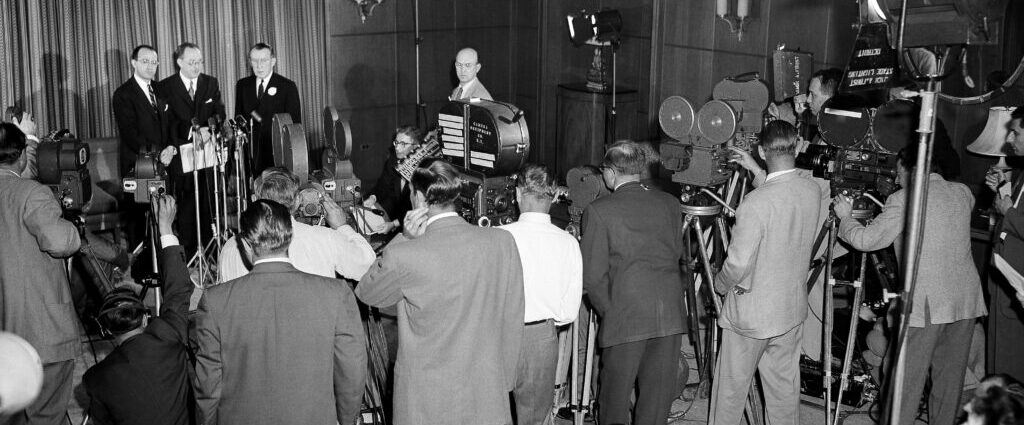
Opinion: I’m a public health communications consultant. Pro-vaccine advocacy needs more fun
2026-09-11
On April 12, 1955, America threw a vaccine party.
That morning, Thomas Francis Jr. — who had overseen trials of polio vaccines developed by Jonas Salk — held a press conference to announce the results.
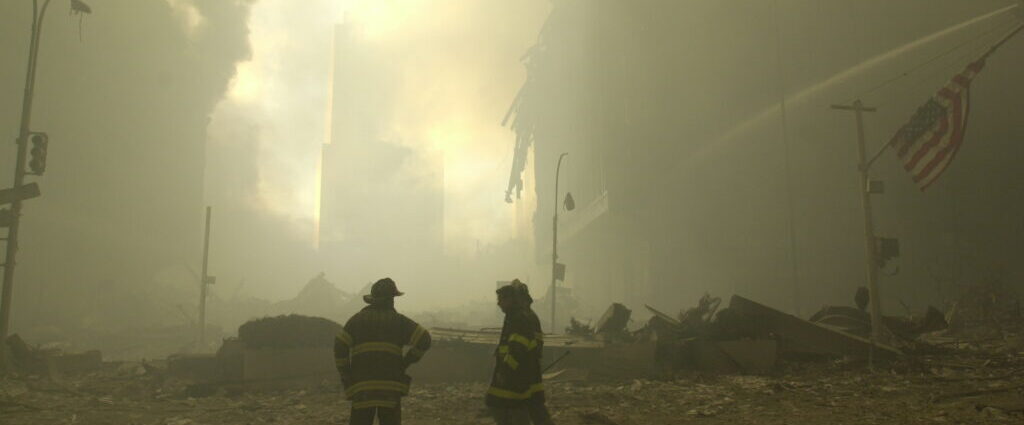
Opinion: I’m a thoracic surgeon in New York City. For many of my patients, Sept. 11 is still not over
2026-09-11
Retired New York City police officer John Aris sat in my office recently waiting for the results of his latest CT scan.
Seven years earlier, I had removed part of his right lung because of cancer. Since then, every follow-up appointment has carried the same anxiety. Before I had even closed the examination room door behind me, I offered the words he had hoped to hear: “No cancer.”


How often you check your phone matters more than how long you spend on it—and if you watch brain rot, you’re burning yourself out
2026-09-11
We know, we know. We spend too much time on our phones, we’re too glued to our screens, etc. And yet, screen time, the number everyone tracks—yet few people actually change their behavior due to that number—may be measuring the wrong thing.
Two separate studies have now quantified how much time you spend on your phone matters a lot less than how you spend it. It’s the latest data point in how digital life is quietly reshaping the ordinary rhythms of American daily life, from where people spend their free time to how they spend the hours on their phone instead.
A seven-month study out of Aalto University in Finland tracked 277 people across desktop and mobile devices, logging more than 13 million events measuring information overload and found that total time online barely predicted how overloaded people felt. What did was something they call “session sparseness”—short, repeated check-ins throughout the day, rather than one longer stretch of use.
“Screen time does matter, but the heaviest users aren’t the most overloaded,” said Henrik Lassila, the study’s lead author. “Those who feel most overwhelmed are the ones who return to their phone again and again for brief moments and then put it down shortly after.”
The effect was concentrated in the morning. Mobile use before noon predicted overload; evening or afternoon use largely didn’t, and desktop use didn’t either. The researchers also tested whether specific content—news, shopping, or social media—drove the effect, and it didn’t. Only messaging sessions stood out, and only because they tend to be the most fragmented, not because messaging itself is harmful.
“We feel overloaded when we can’t process all the incoming information and our minds feel ‘full’ or stressed,” Lassila said. “Information overload is linked with negative emotions, which can, in turn, drive more checking—a vicious cycle.”
Nix the brain rot
A second study says it also matters what you’re actually looking at. Researchers at Karabük University in Turkey surveyed 439 adults about “brain rot,” the term Oxford named its 2024 word of the year for the mental fog tied to compulsive short-form content. The researchers defined it as cognitive overload and fatigue driven by passive, algorithm-fed consumption of low-quality, fast-paced content.
Unlike Aalto’s finding, this study found the type of content mattered a great deal. Brain rot significantly predicted burnout on its own, and burnout then became a chain reaction: It fed into stress and anxiety, and that combination ultimately predicted depression.
The paper draws a sharp line between brain rot and behavioral addictions like gaming disorder. Gaming addiction, the researchers note, involves high arousal and active, goal-directed engagement. Brain rot looks nothing like that. It’s closer to what researchers elsewhere have called “zombie scrolling”—a lethargic state in which people are neither stimulated nor actively trying to stop, just passively surrendering to whatever the algorithm serves next. The brain rot researchers frame the fog and numbness that follow not simply as damage, but as the mind’s own defense mechanism: a deliberate, energy-conserving shutdown that kicks in once sensory input outpaces what a person can process.
The authors describe brain rot as triggering a “loss spiral,” depleting people’s cognitive and emotional resources before that depletion cascades into further distress. Burnout, they write, “emerged as a pivotal transitional factor” in that chain, and the model explained 65% of the variance in depression once the full pathway was accounted for.
Put together, Aalto’s data says the pattern of checking predicts how overloaded you feel, regardless of what you’re checking. Karabük’s data says the type of content predicts whether you burn out, regardless of how often you check it. It suggests two different things are happening to people at once and that neither pattern-of-use nor type-of-content alone explains the whole picture.
This story was originally featured on Fortune.com
IDF kills Hamas Khan Yunis Brigade commander in Gaza Strip air strike
2026-09-11
A Thursday overnight Israeli Air Force strike in Khan Yunis killed the commander of Hamas’s Khan Yunis Brigade, Muhammad Yazouri, the IDF announced on Friday.
The IDF stated that, before becoming the commander of the brigade, Yazouri had been Deputy Commander of the Khan Younis Brigade, Commander of the Combat Support Battalion, and Head of the Brigade’s Intelligence Department.
The strike targeted a vehicle in the Hamad neighborhood, north of Khan Yunis, after which a residential apartment on the first floor of Tower M caught fire, Arab media reported.

According to the IDF, the same strike had also killed Hudheifa Muammar, a company commander, and Muhammad Bahjat Rashi, another Hamas terrorist.
IDF, Shin Bet, Israel Police kills Hamas terrorist responsible for 2002 shooting
On Thursday, the IDF, Shin Bet (Israel Security Agency), and Israel Police announced that Israeli security forces had eliminated Hamas terrorist Farah Hamed, who was responsible for a series of deadly attacks against Israeli civilians and IDF soldiers and later helped direct terrorism in the West Bank.
Hamed was killed on Wednesday in a joint Shin Bet, IDF, and Israel Police operation involving a strike in the central Gaza Strip, according to the security agencies.
Among the attacks attributed to Hamed was a November 2002 shooting near Rimonim Junction in which Israeli civilian Esther Galia Atiya was killed.
Officials discuss Gaza reconstruction at MEAD conference, current plans ‘not progressing’
2026-09-11
Four officials involved in determining Gaza’s future appeared together onstage at the MEAD conference in Washington on Tuesday.
Figures presented at the conference showed that 1.2 million Palestinians had been displaced from their homes and 370,000 homes had been damaged or destroyed, including 70,000 that were partially destroyed.
Officials said rebuilding Gaza should involve more than repairing damaged homes and infrastructure. The process should also include educational efforts to address the anger, hatred, radicalism and extremist ideology that have taken root among Gaza’s population.
Hamas, the US, Turkey, Egypt and Qatar have agreed on a plan to rebuild the Gaza Strip that would include disarming Hamas. However, the initiative remains stalled amid widespread suspicion and a lack of trust among the parties.
Conference participants said clearly that Hamas members are liars and difficult to trust. This has made it challenging to rely on commitments made behind closed doors when the messages delivered publicly differ.

Despite this, and although all parties understand who started the war and abducted and murdered Israeli civilians during the October 7 massacre, the international community continues to hold Israel responsible.
Trump’s plan ‘not progressing’
The conference also revealed that the Board of Peace’s plan includes deploying 10,000 Palestinian police officers to the Gaza Strip. The officers would first undergo vetting as part of the US-mediated process.
For now, however, the ambitious plan is described as “not progressing.”
Participants also called on other countries to support the Gaza reconstruction plan and change their rhetoric and narratives. The aim is to enable Palestinians, through the Board of Peace, to move away from their current course.
They warned that without progress in the process led by the Board of Peace, both Palestinians and Israelis would face harmful alternatives, including a possible return to war.
With more than one million people displaced and hundreds of thousands of homes damaged or destroyed, participants at a Washington conference discussed an ambitious plan to rebuild the Gaza Strip. However, the initiative, which includes disarming Hamas, remains stalled because of deep mistrust.
With more than one million people displaced and hundreds of thousands of homes damaged or destroyed, participants at the MEAD conference in Washington discussed an ambitious plan to rebuild the Gaza Strip. However, the initiative, which includes disarming Hamas, remains stalled amid mistrust among the parties. Participants warned that without a solution, the war could resume.

Exec gave his Gen Z kids a list of ‘daddy tips’ when they became old enough to work—it included showing up on time and ‘bringing value to a meeting’
2026-09-11
Gen Z workers may know their way around the latest gadgets and AI tools better than anyone. But bosses consistently have one complaint about their young new hires: They lack basic people skills. Schools taught them how to type and code, but not how to speak up in a meeting.
One exec took matters into his own hands. Richard Roper, president of Marsh People and Investment (Hong Kong & Macau), is a father of three: a zillennial, a Gen Zer, and a Gen Alpha. When his two eldest daughters were ready to start working, he didn’t just wish them luck.
Instead, he handed them a list of “daddy tips,” distilling three decades of career advice into one cheat sheet. “I spent some time and wrote them a full sheet of ‘daddy tips’ of trying to pass on my work experience of all these years to them,” he said at the Fortune Leaders Forum in Macau on Sept. 8.
“It was a lot of the basics which are now coming around to be very valuable,” Roper explained. “Being enthusiastic, being polite, being respectful to your bosses… always bringing value to a meeting. It sounds quite old-fashioned, but all of those human skills.”
Now both his daughters have jobs, and Roper says the basics he taught them matter more than ever in the age of AI. “Being able to influence, have a story on entering a room, all this kind of stuff, now is really great currency for them.”
Research shows Gen Z is in desperate need of human skills
Roper’s advice might sound simple, but teaching the next generation to show up on time, be polite, and speak up in meetings could give them an edge in today’s job market. With Gen Z struggling to land entry-level roles—many of which can now be done by AI—employers are looking for exactly those “old-fashioned” people skills more than ever.
Soft skills are increasingly rare among Gen-Z workers. Employers repeatedly warn that their young new hires don’t know how to interact with coworkers or clients, haven’t got the skills to work with people who have different opinions, and aren’t clued up on basic office etiquette like what to wear. One in five young candidates even bring their parents to job interviews, as they struggle to share with employers what skills they bring to the job or what their salary requirements are.
Gen Z isn’t completely unaware of their shortcomings: In fact, data compiled in 2024 by Harris Poll showed that 65% of Gen Z workers admitted that they don’t know what to talk about with their coworkers. This worry is heightened among young staff who entered the workforce post-pandemic; the COVID-era cohort is more than twice as likely to struggle with plucking up the courage to start a conversation with colleagues than those who worked before the pandemic.
While some workplaces have resorted to firing their unprepared staffers, others are trying to plug the gap in the form of etiquette classes and soft skills training—including lessons on how to speak up in meetings.
Roper isn’t the only boss to take his kids’ education into his own hands. Grindr’s CEO George Arison is even planning to bring his two children to the office to shadow him once they hit 10 years old. The Soviet-born exec said that watching him pull 12-hour days won’t just teach them how to run meetings or use the printer, but will show them “grit”.
“I still work insanely hard,” he told Fortune. “I think seeing what I do and how important the love for work is will be really crucial.”
The ‘daddy list’—read the tips a Marsh exec shared with his daughters before they joined the workforce

- It is easy to stay ahead of the pack and stand out if you think about it and try a little harder than the rest
- Be positive, enthusiastic, punctual and polite- attitude over aptitude every time
- Find a career you love and you will never ‘work’ another day of your life
- Think about what your boss is looking for and make their lives easier, until you are the boss
- First impressions count at interview, on your first days and in meetings. Get an early win to spread a positive vibe about ‘the new girl”
- Network at work, be kind to people below you and at the same level, you will need them at some point
- Try different things until you find something you like
- No one is ready for a promotion, just accept the job and learn once you have it
- Freedom means a lot, the ability to not be stuck at your desk and do generally what you want is liberating
- Some things pay more than others for the same effort- investment banking and consulting firms pay huge, teaching and nursing pay less. It’s not about your value to society its value to the company. Choose what makes you happy
This story was originally featured on Fortune.com

NATO Innovation Fund on liftoff: the first European private company reaching orbit
2026-09-11
This weekend, a rocket lifted off from a launch pad on a remote Norwegian island and did something no private European space company had ever done before: it reached orbit. Isar Aerospace’s Spectrum vehicle powered through max dynamic pressure, separated its first stage, ignited its second stage, and crossed the Kármán line before completing the burns needed to place its payloads into the right orbit. It was, in the words of Isar’s CEO Daniel Metzler, the moment Europe had its own space capabilities.
For decades, European companies have built extraordinary satellites, telescopes, and space science programs but have steered clear of getting them into orbit. Launch has long been the single biggest bottleneck in the global space economy: the chokepoint that determines who gets to put hardware in orbit, on what timeline, and under whose terms. Isar’s flight is the first proof that a European company can open that chokepoint from European soil, for commercial and Allied sovereign customers, without waiting on anyone else’s manifest.
This is crucial for the ability of the Alliance to deter adversaries and, if needed, defend themselves, as well as for the creation of resilient economies. Modern connectivity, surveillance, and information advantage all run through satellites. NATO itself has said as much: since 2019, the Alliance has formally treated space as an operational domain, on par with air, land, sea, and cyberspace. Positioning and timing, missile early warning, weather forecasting for mission planning, secure satellite communications, and intelligence, surveillance and reconnaissance all depend on getting the right satellites into the right orbits, repeatedly and on schedule. If Allies cannot launch their own satellites close to home, they cannot fully control their battlefield communications with deployed forces, or rapidly respond to potential threats.
NATO allies already own or operate more than half of the world’s active satellites, and the Alliance is building ambitious shared constellations to knit them together, but those constellations are only as good as Allies’ ability to get replacement and augmentation payloads into orbit on short notice, which is exactly the gap STARLIFT is meant to close, and it’s why Isar Aerospace’s successful second Spectrum launch matters: it hands STARLIFT’s multinational access-and-launch framework its first proven, sovereign European vehicle to actually call on.
A single point of failure in getting hardware to orbit — whether a shortage of vehicles, a single dominant provider, or a geopolitical disruption — is a vulnerability that adversaries can and will exploit. Isar’s model, which pairs a flight-proven vehicle with a vertically integrated factory capable of building up to 40 rockets a year and a second launch site under construction in Nova Scotia, is designed to remove that single point of failure and make Allied launch a repeatable, scalable capability.
Access to space is also critical for deterrence. NATO leaders have already determined that an attack to, from, or within space could trigger the Alliance’s collective defence commitments, and the Alliance is explicit that space today is “contested, congested and competitive,” adversaries’ counter-space technologies threatening to restrict Allied freedom to operate there. Deterrence increasingly depends on the ability to replace, reconstitute, and disperse space capability faster than an adversary can degrade it. Distributed, commercially built, rapidly reproducible satellite and launch infrastructure is key to that effort, enabling the real-time surveillance, resilient communications, and faster targeting cycles that deterrence ultimately rests on.
None of this happens, though, unless Allied governments do their part on the demand side. NATO’s own Commercial Space Strategy, endorsed by defence ministers in February 2025, states plainly that cutting-edge space technology “is no longer limited to state actors” and commits the Alliance to lean more heavily on commercial providers and keep their services available in peacetime, crisis and conflict alike. Isar’s own order pipeline, and its ability to manufacture rockets at scale, exists because institutional and commercial customers were willing to buy before the technology was fully proven. Allied governments, defence ministries, and space agencies need to act as anchor customers, paving the way for new capabilities to emerge and for the rest of the market to then follow.
Isar’s flight from Andøya proved that Europe can build and fly its own rockets. The next stage is for Allies to act as anchor customers to continue developing the most needed capabilities at a commercial scale.
Patrick Schneider Sikorsky is a Partner at the NATO Innovation Fund and David Ordonez is a Senior Associate at the NATO Innovation Fund
The opinions expressed in Fortune.com commentary pieces are solely the views of their authors and do not necessarily reflect the opinions and beliefs of Fortune.
This story was originally featured on Fortune.com

AI solves overtourism’s ‘concentration problem’ by helping people find hidden gems, says Klook cofounder Ethan Lin
2026-09-11
Asia’s tourist destinations are overrun with visitors, testing the patience of residents in hotspots like Kyoto and Bali. Some governments are trying to limit the influx of visitors through measures like taxes or reduced visa stays.
Ethan Lin, co-founder of the Asia-based travel platform Klook, argued at the Fortune Leaders Forum in Macau on Sept. 8 that thinking of overtourism as a pure numbers problem misses the real source of the issue.
“Overtourism is a concentration problem, not a volume problem,” Lin said. In other words, too many tourists are going to the same small number of places within a country, rather than experiencing everything a destination has to offer.
AI may help tourists find something new to do or see. In Klook’s Travel Pulse survey of Gen Z and millennial travelers across Asia, 57% said they had used AI to find new destinations or experiences. “Technology and AI help to diversify [tourism] traffic into different and lesser-known destinations,” Lin said.
Speaking on a separate travel-focused panel, David Mann, Mastercard’s chief APAC economist noted that, per company data, those who pay for AI subscriptions are more likely to visit places off the beaten path. “People are looking to discover more places, more hidden gems, and plenty of places they’ve never tried before,” he said. AI “can really help them to find that even more effectively.”
Hospitality operators, too, have leaned on social media influencers to raise awareness about their offerings. Myoko Suginohara Ski Resort in Japan, for instance, recently collaborated with American snowboarder Travis Rice to showcase the appeal of its mountains for backcountry skiing and snowboarding.
“For two seasons, he brought a crew to film top boarders snowboarding down the mountains in Myoko,” Ken Chan, the founder of Singapore-based Patience Capital Group, which owns the resort, said. “This makes viewers want to have that experience, and [encourages them to] come over to Myoko.”
Driven by experiences
Travel today is also heavily driven by experiences, from concerts to sporting events. Jane Sun, CEO of Trip.com, said demand was driven by the “three Ps”: premium, purposeful, and pro-leisure travel.
The most expensive package Trip.com has ever offered, a $200,000-per-person tour, sold out in 17 seconds, Sun said.
“Young people like to go to G-Dragon, Blackpink and Jay Chou shows,” she added. “NBA games and F1 car races are also very popular—the tickets [on our platform] sold out almost instantly.”
In Macau, integrated resorts are now staging their own experiences to diversify away from their reliance on gaming, dining and shopping. SJM Resorts hosts the Macao Open golf tournament, while Melco-owned City of Dreams stages “House of Dancing Water,” an aquatic spectacle of aerial acrobatics.
“They come for the golf, but they’ll stay for the dining, the hotel, and the holistic experience we offer here in Macau,” said Gerard Walker, SJM’s chief hospitality officer. (SJM Resorts was a host partner for the Fortune Leaders Forum.)
Finally, today’s travelers are turning their flexible working arrangements into “workcations,” performing their regular job duties from a holiday destination rather than an office. “Lots of people work Monday through Thursday. On Friday, they will fly their family [out and] spend a long weekend,” Sun said.
“It’s just more fun. When we’re in our own home city, we tend to be more lazy on weekends, deciding to just stay in or head out for [a quick] dinner,” Lin said during his session. “But when they travel, they have to spend more.”
This story was originally featured on Fortune.com