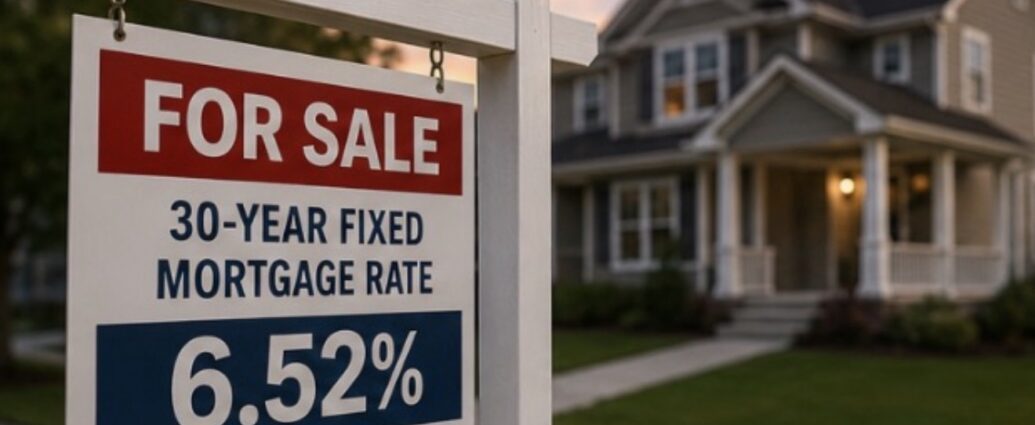
WASHINGTON, June 11 — The cost of buying a home edged higher again this week, according to Freddie Mac, which reported Thursday that the average rate on a 30-year fixed mortgage rose to 6.52% from 6.48% a week earlier.
The average rate remains below the 6.84% recorded a year ago, but the latest increase adds to a gradual climb that continues to challenge homebuyers and sellers alike.
The average 15-year fixed mortgage also increased, rising to 5.84% from 5.79% last week.
Inflation and Energy Prices Drive Rates Higher
Behind the move is a combination of inflation pressures and rising energy costs.
Mortgage rates have moved higher since the conflict with Iran intensified earlier this year, contributing to increases in oil prices. Higher energy costs feed directly into inflation, and inflation expectations influence long-term borrowing costs, including mortgages.
Recent economic data reinforced those concerns.
The Bureau of Labor Statistics reported that consumer inflation reached 4.2% in May, the highest level in three years, while wholesale inflation climbed to 6.5%, its hottest pace in nearly four years.
Home Sales Show Signs of Life
Despite higher borrowing costs, there was some encouraging news in Freddie Mac’s report.
The company noted that stronger hiring and steady employment have helped existing-home sales reach a five-month high, suggesting some buyers are no longer waiting for rates to fall before entering the market.
That shift could be significant for a housing market that has remained largely frozen for much of the past two years.
Many buyers and sellers have remained on the sidelines, hoping for lower rates and improved affordability.
Hopes for Lower Rates Fade
Homeowners entered 2026 with optimism.
The average 30-year mortgage rate began the year near 5.99% following three Federal Reserve rate cuts during late 2025.
At the time, many analysts expected borrowing costs to continue moving lower.
Instead, inflation concerns and higher energy prices reversed that trend.
Mortgage rates have fluctuated sharply throughout the year and remain well above levels many prospective buyers hoped to see.
Higher for Longer
Most major housing forecasts now call for mortgage rates to remain elevated through the remainder of 2026.
The Mortgage Bankers Association and Fannie Mae both project 30-year mortgage rates will stay roughly between 6.3% and 6.5% through year-end.
That outlook reflects what economists increasingly describe as a “higher-for-longer” interest-rate environment.
The Real Cost to Families
For households, even small rate increases can have major financial consequences.
The difference between a 6% mortgage and a 6.5% mortgage can add thousands of dollars in interest over the life of a loan and significantly increase monthly payments.
Many buyers continue debating whether to wait for rates to fall before purchasing a home.
However, housing economists note there is a risk in waiting.
If mortgage rates decline substantially, many sidelined buyers could rush back into the market simultaneously, increasing competition and driving home prices higher.
In some cases, those higher prices can offset the savings gained from a lower mortgage rate.
Federal Reserve in Focus
Attention now turns to the Federal Reserve’s June 16–17 meeting, the first chaired by Kevin Warsh.
Financial markets currently see little chance of an immediate rate cut, and some traders are even pricing in the possibility of another rate increase before the end of the year.
As long as inflation remains elevated and energy prices stay under pressure, mortgage rates are likely to remain near current levels.
For millions of Americans hoping for cheaper borrowing costs, meaningful relief may still be some distance away.
JBizNews Desk — Washington
© JBizNews.com All Rights Reserved. Reproduction or distribution without written permission is prohibited.