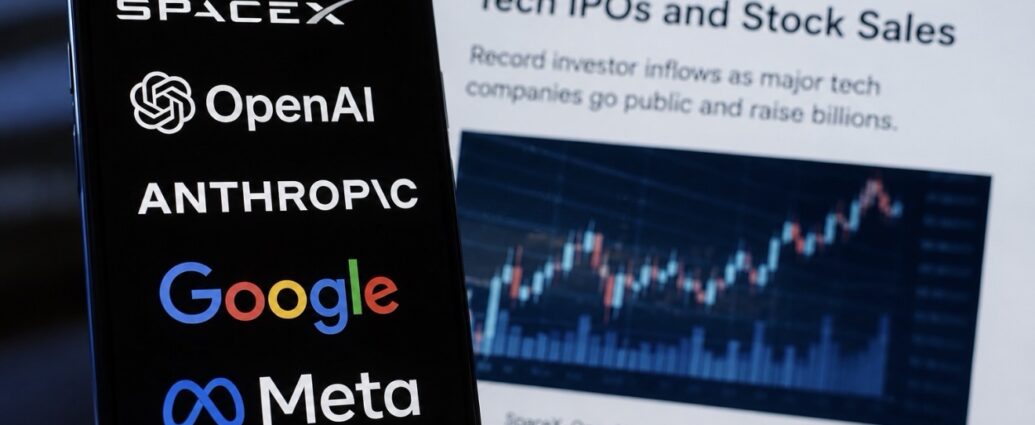
Americans and big investors are putting money into U.S. stocks faster than ever, and most of that cash is heading toward technology. Bank of America said Friday, in its closely watched weekly report on where money is moving, that U.S. stock funds drew record amounts of new money, with tech leading the way. The report, written by strategist Michael Hartnett and based on figures from EPFR Global, tracks how much money goes into and out of funds around the world each week.
To see how strong the run has been: in the week through June 10, technology funds pulled in a record $12.3 billion, part of $31.5 billion that flowed into U.S. and global stock funds. That capped an 11-week stretch of money moving into American stocks — the longest such streak since December 2025. Much of it chased computer-chip companies: the iShares Semiconductor ETF took in about $2.9 billion in a single week, and a leveraged fund that bets on the S&P 500 drew close to $3 billion.
Here is the twist that makes this week’s record unusual. At the very moment investors are handing over more money than ever, the biggest technology companies are selling them a flood of brand-new stock.
That matters because new shares soak up demand. Normally heavy buying with a fixed supply pushes prices up. But tech is issuing stock at a pace not seen in years. SpaceX went public on June 12, trading on the Nasdaq under the ticker SPCX at $135 a share, in a listing valuing it near $1.75 trillion — the largest U.S. stock debut ever. OpenAI and Anthropic, two of the world’s most valuable private companies, have both confirmed plans to go public. Analysts expect the three to raise roughly $200 billion between them.
It isn’t only newcomers. Alphabet, the parent of Google, has said it plans to raise about $80 billion by selling new stock, and Meta is reported to be weighing a similar move. Both want cash to build the giant data centers that power artificial intelligence — and selling shares lets them raise it without taking on more debt.
For everyday savers, the surge has a direct connection. Capital Economics notes that U.S. companies outside the financial industry began issuing more stock than they bought back early this year, the first time since 2021. The firm also offers a caution: big jumps in new stock sales have tended to appear near the late stages of past market booms.
There is also a new source of buying coming straight from Washington. Starting July 4, the federal government begins seeding “Trump Accounts” — investment accounts for children that open with a $1,000 deposit and steer the money into low-fee funds tracking the broad stock market. Bloomberg Intelligence estimates the program could push around $12 billion a year into those funds, rising toward $21 billion if families add the maximum. The money is automatic and stays put for years.
The rise has already lifted household wealth. By Bank of America’s count, the value of stocks owned by U.S. families has climbed about $6 trillion so far in 2026, after gains of roughly $10 trillion in 2025 and $9 trillion the year before. When portfolios swell, people tend to feel richer and spend more, which feeds back into the wider economy.
Not everyone is comfortable. Bank of America’s “Bull & Bear” gauge, which measures how greedy or fearful investors are, has been flashing a sell warning for several weeks — a level the bank reads as a sign buying has run hot. Hartnett has compared today’s market to 1994, when a long calm period ended abruptly once the Federal Reserve started raising interest rates.
For now, the money keeps coming. The bigger test arrives later this year, when OpenAI and Anthropic aim to complete their listings and Alphabet and Meta sell their new shares — adding hundreds of billions of dollars in fresh stock for buyers to absorb.
What These Deals Actually Mean for Your 401(k)
If you own an S&P 500 or total-market index fund, you don’t buy these stocks yourself — the fund does it for you, automatically, based on each company’s size. So a wave of giant tech listings sounds like it should pour your retirement money straight into SpaceX, OpenAI, and Anthropic. The reality is more gradual, and smaller than the headlines suggest.
Two things hold it back. First, index funds only count the shares a company actually sells to the public, not the ones founders and early backers keep. At launch, these firms are floating only about 4% to 5% of their stock, so their weight in your fund starts tiny no matter how huge the valuation.
Second, getting into the S&P 500 isn’t automatic. A company has to be profitable over recent quarters and gets picked by a committee, which can take time. Broad total-market and Nasdaq funds tend to pick up new listings sooner, but still in proportion to those small public floats.
The bigger effect comes later. Analysts at Capital Economics estimate that if these companies eventually release more of their shares to the public — say, a quarter of them — it could add about $750 billion in stock for funds to buy. That’s when an everyday index holder would really feel it.
JBizNews Desk | Wall Street
© JBizNews.com All Rights Reserved. Reproduction or distribution without written permission is prohibited.