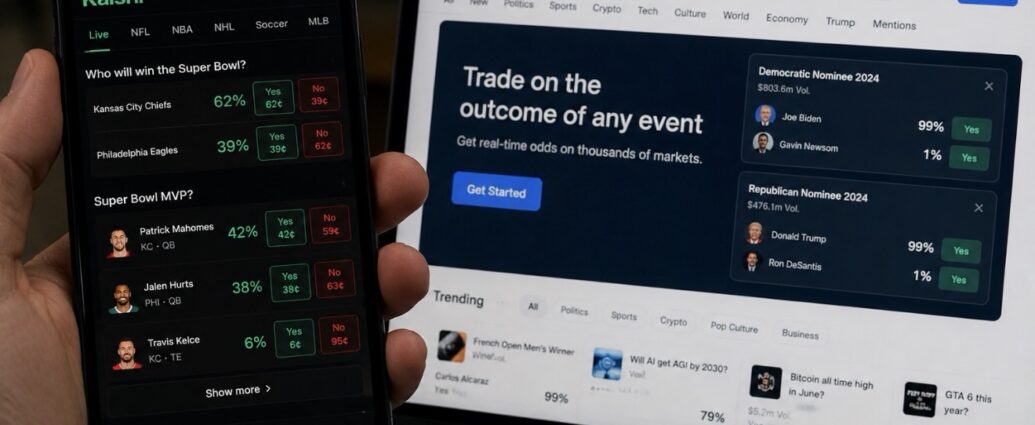
The Trump administration moved Wednesday, June 10, 2026, to establish the first comprehensive federal framework for prediction markets, proposing rules that would allow most sports-related contracts to continue while banning contracts regulators believe are most vulnerable to manipulation.
The Commodity Futures Trading Commission (CFTC) released a 267-page proposed rule outlining which event contracts would be permitted and which would be prohibited. The proposal represents the agency’s first formal attempt to regulate a rapidly growing industry that has blurred the line between financial markets and sports betting.
CFTC Chairman Michael Selig said the goal is to provide clear rules for the industry while protecting market integrity and encouraging innovation.
What Are Prediction Markets?
Prediction markets allow users to buy and sell contracts tied to future events.
Participants essentially purchase “yes” or “no” positions on whether something will happen, with contract values changing as market sentiment shifts.
Over the past year, platforms such as Kalshi and Polymarket have expanded aggressively into sports-related contracts, creating products that often resemble traditional sports betting.
The new proposal would largely allow that activity to continue.
What Would Be Allowed?
Under the proposed rules, prediction markets could continue offering contracts tied to:
- Game winners and losers
- Final scores
- Point spreads
- Tournament advancement
- Team statistics
- Player statistics
- Season-long performance outcomes
In practice, many of these contracts resemble traditional sportsbook products such as:
- Moneyline bets
- Point spreads
- Over/under totals
- Player prop wagers
The CFTC argues these markets provide value beyond gambling by generating information that may be useful to:
- Broadcasters
- Advertisers
- Sponsors
- Fantasy sports companies
- Analytics firms
- Sports data businesses
What Would Be Banned?
The proposal draws a firm line around contracts regulators believe are easiest to manipulate.
The CFTC would prohibit contracts involving:
- A single pitch in baseball
- One shot in hockey
- One foul in basketball
- Individual game plays
- Player injuries
- Officiating decisions
- Physical altercations during games
- Youth sports below the college level, including high school athletics
According to the agency, these contracts raise significant public-interest concerns because individual participants may have greater ability to influence outcomes.
Why Is a Financial Regulator Involved?
The key legal issue is that the CFTC treats prediction-market contracts as financial products rather than traditional wagers.
Under the Commodity Exchange Act, many event contracts are classified similarly to swaps and derivatives, placing them under federal commodities regulation.
That distinction has allowed prediction-market operators to offer sports-related contracts nationwide, including in states where traditional sports betting remains illegal.
The companies argue they are operating federally regulated financial markets rather than sportsbooks.
Growing Battle With States
That legal position has triggered opposition from state gaming regulators and tribal gaming operators.
Critics argue that prediction markets are effectively sports betting under another name and should be regulated under existing state gambling laws.
State officials have warned that allowing federally regulated prediction markets to operate nationwide could undermine:
- State licensing systems
- Tax revenues
- Tribal gaming agreements
- Consumer protections
The CFTC has largely supported the platforms in ongoing legal disputes, defending their ability to offer contracts under federal law.
Some members of Congress have also questioned whether the agency is stretching its authority beyond what lawmakers originally intended.
Industry Reaction
Initial responses from major operators were measured.
A spokesperson for Polymarket said the company welcomes greater regulatory clarity and intends to participate in the public comment process.
Kalshi said it was reviewing the proposal and had not yet reached conclusions regarding the details.
Why It Matters
The stakes extend far beyond sports fans.
A permanent federal framework could remove significant legal uncertainty hanging over the industry and potentially accelerate growth.
Clear rules could attract:
- New investors
- Additional users
- Institutional capital
- Media partnerships
- Sports-league relationships
At the same time, regulators hope restrictions on easily manipulated contracts will reduce the risk of scandals that could damage confidence in the broader market.
What Happens Next?
The proposal now enters a 90-day public comment period.
During that time:
- Prediction-market operators
- Sports leagues
- Gaming regulators
- Tribal gaming organizations
- Investors
- Members of the public
will have an opportunity to submit feedback before the CFTC drafts a final rule.
With multiple lawsuits still working through the courts and states continuing to challenge federal authority over sports-related contracts, the battle over who controls America’s rapidly growing prediction-market industry is far from over.
JBizNews Desk — Washington
© JBizNews.com All Rights Reserved. Reproduction or distribution without written permission is prohibited.