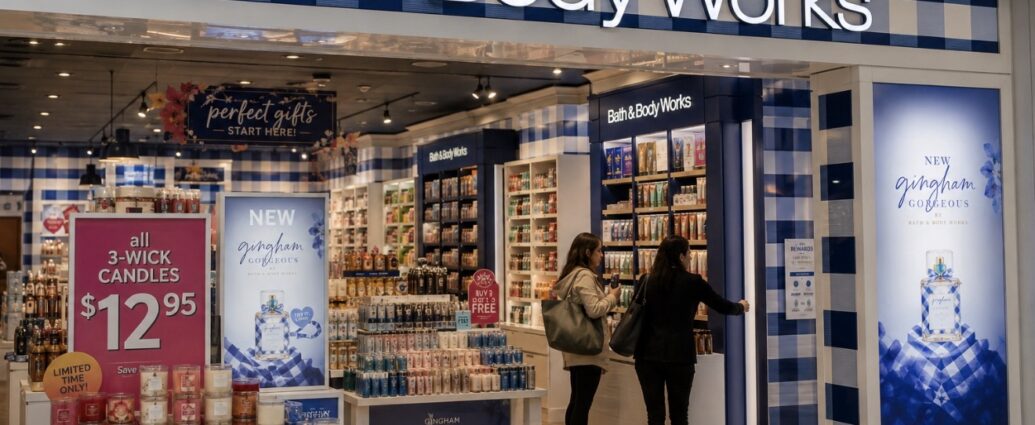
COLUMBUS, Ohio — Bath & Body Works is in the middle of a high-stakes makeover aimed at a generation that never grew up shopping its mall stores, and the effort is beginning to show results just as the company reshuffles its top finance position.
On Friday, June 12, Chief Financial Officer Eva Boratto stepped down to become CFO of drug distributor Cencora, with company veteran Tom Javitch taking over as interim CFO.
The leadership change comes just two weeks after the retailer reported first-quarter results on May 27 that exceeded its own guidance and helped send the stock up roughly 14%, providing early evidence that its strategy to attract younger consumers may be gaining traction.
The strategy has a name: the Consumer First Formula.
Launched in late 2025 by Chief Executive Officer Daniel Heaf, who assumed the top role in May 2025, the initiative aims to make the brand more relevant to younger shoppers through updated products, modern marketing, and expanded distribution channels.
Following the first-quarter earnings release, Heaf struck a measured tone.
“Our results exceeded guidance, but remain below the standard our brand is capable of delivering,” he said.
The numbers offered encouragement.
First-quarter net sales totaled $1.38 billion, down 3% from a year earlier, but adjusted earnings of $0.32 per share exceeded Wall Street expectations.
Net income rose to $183 million, up from $105 million a year earlier.
The company also reaffirmed its full-year outlook and projected approximately $600 million in free cash flow.
That matters because Bath & Body Works has faced challenges in recent years, including removal from the S&P 500 and a prolonged decline in its share price.
Perhaps the clearest example of its push toward younger consumers is its expansion onto Amazon.
The company launched its first authorized Amazon U.S. storefront on February 20, 2026, and executives say the platform is already attracting the customers they are targeting.
Management told investors the Amazon channel shows “a meaningful skew toward younger and more affluent consumers,” while also generating higher average selling prices than the company’s own channels.
For a retailer historically built around in-store fragrance testing and impulse purchases, the shift is significant.
Heaf has argued that the traditional distinction between digital and physical retail is rapidly disappearing.
The company is also targeting younger consumers through college campuses.
After entering approximately 600 campus stores in 2025, Bath & Body Works has expanded to more than 1,000 locations through multi-year partnerships.
The initiative provides low-cost exposure to students while allowing the company to gather insights into younger consumer preferences.
Chief Merchandising Officer Betsy Schumacher said the goal is to help students “make their dorm rooms feel more like home.”
Marketing has also been redesigned for the social media era.
The company recently relied on influencers and podcast advertising to promote its White Barn Neutrals candle collection, which grew approximately 20% during the first quarter and attracted a younger customer base.
The creator-focused approach is expected to expand across the company’s stores, digital properties, and future product launches.
Physical stores remain central to the strategy.
The retailer’s new Gingham+ store concept, designed primarily for off-mall locations, includes scent bars, wider aisles, and a calmer shopping environment intended to encourage browsing and product discovery.
There are signs the brand is reconnecting with younger consumers.
A recent Piper Sandler survey of approximately 6,500 teenagers ranked Bath & Body Works as their favorite fragrance brand and one of their top beauty destinations, marking its first top-10 finish in that category since 2018.
Meanwhile, the company’s My Bath & Body Works Rewards program has reached a record 38 million members, providing a substantial base of repeat customers.
The broader business case is straightforward.
Fragrance products, candles, and personal-care items are often viewed as affordable luxuries—small indulgences consumers continue purchasing even during periods of economic uncertainty.
If Bath & Body Works can attract a customer through Amazon, a college campus, or a social-media campaign at age 16 or 20, it potentially gains a customer for decades.
The challenge is execution.
Expanding through Amazon and third-party channels can create pressure on margins and brand positioning, both of which have historically been strengths for the company.
To offset those costs, Bath & Body Works has launched its Fuel for Growth initiative, a cost-reduction program targeting approximately $250 million in savings over two years.
With a new finance chief taking the reins and early signs of momentum emerging, the company’s bet is clear: win over the next generation of consumers now and reshape how Bath & Body Works reaches customers for years to come.
JBizNews Desk — Retail
© JBizNews.com All Rights Reserved. Reproduction or distribution without written permission is prohibited.