Will mortgage rates ever drop to 3% again?
2025-04-02
URL has been copied successfully!
Share this story:








Socking away money for retirement is something that’s top of mind for many people.
Many Americans save money for their “Golden Years” through workplace retirement plans and individual accounts they set up, with traditional and Roth IRAs being frequently-used vehicles in the latter category.
Holders of Roth IRAs are able to make after-tax contributions to their accounts.
“Why a lot of people like a Roth IRA today is that you pay income taxes today before you put the money into the Roth IRA,” Ted Jenkin, a personal finance expert and partner at Exit Wealth, told FOX Business. “The money grows tax-deferred while it’s inside of the Roth IRA, but the great news about a Roth IRA is you never, ever pay any tax when you take it out, so it’s basically taxed once today and then you’re never ever taxed again.”
For 2025, the contribution limit for Roth IRAs is $7,000 for ages below 50 and $8,000 for those older than that, according to the IRS.
STUDY SHOWS HOW LONG SOCIAL SECURITY, $1.5M NEST EGG WOULD LAST IN 50 STATES
When a person takes out contributions from a Roth IRA, they will not have taxes or a penalty. A holder could face both if they do that for Roth IRA earnings before five years have elapsed since they’ve opened the account or they’re below the age of 59 ½, according to Fidelity.
Funds put into traditional IRAs are typically “not taxed until you take a distribution,” according to the IRS.
“Just like a Roth IRA, the dollars grow tax-deferred. However, on all that growth in the traditional IRA, ultimately you’re going to be taxed when you take it out down the road,” Jenkin said.
He noted that “can be challenging because you don’t always know what your tax brackets are going to be down the road.”
People under 50 years old can make up to $7,000 in contributions to traditional IRAs in 2025. For those above 50, it is slightly higher, at $8,000.
In contrast to Roth IRAs, contributions to traditional IRAs can be tax-deductible but, according to Jenkin, that “depends on a number of factors.”
THIS MIDWESTERN STATE IS CONSIDERED ONE OF THE BEST PLACES TO RETIRE, NEW STUDY SAYS: SEE THE LIST
He said the “big question” for deductibility was “Are you covered by a workplace retirement plan?”
“If you don’t, or your spouse does not, then you can fully deduct the traditional IRA,” he told FOX Business. “But if you have one at work, then there’s a phase out income-wise on how much income you have as to whether or not it’s deductible.”
When it comes to withdrawals for traditional IRAs, you can do so at any time but that distribution “will be includible in your taxable income and it may be subject to a 10% additional tax if you’re under age 59 ½,” according to the IRS.
For traditional IRAs, holders face a required minimum distribution they must pull out each year once they turn 73.
The differences between traditional and Roth IRAs give people planning for retirement plenty to think about as they mull which account they want to use.
Jenkin said one factor was “Do I want to be taxed now, or do I want to be taxed later?”
“When you’re younger, you’re generally in a lower tax bracket, which is why, for younger people, it’s a really great idea in my view to be putting money into a Roth IRA, because once it goes in there, you’re never taxed again.”
He also noted the Secure 2.0 Act that became law in late 2022.
“When you have a traditional IRA and you die and it goes to your kids or any other non-spouse inheritor, you have to take the money out of a traditional IRA within 10 years,” he said. “In a Roth IRA, when you die and your kids inherit the Roth IRA, they can take it out as long as they want. They’re not subject to that 10 years.”
When weighing opening a traditional or Roth IRA, Jenkin also said people should consider whether they can “leave the money in there for an extended period of time.” He said they should factor in their current tax brackets and their “overall future estate plan” for their family as well.
He told FOX Business his “lean on this would be that more and more people should be looking at opening up a Roth IRA versus a traditional IRA.”
The Investment Company Institute said in a study released Thursday that nearly 44% of American households had IRAs in mid-2024, whether that be traditional, Roth, employer-sponsored or a combination.
Traditional IRAs were owned by 32.6% of households, it found. Over 26% of households had Roth IRAs.
401(K) BALANCES HIT SECOND HIGHEST ON RECORD: FIDELITY
A separate report released by Fidelity Investments in February reported IRA accounts held average balances of $127,543 in the fourth quarter of 2024. That was an increase of 8% from the same three-month period in the prior year, according to the report.

As Generation X continues getting closer to retirement, some have less than rosy views about their retirement prospects, according to a recently released nonprobability-based study from Fidelity Investments.
Fidelity Investments found in the latest edition of its annual “State of Retirement Planning” study that 45% of Gen Xers — those between the ages of 44 and 59 — reported feeling they were “not confident” in their ability to retire “when and how they want.”
Meanwhile, 53% felt confident they could do so.
“Gen X is most likely to be what we call the sandwich generation right now,” Fidelity Investments Vice President of Retirement Offerings Rita Assaf told FOX Business. “They are caring for both children and aging parents, as well as preparing for retirement. That’s pretty costly.”
“They’re also at a time where higher cost of living, so if they’re helping with children, they most likely have kids in college or maybe they just finished college, and those costs have been much higher,” she continued. “Their day-to-day expenses are much higher. And we also know with aging parents, the healthcare and long-term care costs associated with that as well.”
Assaf said Gen X being poised to be the first “401(K) generation” has also driven those figures.
“Current retirees are primarily using still pensions as their primary way to fund their retirement savings, but Gen X, I think our study found 61% will be leveraging 401(K)s and IRAs and individual savings vehicles for retirement, so that’s a big difference as well,” she noted.
401(K) BALANCES HIT SECOND HIGHEST ON RECORD: FIDELITY
Compared to last year’s study, Gen X confidence in retiring “when and how they want” dropped 16 percentage points, something that Assaf linked to higher cost of living and members of the generation moving nearer to retirement age.
She said the survey “really highlighted the fact that with higher cost of living, there’s a bit of general concern that ‘will my retirement savings last’?”
Gen X “notably hold the most negative retirement outlook” among the four generations included in the study, according to Fidelity Investments.
The study found Gen Z and millennials felt the most confident about retiring “on their own terms,” at 75% and 71%, respectively. Meanwhile, 68% of baby boomers reported they were confident.
For Gen X, juggling children, aging parents and higher costs of living have played into that. Assaf also said that “anxiety tends to raise as you get close” to retirement.
Younger generations like Gen Z and millennials “still have a long time-horizon so they’re actually feeling more confident” and “have more time on their hands to save more and invest and reap the benefits of compound earnings,” according to Assaf.
Overall, 67% of those in their retirement planning years felt positively when it came to retiring “when and how they want,” Fidelity Investments said.
THIS MIDWESTERN STATE IS CONSIDERED ONE OF THE BEST PLACES TO RETIRE, NEW STUDY SAYS: SEE THE LIST
The study was based on a survey that involved over 2,000 “adult financial decision makers” with a minimum of one investment account.
Socking away sufficient money, inflation and high costs of living, striking the balance of covering expenses now versus saving for retirement and figuring out the amount of funds needed for retirement were among the issues respondents identified as those posing the most challenge, according to the study.
Meanwhile, among current retirees, the Golden Years were “going as planned” for 72%, the study reported. A similar share — 70% — also felt their retirement planning set them up sufficiently.
STUDY SHOWS HOW LONG SOCIAL SECURITY, $1.5M NEST EGG WOULD LAST IN 50 STATES
When it came to retirement income, 77% of retirees pointed to Social Security as their top source, according to the study. Behind that were pensions, at 48%, and personal savings, at 41%.
“Planning does not stop at retirement,” Assaf told FOX Business. “You have to keep evolving your planning, even when you’re in retirement.”
The savings of seven in 10 retirees have taken a hit from the rising cost of living, the survey said.
The Transamerica Center for Retirement Studies found in an August 2024 report that the median age of retirement for middle-class retirees was 62.
Americans think $1.46 million is the amount of money necessary to experience a comfortable retirement, according to a study released by Northwestern Mutual last year.

More savers are embracing the tax-advantaged accounts, and many will contribute leading up to tax day.
Young savers are flocking to Roth IRAs.
They are taking the advice of parents, workplace financial coaches and tax advisers, who have long preached the gospel of these accounts to save for retirement and even big purchases.
By getting the money in early, the thinking goes, they are giving it time to grow tax-free. In the run-up to tax day, more savers are making last-minute contributions to max out their individual retirement accounts.
Savers such as Maria Kyriakopoulos are opening Roth IRAs in addition to saving in their workplace retirement plans. After the 23-year-old got her first full-time job as an analyst at J.P. Morgan Private Bank last July, she immediately started saving in her 401(k).
She also opened a Roth IRA. She just finished contributing to hit the $7,000 maximum allowed for 2024 and contributed $700 to get a start on saving for 2025.
“You have to save a little money on the side,” Kyriakopoulos said. She contributes anywhere from $250 to $800 a month, depending on how much she has left after paying rent, her student loan bills and other expenses.
Of those who contribute to an IRA or Roth IRA, 41% were under 40 in 2022, up from 28% in 2016, according to the latest data from the Center for Retirement Research at Boston College. And most young contributors choose the Roth option, according to the Investment Company Institute.
Many of those opening accounts are customers of financial technology firms, including those that promise money akin to 401(k) matches. Robinhood, for example, offers to match up to 3% of users’ IRA contributions.
It is “the young, hip and cool with their cellphones,” said Alicia Munnell, a senior advisor at the Center for Retirement Research.
Kelli Send, the co-founder of Francis, which provides financial planning advice to employees at their workplaces, says to first contribute to a workplace plan to take advantage of any employer match, and then open a Roth IRA.
“It’s an escape valve, if you need it,” she said. Taxpayers can always access amounts up to their Roth IRA contributions with no tax hit or early-distribution penalties. Earnings generally can’t come out tax- and penalty-free until age 59½.
HOW A DOGE DIVIDEND WOULD WORK
You can make IRA contributions for a given year any time between Jan. 1 and tax day of the following year. So taxpayers can still contribute for the 2024 tax year through April 15.
Boris Wong, a 36-year-old researcher at Vanguard, says he makes the full contribution to his Roth IRA in January. “Why do I have this ritual? If you invest on Jan. 1, you have 15 months extra of compounding,” he said.
Taxpayers must have at least as much earned income as the amount of their IRA contributions, although there is an exception for spouses. With Roth IRAs, the ability to contribute directly depends on savers’ modified adjusted gross income. Those above the income limits can put money into a traditional IRA and move it into a Roth, though there are some pitfalls.
Contributions are in after-tax dollars, but withdrawals can be tax-free. As a result, Roth accounts can be a good choice for savers who expect their tax rate to be higher — or the same — at withdrawal versus at contribution.
RETIREMENT CONTRIBUTION LIMITS FOR 2025
With traditional IRAs, the opposite is the case: Contributions are often tax-deductible, and funds typically grow tax-deferred. So those accounts can make sense for savers who want to lower their taxable income now, and expect their tax bracket to be lower when they withdraw the money.
“I wish I had put more money into Roths. Early diversification is a good idea,” said Munnell. Still working in her early 80s, she has found that she has to take more withdrawals from her traditional IRA than she needs and pay taxes.
Traditional IRAs require annual payouts once you reach 73. Withdrawals are taxed as ordinary income. By contrast, you don’t have to take any distributions from a Roth during your lifetime.
At work, Kyriakopoulos noticed a trend among young rich clients. Many of them inherited money and even though they earn, say, $50,000 at an entry-level white-collar job, they have substantial taxable portfolios. So they move money religiously to Roth IRAs.
John Longoria II rolled leftover funds from a 529 college savings plan into his Roth IRA.
John Longoria II, 24, who is making just over $40,000 as a digital marketing intern in Chicago, is drawing partly from a taxable account his parents helped him set up as a child to fund his Roth IRA. He’s also rolling over leftover funds from a 529 college savings plan into the Roth IRA, and adding some money from his paycheck.
“I try to save money any which way I can,” Longoria said, noting that he has four roommates.
One drawback of Roth IRAs is that, unlike 401(k)s where many employers automatically enroll employees in the plan and deduct contributions from their paychecks, IRA savers have to set up the accounts, make contributions and be diligent about sticking with it. Most IRA custodians let customers set up direct deposits into their IRAs.
Still, you have to pick your investments and stay on top of changing contribution limits.
Mel Meagher, a 37-year-old human resources manager in Brownsville, Wis., opened a Roth IRA at Vanguard in 2023, when the contribution limit was $6,500. She didn’t increase her contributions when the limit went to $7,000 for 2024.
Now, she is having to make up the $500 difference for 2024, on top of starting her 2025 contributions. She also puts 5% of her pay into her 401(k), which has a 5% employer match.
GET FOX BUSINESS ON THE GO BY CLICKING HERE
Why a Roth?
“I don’t want to pull it out early, but I like that there is that flexibility if something happens down the road,” she said.
Write to Ashlea Ebeling at ashlea.ebeling@wsj.com
Copyright ©2022 Dow Jones & Company, Inc. All Rights Reserved.
Appeared in the March 24, 2025, print edition as ‘Roth IRAs Are In Vogue With the Young Crowd.’
Document WP-WSJ-0002501267
© 2025 Dow Jones & Company. All rights reserved. Terms of Use Privacy Notice Cookie Notice Accessibility Reprints Follow Us on LinkedIn Feedback



The Federal Reserve just met to discuss the possibility of interest rate cuts. This time around, the Fed decided to extend the rate pause, leaving rates in the 4.25% to 4.5% range. The decision came due to stable economic activity that’s expected to grow in the first quarter. Economists largely expected this outcome.
“The Fed is going to keep rates where they are today,” predicted Melissa Cohn, regional vice president of William Raveis Mortgage. “[Federal Reserve Chair Jerome Powell] has repeatedly said that the Fed is in no hurry to cut rates. The Trump administration’s tariffs could reignite inflation, making future rate cuts unlikely, too.”
Although the Fed noted that inflation remains elevated, the unemployment rate has stabilized, and labor markets are still solid. To inch the economy closer to 2% inflation levels, the Fed ultimately decided to leave rates where they were.
“While the economic activity in the first quarter economy is still on track to report growth, American households are increasingly concerned with potential re-inflation, their job security and financial outlook, which is holding them back from making major expenditures,” Dr. Selma Hepp, CoreLogic chief economist, said in a statement. “At the same time, many are still catching up with inflation in housing and related services of the last few years.”
Despite a slowly growing economy, consumers aren’t entirely confident in the economic situation. A variety of social and political actions are still impacting American households. Newly implemented tariffs are one of the factors contributing to this uncertainty.
“The Federal Reserve’s war in fighting stubborn inflation continues to impact the day-to-day lives of American households,” explained Anya Gezunterman, director at Imperial Fund Asset Management, in a statement. “On top of this, the Fed now has to look closely at any tariff-related price increases, which would also keep interest rates higher for longer.”
“That said, as the economy seems to continue its so-called ‘soft landing,’ we expect mortgage rates to drift lower through the summer gradually, but not by more than a percentage point,” said Gezunterman.
If you are struggling with high inflation, consider taking out a personal loan to pay down debt at a lower interest rate, reducing your monthly payments. Visit Credible to find your personalized interest rate without affecting your credit score.
INFLATION EASES IN FEBRUARY, BUT TRUMP TARIFFS COULD DERAIL PROGRESS
Rates remained unchanged after the Fed meeting, but they signaled that two rate cuts would happen this year. Economists largely agree that consumers will see cuts shortly. Analysts from Barclays expect two quarter-point rate cuts, likely in June and September. They previously believed there would be just one cut in June.
“The softer labor market causes us to add another rate cut, despite higher inflation,” Barclays analysts said.
Barclay predicts a slowing labor market will raise the unemployment rate later in the year, with unemployment peaking at 4.3% in October.
The first rate cut in June is expected to “reflect [this] slower growth and rising unemployment.” The second rate cut in September is expected to indicate “a rising unemployment rate and some signs of improvement in monthly inflation prints.”
You can take out a personal loan before future rate hikes to help pay down high-interest debt. Credible can help you find your personal loan rate without affecting your credit score.
MORTGAGE RATES HIT A TWO-MONTH LOW THIS WEEK, REMAIN UNDER 7%
Many consumers don’t see the economy as stable, as made apparent by the Consumer Confidence Survey. Consumer Confidence measures the way Americans feel about business and economic conditions.
The Present Situation Index fell by 3.4 points to 136.5 in February, while the Expectations Index also dropped 9.3 points to 72.9. Below 80 on the Index typically signals a recession on the horizon. It’s the first time the Index has been this low since June 2024.
“In February, consumer confidence registered the largest monthly decline since August 2021,” said Stephanie Guichard, senior economist, Global Indicators at The Conference Board. “This is the third consecutive month-on-month decline, bringing the Index to the bottom of the range that has prevailed since 2022…Views of current labor market conditions weakened. Consumers became pessimistic about future business conditions and less optimistic about future income. Pessimism about future employment prospects worsened and reached a ten-month-high.”
More people did plan to purchase homes, showing one area of improvement. The very recent decline in mortgage rates is likely why homebuyers are more willing to buy. Car buying plans declined, however, as did plans to make bigger purchases, like TVs and other electronics.
“Average 12-month inflation expectations surged from 5.2% to 6% in February. This increase likely reflected a mix of factors, including sticky inflation, but also the recent jump in prices of key household staples like eggs and the expected impact of tariffs,” Guichard said. “There was a sharp increase in the mentions of trade and tariffs, back to a level unseen since 2019.”
Need help dealing with high debt? You can also plug in some simple information into Credible’s free online tool to determine if a debt consolidation loan is your best option.
SENIORS TO GET MODERATE COST OF LIVING BUMP IN SOCIAL SECURITY PAYMENTS NEXT YEAR
Have a finance-related question, but don’t know who to ask? Email The Credible Money Expert at moneyexpert@credible.com and your question might be answered by Credible in our Money Expert column.

It isn’t always easy to save for retirement, in part because for many people it is so far away that there’s no sense of urgency.
New research suggests a solution: Make the future feel closer.
“People struggle to save for the future, and part of the reason why is people struggle to connect with the future,” says Katherine Christensen, an assistant marketing professor at Indiana University and the study’s lead author. “We wondered, based on past research, if people felt more connected to their future selves, would they be more likely to save?”
After conducting and analyzing a series of 20 experiments to test this hypothesis, Christensen says the answer is yes.
The research found that when we think about the future, more than 80% of the time, we actually start off by thinking about the present.
“What we did is essentially flip that,” Christensen says. Start the thought process by imagining that future before you turn your thoughts back to the present and the savings goals you need to meet to make it happen.
THIS MIDWESTERN STATE IS CONSIDERED ONE OF THE BEST PLACES TO RETIRE, NEW STUDY SAYS: SEE THE LIST
While the difference is subtle, it has been shown to motivate people to save more. In one experiment carried out by the research team with more than 6,700 customers of a Swedish fintech company, people with low-balance savings accounts were 14% more likely to invest in a long-term savings product when they received a notification with language prompting them to think about the future first.
Hal Hershfield, professor of marketing, behavioral decision-making and psychology at the University of California, Los Angeles, and one of the study’s authors, says the prompts were designed with deliberately simple verbiage. “[We] had language along the lines of: ‘The year is 2034…rewind back to 2024 and consider saving for 2034 you,’ ” he says.
While the research was tailored to give institutions like banks insights into how to make customers save more, Hershfield says individual savers can apply their findings using similar wording.
“The key here is to start in the future and rewind back,” Hershfield says, “rather than the traditional approach of only starting now and zooming ahead to the future.”
SOCIAL SECURITY PAYMENTS TO INCREASE FOR PUBLIC PENSION RECIPIENTS
The authors of the new study based their hypothesis on earlier findings that people perceive trips to unfamiliar locations as lengthier than return trips of identical duration. In other words, we perceive traveling home as quicker than journeying to an unknown destination.
This cognitive quirk takes place because uncertainty creates mental distance, Christensen says. That is, people perceive the unfamiliar as being further away than the familiar. This “going home effect,” as scientists call it, holds true for how we think about years as well as miles—which is where the connection to saving for future events or life stages comes in.
POLITICS SHOULD BE DIVORCED FROM INVESTING
You’re more likely to save for a future that feels imminent, Christensen says. “Since the present is more certain than the future, we’re reducing the feeling of uncertainty” by anchoring subjects with a mental destination of familiar present-day reality, she says. “In our nudge, you basically move towards certainty.”
GET FOX BUSINESS ON THE GO BY CLICKING HERE
Martha C. White is a business and finance writer in New York. She can be reached at reports@wsj.com.
Copyright ©2022 Dow Jones & Company, Inc. All Rights Reserved. 87990cbe856818d5eddac44c7b1cdeb8
Appeared in the March 10, 2025, print edition as ‘Set Savings Goals By Picturing Future.’
Document WP-WSJ-0002246561

Retirement nest eggs and Social Security benefits are key sources of funds for many Americans as they live out their golden years in the state of their choosing.
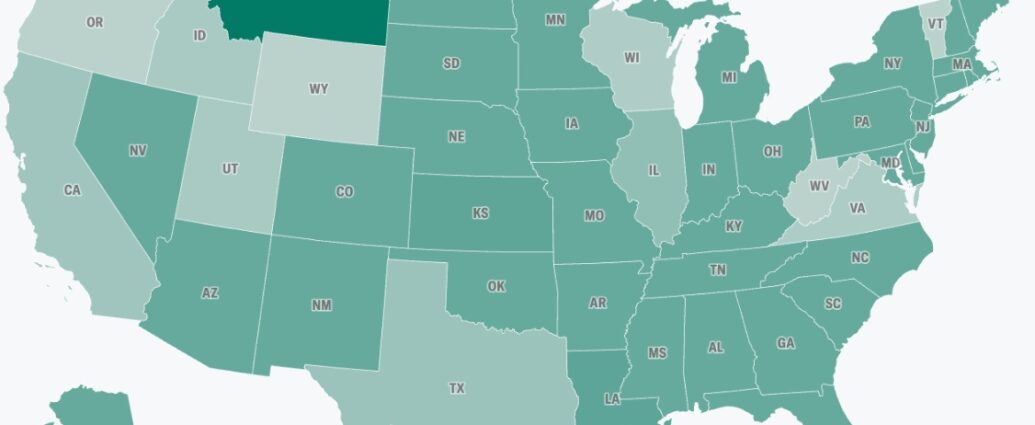
A recently-released study from GOBankingRates looked at the financial runway that retirees would have in each state with Social Security benefits and $1.5 million socked away for retirement, finding West Virginia offered the most years before living costs would deplete their retirement savings.
The Mountain State ranked No. 1 with $1.5 million in retirement savings expected to sustain retirees there for a whopping 54 years while facing about $27,800 in living costs each year after Social Security benefits, according to the study.
The Social Security Administration (SSA) allows Americans to access their Social Security retirement benefits early starting at age 62, though payments “will be reduced a small percentage for each month before your full retirement age” if they do that, according to the SSA. One’s “full retirement age” depends on when a person was born.
SOCIAL SECURITY PAYMENTS TO INCREASE FOR PUBLIC PENSION RECIPIENTS
GOBankingRates said it used data from a slew of sources, including the Bureau of Labor Statistics, the SSA and Missouri Economic Research and Information Center, to determine its rankings of how states stack up in terms of the amount of time that Social Security and $1.5 million in retirement would last retirees residing in them.
Overall, the study indicated that those two sources of funds would provide different amounts of years of “financial security” for retirees in states across the country. States’ cost of living after Social Security ranged from $27,803 to $87,770 per year, it found.
401(K) BALANCES HIT SECOND HIGHEST ON RECORD: FIDELITY
GoBankingRates found the number of years that $1.5 million and Social Security would sustain retirees in each state was:
THIS MIDWESTERN STATE IS CONSIDERED ONE OF THE BEST PLACES TO RETIRE, NEW STUDY SAYS: SEE THE LIST


Annual inflation increased to 2.8% in February, an unexpected decline from 3.0% in January, according to the Consumer Price Index (CPI) released by the Bureau of Labor Statistics (BLS).
Inflation increased 0.2% monthly after rising 0.5% the previous month. Core inflation, which excludes volatile energy and food prices, grew at a higher pace of 3.1% in February from a year prior, decreasing slightly from the previous month’s rate of 3.3%. Housing inflation (shelter) increased by 4.2%, and food prices accelerated by 2.6% over the past 12 months, up slightly from 2.5% in January. Core inflation and housing recorded their lowest readings since 2021.
Both headline and core prices rose by 0.2% month-over-month, aligning with the Federal Reserve’s target. However, the looming uncertainty over President Donald Trump’s proposed import tariffs and their potential impact on future prices remains a cause for concern.
“The uncertainty around tariffs remains a huge source of concern for investors, consumers, and businesses alike,” Jim Baird, Plante Moran Financial Advisors’ chief investment officer, said in a statement. “Understanding that the rules of the game are changing is one thing; understanding what those rules will be and when they’ll be clearly defined are another thing entirely.”
If you are struggling with high inflation, consider taking out a personal loan to pay down debt at a lower interest rate, reducing your monthly payments. Visit Credible to find your personalized interest rate without affecting your credit score.
CALIFORNIA’S HOMEOWNERS INSURANCE INDUSTRY FACES ROUGH ROAD AHEAD AS WILDFIRES CONTINUE
According to First American Senior Economist Sam Williamson, the modest improvement in the CPI report is a positive sign for the Federal Reserve’s ongoing effort to bring down inflation. While it may not be enough to prompt a rate cut in March, it keeps rate cuts on the table.
“Small downside surprise in today’s CPI report is an encouraging sign for the Federal Reserve’s ongoing effort to bring down inflation,” Williamson said. “However, the modest improvement is still not enough to prompt a March rate cut, but it does potentially give the Fed greater flexibility to consider more rate cuts later this year.”
The Federal Reserve, which held interest rates at 4.25% to 4.50% in January, is taking a cautious approach. This is in response to strong economic indicators that have given the central bank more room to wait. Federal Reserve Chair Jerome Powell has stated that the central bank intends to remain cautious about additional rate cuts, as long as the job market remains solid and prices continue to climb.
“Many categories made encouraging disinflation progress last month, including food, energy, and shelter,” Williamson said. “Prices for new vehicles and airline fares actually decreased month over month. However, the impact of new tariffs likely hasn’t materialized yet, leaving uncertainty around inflation as we approach spring, supporting the Fed’s cautious approach in the coming months.”
You can take out a personal loan before future rate hikes to help pay down high-interest debt. Visit Credible to find your personal loan rate without affecting your credit score.
FHFA ANNOUNCES HIGHER MORTGAGE LOAN LIMITS FOR 2025
Americans who rent or are looking to buy a home still feel the pain of surging housing costs. Shelter inflation, a significant component of overall inflation, is a key factor that needs to be addressed to bring inflation back to the Fed’s 2% target. However, lower shelter inflation won’t impact housing affordability or the lack of housing supply.
“The bad news is that rental rates and home prices aren’t going to decline en masse, particularly given the underinvestment in single-family homes in the post-housing bust era,” Baird said. “Higher prices are likely here to stay. The good news is that shelter inflation has fallen by nearly half from 8.2% nearly two years ago to 4.2% over the past year. That’s a considerable, persistent decline to date, with further runway to return to the pre-COVID era norm.”
A recent realtor.com report on the housing supply gap showed that it reached 3.8 million in 2024 and said it would take 7.5 years to close the housing gap and solve a supply shortage that has been the main driver of the housing affordability crisis.
If you want to become a homeowner, you can find your best mortgage rates by shopping around. Visit Credible to compare your options without affecting your credit score.
MORTGAGE RATES HIT A TWO-MONTH LOW THIS WEEK, REMAIN UNDER 7%
Have a finance-related question, but don’t know who to ask? Email The Credible Money Expert at moneyexpert@credible.com and your question might be answered by Credible in our Money Expert column.

There’s good news for potential homebuyers: mortgage rates continued to trend down this week. In January, rates hit 7.04%, the highest level since last May. This week, however, 30-year rates dropped to 6.76% for fixed-rate mortgages, according to Freddie Mac.
“This week, mortgage rates decreased to their lowest level in over two months,” Freddie Mac Chief Economist Sam Khater said. “The drop in mortgage rates, combined with modestly improving inventory, is an encouraging sign for consumers in the market to buy a home.”
Last week, 30-year mortgage rates averaged 6.85%, so this week’s drop in rates is somewhat significant. Rates for 15-year mortgages also dropped this week from 6.04% to 5.94% for fixed-rates.
If you think you’re ready to shop around for a home loan, consider using Credible to help you easily compare interest rates from multiple lenders in minutes.
JANUARY INFLATION GIVES FED MORE REASON TO HOLD ON INTEREST RATE CUTS
Home prices are dropping in many areas, although they’re still not anywhere near pre-pandemic prices. About 23% of sellers cut their listing prices in January, Zillow found.
“Homeowners are finally coming back to the market as the effects of rate lock ease over time, but buyers are still struggling with high monthly costs,” Zillow Chief Economist Skylar Olsen said.
“Sellers are in a good position and are willing to make price cuts to close a deal,” Olsen said. “Home equity is near record highs, and the general economy and financial markets are surprisingly strong. Homes are selling faster than they did before the pandemic.”
Home values are still up 44% compared to before the pandemic, with prices rising 2.6% from last year. Despite high home prices and stubborn buyers, more sellers are putting their homes on the market as the “rate lock” effect is beginning to weaken.
New listings rose nearly 12% year-over-year in January. Sellers appear tired of waiting for rates to break and are listing their homes in response to various life events. Zillow found that 78% of sellers were influenced by events like a new job or changing family sizes.
Many of these sellers are still getting more than they originally listed their home for. Nearly 25% of homes sold in December of last year sold for more than the original listing price. That’s higher than the 19% of homes before the pandemic.
If you’re looking to purchase a home, Credible can help you find the best mortgage rate for your financial situation.
CALIFORNIA’S HOMEOWNERS INSURANCE INDUSTRY FACES ROUGH ROAD AHEAD AS WILDFIRES CONTINUE
Despite rising rental costs, renting is still, by-and-large, cheaper than owning a home, according to a Realtor.com report.
Pittsburgh and Detroit are the only two metros with lower average listing prices, and they are two of the most affordable cities to buy. The average price in Pittsburgh is $229,700 and is $239,950 in Detroit. Rent is increasing in both these cities, so buying a home may be cheaper in the long run.
“For most Americans, owning a home is still a big part of the American Dream, yet the lower monthly costs of renting in all but two of the 50 largest markets are a key consideration,” Realtor.com Chief Economist Danielle Hale said. “This relative cost advantage is one of the reasons we expect an increase in renter households and declines in the homeownership rate in 2025.”
Renting may be cheaper than owning, but rent costs are still high, even though rents are technically falling in general across the country. Rent costs in January 2025 are lower than in 2024 and 2023, but they still exceed rent prices from January 2020 by $257, Realtor.com found.
To see if you qualify for a mortgage based on your current credit score and salary, visit Credible, where you can compare multiple mortgage lenders at once.
FHFA ANNOUNCES HIGHER MORTGAGE LOAN LIMITS FOR 2025
Have a finance-related question, but don’t know who to ask? Email The Credible Money Expert at moneyexpert@credible.com and your question might be answered by Credible in our Money Expert column.


Balances for 401(k) retirement accounts hit the “second-highest average on record” in the final quarter of 2024, according to new data from Fidelity Investments.
The financial services company found in its newly-released fourth-quarter retirement analysis that balances for that type of retirement plan averaged $131,700.
That figure marked a jump of 11% year-over-year, according to Fidelity.
Compared to 2024’s third quarter, however, average balances for 401(k)s posted a 0.5% decline, the analysis showed. The third quarter was when 401(k) plans notched their “highest average on record” for balances, with an average of $132,300.
The rate at which 401(k) retirement plan holders socked away money inched up year-over-year to 14.1% in the fourth quarter, according to Fidelity.
IF YOU ARE 60 YEARS OLD, NEW 401(K) RULES COULD SAVE YOU MONEY
Similar to 401(k)s, average balances for two other popular retirement vehicles — IRAs and 403(b)s — saw small declines of 1% from the third quarter but showed year-over-year increases.
Fidelity pegged the average balance for 403(b) accounts at $117,800 in the fourth quarter, up 11% compared to a year ago.
Meanwhile, IRA accounts held average balances of $127,543. That’s an increase of 8% from the fourth quarter of 2023, according to the report.
Fidelity’s fourth-quarter analysis included over 50 million retirement accounts.
Overall, the financial services company said people building nest eggs “experienced a year of positive growth” in 2024.
Retirement contribution rates went up for almost 40% of those saving for their golden years, Fidelity also reported. On average, the increase was 2.9%.
THIS MIDWESTERN STATE IS CONSIDERED ONE OF THE BEST PLACES TO RETIRE, NEW STUDY SAYS: SEE THE LIST
“As we have for several quarters now, we observed upwards savings trends in Q4. This is encouraging news and is particularly important for many Gen X savers, who are able to make catch-up contributions,” Head of Fidelity Wealth Roger Stiles said in a statement. “This is an important consideration as the April tax deadline approaches where investors may be able to contribute to an IRA for potential tax deductions for 2024.”
The deadline for individual tax return filing is April 15, according to the IRS.
Fidelity also highlighted the retirement saving efforts of Generation X — people born between 1965 and 1980 — in its latest analysis.
When it came to IRAs, Gen Xers boosted their average contributions 16% year-over-year, according to the financial services company.
IRS INCREASES 401(K), OTHER 2025 RETIREMENT PLAN CONTRIBUTION LIMITS
Meanwhile, Gen Xers that have been putting money in 401(k) accounts regularly over 15 years achieved average account balances of $589,400, a jump of 18% from the same period last year, per Fidelity.
Americans think $1.46 million is the amount of money necessary to experience a comfortable retirement, according to a study released by Northwestern Mutual last year.
The Transamerica Center for Retirement Studies found in an August 2024 report that the median age of retirement for middle-class retirees was 62.


The Internal Revenue Service has doled out millions of tax refunds amid the ongoing 2025 tax filing season.
More than 8 million tax refunds have gone out during the 2025 season as of Feb. 7 and, according to the IRS, those refunds have averaged $2,065 each.
When taxpayers receive their refunds, addressing debt, socking away money in an emergency fund and contributing to retirement are some good avenues for using those funds, experts said.
TAX TIP: DON’T FILE UNTIL YOU GET ALL NECESSARY DOCUMENTS
Jonathan Ford Jr., president of JFJ Advisory Services, said paying high-interest debt “would be one of my top recommendations” for people looking to put their tax refund to use.
“Any outstanding credit card debt would be very good to pay down, personal loans, anything financed at especially double-digit percentage rates but anything really above the current market rates could be a really good target for paying down,” he told FOX Business.
Meanwhile, Karla Dennis, the CEO and founder of tax strategy firm KDA, Inc., said tackling high credit card debt, specifically, could be a good use of someone’s tax refund.
U.S. household credit card debt amounted to a collective $1.21 trillion at the end of December, according to the Federal Reserve Bank of New York.
“The cost of their debt is eating away at the money that they could be spending on something else so I would definitely pay down all of my credit card debt” if possible, Dennis said.
“The next thing that I would do with the refund is, I would make sure I had some emergency money, at least $1,000 of emergency cash,” Dennis said.
Emergency funds give people the ability to “purchase things in the event of an emergency,” she said.
“If you maybe this month can’t make your rent, you can pull from your emergency fund,” Dennis continued. “With the price of consumer goods going up, especially food, you can utilize your emergency fund for that, but it really does need to be for an emergency-type situation. I think a lot of consumers look at saved money as ‘oh, let me use this money for want.’ It really needs to be a need.”
Ford said putting money in an emergency fund “would probably be [his] top” recommendation for a tax refund, especially if someone doesn’t already have one or hasn’t fully funded theirs.
A recent U.S. News survey indicated 42% of Americans lack one.
“The emergency fund is pretty much always the number one thing that I have to look at before I come up with any plan, is make sure that we’re building out the emergency savings,” he explained. “The benefit of having the emergency fund is just being able to sleep at night and if you do have a $1,000 or $2,000 expense pop up … then you can pay that expense, and it doesn’t interrupt any other aspect of your financial life.”
He said he tells his clients to try to sock away “three to six months” in an emergency fund because it “provides a little deeper safety net.”
Both Ford and Dennis also said tax refund recipients should consider setting some aside for retirement.
“Once I established my emergency fund, I would then invest some of that money, maybe in an IRA or a Roth IRA, even if I only put in a couple hundred bucks or $500,” Dennis told FOX Business. “I think consumers need to know that investing builds up over time, and you may or may not have the full contribution amount of, say, $7,000 or $6,000, to fully fund your retirement account, but if you could start building a nest egg now, which is putting in a little amount, I think that would be very helpful.”
Ford said he often tells clients to invest in a Roth IRA.
GET FOX BUSINESS ON THE GO BY CLICKING HERE
“There’s additional tax savings there because in the Roth you only pay taxes on the money you contribute,” he explained. “Whereas with the traditional, you pay on the money you withdraw, and so you’re getting taxes on the growth as well, whereas you don’t in the Roth.”
More than 42% of U.S. households had some form of IRA in 2023, according to a report from the Investment Company Institute.
With the arrival of one’s tax refund, there may be a desire to use some of it on something other than improving your finances.
“I do recommend, and I have myself always recommended, taking a small, small percentage of that – maybe less than 25% – and maybe treat yourself to something nice, if there’s something you’ve been having your eye on for a while,” Ford told FOX Business. “I do think buying something to make yourself happy is an important step in making sure you are able to stay on track with your financial goals.”
Dennis said it “depends on what your finances look like” whether you should treat yourself with your tax refund.
“Tax refund money is your money that you’ve allowed the government to keep all year,” she said. “You really need to establish a budget and, within your budget, there should be an allocation of a certain amount of money to go for fun things if you can afford it. But I think a lot of taxpayers are under the misnomer ‘Oh, this is extra money coming in to me.’ No, it’s your money that the government has kept.”
The time it takes to receive a tax refund can vary, depending on how one filed their taxes, the IRS said.
TAXPAYERS LEAVING THOUSANDS OF DOLLARS ON THE TABLE AT TAX TIME: EXPERT
Taxpayers who filed electronically usually get them within 21 days, the agency’s website said. For amended or paper tax returns, refunds usually take four weeks or longer.
The IRS has a webpage where taxpayers can check up on the status of their refund.

Annual inflation increased to 3% in January, rising above expectations and giving the Federal Reserve further reason to slow down interest rate cuts.
Inflation increased 0.5% monthly, slightly exceeding expectations and above the previous month’s increase of 0.4%, according to the Consumer Price Index (CPI) released by the Bureau of Labor Statistics (BLS). Core CPI, which excludes food and energy, rose by 0.4% in January, coming in at the same level as December’s increase. This brought the year-over-year rate to 3.3%.
Shelter costs rose 0.4% and were the most significant contributor to the monthly increase in January, accounting for nearly 30% of the monthly increase in all items. Gas was up 1.8% over the month. Food prices continued to rise, increasing 0.4% last month. The food at home index rose 0.5%, driven primarily by the soaring costs of eggs, which increased 15.2% in January.
“The unexpected acceleration in inflation marks the third consecutive monthly uptick in the consumer price index and extends a reflationary trend since two consecutive flat months for the index in May and June 2024,” Jim Baird, Plante Moran Financial Advisors’ chief investment officer, said in a statement. “Against a backdrop of solid demand, inflation has accelerated. It’s a reality that may spook consumers who remember the Covid-19 era price spike all too well.
“It will also make President Trump’s proposed import tariffs a tougher sell than was the case during his first term, when both inflation and interest rates were exceptionally low,” Baird continued.
If you are struggling with high inflation, you could consider taking out a personal loan to pay down debt at a lower interest rate, reducing your monthly payments. Visit Credible to find your personalized interest rate without affecting your credit score.
SENIORS TO GET MODERATE COST OF LIVING BUMP IN SOCIAL SECURITY PAYMENTS NEXT YEAR
The increase in inflation, combined with a stable jobs market and economic growth, has given the Federal Reserve more room to work.
The Federal Reserve held interest rates at 4.5% to 4.75% in January, prompted by strong economic indicators that gave the central bank more room to wait. Federal Reserve Chair Jerome Powell said that the central bank intend to remain cautious about additional rate cuts so long as the job market remains solid and prices continue to climb.
“The murkiness of evolving trade policy creates a significant unknown for Fed policymakers who will have to grapple with the potential conflicting policy challenges of slower real growth and higher inflation,” Baird said. “While even bearish forecasts are a far cry from the stagflationary environment of the 1970s, the playbook would seemingly still apply.
“Arresting inflation is likely to remain the priority for the Fed, even at the expense of near-term growth,” Baird said. “The fear of inflation expectations becoming unanchored is just too much for policymakers to ignore.”
You can take out a personal loan before future rate hikes to help pay down high-interest debt. Visit Credible to find your personal loan rate without affecting your credit score.
FHFA ANNOUNCES HIGHER MORTGAGE LOAN LIMITS FOR 2025
All signs point to the Fed holding interest rates higher for longer, which means consumers will continue to be impacted by stubbornly elevated interest rates impacting a range of credit products, including credit cards, mortgages, unsecured personal loans and auto loans, according to Charlie Wise, TransUnion’s senior vice president of research and consulting.
“Consumers should avoid building and carrying large credit card balances, particularly in light of very high interest rates on this type of debt, and whenever possible pay more than the monthly minimums due on their cards,” Wise said in a statement.
Additionally, Wise advised that consumers keep a close watch on their credit profiles and keep them in the best shape possible so that when rates finally drop to a more manageable level, they are ready to refinance their existing debts into more affordable loans.
Using a personal loan to pay off high-interest debt at a lower rate could help you reduce your expenses and put money back in your wallet. You can visit Credible to find your personalized interest rate today.
BIDEN CANCELS MORE STUDENT LOANS WITH ONE WEEK LEFT TO HIS TERM
Have a finance-related question, but don’t know who to ask? Email The Credible Money Expert at moneyexpert@credible.com and your question might be answered by Credible in our Money Expert column.