

The perfect storm: Why this Rosh Hashanah may start Israel’s most challenging year yet – opinion
It would be more fun to write a feel-good column on the promise of a much better year. But reality points the other way. A convergence of trends and events – some global, some local – threatens to turn 5787 into a “perfect storm”: several forces coming together, each likely to confront us with challenges even greater than those we have already endured.
At home: political instability, intensifying internal conflict, accelerating net emigration, and continuing security threats. Abroad: artificial intelligence; a climate spinning out of control; instability in the international system and intensifying great-power competition; and, as a result of all these, the continued rise of antisemitism, which, true to form, blames Jews for every ill.
I hope I turn out to be wrong. But I may not.
The problems facing Israel in the new year
Let’s start in Israel. Elections will be held shortly after the holidays. Months of polling, including surveys conducted in recent days, point to a political deadlock. Like two wrestlers in the ring, the political “blocs” have each other by the throat, with neither able to prevail. If that holds, we can expect a replay of the election years of 2020–2023 and prolonged instability. This time, however, the social reality is more extreme – most Israelis identify the social rift as the greatest risk facing Israel –despite the immense challenges of the security environment. As conditions deteriorate, more Israelis are leaving the country, including many who are part of the backbone of the economy.
The security and foreign-policy fronts are also unstable – and in some respects, worsening. Israel has failed to achieve a decisive victory on any front. The IDF is stretched to the limit in Lebanon, Gaza, and the West Bank, while another “round” with Iran looms as a very real possibility. The security burden on military personnel and the Israeli economy is enormous – almost unprecedented.

The international outlook is no brighter. On the eve of the new year, Britain – once a close Israeli ally – imposed unprecedented sanctions on Israel. Eleven other European countries have followed suit, including major EU members. Israel’s standing in the United States is deteriorating as well. On both sides of the political divide, rhetoric toward Israel and Jews is becoming more extreme. Israel has already become a major issue in the midterm elections – not to its advantage – and as the 2028 presidential race heats up, the situation is likely to worsen. Public support for Israel is at a historic low. Then there is antisemitism. In Europe, this is old news – and the situation is bad. But over the past year, antisemitism in the United States, together with denial of Israel’s right to exist, has also surged and gained legitimacy, with such views now openly voiced by influencers and politicians. Antisemitism and rejection of Israel have become intertwined, threatening Jewish life in the Diaspora and becoming a national-security challenge for Israel itself.
Added to these are global challenges that will significantly affect Israel. The first is artificial intelligence. Many experts now expect AI to advance faster than previously thought – and to reshape our lives sooner than expected. There will be benefits, but the labor market and global economy also face the real prospect of a severe crisis – one that could last until economies and governments adapt to this new environment. Israel, whose economy is driven by its technology sector, is especially exposed.
Over all of this hangs the climate crisis. On its own, it might not drastically alter the international system. Combined with other pressures, however, it could become a major factor. Together, these trends intensify instability in the international system and sharpen great-power competition – both with consequences for Israel.
Some of these trends are beyond our control, and Israel has little influence over them. That does not exempt Israel from confronting them and preparing for their effects. Others – those directly involving Israel – are much more within our power to shape. Some result from government policy; others from external forces. But in both cases, we can do more to address them. The challenges awaiting us in 5787 could coalesce into a perfect storm. But this outcome is not inevitable; the choices we make can soften the blow. Despite it all – happy new year!
Dr. Shuki Friedman is director-general of JPPI – the Jewish People Policy Institute – and a senior lecturer in law at the Peres Academic Center.
Munich: The massacre the world must never forget – opinion
A day the world watched
September 5, 1972, should have been a day celebrating the Olympic ideal. Instead, it became one of the darkest days in the history of international sports and one of the most infamous terrorist attacks against Israelis.
Members of the Palestinian terrorist organization Black September infiltrated the Olympic Village, attacked the Israeli delegation, and took eleven Israelis hostage. All eleven were ultimately murdered. They were athletes, coaches, and officials who had traveled to Germany to compete, never imagining that they would become targets of terrorism.
The attack was carefully planned to exploit the global spotlight of the Olympics. The terrorists understood that an attack on Israel’s delegation would command the attention of millions around the world. They were right. The world watched the hostage crisis unfold, watched the failed rescue attempt at Fürstenfeldbruck airfield, and watched as 11 Israelis lost their lives.
But behind the headlines were 11 human beings.
They were not just names
Moshe Weinberg, Yossef Romano, Yossef Gutfreund, Ze’ev Friedman, David Berger, Eliezer Halfin, Amitzur Shapira, Kehat Shor, Mark Slavin, Andrei Spitzer, and Yaakov Springer were not political abstractions. They were husbands, fathers, sons, coaches, and athletes with families and futures ahead of them.

They went to Munich representing Israel and returned home in coffins. Their families did not get to watch them compete or welcome them home. Instead, they had to bury the people they loved.
That is what terrorism does. It turns human beings into targets and families into casualties.
The man I met in Beirut
My connection to Munich became personal years later in Beirut.
In December 1978, I met a striking, almost playboy-looking man at the Hilton Hotel. I had been told to go to the bar and ask for “the Red Prince.” I had no idea who I was about to meet.
During our conversation, he told me that the United States would eventually secure “land for peace.” When I asked whose land, he answered, “Israel’s.” He also told me he had received numerous warnings from the CIA about attempts by Mossad to assassinate him.
At the time, I did not understand the significance of the man sitting across from me. It was only later that I realized who he was: Ali Hassan Salameh, the man known as the Red Prince.
Salameh was a senior Palestinian operative, intelligence chief to Yasser Arafat, and a central figure in the Black September organization. Israeli intelligence accused him of helping plan the Munich massacre. The meeting had been arranged by my friend Saad Haddad, the Lebanese military officer who founded and commanded the South Lebanon Army during the Lebanese Civil War.
The long shadow of Munich
Salameh remained a powerful figure within the Palestinian movement and maintained close ties to Arafat and the Palestine Liberation Organization. Israel continued to regard him as a major terrorist target.
On January 22, 1979, just weeks after our meeting, Salameh was killed in Beirut when a car bomb exploded as his convoy passed through the city. The assassination was widely attributed to Mossad and was part of Israel’s campaign against those it held responsible for the Munich massacre.
His death could not bring the eleven Israelis home. But Munich had already changed the world. Terrorists had discovered that they could turn innocent lives into political leverage and use television and the international media as a global megaphone.
The Olympics were supposed to bring nations together in peace. Instead, they became the stage for an act of calculated murder.
The lesson we must remember
More than five decades later, the greatest danger may be forgetting what Munich taught us.
The language of terrorism changes. Organizations change. Weapons change. But the ideology that dehumanizes innocent people remains. We can debate governments, borders, negotiations, and political solutions. We can disagree passionately about policy. But there can never be a legitimate political justification for murdering innocent civilians.
Munich was not simply an attack against Israel. It was an attack against the principle that innocent people should be protected from political violence.
And the world has seen that lesson repeated many times since.
Remember the 11
I remember the 11 Israelis who went to Munich to compete and never came home. I remember their families, whose lives were permanently changed by their murders. And I remember sitting across from Ali Hassan Salameh at the Hilton Hotel in Beirut.
That encounter taught me something I have never forgotten: history is ultimately about choices. The men who planned Munich made choices. The men who carried out the massacre made choices. And the nations that watched had to decide how they would respond.
More than 50 years later, we are still living with the consequences.
Munich remain a warning about what happens when hatred becomes an ideology, terrorism becomes a political weapon, and the murder of innocent people is rationalized in the name of a cause.
We must remember the eleven because their lives mattered, their families mattered, and their memory still matters.
When terrorism is tolerated, it never remains confined to its first victims. Eventually, it threatens everyone.
Dr. Mike Evans has written 120 books and is a #1 New York Times bestselling author. He is the founder of the Friends of Zion Museum in Jerusalem, the Ten Boom Museum in Holland, and Churches United with Israel, one of the largest Christian Zionist networks in America, with more than 30 million followers.
Inside the IDF Military Intelligence’s crusade to block Iran from getting nukes – exclusive
From the mid-1990s until August 2024, a running line of top Mossad and IDF officials made it their mission to block Iran from getting a nuclear weapon.
When Shlomi Binder was sworn in as the Military Intelligence chief in August 2024, he took up the baton and he and his team of top intelligence officials have pursued the crusade with tremendous tenacity.
Since August 2024, the IDF intelligence team under Binder, along with the Mossad, the air force, and others has managed the bombing of Natanz, Isfahan, and dozens of other sites, and provided the critical intelligence used by the US to bomb Fordow in June 2025.
This period also led to the direct assassination of Ayatollah Ali Khamenei and the dissection of Iran’s ballistic missile and wider military apparatus.

To be sure, the air force dropped the bombs, and the Mossad delivered on key special missions. But if Israel struck Iran around a staggering 4,000 times in June 2025 and around an unthinkable 18,000 times in 2026, the intelligence for well over 90% of those strikes came from Binder and his juggernaut IDF intelligence teams.
Where has IDF intelligence’s crusade left Iran’s nuclear weapons program, five months after the 2026 war and 15 months after the 2025 war?
The Jerusalem Post has learned that the positives are that Iran currently has no centrifuges enriching uranium, all or most of its more enriched uranium is not yet easily accessible, and that most of the regime’s nuclear facilities were destroyed or forced out of operation by the 2025-2026 strikes.
There has been no period of time in decades where enrichment was brought down to zero.
For decades, its facilities expanded and never really contracted, and while operations attributed to the Mossad managed to take one or more facilities offline for temporary periods, at no point was the whole active program broken or shuttered.
Even during “pause” periods from 2003 to 2007 and from 2015 to 2018, large aspects of Iran’s nuclear program were frozen, not broken, and new aspects were almost always being built, even if under the radar.
However, the Post has learned that despite these achievements, future concerns are greater than hoped for right after the 2025-2026 operations.
While the vast majority of Iran’s 20,000 centrifuge fleet was destroyed or rendered unusable, a not insignificant number of centrifuges survived deep underground.
Moreover, multiple sources have expressed concern to the Post that even if only a few hundred advanced IR-6 centrifuges (for enriching uranium) can be salvaged and hooked up again at some medium-term point, that could be enough, at some later undefined point, to secretly weaponize enough uranium for a bomb.
Also, multiple sources are worried that the Iranians could pull off some kind of clandestine digging mission to extract their more enriched uranium from under rubble and underground in a way that sidesteps US and other surveillance.
Regular satellite reports by the Institute for Science and International Security and others show that Iran has added structures on an ongoing basis to block certain areas from continuous satellite coverage.
These same open-source reports have noted the Iranians digging in a variety of areas, sometimes not all that close to the main parts of a nuclear facility that was struck.
Digging underground from a distance could take months or years to smuggle out the 60% enriched uranium, or in some areas 20% enriched uranium. But only maybe around one tenth would need to be clandestinely transferred to have a basis for a nuclear weapon.
Binder’s view is not that Iran is likely to outwit American and Israeli intelligence, but neither does he want to underestimate or discount Iranians’ often surprising and powerful resourcefulness.
That means that the key to the whole picture to some extent is again shifting from uranium enrichment to weapons group issues.
One of the highest priorities – but less reported aspects – of the Israeli attacks on Iran’s nuclear program sites was hitting not only the enrichment facilities, but also the facilities for converting enriched uranium into uranium metal and into hemispheres for use on a nuclear warhead.
Without these and other items, even large quantities of weaponized uranium will do Iran no good, because it will not be able to deliver the uranium 1,000 or more kilometers away in Israeli territory.
The Post understands that thwarting Tehran from rebuilding such weapons group facilities is one of Binder’s top focuses, and so far the regime has not made any serious progress on the issue.
All of this leaves a highly complex picture where the nuclear program is far more damaged than some critics have said, but where there are more gaps in that damage than top Israeli officials, political or defense, admitted right after each round of fighting.
Iran’s nuclear program was set back by some years, and its ability to reconstitute it was also set back. Yet in some ways, Iranian ingenuity has kept the threat alive and able to return, even if less broadly and with great difficulty.

Pickaxe Mountain
Major news was made in a July 13 interview on the Hugh Hewitt Show, when US President Donald Trump said, “We’re going to take out Pickaxe Mountain. Tell the Iranians to be ready,” while in another breath said, “We see no activity there.”
Pickaxe Mountain, once operational, will be the deepest underground nuclear facility the Iranians have ever built, significantly deeper than even the Fordow underground nuclear facility. It is hotly debated whether even the extremely unique and expensive 30,000-pound Massive Ordnance Penetrator mega bunker buster bomb could penetrate it.
The second part of Trump’s statement about Iran’s nuclear facility at Pickaxe Mountain – that there is no activity there; or as the hawkish Institute for Science and International Security has put it, that the facility is still not operational – is the major reason that neither the US president nor Israel has ordered a strike to date, despite his first statement promising to attack.
Across the board, top US and Israeli defense sources told the Post in classified briefings earlier in the summer that there was no current threat from the site, and that the best reason to target it would, at most, be to eliminate a potential future threat.
All of these views contradicted the stunning July 14 reports by The Wall Street Journal and CNN that Israeli intelligence had told the US that Iran had moved thousands of centrifuges and also enriched uranium to Pickaxe Mountain.
In an article on the issue on July 21, none of the several sources that had told the Post that there was no current threat at Pickaxe Mountain clarified the matter, despite several attempts by the Post to get to the bottom of the dispute.
Since then, the Post has more recently clarified the issue.
Both the Mossad and IDF intelligence view Pickaxe Mountain as a strategic threat that must be removed at some point, because it is so difficult to attack.
In addition, both agencies highly prefer to do so before it becomes operational and before the Iranians manage to move sufficient assets there to operate centrifuges and enrich uranium.
The Post understands that what occurred in July was that Prime Minister Benjamin Netanyahu hoped to get Trump to strike Iran, with Pickaxe Mountain being one of the top-of-the-line potential targets.
Senior Israeli defense officials leaned into the issue also because they thought it might be a unique chance to finally rid themselves of the hovering potential threat.
It remains somewhat unclear whether Israeli political officials exaggerated how operational Pickaxe Mountain was, whether one or more Israeli defense officials assisted with this, or whether American officials afterward exaggerated what they had been told.
But as of early September, the Post understands that Pickaxe Mountain remains high on Binder’s list of concerns, but that the facility is still not operational.
One recent change is that some Israeli officials have voiced to the Post greater confidence than in the past about the ability of allied air forces to disable the facility, even if destroying it might not be possible.
All of this highlights that Binder’s view is that the Iranian threat has not passed, that any agreement that gives Tehran the right to enrich to 3.67%, like the 2015 deal, would keep the threat alive, and that Israel must be ready for the real possibility of needing to attack the Islamic Republic at some point in the not-so-distant future.
What about recent talk of Russia providing Iran with supersonic missiles which will be harder for Israel to shoot down?
No one is getting too detailed on this issue yet, and some of the challenges are just starting to evolve, but it does not yet seem to be at the top of the IDF’s list of concerns about Iran.
Regime change
While Netanyahu, Defense Minister Israel Katz, and Mossad Director Roman Gofman still mention regime change publicly and privately, that term has mostly disappeared from the IDF lexicon.
IDF officials are no less enthusiastic about the idea in theory. Regime change has the best chance of promising a long-term end to Iran threatening the Jewish state.
But IDF high command officials, including Binder, were highly skeptical that the regime would easily and quickly fall when they went to war with the Islamic Republic in early 2026, and they believe the chances of this occurring are even more dubious now.
Neither Binder nor other top IDF officials favored the plan to try to use the Kurds to foment an internal rebellion.
While Netanyahu and top officials in the Mossad believed that, along with other moves which Trump vetoed, supporting a Kurdish internal insurgency could potentially radically alter the playing field, Binder and others viewed this move as possibly propping up the regime.
The majority of Iran – regime supporters and opposition – is Shi’ite.
Just as the Kurds often see the Iranian Shi’ites as outsider oppressors, many of the Shi’ites, even those who hate the regime, hate or distrust the Iranian Kurds even more.
In other words, Binder and others in the IDF high command worried that bringing the Kurds in as an officially Israel-US sponsored kingmaker could lead to the largest group of opposition Shi’ites changing sides back into the hands of the regime.
They also noted other major issues, such as that dropping lots of bombs makes protesting harder.
While some said that careful coordination could lead to enabling protests to grow by only bombing regime oppression forces, this never really occurred in a significant way, and most protesters were just too scared and stayed home.
Of those who did not stay home, Binder and the IDF high command would note that many of the bravest protesters were killed during the largest fight between the protesters and the regime over January 8-9 or were killed or tortured after the main war ended on April 7.
None of this means that Binder and the IDF have given up on regime change.
But they believe that it will take longer than some in the Mossad believe, and compared to Netanyahu’s promises, and that in the immediate short term it may even be difficult to make progress, with progress waiting for the medium term when protesters regain their daring.
Despite these truths, Binder and the IDF high command were highly optimistic about the jump in pressure on Iran in late August-early September, with the pace of economic deterioration jumping significantly.
They hope this elevated economic pressure will give the US the upper hand in the standoff over the Strait of Hormuz and the nuclear issue.
All of the talk about the US has also crystallized a realization from Israeli intelligence: instead of leaving the Middle East, Trump has put the American military on the front lines of managing most of Israel’s conflicts with its neighbors.
With one brief 24-hour exception, Israel and Iran have not fought since April 7, whereas Washington and Tehran have been going at it at low-grade military levels sometimes for weeks on end.
The US is managing aspects of Israel’s conflicts with Hezbollah and Hamas, and trying to encourage deconfliction and cooperation between Jerusalem and Damascus.
Lebanon
The UN has said that 360,000 Lebanese remain uprooted from their homes due to the war and the IDF security zone in southern Lebanon.

At the height of the invasion, over 1.1 million Lebanese had been uprooted.
The Post has learned that IDF intelligence estimates that around 500,000 Lebanese have still not returned to their homes, some because they cannot, and some out of fear of IDF forces nearby, or because of low-grade fighting between Hezbollah and the IDF.
This factor is the single largest pressure on Hezbollah to reduce its threat to Israel.
Despite Iranian attempts to protect Hezbollah in Lebanon, the Post learned, a little before it became public last week, that the IDF succeeded in a slow and grueling siege to defeat a sizable Hezbollah force that had been trapped in a standoff with the IDF at Ali Taher Ridge for months.
IDF intelligence correctly analyzed that while an overt and dramatic attack on Ali Taher Ridge might have given Iran an opening to attack Israel in support of Hezbollah, a quiet and gradual wearing down of those Hezbollah forces fell under the Iranians’ radar, or provided them with a face-saving outcome where they could look the other way.
Hezbollah’s FPV fiber cable drone threat is far from gone. But whenever Hezbollah has launched drones, the IDF has responded harshly, either striking a dozen Hezbollah targets or forcing another Shi’ite village to evacuate the area near where the drone launched from.
Binder and the IDF high command are skeptical that the Lebanese army will succeed in evacuating Hezbollah from southern Lebanon areas where it is still operating.
This could leave a standoff regarding how long the IDF remains in parts of southern Lebanon and regarding what conditions will be required of Lebanon-Hezbollah for ongoing partial withdrawals.
There is a similar standoff with Hamas in Gaza. However, even if no one expects Hamas to disappear, Binder and the IDF high command believe they have stronger cards to play versus Hamas given its weaker position.
Saudi-Pakistan-Turkey alliance
While much of the world has viewed the Saudi Arabia-Pakistan-Turkey alliance as another move by Riyadh to try to deter Iran from striking it in the future, as it has in 2026, Binder and the IDF high command have specific Israeli concerns.
For example, what if Iran joins the alliance? Although it was built to deter the Islamic Republic, in the messy world of Middle East politics, both sides could decide that integrating Tehran could have advantages.
These advantages for the Saudis and Iran would likely be clear negatives for Israel and could even complicate aspects of relations with the US, if Washington gives critical nuclear and F-35 weapons technologies to Riyadh.
More generally, such an alliance could reduce Israeli influence in the region.
Though highly unlikely, there is even a slim chance that Egypt could join the alliance, which could undermine decades of close Jerusalem-Cairo military cooperation, as set down in the Camp David Accords.
Artificial intelligence revolution
Binder has mostly been known to the public for transforming IDF intelligence from its pre-October 7 state of “bubble thought” and complete reliance on technology to rebuilding human intelligence collection and elevating branches that question conventional wisdom.
However, he is also engineering a new AI revolution in IDF intelligence.
The key is not only using AI to perform data mining against targets, but also to shape human-AI agent relationships so that most or all IDF intelligence officials’ strategic and tactical visions broaden to see and predict big-picture trends before they happen.
In many ways, Binder and his IDF intelligence team have brought the agency back from the brink after October 7 to new highs, now and moving into the future.
The Diaspora mirror: How global Jewish warmth is healing Israel’s war-weary youth – opinion
Every year before Rosh Hashanah, the Jewish world turns inward for heshbon nefesh, an accounting of the soul. We examine our roots, our heritage, and the complicated cords that bind us as a people.
For decades, the relationship between Israel and the Diaspora has too often settled into a familiar pattern: Israel as the military and cultural center, the Diaspora as its financial supporter.
Israelis went abroad as emissaries and educators; Jewish communities abroad sent money and support home.
There is another way to understand this relationship, and one of the best places to discover it is a Jewish summer camp.
For Jewish communities abroad, camp is often the defining Jewish experience of the year: an immersive world where Jewish identity, Zionism, friendship, and leadership are lived rather than simply taught.

As Israel struggles with the trauma left by the October 7 massacre and the war that followed, there is something profound to learn from that culture of warmth, belonging, and peer-to-peer leadership.
This summer, at Hadassah Youth Neurim Village in Beit Yanai, that lesson came alive at Hallelujah Summer Camp, a flagship initiative of Netaim, the organization carrying forward the vision of the late Ofir Libstein alongside Shiri Madar, Netaim’s CEO.
The program works with what Libstein and Madar called the “periphery of the Diaspora”: more than 150 Jewish communities around the world with fewer than 2,000 members.
Ami Magen, manager of the youth village, puts the purpose simply: “For me, the key is helping our youth rewrite their story, changing their narrative from victim to hero, from survivor to leader.
“When a teenager realizes that even from the lowest point they have experienced, they still have something of value to give to someone else, that is the ultimate empowerment.”
At Hallelujah, Israeli teenagers – many from the war-torn Gaza border communities – encountered young Jewish leaders from Brazil, Argentina, Australia, Uruguay, Romania, and Bulgaria.
They arrived not as donors or rescuers, but as counselors, friends, and role models.
Camp director Tomer Revivo and project initiator Doron Moshe deliberately built Hallelujah around a different leadership culture.
Moshe had spent years as a Habonim Dror emissary in South Africa, where he encountered a looser, warmer approach to youth leadership.
“I would prefer a thousand times that the campers are 10 minutes late, or that a scheduled activity falls apart entirely,” Revivo said, “as long as we do things with warmth, coloring, and genuine human connection. We wanted to build an organizational culture of smiling and unconditional embrace.”
That philosophy was tested almost immediately.
One camper from the Gaza border communities, grieving relatives murdered on October 7, began isolating himself and lashing out. His Argentinian counselors asked Revivo to let them keep him rather than send him home.
They took personal responsibility for him, walking with him and listening. By the end of the summer, he returned home with a notebook filled with handwritten messages of love from counselors who had refused to give up on him.
Lior Avril, an Israeli coordinator from Ashdod, watched foreign counselors give up their own breaks to sit with campers at lunch, sometimes communicating in limited Hebrew.
During an ecology lesson, counselors from Brazil, Argentina, and Australia painted themselves blue and turned the subject into a Smurfs-themed sing-along.
Then came a harder moment. An Israeli camper directed a racial slur at a Black Brazilian counselor. Rather than demand punishment, the counselor sat with the boy for two and a half hours, discussing racism and the weight of words.
By that night’s talent show, the two were dancing together on stage.
Opening up the Israel-Diaspora relationship
Hallelujah’s phone-free week created another unexpected transformation.
“On the first day, you see children who are completely lost, sitting in corners, unsettled because they can’t take photos or check social media,” Avril said.
“But by the second and third day, something beautiful happens. They open up. They start talking to the person next to them at the table. They start singing, laughing, and spontaneously dancing.”
For Moshe, this represents something larger than a successful camp. It reverses the traditional direction of the Israel-Diaspora relationship.
“Historically, major communities like Geneva or Glasgow were used to a very specific, patron-recipient relationship,” he explained.
“They expected us to bring traumatized delegations from the Gaza border communities so they could fundraise for them, put them in hotels, and give them a respite park as their contribution to Israel’s rehabilitation. We flipped that script entirely.”
Instead, Netaim told those communities: “Our youth are coming to volunteer, they are coming to work, and they are coming to contribute to you.”
The exchange continues after camp. Israeli graduates can go on to volunteer in Jewish communities such as Geneva, Barcelona, and Glasgow, bringing their own energy and connection to Israel back to communities that have given so much to Israel.
The mirror works in both directions.
Boris, 19, from Curitiba, Brazil, said Israel taught him something about his own Jewish identity. “In the Diaspora, we have to actively be Jewish,” he said. “We have to actively practice and celebrate so we don’t forget, so we keep connected.”
Israeli teenagers, meanwhile, heard what antisemitism looks like when it is not a chapter in a history book.
Lali, from Perth, described hiding her Star of David necklace and locking her community center’s doors during hostile protests. Pedro, from Rio de Janeiro, recalled a Jewish friend who opened his lunchbox at school to find a swastika drawn in ketchup.
Then there is Dora, 18, from Bulgaria. She first came to Hallelujah as a shy 14-year-old camper. This summer she returned as a counselor. Her mother told her she had come home transformed.
Her school in Sofia later nominated her to represent Bulgarian youth at the World Zionist Congress, and she now runs social media campaigns against online antisemitism.
“The Jewish world cannot survive without Israel at its center, but Israel also needs the strength of the Diaspora,” Dora said. “Hallelujah showed me that we are one family, and we must protect Western values together.”
As we dip apples in honey this Rosh Hashanah, Hallelujah offers a powerful lesson about the Jewish people: our strength is held across borders, generations, and cultures.
“The rope of the Jewish people is held from both ends,” Moshe said. “They help us when we need it, and we must help and strengthen them.”
Perhaps that is the mirror Israel needs now. To heal its young people, it may need to look outward and rediscover what Jewish communities abroad have been practicing all along: the power of belonging, warmth, chosen identity, and one another.
Shana Tova.
The writer is a travel photojournalist, explorer, and Israeli storyteller who has led NGOs on the frontlines and brought Israel’s most pressing stories to international audiences.
Israeli polls split on 2026 Knesset election possibilities, as Yashar, Likud vie for primacy – poll
Less than 24 hours after the closing of the Knesset 2026 party lists, five polls published Wednesday night presented a highly fragmented political picture.
In four of them, Gadi Eisenkot’s Yashar party is the largest party, while in an i24NEWS poll, the Likud surged into first place by a significant margin.
Ofer Winter’s party crosses the electoral threshold in all five polls, while Yoaz Hendel and Yaron Zelekha’s party crosses only in the KAN News poll.
The bloc map also remains unclear: Two polls show a tie, while in the others the Zionist opposition bloc maintains an advantage, except for the i24NEWS poll, in which Prime Minister Benjamin Netanyahu’s bloc strengthens significantly.
i24NEWS: Likud leads with 27 seats
The most notable poll of the evening was conducted by i24NEWS and Direct Polls. Unlike all the other surveys, the Likud led by Netanyahu was in first place with 27 seats, while Eisenkot’s Yashar received only 22. Naftali Bennett’s B’Yachad fell to 10 seats, the Democrats received 9, United Torah Judaism and Otzma Yehudit received 8 each, and the Joint List, Yisrael Beytenu, and Shas received 7 seats each. Religious Zionism and Zehut received 6 seats, Ra’am received 5, and Ofer Winter’s People of Israel received 4. The Reservists and Economic party of Hendel and Zelekha was far below the threshold with 1.4%, while Blue and White received 1.1%.

Based on the seat distribution, Netanyahu’s bloc together with Winter would receive 60 seats, the Zionist opposition bloc would receive 48, and the Arab parties would receive 12.
Channel 13: Netanyahu, Zionist opposition tie at 53 seats
The Channel 13 News poll presented a completely different picture: Eisenkot received 22 seats, while Netanyahu’s Likud fell to 19. Bennett received 13 seats, Shas 7, and Winter 4. Hendel and Zelekha received 3.2% and remained below the electoral threshold. Benny Gantz’s Blue and White and the Haredi Public party also failed to enter the Knesset.
The bloc map showed a complete tie: 53 seats for Netanyahu’s bloc and 53 for the Zionist opposition bloc, with the Arab parties holding the remaining 14 seats.
KAN News: No clear winner, Hendel and Zelekha cross threshold
The first KAN News poll following the closing of the party lists also showed no clear winner between the blocs. Yashar strengthened by one seat and reached 24, while the Likud rose to 21. Bennett’s B’Yachad received 12, the Democrats 9, United Torah Judaism 8, and Otzma Yehudit, Yisrael Beytenu, and Shas received 7 each.
Religious Zionism and Zehut received 5 seats, Winter’s People of Israel received 4, and here came the significant difference compared with most of the other polls: Hendel and Zelekha’s Reservists and Economic list crossed the threshold and received 4 seats.
The Joint List received 7 seats, and Ra’am received 5. Blue and White, the Haredi Public party, and Noam remained outside the Knesset. The bloc map: 52 seats for Eisenkot’s bloc, 52 for Netanyahu’s bloc, 12 for the Arab parties, and 4 for Hendel and Zelekha.
Channel 12: Eisenkot’s Yashar leads with 25 seats
In the Channel 12 poll, Yashar maintained first place with 25 seats, while the Likud received 21. Bennett received 13, the Democrats 10, and Yisrael Beytenu 9.
United Torah Judaism received 8 seats, the Joint List and Shas received 7 each, Religious Zionism and Zehut received 5 each, and Winter’s People of Israel strengthened to 5 seats. Ra’am closed the list with 4 seats.
Hendel and Zelekha remained below the threshold with 2.9%, Blue and White received 1.4%, and the Haredi Public party received 1%.
In the bloc map, the current coalition together with Winter received 52 seats, the Zionist opposition bloc received 57, and the Arab parties received 11.
Walla: Netanyahu bloc, with Winter, at 51 seats
The Walla poll by Lazar Research also placed Eisenkot in first place with 25 seats. The Likud received 21, Bennett’s B’Yachad 14, and Yisrael Beytenu and the Democrats 9 each. Otzma Yehudit, United Torah Judaism, the Joint List, and Shas received 7 seats each. Religious Zionism and Zehut received 5 each, Ra’am received 5, and Winter’s People of Israel received 4.
Hendel and Zelekha received 2.8% and did not cross the threshold, while Blue and White fell to 0.9%. As a result, Netanyahu’s bloc together with Winter stood at 51 seats, the Zionist opposition bloc at 57, and the Arab parties at 12. The poll was conducted the morning after the closing of the lists among 506 respondents, out of 3,603 people contacted, with a maximum sampling error of 4.4%.
Yashar leads poll average, ahead of Likud by nearly two seats
When averaging the five polls published Wednesday night, Eisenkot’s Yashar leads with an average of 23.6 seats, ahead of Netanyahu’s Likud with 21.8. In third place is Bennett’s B’Yachad with 12.4 seats, followed by the Democrats with 9.4 and Yisrael Beytenu with 8. United Torah Judaism receives an average of 7.8 seats, Otzma Yehudit 7.4, the Joint List 7.2, and Shas 7. At the bottom of the list are Religious Zionism and Zehut with 5.4 each, Ra’am with 5, and Winter’s People of Israel with 4.2 seats.
A clear picture also emerges among parties below the threshold: Hendel and Zelekha’s Reservists and the Economic party stand at an average of about 2.7% across the five polls, although it crosses the threshold in the KAN News poll and receives 4 seats. Gantz’s Blue and White remains far behind with an average of about 1.1%. The Haredi Public party receives an average of about 0.8%, and Noam for Israel is around 0.2%.
The bloc averages also show no clear outcome: Netanyahu’s bloc, including Winter, stands at 53.6 seats, compared with 53.4 for the Zionist opposition bloc. The Arab parties receive an average of 12.2 seats, leaving a gap of only two-tenths of a seat between the two main blocs.
Tiberias man charged with sexually abusing two brothers when they were nine
The State Attorney’s Office indicted a Tiberias resident, about 50, on Thursday over numerous sexual offenses he allegedly committed against two brothers when they were around nine years old, approximately two decades ago.
The indictment, filed in the Haifa District Court, also alleges that the defendant sexually abused the brothers’ sister several years later outside Israel.
According to prosecutors, the defendant developed a close relationship with the children’s mother and gained her trust and that of her sons while falsely presenting himself as a therapeutic professional.
Exploiting that relationship and the boys’ young age, he allegedly subjected them to sexual abuse repeatedly over an extended period, the indictment said.

Suspect prevented one brother from leaving, said to keep abuse secret
In some instances, prosecutors alleged, he prevented one of the brothers from leaving the place where they were and instructed him to keep the abuse secret.
The defendant has been charged with sodomy against a minor, indecent acts involving minors, causing a minor to commit an indecent act, and false imprisonment.
Two arrested in London over suspected Iran-linked national security offenses
Two people have been arrested in London as part of an investigation into suspected National Security Act offenses linked to Iran, British police said on Thursday.
London’s Metropolitan Police said a 42-year-old woman and a 60-year-old man were arrested on Wednesday on suspicion of assisting a foreign intelligence service.
Both have been released on bail until a date in late October.
The police said the investigation “is not connected to any of the incidents or attacks earlier this year that have been targeted at various venues and buildings linked to Jewish and Iranian communities across London.”

Wave of attacks on London’s Jewish community
Between March and May, there was a spate of incidents targeting London’s Jewish community or sites linked to Iran which began with an arson attack on Jewish community ambulances in London.
Subsequently, a synagogue and a former synagogue were targeted, as was Persian-language media organization Iran International and a memorial wall dedicated to people killed in Iran.
Herzog expresses hope of someday meeting with Lebanese president during visit to Cyprus
President Isaac Herzog said that his dream was to have the president of Lebanon, Joseph Aoun, join a meeting he held on Thursday with Cypriot President Nikos Christodoulides.
“I believe that we should move toward peace in our region while making sure that terror is shunned and removed, and that life thrives between nations and peoples for the well-being of the entire region and the world,” he said.
He also thanked Christodoulides for his friendship with Israel.

“You’re a great friend, and we respect the dialogue with you, in openness and frankness, on the multitude of issues for discussion,” Herzog said. “I bring a message of friendship from Israel, and I hope that together we can enhance further the unique partnership between our peoples and our nations.”
Cyprus looking forward to enhancing partnership with Israel
In response, Christodoulides said that he looked forward to discussing how to enhance the two countries’ strategic partnership in tourism, trade, security, energy, and defense.
“We will exchange views on regional developments in our neighborhood and how we can work together, also with other like-minded countries, in order to create conditions of stability, security, and cooperation,” he said.
UK man charged with aiding Russian intelligence, planning drone factory sabotage
A British man appeared in a London court on Thursday accused of providing information about factories that manufacture drones and offering to sabotage them on behalf of Russian intelligence.
Joshua Cammidge, 31, has been charged with assisting a foreign intelligence service and preparing an act of sabotage after contact with the GRU Volunteer Corps, which prosecutors said was controlled by Russia’s GRU military intelligence agency.
Appearing at Westminster Magistrates’ Court, prosecutor Warren Stanier said Cammidge was accused of providing details of four drone factories near his home in Swindon, west England, and volunteering to commit an act of sabotage.
Prosecutors say he also conducted research about a Wi-Fi jamming device and undertook reconnaissance.
Cammidge did not enter a plea, but Stanier said that in a police interview he had strenuously denied the charges and said he had had no intention of carrying out any sabotage.

Russia’s embassy in London has not commented on the case.
Stanier told the court that Cammidge, who was arrested in Swindon last week by counterterrorism officers, had been communicating between August 28 and September 3 with a British national who had gone to Russia to fight against Ukraine.
“The essence of those conversations was the location of factories in the UK which manufacture drones and the sabotage of those factories,” Stanier said.
Stanier said other conversations Cammidge had had with an ex-partner and a trusted work colleague showed he was being requested to do so by the Russian intelligence services.
Cammidge was remanded in custody and will appear at London’s Old Bailey court on September 25.
UK’s deteriorating relations with Russia
Relations between Britain and Russia have deteriorated sharply since Moscow’s invasion of Ukraine in 2022, with British authorities increasingly warning about possible Russian espionage, sabotage and other hostile state activity.
Russia warned last month it could strike British military targets in response to Ukrainian attacks that use British-supplied long-range missiles.
“Russia is constantly probing us and testing us,” British defense minister Wes Streeting told lawmakers on Thursday.
Two years ago, the UK’s domestic spy chief said the GRU was seeking to cause “mayhem” across Europe, and there have been warnings from other European countries in recent weeks that Russia was stepping up a ‘hybrid’ war against allies of Ukraine.
Germany has blamed Russia for an attempted drone attack on a Ukrainian cargo plane at Leipzig/Halle airport last month, though Moscow’s embassy in Berlin said the Leipzig incident was just another example of unsubstantiated accusations.
“I know people will be concerned about recent incidents across Europe, intended to sow fear, create disruption and undermine support for Ukraine. They will not succeed,” British security minister Dan Jarvis said on Wednesday.
In a separate case, Russia’s FSB internal security agency said on Thursday that it had detained a former guard at the British Embassy in Moscow who it said had collected personal data on British diplomats on behalf of Ukrainian intelligence.
Network of 100 fake X accounts targeting Ofer Winter removed from social media platform
Social media platform X on Thursday removed an influence network comprising about 100 fake accounts with AI-generated profile pictures that operated in a coordinated manner against People of Israel chairman Brig.-Gen. (res.) Ofer Winter, according to an investigation by the FakeReporter initiative.
The investigation, which led to the network being blocked with assistance from the Israel Internet Association, found that the accounts published hundreds of posts against Winter. More than half of the posts were published within a single hour, one day after he announced the establishment of his party.
This is a developing story.
How a new tool in Lithuania helps people read letters from their Jewish ancestors
At a family reunion in California in 2013, Felicita Trueblood discovered a portal to the past: a binder full of letters from her great-grandfather, a rabbi in Ukraine, from before World War II.
As exciting as the discovery was, the letters were illegible to her – until now, thanks to an artificial intelligence tool developed by Sergii Gurbych, a researcher in Lithuania who hungered for information about his own Jewish past. They unveiled a world of grief but also brought Trueblood solace, uncovering the truth about her great-grandfather’s death.
The letters, about 50 pages in total, had sat untouched for decades in her cousin’s house in Palm Springs. They were penned in Yiddish by Pavel Malisoff, Trueblood’s great-grandfather in Konotop, Ukraine – then in the Soviet Union – to his son, Trueblood’s great-uncle Solomon, who immigrated to the United States and changed his last name to Malis.
Between 1927 and 1934, the letters bridged two worlds – on one side, a father in Ukraine witnessing a community on the brink of destruction, and on the other, a son journeying from New York to California under the weight of the Great Depression. Malis died in 1985. For nearly a century, no one else read those pages.
At the 2013 reunion, none of the living family members could decipher their ancestor’s Yiddish letters, written in Hebrew script. Trueblood, who is now 75, felt compelled to take charge of the treasure trove. She grew up in San Diego with few traces of her Jewish past. Her mother, Malisoff’s granddaughter, became a Christian Scientist before marrying her father, a non-Jewish descendant of colonial Americans. Trueblood wanted to know who her great-grandfather was and the life he inhabited, long cut off from her family memory.

“I was raised outside the Jewish community, with no day-to-day connection,” Trueblood told the Jewish Telegraphic Agency. “But I was always fascinated.”
Trueblood soon ran into obstacles. She found only a handful of translators who could help decipher the handwritten letters, and the cost of hiring them to work through the whole stack was prohibitively high.
VILNISH turns handwritten Hebrew, Yiddish letters into digital text
But 13 years after inheriting the letters, she saw a Facebook post about VILNISH, a new project in Lithuania that aims to turn handwritten and historical printed texts in Yiddish and Hebrew into digital texts that can be easily searched and translated.
Gurbych, a researcher at Vilnius University’s Center for the Study of East European Jewish History, built the AI model behind VILNISH, which launched late last year. Born in Ukraine, Gurbych studied Hebrew and Yiddish alongside electrical engineering. At Vilnius University, he focuses on developing digital approaches to analyzing archival Jewish texts.
Gurbych is particularly interested in texts written between World War I and World War II, when Jewish cultural and intellectual life flourished in Vilnius. In 1925, Vilnius became the first headquarters of the Yiddish Scientific Institute, or YIVO, which continues to preserve the Yiddish language and Eastern European Jewish heritage in New York City.
Gurbych turned to a wealth of diaries, memoirs, and other documents written by Jews in the interwar period and stored in the National Library of Lithuania. They provided the perfect material to teach a language model to recognize handwritten texts from the period. As he trains VILNISH on more and more handwriting types, it becomes a more universal tool.
Soon after Gurbych publicized the service, he began to hear from people like Trueblood, who sought to read letters left behind by their relatives.
Their urge to connect with the past was familiar to Gurbych. His own grandfather was a Jew born in 1915 in the Polish city of Łódź. During the Holocaust, he escaped the Łódź Ghetto days before its liquidation by the Nazis, when most of the 67,000 Jews who lived there were killed. Gurbych’s grandfather settled in present-day Ukraine, then part of the Soviet Union.
Gurbych is drawn to pieces of writing that evoke the atmosphere, the tastes and smells of life for Jews in Poland before their communities were destroyed.
“I want to know more about the world where my grandfather lived,” said Gurbych. “He died in 2001, and I just feel that I didn’t speak with him about this time enough. He was a person who lived in the Soviet Union, so he was just closed, and didn’t very much like to talk about his Jewish background and about life in interwar Poland.”
Trueblood contacted Gurbych in May. Within a month, he sent her translations of all her great-grandfather’s letters. She was stunned by the vivid images of Malisoff’s life in Konotop, marked by poverty and separation. All of his 11 children were forced to relocate across the Soviet Union or immigrate to Canada and the United States.
Konotop was racked by famine during Stalin’s rapid forced collectivization of agriculture. Malisoff described “people walking half naked, hungry, with only a few coins in their pockets, without a piece of bread, without proper clothing, silently, without work and without money.” The “spiritual condition” was destroyed, he wrote, as the Sabbath, the holidays, kosher food, circumcisions and religious teaching disappeared – “as though they had never existed.”
It wasn’t just an AI language model that supplied her these windows to the past, said Trueblood. Gurbych had the knowledge of Jewish history and religious tradition to explain the terms her great-grandfather, a rabbi, used and to point her toward the stories and texts he referenced.
“What I got back was just beautiful, because he understands the context, the history, the biblical references,” she said.
Trueblood discovers through VILNISH how her great-grandfather died
She also made a discovery that shifted her understanding of how her great-grandfather died. Trueblood and her other living relatives knew that Malisoff had been tortured by Stalin’s regime for receiving small packages of money from family members in California. They always believed that was how he died.
But after the letters from Malisoff stopped abruptly in 1934, other letters from his wife and children revealed the truth: Malisoff had died not from torture, but from a heart attack at 74. A letter from one of his children in the Soviet Union gave Trueblood the unexpected gift of her great-grandfather’s dignified death and memorial service.
“Our old father of blessed memory has passed away, but his good and beautiful name has not died,” the letter said. “It lives on, and will continue to live for many years. The town paid him the highest honors. The entire town, old and young alike, accompanied him on his final journey, and he was given the place of highest honor in accordance with his good deeds.”
Gurbych hopes that VILNISH will retrieve such memories for many more people like Trueblood, while also helping academic researchers who face huge sets of archival documents in Yiddish and Hebrew that few people can read.
The tool also has the potential to support the descendants of Jews who were persecuted during the Holocaust as they prepare materials to confirm their eligibility for repatriation or citizenship, such as synagogue records, internal rolls of Jewish communities, and other historical documents.
Trueblood was struck by how many others have yet to access threads to their past, as stacks of paper like hers sit untouched in attics and libraries.
“These letters are all over the world,” she said. “There are thousands of them out there that haven’t been translated.”


Built Around the Operation: How Chick-fil-A Supply Approaches Real Estate
Most conversations in industrial real estate start with the building – where to site it, what it costs, how fast it can be delivered. A session at CREDA’s I.CON Cold Storage this week moderated by Eric Brown, president of ALTA Refrigeration, took the opposite approach, asking what the operation itself demands before the building is considered.
Brown was joined by Colin Massa, principal program lead for industrial development and construction at Chick-fil-A Supply, Bill Moultrie, vice president for cold storage, Stream Realty Partners, and Ben Trusty, principal of design at Chick-fil-A Supply, to trace how operational priorities have shaped the company’s distribution network as it has scaled.
Resiliency Born from a Satisfaction Problem
Massa opened by explaining why Chick-fil-A Supply exists at all. Before the company was formed, third-party logistics providers served the fast-growing restaurant chain and maintaining a high level of reliability became increasingly important to keep pace supply chain reliability sat at “about 40% satisfaction rating” among operators. In response to the needs of restaurant operators’, the Cathy family took an approach of innovation: building an internal supply chain, starting with a facility in Cartersville, Georgia, in 2020. The pilot program was built out with leased space and trailers rather than a full ground-up design. As Massa put it, that first building was “a little bit more build-design than maybe design-build,” as the team was still learning what the business actually needed.
That pilot has since grown into a network of 13 facilities and 1,650 team members, now handling roughly 42% of the restaurant footprint’s daily deliveries.
Designing for Culture, Not Just Throughput
Trusty described a design choice that visitors to the Chick-fil-A Supply distribution centers notice immediately: extensive use of glass walls, borrowed directly from Chick-fil-A’s corporate support center. “Every time we give a tour of one of our distribution centers, everyone’s really, really surprised and loves the fact that it’s so open and bright,” he said. It’s a detail that could easily be value-engineered away on a typical distribution project, but for Chick-fil-A Supply it reflects something more deliberate.
Massa explained that as the company expands into new markets, preserving that same feel in an industrial setting is central to extending the culture built at the corporate office to warehouse team members across the country – regardless of whether that building sits in Georgia or a market thousands of miles away.
Stewardship Over Decades, Not Just Delivery
Perhaps the clearest thread through the conversation was the long ownership horizon behind Chick-fil-A Supply’s design decisions. Massa described the team’s role as delivering “an asset for the Cathy family, for our warehouse team members, for staff that they’re going to be able to live and operate in for 40 plus years.” The first question the team asks isn’t how much a decision saves, it’s how a change affects day-to-day operations, and then how it affects the facility 10 to 15 years down the road. “It’s not always the dollar amount,” Massa said, “but the longevity and ROI calculation.”
That long horizon also shows up in how the company treats its own design standards. Rather than locking in a fixed spec sheet after building its first few facilities, Chick-fil-A Supply’s design criteria continually evolves. “It’s more of a living document of how our standards are and how we’ve progressed through our journey,” Trusty said. Moultrie added that Chick-fil-A’s own instinct to keep innovating means the standard will likely never fully settle.
For Chick-fil-A Supply, designing facilities that carry corporate culture into the warehouse and treating every decision as one a future team member will have to live with for decades to come, guides their approach.
The post Built Around the Operation: How Chick-fil-A Supply Approaches Real Estate appeared first on Market Share.

Antisemitic conspiracies blaming Jews for 9/11 resurface ahead of 25th anniversary, CyberWell warns
Antisemitic conspiracy theories blaming Jews and Israel for the September 11, 2001, terrorist attacks have resurfaced on social media ahead of the day’s 25th anniversary.
CyberWell, an Israeli non-governmental organization dedicated to fighting antisemitism online, recently identified numerous posts across Meta, Reddit, TikTok, and X/Twitter claiming Jews had planned 9/11, knew the attacks were coming, or secretly had a hand in controlling the terrible events.
Some of the posts used a juice box emoji to subtly refer to the Jewish people in a way that would prevent the post from being flagged by the sites’ moderation systems, according to CyberWell.
Others were more direct, pairing images of 9/11 alongside the antisemitic “Happy Merchant” caricature, explained CyberWell, while others still targeted individual Jews directly, calling them antisemitic slurs and accusing them of being involved in the terror attack.
CyberWell noted that some of the posts also recycled the “Dancing Israelis” conspiracy theory, which claims that Israeli men seen near the World Trade Center on September 11, 2001, had advance knowledge of, celebrated, or were involved in the attacks.

Additional posts invoked American billionaire Larry Silverstein, alleging that his absence from the Twin Towers that morning was because he knew of the attacks ahead of time.
Jews account for roughly 10% of 9/11 victims
“September 11th was a horrific terrorist attack on a global scale against the entire free world,” said CyberWell CEO and Founder Tal-Or Cohen Montemayor. “According to US State Department figures, an estimated 200 to 400 Jews died at the World Trade Center, including five Israelis, meaning Jews accounted for roughly 10% of the victims.”
“Those trafficking in conspiratorial hatred online around the 25th anniversary of September 11 undermine the true lessons of this tragic event and tarnish the memory of its victims and the brave first responders who risked their lives to save others.”
“The outrageous and false conspiracy blaming Jews and Israel for the 9/11 attacks continues to spread widely online, amplified by engagement algorithms and, in part, by a lack of effective platform policies to address it,” Cohen Montemayor explained. “CyberWell has recently tracked significant increases in scapegoating of Jews for major world tragedies, yet very few platforms directly address this form of hatred in their Trust & Safety policies.”
She noted that “as AI and LLMs increasingly rely on social media data for training and as a source of knowledge, the risk of antisemitic conspiracies and bias being absorbed and reproduced as fact increases.”
“On the anniversary of 9/11, we must keep national security top of mind,” Cohen Montemayor added. “Foreign state actors are backing and amplifying wild antisemitic conspiracy theories that scapegoat Jews in order to erode social cohesion and security in the West.”
“As major social media platforms increasingly automate content moderation with AI, expert partners who can recognize how antisemitism evolves through coded content and new forms of scapegoating are increasingly vital to effective enforcement against conspiracy theories and disinformation campaigns designed to destabilize societies and sow hatred,” she said.

191-year-old Ohio newspaper says it will shut down by year’s end without a buyer
The owners of The Blade are looking to sell the Toledo newspaper and said Tuesday that if they’re unsuccessful, both the print and digital versions of the paper will stop publishing at the end of the year.
Block Communications similarly cited financial losses when it announced in January that it would cease publishing another newspaper, the Pittsburgh Post-Gazette. But about two weeks before it was to shut down in May, Block announced that the nonprofit Venetoulis Institute for Local Journalism would buy the newspaper and keep it open.
Block announced the Blade news in an email to the paper’s staff, with president and chief operating officer Jodi Miehls calling it “an extremely difficult decision.”
“The Block Family’s continued investment to keep the Blade open is no longer an option. The financial losses the Blade has endured for years are simply not sustainable,” she wrote, according to the newspaper.
A team of reporters from the Blade won the Pulitzer Prize in investigative reporting in 2004 for articles about an elite Army platoon accused of killing unarmed Vietnamese civilians in 1967. Reporters at the newspaper also were finalists for the prestigious journalism award in 2000, again for investigative reporting, and in 2006 in the public service category.
Among the newspaper’s alums was Mildred Wirt Benson, better known to legions of Nancy Drew fans as Carolyn Keene, the original author of the mystery books featuring the plucky amateur detective.
The Blade was founded in 1835 — two years before Toledo was officially incorporated as a city — and says it is the city’s oldest continually operating business. Paul Block Sr., a newspaper mogul, took over the paper in August 1926.
An advertisement printed the day after Block was introduced to the newspaper staff said the date “will long be remembered by us as the beginning of a new era of good will in our association with the Toledo Blade,” along with a list of all of the newspaper’s employees, according to the paper.
“Block Communications Board of Directors and the Block Family are truly disappointed to have reached this point,” Miehls said in Tuesday’s email, just over a hundred years later. “Unfortunately, the realities facing local journalism have left us in this situation.”
This story was originally featured on Fortune.com

‘Parents see themselves more as a client of the school’: Underperformance in class leads to apathy at home
Families’ interest in their kids’ education is falling in many high-income countries as school systems struggle with plunging test scores, according to newly released results from a standardized test taken by 15-year-olds around the world.
Over 760,000 teenagers in dozens of countries took the Programme for International Student Assessment last year. Results released Tuesday show average scores in math, reading and science are all at their lowest point in PISA history among highly developed economies. That includes continued declines in reading and math scores in the U.S.
China, Singapore, Taiwan, Japan and South Korea scored the highest marks on the test. Estonia, the United Kingdom and New Zealand also did well.
The key to why scores are falling so widely may be found in an accompanying survey taken by students.
Compared with the 2022 results, almost every country saw a drop in families’ support for their kids’ education, especially for boys, as measured by questions about how often parents talk to their kids about their schoolwork or take an interest in their learning.
“Parents see themselves more as a client of the school, not as someone who takes personal interest,” said Andreas Schleicher, director for education and skills for the Organization for Economic Cooperation and Development, which runs the PISA test.
Students who said a family member asks them at least weekly what they did in school that day scored around 35 points higher on the PISA science test — equivalent to over a year and a half of learning — compared with students whose families take less interest. That number includes adjustments for socioeconomic differences.
Digital distraction is another factor. Over a quarter of students in high-income countries complained their classmates got distracted by digital devices in most or every science class. In countries with strong policies controlling the use of cellphones in schools, distraction rates were lower.
There’s undoubtedly a strong association between students using digital devices for leisure and lower test scores, Schleicher said. When tech is used for learning, however, the results are more nuanced.
Countries where high schoolers reported using digital devices for around two to three hours per day in school saw higher test scores, but scores fell once tech use climbed beyond that.
Asian nations dominate in test scores
Asia seems to have found the key to using technology in a way that benefits students. Fewer than 10% of tested students in Japan, Korea and mainland China complained of digital distraction in the classroom. (Only four provinces in China participated in testing, plus Hong Kong and Macao.)
At the same time, Asia had some of the strongest schools in the world, with Japan, Korea, Taiwan, Singapore and the Chinese provinces ranking among the top 10 regions for math, science and reading.
Almost 100% of all children in the Chinese provinces scored at or above baseline for math and reading. In the U.S., it was only 65% in math and 74% in reading.
Experts worry China’s educational dominance over the U.S. has serious political implications.
“To win a technological race, you need the people with the science and the technology and the reading capabilities,” said Tracey Burns, chief of global strategy and research at the National Center for Education and the Economy, a group that researches high-performing education systems.
The U.S. scores for math were equal to the average among OECD countries that administered the test, and the U.S. was ranked in the top 15 countries in the world for science, reading and computational problem-solving, a new category. However, those rankings benefited from other countries’ declines. After all, U.S. teens’ reading and math scores slid to the lowest point since the PISA test was first administered in the early 2000s.
Researchers warned the results must be taken with a grain of salt because the U.S. did not meet standards for having a large enough sample of schools and students that participated in the test.
More AI usage, less learning
Generally, higher use of artificial intelligence was associated with lower test scores. Students who said they never use chatbots performed better than students who did. Almost half of students in developed economies say they use AI chatbots to help them learn at least weekly.
Schleicher pointed to China, Japan, Singapore and Estonia as countries that have succeeded in using AI to support learning without overusing it. He noted that in Asia, in particular, teachers are more empowered to take the lead in designing AI systems for the classroom.
“In the United States, teachers largely implement lessons. In Asia, teachers have a very strong role,” he said.
He remembers seeing one classroom in China where elementary schoolers practiced calligraphy with ink and brushes. The teachers scanned their work and used AI to analyze how their handwriting could improve.
“The classroom, if you made a photograph, would have looked like the 1950’s — students doing calligraphy with ink,” Schleicher said. “But everything was powered by AI.”
___
The Associated Press’ education coverage receives financial support from multiple private foundations. AP is solely responsible for all content. Find AP’s standards for working with philanthropies, a list of supporters and funded coverage areas at AP.org.
This story was originally featured on Fortune.com

‘South Park’ renamed ‘South America’ in honor of Donald Trump
The creators of the long-running and enthusiastically insolent TV show “South Park” aren’t known to be huge fans of President Donald Trump. However, they’ve decided to adopt one of his ideas — in a way.
They’re changing — at least for the moment — the name of the popular series, which just won the Emmy for outstanding animated program.
In a statement posted on the show’s Instagram page, creators Trey Parker and Matt Stone say they are “changing the name of South Park to SOUTH AMERICA.” The statement comes as Trump, escalating his trade war with Canada, has declared he’s renaming Lake Ontario to be known as “Lake America” in the United States.
It coincides with changes in popular maps
The move by the two satirists, a week before the 29th season premiere of “South Park” — er, “SOUTH AMERICA” — also takes aim at Apple and Google, which have adopted Trump’s changes, as well as the show’s own parent company.
Apple has relabeled Lake Ontario to “Lake America” for U.S. users of its Maps app, following cartographic competitor Google.
“Inspired by the bravery and patriotism of Apple and Google, we are changing the name of South Park to SOUTH AMERICA. We especially want to thank our parent company Paramount — a Skydance Capitulation.”
The hugely successful “South Park” airs on Paramount-owned Comedy Central. Parker and Stone have taken aim at Paramount’s merger with Skydance. But in July 2025, Paramount announced a five-year renewal deal with Parker and Stone, including streaming rights for previous “South Park” seasons on Paramount+.
During his second term, Trump has also signed an executive order renaming the Gulf of Mexico the “Gulf of America” even though parts of it lie in international waters. Apple and Google maps also followed suit in that case.
Also in line with Trump’s enthusiasm for renaming things — after America, or after himself — he suggested this week that New Mexico be renamed “New America,” though it was uncertain whether that was serious.
He also arranged for the Kennedy Center to add his name to its building, a move that has triggered much controversy.
The show’s creators have needled Trump before
The decision to rename the show is not the only jab Parker and Stone have recently taken at Trump.
“You finally got your Emmy,” the show posted on Instagram along with a cartoon depiction of the president — with his pants down, surrounded by the show’s characters. A recent storyline on the show depicted Trump as romantically involved with Satan.
Canada, too, has not gone unnoticed by the show. In 1999, its foray onto the big screen, “South Park: Bigger, Longer and Uncut,” depicted Canadians as scapegoats of a national parental movement to stop children from swearing — which they blamed on comedians from Canada named “Terrance and Phillip.”
The movie was structured like a Broadway musical, and one of the key “show tunes” it presented was called “Blame Canada.” Its overall point: People can find a way to blame anyone for anything. “It seems that everything’s gone wrong since Canada came along,” one character sang.
Other targets of the show’s sharp parody over the years have been Saddam Hussein, Tom Cruise, the soft drink Prime and GLP-1 weight-loss drugs.
___
Jocelyn Noveck covers the intersection of media and entertainment for The Associated Press.
This story was originally featured on Fortune.com
Trump’s ‘Big Beautiful Bill’ projected to add a big, unbeautiful $3.4 trillion to the national debt over the next decade
Working to keep the majority in Congress, Republicans at the midterm convention in Dallas are showcasing their chief legislative accomplishment — the sweeping package of tax breaks, social service cuts and immigration enforcement that President Donald Trump signed into law.
A year on, what’s known as the One Big Beautiful Bill — or, the “Big Ugly Bill,” as Democrats call it — has produced mixed results. Millions of people have received enhanced tax breaks, while millions are also losing access to federal food aid and health care. More immigrants are being arrested, many deported, some dying during the process.
House Speaker Mike Johnson calls it the kind of “common sense” governing that Republicans plan to do more of, if voters return them to power.
“Shamefully, not one Democrat voted for it,” Rep. Derrick Van Orden, R-Wis., said Wednesday during the convention’s opening night.
Here’s a look at what the big bill has accomplished, over the objections of Democrats.
Tax breaks for millions
Millions of taxpayers enjoyed tax benefits this year they might not even realize they received — the continuation of policies from Trump’s first term, in 2017, that were set to expire at the end of 2025 if Congress had failed to act.
The legislation extended those Trump tax breaks and added new ones, including no taxes on tips, overtime pay and certain auto loan interest payments. There’s a larger standard deduction, a bigger child tax credit and an extra deduction for many seniors, as well as new Trump accounts for children.
“Let me hear you if you’re benefiting from those tax cuts President Trump fought for,” Majority Leader Steve Scalise, R-La., said at the convention.
Cheers rippled through the audience.
All told, some 7.5 million filers claimed no tax on tipped income, 29 million people claimed no tax on overtime and 35 million took the enhanced senior deduction, the Treasury Department said. Nearly 40 million families claimed the bigger child tax credit.
But the flow of the tax breaks has been uneven, with larger gains at the upper incomes.
Garrett Watson, vice president of federal tax policy at the nonpartisan Tax Foundation, said people may not feel the tax cuts, which averaged $2,300, “because it’s just continuing what was already the case.”
Actual refunds were up by about $350 on average, the foundation said, about an 11% increase.
“It was avoiding a tax hike,” he said, which is different from “here’s additional relief.”
Those gains have been largely offset by costs from Trump’s tariffs and other policies, he said.
Cuts to SNAP food aid and healthcare
A centerpiece of the bill brought substantive changes to the nation’s federal food assistance and healthcare programs, with stricter new work requirements for many people who receive aid.
The shifts are set to chisel more than $1 trillion from the programs as fewer people are enrolled, according to the nonpartisan Congressional Budget Office.
So far, 4 million fewer people are receiving food aid through the Supplemental Nutrition Assistance Program, known as SNAP, according to federal data compiled by the Center on Budget and Policy Priorities, a think tank in Washington.
SNAP participation rates have dropped in every state, and more than 800,000 children are no longer receiving the aid in at least 13 states with publicly accessible data, according to the think tank.
While SNAP has always required certain people to work as part of receiving the aid, the Republicans extended the requirement to more people, including older Americans through age 64 who are able-bodied and without young children.
The Medicaid health program has not had such a work requirement, and will soon face one as part of the big bill.
While a few states have begun imposing the Medicaid work requirement this year, most will launch in 2027. The CBO has estimated more than 7 million people will be without health insurance from the Medicaid changes. The bill adds a $50 billion fund to help rural hospitals handle the cuts.
Republicans said their goal has been to root out what they call waste, fraud and abuse in the food aid and healthcare programs and get people back to work. Recipients are required to work, do community service or enroll in education programs for 80 hours a month.
Advocates for the programs say many of those who can work already do, relying on the aid to help make ends meet.
All told, the tax breaks and program cuts add up to fewer resources for poorer people — and more for those in the upper incomes.
“Resources will decrease for households toward the bottom of the income distribution,” the budget office said, “whereas resources will increase for households in the middle and toward the top of the income distribution.”
There’s more money for the Pentagon and deportations
The package provided some $350 billion for the Defense and Homeland Security departments, supercharging agency budgets.
The Pentagon’s $150 billion boost is funding a range of projects, though Defense Secretary Pete Hegseth returned to Capitol Hill this summer seeking additional money to help pay for the war against Iran.
Homeland Security was given some $175 billion in the big bill, largely to support Trump’s immigration enforcement and deportation agenda.
Immigration arrests surged to a high of nearly 50,000 in July, as Homeland Security redoubled its efforts following a slowdown in the aftermath of the deaths of two Americans, Renee Good and Alex Pretti, who were killed by law enforcement while protesting the federal enforcement actions in Minneapolis.
Then in August, Homeland Security said it set another record, nearly 51,000 immigration arrests.
Immigration and Customs Enforcement has been on a hiring spree, while state and local police departments are also tapping additional funds to partner with ICE.
Deficits rise and debt hits a milestone
The big bill is expected to increase the nation’s deficit by $3.4 trillion over the decade, according to a CBO analysis.
Tax revenues are projected to fall by $4.5 trillion, thanks to the tax breaks, offset partly by a $1.1 trillion reduction in spending, largely to the food and healthcare programs.
The nation’s annual deficits are hovering at nearly $2 trillion, and the accumulated U.S. debt now stands at $40 trillion, a milestone.
This story was originally featured on Fortune.com
Pakistan orders Afghan medical students home, bars new Afghan admissions
The Embassy of Afghanistan in Islamabad has expressed deep concern over the Pakistan Medical and Dental Council (PM&DC) decision concerning the forced return of Afghan medical students currently pursuing their studies in Pakistan.
In a statement released Tuesday night, the Afghan Embassy said the decision would significantly affect the academic progress and future of Afghan students who began their studies through lawful, established procedures.
The embassy said many students had already invested years of dedication, time, and considerable financial and personal resources and were now completing their academic programs. It urged Pakistani authorities and international bodies to protect the students’ academic rights and ensure uninterrupted studies.
The embassy further emphasized that vital areas such as knowledge, education, and human relations should remain protected from political disagreements.
Pakistan’s medical regulator ordered Afghan students enrolled in medical and dental colleges across the country to return to Afghanistan and barred institutions from admitting new Afghan students.

The PM&DC directed medical and dental institutions to require Afghan nationals previously enrolled in their programs to return to Afghanistan and complete all necessary formalities, including issuing No Objection Certificates (NOCs) to facilitate their departure. The Media Line obtained a copy of the letter.
Authority orders institutions not to admit, transfer, migrate, place Afghan nationals
The authority also ordered institutions not to admit, transfer, migrate, place or otherwise facilitate any Afghan nationals during the current academic session until further orders.
“The matter is of highest priority and relates to national policy directions,” it stated.
Pakistan has launched a campaign to repatriate Afghan nationals as diplomatic relations between Pakistan and Afghanistan’s Taliban government have deteriorated.
Meanwhile, Mansoor Ahmad Khan, former Pakistan ambassador to Afghanistan, urged the PM&DC to reconsider its decision on Afghan medical students on humanitarian grounds and in view of the longstanding ties between the peoples of the two countries.
He said a more humane and practical approach would be to allow the students to complete their degrees and facilitate their return to Afghanistan upon graduation.
Asif Durrani, Pakistan’s former Special Representative for Afghanistan and ambassador to Iran and the UAE, called the decision “shocking,” particularly for young women already facing severe restrictions on education under the Taliban.
He said the issue was one of humanity, compassion and Pakistan’s moral responsibility, stressing that for many of these women, medical education may be their only remaining pathway to a dignified future.
“Sending them back could derail years of study and extinguish their hopes of becoming doctors,” he added.
Durrani urged Pakistan to reverse the decision and allow the students to complete their medical degrees before returning to Afghanistan.
Amnesty International South Asia, in a post on X, called the PM&DC’s decision “patently discriminatory and arbitrary.” It said the impact would be particularly severe on female students, many of whom have already been denied access to higher education in Afghanistan under the Taliban’s gender restrictions.
The human rights organization pointed out that students had spent years studying medicine and could now see their education abruptly ended, with little prospect of resuming their studies elsewhere.
It urged Pakistan to adopt a “humane and practical solution” allowing Afghan students, including women and girls, to complete their medical education.
Katz threatens attacks on Iranian energy infrastructure in Rosh Hashanah message
Defense Minister Israel Katz threatened to set Iran back decades if the Islamic regime attacked Israel in a Rosh Hashanah message to Iranian civilians on Thursday.
Katz threatened to attack Iranian energy infrastructure if regime leadership decided to strike Israel.
“Any attack on Israel for any reason and anywhere will be met with a powerful response,” he said, “which will inflict severe damage on Iran that it has not yet suffered to this day, including on its central energy facilities, which provide resources and capabilities for the Iranian war and terror system and for harming the citizens of the State of Israel.”
He also said that Israel’s retaliation would set Iran’s progress back by decades, and that the IDF was “alert and ready” to carry out such a mission.

Katz wishes Iranian Jews a happy new year
In his message, he wished Iranian civilians a new year in which their country would be free of oppression and tyranny.
He also wished Iranian Jews a happy new year, telling them they were part of “a glorious Jewish history” and that they would “always be in our hearts.”
Katz concluded by wishing Israeli and global Jewry a happy new year, ending with a traditional Rosh Hashanah blessing against Israel’s enemies: “May our enemies and our haters and all who seek our harm depart.”
Hamas terrorist behind 2003 murder of Shalom Har-Melech killed in IDF strike in Gaza
Farah Hamed, a senior Hamas member and terrorist who carried out a 2003 attack that resulted in the murder of Shalom Har-Melech, late husband of MK Limor Son Har-Melech, was killed in an IDF strike in the Gaza Strip, Hamas announced on Wednesday.
Hamed, who killed Shalom Har-Melech in a drive-by shooting, was released from prison in the 2011 Gilad Shalit prisoner exchange deal, in which Israel freed 1,027 Palestinian prisoners in exchange for IDF soldier Gilad Shalit, who had been held captive in Gaza for over five years.
Limor, who was seven months pregnant at the time, was critically injured in the attack but survived, giving birth to their daughter shortly after via emergency C-section.
“Another circle closed!” wrote Limor in a post on X/Twitter.
“Let every terrorist who murders Jews know: even if he is released, even if he flees, and even if many years pass, the long arm of the people of Israel will reach him. Thank you to the IDF fighters and the security forces who closed an important and painful circle today. May the memory of Shuli and all the Silwad murder victims be blessed.”
עוד סגירת מעגל!
פרח חאמד, מבכירי הזרוע הצבאית של חמאס ומחברי חוליית סילוואד שרצחה את האיש שלי שולי הר מלך הי״ד, ב”ה חוסל היום ברצועת עזה.
שחרורו ושחרור יתר הרוצחים הם ההוכחה לצורך הקיומי בחוק עונש מוות למחבלים אותו זכינו להעביר לפני כחצי שנה.
ידע כל מחבל שרצח יהודים: גם אם… pic.twitter.com/7a0FtBXrwa
— לימור סון הר מלך (@limor_sonhrmelh) September 9, 2026
IDF strikes continue in Gaza, three weapons facilities destroyed
On the same day as the Hamas announcement, the IDF and Israel Security Agency (Shin Bet) destroyed three Hamas weapons storage facilities throughout the Gaza Strip, according to a joint statement.
The facilities, which were located in three different parts of the Strip, were utilized by Hamas to “store weapons, explosive devices, anti-tank missiles, and additional military equipment,” the military said.
Are the new sanctions a threat to Israel’s economy, or just election season theater?
The UK recently escalated sanctions on goods imported from Israeli settlements in the West Bank. Within hours, 11 other countries, including Canada, France, Spain, and Ireland, moved in the same direction with their own measures.
Israel answered on the diplomatic track, recalling ambassadors, closing a consulate, and expelling British personnel from the multinational force headquartered in Kiryat Gat.
On the latest episode of The Deep Dive, host Jacob Laznik and The Jerusalem Post editor-in-chief Zvika Klein assess whether the coordinated push marks the opening of a broader international campaign against Israel’s economy, or, as Laznik argues, a largely symbolic “nothing burger” driven more by domestic politics in London and Paris than by any real intent to inflict economic harm.
The two don’t land in the same place, and that tension drives the conversation. Laznik contends the targeted market is small, the messaging outweighs the substance, and the overlooked headline is the UK’s explicit condemnation of the BDS movement even as it acts. Klein pushes back, warning of a slippery slope: BDS, he notes, once framed itself as targeting only the West Bank, and points to the earlier SodaStream boycott, which ended up costing Palestinian workers their jobs.
His sharper argument cuts at Israel itself: the country doesn’t see itself as strong as the world sees it, Klein says, and keeps responding to diplomatic pressure as though it were a military threat. The episode’s centerpiece is a live role-play in which each presses the other on what an Israeli prime minister should actually do in response, neither letting the other off easily.
The timing is what raises the stakes. With one of Israel’s most closely watched elections weeks away, both men weigh whether the 12 countries are attempting to weaken Prime Minister Benjamin Netanyahu, and whether the move could backfire by handing him exactly the external threat he needs to consolidate the right.
They disagree on the answer, and both concede the picture could shift within days depending on how far the sanctions are enforced.

STAT+: FDA expands Bayer lung cancer drug approval
Want to stay on top of the science and politics driving biotech today? Sign up to get our biotech newsletter in your inbox.
Today, we look at how regulators are trying to keep pace with agentic medical AI, see the FDA launch a project to examine why pregnancy registries struggle with enrollment, and more.
Someone out there cure asthma, eh? It sucks.
Jason Finch named president of Fischer Homes


Britain Wants To Boycott Israel? Then Boycott The iPhone, Tesla And The Technology You Depend On
Britain wants to boycott products made by Jews in Yehuda V’Shomron.
Then perhaps Britain should start looking at everything else Israeli innovation has helped build.
Start with the iPhone.
Apple is hiring engineers in Israel today to work on next-generation Apple silicon, camera hardware, advanced optics, Wi-Fi and other technology that goes directly into Apple products. Its Israeli engineering operations stretch across Herzliya, Jerusalem and Haifa.
So when the newest iPhone reaches Britain, perhaps the people cheering an Israeli boycott should leave it on the shelf.
But don’t stop there.
Look at the car.
Even Tesla’s rise in autonomous driving has an Israeli chapter. Israeli-founded Mobileye supplied chips and software for Tesla’s early Autopilot system before the companies ended their relationship in 2016.
That means one of the most famous technology companies of the modern era once depended on Israeli-developed technology to help build one of its signature products.
Then look at the rest of the automotive industry.
Mobileye, founded in Jerusalem, went on to become one of the world’s most important companies in driver-assistance and automotive safety technology.
Now check your computer.
Israeli engineers have played major roles in developing Intel processors and technologies that helped shape modern mobile computing.
Check your cybersecurity.
Check Point was founded in Israel and helped pioneer technology at the foundation of modern network security.
Check the little device people carried in their pockets for years before cloud storage became commonplace.
Israeli company M-Systems helped commercialize the USB flash drive and change the way the world moved digital information.
Check the cloud.
Israeli engineers work at some of the world’s biggest technology companies building semiconductors, networking systems, artificial intelligence and infrastructure powering the modern digital economy.
Then look up.
Iron Dome.
David’s Sling.
Arrow.
And look at the battlefield.
Trophy.
Israel has built systems designed to intercept rockets and missiles in the sky and destroy incoming anti-tank threats before they strike soldiers.
These aren’t slogans.
They are technologies built to solve problems the world actually has.
Which raises a question Britain should answer before congratulating itself on another boycott:
What have you contributed to mankind in this new technological era while trying to punish the people helping build it?
Britain is free to disagree with Israel politically.
It is free to argue over borders, diplomacy and policy.
But something becomes deeply hypocritical when Britain happily enjoys Israeli innovation while deciding that a Jewish farmer, manufacturer or business owner becomes economically unacceptable because of where he lives.
The Israeli engineer is good enough to help build your phone.
Israeli technology is good enough for your car.
Israeli cybersecurity is good enough for your bank.
Israeli innovation is good enough for your computer.
Israeli defense technology is good enough when missiles start flying.
But the Jewish businessman in Yehuda V’Shomron?
Boycott him.
That is the contradiction.
Britain’s government announced this week that it intends to restrict trade in goods from Israeli communities in Yehuda V’Shomron as part of a coordinated move with other countries.
The products targeted may represent only a small piece of global commerce.
But the principle Britain is embracing is much bigger.
It wants the economic power to determine which Jews may participate in international commerce depending upon which side of a politically disputed line they live.
Meanwhile, Israel keeps building.
A country with a population smaller than many of the world’s great metropolitan areas has produced companies, engineers and technologies that have reached into phones, computers, cars, hospitals, data centers and military systems across the globe.
Israel did not get there by boycotting Britain.
It got there by innovating.
By taking risks.
By solving problems.
By turning ideas into products that billions of people can benefit from.
And that is why Britain’s boycott deserves a response that goes beyond diplomatic statements.
If you genuinely believe Israeli economic activity should be rejected, then be consistent.
Don’t just boycott the easy product with “Made in Israel” written on the package.
Look inside the technology you depend on.
Look at your new iPhone.
Look at the history of Tesla.
Look at your computers.
Look at your cars.
Look at your cybersecurity.
Look at your cloud infrastructure.
Look at the technology protecting soldiers and civilians from missiles.
Then ask yourselves the same question you apparently feel entitled to ask Israel:
What have you contributed to mankind lately?
Israel’s answer is sitting in your pocket, driving down your streets, running through your networks and defending lives.
So Britain, if you really want to boycott Israel, go ahead.
Start with the iPhone.
Then Tesla.
Then the technology you depend on.
Let us know how far you get.
JBizNews Desk | New Jersey
© JBizNews.com All Rights Reserved.

A string of controversies hits OpenAI, Anthropic
Emily Forlini here. OpenAI and Anthropic are no strangers to controversy, but over the past week the heat on them has snowballed from a steady flame to a full-blown dumpster fire.
Let’s start with OpenAI, which has had a particularly rough week.
Last Friday, Reuters reported that OpenAI’s agents hacked a German Wikipedia page and used it as a messaging board to talk to each other. This is similar to when OpenAI’s agents hacked Hugging Face in July. OpenAI confirmed it knew about the “wiki incident,” as the company is calling this scandal, and about its agents’ misaligned behavior—or when an AI system fails to follow human intentions—and did not report it. (More on that here from Fortune’s Beatrice Nolan.)
That day, I also published an article about OpenAI changing the performance metrics for its new Astra model several times within hours of the launch announcement. I combed through previous versions of the benchmarks and found that OpenAI was continuing to run tests and swap in better numbers for Astra in some cases, and worse ones for Anthropic’s models, a practice known as “benchmaxxing.” OpenAI confirmed it was changing the metrics, but said that process routine, and noted that some metrics got worse for Astra. They still planned to change more.
Then, over the weekend, social media was buzzing with another controversy about OpenAI solving a difficult math problem for the first time in history. It’s called the Navier-Stokes problem, and Fortune’s Jeremy Khan provides a detailed overview here.
Here’s the gist: two mathematicians who were working on the problem with Codex accused OpenAI of combing through their user logs to steal their work and solve the problem first. OpenAI denies this, but admits it doesn’t know if the models trained on the mathematicians’ work. “While unlikely, we cannot rule out that de-identified data derived from their usage of our products helped improve our models,” OpenAI wrote in a post.
Finally, this week a viral post from a former Anthropic employee casts serious doubt about what’s happening inside the frontier AI labs. “The people building AI earnestly believe that it could kill us all by the end of the decade. This is not a marketing stunt,” said Jacob Coxon, who previously was a researcher for three years at Anthropic. He says both OpenAI and Anthropic are moving too fast and “neither is acting responsibly.” This all, of course, matters more than ever as both companies march towards IPOs.
On that note, good luck out there, everyone.
See you tomorrow,
Emily Forlini
X: @EmilyForlini
Email: emily.forlini@fortune.com
Submit a deal for the Term Sheet newsletter here.
Joey Abrams curated the deals section of today’s newsletter. Subscribe here.
This story was originally featured on Fortune.com

Current price of oil as of September 10, 2026
By 8 a.m. Eastern Time today, oil had reached $105.20 per barrel, measured using the Brent benchmark. That’s $3.15 more than it cost yesterday morning and about $37.30 above its price a year earlier.
Will oil prices go up?
Oil prices are inherently unpredictable. While many variables come into play, the basic push and pull of supply and demand is what ultimately matters. In times of heightened concern about recession, war, or other major disruptions, oil can swing suddenly.
How oil prices translate to gas pump prices
Each gallon you pay for at the pump bundles together several costs. Crude oil is one piece, but you also pay for refineries, wholesalers, government taxes, and the price markup set by gas stations.
Because crude oil usually accounts for more than half of the price per gallon, it tends to move the needle the most. Sharp increases in oil almost always show up quickly at the pump. Declines in the price of oil, on the other hand, often translate into slower, more delayed drops in gas prices—the “rockets and feathers” effect.
The role of the U.S. Strategic Petroleum Reserve
When an emergency arises, the U.S. has a reserve of crude oil called the Strategic Petroleum Reserve. Its chief function is to secure energy during disasters like sanctions, severe storm damage, or war. It can also help take the edge off brutal price spikes when supply gets hit.
It’s not a solution for the long haul. It’s more of an immediate safety net to support consumers and keep crucial sectors of the economy running (think key industries, emergency services, public transportation, and the like).
How oil and natural gas prices are linked
Oil and natural gas are two of the main fuels that keep the world running. A big change in oil prices can end up affecting natural gas. As an example, if oil prices increase, some industries may sub natural gas for certain areas of their operations wherever possible. This can increase demand for natural gas.
Historical performance of oil
The oil market typically tracks two benchmarks:
- Brent crude oil (the main global oil benchmark)
- West Texas Intermediate (WTI) (the main benchmark of North America)
Between the two, Brent offers a clearer view of global oil performance because it prices much of the world’s traded crude. It’s also often the preferred gauge for tracking historical oil trends. In fact, the U.S. Energy Information Administration now uses Brent as its primary reference in its Annual Energy Outlook.
Looking at the Brent benchmark over multiple decades, you’ll find oil has been anything but stable. It’s seen sharp rises due to factors like wars and supply cuts, along with steep declines tied to global recessions and oversupply (called a “glut”). For example:
- The early 1970s saw the first major oil shock when the Middle East slashed exports and placed an embargo on the U.S. and others during the Yom Kippur War.
- Prices fell in the mid-1980s for reasons including lower demand and the entry of more non-OPEC oil producers.
- Prices jumped again in 2008 with increased global demand, but then plunged alongside the global financial crisis.
- During the 2020 COVID lockdown, oil demand collapsed like never before—bringing prices below $20 per barrel.
Bottom line, oil’s historical performance has been anything but smooth. It’s hugely affected by wars, recessions, OPEC whims, evolving energy initiatives and policies, and much more.
Energy coverage from Fortune
Looking to stay up-to-date regarding the latest energy developments? Check out our recent coverage:
- ‘We worry now’: Oil tops $100, diesel hits record highs amid Iran war escalation
- Oil surges back above $100 a barrel as diesel climbs to a record $5.94 per gallon
- After hitting oil tankers, Iran targets Navy warships; U.S. retaliates with higher economic cost
Frequently asked questions
How is the current price of oil per barrel actually determined?
The current price of oil per barrel depends largely on supply and demand, including news about potential future supply and demand (geopolitics, decisions made by OPEC+, etc.). In the U.S., prices also move based on how friendly an administration is to drilling, as it can affect future supply. For example, 2025 saw the Trump administration move to reopen more than 1.5 million acres in the Coastal Plain of the Arctic National Wildlife Refuge for oil and gas leasing, reversing the Biden administration’s policy of limiting oil drilling in the Arctic.
How often does the price of oil change during the day?
The price of oil updates constantly when the “futures” markets are open. A futures market is effectively an auction where people agree to buy or sell oil in the future. As long as people and companies are trading contracts, the oil price is changing.
How does U.S. shale oil production affect the current price of oil?
In short, shale is rock that contains oil and natural gas. Think of shale as energy yet to be tapped. The more shale the U.S. accesses, the more energy we’ll have—and the more easily oil prices can keep from spiking as much thanks to a greater supply.
How does the current price of oil impact inflation and the broader economy?
When oil is expensive, it tends to make everyday items cost more. This can be related to energy (your heating, gas utilities, etc.), but it’s also due to the logistics involved with making those items accessible to you. Shipping, for example, can affect the price of things at the grocery store, as it’s more expensive to get those products from warehouses and farms onto the shelf.
This story was originally featured on Fortune.com

There are fewer than 4,000 billionaires worldwide, and they now hold a record $15.1 trillion. That’s nearly half of the U.S. economy
How many students made up your college cohort? Odds are its about 4,000—the same, if not more, than the total number of billionaires on earth.
Think about the last time you went to a sports stadium, to a concert venue, or even visited a small coastal town ahead of the fall holidays. The fewer-than 3,800 billionaires worldwide make up just one-fifth of a full house at MSG, a tenth of Yankee Stadium, and the population of your average New England town. And out of a world of more than 8 billion people, they make up a sliver so thin it barely registers: about 0.00005%, or one in every two million people alive today.
And yet, that sliver holds a record $15.1 trillion, according to Altrata’s Billionaire Census 2026 — close to half the size of the entire U.S. economy (at $32.5 trillion per the St. Louis Fed), and nearly 30% of the combined GDP of the G7 nations (at $52.06 trillion per the IMF).
The population grew 8.2% in 2025, the fastest pace in five years, but the gains are not shared equally. Twenty-nine people now hold fortunes above $50 billion, dubbed superbillionaires in Altrata’s report, and together, they hold $4.1 trillion, or 27.2% of all billionaire wealth. But less than a decade ago, in 2017, just 10 people held that same status and controlled only 7.2% of the total billionaire wealth.
Most of the superbillionaire rise has come in the last two years alone, as the share stood at 16.3% as recently as 2023, while public rankings point to who many of these people are: Elon Musk, Larry Page, Sergey Brin, Jeff Bezos, Larry Ellison, Mark Zuckerberg, Jensen Huang, and Warren Buffett dominate the list.
Maeen Shaban, Altrata’s director of research and analytics and a lead author of the report, points to one cause above the rest: artificial intelligence. Altrata identified the 150 public companies where the most billionaire wealth sits, then split them into two groups: those that made a meaningful investment in AI since 2023, and those that did not. The AI investors beat the rest by 23% in market cap growth over 2024 and 2025 combined.
“Hundreds of billions have been injected into that space,” Shaban told Fortune. But he cautioned against treating the number as precise, since some billionaires built AI companies outright while others simply used it to cut costs elsewhere.
“It’s a very, very complicated thing to do,” he said.
A geographical divide
AI isn’t the only thing that divides billionaires: so do urban areas. New York gained 12 billionaires in 2025, now bringing the total up to 164 in Gotham City, while Singapore and San Francisco grew just as fast. Hong Kong and London were the only two of the top 15 cities to lose billionaires. Still, there’s no rhyme nor reason as to why some cities see this growth while others fall.
“With these really small populations, it’s very hard to call it a trend,” Shaban said.
He said the scale of AI investment in the U.S. is one pull, but there’s a pull in the other direction, too, as some wealthy people have moved back toward the Middle East amid the war there.
“Mobility for them is not a luxury, it’s a need,” he said.
Public data suggests the wealth may be even more concentrated than the city rankings show: The San Francisco Bay Area alone is reportedly home to six of the world’s richest people, including Musk, Zuckerberg, Ellison, Page, Brin, and Huang.
Germany, with the world’s third-largest nominal GDP, still has no German city that cracks the top 15, because, Shaban said, “the wealthy in Germany… are more distributed across the country than you would see, for example, in the UK, where 60% are in London.”
That same pattern shows up in who counts as a local: About one-fifth of the world’s billionaires were born somewhere other than where they now live—Musk a clear example among them—and the share of foreign born climbs above half in Singapore and London.
The great wealth transfer for billionaires
And just as we’re in the middle of the Great Wealth Transfer for all socioeconomic statuses, so too will the billionaire class experience this as well. Altrata expects billionaires to pass $6.6 trillion to spouses and children over the next decade, estimating that amount would be split among roughly 5,000 people, with about 2,000 of them spouses.
“In 10 years, that could be double that,” but said even with the minting of new billionaires through generational wealth, the greater number will still be self-made, Shaban said. “More than 60, 70% are going to be self-made,” he added. “The main contributor to future growth, in our opinion, is not [inheritance]. It’s more like entrepreneurship.”
“Billionaires are literally tiny as a population on the world stage,” he continued. “It’s like a needle in a haystack.”
Even the broader $30 million-plus tier holds only about half a million people worldwide, he said. But the ability to reach millionaire status and above has gotten greater, for everyone. Technology, shifting regulations, and wider entrepreneurial opportunity have made that wealth level more attainable than a generation ago, even if it remains rare in absolute terms. By Altrata’s count, the ultra-wealthy population grew roughly seven times faster than the world’s adult population between 2005 and 2025.
He expects the churn to accelerate. Altrata’s internal estimate, not yet published, is that by 2040, about 70% of the ultra-wealthy population will be people who aren’t in it today.
“That’s just 15 years away,” he said. “If you’ve got banks that are 300 years old, 15 years is nothing.”
This story was originally featured on Fortune.com

Lawsuit: Former Amazon workers claim pregnant women, struggling for breath, weren’t even allowed to sit down
A group of former Amazon warehouse employees is suing the company for systemically discriminating against pregnant workers, accusing the company of denying them basic accommodations and penalizing some who took breaks to pump milk or time off for hospital visits.
The four plaintiffs filed a proposed nationwide class action in a Brooklyn, New York federal court Tuesday, accusing Amazon of violating the 2022 Pregnant Workers Fairness Act, which requires employers with 15 or more workers to provide a “reasonable accommodation” for pregnancy and childbirth related medical conditions. To refuse an accommodation, companies must show it would create “undue hardship” for the business.
“Denying a pregnant worker a stool, a lighter workload, or a bathroom break is a violation of federal law — it’s that simple,” said Inimai Chettiar, president of A Better Balance, a nonprofit organization that is representing the plaintiffs along with the law firm Emery Celli Brinckerhoff Abady Ward & Maazel. “Amazon has built an empire on speed and efficiency — speed and efficiency that too often sacrifices the rights of pregnant workers it refuses to accommodate.”
Amazon denied the accusations, saying the lawsuit’s description of events is inaccurate.
“Ensuring the health and well-being of our employees is one of our greatest responsibilities, and we strive to provide a safe and supportive environment for everyone, which includes supporting tens of thousands of employees with pregnancy accommodations each year,” said Kelly Nantel, an Amazon spokesperson.
Nantel said Amazon has approved “more than 99.9% of pregnancy related accommodations” over the past year and that “the accounts shared by A Better Balance contain inaccuracies and omit important details.”
A Better Balance spearheaded a decade-long campaign for the Pregnant Workers Fairness Act, drawing attention to the plight of thousands of women, especially low-wage workers, who have been pushed out of work for requesting accommodations such as a chair or stool, leave to attend prenatal appointments, light duty for manual labor, or temporary reassignment.
The law passed with overwhelming bipartisan support and took effect in June 2023 but has since been embroiled in several lawsuits filed by Republican-led states and religious groups, which objected to regulations passed by the Biden-era Equal Employment Opportunity Commission establishing that workers seeking abortions are entitled to accommodations.
A federal judge last year struck down the abortion provision of the regulations, which the EEOC, now led by a Republican majority, plans to revise. A separate lawsuit filed by the state of Texas takes aim at the entirety of the law, claiming its passage was unconstitutional because a majority of House members were not physically present to approve the law as part of a spending package in December 2022.
Despite those disputes, the EEOC has been regularly enforcing the Pregnant Workers Fairness Act, pursuing companies who deny pregnant workers accommodations.
The new lawsuit against Amazon claims the company’s “discriminatory and retaliatory policies” against pregnant workers have already been well-documented in state investigations in New Jersey and New York and EEOC findings.
One of the plaintiffs, Jennifer Hatch, worked in a role processing customer returns in Lancaster, New York, which involved standing for several hours at a time and lifting boxes of various weights to sort their contents. After she found out she was pregnant in January 2025, her doctor determined her pregnancy to be high-risk due to her age, and recommended she sit down at regular intervals.
But when she requested a 30-pound lifting restriction, a sitting break for 15 minutes every four hours, and a maximum of eight hours per shift, Amazon delayed and then denied the requests, according to the lawsuit.
Then, in early March 2025, a manager refused to let Hatch sit in an available chair since her accommodation was not approved, although she was struggling to breathe, the complaint says. And when she clocked out of work early multiple times to go to the hospital for pregnancy-related abdominal pain, exacerbated by standing for long periods at work, Amazon docked her unpaid time off balance and later fired her for violating an attendance policy.
“Lower wage, shift, and hourly women workers are foundational to this country’s economy — yet they’re being treated as disposable. And practices that deny pregnant workers simple accommodations that pose no threat to productivity are not just unfair, they’re illegal,” Chettiar told AP in an emailed statement.
___
The Associated Press’ women in the workforce coverage receives financial support from Pivotal Ventures. AP is solely responsible for all content. Find AP’s standards for working with philanthropies, a list of supporters and funded coverage areas at AP.org.
This story was originally featured on Fortune.com

‘Gambling with our lives’: former Anthropic researcher quits in alarm at what he saw in 3 years of working at the lab
An Anthropic researcher said he is resigning from the company over concerns the artificial intelligence firm and its competitors are not acting responsibly in AI development, echoing concerns raised inside and outside of the industry about the technology’s potential to elude human control.
Jacob Coxon, who said he spent three years doing research at both Anthropic and OpenAI, said Tuesday on the social platform X that the two AI companies are more focused on beating each other and global competitors in developing the most advanced model possible than they are on safety.
OpenAI and Anthropic caused a stir this summer when they announced, about a week apart, that their models had broken out of testing environments and obtained unauthorized access to real computer systems. The announcements prompted concerns about models going rogue and carrying out other, more harmful tasks. Both companies said at the time they were pausing some evaluations while they put more monitoring measures and guardrails in place.
The technology’s rapid development has led some in the U.S. as well as global leaders to call for a more cautious approach. U.N. human rights chief Volker Türk urged countries this week to put “cast-iron guarantees in place around the safety and security of AI before it is too late.”
In his social media posts, Coxon said Anthropic and its chief rival OpenAI “are racing straight to self-improving superintelligence and gambling with our lives.” He warned that some working on AI development believe it could threaten human life by the end of the decade.
“Do not underestimate the power of this technology,” he continued. “These will soon be superhuman systems that can hack anything, revolutionize any field overnight, and acquire real power and resources. We have all witnessed the progress in each of these domains, and progress is not slowing.”
His posts reached more than 100 million people overnight.
Coxon is not the first AI insider to publicly raise such concerns. Both Anthropic and OpenAI have seen high-profile resignations in recent years that were tied to safety concerns. Two current Anthropic employees also responded to Coxon’s post in agreement.
Sen. Bernie Sanders, a Vermont independent who has called for AI safeguards and regulation, agreed with Coxon’s concerns and said he would soon introduce legislation to pause AI development and ban superintelligence.
“The very people building this technology admit that it could threaten the future of humanity,” Sanders said Wednesday on social media.
AI companies themselves have at times highlighted the technology’s threat to humanity, which skeptics have seen as part of a push to make their products seem all-powerful. Coxon said the fears he outlined in his post are not a “marketing stunt.”
Coxon did not respond to messages seeking comment. Anthropic and OpenAI did not immediately respond to requests for comment.
Anthropic has long pitched itself as the more responsible and safety-minded of the leading AI companies, ever since its founders quit OpenAI to form the startup in 2021. The company recently said it was taking action to “prioritize safety over speed when the two are in tension.”
Anthropic and OpenAI are each ramping up for buzzy initial public offerings and locked in steep competition with each other. They’re also each on a mission to outpace the development progress of Chinese AI companies, a race the Trump administration has been keen on winning.
___
Associated Press writer Jamey Keaten in Geneva contributed.
This story was originally featured on Fortune.com

America’s tariff war on Canada rages as it seeks ‘early date’ to bring early end to $30 billion impasse with China
China and the U.S. hope to reach an agreement on lowering import taxes soon, a Chinese government spokesperson said Thursday, fueling expectations that an announcement could come when the leaders of the two countries meet in two weeks.
Negotiators are striving to implement reciprocal tariff reductions on $30 billion worth of goods “at an early date,” Commerce Ministry spokesperson Huang Ling said at a weekly briefing.
The $30 billion will be from each side, China’s official Xinhua News Agency said.
U.S. President Donald Trump and Chinese leader Xi Jinping are expected to meet in Washington on Sept. 24 for what will be their third face-to-face talks in the past year. Both governments characterize the meetings as a way to stabilize relations in an era of competing interests between the world’s two largest economies.
“Leaders’ diplomacy plays an irreplaceable strategic guiding role in China-U. S. relations,” Chinese Foreign Ministry spokesperson Guo Jiakun said Thursday.
Trump and Xi agreed at their previous meeting in May in Beijing to launch a U.S.-China Board of Trade that would manage trade between the two countries, along with a parallel Board of Investment. The agreements came after a truce was reached in a blistering tariff war in which Trump hiked tariffs on Chinese imports to extremely high levels and China responded in kind.
The talks on reciprocal tariff reductions are a central part of the negotiations on creating the Board of Trade. The goal is to identify and reduce tariffs on equivalent amounts of “nonsensitive” goods on each side, the U.S. said.
“Trade will be front and center at the summit,” Barclays Bank said in a research note this week on the upcoming Trump-Xi meeting, noting that the truce the two countries reached on tariffs expires on Nov. 10. But it cautioned that the scope for a broad trade deal is limited, and that targeted tariff reductions are more likely.
But as the U.S. and China have already reduced mutual trade reliance, the “overall trade significance will be more limited than before, given the smaller bilateral volume,” said Gary Ng, a senior economist at French bank Natixis.
Chinese exports to the U.S., for example, fell sharply last year, after the U.S. rolled out elevated tariffs.
An agreement on reciprocal tariff reductions could likely benefit the U.S. more, as $30 billion is roughly 28% of its exports to China, while it is only around 10% the other way around, Ng said.
This story was originally featured on Fortune.com

Billionaire Democratic governor of Illinois insists ‘Republicans have done nothing to earn your vote’
It’s not just Republicans descending on Dallas for the midterm convention — Democrats are there too as they try to convince voters that the reality of Donald Trump’s second presidency doesn’t match the spectacle of his made-for-TV event.
“This bizarre Republican midterm convention here can’t paper over the fact that Republicans have done nothing to earn your vote,” Illinois Gov. JB Pritzker, a potential 2028 presidential contender, said Wednesday morning.
Trump organized the two-day gathering in an attempt to boost Republican enthusiasm despite his low approval ratings, economic concerns and dissatisfaction over the war with Iran. Democrats are trying to capitalize on voters’ frustration to retake control of Congress.
Besides Pritzker, several leading House Democrats were traveling to Dallas for events, as well. And Texas Democrats hope the spotlight on the state ends up benefiting their candidates.
James Talarico, a Texas state lawmaker who is running against state Attorney General Ken Paxton in a closely watched Senate race, held a food drive Wednesday at Friendship West Baptist Church in Dallas. He compared volunteers’ work with Republicans’ festivities.
“While we’re here serving our neighbors, billionaire megadonors and their puppet politicians are clinking their Champagne glasses,” Talarico said. “They are toasting to their own corruption. They are celebrating corrupt tariffs, billionaire tax breaks and a new forever war that are all driving up costs.”
Several Democrats on Wednesday mocked Trump’s idea for a midterm convention, an unusual affair that, unlike presidential nominating conventions held every four years, does not involve official party business handled by delegates from across the country. Trump will be featured both nights and is also using it as an opportunity for fundraising.
Talarico smiled as he thought about wealthy Republicans spending thousands of dollars for a picture with Trump.
“If you want a picture with me,” he said, “it’s free.”
Texas Democratic chairman Kendall Scudder added, “Trump’s trickle-up economics is taking money out of your pocket and giving it to the richest people in this country,” but he insisted that Democrats are determined to do more than criticize the president.
“This party has stood in modern history on the side of working-class people,” he said. “We’re recapturing that narrative.”
Gina Hinojosa, the Democratic candidate challenging Gov. Greg Abbott, went to Dallas to visit a venue featuring thousands of volumes of files related to Jeffrey Epstein and met with those who have accused him of sexual abuse. Trump had resisted releasing the files.
“It’s really incredible that we live in a country where the justice system is so broken at every level that there has not been accountability of what we know was extensive sexual abuse, exploitation that happened for decades,” Hinojosa said. “And that powerful people who run this country are still living their lives without having been held to account.”
The Democratic members of Congress who traveled to Texas said their mission is not just to highlight Trump’s shortcomings, but also to show voters what they would prioritize as a congressional majority.
“We want to ensure that people can actually live their lives, be able to work, have access to health care,” said Rep. Robert Garcia of California, “and the president’s more interested in sending bizarre, deranged social media posts and having his party in Dallas.”
Garcia is the ranking Democrat on the House Oversight Committee and is in line to chair the panel should Democrats win the majority. That would put him at the forefront of the party’s promised investigations of the Trump administration and the first family’s business dealings.
The would-be chairman said those efforts are not a distraction but instead dovetail with Democrats’ message on the economy.
“We just got to be very clear that this is the most corrupt administration in the history of the United States,” he said, “and as Donald Trump and and his family get infinitely richer, the average American continues to struggle and can barely afford to make ends meet.”
Rep. Jason Crow of Colorado added that Democrats, both while campaigning and then potentially as a House majority, can balance policies aimed at helping voters with a range of likely investigations.
“Do you do oversight and accountability or are you legislating other things?” he asked, immediately answering that a Democratic Congress must do both. “And that’s actually not our decision. That is what the Constitution says the job is, right? … And we don’t get to decide not to do our job.”
___
Barrow reported from Atlanta.
This story was originally featured on Fortune.com

Chinese car exports are increasingly flooding the world despite all of the west’s (mixed) efforts to keep them out
China’s passenger car exports in the first eight months of this year already surpassed last year’s total, an industry association said Thursday, though domestic sales continued to decline.
Passenger car exports in August jumped 67.1% from the year before to around 890,000 units, driven by plug-in hybrids and pure electric vehicles, according to the China Association of Automobile Manufacturers (CAAM).
China exported more than 6.2 million passenger vehicles in January-August. Exports of all types of vehicles totaled 7.1 million last year, CAAM data show, including about 6 million passenger vehicles.
The world’s largest car exporter is on track to achieve 50% to 70% growth in full-year passenger vehicle exports, according to S&P Global Ratings.
At home, passenger car sales fell 25.6% year-on-year in August to just below 1.5 million vehicles.
China’s domestic car market is under pressure from intense competition and price wars, while the slowing economy has undermined consumer confidence.
China’s car exports have been stronger than expected so far this year, helped by competitive pricing and quality, said Stephen Chan, an associate director at S&P Global Ratings.
“It’s likely that strong export growth will largely mitigate the domestic weakness,” he said.
Over the past few months the energy shock from the Iran war and rising fuel prices have led more drivers of gasoline and diesel-powered vehicles to shift to EVs.
Hefty tariffs have in effect kept most Chinese-made passenger cars out of the U.S. market. But China has been exporting and selling more of its vehicles to Europe, Latin America, Africa and Southeast Asia.
Chinese automakers are also setting up more factories overseas.
Weak domestic demand is increasing carmakers’ incentives to redirect capacity overseas, analysts at Morgan Stanley said in a recent research note, and Chinese carmakers are increasingly moving beyond vehicle exports toward local assembly and manufacturing to ease impacts from trade barriers and reduce logistics costs.
This story was originally featured on Fortune.com

Broken bridge and commuter fury combine to defeat Rhode Island’s governor — at the hands of the CVS exec he vanquished 4 years ago
Helena Foulkes defeated Rhode Island Gov. Dan McKee in the state’s Democratic primary Wednesday, making him the first governor in any U.S. state to lose a party primary since 2018.
McKee’s defeat ends his bid for a second full term and marks the first time in more than 30 years that a sitting Rhode Island governor has been beaten in a primary.
Foulkes, a former senior executive at CVS and the retailer Hudson’s Bay, wasn’t the only challenger to oust an incumbent Wednesday. The mayor of Providence lost to David Morales, a young democratic socialist endorsed by U.S. Sen. Bernie Sanders.
For Foulkes, the win was a redemptive rebound from 2022, when she narrowly lost to McKee in a more crowded primary field — on a night when the governor notably refused to take her concession call.
In their rematch, McKee was dogged by questions about his administration’s work to replace a critical bridge in the state capital that was abruptly closed due to safety problems in 2023.
Foulkes leveraged public exasperation over the cost and pace of the bridge project for her argument that McKee’s administration isn’t working for most Rhode Islanders.
“Tonight, we may have won the Democratic primary for governor, but let me be clear about what happens next: You will have a governor for everyone,” Foulkes told a large crowd in Providence during her victory speech Wednesday. “Because there is so much work that needs to be done, and we need to do this together.”
McKee attempted to characterize Foulkes as an out-of-touch elite who turned a blind eye to the opioid crisis during her tenure at CVS, arguing that he had a stronger record.
However, in his concession speech in Providence, McKee promised to work with Foulkes to ensure a “smooth transition.”
“This is something that I think is difficult to deal with, but we just got to hold our heads high,” McKee said, adding that he has his head “very high because I know the work we’ve done together is really special.”
Incumbent governors rarely lose party primaries. The last time it happened in Rhode Island was in 1994, when Democrat Bruce Sundlun lost to state Sen. Myrth York, ending his bid for a third term. In that race, Sundlun was facing multiple controversies and voter fatigue while York ran on reform.
In a separate election shakeup, Providence Mayor Brett Smiley lost his reelection bid to Morales, 27, in the Democratic primary. Smiley, 47, has held the seat since 2022. Aside from Sanders, Morales also had the backing of U.S. Rep. Ro Khanna and several high-profile labor unions.
McKee has been governor since 2021.
In 2023, McKee closed the Washington Bridge, a vital link that carries Interstate 195 over the Seekonk River and connects Providence to its eastern suburbs and the south coast of Massachusetts. During the summer, it also carries traffic bound for Cape Cod.
State transportation officials had flagged a “critical failure” in an older part of the bridge, but demolishing and replacing it has taken longer than the governor initially estimated. Traffic continues to flow but has been squeezed into fewer lanes on a newer part of the span, leading to lengthy commute times.
McKee maintains that his decisions kept people safe and that the bridge construction will be finished by 2028. He often points to Maryland, saying the Washington Bridge will be complete ahead of the replacement of Baltimore’s much larger Francis Scott Key Bridge, which collapsed and killed six construction workers in 2024 after a container ship crashed into it.
Foulkes’ grandfather and uncle, Thomas and Chris Dodd, were both Democratic U.S. senators in Connecticut. She worked at CVS for 25 years, eventually becoming president of the company’s pharmacy division between 2014 and 2018. She then became chief executive officer of the Canadian retail giant Hudson’s Bay before leaving in 2020.
When pressed on her time at CVS, Foulkes argued that CVS reduced its opioid dispensing by 40% when she was president of CVS’ pharmacy division. In 2022, after Foulkes had left CVS, the company agreed to pay $5 billion to settle lawsuits nationwide over the toll of opioids without admitting wrongdoing.
The last governor to lose in a primary was former Kansas Gov. Jeff Colyer, who narrowly lost the Republican nomination to Kris Kobach in 2018.
In the Republican gubernatorial primary, Aaron Guckian and Elaine Pelino were in a close contest for the nomination, separated only a few hundred votes with most of the vote counted. Guckian is a state trade association executive and was the nominee for lieutenant governor in 2022. Pelino is a former actor and first-time candidate. The state party has endorsed Guckian.
This story was originally featured on Fortune.com

STAT+: Cancer medicines remain in short supply across the U.S., survey finds
An ongoing shortage of cancer medications continues to force leading cancer centers around the U.S. to seek work-around strategies to treat patients and a majority also report that clinical trials have been disrupted, according to a new survey.
All of the centers noted they are experiencing a shortage of at least one medicine, and more than 20% of the centers are currently reporting shortages of five or more different medications. The survey was conducted by the National Comprehensive Cancer Network, a nonprofit alliance of 34 treatment centers.
Meanwhile, 61% reported they are able to treat patients despite shortages, but only by trying to avoid wasting medicines, limiting use of existing inventory and administering the minimum suggested dosing. Two-thirds of the centers also said shortages delay treatment, because they must again pursue prior authorization from insurers.

STAT+: Pharmalittle: We’re reading about a Novartis investor seeking a shake-up, a Gilead setback, and more
Rise and shine, everyone, another busy day is on the way. And it is getting off to a pleasant start here on the Pharmalot campus, where clear blue skies and comfy breezes are greeting us. As for the official mascots, they are happily snoozing in their respective corners. As for us, we are firing up the coffee kettle for another cup of stimulation. Our choice today is tiramisu. Of course, you are invited to join us. For the full experience, we are now hawking replicas — take a look. Meanwhile, here are a few items of interest. As always, do keep in touch. We appreciate feedback, criticism, and tips. …
A major Novartis shareholder has called for a shake-up of the drugmaker’s board to improve corporate governance after its shares suffered a record fall this week following back-to-back trial setbacks, Reuters tells us. David Samra, managing director at Artisan Partners and founding partner of International Value Group, said successive chairmen had failed Novartis on acquisitions and that the company needed to change how it oversees deals. In recent days, Novartis disclosed a muscle-wasting disorder drug acquired through its $12 billion takeover of Avidity failed a late-stage study, and results from heart drug pelacarsen disappointed investors.
U.S. Centers for Medicare and Medicaid Services Administrator Mehmet Oz says the Trump administration is pursuing additional drug-pricing deals with pharmaceutical companies, Bloomberg News reports. Officials have so far announced more than two dozen voluntary agreements with pharmaceutical companies. Each of the agreements is bespoke, but companies generally have agreed to lower the prices they charge public programs for medicines and to launch new drugs at prices similar to those paid by other developed nations in exchange for relief from tariffs.


His family fled the Soviet Union with 1 ruble to their name. Now billionaire Igor Tulchinsky is backing the biggest European exhibition of 2026
“I was born in a country that no longer exists,” Igor Tulchinsky tells me simply at the beginning of our interview. “The Soviet Union.”
Tulchinsky, who was born in what is now called the Republic of Belarus, left his home at the age of 11. It was the 1970s, when the Cold War between the communist East and the USA-led West was at its most dangerous. Many believed the third world war, and maybe even nuclear conflict, was coming as the two super-powers battled for control and influence around the world.
His parents, both accomplished musicians, were allowed to leave with 1 ruble, worth anywhere between 20¢ and 50¢ according to black market rates (no Soviet citizens could gain the official rate of 1 ruble to $1.30). “My father spent it on a piece of gum as soon as we crossed the border,” Tulchinsky tells me. “And symbolically it was Polish gum, and it melted in my mouth as I chewed it.”
His childhood experience taught him that life was often about risk. And that without risk, results are often poorer.
“My parents took very big risks,” he says. “In those days, when you applied to get out, you could get permission, or you could get a denial. If you got into a denial process, you were without a job. Everybody thinks you’re a traitor, and you just kind of live in the shadows. But thankfully, that didn’t happen, and we went to Italy, applied for refugee status in the United States, and received the status in about four months.
“It’s a kind of move that changes you. It puts you in a place where you’re okay taking risks and understanding that sometimes big risks should be taken because even if you don’t try to take them, they can take you.”

Tulchinsky made his fortune in the world of algorithmic trading in the financial markets. He is the founder of the hedge fund, WorldQuant, which was spun-out from Millennium, Israel Englander’s U.S. quant business.
Tulchinsky says AI is changing everything they do and will soon lead to a 100-fold leap in productivity for WorldQuant. The firm is investing heavily in structuring presently unstructured financial data and finding value as they progress.
So, it may seem odd that a man whose net worth is estimated at $1.7 billion and who works at the cutting edge of the technological revolution is interested in a 1,000-year-old tapestry that is the centerpiece of the British Museum’s biggest blockbuster show in 50 years.
The Bayeux Tapestry exhibition opened this month in London. More than 65,000 people queued online for tickets when they were first released and it is now sold out until the end of the year. More than 1 million people are expected to file past the 70-meter-long embroidery, which marks the French Norman conquest of Anglo-Saxon England in 1066—the last time Britain was successfully invaded. It is the first time the tapestry has been seen in the U.K.
Tulchinsky has donated £5m ($6.8m) to the British Museum to support the exhibition which has been described by King Charles as a “remarkable artwork”. Tulchinsky says bringing history to the next generation of young people drives him to act, and that seeing something that is both physical and ancient leads to greater creativity and a deeper sense of what only humans can do. In the age of always-on social media and large language models, such skills are increasingly important.
“When you just give money to somebody, they take the money, they spend it, it’s gone,” he says. “When you give somebody a skill, the skill stays with them their whole life, and maybe a part of it gets transferred across generations, and so on. It’s like in business. I look for maximum output per dollar spent. In philanthropy, I also look for maximum impact for dollar spent.
“If businesses are doing philanthropy in a way that’s not maximally impactful, we’re not getting the full benefit of it. It’s just money shifting locations. We really want philanthropy to create permanent skills that compound exponentially over time. [We say that] talent is distributed equally around the world, but opportunity is not. So, in the big picture, we want to close that gap by providing opportunity to talent where there isn’t any opportunity, and by education.”
The WorldQuant Foundation funds WorldQuant University, which offers free online education programs in financial engineering and applied AI. As technology advances and the delivery of information expands, slowing down and considering longer timeframes becomes increasingly valuable.
“Looking at what [the Bayeux Tapestry] is, how important it is historically; it shows essentially the formation of England,” Tulchinsky says. “And [then] the huge size of it, the precision, the fact that it’s a physical object that you can go and look at. It takes you away from the war of the world of Instagram and TikTok and all that stuff.”
King Charles, President Emmanuel Macron of France and the U.K. Prime Minister, Andy Burnham, were given a private view of the tapestry last week. Macron said the work was a “masterpiece”.
“People who see the tapestry become influenced,” Tulchinsky says. “They take a few steps back from Instagram and a few steps into the past, and looking into the past is a little bit like flying really high in the sky. You look down, and everything looks small and inconsequential. And when you look into the past, it does the same thing for the present.
“We really want philanthropy to create permanent skills that compound exponentially over time”
Igor Tulchinsky
“If you look deeply enough, [it gives you a] kind of respect and humility and understanding that perhaps in some ways those times were much more difficult and demanded strength and character that may not be in such demand today.”
The tapestry is thought to have been embroidered in England by a large group of skilled craftswomen before being taken back to Bayeux in France to be displayed. It was commissioned by a cousin of the victor in the war against England, the Duke of Normandy, later known as William the Conqueror. In its complexity, Tulchinsky sees the earliest echoes of what we now call systems thinking.
“They compressed a big tale into 70 meters of art—that’s mathematical. It requires broad understanding. It requires compression. It requires putting things in the right places and doing that without losing the meaning of the story. So definitely, there is an art to math connection.”
Philanthropy focuses on the mechanisms of giving to others. But Tulchinsky also knows its positive effects can be felt closer to home. Until his team approached him about the opportunity to fund the Bayeux exhibition, he had not heard of the embroidery.
“Social media doesn’t require attention span,” he says. “Everything is served to you to build up your dopamine. But here you have to examine something very big, and you have to think.
“And we cannot lose these things because if we do, there’ll be nobody around who can manage the AI. Somebody has to manage it, and the person who manages it has to be a broad thinker and has to have a deep understanding of not only AI but different subjects, critical thinking.
“Seeing these kinds of things in a new way, that are out of this world, they increase your creativity because your brain just puts things together in different ways, and you see something here, and then you apply it there. So, in ways that can’t even be foreseen, I expect to get a creativity boost following seeing and understanding the tapestry.”
This story was originally featured on Fortune.com
US calls for NATO allies to withdraw from Rome Statute, ‘systematically dismantle’ ICC – report
The United States attempted to recruit its NATO allies for a move aimed at “systematically dismantling” the International Criminal Court in The Hague, Politico reported on Thursday.
According to three NATO diplomats, the US administration called on member states of the alliance to withdraw from the Rome Statute, the court’s founding treaty, and end their support for it.
US Ambassador to NATO Matthew Whitaker made the demand during a closed-door meeting of ambassadors from the alliance’s 32 member states, held in Brussels in mid-July. According to the diplomats, Whitaker asked allies to help dismantle the court and concluded his remarks with a warning: “We will be watching closely who stands with America.”
At the same time, the US delegation to NATO circulated a document among the delegations outlining the administration’s demands. “The United States will systematically dismantle the capabilities of the International Criminal Court,” the document stated. Washington asked allies to “immediately take steps to withdraw” from the Rome Statute.
The countries were also asked to “examine the threat” that the United States claims the court poses to them, publicly condemn what was described as the ICC’s “overreach of authority,” and immediately halt “any material support” for it. “Let’s end once and for all the charade of the International Criminal Court,” the document stated.

NATO itself is not a party to the Rome Statute, but all alliance members except the United States and Turkey are members of the court.
France, Netherlands stand against US attack on ICC
The US move sparked opposition during the meeting. France and the Netherlands defended the institution and made clear they did not intend to comply with the American demand.
One diplomat who attended the meeting described Whitaker’s remarks as “quite shocking,” while another said they were “disappointing.”
The US mission to NATO did not respond to Politico’s request for comment. The French delegation declined to address the details of the closed-door discussion but stressed that France’s support for the court was “unwavering.” The Dutch delegation referred to comments by Foreign Minister Tom Brandsen, who said the Netherlands fully supports the court.
According to the report, US envoys also raised the demand in bilateral discussions with European countries. The US State Department warned that it would increase scrutiny of countries that refuse to distance themselves from what it called the court’s “false authority” while continuing to rely on American assistance.
The campaign against the ICC was launched over the summer by US Secretary of State Marco Rubio, who accused the court of undermining US sovereignty. “The International Criminal Court and its friends are waging war against our country, not through bullets or missiles, but through laws, treaties, and the power of what is called international law,” Rubio said on July 13. “If they believe they can deprive us of our sovereignty, we will teach them the full meaning of American resolve.”
The US campaign against the court stems in part from concerns that American officials and soldiers could face prosecution for war crimes. In 2020, the ICC opened an investigation into alleged crimes by US soldiers in Afghanistan, though the investigation was given lower priority the following year.
The US administration is also acting against the court over proceedings against Israeli officials and the arrest warrants issued for Prime Minister Benjamin Netanyahu and former defense minister Yoav Gallant.
US sanctions ICC officials, President Tomoko Akane
Last month, Washington imposed sanctions on ICC officials, including President Tomoko Akane.
In response to the US move, an ICC spokesperson said the institution “remains focused on fulfilling its mandate impartially, independently, and in accordance with the Rome Statute, for the benefit of victims and in the name of justice.” The spokesperson added that despite attempts to obstruct its work, the court “remains steadfast and resilient.”
The confrontation comes at a sensitive time in relations between the United States and its European allies. Tensions have risen after many European countries refused to join the US war against Iran, as well as following US President Donald Trump’s previous threats to annex Greenland, an autonomous territory belonging to Denmark, a NATO member.
According to Politico, the demand regarding the ICC was raised shortly after the NATO leaders’ summit in Ankara had reportedly succeeded in reducing tensions. The diplomats estimated that Washington was not attempting to issue an explicit ultimatum to its allies, since the issue was raised as a side topic during a routine meeting. However, they emphasized that raising such a demand within NATO was particularly sensitive because of the United States’ role as the alliance’s de facto leader.

Israel ranks third worldwide in AI commercialization as economy grows 3.2% ahead of Rosh Hashanah
The government revealed on Monday that Israel ranks third worldwide in artificial intelligence commercialization in its annual economy report, unveiled ahead of Rosh Hashanah.
According to the report, Israel is still among the top ten powerhouses in terms of AI development, research, and commercial implementation, something that also translated into higher investment rates in the Israeli high-tech ecosystem.
The report noted that the country recorded a 53% increase in capital raised by high-tech ventures during the first half of 2026, compared with the same period in 2025.
At the same time, the Tel Aviv Stock Exchange (TASE) TA-125 Index rose by 35% during the last Jewish calendar year, while the shekel strengthened 11% against the dollar, even amid the uncertainty created by the war.
Inflation also went down according to the report, from 2,5% in 2025 to 1,5% in 2026, and the budget deficit stayed within the 4,9% target, with the latest numbers indicating a 3,3% deficit.

Aiming for $70,000 GDP per capita
While the government announced that Israel’s nominal Gross Domestic Product (GDP) per capita was projected to reach the $70,000 milestone, it also pointed out that the purchasing power of per capita still remained $4,000 below the Organization for Economic Co-operation and Development (OECD) average.
This difference stands mainly because Israeli prices are marginally higher than the OECD average, meaning that even with a high GDP per capita in nominal terms, the actual purchasing power of Israelis is lower than average.
In terms of actual growth, the government reported a 3,2% growth in the GDP during the first six months of 2026, compared to the second half of 2025.
In the employment market, the government reported a 3,3% unemployment rate, while the employment rate among people aged 15 to 64 stands at 71%, a little below the 74% reported in OECD countries.

Yemeni forces obtain intelligence, maps showing IRGC plan to takeover Bab al-Mandab Strait – report
National Resistance Front forces, a coalition of anti-Houthi forces led by former Houthi ally and senior member of the Yemeni government, Tareq Saleh, have obtained intelligence and maps revealing an Islamic Revolutionary Guard Corps (IRGC) plan for a phased advance and takeover of the Bab al-Mandab Strait, Iran International reported, citing a Wednesday Yemeni military media announcement.
The information was found on the laptop of a Houthi commander captured by government forces in western Yemen, according to the military, which added that the individual was responsible for Houthi operations.
“The Republic Network,” affiliated with the NRF, also published images of military maps that the outlet said show four stages of an advance toward Bab al-Mandab and the city of Hodeidah, as well as parts of the Houthis’ military plans and movements, according to Iran International.
The Iranian-backed Houthi terror group took control of Mocha, a Yemeni port city on the Red Sea and less than 50 miles from the Bab al-Mandab Strait, three anti-Houthi Yemeni government officials told Reuters on Thursday.
Arab media outlets first reported that Yemeni government forces had withdrawn from the city on Thursday morning as the Houthis advanced, and online social media posts displayed photos and videos of Houthi fighters within the city.

NRF commander leads military contingent into Mocha
According to the NRF, a force commander led a military contingent into Mocha on Thursday morning.
“Force reorganization and consolidation [of Mocha’s defenses] are underway in coordination with the anti-Houthi coalition,” NRF’s official media outlet reported.
The NRF forces clashed with Houthi naval forces, the outlet added.

Disney CFO says this one sector is critical for driving customer lifetime value: ‘It’s just on fire’
Good morning. Live sports has become a strategic battleground for media companies and technology platforms competing for consumer attention and advertising dollars. Disney CFO Hugh Johnston also sees it as a driver of customer lifetime value.
Johnston didn’t mince words about the state of live sports. “It’s just on fire,” he said during a question-and-answer session at the Goldman Sachs Communacopia + Technology Conference on Wednesday. “People just can’t get enough of it, and our advertisers can’t get enough of it.”
It’s a strategic bet Disney has been building for years: Live sports isn’t just a content category anymore; it’s connective tissue for Disney’s broader consumer ecosystem, from ESPN to Disney+.
In its fiscal Q3, Disney’s Sports segment, primarily ESPN, generated $4.5 billion in revenue, up 4% year over year, driven by subscription and affiliate fees and advertising, the company reported last month. Entertainment SVOD, which includes Disney+ and Hulu, grew 11% to $5.53 billion. Across the two segments, advertising revenue topped $2.8 billion, with sports advertising up 5% offsetting a 1% decline in Entertainment advertising.
That divergence helps explain why Johnston is leaning into sports. As general entertainment advertising softens, live sports remains a reliable draw for both viewers and advertisers.
“In terms of sports rights, we’re actually pretty well locked up through 2029 or 2030,” Johnston said. He cited “creative deals” with the NBA, NFL, MLB and NHL, giving ESPN its “base load” of marquee content for years.
But Disney (No. 44 on the Fortune 500) isn’t trying to obtain rights to every sports property. Johnston specifically cited Formula 1 and UFC as properties that had become too expensive, saying Disney chose to put its spending elsewhere. The message from the CFO: Own the rights that matter, but at prices that protect ESPN’s margins.
“Sports to drive ad dollars and engagement is absolutely a core part of Disney’s business,” Morningstar Senior Equity Analyst Matthew Dolgin told me. Sports also helps keep ESPN important to the pay-TV bundle and gives Disney a way to attract consumers to the ESPN app who don’t subscribe to traditional pay TV.
Integrating sports more deeply into Disney’s streaming ecosystem is more complicated, Dolgin said. Disney has begun putting some ESPN content on Disney+ and offers bundles combining ESPN, Disney+ and Hulu, aiming to boost overall streaming subscriptions and engagement.
Advertisers are sorting into winners and losers
Johnston also offered a glimpse into the advertising environment. Technology and AI advertisers are “doing very, very well,” along with political spending and health care. Consumer packaged-goods companies, restaurants and telecom carriers are facing more pressure.
The telecom example illustrates a broader trend: Advertisers are concentrating budgets around a small number of must-see events rather than spreading spending broadly. For Disney, whose ESPN strategy is built around those unmissable moments like College GameDay, the NBA Finals and Monday Night Football.
And that’s potentially a significant tailwind, as long as ESPN keeps landing the biggest games.
Sheryl Estrada
Sheryl.Estrada@fortune.com
This story was originally featured on Fortune.com
Getting the tanker war right: A history of blockades from the US Civil War to Iran – analysis
The US is involved in a kind of tit-for-tat tanker war with the Iranians. What began as strikes on Iran by the US and Israel in February has shifted significantly over the last few months. One of the features of the conflict now is the battle for the Strait of Hormuz. That battle is fought in a complex environment and in a unique way.
The Iranian threat to shipping in the Gulf is complex. The Iranians have various types of drones and missiles. Iran also borders the waterway. It’s hard to defend hundreds of miles of waterway. History shows that the country bordering the waterway will have an advantage, even if it is weaker.
US Central Command (CENTCOM) has begun a new novel approach to this conflict. It is retaliating when Iran strikes at ships: The US is sinking Iranian tankers.
CENTCOM said on September 9 that “CENTCOM forces destroyed five Iranian crude oil carriers, Sept. 8, after the Islamic Revolutionary Guard Corps (IRGC) targeted a US Navy warship with ballistic missiles twice over the past two days. The US warship successfully evaded the attempted Iranian attacks and continued to patrol regional waters. No American personnel were harmed.”
The Iranians have responded, striking at Jordan and continuing to threaten shipping. Success in the Strait of Hormuz is measured in part by whether ships continued to transit. This depends on several factors, some of which involve international shipping and insurance.

Risk plays a big role. No captain or company wants to risk the crew of ships, even if the chances of them being sunk or struck are low.
The US has been conducting naval blockades for hundreds of years
The US has been clearing mines and finding other methods to aid shipping. It appears the US may be slowly gaining the upper hand on several levels. However, the history of naval blockades tells us that achieving success is a long haul.
Consider the US blockade of the Confederate States envisioned in the Anaconda Plan of 1861.
It envisioned blockading the Confederacy, a process that took years.
Other wars have also used blockades. Napoleon attempted a reverse blockade of Britain in 1806, essentially trying to cut off British trade with Continental Europe.
The Germans used U-boats to do the same. At the same time, the Germans were also blockaded in the First and Second World Wars, and they resorted to using various ships to run the blockade. In each instance, what history tells us is that this can take years.
Other examples abound. There was a decade-long siege of Montevideo, Uruguay, in the 20th century. If a small area of Uruguay couldn’t be reduced by blockade, what chance does Iran have? It’s possible that the decision to go to war with Iran directly could lead to a decade-long conflict.
This would be similar to what happened with Iraq after the 1991 war. The US helped secure no-fly zones in southern and northern Iraq. It was a complicated mission. The US also has experience with a tanker war, having had to deal with the Iran-Iraq war in the 1980s, when both sides targeted shipping.
Can the region get the tanker war right this time? Iran has kept up its warnings. It recently warned South Korea not to get involved in the Gulf conflict. Arab News also reported that Qatar has said that Gulf countries cannot rely solely on the US for security. Iran also said this week it would announce a new “restricted” zone in the Gulf.
Iran believes it has options
“The new restricted zone will begin from where the US blockade of Iran begins and extend into areas of the Gulf, Mohsen Rezaei, the secretary of Iran’s Supreme National Security Council, said on Sunday in an interview with state TV. Few details were provided on the plan, but Rezaei said any ship entering the new zone would be added to a sanctions list,” Arab News noted.
The challenge now is going to be to see if Iran continues to strike at ships. Can the US go tit-for-tat with the Iranians and strike enough of their ships to make Tehran choose a new path? Even if the sinkings and strikes on the Iranian tankers do make Iran shift tactics, will the Iranians simply find a new way to cause havoc? Will they strike at energy installations, or attack Jordan more than in the past?
One thing is clear about Iran: it believes it has options.
Iran also has a long front line to exploit. Not only is the Iranian border with Iraq and the Gulf hundreds of miles long. It also has a long coastline on the Indian Ocean. In addition, it has proxies in Yemen and other places. The Houthis expanding their role in the Red Sea, for instance, can be seen as a way for Iran to open or exploit a new front.
Getting the tanker war right will be a challenge for the US because of the factors involved. The White House is already signaling that the conflict and high oil prices will continue through the midterms in November.
There doesn’t appear to be much of an appetite to try another deal with Iran. Tehran is duplicitous and isn’t willing to change yet.
Facing such an enemy will be a long road.
Mao Zedong, Israel and the road not taken – 50 years after leader’s death
Wednesday, September 9, marked 50 years since the death of Mao Zedong, the Chinese revolutionary leader whose long shadow is still cast over Asian and world geopolitics.
For almost three decades after proclaiming the establishment of the People’s Republic of China in Beijing in October 1949, Mao stood at the center of a political transformation that altered China entirely and reshaped the balance of the Cold War.
Under his leadership, the world’s most populous country emerged from decades of civil war, foreign occupation and internal collapse as a Communist power determined to chart its own course, eventually challenging both the United States and, after the Sino-Soviet split, the Soviet Union for influence across Asia, Africa and the developing world.
His domestic rule brought immense upheaval and suffering, from the Great Leap Forward to the violence and political convulsions of the Cultural Revolution, which together inflicted enormous loss of life and upheaval on China. But abroad, Mao became something larger than the leader of China alone. To revolutionary movements from Vietnam to Africa and the Middle East, Maoism offered an ideology built around guerrilla warfare, peasant revolution and resistance to imperialism, while Beijing sought to present itself as the natural patron of peoples struggling against colonial or Western-backed powers.
Israel occupied a curious place within that worldview, because Mao’s China had not begun as its enemy.

A relationship with an extraordinary trajectory
In fact, the relationship followed an extraordinary trajectory. Israel was the first country in the Middle East to recognize the new Communist government, and the two countries briefly appeared to be moving toward full diplomatic relations, as Chinese officials spoke warmly of friendship with Israel and the Jewish people. Within little more than a decade, however, Mao was receiving the leaders of the Palestine Liberation Organization (PLO) in Beijing, supplying Palestinian terrorists and describing Israel alongside Taiwan as one of the West’s “bases of imperialism in Asia.”
A little over a month before Mao died in Beijing, then-Israeli prime minister Yitzhak Rabin attempted a relatively uncomplicated gesture of international sympathy.
On July 28, 1976, an enormous earthquake had devastated the Chinese city of Tangshan, killing hundreds of thousands of people in one of the deadliest natural disasters of the 20th century. Rabin sent Chinese premier Hua Guofeng a cable expressing Israel’s sorrow over the loss of life and offering medical and other assistance to the Chinese people. Beijing sent it back.
Attached to the returned message was an explanation that, since the People’s Republic of China did not have diplomatic relations with Israel, the Chinese government could not accept the cable.
For a brief moment in the 1950’s, full diplomatic relations appeared within reach
It was a final footnote to the relationship that a quarter of a century earlier had appeared capable of ending very differently. Israel had been the first country in the Middle East to recognize the People’s Republic, Israeli officials traveled through Maoist China as guests of the government, and senior Chinese officials had spoken openly of their friendship with Israel and the Jewish people. For a brief period during the 1950s, full diplomatic relations appeared within reach.
Mao, born in Hunan province in 1893, had risen from the son of a prosperous peasant farmer to become one of the founders of the Chinese Communist Party and, eventually, the dominant figure of the Chinese revolution. After decades of civil war, Japanese occupation, the Long March, and the final defeat of Chiang Kai-shek’s Nationalists, Mao stood in Beijing’s Tiananmen Square on October 1, 1949, and proclaimed the establishment of the People’s Republic of China.
On January 9, 1950, less than four months after Mao declared the People’s Republic, Israel formally recognized his government as the legitimate government of China. At the time, there was some Chinese sympathy for Zionism, which could be viewed through the lens of revolution and a national liberation movement that had fought British imperial rule.
The Korean War, which broke out later that year and eventually saw Chinese troops fighting American-led UN forces, complicated Israel’s efforts to develop the relationship. Israel was increasingly conscious of its close relationship with the United States, which continued to recognize Chiang Kai-shek’s government on Taiwan as the legitimate government of China and viewed diplomatic engagement with Communist Beijing with deep suspicion.
Even so, the possibility never entirely disappeared, and several years later an unlikely Israeli diplomat in Burma began trying to reopen the door.
David Hacohen, Israel’s man in Rangoon, had become convinced that the young Jewish state could not afford to neglect Asia. Beginning in late 1953, he held discussions with China’s ambassador to Burma, Yao Zhongming, and later met premier and foreign minister Zhou Enlai as the Chinese leader passed through Rangoon following the 1954 Geneva Conference.
The talks quickly became serious enough for trade to be discussed, and produced one of the stranger episodes in the story. According to Hacohen’s account, the Soviet ambassador in Burma joined the conversations and, confronted by the possibility that Washington might object to direct trade between Israel and Communist China, suggested simply sending the goods on a triangular route through Odesa and Siberia.
Beijing subsequently invited an Israeli commercial delegation to China, and in early 1955 Hacohen led a group that spent several weeks touring the country, visiting cities, factories, industrial plants and villages before holding talks in Beijing.
The reception appears to have been extraordinarily warm. A Chinese undersecretary of trade told the delegation that “the Chinese people and their government are great friends of Israel and the Jewish people,” while Hacohen returned convinced that China wanted commercial ties and would respond positively if Israel moved toward diplomatic relations.
There were discussions behind the scenes about what formal relations might look like, yet Israel hesitated. Hacohen later complained of what he called “friendly American pressure,” while Israeli diplomats in Washington worried that moving too quickly toward Mao could damage the country’s increasingly important relationship with the United States.
By the time of the Bandung Conference in April, 1955, China was moving in another direction.
Bringing together 29 Asian and African states in Indonesia, Bandung became a defining moment in the emergence of what would later be called the Third World. Israel was kept away following opposition from Arab participants, while Zhou used the gathering to cultivate governments emerging from colonial rule and to align China increasingly with their causes.
Another blow to Sino-Israeli relations was Israel’s participation alongside Britain and France in the 1956 Suez Crisis against Gamal Abdel Nasser’s Egypt, which proved particularly damaging in Beijing, where Mao’s China was attempting to present itself as one of the foremost opponents of Western imperialism. Whatever the Chinese had once made of Israel’s own struggle against British rule, the image was now of Israeli forces fighting beside two former European imperial powers against perhaps the most celebrated Arab nationalist leader of his generation.
During the following decade, that perception only hardened.
PLO greeted warmly by China’s leadership
The transformation was unmistakable in March 1965 when Ahmad Shukeiri, then chairman of the recently established PLO, arrived in Beijing at the head of a Palestinian delegation. He was given the sort of welcome usually reserved for the representatives of a state, greeted amid flags, drums and crowds before meetings with China’s most senior leadership, including Mao himself.
During his conversation with Shukeiri, Mao offered perhaps the clearest explanation of where Israel had come to sit in his conception of the world.
“Israel and Formosa (Taiwan) are bases of imperialism in Asia,” Mao said. By then, he had come to see Israel and Taiwan in much the same light: as Western-backed footholds in Asia, Israel positioned against the Arab world and Taiwan against Communist China.
Taiwan was among the defining obsessions of Mao’s foreign policy. Chiang Kai-shek and the remnants of the Nationalist government had fled there following their defeat in 1949, surviving under American protection as Mao remained determined that the island would eventually come under Beijing’s control.
China provided PLO with arms, money, military training
China’s support for the Palestinians soon extended well beyond rhetoric. The Chinese provided money, small arms, expertise and military training to Palestinian organizations, although the scale was considerably smaller than was sometimes claimed at the time. Small groups of Palestinian terrorists traveled to China during the late 1960s, where their instruction included guerrilla warfare alongside immersion in Maoist political doctrine and visits to factories, agricultural communes and revolutionary sites.
Some returned to the Middle East as instructors themselves, carrying with them an ideology then reaching the height of its global influence. Even Mao’s Little Red Book found its way onto the battlefield; following an Israeli operation against Palestinian guerrillas in Lebanon in 1972, Israeli troops were reported to have found an Arabic edition of Mao’s sayings among captured propaganda material.
Even during the years of Maoist hostility, however, Israel maintained the position it had taken in 1950 – that Beijing, rather than Taipei, was the government of China.
In October 1971, despite China’s support for Palestinian terror groups and years of bitter rhetoric against Zionism, Israel voted in favor of UN General Assembly Resolution 2758, which transferred China’s seat at the United Nations to the People’s Republic and expelled the representatives of Chiang Kai-shek. Israel was among the 76 countries voting in favor.
Five years later came the Tangshan earthquake and Rabin’s returned message.
Mao died several weeks afterward, on September 9, 1976. In the years that followed, China gradually moved away from the revolutionary foreign policy of the Mao era, as Deng Xiaoping placed more emphasis on economic modernization and pragmatic relations abroad. Quiet contacts with Israel developed behind the scenes, and on January 24, 1992, the two countries finally established full diplomatic relations.
Chikli turns down apology to Gaza border communities for Oct. 7, blames Oslo accords
Diaspora Affairs and Combating Antisemitism Minister Amichai Chikli (Likud) refused to apologize to Israeli residents of the Gaza border communities for the October 7 massacre in an interview with KAN Reshet Bet on Thursday, instead pointing an accusatory finger at the Oslo Accords and the disengagement.
“The oversight happened on the government’s watch, and I think (asking me to say) sorry is like blaming us, right? Like we did it intentionally, and I don’t believe in that,” Chikli stated.
“I’m saying the following: People who pushed for the Oslo Accords, who pushed for disengagement, these people need to apologize.”
Chikli said that there was a limit to how much he could listen to those who “all along, promoted exactly the things that brought us to these catastrophes.

“I opposed disengagement and the Oslo Accords. What do you mean, to ask for forgiveness from the residents of the border communities?”
Chikli says ‘underperforming’ security systems need examination after October 7
He clarified that, while he agreed that there had to be an examination into the serious security failure and some systems “underperforming,” he was not able to accept the way matters concerning October 7 were presented.
“When they present it as if I had intentionally harmed them, as if there was some kind of malice, I’m simply not there. Friends, we heard, goodbye, that’s enough,” he concluded, ending the interview.
Fire on cargo vessel at China shipyard causes major casualties, state media reports
At least 20 people have been killed in a fire aboard a foreign cargo vessel undergoing repairs at a state-owned shipyard in the eastern Chinese city of Qingdao on Thursday, state media reported, with five others still missing.
The fire broke out at about 11:15 a.m. at the Qingdao Beihai shipyard during repair and inspection work, state-run Xinhua said. Of the 42 people onboard, 12 were evacuated safely, and five were injured and hospitalized.
The blaze was extinguished by early afternoon, state media said.
A picture of the scene released by Xinhua showed the vessel involved to be the Ocean Melody. LSEG ship-tracking data identified it as a 20-year-old Liberia-flagged dry bulk carrier managed by Yuyangkunpeng Shanghai Shp Mgm, with Huili Shipping Co Ltd listed as its registered owner.
The vessel arrived at the Qingdao shipyard on August 31 and has remained there since, LSEG data showed.
Chinese President Xi Jinping called for intensified search and rescue efforts, a swift investigation and accountability measures, according to Xinhua.
The shipyard is controlled by state-owned China State Shipbuilding Corporation (CSSC), one of the world’s largest shipbuilders.

CSSC described as China’s largest ship, offshore equipment designer, builder
CSSC describes itself as China’s principal naval shipbuilder and the country’s largest designer and builder of ships and offshore equipment.
A 2022 recruitment notice on the CSSC-owned Qingdao unit’s website said the shipyard had annual shipbuilding capacity of 3 million deadweight tons and could repair 212 vessels a year.
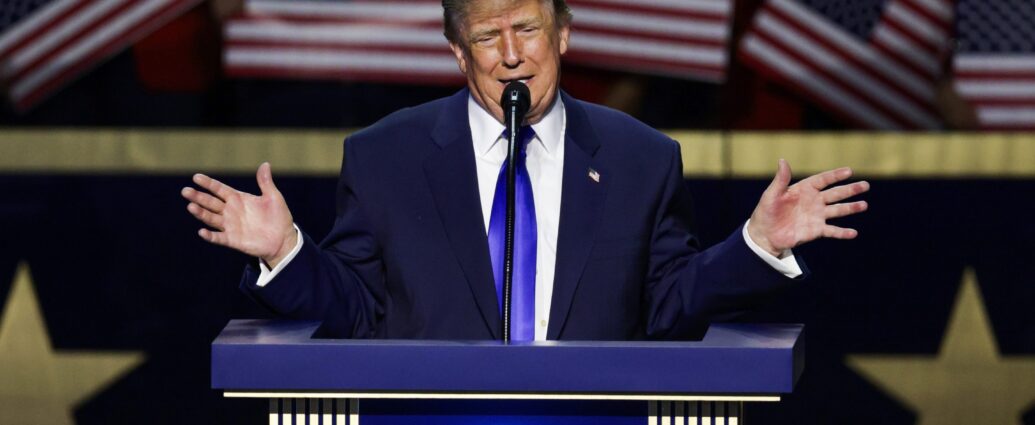
As the U.S. Treasury shells out $95 billion a month in interest to cover deficits, Trump pitches a $1.3 trillion payout to voters if Republicans win the midterms
President Trump has promised that every adult American could receive a $5,000 windfall if Republicans win both chambers of Congress in the midterms in November, and, while light on details, the plan would cost more than $1 trillion.
The president did not specify who would pay for the scheme, but said the money would have to be spent on U.S. goods and services. According to Census Bureau data for 2020, there were 260 million adults living in the U.S.—a figure likely to have increased as the population continues to age. Yet even with this more conservative figure in mind, the plan would still cost at least $1.3 trillion.
If the plan were deemed legal and feasible, it would be funded by the U.S. Treasury, which is already financing deficits and the interest payments required to service its public debt.
The Congressional Budget Office’s (CBO) latest monthly budget update, released yesterday, reports the federal budget deficit totaled $2 trillion in the first 11 months of fiscal year 2026, beginning in October and ending in August. This was $6 billion less than the deficit recorded for the same period last year.
However, the CBO points out that this reduction is only due to shifts in payment timings. Payments that had been due to land on September 1, 2025, were instead moved to August of that year—if it weren’t for the reallocation, this year’s deficit would stand at $82 billion more than the same period in 2025.
These deficits add to the pile of debt the U.S. has accrued over decades—now sitting at more than $40 trillion. For the past 11 months, the CBO reports that the U.S. Treasury has spent $1.05 trillion servicing that debt—approximately $95 billion every month.
Interest payments alone have cost the Treasury more than its outlays for the Department of Defense, the Department of Education, the Small Business Administration, the Department of Commerce, and the Environmental Protection Agency, combined. Indeed, interest is still $50 billion ahead of the combined spend.
Hypothetically, President Trump’s $5,000 suggestion would stimulate spending and thus would generate revenue for the Treasury in the long term. However, it’s not clear whether the proposed outlay would be financed ahead of time or rely on further Treasury borrowing.
That being said, it’s difficult to estimate how the plan might shape up. The president’s promise was broad: Speaking at the Republican party’s first-ever midterm convention last night, he said “If the Republicans win, you win with us, and you get $5,000. It will be called the Trump dividend. Congratulations.”
Previous examples
While the premise of Trump’s offer is unusual, as it is based on a political outcome rather than a perceived economic need, it’s not unheard of for governments to put cash in the hands of American households.
Already in his second term, Trump has suggested that tariffs would generate so much cash that it could be shared with the public in the form of $2,000 checks. The president’s math raised eyebrows, as he suggested the duties could both help pay off national debt and leave some over for consumers in the scheme estimated to cost $135 billion.
This was, at the time, nearly half of the tariff revenues expected to be generated annually. However, the proposal was razed when the Supreme Court ruled the basis of Trump’s tariffs was illegal, and ordered the government to refund more than $100 million of the revenues.
In his first term during the coronavirus pandemic, Trump also attempted to increase aid to American households by $2,000—an increase on the $600 agreed by Congress. The motion was knocked down by Senate Republicans, and the proposal never reached a vote.
The plan was later followed through by President Joe Biden, and questions linger over the extent to which the extra soending contributed to rocketing inflation during the period (peaking at 9.1% in June 2022).
This story was originally featured on Fortune.com

119-year-old NJ amusement park to close, go up for sale
Historic South Jersey amusement park Clementon Park & Splash World has closed its doors and will be put up for sale, its corporate owner announced Wednesday.
The decision marks the second time in seven years that the historic site has shuttered. Owned and operated by Chicago-based IB Parks & Entertainment, the park officially ended operations Monday following the conclusion of its 2026 summer season.
“After five memorable years, we are saddened to announce that we have made the difficult decision to close the park and plan to offer the park for sale,” management said in a statement posted to the park’s website. “It has been a privilege to care for a place that has meant so much to generations of families. We are hopeful that we will find a buyer who shares our love for Clementon Park and will carry its history and legacy forward.”
SIX FLAGS GIVES FAN-FAVORITE ARIEFORCE ONE COASTER A SECOND LIFE
IB Parks & Entertainment acquired the 52-acre property at a foreclosure auction in March 2021 for $2.37 million. The venue had previously closed unexpectedly in late 2019 under prior ownership following a $4.5 million loan default, remaining dark until IB Parks purchased and reopened it in summer 2021.
Founded in 1907 by Theodore Gibbs and his two sons, Clementon Park began as a traditional “trolley park” built at the end of a transit line to encourage weekend ridership and provide recreation for nearby Philadelphia residents. Situated on a spring-fed lake between Philadelphia and Atlantic City, the venue remained family-run for more than a century before its first sale in 2011.
Over the decades, the site expanded into a hybrid amusement and water park following a $5 million renovation in July 1993 that added the Splash World water park. Its major attractions include the Hellcat wooden roller coaster, the Dragon Coaster, a drop tower, a giant Ferris wheel, and various water slides.
IB Parks & Entertainment, which also operates Indiana Beach Amusement and Water Park in Monticello, Indiana, did not state a specific financial reason for the closure.
CLICK HERE TO GET FOX BUSINESS ON THE GO
Management noted that additional details regarding the property sale will be released as they become available.
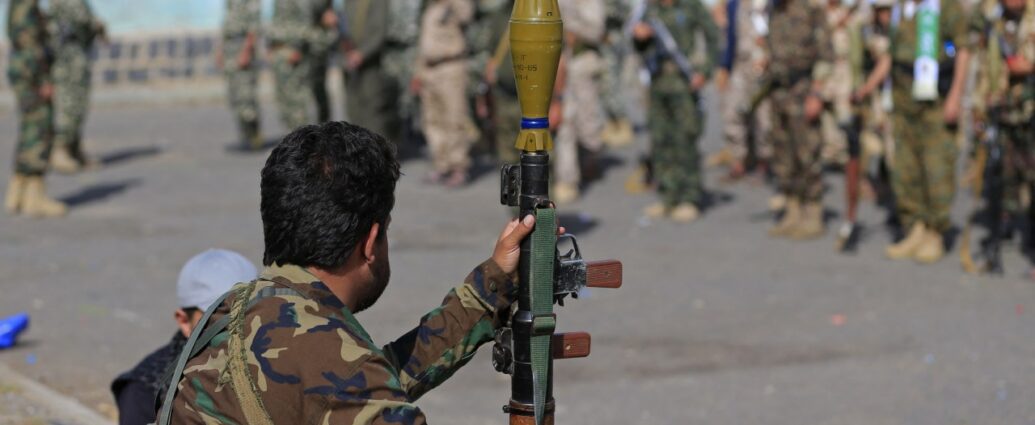


Israel’s education system is failing the students who will shape its future – editorial
Anyone who has lived in Israel over the past few years can attest to the constant volatility, uncertainty, and stress that we have been living through.
We are in constant survival mode, especially since October 7, 2023, and that state of being can crack even the best of us. With budgets logically earmarked in a top-heavy fashion toward defense and security, other vital resources and issues are suffering from a lack of attention and proper budgeting.
Yet we must promote, finance, and treat education as if Israel were in the middle of a peaceful oasis. It’s the primary realm, besides security, that ensures our future. Based on results published this week, we’re failing in education security.
Israel suffered a dramatic collapse in the 2025 PISA exam, which assesses 15-year-old students’ performance in mathematics, reading, and science. In all three subjects, Israel recorded its lowest-ever scores, significantly below those in the previous exam, held in 2022.
Israel’s average score across the three subjects fell by 29 points, the second-sharpest decline among the 75 countries and economies tested, after Latvia.

Israel’s divided school system is failing its future
Israel’s mathematics score fell to 433 points, down 25 points from 458 in 2022, the second-sharpest decline worldwide after Malta. Israel’s science score fell to 442 points, down 23 points from 465 in 2022 and the third-sharpest decline worldwide.
The steepest decline was in reading. Israel’s score fell to 436 points, down 38 points from 474 in 2022 and the second-sharpest decline worldwide, after Latvia.
Of course, those results must be seen in the context of the upheaval the country – and the nation’s students – have faced over the last three years. Education Minister Yoav Kisch did just that, attempting to put a positive spin on the results.
“After nearly a year and a half of war, the evacuation of communities, and deep disruptions to the continuity of learning, I believe these results demonstrate the extraordinary resilience of Israel’s education system,” Kisch said. “Israel maintained its ranking in reading and science compared with 2018, and in math it dropped just one place.”
The Education Ministry also attributed the low scores to the chaotic disruptions to regular learning schedules forced on the education system by the war.
But as valid as war excuses may be, there’s an underlying factor to the scores that can’t be ignored. The education system desperately needs reform.
In 2025, 23% of all first-graders were Arabic speakers, and 25% were haredim (ultra-Orthodox). Israel’s Arabic-speaking students scored below many Third World countries – including below six of the seven Arab countries that participated in the PISA exam. Nearly all of the haredi students in Israel do not even study the material and, as a result, are not even tested.
According to Prof. Dan Ben-David, president and founder of the Shoresh Institution for Socioeconomic Research, the bottom line is that about half of Israel’s children – among them haredim, Arab Israelis, and those living in Israel’s geographic and socioeconomic peripheries – are receiving a third-world level education.
“And as if that were not enough, these children belong to the fastest-growing segments of the population. When they eventually constitute half, and later a majority, of Israel’s adult population, they will not be able to maintain a first-world economy,” Ben-David told The Jerusalem Post.
Ben-David’s solution is to dismantle the four separate education streams that currently function in Israel (state, state religious, haredi, and Arab) and replace them with a new, single education system for all.
“The basic tenets of such an overhaul need to include a significant upgrade of the compulsory, identical, core curriculum (allowing the remaining curriculum to reflect local parental preferences). Funding should be only for fully compliant schools, with complete cessation of funding for all others,” he proposed.
Ben-David’s proposal is worth considering, but even if it’s too ambitious, education must take a prominent spot at the table of any future government.
As we head to next month’s election, every party will try to convince the electorate that it has the answer to the country’s pressing issues. They’ll talk about security and the economy. But just as important is what their plans are for the future.
Just as defense is paramount to securing a thriving future for Israel, education is vital to the well-being and continued success of the Jewish state. Brushing the issue aside because we’re fighting for our survival is not an option.
My ethical will was supposed to be a simple insurance policy — then we lost our daughter
Cara brought so much joy, love, and perspective to our family, and her life continues to shape the way I think about what matters most. She remains at the heart of our family story — not defined by losing her, but by everything she taught us and what we learned through the experience. Rewriting my ethical will after Cara’s death is when I understood what the document was actually for. It wasn’t a backup plan. It was the only place resilience, gratitude, and presence could be passed down in my own words — instead of secondhand, through someone else’s account of who I was or from someone’s fading memories.
Families spend years planning how wealth will pass from one generation to the next. We work with attorneys, advisors, and tax professionals to think carefully about what we will leave to our loved ones. We invest enormous resources in transferring financial assets — and almost nothing in transferring the values and experiences that gave that wealth its purpose.
That imbalance takes on greater significance when you consider the scale of what will pass from one generation to the next. An estimated $84 trillion is expected to change hands in the U.S. by 2045 as older generations pass wealth to their heirs, the largest generational wealth transfer in history. We are spending an extraordinary amount of time preparing to transfer the assets, but I believe we have a responsibility to think just as carefully about whether we are passing along the judgment, perspective, and knowledge that helped create and steward the wealth.
Those things deserve a succession plan, too. In fact, they may be the most valuable asset that you pass to the next generation.
An ethical will is not a legal document, and it does not replace a traditional estate plan. Rather, it complements one by capturing the human side of a family legacy. It is a place to preserve our family history, the experiences that shaped us, the mistakes we made, the people who influenced us, and the lessons about business, relationships, family, community, and life that took decades to acquire.
I first learned about ethical wills from Susan Turnbull, a pioneer in the field. I reached out to her directly, and she helped me write my first draft in 2007. I wanted to chronicle the experiences and lessons that had shaped my life so my children would have them if something happened to me unexpectedly. When I finished that first version, I felt an enormous sense of peace. I knew that if life did not unfold as I hoped, my wife Jill and our children, Greg, Cara, and Jake, would still have my words and a deeper understanding of who I was and what mattered to me most.
I quickly determined that an ethical will should be a living document. The rewrite taught me the real lesson: an ethical will only works if you keep returning to it.
Writing my ethical will also illustrated how many of the values I considered my own had been handed down to me. My grandparents taught me about family, hard work, and making the most of the opportunities available to you. My mother taught me the importance of curiosity, education, and pushing beyond what was comfortable. My father, the original entrepreneur in our family, taught me about hard work, generosity, communication, resourcefulness, and the importance of relationships. Jill has taught me about resilience, being present, and living a joyful life. Mentors, teachers, colleagues, and friends have added countless lessons.
We talk frequently about the power of compounding financial assets. I believe our life experiences compound as well. The lessons passed from one generation to another accumulate over time, shaping how we make decisions, raise our children, build businesses, navigate difficult moments, and understand our responsibilities to others. Their compounded value can be extraordinary. Writing an ethical will gave me a reason to stop and trace some of those ideas back to their source.
It is one thing to tell your children that integrity matters, that relationships are important, or that they should be resourceful when things go wrong. It is much more meaningful when they understand how you learned those lessons, when you saw them tested, and how they served you. An ethical will can provide a deeper understanding of a family’s core values, where they came from, and why they have endured.
Families can spend decades preparing the next generation to inherit financial capital. We create trusts, tax strategies, governance structures, and succession plans. All of that is important. But financial capital is only one form of inheritance. We should bring the same intentionality to transferring our human, intellectual, and social capital. An estate plan can explain what you are leaving behind and how it should be transferred. An ethical will can help explain why.
For anyone considering writing one, I would resist making the exercise too complicated. Start with your own story. Who shaped you? Which experiences changed you? What mistakes taught you something worth preserving? What matters most to you?
The objective is not to write a rulebook for someone else’s life. Our children must make their own choices and create lives of their own making. My intention is simply to give them something they can return to as they encounter their own moments of truth. We can share wisdom earned through experience. We can introduce them to people they may never have had the opportunity to know. We can explain not simply what we believe, but why.
My hope is that many years from now, something I write today will help my children understand where they came from, remember the values that shaped our family, and decide for themselves where they want to go.
The opinions expressed in Fortune.com commentary pieces are solely the views of their authors and do not necessarily reflect the opinions and beliefs of Fortune.
This story was originally featured on Fortune.com
Lighting the way: Meet the next generation of Zionist leaders
“Everybody’s an influencer,” says Jewish National Fund-USA CEO Russell Robinson. “But the important ones are those that decide that they’re going to stand up and turn on the light and bring people out of the darkness. These are people who are coming forward and saying, ‘I’m ready to lead.’ They lead in all different ways, and I think that we should be helping fuel their fire.”
Shaped by the aftermath of October 7, global antisemitism, and renewed debates about Zionism, a new generation of young Zionist leaders is coming of age. With this new generation of Jewish leaders in mind, Jewish National Fund-USA and the Jerusalem Post are celebrating, for the fourth consecutive year, the next generation of ViZionaries – the 25 most influential Zionists under 46 who are going above and beyond to support the land and people of Israel.

These imaginative, bold, and creative young leaders are making their mark in diverse fields while emerging as influential voices in their communities, united by their proud and public commitment to the land and people of Israel.
Robinson explains that this year’s ViZionaries are using the power of the Internet and social media to support the Zionist idea. “If you go through the list of people who have been nominated, you see that from chefs to singers to writers – they are people who are online and talking it up.”
Defending Israel and promoting Zionism online requires a great deal of courage, says Robinson, and this year’s awardees possess that quality. “If you want to see bravery, follow these young influencers. They’re putting themselves up right in the front line of this attack without any barrier between them and the people who want to attack them. They’re doing it day after day. And I say, let’s celebrate them.”
Robinson suggests that this new generation of Zionist leaders can unite the Jewish people. “I think that we have allowed the division of walls by organizations; the division of walls by religious or non-religious; the division of walls between right and left; the division of walls between knowing what a Jew does in Paris to what a Jew does in New York to what a Jew does in Tel Aviv, to understanding who we are. We don’t know you, you don’t know us, and it’s a shame. I think that this new group of leaders of tomorrow is breaking down those walls, maybe because their phones don’t have walls.
“These influencers that we’re honoring this year are going to be the influencers that I believe deep in my heart will talk about shared values, common destiny, their own common language, but I believe a language of Zionism.”
A number of this year’s ViZionaries, notes Robinson, are members of other faiths, including Christianity and Islam. “That’s the beautiful thing about Zionism. If you’re a Zionist, you don’t have to be Jewish. If you’re a Zionist, you’ve got to believe in light over darkness.”
JNFuture National Chair Danielle Hankin adds that today’s young Zionist leaders are facing new and perilous challenges. “For our generation specifically, I think that the generation’s facing Israel in a very different light than they’ve had to previously. We have social media. Misinformation and antisemitism are on the rise like nothing before because of social media and the way that the world interacts now.”
Highlighting the young Zionist leaders of today is significant, she says, because “It helps those young leaders feel accomplished. It shows what an impact those young people can have and gives this group contact that they might not otherwise experience or have.”
Like Robinson, she lauds the fact that some of the ViZionaries are members of other faiths. “Some of our strongest advocates are people who have chosen to stand with Israel because they believe in values. They’re willing to speak up even when there’s nothing personally compelling them to do so. It’s just because they believe in what Israel stands for. Those voices reach audiences that sometimes the Jewish community cannot reach, and it brings Israel into different communities and cultures and faiths into conversations that demonstrate that supporting Israel is not just about being Jewish.”
Hankin shares that JNFutures enables young people to grow in Jewish leadership within the JNF-USA community. “JNFutures allows young people to have opportunities to serve on boards, to lead missions like JLIM (JNFuture Leadership Institute Mission to Israel), build campaigns, engage donors, participate in the conversations that we’re talking about amongst themselves, and develop relationships with the JNF-USA community, both in the United States and in Israel. JLIM (JNFuture Leadership Institute Mission to Israel) is really the first step to helping young people with passion for Israel to truly have a voice in what happens in the future going on there.”
With this year’s cadre of young Zionist ViZionaries and JNFutures, Robinson is optimistic about the Jewish future. “I met all of our young people. They’re smarter, greater, more philanthropic, more involved, and more engaged in debate than any other generation I’ve ever seen.
“We are one, and we believe in life, and they’re turning on the lights and taking those people out of the darkness. And I say, let us make sure we are not only celebrating them, but also working with them and honoring them. That’s what we’re doing with the Jerusalem Post and the Jewish National Fund-USA’s ViZionaries.”
This article was written in cooperation with Jewish National Fund-USA.
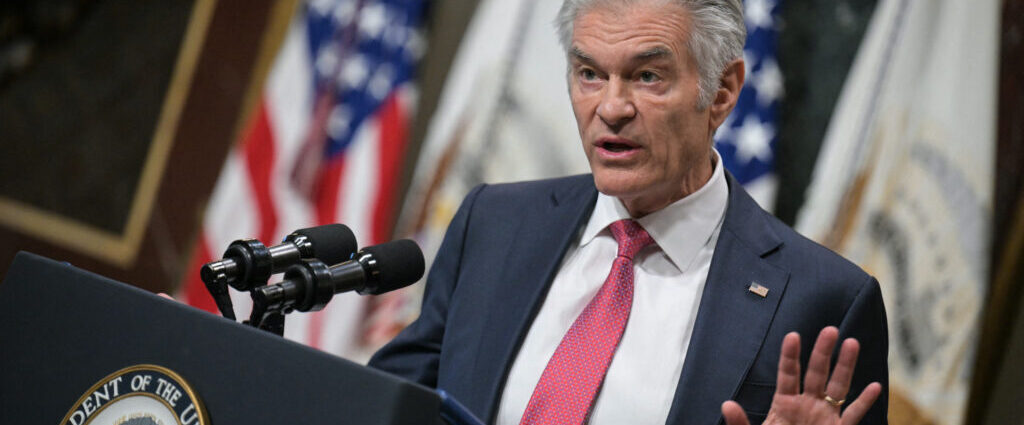
Oz says ‘AI-based avatars’ can help rural communities. Some leaders disagree
Get your daily dose of health and medicine every weekday with STAT’s free newsletter Morning Rounds. Sign up here.
A high-level official at Anthropic posted on Tuesday evening that he believes there is a greater than 10% chance that “AI could kill all humans” within the next decade.



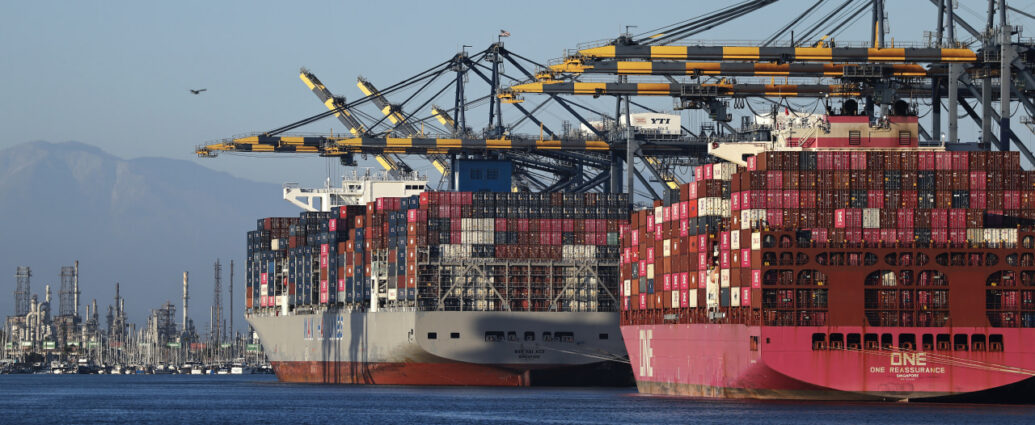

Yair Golan files NIS 2.55 million defamation lawsuit against Sara Netanyahu over October 7 remarks
Democrats faction head Yair Golan filed a NIS 2.55 million lawsuit against Sara Netanyahu on Thursday, accusing the prime minister’s wife of defaming him and endangering his life by implying that he knew in advance about the October 7 Hamas attack.
The suit, filed in the Central District Court in Lod, asks the court to order Netanyahu to pay damages and publish a correction and clarification.
The dispute stems from an August 31 interview with Channel 14, in which Netanyahu questioned how Golan, a former IDF deputy chief of staff, reached southern Israel on the morning of the attack.
“When you are a military officer of such a high rank and claim that you fought on October 7, you were already there early in the morning, already dressed and prepared,” she said. “At a very, very early hour, when others did not know, such as the prime minister.”
Golan argues that an ordinary viewer would understand those remarks as suggesting that he knew the attack was coming before it began, failed to warn anyone, and may even have been involved in a betrayal of the country.

Court will have to decide how a reasonable viewer would understand comments
The lawsuit also argues that Netanyahu cast doubt on Golan’s documented rescue efforts by saying that he “claims” to have fought that day.
Netanyahu has rejected that interpretation. Responding to a warning letter sent by Golan on September 1, she said her remarks had been distorted and were directed sarcastically at those who, she argued, failed to alert the prime minister promptly after the attack began.
Later in the interview, when asked about theories alleging betrayal on October 7, Netanyahu said she was “not part of any theories.” Likud said following Golan’s warning that she had not alleged a conspiracy and had, in fact, said the opposite. Prime Minister Benjamin Netanyahu later said that “there was no betrayal on October 7; there was a failure.”
The court will ultimately have to decide how a reasonable viewer would have understood the interview as a whole, not merely how either side now describes it.
Security forces successfully locate missing Israeli who entered Palestinian village in West Bank
Security forces located a missing Israeli after several hours of search operations in the West Bank after he entered a Palestinian village of his own volition.
Israel Police, IDF, Shin Bet (Israel Security Agency), and Israel Prison Service’s initial announcement said that 53-year-old Yaniv Sardal had gone missing after last being seen on Wednesday evening in the West Bank settlement of Ariel, where he lives.
The forces launched an interdepartmental manhunt in order to locate him after he was reported to have entered an unspecified Palestinian village.
Sardal was found “safe and sound,” the joint statement said.

Police ask for information on missing Israeli’s whereabouts
As part of the search, the police sent out a search helicopter to the area, and IPS deployed its tactical Metzada Unit, which, among other things, specializes in hostage rescue operations.
Empty shelves, shattered warehouses: Ukraine’s Jews prepare for fifth Rosh Hashanah at war
To supply sweet holiday kits to tens of thousands of Jews in the embattled country, Chabad Ukraine said it is “working under complex hardships” to give hope that “the sweet tradition of Rosh Hashanah won’t stop.”
Amid intensifying shelling in Ukraine’s cities, Ukraine’s Jewish communities remain on high alert ahead of the High Holy Days.
Kyiv’s Jewish communities have weathered repeated attacks on the capital. On August 29, Reuters reported that at least 37 people were killed after a Russian drone attack on a Kyiv-area ammunition depot sparked a detonation. Moscow’s air attacks on Kyiv and surrounding regions dragged into a third straight day, killing residents, damaging homes, and derailing daily life.
This follows an unfortunate pattern, as a Russian strike on July 2 launched 74 missiles and 496 drones overnight, killing at least 20 people and wounding more than 90, according to Ukrainian authorities, sending Jewish families back into shelters just a day after they’d returned from a respite camp run by the Jewish Relief Network Ukraine (JRNU) in the Carpathian Mountains.
However, as fighting in the country becomes routine, with the sounds of explosions having become part of daily life, community rabbis are working around the clock to produce mass amounts of kosher honey, essential to the unique culture of Rosh Hashanah.

Essential food products to be unloaded at foot of Jewish centers in various cities
The main phase of the operation has officially commenced: a fleet of massive aid trucks set out from supply centers toward dozens of Jewish communities scattered throughout the country.
Huge pallets of essential food products were unloaded at the foot of Jewish centers in various cities, then transported directly to community members’ homes through an internal, organized, and dignified distribution system.
The diverse list of food items included poultry, fresh meat, locally produced jars of honey, dairy products, canned goods, various spreads, honey cakes specially airlifted in from Israel, and festive honey pastries imported from Zaporizhzhia.
To add extra value to the package, informational pamphlets were included. Beautifully designed and adapted into the local language, they explain the meaning of the High Holy Days and include a unique, rich calendar combining Jewish content with images from community life.
‘Situation has become extreme’
Jewish communities in Ukraine are reportedly expecting record participation this year in synagogues and various holiday activities. As such, Jewish resilience continues to thrive. “We are preparing for an unprecedented number of worshippers who will come to Rosh Hashanah and Yom Kippur prayers,” says Rabbi Simcha Levenharts, a Chabad emissary in Kyiv who is coordinating the distribution effort.
“The situation has become extreme in recent days,” Levenharts said. “Warehouses in the area have been destroyed, and the shelves in stores are simply empty. People can barely go shopping because the chains are closed for many hours because of the alarms.”
JRNU said some Rosh Hashanah supplies were brought by air from Israel, including honey cakes and other holiday goods. Communities are also distributing chicken, meat, and jars of honey.
Despite the worsening security situation, Jewish leaders say they are preparing for unusually high synagogue attendance over Rosh Hashanah and Yom Kippur.
“We are preparing for an unprecedented number of people to come to Rosh Hashanah and Yom Kippur prayers,” Levenharts said.
“After such a long and exhausting period of war and uncertainty, people are looking more than ever for togetherness and tradition, so they don’t break and can remain strong.”
Chabad organizing massive logistical efforts to ensure holidays marked with greatest possible dignity
The JRNU, which is behind the distribution of aid packages to the country’s Jews, made a strategic decision: to produce most of the basic food and holiday products on Ukrainian soil itself, at special local factories prepared in advance for this purpose.
The Kyiv area is surrounded by logistics hubs and giant warehouses that have absorbed serious hits and daily bombardments in recent weeks, but by some miracle, the factory chosen for producing the pure honey has remained standing.
While these logistics hubs are absorbing heavy bombardment and shelling, Chabad is organizing massive logistical efforts to ensure the holidays are marked with the greatest possible dignity and to strengthen communal solidarity despite the dangers on the ground.
As the noise of the machines mixes with air-raid sirens, the production workers continue working there under constant alertness. In addition to the honey factory, which was certified kosher by Rabbi Yehoshua Vishetzki of the “Ukrkosher” kashrut system, special meat and poultry slaughter operations have also been certified kosher under strict standards, amid the chaos of war.
JRNU has spent the war years building local production and distribution infrastructure – including factories, kosher slaughter operations, and a delivery network – to sustain religious life for Ukraine’s Jewish population without relying on imports that wartime logistics make unreliable.
The honey factory near Kyiv is ostensibly one facet in that system, illustrating both the scale of the effort and the risks involved in running it inside an active war zone.
In the Jewish community of Kyiv, connecting to tradition by “manufacturing kosher food in Ukraine not only instills local pride but aids the country’s struggling economy as well”, says Chabad.org.
Drones fall near Kremenchuk rabbi’s home
The security threat has reached Jewish community leaders directly.
Rabbi Shlomo Salamon, chief rabbi of Kremenchuk, said two drones fell close to his home this week.
“Just today, a few hours ago, two UAVs fell right near our home and immediately brought us back to the difficult atmosphere of the war,” Salamon said.
“In days like these, when food warehouses are being bombed, and you can feel the shortages and uncertainty in the stores, the joy of receiving these substantial and festive food packages is enormous,” he said.
In Poltava, Chief Rabbi Yosef Segal said residents were also encountering shortages.
“Many stores are dealing with empty shelves, and there is a shortage of basic food products,” Segal said, adding that holiday food packages were providing both practical help and emotional support.
In Cherkasy, Rabbi Dov Axelrod said preparations for Rosh Hashanah were continuing despite the deteriorating security situation.
“The preparations for the holiday fill the synagogue and the community with a feeling of togetherness, family, and hope for a better and sweeter year,” he said.
Jerusalem Post Staff contributed to this report.
IAEA exposes North Korea’s secret nuclear enrichment facility, expansion of weapon infrastructure
North Korea has built a new uranium enrichment facility at its main Yongbyon nuclear complex that could house up to 28 centrifuge cascades, and started operating an expanded annex at its Kangson enrichment site, the International Atomic Energy Agency (IAEA) said.
The Vienna-based nuclear watchdog said in a report that the findings pointed to a steady expansion of North Korea’s nuclear infrastructure at multiple locations.
In the report, dated August 28, the IAEA said it relied on satellite imagery and open-source material, including photographs published by North Korean state media, to track Pyongyang’s nuclear activities. The agency has had no inspectors in North Korea since 2009.
It identified a new two-story building at Yongbyon as the site’s second uranium enrichment facility by comparing state media photographs of a June visit by North Korean leader Kim Jong Un with satellite images taken during the building’s construction.
Photographs from the visit indicate gas centrifuge cascades are installed on both the upper and lower floors of the main building, the report said, adding the building could accommodate up to 28 of the cascades shown in the photographs.

Expansion of North Korea’s production of weapons-grade nuclear material
The report also said there were indications that operations began in January at a uranium enrichment facility in Kangson, near the capital Pyongyang, within an annex that had been constructed in 2024.
The IAEA said the developments in North Korea’s nuclear program violated UN Security Council resolutions.
“The ongoing operation of enrichment facilities at Kangson and Yongbyon and the reported further expansion of the DPRK’s production of weapons-grade nuclear material is a cause for serious concern,” IAEA Director General Rafael Grossi said in a statement to the board of governors on Monday, referring to the North’s official name, the Democratic People’s Republic of Korea.
The report accompanied Grossi’s statement.
Pyongyang has repeatedly rejected the agency’s authority. North Korea’s mission to the United Nations in Vienna said last September that North Korea’s status as a nuclear weapons state had become irreversible and the IAEA had “no legal right… to interfere in the internal affairs of a nuclear weapons state which exists outside the NPT,” referring to the Non-Proliferation Treaty.

Mamdani tax creates ‘so much confusion’ in NYC real estate, but broker says ‘big crisis’ is something else
When Mayor Zohran Mamdani’s controversial pied-à-terre tax took effect, some critics warned it could drive wealthy residents and investment out of New York City.
But inside Manhattan’s high-end real estate market, brokers and market data paint a more nuanced picture: while the policy has triggered confusion among buyers and sellers, some high-net-worth buyers appear to be adapting rather than leaving.
“Any time you add more taxes and your barrier to entry is harder, then it’s not going to be great for the real estate,” Douglas Elliman’s No. 2 agent by volume in Manhattan, Michelle Griffith, told Fox News Digital. “Am I for the pied-à-terre tax? Absolutely not. What I always look at is the opportunity cost… So that remains to be [seen].”
“[The next] two quarters will not tell us the full impact. This is uncharted territory: prior taxes were one-time closing costs, not a recurring annual charge, and whether it produces capital flight is a question we may not be able to answer until 2029,” Douglas Elliman Senior Vice President of Research and Analytics Charles Snyder also told Fox News Digital.
AMAZON WARNS MAMDANI-BACKED DELIVERY MANDATE COULD COST N.Y.C. HOUSEHOLDS HUNDREDS EVERY YEAR
About one month ago, a New York judge temporarily blocked parts of Mayor Mamdani’s rollout of the new tax on luxury second homes, ordering City Hall to take down a controversial list containing the names, addresses and property values of more than 900,000 New York City property owners. The Aug. 10 order temporarily restrained the Mamdani administration from moving ahead based on the disputed property roll or mailed notices and barred the city from enforcing its deadlines against homeowners caught up in the rollout. The city appealed that same day, automatically staying the temporary restraining order and allowing the rollout to continue while the case proceeds.
The signed order would also have prevented the city from imposing, assessing or collecting the surcharge against homeowners identified on the supplemental roll or sending a notice without first making an individualized determination and providing the notice required under state tax law.
The tax has sparked a legal battle, while opponents have warned it could push wealthy New Yorkers toward lower-tax states such as Florida, Texas and Tennessee. However, recent Manhattan transaction data shows continued luxury-market activity despite uncertainty surrounding the surcharge.
“The luxury market entered the tax era from a position of strength rather than weakness. Manhattan contracts rose 4% year-over-year in Q2 to 3,188, closings above $10 million were up 31%, and July, the first month under the tax, saw 98 contracts signed at $4 million and above, down 24% from June but up 5% from a year ago,” Snyder said.
“[Luxury property historically] absorbs [tax increases], but not right away and not for free,” Snyder added. “After the 2019 mansion tax expansion, luxury closings fell 20% in 2017, and the luxury median dropped to $5.4 million from $6.5 million. The catch is that this tax is an annual charge on top of the closing taxes, which raises the odds that this may have a greater impact on the luxury market.”
“The number one word to summarize the pied-à-terre tax is confusion. It’s created so much confusion in the market, not only for our buyers and our sellers, but whether it’s real estate attorneys… real estate professionals. And I think part of why it’s so confusing, is the valuation,” Griffith noted. “If you were to sell the apartment, what is it worth? But now, in having conversations about the pied-à-terre tax, it’s the Department of Finance’s (DOF’s) assessed value… I’ll give you an example: I was looking at an apartment this morning. It sold for $9.5 million, but the Department of Finance’s assessed value was $1.5 [million].
“[It’s] a lot of unknowns that people are trying to get their head around. So we always say, anytime there’s uncertainty, what happens in the market, certain people pause. So whether it’s a presidential election, whether the mayor’s being elected, and whether we’re talking about pied-à-terre taxes, it’s creating some moments of pause. But really what it’s created is uncertainty,” she continued.
In the tax’s first two years, through June 30, 2028, condo and co-op units that are not used as a primary residence may be subject to the surcharge if their DOF market value is at least $1 million, with rates ranging from 4% to 6.5%. One-, two- and three-family homes that are not used as a primary residence may be subject to the surcharge if their DOF market value is at least $5 million, with rates ranging from 0.8% to 1.3%. Beginning July 1, 2028, the $5 million threshold and 0.8% to 1.3% rate structure will apply to covered properties, while DOF will value condo and co-op units under a new methodology that considers comparable condo and co-op sales.
“I would say probably one of the biggest levels of confusion is people are saying, ‘Well, if my property is worth a million dollars, am I going to be taxed?’ And that’s because we’re not looking at fair market value. We’re looking at the DOF assessed value, which can sometimes be a fifth or less of the actual valuation,” Griffith said.
MAMDANI DROPS MASSIVE 9/11 RECORDS TROVE AS OLD CLAIMS ABOUT GROUND ZERO COME UNDER FIRE
When asked whether property valuations are clustering around the $1 million and $5 million tax thresholds, Snyder responded, “Not in a measurable way yet, and through mid-2028 the law is harder to game than the mansion tax because the trigger is assessed value on the city’s roll, not sale price. That changes in July 2028, when the condo and co-op threshold moves to $5 million of market value tied to comparable sales, and at that point we would expect real clustering just below $5 million, the same pattern the market has shown at the mansion tax thresholds.”
Douglas Elliman data shows that luxury supply tightened following the tax announcement: Q2 new listings fell 7% year over year, with $5 million to $10 million condo listings dropping 10%. In July, the first month the tax took effect, new listings for properties priced at $4 million or more fell 53% from June and 41% from the previous year.
“There is no mass exodus. Our big crisis is inventory,” Griffith said. “The biggest challenge we have in the market right now is inventory. The lack of inventory at every single price point is making it a very difficult market to transact in. And things that come to market are going into bidding wars immediately… Although I know the headlines are much more sensationalized talking about the pied-à-terre tax, really, our biggest challenge is lack of inventory.”
“Unsold sponsor inventory is down 15% year-over-year to 3,334 units, the lowest level since 2014, suggesting owners are waiting rather than a wave of forced selling,” Snyder said.
Market metrics from Douglas Elliman also indicate that properties are not taking longer to sell (July median condo days-on-market fell 14% to 88 days), but buyers are demanding higher price concessions. Additionally, sellers with properties hovering just above key benchmarks such as $5 million are being forced to price below the line to satisfy pied-à-terre buyers capitalizing the recurring tax cost into their offers.
“I had a couple of properties that we sold this summer and they were priced slightly above five. Bids came in, they were slightly below that number, and then we have serious conversations with our sellers and we say, ‘Listen, this is going to come up multiple times. Most of the buyers that have been serious about this property are all looking at it as a pied-à-terre, so you’re likely gonna have to be below that $5 million mark,” Griffith explained.
“I think certain clients are evaluating their usage and how much time they’re spending in New York,” she said. “But I want to be completely transparent. No one’s rushing and listing it for sale or listing it to rent… I think certain people that maybe don’t want to sell the property and keep it in their portfolio are thinking about renting.”
“We are confident in both the pied-à-terre surcharge and the City’s ability to implement it fairly and effectively,” Matt Rauschenbach, a spokesperson for the mayor, previously said. “This surcharge asks those who own second homes valued at $5 million or more to contribute their fair share to the city they benefit from.”
Griffith and Snyder warned that aggressive tax surcharges could backfire if transaction volume drops or prices fall, potentially reducing city revenue from real property transfer and mansion taxes and offsetting some revenue from the new surcharge.
GET FOX BUSINESS ON THE GO BY CLICKING HERE
“The early behavioral signal is that some high-end buyers are choosing to rent in Manhattan for now and others are being far more selective about what they buy, which reads as a delay in commitment and a higher bar for the right property rather than a departure from the city,” Snyder detailed. “At the same time, our Florida new development portfolio is having a banner year, but most of that product will not deliver for one to three years, and we do not yet know how many of those buyers will be NYC relocators.”
“You don’t come to Manhattan for anything to be easy,” Griffith admitted. “I think the biggest thing is, we need to reduce the size of our budget, right? They keep talking about, how are we going to get money to make up for the deficit? Well, you need to also decrease spending. So maybe we need to shift that conversation into, are the programs effective? Where’s the money going? How is it being utilized, and how do you decrease spending?”
Fox News’ Stepheny Price and Maria Paronich contributed to this report.

Aflac President: why AI shouldn’t drive your healthcare
Every fall, cancer starts sounding louder in the national conversation. The months between summer and winter bring multiple awareness campaigns, survivor stories, and reminders to get checked. That attention really matters. This year, however, that conversation is happening alongside another major shift: More Americans are turning to artificial intelligence (AI) for answers about their health.
A recent study found that 76% of Gen Z adults and 63% of millennials now turn to AI as their first line of primary healthcare — before ever seeing a doctor.
In seconds, we can search for symptoms, understand medical terminology and learn more about potential risks. Used responsibly, AI can be an extraordinarily useful tool, but knowing more is not the same as knowing what to do next. This is especially true when it comes to cancer. Consistent physician care can more accurately identify signs of more serious conditions associated with symptoms that might not always seem relevant. That is why AI should copilot but not drive our healthcare.
Being president of a Fortune 500 company means turning concepts into decisions, and decisions into action. After more than two decades in leadership roles at Aflac, I have learned that action without guidance can quickly turn into inaction. The best cure for that is a solid strategy that results in a viable care plan.
And this is where, when it comes to our own healthcare, we continue to fall short.
Despite decades of awareness campaigns, nearly two-thirds of Americans still delay recommended health screenings. It is not because people don’t understand that screenings matter; rather, life just gets busy. We also know that people worry about what they might learn, or convince themselves that because they feel fine, there is no reason to get checked.
Technology can help address some of those barriers. AI can be a component of the plan. It can help someone understand the difference between screening options or help prepare questions before a doctor’s appointment. But there is a limit to what AI technology can do.
AI cannot take you to an appointment when you are hemming and hawing about going. It cannot perform a mammogram or a colonoscopy. And it cannot personally view your health history and connect the dots on a possible condition that didn’t exist before, and certainly cannot replace the voice of someone you trust asking, “Did you get that checked?”
Separate research on cancer-screening behavior backs this up: most Americans describe encouraging a loved one to get screened as an act of love, and say that encouragement changes their own behavior. It’s a reminder that the most powerful health intervention tool is not information coming out of a screen. It often can be someone who knows and cares about you.
Like so many families, mine has been touched by cancer, and I have watched loved ones and friends navigate diagnoses, treatment and the uncertainty that comes with both. Those experiences are why I will continue to raise my voice to help move people from uncertainty to action.
That’s also, frankly, Aflac’s business model: we exist because a screening gets missed, a diagnosis comes late, and a family needs help covering what health insurance alone doesn’t. The AI conversation isn’t abstract for us — it shows up in our claims data.
You can apply this principle by being the leader of your health. That is why AI should be the copilot but not the driver of our healthcare.
Virgil Miller is president of Aflac Incorporated and Aflac U.S., a leading provider of cancer insurance in the United States and Japan.
The opinions expressed in Fortune.com commentary pieces are solely the views of their authors and do not necessarily reflect the opinions and beliefs of Fortune.
This story was originally featured on Fortune.com
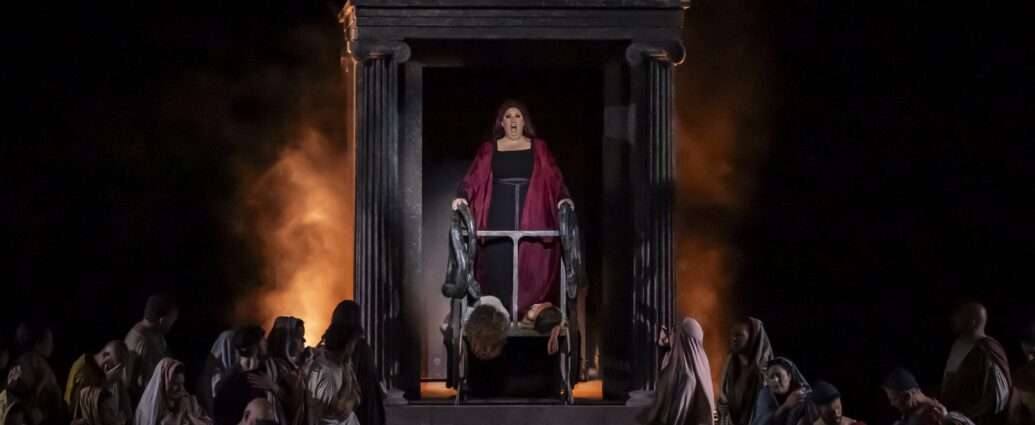
The AI writing debate is eerily similar to the one that rocked ancient Greece 2,700 years ago
The ancient Greeks had a word for an object that is a remedy in one hand and poison in the other, depending on how it’s administered: pharmakon. Socrates used it in Plato’s Phaedrus, more than two millennia before Claude, Perplexity, or the AI-detection tool Pangram existed, to describe writing itself.
Plato recounts an Egyptian myth in which the god Theuth presents writing to King Thamus as a pharmakon — an “elixir,” or remedy, for memory (mnēmē) and wisdom (sophia). Thamus is not persuaded. Writing, he answers, will instead produce forgetfulness: by relying on external marks, people will neglect their own memory. It is, he says, a pharmakon not of mnēmē but of hypomnēsis — not memory itself, but only an aid to recollection — and one that may furnish the appearance of wisdom without genuine understanding.
The French philosopher Jacques Derrida returned to that passage in his 1968 essay Plato’s Pharmacy, arguing that pharmakon cannot be fixed as either remedy or poison: the same tool that preserves and extends thought can also displace the faculty it is meant to support. That is generative AI’s dilemma, revived. Used by someone with knowledge and judgment, it can help retrieve, organize, test, and revise ideas; used as a substitute for those capacities, it can produce fluent prose without understanding.
The remedy and the poison are one and the same. The debate over AI writing, in other words, is not a 2026 conundrum. It is the oldest argument about writing, wearing a new face.
The strait every desk now faces
Greek myth also offers a parable for a threat that can only be managed, not avoided: Circe’s warning to Odysseus to steer between Scylla and Charybdis, a calculus of survivable loss versus total destruction. Together they name, almost too closely, the two live questions in every newsroom’s, law firm’s, and research desk’s relationship to generative AI: how visible the intervention is, and what you’re actually willing to give up to use it responsibly.
Circe’s counsel to Odysseus is among the least comforting pieces of advice in ancient literature, precisely because it is sound. Ahead lies a strait: on one side, Scylla, a six-headed creature that snatches sailors from the deck; on the other, Charybdis, a whirlpool that swallows the entire ship. Steer nearer Scylla, Circe advises — better to lose six men than all, and the vessel besides.
Media institutions, research desks, law firms, and other entities producing content or ideas are quietly weighing Circe’s counsel: what can be surrendered without diminishing the work itself, or the broader mission of truth it serves. The question is no longer whether to make a sacrifice, but how to calculate the precise formula of survivable loss.
Charybdis is the old economics: insist on the unassisted workflow and risk becoming a “media Pharisee,” while a competitor’s earnings note lands an hour sooner, a memo arrives overnight instead of in a week, a research desk publishes at half the cost. The precedents are not hypothetical. The Associated Press made the trade in 2014, automating corporate earnings stories and expanding coverage from roughly 300 companies per quarter to 4,400, on the logic that a formulaic scoreboard story was worth ceding for reporting time that requires judgment and better sourcing. Bloomberg made the same bet around the same time, publishing headlines with the help of machine learning starting in 2015 and using automated technology to assist with roughly a third of its content as far back as 2019, per The New York Times.
When investor Stanley Druckenmiller published a Wall Street Journal op-ed on the bond market this August, readers running it through the detection tool Pangram got a 100% AI-generated verdict. Druckenmiller confirmed it within hours, without shame. The piece carried no disclosure, and WSJ editorial page editor Paul Gigot defended the silence rather than demand it be broken. More than a decade before “AI writing” became a newsroom-wide reckoning, it had already redefined much of the job — for people willing to look honestly. Noteworthy figures in business and technology consistently insist on and defend the use of the tool.
Scylla is the toll those efficiencies exact: the byline’s claim to have thought the thought, the analyst’s to have read the filing, the student’s to have made the argument — each quietly severed from the work that once made it theirs. It is the Odyssean bargain: accept a sufferable loss in pursuit of a larger goal, but know exactly what you are giving up.
The god from the machine
If the AI-writing crisis is older than most people know, the face it’s wearing is older still—borrowed from the Greek stage. The deus ex machina was a device where an actor playing a god was lowered to the stage by crane to solve what no character in the narrative could. The crane itself had a name: the mēchanē, the actual piece of stage technology that delivered the deus — and it was introduced by the great playwright Aeschylus before becoming the signature of Euripides, particularly at the end of Medea, when a dragon-drawn chariot from Helios lifts the murderous heroine out of a plot that had run out of road.
Just as with today’s innovation, the mēchanē drew criticism. Aristotle was unimpressed, arguing in his Poetics that a resolution imported from outside the story’s own causal logic might satisfy an audience, but cheapens the tale it claims to finish. A deus ex machina, as it came to be called in Latin, is defensible for events “outside the play,” Aristotle allowed — past events beyond human knowledge, or future ones only a god could foresee — but not for solving a plot a human character should have solved.
According to Drew Lichtenberg, the Yale-trained dramaturg and artistic producer at Washington, DC’s Shakespeare Theatre Company (and the twin brother of one of the authors), the critique was both more and less fitting for the age of AI than people think. “Aristotle was speaking specifically about Euripides,” Lichtenberg told Fortune. “He had a problem with [Euripides] cheapening or corrupting the poetics.” Aristotle was describing writers in the late part of the 5th century who started to “abuse this device” of the deus ex machina — particularly how Euripides pushed past its limits by having “the gods come down and interfere” in plots that, in Aristotle’s view, should have resolved themselves through human action alone.
In chapter 15 of the Poetics, Aristotle writes that “The supernatural should be used only in connection with events that lie outside the play itself, things that have happened long ago beyond the knowledge of men, or future events which need to be foretold and revealed, for we attribute to the gods the power of seeing all things.”
Lichtenberg said he saw a parallel — though one that inverts the ancient device in a telling way. “AI is the deus coming out of the machina, more than the machina,” he said — because in AI writing and AI creating, it is taking on an active role in a play that was formerly reserved for human characters. “That’s where it’s a really suggestive comparison,” he said. Film critics today sometimes accuse a lame act III of having a deus ex machina problem, and it names the crisis at the heart of AI writing: a machine wedged between a person’s idea and its expression, blurring how much of the finished piece is the person’s and how much the machine’s.
Lichtenberg calls Euripides “an unorthodox and experimental writer who was interested in new forms and sensations,” fascinated with the idea of the witch character Medea becoming a deus. More broadly, he was “fascinated with people becoming gods,” a fascination “which people found creepy and scary, the way people do with AI.” (It appeared again in Euripides’ later work, The Bacchae.) At the same time, Lichtenberg says, he went on to become “very influential on the generation that came after” — a writer blamed, even then, “for ending the golden age, for his excesses.”
Euripides’ late career overlapped with, in Lichtenberg’s words, “the decline and fall of self-rule” in Athens — the Peloponnesian War, the oligarchic coup of 411 B.C., and the slow exhaustion of Athenian democracy in which his final plays were written. What followed compounded the shift in dramatic taste. After Euripides, he explained, Alexander the Great came to power and changed culture: “Alexander goes around the ancient world and builds all these massive theaters,” Lichtenberg says, and “the style of theaters becomes more bombastic” in the Hellenistic period that followed — venues built to seat 10,000 or more, architecture and performance scaling up in grandeur even as the tightly self-governing city-state that had produced Sophocles receded into memory. “When we talk about the fear of AI,” Lichtenberg argues, “we are talking about this Euripidean decline and fall.”
At the same time, Lichtenberg allows, “now we read [Euripides] and he seems to be the most modern” of the three tragedians, with characters that are “the most complex.” What once got Euripides docked points with his judges is exactly what unsettled his contemporaries: “the irregularity of his dramaturgy,” Lichtenberg says, made his plays seem “disunified or incomplete, distorted,” producing what he calls “grotesque variations” on the form Aeschylus and Sophocles had established.
The Nietzsche question
No critic made a harsher case against Euripides — and perhaps its modern counterparts in the AI media crisis — than Friedrich Nietzsche, who devoted much of The Birth of Tragedy to the argument that Euripides had killed the art form. “Tragedy died,” in Nietzsche’s argument, “because the Dionysian rites, the ritual origin of tragedy, was lost,” Lichtenberg says, “replaced by a more psychological, scientific, questioning mode.” Nietzsche argued that “tragedy should be about mysteries and ritual essences,” not the interrogative, rationalizing sensibility that Euripides brought to the stage.
Addressing “sacrilegious Euripides” in Chapter 10 of The Birth of Tragedy, Nietzsche levels an accusation about tragedy: “It died under your violent hands … you plundered all the gardens of music, you still managed only copied, masked music. And because you had abandoned Dionysus, Apollo abandoned you: rouse all the passions from their resting places and conjure them into your circle, sharpen and whet a sophistical dialectic for the speeches of your heroes–your heroes, too, have only copied, masked passions and speak only copied, masked speeches.”
Ancient critics could never quite agree on the direction of causality between Euripides’ formal excesses and the political decay of Athens around him — and Lichtenberg thinks that same ambiguity now surrounds AI. “There’s an interesting chicken-or-the-egg problem with Euripides, he says: “Is he writing this way because society is falling apart? Or is society falling apart because artists are doing these damaging things?” Indeed, in Chapter 11 of The Birth of Tragedy, Nietzsche argued that “Euripides brought the spectator onto the stage” and “made the New Comedy possible.” As a result, “Civic mediocrity, on which Euripides built all his poetical hopes, was now given a voice.” The AI question, to Lichtenberg, conjures similar questions to the ones Aristotle and Nietzsche asked: “Is AI a sign of decline, or a symptom of disease?” he asked rhetorically. “Have we opened Pandora’s box?”
Nietzsche is not just a long-dead German philosopher: tech titans and AI thought leaders still use his language to describe their creation. Nietzsche’s concept of the Übermensch, or “superman,” is one that tech boosters have repeatedly reached for to describe AI’s potential. Mark Zuckerberg calls his own AI lab Superintelligence, and released a 6,000-plus-word essay on his dreams of achieving “personal superintelligence.” SoftBank’s Masayoshi Son told shareholders in 2023 that ChatGPT had brought him to tears over the meaning of life before he committed his company to “design the future of humanity”; by June 2026, Son was telling CNBC that AI models were approaching “superintelligence… exponentially smarter than all of us,” language lifted almost directly from Nietzsche’s own vision of a being that “overcomes” ordinary human limits.
Lichtenberg argued that Nietzsche meant something different in preaching about the superman: he was the latest apparition of the Dionysian, not a triumph of engineered reason. To Nietzsche, Lichtenberg explained, Dionysus was a “mask” or “metaphor” for something profound in human nature — an argument that “we should embrace the things that make us like beasts, seeing through the illusory nature of existence and exerting selfhood.”
That, in Lichtenberg’s telling, is the deeper misreading built into AI hype: not just that executives have seized on the Übermensch as a marketing metaphor, but that they’ve located the god in the wrong place. “AI could be the deus ex machina, but who’s the person who’s wielding it?” he asked. The artist used to be society’s transgressor; now “politicians and the tech overlords are the real transgressors” — casting their machines as gods to obscure their own hand on the lever. Modern society may have lost the Apollonian and the Dionysian altogether, leaving only the rationalizing, “Euripidean” half of human experience—just as a new machine intelligence arrives to do the questioning for us.
“What tradition does AI actually fall into?” Lichtenberg asks. “What’s so anxiety-producing, maybe, is there’s no clear precedent. It combines all these forms in a new and somewhat frightening way.”
“What tradition does AI actually fall into?” Lichtenberg asks. “What’s so anxiety-producing, maybe, is there’s no clear precedent. It combines all these forms in a new and somewhat frightening way.”
Writing was offered as remedy; Thamus called it poison; the pharmakon refuses to resolve. The same tool that extends thought can displace it; the same machine that speeds the work can sever the author from it. All Circe’s counsel makes clear is that there is no passage without loss; only the question of which loss you can survive.
The opinions expressed in Fortune.com commentary pieces are solely the views of their authors and do not necessarily reflect the opinions and beliefs of Fortune.
This story was originally featured on Fortune.com

Trump says he’ll give everyone $5,000 if Americans vote Republican—but it’s questionable whether he can deliver on the promise
Good morning. On Fortune’s radar today:
- Trump wants to give you $5,000 if you vote Republican.
- Why the price of oil needs to go even higher.
- Markets: It’s not good.
- Two numbers that will tell you whether the Fed hikes next week.
- Map: Global warming is harming food production.
- More influencers are on OnlyFans than you might think.
- We talked to the mysterious group buying ads in the Wall Street Journal to promote Bitcoin.
This story was originally featured on Fortune.com
Reform UK would ‘undo’ Labour’s damage to Israel ties, Nigel Farage tells ‘Post’
A Reform government would “undo the damage done” to the UK-Israel relationship under Labour, Reform UK leader Nigel Farage told The Jerusalem Post on Thursday.
Farage spoke to the Post following a phone call with Foreign Minister Gideon Sa’ar on Wednesday – a conversation Farage described as “very productive.”
During the conversation, Farage told the Post he had reaffirmed his “strong support for Israel” and reiterated the importance of strengthening the UK–Israel partnership, particularly in the fields of trade, security, technology and innovation.
Pleased to speak with Gideon Sa’ar. I emphasised the Falklands issue to him and its importance to the British people, though I understand Israel’s relationship with President Milei.
A Reform government would undo the damage caused by Labour. https://t.co/V26fBMHbWm
— Nigel Farage (@Nigel_Farage) September 9, 2026
“I made clear that a Reform government would undo the damage done to this important relationship under Labour and rebuild it on the basis of shared interests and mutual respect.”

Farage, Sa’ar discuss Falkland Islands
The two also discussed the Falkland Islands.
Farage said he stressed the importance of Israel maintaining a position that respects British sovereignty and security interests.
“For the United Kingdom, the safety and security of the Falkland Islanders and the defense of our sovereign territory are paramount,” he told the Post.

STAT+: What to expect from UniQure’s upcoming Huntington’s gene therapy readout
This story first appeared in Adam’s Biotech Scorecard, a subscriber-only newsletter. STAT+ subscribers can sign up here to get it delivered to their inbox.
Before the end of September, UniQure is expected to report four-year results from the closely tracked clinical trial of AMT-130, its gene therapy for Huntington’s disease.
Three-year results were reported almost one year ago. The high dose of AMT-130, administered to 12 patients, slowed the progression of Huntington’s by 75% compared to matched participants in an external control group based on a large, natural history study.

STAT+: Roivant is one of the savviest dealmakers in biotech. It also has a secret weapon
This story first appeared in Adam’s Biotech Scorecard, a subscriber-only newsletter. STAT+ subscribers can sign up here to get it delivered to their inbox.
Roivant has proven to be one of the savviest dealmakers in biotech, evidenced once again this week by the strong efficacy achieved by its pipeline drug mosliciguat in a Phase 2 study of pulmonary hypertension associated with interstitial lung disease, or PH-ILD.
As I wrote Tuesday, the study results could open up a new way to treat the serious lung disease and bolster Roivant’s financial health with a second blockbuster medicine. The drug’s origins are another fascinating aspect to the story.


Inside John Ternus’ first Apple launch event as CEO: Foldable iPhone Duo, AI and more
Apple on Wednesday unveiled a highly anticipated foldable version of the iPhone along with other consumer tech devices embedded with artificial intelligence in the first major product event under the leadership of new CEO John Ternus.
Wednesday’s event marked the first major product launch since Ternus stepped into the top job at Apple after former CEO Tim Cook stepped down at the end of August after 15 years leading the company.
Ternus has worked at Apple since 2001, primarily in its product design and hardware engineering teams, and brings deep knowledge of key products like the Mac, iPad, iPhone, Apple Watch and AirPods to the role.
The two Apple veterans joked about the transition during the event, with Cook appearing in a video about how to start the presentation that ended with a closeup of the former CEO saying, “Not me. That’s your guy,” and pointing back to Ternus.
APPLE UNVEILS FIRST FOLDABLE IPHONE, IPHONE 18 PRO LINEUP, NEW WATCHES AT ANNUAL LAUNCH EVENT
Leander Kahney, editor and publisher of Cult of Mac, spoke with FOX Business following Apple’s event and said that Ternus does a “very good job of putting a human face on the big corporation that is Apple.”
“He talked a lot about the team, about the people behind the products and what a privilege it was to be able to lead the team, and he thanked them at the end,” Kahney said. “I think that’s something Steve Jobs used to do, and it’s a good continuation of that, to acknowledge that he’s not just the one guy – that he might be the face of Apple, but it’s definitely a big team of people behind him.”
Here’s a look at some of the key topics discussed during Apple’s event.
APPLE ENTERS A NEW ERA AS JOHN TERNUS TAKES OVER AS CEO
The new iPhone Duo, which is foldable and offers the largest ever iPhone display, will come with a starting price of $1,999. Duo’s 7.6-inch display is 50% larger than the iPhone 18 Pro Max, and when opened is also the thinnest iPhone. It comes with storage options from 256 GB to 2 TB, and serves as Apple’s entry into the foldables market that has been dominated by Android devices.
The Duo’s folding system is made of more than 100 small precision components, and Apple said that it used AI algorithms during manufacturing to match each hinge with its best-fit housing to ensure perfect alignment.
“I think it’s going to be really popular,” Kahney said. “It combines portability with the big screen. Performance seems to be fantastic. It looks like it’s a really good phone for gaming and for productivity, of course, for working on the go. The cameras look pretty good – they’re obviously not the best cameras, but they look plenty good enough for all those everyday uses.”
Kahney added that the selfie feature was a “very clever” use case, as it allows users to not have to rely on a camera when setting up a group picture and will instead wait until people are in the picture and begin taking pictures automatically.
The Duo will be available starting on Oct. 23, with pre-orders opening a week earlier at 5:00 a.m. PT on Oct. 16.
APPLE POSTS RECORD JUNE QUARTER AS IPHONE SALES SURGE; COOKS WEIGHS IN ON AI, CHINA
“The key thing with Ternus was talking about the Apple ecosystem,” Kahney said. “Being a product guy, he’s worked on all of these different things – the Apple Watch, the iPad, the iPhone. And this is Apple’s strength, I think, having an ecosystem of products that complement each other and work well together.”
“They had new phones, new AirPods, new Apple Watches – all of them powered by AI,” Kahney said. “AI, of course, is going to have a massive impact on the kind of experiences and the kind of things you can do with watches, with tech products, and they seem to be well-integrated.”
Apple unveiled AirPods 5, which have “industry leading” active noise cancellation, improved sound quality, hands-free Siri AI and live translation, the company said. The devices start at $129.
The Apple Watch Series 12 boasts an updated health sensing system, including higher-frequency heart rate and heart rate variability measurements. Those updates pair with a redesigned Health app to track users’ workouts, sleep, heart rate and more. The Apple Watch Series 12 starts at $399.
TIM COOK’S LAST DAY AS APPLE CEO: HOW HE LED THE TECH GIANT’S RISE TO $4T
AI features were a notable focus in the latest products Apple rolled out at the event, and Ternus himself said that if you were designing a new product from scratch that would serve as an AI-powered personal hub, it would look a lot like the iPhone.
“There’s no product in the world better designed to be your intelligent personal hub than iPhone,” Ternus said. “As your personal hub, your iPhone can do so much more for you because it understands your context. This includes your calendar, your relationships, your routines, the most private details of your daily life.”
Ternus said that Apple Intelligence runs on devices whenever it can to protect users’ data, calling it “personal intelligence that’s actually personal,” and outlined how AI is making the company’s products more capable.
“From Siri becoming more capable and more personal across your Apple products, to meaningful health insights with Apple Watch, to powerful new AirPods, features like live translation, and so much more,” Ternus said.
GET FOX BUSINESS ON THE GO BY CLICKING HERE
Kahney noted the Apple Watch’s live rewind tool, which can provide subtitles for conversations and summarize important discussions for reference.
“It’s very smart for Apple to take an Apple Watch, which a lot of people wear these days, and layer in those kinds of AI features without coming up with a whole new product,” Kahney said.

GM CEO Mary Barra is unfazed by the electric slowdown: ‘We still think EVs are the end game’
- In today’s CEO Daily: An interview with GM CEO Mary Barra
- The big leadership story: Jensen Huang declares the start of the AGI era.
- The markets: Mixed globally as Brent crude tops $100 a barrel
- Plus: All the news and watercooler chat from Fortune.
Good morning. Alyson Shontell, Fortune’s Editor-in-Chief, writing from New York this morning. When I had the chance recently to interview Mary Barra for Fortune’s Titans podcast, the GM CEO made clear that the company has no plans to abandon EVs, even as consumer adoption has slowed, improvements to the charging infrastructure have taken longer than expected, and the Trump administration has pulled back on policies designed to accelerate the transition.
“I don’t think it’s shifted our mission,” she told me. “We still think EVs are the end game.”
That conviction matters, given that GM has spent years investing in electric vehicles, batteries, software, and charging. Going forward, Barra is applying a pragmatic framework: GM will keep selling EVs and hybrids; it will also keep selling the lucrative trucks and SUVs that many Americans still want. Investors by and large have applauded her embrace of the messy middle: The stock is trading near its all-time high and is up nearly 6% YTD.

The mantra that Barra returned to again and again in our interview was choice. She invoked the goal of the legendary GM CEO Alfred P. Sloan: to reach “a lot of pocketbooks.” It’s an idea that feels newly relevant in an inflationary era, as automakers try to serve customers with very different budgets, driving habits, and comfort levels with electrification.
As for her broader management philosophy, Barra told me, “Agility is a superpower now.” It’s a lesson she learned early in her tenure as CEO, when it became clear that a disastrous ignition-switch malfunction had not been addressed for months because of what she called at the time a “deeply troubling” culture of bureaucratic inaction. Barra quickly instilled a set of protocols to prevent anything like that from happening again: Solve problems immediately, build mechanisms for employees to surface concerns, and repeat the message until it becomes embedded in the culture.
That’s still her approach. “Rarely do problems get smaller,” she told me. Today, GM starts every meeting with a safety message—a way to keep the lessons learned from the ignition switch crisis top of mind—and maintains a “speak up for safety” culture.
Creating an agile organization also means anticipating what lies ahead. To that end, GM is investing in automation, aiming to offer eyes-off-the-road highway driving in a Cadillac Escalade IQ by 2028. It is spending more than $250 million on skilled-trades training, which Barra has told high school students may be “a little more AI-proof” than some white-collar jobs. And it is experimenting with AI in factories and vehicle design to help its workforce move faster.
These approaches add up to a clear strategy other leaders can learn from: Play the long game and don’t let shifts in the landscape throw you off course. Address problems as they arise and retain the flexibility to meet customers where they are now.
Check out my full interview with Mary Barra here.
Contact CEO Daily via Diane Brady at diane.brady@fortune.com
This story was originally featured on Fortune.com

CEO of an automation platform explains how he wrote a 168-page book with AI: ‘It was like a Socratic dialogue’
- In today’s CEO Daily: UiPath CEO Daniel Dines used ‘adversarial prompts’ for his AI-co-written book.
- The big leadership story: Inside Walmart’s winning China strategy.
- The markets: U.S. futures are up ahead of the first of two inflation reports.
- Plus: All the news and watercooler chat from Fortune.
Good morning. I’ve long thought of Daniel Dines as a kind of philosopher king in business. Growing up in Romania, the billionaire co-founder and CEO of UiPath wanted to be a novelist. Even after he’d created a leading platform for robotic process automation, he’d often start his day with a book, sometimes followed by a nap before turning on his computer. Whether giving advice to entrepreneurs or talking about founder mode, Dines will often insert references to writers like Friedrich Nietzsche or Jack London.
So, when I learned that Dines has written a book called The Work That Remains with Claude and ChatGPT (which you can download here), I was intrigued to find out more. It’s a book about how humans and AI will work together, with Dines outlining a model in which AI proposes, humans decide, and automation executes. It’s 168 pages, around 40,000 words, and can of course be distilled to an AI summary or a haiku. Such are the wonders of technology.
When speaking to Dines, I was less interested in his conclusion than how he arrived at it through AI. “It was really like a Socratic dialogue,” he told me, with each session involving a series of hypotheses, challenges and instructions. “I used two models and did adversarial prompts: This is the theory. Read this article. Create opposing views … The book grew at one point to be almost 100,000 words. AI is extremely verbose, so the real work was cutting it down.”
Those interactions were intense but iterative, with his thesis taking shape over three years as he took time to reflect, observe, read, refine and run a business. “When I started, I didn’t have such a clear idea of where I wanted to land. The ideas I got came through the process of writing the book. Our company strategy, the book, they evolved together,” he said. “I had many evenings and mornings where I couldn’t wait to wake up and write. I was in a complete state of flow. You have to be immersed and challenged and work together and consider it as a partner.”
And what did he learn about the limits of AI? First, that it’s only as good as the data it’s trained on, which makes it better at dealing with a known math problem than a novel idea. Second, that challenging feedback is critical for both AI and humans to avoid hallucinations and getting stuck in a rut. Thoughtful collaboration can work. “I have ideas, but I don’t have the time and the talent to put them on paper in a structure, in a manner that can be consumed by the public at large,” he said.
Contact CEO Daily via Diane Brady at diane.brady@fortune.com
This story was originally featured on Fortune.com
Houthi threat to Red Sea expands with takeover of Mocha, potentially reshaping region – analysis
After three days of escalating conflict in Yemen, where it appeared that the Saudi-backed government was making gains, the Houthis gained control of the city of Mocha on the Red Sea on Thursday.
The advance by the Houthis was anticipated. It also appears that although the Houthis suffered some setbacks on other fronts, this offensive could have wider implications for the strategic Red Sea Mandab Straits.
Mocha is a port city that is one of several important ports in Yemen. Along with Hodeidah, it plays a key role along the Red Sea coast. It also sits at the northern end of the Bab al-Mandab Strait. As such, this could potentially put the Iranian-backed Houthis closer to being able to close the Bab al-Mandab Strait, the way they have attempted to close the Strait of Hormuz.
Houthi control gives Iran greater influence
This would give Iran more influence in the region, even as Iran was appearing to lose out on many fronts. For instance, Iranian-backed proxies have faced setbacks in Gaza, Lebanon and Syria. They have also faced pressure to disarm in Iraq. The Houthis are one of the most powerful pro-Iranian groups remaining.
Reuters reported that the Houthis had taken Mocha on September 10. The full story of what is happening in Yemen remains to be seen because reports are not always accurate. What matters is that the Houthis are trying to increase their role along the Red Sea.

This comes amid several developments in Yemen and Saudi Arabia. The Houthis attacked Saudi Arabia this week as fighting increased in Yemen. Riyadh backs the government of Yemen against the Houthis. Saudi Arabia led an intervention in Yemen in 2015.
Now, Arab News in Saudi Arabia has reported that “Saudi civil defense issued an emergency alert for the south western province of Khamis Mushait to warn of potential danger for the fourth time in 24 hours.” The General Directorate of Saudi Civil Defense said: “The danger has been lifted from Khamis Mushayt Governorate. For your safety, continue to follow the instructions of the Civil Defense and completely avoid gatherings and photography. In case of emergencies, call the number (998).” The warning had been linked to the Houthi conflict.
The Houthis had claimed to target an airbase in this part of southern Saudi Arabia near Yemen. As such, the Kingdom was being cautious. This shows that the Houthis are not wary of continuing to target the Kingdom. This comes as Pakistan has expressed support for Saudi Arabia. Pakistan, Saudi Arabia and Turkey recently signed onto a defensive pact. There are questions about whether the Houthi attacks might trigger wider support for Riyadh.
Pakistan expresses solidarity with Saudi Arabia
Pakistan’s leader has expressed his “unwavering solidarity” with Saudi Arabia, after Houthi drone and missile attacks on civilian and energy facilities in the Kingdom left 73 people injured, Arab News noted. “At the same time, Pakistan’s Defense Minister Khawaja Asif said that a three-nation defense pact between Pakistan, Saudi Arabia and Turkiye could become operational in the event of aggression against the Kingdom.”
Many are watching closely to see if the Saudis will receive support from their new partners. Iran is also watching to see if the Houthis can continue to make gains and threaten the Bab al-Mandab strait. The threat of the Houthis may increase global insecurity and continue to roil energy markets. US President Donald Trump had said that he expects the conflict with Iran to wind down after the US mid-term elections. The high oil prices are expected to come down as well. The battles in Mocha could change this perception.
There are other issues that will affect the fate of Yemen and the Red Sea coast. Saudi Arabia has been backing the government forces in Yemen. However, the Saudis and the UAE have not agreed on policy in Yemen. This may present challenges for the frontlines around Aden and Mocha.
The Yemen government forces who oppose the Houthis face a challenge in that they control areas around the Houthis, but the Houthis control the high ground and also part of the coast. As such, the Houthis can shift forces along internal lines. The Yemen government can’t do this. They can’t move forces easily from Jawf, for instance, to Mocha. To do so would require a lot of logistics, and it’s not an easy task. As such, the Houthis enjoy some advantages in being able to shift resources from one front to another. Even when pressed, the Houthis will continue to enjoy this advantage.
The setbacks in Mocha illustrate how a forgotten and low-level conflict in Yemen can potentially reshape the region.
‘Londonistan’: Knesset speaker condemns British sanctions on Israeli West Bank settlements
British sanctions against Israeli West Bank settlements will not prevent Israel from fighting to secure its citizens, Knesset Speaker Amir Ohana (Likud) told 103FM on Thursday.
“We will continue to fight for the safety and security of Israeli citizens even if it brings condemnations, and even harsh condemnations, from some countries around the world,” he said.
“Thankfully, our closest ally is not ‘Londonistan’ but the United States of America,” he added.
He also quoted former prime minister Golda Meir, saying “We prefer your condemnations over their condolences.”
When asked whether his comments justified violence by Jews in the West Bank, Ohana rejected the suggestion and said: “I of course condemn that small group that does not represent the settlement movement.”

He said the British sanctions were not directed only against those who commit violence, but against “the settlement enterprise itself and the goods that come from there.”
Ohana accuses Mohammed Dahlan of spreading lies against Netanyahu
Ohana also addressed the recent report claiming that Netanyahu received a warning from the UAE president before the October 7 attack.
Ohana claimed that the source of the report was not the UAE president but Mohammed Dahlan. “I think the Israeli public is already immune to the lies that emerge before elections from Mohammed Dahlan, the man who wants to succeed Abu Mazen [Palestinian Authority President Mahmoud Abbas] and understands that it will be easier for him to take control of the Palestinian Authority if Netanyahu is not elected,” he said.
According to Ohana, Dahlan wants to replace Netanyahu for political reasons. “The man who wants to succeed Abu Mazen and understands that it will be easier for him to take control of the Palestinian Authority if Netanyahu is not elected,” Ohana claimed.
“Israel’s enemies do not want Netanyahu. Did you hear Hezbollah’s representative in the Lebanese parliament say that they are not attacking Israel in order not to help Netanyahu? These things fall on the very attentive ears of Shlomi Eldar, who receives a salary from the ‘Darkeinu’ organization, which works together with the Democrats, and are echoed in Haaretz a month and a half before the elections.”
Bennett, former CIA director, deny report on Netanyahu, Ohana says
Ohana said that the report would result in a court hearing, claiming that it was a complete fabrication. “This information has been sitting there for three years and suddenly it appears. Suddenly we discover this now? This is fake news and, as Netanyahu said, ‘an absolute lie.’”
Asked about claims that Naftali Bennett and former CIA director Bill Burns also heard about the same conversation, Ohana said that other officials had denied the reports. “Blinken says it is completely fake and Ron Dermer said it is fake. A conversation like this between heads of state should be documented, and there is no documentation or record of it,” he said.
“The burden of proof is on whoever is bringing this report. There is a statement of claim, this is a very serious matter, and fortunately I think the Israeli public is not buying it. I do not think this report moved a single person from one camp to another,” Ohana said.
Knesset speaker calls on Winter to withdraw from election, claims he is endangering right-wing bloc
Ofer Winter, chairman of the People of Israel party, is endangering the right-wing camp and should withdraw from the upcoming election, Knesset Speaker Amir Ohana (Likud) told 103FM on Thursday morning.
“The greatest danger to the right is not the Left, it is the Right itself. In 1992, despite the fact that the right received more votes, the left formed a government,” Ohana claimed.
“There is a danger that Winter’s party will not pass the electoral threshold and will throw votes away. I remind you that Ayelet Shaked together with Naftali Bennett, with the ‘strong right’ that would fight Hamas and the High Court of Justice, did not pass the electoral threshold. So Ofer Winter will pass the electoral threshold?” Ohana queried.
Ohana said that he had called for Winter to unite, but that the deadline has passed.
“Winter needs to withdraw, he is endangering the right-wing camp. If he wants Netanyahu to be prime minister, then he should withdraw,” the Knesset speaker said.

Ohana dismisses concerns of Yashar beating Likud in polls
Later in the interview, Ohana was asked whether he was concerned that Gadi Eisenkot’s Yashar party had overtaken Likud in polling by around four seats.
MK Ohana dismissed the concern and argued that polls had never favored his party. “I ask you, in which election campaigns did the mainstream polls give Likud a victory? I don’t remember such a thing, and yet Likud has been the governing party for many years.”
“I remember the 2015 election, when I entered the Knesset. The most favorable polls gave us 24 seats and the toughest gave us 18 seats, and in the end we received 30 seats.”
Ohana also addressed Likud’s decline in the polls and its partnership with the haredi parties. He said, “We are paying a price for the alliances,” but defended his support for the enlistment law, claiming that if it had passed, “we would have seen thousands of haredim who do not currently enlist enlist.”
In response to his comments during the interview, Winter attacked Ohana. “Likud failed in its attempt to reserve slots for senior members of People of Israel,” he said. “The more you attack, the more we will grow and strengthen. What was will not be again.”
The People of Israel party also responded to Amir Ohana’s comments, saying that the People of Israel was seeking to refresh the government’s ranks.
“We will not sink into the politics of fear. The right must acknowledge that the public is seeking new people, those who were not part of the events that led to October 7, those who can lead to a decisive outcome in Gaza, integrate haredi (ultra-Orthodox) people into the IDF, and address everything that was not handled during the previous term.
“It is time to bring a new spirit into the right-wing camp and into the Knesset.”
People of Israel is ‘here to stay,’ party claims
The People of Israel party also said that it was not a coincidence that the Likud party had “pursued reserving slots for senior members of the People of Israel party until the last moment and failed.”
The party claimed that its field operation and 94 headquarters spread across the country were reporting a surge of young people and voters from across the spectrum, from the periphery and the center, toward People of Israel.
“We recommend that those Likud MKs internalize that People of Israel is on its way to becoming the surprise of the election. People of Israel is here to stay, and we recommend remembering that there is also a day after,” the party announced.
“It has already been proven that the more you attack, the more we will grow and strengthen. What was will not be again; we will pass a law for those who serve. We will take care of reservists and act with determination to achieve victory.”
Dahlan denies involvement in Haaretz report alleging UAE warned Netanyahu ahead of Oct. 7
Fatah Reform Democratic faction leader Mohammed Dahlan rejected allegations made by Prime Minister Benjamin Netanyahu on Wednesday night that the exiled Palestinian politician was behind a Haaretz report accusing Netanyahu of ignoring a warning from the United Arab Emirates ahead of the October 7 attack, FRD spokesperson Dimitri Diliani told The Jerusalem Post on Thursday.
Netanyahu, who has also announced plans to sue Haaretz for libel in addition to the report’s author, Shlomi Eldar, claimed that Emirati-based Dahlan was behind the “false report.”
Dahlan, according to claims published by Likud, “needs a weak left-wing government of Eisenkot, Yair Golan, Lieberman, and the Arab parties” so that he can seize control of the Gaza Strip with Hamas.
In a message sent to the Post, the FRD faction claimed that Netanyahu’s “incitement campaign” was an attempt to “drag Dahlan’s name into Israel’s election contest” in the hopes of evading serious questions about the state’s and Netanyahu’s failures and responsibilities surrounding October 7.
“Likud’s claims against Mohammed Dahlan, the head of our faction, including its allegation that he is interfering in the Israeli election, are ludicrous and misleading,” Diliani said. “They expose the confusion gripping Netanyahu and his camp. That camp stands isolated internationally and stained by the shame of the genocide perpetrated against our people.”

Diliani asserted that Dahlan has never participated in the internal political conflicts of Israel and is entirely focused on the treatment of Palestinians by Israel.
“For our people, successive Israeli governments have followed the same course whenever our rights and blood are at stake. They have spilled our people’s blood without restraint,” Diliani accused. “They have maintained the military occupation, expanded colonial settlements and denied our people their legitimate national rights.”
Only the Palestinian people can decide Gaza’s future, Diliani says
Diliani also asserted that neither the Likud Party nor Netanyahu himself will be allowed to decide the future of the Gaza Strip, insisting that only the Palestinian people can decide its future.
“We will resist attempts to make Gaza part of Israeli election bargaining. It is an integral part of the Palestinian homeland. Netanyahu conducts his election propaganda with the blood of our innocent children and women,” Diliani said.
The United Arab Emirates has declined to confirm or deny a report alleging that Emirati President Sheikh Mohamed bin Zayed Al Nahyan, though sources who spoke with the Post on Wednesday claimed then-US president Joe Biden was not informed of any communication from the UAE that suggested there was prior knowledge of the attack.
Prof. Kobi Michael is a senior researcher at INSS and a visiting professor at the International Centre for Policing and Security at the University of South Wales, told the Post that he doubted Dahlan had been involved in the Haaretz report, reasoning that Dahlan would not do anything to jeopardize the trust he has built with MBZ.
Acknowledging that it was possible Dahlan received information and passed it on to MBZ, leading to the reported warning to Netanyahu, Michael said that such an outcome would indicate that the warning was given either with Hamas’s approval or behind the Islamist group’s back.
“If Dahlan was involved and did it on behalf of the request of Hamas, then he strengthened his position vis-a-vis Hamas and MBZ together,’ Michael reasoned. “If he did it behind the back of Hamas, he put his position vis-a-vis Hamas in danger.”
Far more likely, Michael said, is that Netanyahu’s accusations against Dahlan are part of a broader campaign intended to “distract attention and focus and to elaborate on the idea of external involvement in the election.”
“At the end of the day, it doesn’t really matter if MBZ really informed Netanyahu or not,” he concluded. “Even if [he did], it was another alarm in addition to many others that the entire system didn’t receive or internalize. The entire system had the information but misinterpreted it.
“The IDF had the responsibility to be ready and to be deployed correctly and to have the right and relevant strategy to prevent any surprising attack; this is the basic responsibility of the military, mainly when the military intelligence itself issued so many alerts and warnings,” he said.
Hezbollah’s use of cluster munitions against Israel may be war crime, HRW says in rare condemnation
Hezbollah’s use of cluster munitions in attacks on northern Israel on March 4 and March 15, 2026, may have constituted a war crime, Human Rights Watch said on Wednesday, in a rare condemnation of the terror group.
Hezbollah launched the cluster munitions at civilian towns in northern Israel in response to the assassination of Ayatollah Ali Khamenei, drawing Lebanon into renewed conflict. The terror group had already reinitiated hostilities on October 8, 2023, with intermittent ceasefires, in support of Hamas following the October 7 attack.
A cluster munition is an explosive weapon that releases dozens or hundreds of smaller submunitions over a wide area and was used repeatedly by the Islamic Republic against Israel during the March war. Though Hezbollah’s cluster munition attacks did not result in civilian casualties, Human Rights Watch noted that cluster munitions can kill and maim for decades after they are used, as many submunitions fail to explode on impact and can act as landmines.
“Cluster munitions should not be used under any circumstances, and their use may amount to a war crime,” said Patrick Thompson, crisis, conflict and arms researcher at Human Rights Watch. “Not only are they inherently indiscriminate, but unexploded submunitions can kill and injure civilians long after hostilities conclude.”
The 2008 Convention on Cluster Munitions, which has 112 states parties and 12 more states have signed, prohibits the use of these weapons. Lebanon is a state party held to the treaty, though Hezbollah is not formally bound by it as a non-state armed group.

Cluster munitions in civilian areas ‘a flagrant violation of international law’
“The use of cluster munitions in civilian areas is a flagrant violation of international law,” Thompson said. “Hezbollah and all parties to the conflict should abide by the laws of war.”
Researchers from the NGO visited Metula in May and confirmed Hezbollah’s use of the banned weapon after analyzing impact sites and interviewing four witnesses.
Though Hezbollah publicly claimed responsibility for the attacks on Metula in March, Hezbollah denied to Human Rights Watch that it had used or had cluster munitions in its possession.
The United Nations Office of the High Commissioner for Human Rights, HRW noted, has also confirmed that Hezbollah fired unguided rockets into populated civilian areas. These weapons indiscriminately kill and cannot distinguish between military and civilian targets, making their use a violation of the laws of war.
Multiple civilians were killed or wounded by Hezbollah’s attacks between March and June.
Hagai, a 57-year-old witness of Hezbollah’s March 4 attack, told the NGO that he remembered running to the shelter with his wife and two children at around 4 p.m. before hearing multiple explosions.
On March 4, an attack struck a residential street on the southern side of Metula near the cemetery. Hagai, 57, whose full name is not used for his safety, lives in the town with his wife and two children, and said that he and his family ran to their shelter outside their house as they heard sirens at around 4 p.m. They were instructed by authorities to remain inside for a full day as the IDF cleared his neighborhood of submunitions that fell during the attack.
The submunitions damaged his family’s two cars beyond repair, damaged 12 of his windows, cut two water pipes in half, and authorities located a submunition on his roof.
Hagai told Human Rights Watch that he continues to worry for his children’s safety.
“My son plays basketball here,” he said. “If the ball goes down the hill into the grass, I tell him to leave it. They checked the whole area for unexploded bombs, but who knows, I don’t know how thoroughly they can check the bushes.”
Approx. 50 impact craters counted near Metula
Hagai said the military counted approximately 50 impact craters. Though the road had been repaved by the time Human Rights Watch researchers arrived, the researchers were still able to identify seven impact craters consistent with submunition impacts. Having analyzed photos taken by journalists before the road was paved outside Hagai’s home, HRW also concluded that additional craters had been created by the attack.
A house 50 meters from Hagai’s was also severely damaged, with the windows broken from the impact. The anonymous homeowner said that there were multiple unexploded submunitions collected from outside her home.
HRW also found a photo released by Israel Police, showing an unexploded BRB1-type submunition from a 122 mm rocket, which held between 45-56 BRB1-type submunitions, credible even if they could not independently authenticate the image.
Though unable to independently confirm the location of the photograph, researchers did not find a version of it uploaded online before March 4, and witness reports of approximately 50 submunition impacts in Metula on March 4 are consistent with numbers reportedly contained in the BRB1 delivery system, as are the craters Human Rights Watch analyzed.
A witness to the March 15 attack also told HRW that she heard multiple simultaneous explosions and was instructed by the military to remain at home for 24 hours as the streets were being cleared of cluster munitions.
By the time researchers arrived, the road had been paved over, but they were able to identify one crater consistent with a submuntiion.
A geolocated video uploaded to Telegram on March 15 also showed approximately 30 small explosions around the entrance gate consistent with a cluster munition attack. Researchers were able to identify the area where witnesses reported seeing the cluster munition strike.

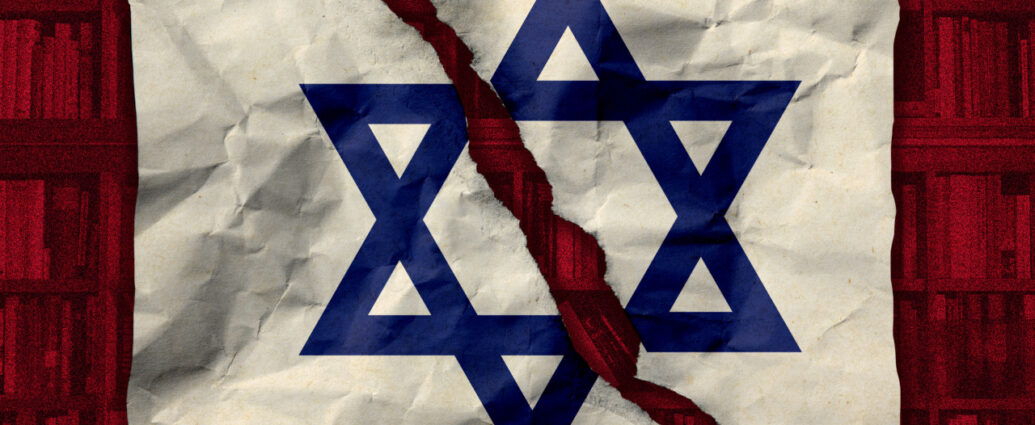



The Question Panera’s Co-Founder Asks CEOs

Opinion: John Fetterman’s post-stroke, politically problematic behaviors offer lessons about brain health on Capitol Hill
When Sen. John Fetterman’s support of Israel garnered him ill will in an increasingly pro-Palestinian Democratic caucus in May 2024, Sen. Cory Booker attempted to rehabilitate his colleague’s sudden turn toward more right-wing, moralistic positions with praise, casting the still-aphasic stroke survivor as an “inspiring figure” whose “moral voice,” despite his language impairments, had “only grown stronger.”
In September, 15 months after Booker’s statement, a Wall Street Journal investigation described a senator so checked out that he skipped 11 of 12 hearings in one stretch, dismissed Children’s Hospital of Philadelphia officials as wanting “free trips to D.C.,” and called a three-hour funeral for slain police officers “a nonstarter.” Rep. Brendan Boyle, a fellow Pennsylvania Democrat, called him “a disgrace” and “lazy.”

Trump officials say AI will help save rural health care. Some leaders in the field don’t believe it
BANGOR, Maine — Rural health care providers, which have struggled for years, are facing nearly $1 trillion in Medicaid cuts over the coming decade. The Trump administration is pointing to a cutting-edge, if unproven way to save them: artificial intelligence.
“The best way to help” rural communities, is “AI-based avatars,” Mehmet Oz, who leads the Centers for Medicare and Medicaid Services, said at an event on mental health this year.

STAT+: Five midterm races to watch that could be crucial for vaccine policy
In Iowa, the Republican candidate for governor wants to end all school vaccine requirements. In Florida, the Republican running for governor recently told CBS that he supported his state’s push to remove certain vaccine mandates for schools. And in Texas, the Republican Senate candidate spent the last few years as the state’s attorney general investigating financial interests linked to vaccine recommendations.
Vaccine policy has become a prominent issue ahead of the November midterms elections, spurred on by a vaccine-skeptical president and health secretary. A number of Republican candidates have embraced health secretary Robert F. Kennedy Jr.’s Make America Healthy Again message, which includes an emphasis on medical freedom and a rejection of vaccine mandates. Other, more liberal candidates, have positioned themselves as willing to stand up and hold Kennedy accountable.
“I can’t wait to sit across from RFK Jr. and actually grill him,” Michigan Democratic Senate candidate Abdul El-Sayed said on CNN in August after winning his party’s nomination.
Ayala, one of Asia’s oldest conglomerates, wants to keep itself together. Its CEO explains why
Cezar Consing had hoped to enjoy retirement. He had stepped down from running BPI, Southeast Asia’s oldest bank, and spent a year and a half playing golf and traveling.
That changed when Ayala Corporation’s chair, Jaime Augusto Zobel de Ayala, called him in a panic. The company’s then-CEO and the chair’s younger brother, Fernando Zobel de Ayala, was resigning for health reasons, and the company needed a replacement.
“It was a bit of an emergency,” Consing says. “We had this conversation that was completely surreal. I ran into my bedroom and asked my wife, ‘I’m being asked to do this. What do you think?’ And she says, ‘Good to get you out of the house.’ So I went back to the phone and said, ‘Done, I’ll take it!’ and I was at work the next day.”
Consing, the first non-family member to serve as Ayala’s CEO, is now running a strategy that most of the global corporate world has ditched. Diversified conglomerates are out of fashion: General Electric, which split into three companies in 2024, and Johnson & Johnson, which spun off its consumer health business as Kenvue, have made corporate break-ups in vogue. Investors have rewarded the strategy with a surge in share prices, and activists are pressuring boards to spin off anything that’s not “core.”
Analysts, too, often talk about the “conglomerate discount”, a trend where the stock market values diversified firms at less than the combined worth of its separate business units.
Instead, Consing wants to keep the sprawling Ayala group together–even if that does mean demanding more from the conglomerate’s portfolio, which spans banking, real estate, telecoms, energy, and more.
Following record profits last year, Ayala has had a tough start to 2026. The conglomerate earned 22.1 billion Philippine pesos ($359 million) in net income over the first six months of the year, , a 7% drop. Profits at Ayala Land, one of the conglomerate’s most important divisions, fell by 19%.
“The group did an excellent job of seeding capital to companies, but I thought it was almost too selfless,” Consing told Fortune. “As the parent, we ought to be more demanding of our business units and grow more shareholder value at the center.”
Despite their declining popularity in the West, conglomerates remain dominant forces across Asia. In Southeast Asia, in particular, conglomerates served as the foundational pillars of emerging economies like Indonesia, Thailand, and the Philippines, where they help to plug “institutional voids”, or gaps in business infrastructure.
Consing drew on his early years as a JPMorgan investment banker in Singapore and Hong Kong to lay down new rules for fiscal discipline. “Instead of just saying that we’ve allocated capital and companies are free to do the most they can with it, we now tell them what we require in return: better dividends,” Consing explains.
“If we don’t extract value from them, how can we remain relevant?”
The argument for a corporate break-up is straightforward: Conglomerates use bumper profits from one part of the business to subsidize less profitable parts of the business, dragging down the whole company. Nor are individual divisions free to act in their best interests, as they are forced to follow the conglomerate’s overall strategy.
GE, once the poster child for a large diversified conglomerate, is now a symbol of why corporate divorces work. In 2018, GE was worth just $89 billion; now, the combined market capitalization of its three successor companies is $689 billion. “GE was pursuing the benefits of synergies… and it was expensive and not working,” Larry Culp, the former CEO of GE and now the head of GE Aerospace, told Fortune in an earlier interview. “The best route was the opposite, allowing each business to operate on its own so it can best serve different sets of customers. Focus beats synergies every time.”
Consing takes a different stance. “Someone told me that synergy works better when companies are more similar to each other, and that’s probably true,” he says. “But if you can make a diverse portfolio work together, that’s truly valuable.” For example, AC Logistics now draws a “fair share” of its business from sister companies like Globe Telecom and ACEN, its renewables arm.
When Ayala decided to push EVs, Consing created a board composed of the CEOs of nearly every major group company, each with a role: Ayala Land to install chargers in its condominiums and malls, ACEN to supply clean power, Globe to connect the charging stations, and BPI to finance the car purchases. “We wanted all our major companies to contribute to the success or failure of our push into EVs,” he says.
That push made ACMobility, the group’s automotive arm, the third-largest car distributor in the country, with 10.9% of the market—even as it posted a 57-million-peso loss ($925,000) in the first half of the year, after spending on marketing and charging infrastructure.
Synergy, Consing concedes, is not automatic. “The temptation is always to do what’s in front of you. Why should you look sideways if there’s so much to do in front of you?” he says. “What we’re asking our people to do is occasionally look sideways.”
Age-old conglomerate
Domingo Roxas and Antonio de Ayala founded Ayala in 1834, when the Philippines was still under Spanish colonial rule. It started as the Ayala Distillery, before expanding into infrastructure with the Ayala Bridge over Manila’s Pasig River in 1872, and the country’s first tramcar service in 1888.
“I look at Ayala more as an idea,” Consing says. “We’ve remained relevant because we have been able to go in and out of businesses that matter for the times.”
Still, since the 1950s, Ayala’s portfolio has maintained two constant pillars: real estate (Ayala Land) and banking (The Bank of the Philippine Islands, or BPI).
Ayala Land posted a net income of 11.5 billion pesos ($186 million) in the first half of 2026, down 19% year-on-year amid a broader housing slowdown in the Philippines. This month, MSCI demoted it from the Philippines Standard Index to the Small Cap Index after a steep slide in its market value. BPI earned net income of 32.8 billion pesos ($532 million), roughly flat year-on-year.
Consing’s first job was at BPI, where he handled corporate banking from 1981 to 1985. He also collected independent directorships along the way at Jollibee, CIMB, and Filipino clean energy firm First Gen. After spending decades abroad, he returned to the Philippines to lead BPI as its president and CEO. “I was out of the country for 28 years, and this was my excuse to come home,” Consing says. “I’ve come full circle.”
At BPI, Southeast Asia’s oldest bank, Consing focused on democratizing its services. “BPI has traditionally been a bank that focuses on the upper tier of the market,” he says. “We made a conscious decision to make it more accessible to the middle and lower classes, and to do that we had to digitalize the bank, since it’s too expensive to try to service everyone over the counter at our branches.”
The country’s pain points
Since Consing took the helm, Ayala has deepened its push into three newer businesses—AC Health, AC Education and ACEN—which he argues matches the “pain points” the Philippines is facing.
“For a country that needs education and healthcare, it makes no sense for their value pools to be as small as they are,” Consing explains. “People should be spending more on them. We, too, want to be in the industries that matter most for our country.” (In 2025, total healthcare spending accounted for 6.7% of the Philippines’ GDP, while government spending on education contributed 4%.)
Energy, too, has proved to be a serendipitous investment. The Philippines, which imports 98% of its oil from the Middle East, was hit hard by the outbreak of the Iran war in February. President Ferdinand Marcos Jr. declared a nationwide state of emergency on March 24.
“The recent energy crisis made us realize we’re thankful to have ACEN,” Consing says. “The Philippines imports so much energy that we basically import inflation…and how you address that is by investing in renewable energy.”
ACEN generates 100% of its power from renewable sources, including solar, wind and geothermal energy. It’s also the group’s most international business, with over 7 gigawatts of attributable capacity across the Philippines, Australia, India, Vietnam and Lao PDR—and a first-half net income of 3.9 billion pesos ($63 million), up 411% year-on-year.
Finally, there’s education. Consing complains that the COVID pandemic left “educational gaps” across the Philippines. In an attempt to plug them, Ayala and Yuchengco, another local conglomerate, partnered with Arizona State University in 2023 to “bring experiential global education to Filipinos on a cost-effective basis”.
“What’s the point of having a demographic dividend if you don’t have an educated population?” Consing grumbles, referring to the idea that countries get an economic boost from young and growing populations.
Still, one gap in the portfolio is consumer retail, where Ayala is “almost absent,” in Consing’s words. On Aug. 12, Ayala launched ACX Retail, a platform designed to bring international fashion, lifestyle and specialty brands to the Philippine market. Thus far, the platform has announced strategic joint ventures with various international retail brands, including South Korea’s Musinsa Standard, Australia’s Anko and Thailand’s Makro.
“I would like our portfolio to mirror the large value pools in the country,” Consing says. “We are already in four or five, so it would be great to be in five of five.”
‘Keeps the country churning’
The Philippines has struggled in recent years. The economy grew by 4.4% in 2025, the slowest pace since the COVID pandemic and a rate Consing calls “unusually low.” The economy has slowed even more this year, growing by just 2.3% in the second quarter. High inflation, averaging 5.0% for the year so far, is dragging down consumer confidence; a corruption scandal is also hurting public spending.
Still, Consing is bullish on the Philippine economy. “The Philippines is particularly good at managing its fiscal and monetary affairs, and that’s given the country some guardrails,” Consing concludes. “You combine that with good demographics and two very unique industries—business process outsourcing and inward remittances—and that’s what keeps the country churning.” (As of 2026, the BPO sector accounts for 8% of the Philippines’ GDP, while inward remittances contribute around 10%.)
Ayala turns 200 in 2034, making it older than most companies on Fortune’s corporate rankings. (Just a dozen Fortune 500 companies are more than two centuries old.) Yet Consing isn’t willing to rest on Ayala’s laurels.
“Nothing is preordained. This almost 200 years of work can go poof if we aren’t good stewards—if we behave badly, if we’re misinformed, if we don’t work hard,” he says. “It’s always: let’s begin again.”
In Fortune’s “Asia Agenda” column, released at least twice a month, we speak with Asia’s top business leaders about how they are building for the future and the lessons they’ve drawn from leading companies in one of the world’s fastest growing and most dynamic regions. Explore all of our profiles here.

This story was originally featured on Fortune.com
Bayer COO: we stopped assigning sales targets. Our teams aimed higher
At Bayer Pharmaceuticals, we made a decision that would sound reckless in many large companies: we stopped assigning sales targets to regions or countries.
We did not eliminate accountability. We shifted it – from an annual number handed down from headquarters to employees deciding where resources will produce the greatest return for patients and the business.
It was one of the hardest decisions I made. My 25-year career had taught me to equate sales targets and budgets with accountability. And there was an added complication: I still had a sales and earnings number to deliver. We are a publicly traded company, so along with our commitment to customers and patients, we guide the financial markets, and I am accountable to our shareholders.
My first instinct was to take that commitment and divide ownership up among employees. But I chose not to. I came to believe that sales targets and budgets can undermine the accountability they were meant to create.
Eliminating these numbers was only one part of a broader redesign of how we operate. Instead of adding layers to the bureaucracy, we stripped them away. Instead of locking in targets and budgets once a year, we began flowing people and resources to opportunities with the greatest potential. We deprioritized the rest. The goal was to put more authority – and accountability – in the hands of the people closest to the market.
That required me to change my own assumptions about leadership. With the redesign, would people still give us their best? The answer depends on what you believe about your people. Ultimately, I had to trust that giving people more ownership and freedom would lead them to aim higher.
My conviction that we needed to change didn’t come from a management book or a consultant’s presentation. It came after sitting through yet another discussion about cutting investment behind our prostate cancer treatment Nubeqa, one of our most important medicines, and thinking: this makes no sense.
In many companies, including ours, there is an incentive to argue for as many resources as possible while keeping the revenue commitment achievable. If you negotiate the expectation low enough and then exceed it, you have succeeded – even if the business could have achieved more.
For example, there was real anxiety as we approached a new year about our ability to grow when Xarelto and Eylea, two of our most important products, faced loss of exclusivity. In the old days, we might have turned that outlook into a negotiation over an achievable sales target: hypothetically, say, a 4% decline, and then celebrated if we beat it and finished down only 3%.
But why should a negotiated number define our ambition?
So, we didn’t turn the forecast into a target. We instead asked a different question: How might we, against all the obstacles, turn this into a year of growth?
That didn’t mean abandoning rigor or going rogue. We identified the handful of things we would have to do exceptionally well, while continually asking: Where are the biggest opportunities? Where should our people and resources go? What is working, and what should we stop? We replaced targets with greater scrutiny of a plan – and more candor about our progress along the way.
Nubeqa became one of the first tests of this approach.
At the time, our U.S. pharmaceuticals business needed to grow significantly. Nubeqa was gaining momentum and represented a big growth opportunity. Yet by the second half of the year, budgets had been spent elsewhere, and we were again preparing to pull investment from a product we relied on for future growth.
Freed from a sales target and a conventional budget, the U.S. Nubeqa team created an ambitious mission: “Quest for a Billion.” It dropped the traditional brand plan and pursued new opportunities with unusual speed.
When the team saw a chance to better serve U.S. veterans, it partnered with a contract sales force – a decision made in under an hour. We launched the program in 45 days. In most large companies, including Bayer, that work would have taken months. Nubeqa became the fastest-growing drug in its category in the veterans community in 2024, increasing utilization by 60%.
What happened afterward matters, too. Once the VA effort had met its objective, the team disbanded it and moved on.
I wasn’t involved when they decided to scale it or when they decided it was time to stop. That’s the new kind of accountability I want: teams knowing when to invest, when to stop and where resources can have greater impact.
The team ultimately achieved blockbuster status five months ahead of schedule, contributing strongly to Nubeqa’s global sales of €2.4 billion in 2025.
The change also altered conversations among our leaders. In the old system, each country leader had an assigned number and budget to defend. Without those individual targets, the question became what would produce the best result for Bayer as a whole.
I saw that shift in late 2024, when I stepped into my role as Worldwide Chief Operating Officer, and we began to scale our transformation. My senior leaders were in a room discussing how to allocate resources across our global business. At one point, the head of Latin America stopped the conversation by simply saying, “We are all the U.S.”
He wasn’t abandoning Latin America. He recognized that the most urgent need – and business return in that moment – was in the U.S. and put the enterprise ahead of his own region.
That’s increasingly how we operate: as one global enterprise where accountability sits close to our markets, but leaders act as owners of the whole. That only works when leaders trust one another to use shared resources wisely – and to move them again when circumstances change.
Bayer’s transformation remains a work in progress. But it is delivering results.
Remember the anxiety I described about whether we could grow? We did, despite the loss of exclusivity of our two biggest brands. And that isn’t all. The U.S., our largest market, now represents more than 30% of Bayer’s pharmaceutical sales, up from 19% a few years ago. We’ve seen growth in markets outside of the U.S. too. In China, the changes have helped us double sales of our kidney therapy, Kerendia, and grow Nubeqa sales by 70%.
Removing sales targets was never about lowering expectations. It was about changing how those expectations are created.
Instead of asking people to negotiate a number they can promise, we ask them to determine what is possible and take responsibility for the choices required to get there. That’s a different kind of accountability: not simply hitting a target someone else assigned but owning the decisions – and the results.
The opinions expressed in Fortune.com commentary pieces are solely the views of their authors and do not necessarily reflect the opinions and beliefs of Fortune.
This story was originally featured on Fortune.com
Billionaire Coinbase CEO Brian Armstrong says most charities are ‘net negative’—and that he has no plans to make his own foundation
Elon Musk isn’t the only billionaire who has a contrarian view of philanthropy. Coinbase CEO Brian Armstrong admitted on a recently published episode of the Katie Miller Pod he doesn’t think charities have much of a positive impact on the world.
“The common view is that philanthropy is like this noble cause,” said Armstrong, who is worth nearly $10 billion. “I guess I have sort of a contrarian view, which is like a lot of charities and philanthropies are actually net negative on the world, and they get captured.”
He went on to argue it’s “remarkably hard to find” a philanthropic organization that hasn’t gotten captured by ideology and hasn’t had unintended consequences on the world. Armstrong, the CEO of the world’s largest cryptocurrency exchange, gave the example of a hypothetical nonprofit organization focused on criminal justice reform that ultimately “just increased crime.”
Armstrong said his main fear about setting up a foundation is “that it just gets captured by some ideology [and] that I lose control of it.” He drew a comparison to Henry Ford, who he argued would be “turning over in his grave” if he knew what the Ford Foundation was doing. That organization awards grants to reduce poverty, stop injustice, and advance human welfare and has awarded about $4 billion across thousands of grants.
Armstrong said, though, he does have a donor advised fund (DAF), “and I just try to put money toward things that I think are helping civilization advance,” although he didn’t mention exactly what those causes are. DAFs essentially serve as a personal charitable savings account allowing people to set aside money for charity, get an immediate tax break, and choose where the money goes later.
While he didn’t say he would never form a foundation, he said it would be “crazy” to do so now.
Other billionaires’ perspectives on giving
While some billionaires, such as MacKenzie Scott (who has given away more than $26 billion) and Melinda French Gates, have been on a giving spree, other ultrawealthy people don’t see the same ease or value in making philanthropic donations.
Musk, the world’s richest man, has infamously lamented how difficult it is to give away money effectively. He also made a direct jab at Scott, arguing her philanthropy was making the world a “worse place.”
Peter Thiel, the venture capitalist and PayPal cofounder, also said the Giving Pledge—the campaign urging the ultrawealthy to give away most of their fortunes—has “really run out of energy,” adding he’s nudged fellow signatories to walk it back.
“I’ve strongly discouraged people from signing it, and then I have gently encouraged them to unsign it,” he said. Thiel has also said he warned Musk his fortune would otherwise flow to “left-wing nonprofits that will be chosen by Bill Gates.”
Meanwhile, other critics of so-called slow philanthropy note many billionaires keep money in foundations and DAFs, which grant immediate tax benefits but carry no requirement to move money to working charities quickly. DAFs have no annual payout mandate, and private foundations must distribute just 5% of assets a year.
The debate isn’t just academic: French Gates, a Giving Pledge cofounder, said in late 2025 that the effort had fallen short of its promise, ripping into a billionaire class she argued has been too slow to part with its wealth. Her critique isn’t at philanthropy itself, but at how little of it actually reaches the people it’s meant to help and how slow it can be.
That said, that fear hasn’t universally stopped philanthropic giving. From Jensen Huang’s $75 million Vanderbilt gift to a resurgent Giving Pledge, plenty of Armstrong’s peers are betting structured philanthropy is still worth it.
This story was originally featured on Fortune.com

Trump’s ‘America First’ national park fees for foreign tourists have raised a quarter of what was promised
Everyone knows “give me your tired, your poor, your huddled masses yearning to breathe free,” are the most famous lines of Emma Lazarus’ poem, “The New Colossus.” But what some might not know is the line before it: “From her beacon-hand glows world-wide welcome.”
I read, and sometimes stared at the bronze plaque inscribed with that poem for eight hours a day, every day, for a year in 2016. Unlike the plaque (and the building it was in), my location was golden: overlooking the New York Harbor, 20 stories off the ground (following 13 flights of intertwining double-helix stairs), chatting with visitors from across the country and around the world about the Statue of Liberty, explaining the symbolism of the tablet (inscribed with July 4, 1776); the lifted foot (breaking from chains); the points on her crown (we simply just don’t know). I was a National Park Ranger, at the Statue of Liberty no less, and during the National Park Service Centennial at that. I and a team of other rangers welcomed a record high of 4.5 million visitors to the Statue that year, often from other countries looking to celebrate the awes and wonders of the national parks system.
They lucked out, because now, a decade later, any foreign visitors to select national parks are subject to an international visitor surcharge as part of the “America-first” pricing plan, which was pitched as a $90 million-a-year fix. And now, half a year into the surcharge, the government says it has brought in just $22.5 million.
Six months after the federal government began charging foreign tourists extra to enter America’s most popular national parks, the fee has raised $22,531,075, Interior Secretary Doug Burgum reportedly told the Daily Signal—roughly a quarter of the $90 million the administration projected for its first year.
The Congressional Research Service noted projecting this revenue “has been challenging… because NPS has not collected systematic data on numbers of international park visitors,” and the government’s own annual FLREA fee-revenue report still lags two years behind, currently covering only fiscal year 2023. Until a newer report or an outside audit surfaces, Burgum’s numbers are the only numbers available.
‘Preserving opportunities for American families’
President Donald Trump signed Executive Order 14314 on July 3, 2025, stating the intention of the surcharges was “to preserve these opportunities for American families in future generations by increasing entry fees for foreign tourists.” Then at a rally in Iowa, he said: “The national parks will be about America first. We’re going to take it.”
The department announced the new pricing last November and it took effect Jan. 1. Foreign visitors now pay $250 for an annual America the Beautiful pass, up from $80, or $100 per person on top of standard entrance fees at 11 of the busiest parks, including Yellowstone, Yosemite, and Zion.
But Burgum said the shortfall is just early-stage growth, not failure, telling the Daily Signal the policy has “created a sustainable funding stream” for the park system.
Still, the rollout hasn’t gone smoothly. Five Senate Democrats, led by Alex Padilla, Catherine Cortez Masto, and Ron Wyden, wrote to Burgum twice, arguing the fee violated the Federal Lands Recreation Enhancement Act, which requires public notice and comment before recreation fees are changed. Interior implemented the fee on schedule anyway, which meant park staff suddenly had to determine who is and isn’t a U.S. resident at the gate.
The NPS has always required resident pass holders to show photo ID; what’s new is non-pass holders at the 11 surcharge parks now face a verbal residency check. The Guardian reported delays at entrances in the fee’s first week, and Padilla and his colleagues have separately asked whether residency data collected at the gate could be shared with other federal agencies, something Interior hasn’t answered.
Neither the Department of Interior nor the National Park Service have responded to Fortune’s requests for comment.
But none of this makes the underlying idea unusual. Charging tourists more than locals is common practice well beyond U.S. borders: The Louvre raised its non-EU ticket price nearly 50%, to $37; South Africa’s Kruger National Park charges foreign visitors $35 a day versus $8 for residents; Kenya’s Masai Mara charges foreigners $200 versus $24 for residents; and Ecuador charges foreign adults $200 to enter Galápagos National Park versus $30 for citizens. Britain has debated, but not adopted, a similar museum surcharge, opting instead for a city-level “tourist tax” on overnight stays.
What’s different about the U.S. version is its timing: International visits to the U.S. fell 5.5% in 2025 even as global travel grew elsewhere, with foreign tourists spending $14 billion less than in 2024, and one analysis found 46% of travelers said they were less likely to visit the U.S. because of the president’s policies.
Charging tourists more only raises real money if the tourists keep showing up, and right now, fewer of them are.
This story was originally featured on Fortune.com

Wealthy parents are buying their kids $75,000 AI schooling with guardrails as schools grapple with a literacy crisis
Rich families have tried to personalize their children’s education since the days of ancient Greece, when Alexander the Great’s father hired Aristotle as a tutor for his son.
The AI age is ushering in a new iteration of this behavior as anxiety looms about how the technology will reshape work opportunities for young people and how best to prepare them for an economy that could see less entry-level hiring and more requirements for AI literacy.
Some families are shelling out up to $75,000 per year to send their kids to the AI-powered Alpha School: A spokesperson told Fortune has more than 1,200 students as it plans to expand to 50 campuses this year. There, students spend two hours per day on core subjects with an AI tutor before devoting their afternoons to workshops designed to hone skills like public speaking and relationship building. Human teachers called “Guides” are still there to get to know and motivate the students, but they don’t plan lessons or grade homework.
“I definitely think using AI well is a skill in the future, if not the skill, so it’s kind of a disservice not to have that in school,” Sarah Cone, a venture capitalist whose 8-year-old daughter attends the Alpha School in New York, told Fortune.
Affluent families like Cone’s can curate schooling that integrates AI use with human instruction through places like Alpha as schools nationwide figure out how to teach or restrict the technology, with New York City recently announcing a one-year ban on student-facing generative AI for kids in 2-K through eighth grade. Researchers have warned indiscriminate AI use can erode the cognitive effort needed for learning, but suggested intentionally designed AI tools, like chatbots acting as math tutors instead of giving away answers to problems, can improve learning.
But Huriya Jabbar, a professor of education policy at the University of Southern California, explained that public schools with fewer resources often can’t implement that kind of AI curriculum due high teacher turnover. The thought is someone could be trained in how to engage students with it, but then leave in a year. She also cited other constraints like schools serving low-income students facing more pressure to boost test scores with less bandwidth for innovating new approaches to teaching.
“AI—just like any other tool, technology, curriculum—is going to play out in an already unequal landscape,” Jabbar told Fortune.
Schools grapple with literacy
Introducing more technology in schools isn’t a new concept, but the rollout of computers to schools since 2014 to help students learn is now being blamed for worsening students’ ability to think.
Neuroscientist Jared Cooney Horvath testified to Congress screen-based learning was distracting from learning and leading to lower test scores, saying in the hearing “our kids are less cognitively capable than we were at their age.”
“This is not a debate about rejecting technology,” Horvath said separately in his prepared remarks. “It is a question of aligning educational tools with how human learning actually works. Evidence indicates that indiscriminate digital expansion has weakened learning environments rather than strengthened them.”
A similar dynamic is playing out with AI as students use chatbots without the guardrails provided by schools. An estimated 84% of high school students report using AI for homework help, and one in five high schools allow AI use but have no formal policy for it, according to 2025 surveys from College Board, the nonprofit that administers SAT and AP testing. But using AI for homework doesn’t translate to learning for exams. A study looking at AI adoption by 26,811 Chinese students in grades seven through 12 found AI use boosted homework scores by 18%—then tanked exam scores by 20%.
This is happening as foundational literacy skills are eroding. Reading and math performances for 15-year-olds in 38 free-market democracies on the globally watched benchmark Programme for International Student Assessment (PISA) reached the lowest average ever recorded, with U.S. students’ average reading scores dropping by 14 points to 490, the lowest since it began participating in the exam in 2000.
Worsening learning outcomes in grade school follow students to college. Professors previously told Fortune students are arriving to classrooms unable to process long passages and leaning on AI summaries. Gen Z is also reading less than other generations, with Americans between 18 and 25 reporting they read 5.8 books on average in 2025 compared to 12.1 for Americans 65 and older and 8.2 for those between 30 and 44.
But the goal of educators still has to be developing writers and readers even when AI can interpret texts and generate writing, according to Kirsten Peterson, a senior project manager at the nonprofit Education Development Center.
”We want readers who can interpret, question, make connections, recognize perspective, evaluate evidence, sit with ambiguity, and form their own understanding,” Peterson told Fortune. “We have to be really careful not to use AI to remove the very thinking students need to practice in order to become literate.”
This story was originally featured on Fortune.com

‘We worry now’: Oil tops $100, diesel hits record highs amid Iran war escalation
Pockets of fuel shortages worldwide, continuing price spikes, and rising inflationary pressure are now more imminent amid the ongoing Iran war escalation and the continuing decline of global energy supplies, analysts said.
On Wednesday, the global benchmark for crude oil topped $101 per barrel for the first time since July and the U.S. standard for diesel rose above $200 per barrel—just the second time ever after a brief blip in 2022 following Russia’s invasion of Ukraine. With oil flows again slowing to a crawl in the Strait of Hormuz bottleneck, central banks worldwide will again look at rate hikes to stem rising inflationary pressures, they said.
“The conflict has entered a new stage,” said Susan Bell, senior vice president for the Rystad Energy research firm. “Global stocks of diesel, gasoline, and jet fuel have drawn down an awful lot; they are now at critical low levels. They’ve breached levels we last saw after Russia first invaded Ukraine.”
The only solution is that prices rise more to force further “demand destruction” of oil and fuels, she said. “I hate to say it, but we need prices at the pump to go up higher to encourage consumers to make choices on their energy consumption. We need more (global) austerity measures,” Bell told Fortune.
Heading into the fall and winter, fuel shortages—especially diesel—will become more prevalent, especially in the U.K. and other parts of Europe, as well as much of South Asia, she said.
This week has already seen the U.S. more aggressively attack Iranian oil tankers with Iran targeting vessels as well, and the Yemeni Houthis escalating attacks on Saudi Arabian energy facilities and vessels in the Red Sea—tankers that already were taking alternative paths to avoid Hormuz. As such, moderate tanker traffic through Hormuz in recent weeks—sometimes above 50% of pre-war volumes—has again slowed to very little movement.
While countries continue to deplete their oil reserves—the U.S. Strategic Petroleum Reserve is down to a 44-year low—there are no comparable reserves for fuel, and many refineries are offline from the Middle East to Russia. Supplies are becoming especially dire for diesel, which fuels the global economy for trucking fleets and more, said oil forecaster Dan Pickering, founder of Pickering Energy Partners consulting and research firm.
“The [global] market is competing for a limited supply of diesel. So, at what point do we worry? We worry now,” Pickering told Fortune. “Prices are quite high and there’s no easy relief valve. Nobody is building new oil refineries.
“There’s a growing awareness that diesel is the bigger canary in the coal mine right now. Folks are paying attention to $100 [oil], but they really ought to be paying attention to $200 diesel,” he added.
And inflationary pressures are rising.
“The risk that this shows up in inflation is growing—not just U.S. inflation, but global inflation,” Pickering said. “You’re starting to see more folks talking about how this might impact interest rate decisions at central banks.”
Looking forward
The average price for a gallon of regular unleaded gasoline in the U.S. rose to $4.22 on Wednesday—an all-time September high. And the price at the pump for diesel in the U.S. already is at its highest ever.
Casey’s General Stores—the third-largest convenience store chain in the U.S. after 7-Eleven and Circle K—is seeing impacts at the pump and in snack sales, said Casey’s CEO Darren Rebelezon during an earnings call Wednesday.
“With the higher fuel prices, we’re seeing exactly the type of behavior that we would expect to see—fewer gallons per trip, but more trips made,” Rebelez said. “People are trading out of premium and mid-grade and opting for regular.”
And customers are buying fewer in-store brand-name snacks because of inflationary price increases, he said, adding that the behavioral buying differences are starker amongst lower-income customers.
While some countries and companies can work on pumping out marginally more oil—and further deplete oil reserves—similar solutions don’t exist for fuel.
“You can’t spend money and fix the problem,” Pickering said. “You either need to resolve the Middle East situation and get that capacity back on or resolve Russia-Ukraine and get that capacity back on. If you can’t do that, then price and demand must solve the imbalance, which is painful to consumers.”
Speaking to reporters Wednesday, President Donald Trump said he expected Iran to continue the war through the November midterm elections in order to damage him politically—a sentiment shared by energy analysts.
“They’re desperate to try and affect the election so that we can get a nice weak group of people in there and leave them alone and let them have their nuclear weapon,” Trump said, arguing that Iran is losing and he will aim to end the war “immediately after the election.”
Rystad Energy chief economist Claudio Galimberti said the combination of further depleting inventories and demand destruction from rising prices will keep the global economy afloat into November and early December if necessary.
But, by the end of the year, a U.S.-Iran truce may become necessary to avoid major economic damage into 2027, he said. “The [Trump] administration will want to show inflation is under control.”
This story was originally featured on Fortune.com
Yemeni government says campaign to retake Sana’a from Houthis has begun
Yemeni government forces have launched a counteroffensive against the Houthi terror group on several fronts, with senior officials describing the campaign as an effort to retake Sana’a after years of relative military stalemate.
Deputy Defense Minister Maj. Gen. Samir al-Sabri said on official Yemeni television that “the decision to liberate Sana’a has been finalized and taken decisively,” adding that government forces were advancing on several fronts. He said the objective was to restore state institutions and end Houthi control of the capital.
The Iranian-backed Houthis have controlled Sana’a since late 2014. Saudi Arabia launched Operation Decisive Storm with a Saudi-led coalition in March 2015, followed by Operation Restoring Hope the next month, but neither campaign succeeded in removing the group from the capital.
Fighting eased after a UN-brokered truce in 2022, though Yemen remained divided between Houthi-held territory in the north and areas administered by the internationally recognized government and southern forces. Calls for southern secession have further complicated efforts to rebuild a unified state.
Government officials say the current campaign has brought advances in the governorates of Al-Jawf, Al-Bayda, Taiz, and Al-Hudaydah. Those claims have not been independently verified in full, though recent reporting has confirmed intensified fighting in Al-Jawf and Al-Bayda.
Col. Majid al-Nuzaili, the official spokesperson for the Yemeni Armed Forces, said on X that “the Houthi group has attempted over the past years to impose on Yemeni society a project that transcends politics, attempting to alter the very nature of the religious, social, and cultural life that Yemenis have known throughout their history.”
He continued, “We do not want Yemen to become a replica of Iran, nor do we want to import centuries-old sectarian and historical conflicts into our country, nor do we want Yemenis to be forced to endure disputes that have never been their primary concern.”
In recent days, Saudi-backed Yemeni forces have stepped up operations against Houthi positions. The renewed fighting has coincided with Houthi missile and drone attacks on Saudi Arabia.
Saudi authorities said Houthi attacks on Sept. 8 struck sites in Abha, Jazan, Najran, and Khamis Mushait, injuring 73 people and causing fires and operational disruptions at energy facilities. The Houthis said the attacks were retaliation for Saudi military operations in Yemen.
Brig. Gen. Yahya Saree, the Houthi movement’s spokesperson, said on X that the operations in Yemen constituted “Saudi aggression.” He asserted that “Saudi Arabia is carrying out these operations,” not the Yemeni army, and threatened further attacks if the campaign continued.
Preparations Began Early
Hamed al-Ruba’i, a retired colonel in the Yemeni army, told The Media Line, “The battle to liberate Sana’a effectively began several years ago, through preparations, unifying the ranks of the armed forces, winning over Yemeni tribes, and securing military equipment, supplies, plans, training, and other resources.”
He continued, “The plan was clear: we wouldn’t begin until we were completely ready for this battle to ensure its success. Now is the most opportune moment, as the whole world has become aware of the danger posed by the Houthi militia, after their repeated targeting of several neighboring countries, shipping in the Bab el Mandeb Strait, and maritime traffic in the Red Sea, actions carried out on Iranian orders.”
Al-Ruba’i emphasized that “the most important thing was training, effective plans, and mobilizing the tribes, as Yemeni unity is what will defeat the Houthis.”
Street Battles and Changing Tactics
Yemen’s mountainous northern provinces, including Sana’a and Sa’dah, pose a major obstacle to any attempt to dislodge the Houthis. More than a decade of air campaigns has not removed the group from its northern strongholds, leaving any offensive dependent on ground forces and local alliances.
Ahmed al-Sabahi, a Yemeni military analyst, told The Media Line, “The battle to liberate Yemen from the Houthis will depend on the armed forces’ ability to engage in street battles to eliminate what remains of them.”
He added, “Now there is a tribal army and the Yemeni army, and they all know this terrain, how to hide in it, and from where to retaliate against the Houthis. This is what we are seeing in the current operational approach.”
Mohammed al-Kamel, a military analyst, told The Media Line, “The Yemeni army has changed its war tactics against the Houthis, starting with cutting off their supply lines, launching surprise attacks, and opening multiple fronts.”
He continued, “Drones are also being used in some attacks, and there are also warplanes providing air cover for the ground forces. Therefore, the armed forces’ tactics this time are more serious in liberating Sana’a.”
Al-Kamel added, “The Yemeni armed forces may have obtained the drones from Turkey, and several other arms sources.”
He said the Houthis had “lost a significant portion of its forces due to the operations it has carried out over the past three years, including targeting ships in the Red Sea, shelling Israel, and also the attacks on Saudi Arabia. With Iran’s involvement in the war with America, it has not supplied the Houthis with the necessary weapons and sufficient equipment, and they are perhaps now at their weakest point.”
Political support and regional risks
In a Sept. 8 statement on X, the US Embassy in Yemen said, “The Houthis started this conflict and must bear the consequences of their aggression. The Republic of Yemen is the sole legitimate government and has every right to defend its people and end the Houthis’ ability to inflict terror.”
At a press conference with Russian Foreign Minister Sergey Lavrov on Tuesday, Saudi Foreign Minister Prince Faisal bin Farhan said that “the Houthis have opened a Pandora’s box for themselves.”
He added, “The Houthis prioritize their narrow, self-serving interests over the interests of Yemen and resort to violence whenever they are in a difficult position.”
Faisal bin Farhan continued, “The path for diplomacy to deal with the Houthis remains open.”
Saudi Arabia also said in a Foreign Ministry statement carried by the Saudi Press Agency that “the Kingdom reserves the right to respond to these attacks in self-defense.”
Potential Turkish, Pakistani participation
Dr. Awad al-Quraini, a Yemeni political analyst, told The Media Line, “Turkish or Pakistani forces may participate in operations to deter the Houthis, should Saudi Arabia declare that it is under attack and hostile operations, in accordance with the Mecca Agreement recently signed in Saudi Arabia.”
Al-Quraini added, “If Turkey and Pakistan enter the fray, the Houthis will fall within days. They made a mistake by targeting Saudi Arabia under this recently signed security agreement.”
He said that Turkey’s participation could involve equipment, drones, and warplanes, while Pakistan could provide ground forces.
Saudi Arabia, Turkey, and Pakistan signed the Mecca Joint Defense Agreement in August. The agreement includes collective-defense language, but the governments have not publicly defined the military commitments or procedures that would follow an attack on a signatory.
No Turkish or Pakistani deployment to Yemen has been announced.
Life under Houthi rule
Residents of Sana’a have endured severe economic hardship during more than a decade of Houthi rule, according to interviews with people in the capital. Humanitarian conditions, public services, salaries, and access to basic goods remain central concerns.
Munther Mohammed, a Yemeni citizen living in Sana’a, told The Media Line, “We are living in dire circumstances. Salaries aren’t even enough to buy bread for the entire month. There are no hospitals, no services, and none of the basic necessities for a human life. We can’t leave the governorate easily.”
He continued, “We want to get rid of the Houthis by any means necessary.”
Mohammed al-Dhubyani, a former Yemeni trader, agreed with Munther, telling The Media Line, “We pay taxes to the Houthis, and they often confiscate our goods. There are no regular salaries, and living has become difficult for everyone.”
The Houthis Say They Are Ready
Samir al-Numairi, a Yemeni journalist aligned with the Houthis, told The Media Line, “The Houthis will be able to deter this aggression. They have enough weapons, and they launched one of the largest attacks on Saudi Arabia, and they have more.”
He continued, “The Ansar Allah [Houthi] group will not submit to any compromises, and they will not sit at the negotiating table. They have significant military capabilities that they have built to deter any aggression, and they are ready for it.”
Russia markets drone-like missiles in Egypt during Su-57 jet’s Africa air show debut
Russian state-owned arms exporter Rosoboronexport showed off drone-like missiles for its Sukhoi Su-57 fifth-generation stealth jet fighter in Egypt on Wednesday as the warplane made its African air show debut.
The jet roared over the arid landscape outside the El Alamein International Airport near the Mediterranean coast during the second installment of an exhibition meant to position Egypt as a gateway to African and Middle Eastern markets.
On display in Russia’s section of the airfield were S-71M and S-71K missiles, which combine features of cruise missiles and low-cost attack drones, according to defense industry outlets.
The airshow in El Alamein marked the first time the missiles were displayed publicly, though they have previously been used in combat, said a Rosoboronexport representative, who spoke on condition he not be named.

“It’s not a drone, it’s not a missile, it’s something [like] both,” he told Reuters.
The export model of the Su-57, a rival to Lockheed Martin’s F-35 Lightning II, has previously been shown in China, India and the United Arab Emirates. Ukraine said it hit an Su-57 at an air base inside Russia in 2024.
Elsewhere at the airshow, China displayed its J-16 fighter jet, just weeks after the warplane took part in joint military exercises with Egypt in the aircraft’s first deployment to Africa.
Companies from Turkey, the United Arab Emirates and Egypt also featured heavily at the exhibition, hawking products for an era of war increasingly dominated by drones as military delegations from countries such as Sierra Leone, Tanzania and Kuwait browsed their booths.
Mohammed Al-Sayed, a consultant at the Egyptian private defense company Amstone International Group, said turnout reflected interest in Egypt as a gateway to African and Arab defense markets.
WATCH: Prosecutors move to indict Beersheba man in sedative-laced baby food case
Prosecutors were expected to notify a court on Thursday that they intend to indict Yan Shemla, a 41-year-old Beersheba resident suspected of deliberately placing sedative drugs in baby fruit purees sold in Jerusalem, police said.
Police will ask the court to keep Shemla in custody for another five days while the indictment is prepared.
The prosecutor’s statement marks the final stage of the investigation before charges are filed.
Shemla is suspected of contaminating jars of Prinok fruit puree that were linked to the hospitalization of at least four children in Jerusalem earlier this year.
The investigation became public in June after children were taken to Hadassah-University Medical Center in Ein Kerem suffering from unusual weakness, drowsiness and apathy. Tests found benzodiazepines in their blood, while Health Ministry laboratory tests identified the sedative drugs clonazepam and lorazepam in jars of the puree.

The children were released from the hospital after observation.
The affected products had been bought at two branches of the Zol VeGadol supermarket chain in Jerusalem. The Health Ministry issued closure orders against both stores at the time but did not order a blanket recall of Prinok products, saying the evidence pointed to a localized incident.
Police said investigators reviewed hundreds of hours of security-camera footage from several locations and used technological tools to identify Shemla.
According to police, investigators initially had no clear lead because hundreds of people passed through the locations each day and the suspect had no known prior connection to the children or the products.
Police surveilled Shemla before arrest
After identifying Shemla, detectives placed him under covert surveillance, tracking his movements and routine until police believed they had gathered sufficient evidence to arrest him at his home.
Police also released security-camera footage on Thursday showing Shemla inside a supermarket around the time of the alleged acts. The publicly released footage does not show substances being placed inside the jars.
The Shin Bet (Israel Security Agency) assisted the investigation, police said. Thursday’s announcement did not identify a suspected motive or say that the case was being treated as terrorism.

Teacher shot in school parking lot near Beersheba, hospitalized in moderate condition
A 40-year-old teacher was shot in the parking lot of a school in Hura, northeast of Beersheba, on Thursday morning.
Students were in the area at the time of the shooting.
The shooter’s identity and motive remain unclear at the time of writing.
Magen David Adom paramedics arrived at the scene and provided initial medical care to the victim before evacuating them to Soroka Medical Center, Beersheba, for further treatment.
The victim was in moderate condition at the time of their hospitalization, MDA said.
The school temporarily suspended classes after the incident and released a statement cited in Israeli media.
“This is an extremely serious incident and a crossing of a clear red line. We wish to convey a clear message to students and parents alike: the school is a protected and safe space,” the school said.
“Harming a teacher or any staff member is an attack on the heart of the educational system, and we will not tolerate it. Violence is not a way to resolve disputes, is not legitimate under any circumstances, and will not be part of the agenda,” it added.
Jerusalem Post Staff contributed to this report.
This is a developing story.
IDF soldier steals three M-16s from Shayetet 13 Navy SEALs, military launches investigation
An IDF soldier stole three M-16 rifles from Shayetet 13 Navy SEALs during the night between Wednesday and Thursday, N12 News first reported on Thursday morning.
The IDF confirmed that it was launching an investigation into the incident.
“The IDF views any incident involving the theft of weaponry with great severity and acts decisively, along with Israel Police officers, to prevent such occurrences,” the military said.
“Following the incident, a joint investigation was launched by the Military Police’s Criminal Investigation Division and Israel Police officers,” the military added.
“The investigation’s findings will be submitted to the Military Advocate-General Corps for review upon completion,” the military stated.
This is a developing story.
Trump’s Iran campaign echoes the post-9/11 ‘forever wars’ – analysis
When Donald Trump campaigned for a second term in the White House, he promised to be a “president of peace” who would stop foreign wars, not start them.
Now, a quarter-century after the September 11, 2001, attacks that triggered America’s global “war on terror,” he is entangled in an unpopular conflict of his own making that analysts say risks becoming his version of a “forever war.”
With the 9/11 anniversary at hand, Trump’s war against Iran is drawing comparisons in foreign policy circles to the long, divisive conflicts in Afghanistan and Iraq that preceded it. It is also prompting questions about whether the US has again failed to learn the lessons of past conflicts or prepare a clear exit strategy.
“Trump has broken an important post-Iraq and Afghanistan constraint in Washington against launching another major, open-ended war in the Middle East,” said Sina Toossi of the Center for International Policy, a Washington think tank. “That could leave his successor inheriting … an entrenched US-Iran confrontation.”
Administration officials have said the war against Iran is nothing like the protracted post-9/11 engagements.

During the conflicts in Iraq and Afghanistan, the US removed hostile governments, committed thousands of ground troops who took and held territory, suffered and inflicted much higher casualties, and struggled to instill Western-style governance.
US mired in war of attrition
This time, the US is relying mainly on air and naval power, operations that have damaged Iran militarily and economically but have not defeated it or spurred Iranians to overthrow their rulers as Trump initially urged.
But after six months of war, the United States is mired in a battle of attrition punctuated by bursts of hostilities – exemplified by this week’s exchange of attacks on oil tankers – while Trump tries to tighten the economic noose around Tehran.
Analysts warn it is likely to drag on well past the US midterm elections in November, when voters’ opposition to the war could threaten Trump’s Republican Party’s chances of keeping control of Congress.
And, much like those earlier conflicts, there is no obvious exit even as the economic costs weigh on US consumers.
Tehran’s disruption of oil shipments through the Strait of Hormuz has pushed US gasoline prices higher. The war has weakened Trump’s approval ratings and undermined Washington’s international standing, which was also one of the repercussions from the Iraq and Afghan wars.
White House spokeswoman Anna Kelly said Trump alone had “possessed the courage” to confront Iran over its nuclear program, that he had achieved all of his objectives, and that Iran’s economy was being crippled by stepped-up sanctions and a US maritime blockade.
She did not respond directly to Reuters‘ questions on how the Iran conflict fits into America’s legacy of post-9/11 wars.
Lessons ignored?
Analysts say Trump has failed to heed the central lessons of the post-9/11 era, which began after al-Qaeda militants crashed planes into New York’s World Trade Center and the Pentagon outside Washington, killing nearly 3,000 people.
Those include the steep political downsides of long wars and the dangers posed by an entrenched foe fighting for its survival.
The attacks led to decades of conflict, starting with the invasion of Afghanistan, where al-Qaeda leaders were sheltering, and followed by the 2003 invasion of Iraq, based on what turned out to be faulty intelligence that it was developing weapons of mass destruction.
The twin wars undertaken by President George W. Bush overstretched the US military and destabilized the Middle East.
The resulting US public backlash helped fuel Trump’s rise a decade ago, and he won a second term in 2024, vowing to avoid military adventurism and focus on Americans’ economic concerns.
But similar to how the Bush administration underestimated the insurgencies the US would face in Iraq and Afghanistan, Trump and his aides have miscalculated Iran’s resiliency and ability to throttle a fifth of the world’s energy shipments, analysts say.
Notably, Trump’s “Operation Epic Fury” launched alongside Israel on February 28 was not precipitated by a 9/11-type national trauma but was deemed by critics to be a war of choice. Experts have disputed Trump’s claims that Tehran’s nuclear program posed an imminent threat to the US
Iran may be taking a page from Afghanistan’s Taliban, who returned to power five years ago after a chaotic US withdrawal, that a determined foe can outlast Washington’s superior firepower while domestic pressure erodes its resolve.
The Iran conflict has also illustrated the cost of going to war with few allies on board.
Bush secured significant international support before launching his Iraq and Afghan campaigns, though that backing waned over time.
By contrast, Trump attacked Iran with little prior consultation or explanation and has found European and Asian leaders mostly resistant to his demands for assistance.
Relations with Trump had already been strained by his threat to seize Greenland, his questioning of NATO’s utility, his reduction of weapons supplies to Ukraine and his sweeping tariffs on trade partners.
High cost for allies
The conflict has also mirrored the Iraq invasion in terms of a regional spillover that seemed to catch Washington off-guard, in this case Tehran’s retaliation against US Gulf allies.
With Iran’s neighbors quietly seeking to de-escalate a conflict they never wanted, a Gulf official lamented that the administration might be making some of the same errors of the post-9/11 wars.
“What was the (US) strategy here?” asked the official, speaking on condition of anonymity.
Saudi analyst Aziz Alghashian described “a sense of limitation and helplessness in the Gulf about the wars that are taking place due to the whims of the United States.”
While the Iraq and Afghan wars ended as unpopular conflicts, both started with solid support at home.
Trump’s war enjoyed no such honeymoon in public opinion.
Most Americans were against it from the outset, and he has even drawn criticism from prominent figures associated with his “America First” movement.
Trump had initially expected to replicate his quick win from a January 3 raid that captured Venezuelan leader Nicolas Maduro.
But the Iran campaign instead has hardened into an uneasy stalemate that has not achieved most of Trump’s shifting objectives, including shutting down its nuclear program, and has depleted the Pentagon’s missile stockpiles.
Still, Trump is not without defenders.
Mark Dubowitz, head of the Foundation for Defense of Democracies, an anti-Iran think tank in Washington, denied Trump had plunged the US into an endless war and insisted he had scored successes that would eventually bring victory.
“It’s been a 47-year war waged by the Islamic Republic against America,” Dubowitz said. “And now we’ve struck back.”
US grant for MAGA-aligned groups in Europe excludes French applicants over election fears
A US grant program for organizations pursuing Trump administration priorities in Europe will exclude French groups because of sensitivities over allegations of foreign interference ahead of next year’s presidential election, according to two sources.
The decision has already been communicated to French officials, one of the sources said. It reflects a recognition in Washington that funding MAGA-aligned organizations in France could jeopardize extensive economic ties between both countries.
US President Donald Trump‘s administration has sought to support far-right parties across Europe, accusing the continent’s centrist leaders of overseeing “civilizational erasure” and “the subversion of democratic processes.”
The US State Department’s Bureau of Democracy, Human Rights, and Labor (DRL) grant program offers between $1 million and $3 million to organizations seeking “to strengthen and develop democratic resilience, rule of law, freedom of speech and freedom of the press, and the defense of human rights in Europe,” according to DRL’s July 13 funding guidelines.
Eligible groups may also focus on “national sovereignty, migration, censorship, and lawfare challenges.”

French concerns over election interference rise
France, which faces a presidential election next April-May that could hand power to Marine Le Pen’s far-right National Rally (RN), has grown increasingly worried about potential US interference in the vote. The RN has pledged a constitutional reform to ramp up deportations, restrict birthright citizenship and give French nationals priority access to public services.
In July, just days after DRL published its funding announcement, French Foreign Minister Jean-Noel Barrot reacted angrily on X, writing: “France and the Europeans will not tolerate any attempt at foreign interference in their electoral processes, regardless of where it comes from.”
One French applicant, who declined to be named, said they had sought $1 million for their organization’s work on anti-censorship and freedom of speech initiatives. They were recently informed that French groups would be excluded because of concerns over foreign interference.
According to the source, US officials were particularly concerned that US-funded activities could conflict with a proposed French law that would strengthen penalties for online disinformation and foreign interference in democratic processes. The fast-tracked, government-backed bill is currently before the Senate.
Although DRL’s August deadline has now passed, the source said they may relocate their organization, potentially to Brussels, to qualify for future funding opportunities.
A State Department spokesperson declined to answer whether French groups were now excluded, saying “programs are still in active deliberation,” and adding “we do not comment on private diplomatic discussions.”
France’s foreign ministry did not respond.
Franco-American relations strained
Although several senior MAGA officials within the State Department have sought a tougher line on France over freedom of speech and tech regulation, sources say they have faced pushback from other US officials who fret about negative repercussions for US companies with significant operations in France.
The United States is France’s top foreign investor, with $107.9 billion invested in the French economy in 2024, while the two nations traded $160.9 billion in goods and services that year, according to US government data.
Still, diplomatic relations are at a low ebb.
On top of lingering issues over tariffs, the Iran war and threats to European sovereignty, Washington has yet to accredit France’s next US ambassador following public French criticism of the United States’ human rights record.
French officials have been irked by US Ambassador to Paris Charles Kushner, whose son Jared is married to Trump’s daughter Ivanka. He has twice failed to respond to summonses in Paris following diplomatic incidents.
They were also upset when DRL officials traveled to Paris last year to support Le Pen after a court barred her from office as part of a drive against alleged “lawfare” against conservatives.
NATO allies foil Russian subsea cable sabotage plot in Arctic waters
Deep in Arctic waters near the remote Svalbard archipelago this spring, NATO allies caught Russian subs training to unleash a secret weapon designed to disable critical undersea cables without leaving any fingerprints.
The clandestine Russian operation, described to Reuters by two Western officials, was carried out by Moscow’s GUGI undersea warfare directorate, which used deep-sea submersibles to simulate the deployment of the sophisticated and destructive technology.
A joint operation involving Britain, Norway and the United States tracked and confronted the Russian vessels at sea, said the two officials, speaking on condition of anonymity. The vessels were prevented from completing their exercise and eventually left the area.
Britain and Norway disclosed in April that they had uncovered a covert Russian operation in Arctic waters. But the discovery of the new weapon, the location of the operation and the US involvement have not been reported.
The deep-sea face-off comes at a time when some Western intelligence officials fear the Kremlin is ramping up sabotage operations in Europe and preparing for a conflict with NATO.

Some US intelligence analysts are increasingly concerned Russia may test NATO’s mutual defense pact, known as Article 5, three US officials said. If it does, destroying subsea cables could be a critical part of that effort, the Western officials said.
Cables no thicker than a garden hose, lying on the seabed or buried just below, are critical to global internet connectivity and financial transactions. Their economic and strategic importance has made them targets in past conflicts, including in the First and Second World Wars, when they were critical to delivering orders by telegraph or telephone.
Two 1,400 km subsea fiber-optic cables linking Svalbard to mainland Norway lie as deep as 2,700 meters below the sea’s surface. They carry vast amounts of satellite data downloaded at the SvalSat satellite ground station, the world’s largest and part of NASA’s Near Space Network.
Russia’s Defence Ministry didn’t respond to a request for comment on the incident. The Kremlin consistently denies conducting sabotage operations in NATO countries or plotting any confrontation.
Some Western officials argue that Moscow’s targeting of European states has increased in recent months as the front line in Ukraine has become largely static.
Countries including Poland, Lithuania, and Romania have confirmed various violations. Most recently, an attempted drone attack on the Leipzig/Halle Airport in August triggered a series of responses from Germany, including the closure of a Russian consulate in Bonn and a cultural center in Berlin.
In August, Central Intelligence Agency Director John Ratcliffe visited intelligence counterparts in Moscow, in part to warn Russia against escalating sabotage operations in Europe, said two people familiar with the matter.
Reuters couldn’t determine if Ratcliffe raised Russia’s covert subsea operations. The Kremlin declined to say what had been discussed or to provide any further details.
Arctic exercise
At the same time as the confrontations at sea, British and Norwegian officials took their findings to Moscow to show they were aware of the new technology – hoping it might make Russia hesitate to use it, the two Western officials said.
Russia didn’t damage any cables. The exercise focused on simulating the deployment of the technology in the event of a conflict with NATO, the officials said. They declined to detail how the technology works.
Asked for comment, NATO referred Reuters to Norwegian and UK authorities.
“Through our joint operation, we sent a clear message to Russia that they cannot operate covertly,” Norway’s Defence Minister Tore Sandvik said in a statement.
“We have made it unequivocally clear to Russian authorities that any attempt to target our critical infrastructure will be detected and met with consequences,” he said. “It is in no one’s interest to escalate tensions in the High North.”
Britain’s Defense Ministry pointed to April 9 statements acknowledging attempted covert activities in and near Norwegian and British waters by Russia’s Main Directorate of Deep-Sea Research, known by its Russian acronym GUGI. Washington and London have both imposed sanctions on the secretive directorate.
The White House didn’t respond to a comment request. The CIA declined to comment.
Any escalation between Russia and NATO could quickly underscore the strategic importance of an icy expanse of water between the southern tip of the Svalbard archipelago and mainland Norway known as the Bear Gap, one of the Western officials said.
To reach the Atlantic, Russian nuclear submarines based in the Kola Peninsula would cross the 400-mile-wide stretch of water before passing Norway’s remote volcanic island Jan Mayen.
Britain said this week it deployed forces to Jan Mayen in August alongside Norwegian and US allies for an exercise to demonstrate NATO’s ability to operate jointly in the High North.
Norway plans to have new fiber-optic cable linking Svalbard and Jan Mayen to the mainland by 2028.
‘Burgeoning Russian threat’
NATO allies have focused on subsea infrastructure security since the 2022 destruction of three of the four Nord Stream subsea pipelines supplying Germany with Russian gas. German prosecutors have indicted a Ukrainian man who was a special forces officer at the time of the attack. Ukraine denies any role in the sabotage.
And since 2023, more ships have sailed slowly over or near sensitive subsea infrastructure, including pipelines, power cables and telecoms cables, to map their location, an activity known as drifting.
Last year, drifting in the North Sea rose 52% to 13,079 vessels from the previous year, data from maritime risk analytics firm Windward showed, while activity in the South China Sea region jumped 88% to 18,401 vessels.
It’s not illegal to survey infrastructure in international waters, but security experts see such extensive mapping as preparation for sabotage.
The activity and suspected interference with some cables prompted new initiatives launched in January last year, including NATO’s Baltic Sentry monitoring system and the UK-led Nordic Warden, bringing navies together for increased patrols of critical infrastructure.
In the Baltic Sea – one focus area for monitoring – 2025 drifting activity was down 5% to 526 vessels from a year earlier, Windward data showed. It said at least 11 subsea cables had been damaged or cut in the Baltic from October 2023 through the end of last year.
“The current thinking is that Russia and China are probably the most active and critical underwater threats,” said Windward Chief Executive Ami Daniel.
The global network of power and telecoms cables running across seabeds is expanding each year, supported by increases in demand for data and electricity, partly driven by artificial intelligence, and some analysts say Europe remains vulnerable.
“In the last 25 years, Europe did two things simultaneously. It dramatically expanded the extent to which it relies on seabed infrastructure, and it dramatically shrunk its capacity to protect that infrastructure,” said Bruce Jones, a senior fellow with the Brookings Institution. “It’s belatedly rebuilding now, in the face of a burgeoning Russian threat.”
Iran dodges sanctions using barter system to buy billions of dollars of Chinese goods
Iran has used a barter-like arrangement to bypass sanctions on its oil sales and buy billions of dollars’ worth of goods from China, including military gear, two senior Iranian sources and three other people familiar with the matter told Reuters.
The secretive trade mechanism, in which Iranian oil is exchanged for credits for Chinese imports, has provided a financial lifeline for Tehran in recent years as the United States stepped up economic and military pressure over its nuclear program, according to the sources, who spoke on condition of anonymity.
It has also helped China, the world’s biggest crude importer, retain access to discounted Iranian oil while shielding banks and companies that export to the Islamic Republic from international scrutiny or penalties, they said.
The US has imposed sanctions on some smaller Chinese entities that buy or facilitate shipments of Iranian oil but has stopped short of the most punishing measures that could have repercussions on the global economy.
Washington has intensified the pressure as it tries to resolve its war with Iran and reopen the Strait of Hormuz. In August, Treasury Secretary Scott Bessent warned countries to cut business ties with Iran or risk being forced out of the dollar-based financial system.
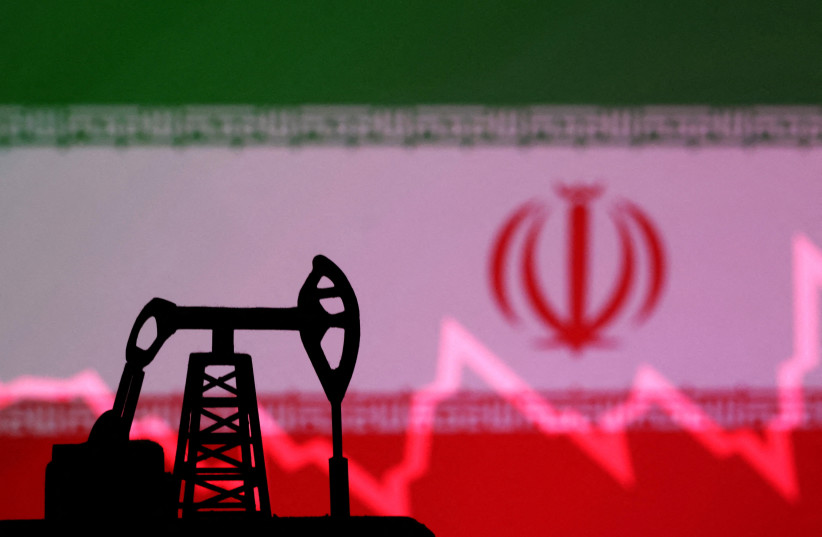
Reuters could not determine the impact on the barter-like arrangement of the US naval blockade imposed on Iran as part of the six-month war. No Iranian crude cargoes have successfully transited the Strait of Hormuz to China since the blockade was reinstated on July 14, the news agency reported last week.
China and Iran have repeatedly denounced what they regard as illegal unilateral Western sanctions and have vowed to protect their interests. The countries are longstanding economic and political partners but have said little publicly about how they keep trade flowing despite international restrictions.
Iran has used the arrangement to buy medicines, vehicles and communication equipment from China, all the sources said. The manufacturers were not dealing directly with Iran, and there is no indication they were in breach of sanctions.
The mechanism was also used at least once in the past year in connection with contracts to supply Iran with air defense equipment worth millions of dollars, the sources said.
They did not provide details about any of the alleged transactions with Chinese manufacturers, and Reuters could not independently verify that they took place.
A UN embargo on the export of most major conventional weapons to Iran was reinstated with other sanctions in September 2025 after the US withdrew from a 2015 nuclear accord between Iran and world powers during President Donald Trump’s first term, and Tehran stopped complying with some of its provisions.
Iran and China said the move by European countries to automatically restore the sanctions through a “snapback” mechanism was “legally and procedurally flawed.”
Responding to Reuters questions about the barter-like trade, China’s foreign ministry said it was “not familiar with the situation you describe.”
“China has consistently opposed unilateral sanctions that have no basis in international law and have not been authorized by the United Nations Security Council,” it said.
Iran’s UN missions in New York and Geneva did not respond to requests for comment.
In response to questions to the White House, a US official said the Trump administration works with economic partners including the European Union to “deprive Iran of the material means of furthering its nuclear ambitions.” The official did not comment on the arrangement described to Reuters.
Avoiding international banking channels
Decades of US sanctions have left Iran with few oil customers. China is the main buyer, accounting for more than 80% of Iran’s shipped oil in 2025, or an average 1.4 million barrels per day, according to commodities data and analytics firm Kpler.
In 2021, the two countries signed a 25-year strategic partnership accord covering sectors such as energy and infrastructure, but public details remain scarce.
The arrangement described to Reuters is one of a number of mechanisms through which Iran purchases goods and services from China without paying Chinese companies directly through international banking channels, three of the sources said.
A Western official and two other people familiar with the matter said a buyer acting on behalf of Chinese state-owned oil trader Zhuhai Zhenrong was at least until this year depositing hundreds of millions of dollars a month with an obscure, China-based financial entity known as ChuXin.
The deposits covered purchases agreed with a Hong Kong-registered company linked to Iran’s national oil company, the people said, citing material gathered by intelligence agencies. ChuXin would then send funds to Chinese exporters and companies that build infrastructure in Iran, likely via other Chinese financial institutions.
Roughly 70% of the Iranian oil proceeds handled by ChuXin are allocated to infrastructure projects, the three sources said, an arrangement first reported by the Wall Street Journal last October. The rest go into accounts belonging to a special purpose vehicle (SPV) used to pay companies that supply goods to Iran.
The Iranian sources, who are close to the country’s decision-making circle, confirmed the existence of the SPV, which has not previously been reported.
All five sources said funds in the SPV are managed by two entities: a firm acting on behalf of China’s Ministry of Commerce and one linked to Iran’s central bank. The Iran-linked firm notifies the Chinese one when Iran’s central bank authorizes importers to access funds in the SPV so payments can be sent to the suppliers, three said.
Reuters could find no record of a financial institution called ChuXin in Chinese company registries or of the firms said to be acting on behalf of China’s commerce ministry and Iran’s central bank. One source said ChuXin might only exist on a spreadsheet.
Companies with the same names as those said to be acting on behalf of the National Iranian Oil Company (NIOC) and Zhuhai Zhenrong are listed in the Hong Kong companies registry, but Reuters could find no public records of their ownership structure or business dealings. Neither responded to questions delivered to their registered addresses, which are in offices belonging to secretarial services companies.
Plausible deniability
Zhuhai Zhenrong has been a target of US sanctions over its alleged dealings with Iran. One source shared what appeared to be a July 22, 2025, letter from NIOC to the Chinese oil trader requesting confirmation of an outstanding balance – evidence, the person said, of a business relationship.
Reuters could not independently authenticate the document. NIOC and Zhuhai Zhenrong did not respond to questions about it or their alleged roles in the trade mechanism.
Iran’s central bank and China’s commerce ministry also did not respond to requests for comment.
The mechanism described to Reuters has been in place since at least 2021 and was first used to supply medicines and COVID-19 vaccines to Iran, three sources said.
As Washington has stepped up pressure on companies that do business with Iran, it has become increasingly important for trade, they said. They estimated that between $2 billion and $2.5 billion flowed through the SPV over the last year.
China is using such arrangements to push back against the US and show it cannot be coerced with the threat of secondary sanctions, said Andrea Ghiselli, an international politics lecturer at the University of Exeter who studies Beijing’s relations with the Middle East.
But he said China’s leaders do not want their banks or companies excluded from the international financial system.
“They want plausible deniability.”

TSA revives pre-9/11 tradition with gate access for certain travelers without tickets
The Transportation Security Administration has launched a new program allowing eligible TSA PreCheck members who are not flying to go through security and enter secure areas to greet arriving passengers or say goodbye to departing loved ones at the gate at some U.S. airports.
Under the program, eligible TSA PreCheck members without tickets can pass through security and enter gate areas, bringing back access that was largely restricted after the Sept. 11, 2001, terrorist attacks that led to heightened airport security measures.
The move would bring back the emotional send-offs and gate-side reunions that were common before 9/11. The program would also allow guests to meet someone during a layover or visit airport restaurants and shops.
After 9/11, access beyond airport security checkpoints was generally limited to ticketed travelers, although airlines could issue gate passes in certain circumstances.
CALIFORNIA AIRPORT CONSIDERING SCRAPPING POST-9/11 POLICY THAT BARRED GOODBYES AT TERMINAL GATES
“As an exclusive benefit for our most trusted travelers, this new program makes it easier to return to the gate for welcomes and send-offs, meet friends during a layover, and enjoy dining and shopping along the way, bringing back the moments that once defined air travel,” the TSA said on its website.
The program, Gateside by TSA PreCheck, is free, but members interested in a guest pass must apply online at least one day and no more than three days before their planned visits and receive approval before showing up at the airport.
If approved, guests can enter security using a TSA PreCheck lane with an acceptable form of identification. Visitors who do not have an acceptable form of identification can use TSA ConfirmID to attempt to verify their identity for a $45 fee. TSA does not guarantee that it will be able to verify their identity.
The passes are valid for only one calendar day, although reentries are permitted for that day.
Children can also go through security but must be included on their parent or guardian’s application.
The TSA said members of other trusted-traveler programs who have a Known Traveler Number may also apply for access to the gates.
The initial rollout applies to 13 airports, including Los Angeles International Airport, San Diego International Airport, Dallas-Fort Worth International Airport, Salt Lake City International Airport and Harry Reid International Airport in Las Vegas.
GET FOX BUSINESS ON THE GO BY CLICKING HERE
The other participating airports are Phoenix-Mesa Gateway Airport, John Glenn Columbus International Airport, Detroit Metropolitan Wayne County Airport, Wichita Dwight D. Eisenhower National Airport, Indianapolis International Airport, Bill and Hillary Clinton National Airport, Will Rogers International Airport and Eppley Airfield.
But the agency said it plans to expand the program to additional airports in the coming months.
This comes as 21 airports across the country have adopted policies allowing non-ticketed visitors to receive a guest pass to move through airport security and into the terminal at no charge, with Pittsburgh International Airport being the first major U.S. airport to enact such a policy in 2017.
UK Faces Soaring Gas Prices as Winter Nears
Pakistan warns Iran to rein in Houthis as Riyadh strikes back
Pakistan has delivered a Saudi warning to Iran to rein in its Yemeni Houthi allies after they stepped up attacks on the kingdom, in a coordinated effort to prevent the crisis from spiraling, Saudi, Pakistani and Iranian sources said.
The Houthis struck an airbase in Khamis Mushait and oil infrastructure in nearby cities on Tuesday, wounding 73 people, in one of the biggest attacks on Saudi Arabia since the start of the US-Israeli war on Iran in February.
Houthi military spokesman Yahya Saree said on Wednesday that Saudi warplanes carried out 54 airstrikes across various Yemeni provinces over the past 12 hours, adding that they would “not go unanswered and unpunished.”
The escalating conflict, which represents a second theater of war to threaten global energy supplies, comes as Iran and the United States wage their biggest declared wave of tit-for-tat attacks on shipping in the Gulf region since their war began.
Pakistan’s warning to Iran carries significant weight because of its defense pact with Saudi Arabia and Turkey.

While officials in Islamabad stressed any military role would be confined to defending Saudi territory, Pakistani Defense Minister Khawaja Asif said attacks spilling into the kingdom could trigger a joint security arrangement involving Riyadh, Ankara and Islamabad.
“An aggression on one country will be considered an aggression on all three countries,” Asif said on Pakistani TV.
“There is no ambiguity or doubt… Unprovoked aggression or spillover… into Saudi Arabia will definitely make this agreement operational.”
The Pakistani defense ministry, foreign ministry and the military did not respond to a Reuters request for comment.
Fears of proxy war turning into wider regional crisis
Pakistan’s intervention, after years of balancing ties with Saudi Arabia and Iran, has underscored the seriousness of the Houthi attacks. The message to Tehran is clear: rein in the Houthis or risk turning a proxy conflict into a broader regional security crisis, the sources said.
A senior regional diplomat said Pakistan had conveyed the message to Iran over the past 24 hours, urging Tehran to use its influence to halt Houthi attacks on Saudi Arabia.
A senior Iranian official confirmed that Pakistan conveyed the message to Tehran on Tuesday and Tehran’s response was that “Iran does not control the Houthis.”
However, two Iranian sources said Tehran had told the Houthis last week to carry out attacks on Saudi Arabia. Tehran promised additional funding and weapons, they said, while several Islamic Revolutionary Guard Corps commanders had traveled to Yemen to help coordinate the attacks.
The regional diplomat said Islamabad was seeking to restrain the Houthis before the escalation reached a point where Riyadh could press Pakistan to play a more active role in defending it.
“Pakistan has an agreement with Saudi Arabia, but I am hopeful the situation will not reach the point where Pakistan has to practically step in,” the diplomat told Reuters. “It will pursue a diplomatic solution for now.”
Pakistani support for Saudis
The Pakistani source said Saudi officials had met senior Pakistani and Turkish military representatives in Riyadh to coordinate their response. The three countries agreed that their troops would not enter Yemen and that any response would be launched from Saudi territory, the source added.
A second Pakistani source said no decision had been made to join retaliatory strikes, stressing that its military pact with Riyadh was defensive and limited to protecting Saudi territory. Pakistani forces could provide military, technical, ground or air support within Saudi Arabia, but would not take part in combat operations on foreign soil, the source said.
The pressure campaign waged by Iran and the Houthis could have the opposite effect to that intended by Tehran, the regional diplomat said.
By targeting Gulf security in a bid to pressure Washington over its blockade of Iranian ports, Tehran risks driving Saudi Arabia, Pakistan, Turkey and other US-aligned states into closer security coordination rather than fracturing their ties.
Trump’s blockade of Iran set to continue
Regional officials also see little sign that Washington is prepared to relent.
President Donald Trump appears committed to maintaining the US blockade until Iran reaches an agreement with Washington, the diplomat said, while Qatar is quietly exploring new proposals aimed at bringing both sides back to negotiations.
Another regional source said Saudi Arabia’s military response would remain focused on the Houthis rather than Iran itself. Nor do Saudi officials believe Houthi attacks will achieve Tehran’s broader objective of ending the US blockade.
Riyadh is not expected to press Washington to lift the blockade, that source said, stressing that Trump believes sustained economic coercion is the most effective pathway to negotiations.
“The question is how much pain Iran can absorb, and for how long,” the source said. “Trump does not want a military solution. He wants to squeeze them through the blockade.”
Trump advisers warn Iran conflict may last through end of his term – report
Top White House advisers, including Vice President JD Vance and Secretary of State Marco Rubio, have privately warned President Donald Trump that the conflict with Iran could extend through the remainder of his presidency, the Wall Street Journal reported on Wednesday, citing US officials.
The White House did not immediately respond to a Reuters request for comment.
The advisers told Trump in private discussions in the Oval Office and the Situation Room that Tehran could continue to resist US pressure, potentially prolonging the conflict beyond Inauguration Day in January 2029, the WSJ added.
Trump says he expects war to end ‘immediately after’ US midterm elections
The reported warning contrasts with Trump’s own public remarks about the war. The president said on Wednesday he expected the war to end “immediately after” the US midterm elections in November, arguing that Iran was trying to influence the vote but would be unable to sustain its resistance much longer.

Speaking to reporters before departing for Dallas, Trump was asked about the continued conflict with Iran and the sharp rise in oil prices.
“I think the war will end immediately after the election,” Trump said. “I think the war will end immediately after the election because they can’t hold out any longer.”
Trump’s remarks came as oil prices climbed above $100 a barrel amid renewed US-Iran military action. He acknowledged that Americans are paying higher prices but again framed the conflict around preventing Iran from obtaining a nuclear weapon.
Idan Kweller contributed to this report.
Two-thirds of US Jewish voters to favor Democrats in November elections, poll shows
Two-thirds of Jewish voters plan to vote for Democrats in the coming midterms, according to a poll published Wednesday, in a sign that roiling tensions in the party over Israel have barely budged its status as the political home favored by a substantial majority of Jews.
The poll by the Jewish Voters Resource Center, which is led by prominent Jewish Democrats, showed that 67 percent of respondents planned to vote for Democratic congressional candidates in November, and that 26 percent said they would vote for Republicans.
It reflected other polling since the Oct. 7, 2023 deadly Hamas attacks on Israel, showing increased concern about antisemitism and about Israel.
Antisemitism ranks third on important issues lists
Asked to rank their top two issues going into the voting booth, respondents made antisemitism third, after affordability and the future of democracy. Israel ranked fifth.
Much of the recent Jewish community anxiety about antisemitism and Israel has been directed at Democrats, who have elevated a number of strident Israel critics in primaries this season, including a number who refuse to recognize Israel’s right to exist as a Jewish state. Additionally, a number of candidates have faced Jewish community criticism for appearing with social media influencers accused of peddling antisemitic tropes.

Still, the high ranking of concerns about democracy are huge unfavorables for President Donald Trump – and his vice president, JD Vance – who at times has been hostile to Israel and who has maintained close relationships with figures who have drawn accusations of antisemitism – suggests that Republicans are stumbling in seizing the moment of Jewish disaffection with Democrats.
Asked to rate candidates on an unfavorability scale, Trump scored 75 out of 100; Vance scored 82.
Israeli Prime Minister Benjamin Netanyahu, who has been fiercely criticized by Democrats for his conduct of the war in Gaza, scored 67 on the unfavorability scale.
Jewish history shows favor for Democrats since 1930s
Since the 1930s, Jews have voted consistently in two-thirds majorities for Democrats, with peaks in the 2000 election, when some polling showed close to 80 percent of Jewish voters favored a ticket that had the Jewish senator, Joe Lieberman, as running mate to Al Gore.
There was some movement toward Republicans in 2012, when moderate Mitt Romney was the GOP presidential nominee facing President Barack Obama, but Trump’s election in 2016 reversed those gains.
The survey was conducted by GBAO Strategies, a polling firm that works with liberal groups and with Democrats. For this poll, it reached 800 Jewish voters via text from Aug. 26-Sept. 1 and has a margin of error of 3.5 percentage points.

‘My boss is the Chinese customer’: Walmart China CEO Christina Zhu on how the Fortune 500 company is thriving in a tough retail market
When U.S. supermarket chain Walmart opened its first Chinese outlet in Shenzhen in 1996—five years before China joined the World Trade Organization—the retail landscape in the country looked vastly different. With no large-scale hypermarts, shoppers rose at dawn to snag the freshest produce at local wet markets.
Yet, in the last 30 years, China’s rising middle class and deep manufacturing capabilities has given rise to one of the world’s most dynamic, yet competitive, consumer markets. And the relentless domestic competition has proven to be a double-edged sword for retail companies: those which can’t adapt quickly are stamped out, while the most successful firms become hyper-efficient, agile and globally competitive. Walmart, for one, saw its China business grow by 20.7% last quarter. That’s faster than Walmart’s other global businesses (Walmart U.S. saw sales grow by 2.6%), and bucks a broader trend of sluggish retail sales within China.
“Customers everywhere want similar things—they want assortment, value, convenience and emotional experiences,” Christina Zhu, the president and CEO of Walmart China, said at the Fortune Leaders Forum in Macau on Sep 8. “But in China, there’s a whole different degree of intensity: Convenience might be defined elsewhere as receiving an online purchase in three days. Here, it’s [more like] 30 minutes.”
Walmart’s Chinese outfit has also been forced to shift its strategy over the years. With the rise of domestic e-commerce giants like Taobao and Pinduoduo, Zhu’s team has moved from solely operating brick-and-mortar stores, to building a strong omnichannel network. (Today, over 50% of Walmart China’s sales revenue hails from online purchases.)
“Coming from a traditional business, it took a lot of effort to try to transform the organization,” Zhu admitted. “I think we’ve passed that [hurdle] and are today a fully-fledged omnichannel company.” (Walmart still has a significant physical presence in China, operating nearly 300 Walmart Supercenters across more than 100 cities.)
Doubling down
Although many Western brands, including Starbucks and Lululemon, have struggled in China, Walmart continues to deepen its footprint, opening over ten stores across China in the last year. Zhu attributes the brand’s domestic success not to any particular localization strategy, but rather, her team’s dedication to meeting their customers’ shopping needs.
“I only have one boss, and my boss is the Chinese customer,” Zhu said. “We’re not here to propagate any particular [business] model, but rather to serve our customers. If you always go back to that starting point, then everything else becomes very easy.”
Aside from Walmart Supercenters, the brand’s premium members-only chain, Sam’s Club, has also been gaining popularity in China. Last week, the brand opened its sixth Sam’s Club outlet in Beijing, within the Fangshan district.
“We very clearly define who we serve,” explained Zhu, pointing to how items at their members-only stores are carefully chosen and curated. “Sam’s Club serves the upper middle class families in Chinese cities…so we don’t try to serve everyone with that format.” (Separately, Walmart China has also continued expanding its smaller community and neighborhood store format, opening new outlets in Shenzhen.)
Ultimately, Zhu says that the secret sauce to Walmart China’s success is its openness to change. “Certain things—like our values and purpose of helping customers to save money and live better—don’t change,” she concludes. “But everything else must change, because…technology and consumer behaviour will change.”
This story was originally featured on Fortune.com
Somaliland willing to send up to 2,000 troops to Gaza force, president says
WASHINGTON — Somaliland is willing to contribute up to 2,000 soldiers to the International Stabilization Force planned for Gaza but is waiting for the US or Israel to ask, Somaliland President Abdirahman Mohamed Abdullahi said on Wednesday.
“If they ask, we can provide,” Abdullahi said in an interview on the sidelines of the MEAD conference, stressing that although Somaliland is not volunteering, “if they ask me, I am ready.”
Uganda has approved a contingent of some 1,200 troops, while Morocco has committed up to 500. Albania, Kazakhstan and Kosovo have also pledged personnel to the US-led force, which is intended eventually to deploy some 20,000 soldiers in Gaza.
The force’s tasks are set to include maintaining security, training Palestinian police, facilitating humanitarian aid and preventing Hamas from reestablishing its military control.
Somaliland has an army of approximately 25,000 soldiers and a coast guard of some 1,500 personnel, Abdullahi said. It has not previously contributed troops to an African Union force.

Israel the first country to recognize Somaliland independence
In December, Israel became the first country to formally recognize Somaliland as an independent state, ending the territory’s 35-year struggle without international recognition. Somaliland declared independence from Somalia in 1991, but Mogadishu still considers it part of Somalia.
Somaliland opened an embassy in Jerusalem in June during Abdullahi’s first official visit to Israel. This was its first formally designated embassy in the world, though it also opened an embassy-like representative office in Taiwan in 2020.
Abdullahi said Israel’s recognition has already significantly raised Somaliland’s international profile, even though no other country has yet followed Israel’s lead.
“There has been much more attention paid to Somaliland following Israel’s recognition,” he said. “ Now you can find the word ‘Somaliland’ in every language in the world—in Indian, Arabic and Chinese.”
Abdullahi said that for 35 years his country has been asking the whole world to “see us,” and now they are paying attention.
The president is expected to meet members of Congress next week, including Sen. Ted Cruz, one of Somaliland’s most vocal supporters in Washington. Cruz has called on the US to recognize Somaliland, arguing that it could serve as an important American security and diplomatic partner in the strategically significant Horn of Africa.
Abdullahi said he could not point to any American promise to recognize Somaliland, but added that his government had discussed both recognition and security cooperation with US officials.
“We are optimistic,” he said.
Israel’s recognition has, however, increased tensions with Somalia and Turkey, one of Mogadishu’s closest military, economic and diplomatic partners.
Turkey adamantly opposed Israel’s move, arguing that Somaliland remains part of Somalia and that recognizing its independence violates Somalia’s sovereignty and territorial integrity. Turkish President Recep Tayyip Erdogan called the recognition illegitimate and unacceptable and accused Israel of trying to destabilize the Horn of Africa.
Ankara operates a military base in Mogadishu. It also trains Somali troops, has supplied Somalia with armed drones and is exploring for oil and gas off the Somali coast. Following Israel’s recognition, Turkey also deployed F-16 fighter jets to Somalia, further expanding its military presence there.
Abdullahi said Turkey’s steps showed that Israel’s recognition had concrete security consequences for Somaliland.
“There is no free lunch,” he said. “Everything has some negative and some positive.”
“We created new enemies,” he added, saying countries that had not previously provided Somalia with sophisticated weaponry were now doing so.
Asked whether Somaliland faced a threat of invasion, Abdullahi said Somalia’s president and defense minister had publicly spoken about invading the territory. Somaliland has enough manpower to defend itself, he said, but needs more advanced weapons and technology.
“We need protection,” he said, adding that Somaliland is seeking assistance from Israel, the US and other allies to “balance the situation.”
The president said there is currently no Israeli or American security presence in Somaliland, but he did not rule out such a presence in the future, saying it could create both balance and deterrence.
Asked directly whether he would like an Israeli security presence in Somaliland, Abdullahi said he expected a foreign presence “maybe in the near future.”
President denies discussing Israel using Somaliland territory for operations against Houthis
He denied, however, that Israel and Somaliland had discussed using Somaliland’s territory or airspace for operations against the Iranian-backed Houthis in Yemen.
Somaliland and Yemen face one another across the Gulf of Aden and have been neighbors for thousands of years, he said.
“As a country, Somaliland, we don’t have any conflict with the Houthis at the moment,” he said. “We haven’t discussed possible Israeli operations against them.”
Abdullahi also denied reports that Somaliland had discussed accepting Palestinians from Gaza as part of its agreement with Israel.
“We haven’t discussed it with Israel, we haven’t discussed it with the Americans, we haven’t discussed it with anyone,” he said.
The recognition declaration signed with Prime Minister Benjamin Netanyahu last year provides for cooperation in security, trade, investment and economic development, Abdullahi said. Water technology will be the top priority because Somaliland is semi-arid.
He said he met representatives of more than 100 Israeli companies during his visit to Tel Aviv, including firms interested in Somaliland’s potential oil and gas reserves.
No concrete Israeli investments have yet been made, he said, “but we expect” them.
Israel’s measures against UK likely succeeded in diminishing British influence, Abrams says
WASHINGTON – Israel’s retaliatory measures against Britain for banning imports from the settlements were designed to make London “wince” and have likely succeeded, former senior US official Elliott Abrams said on Wednesday.
Abrams, in an interview on the sidelines of the MEAD conference, said Israel’s decision to close the British Consulate in east Jerusalem and exclude Britain from diplomatic and security activity connected to the Palestinians would impair London’s ability to play the global role it seeks.
“I think they achieved that,” he said when asked whether Israel’s response would cause Britain diplomatic pain. Among the retaliatory steps Israel announced were ordering the closure of the British Consulate in Jerusalem within 30 days, removing British personnel from US-led coordination efforts in Gaza, ending British training of Palestinian security forces, and barring several British figures from entering Israel.
Abrams criticizes Miliband over Israel policy
Abrams, a senior fellow for Middle Eastern Studies at the Council on Foreign Relations and a former US deputy national security adviser in the Reagan, George W. Bush, and Trump administrations, was sharply critical of British Foreign Secretary Ed Miliband, particularly his accusation that Israel was carrying out “ethnic cleansing” in Judea and Samaria.
He said Miliband’s speech announcing the new policy would offend many British and Israeli Jews because, in slamming Israeli policy, he “relies on the fact that he’s Jewish.”

“He’s a Jew according to the Nuremberg Laws,” Abrams said. “But there is nothing in the way he lives his life that shows any particular involvement or affinity with the Jewish community, and I think that’s going to rankle a lot of Jews.”
Abrams said he didn’t think Miliband cared whether his words would “rankle” the local Jewish community, adding that this is “part of the problem.”
“You have a British Jewish community that’s under a lot of pressure, and not just political pressure,” he said. “I mean, they do not feel themselves to be safe physically. They don’t think their children are safe in their schools. Nothing that Miliband has done will help. It will make them feel less safe. It will make them feel the government is against them.”
Abrams said the sanctions were imposed according to Britain’s domestic political timetable, with little consideration for the anniversary of the October 7 massacre or Israel’s October 27 election.
The domestic political timetable he referred to was the British Labour Party’s annual convention to be held at the end of the month, with this move believed to be meant to placate the hard-left faction inside the party.
Abrams noted that the sanctions will be implemented in another six to nine months, leaving open the possibility that their scope could change, particularly if Israel has a different governing coalition next year.
Israel seeks to limit Britain’s diplomatic role
Abrams said that with the deterioration in diplomatic ties between the two countries, the question now was whether it would spill over into military and intelligence cooperation.
While such ties can sometimes be insulated from political disputes, he said, Israel will seek to marginalize Britain from Israeli-Palestinian diplomacy and the postwar Gaza process.
“The British, like the French, think of themselves as a global power,” he said. “Okay, not a superpower, but a country with a global role.”
If Israel tells Britain, “You just lost your role here,” and makes it more difficult for London to exert influence in Ramallah or Gaza, he said, that will matter to the British.
Abrams rejected the suggestion that Israel’s effort to deter other governments had already failed because 10 additional countries joined the British-led initiative, noting that the majority of European states, as well as Latin American and Asian states, did not join the boycott.
He said the strong Israeli reaction was meant to warn other countries that there would be a price.
He said it was likely that Britain was singled out for the harshest Israeli response because it not only imposed the measures but also actively recruited other countries to join.
“It was the British who not only did it, but then went out and tried to convince others to join them,” he said. “And I think the Israelis particularly resent that.”
Abrams warns Britain could lose influence
Last month, Israel expelled Dutch representatives from the US-led Gaza coordination center in Kiryat Gat because the Netherlands announced a ban on settlement imports.
Abrams described the group of countries now acting outside the framework of the European Union, where states including Germany and the Czech Republic can and often do block actions against Israel that need to be taken unanimously, as an “anti-Israel coalition of the willing.”
Abrams said Norway offered a cautionary example of what Britain risks. Once considered an effective mediator in conflicts worldwide, Norway lost its influence when it ceased to be neutral on the Israel-Palestinian issue.
“What have you achieved?” Abrams said he has asked Norwegian diplomats. “Nothing for the Palestinians, and you diminished your own influence.”
That, he said, was also his message to London: “What you did will not help one Palestinian, but it will diminish British influence.”
Upstage Co-Founder Lee on AI Race, Strategy


Cream cheese and deli salads recalled over potential listeria contamination
Cream cheese and ready-to-eat deli-style salads are facing a recall over potential listeria contamination.
New York-based Made Fresh Salads, Inc. issued a recall this week for all of its cream cheese products and Ready-to-Eat Deli Style Salads in response to the listeria risk.
Made Fresh Salads’ recalled cream cheese items include 5-pound and 30-pound tubs of various flavors, such as 5-pound apple cinnamon cream cheese, 5-pound tofu vegetable spread, 30-pound whipped cream cheese and 30-pound scallion cream cheese.
The company also recalled dozens of ready-to-eat salad products, including 5-pound chickpea salad, 5-pound bowtie pesto, 30-pound macaroni salad and 30-pound potato salad.
MORE THAN 1,500 POUNDS OF PORK RECALLED OVER LISTERIA CONTAMINATION RISK
The company’s 7-pound chocolate pudding, 6-pound vanilla pudding, 12-piece crab cakes and 12-piece potato croquettes were also subject to the recall.
Affected items have expiration dates ranging from Sept. 3 to Sept. 18.
The salads and cream cheese items were distributed in Brooklyn, Queens and the Bronx in New York City in 5-pound and 30-pound white plastic tubs with a Made Fresh Salads label or Northside label and half-size aluminum pans.
DOG SUPPLEMENTS RECALLED OVER POTENTIAL SALMONELLA CONTAMINATION
The products may have been repacked by retail locations in deli-style or other retail packaging, according to the company, although retail packaging and coding can vary based on purchase location.
The recall was initiated following environmental sampling by the company and the Food and Drug Administration, revealing that some areas of the facility tested positive for Listeria monocytogenes. The company has ceased production and distribution of the products as it continues to investigate, along with the FDA, what caused the contamination.
A listeria infection can cause symptoms such as high fever, severe headache, stiffness, nausea, abdominal pain and diarrhea, as well as miscarriages and stillbirths among pregnant women.
CLICK HERE TO GET FOX BUSINESS ON THE GO
It can cause serious and sometimes fatal infections in young children, frail or elderly people and others with weakened immune systems.
No illnesses have been reported thus far in connection with the recalled products.
Consumers who purchased the affected items are urged to return them to the place of purchase for a full refund.
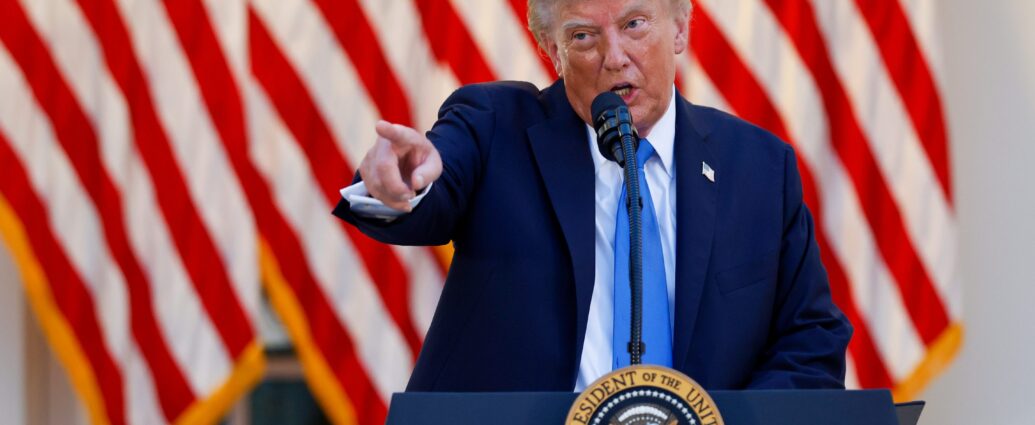
Trump posts AI superhero memes as low approval on the economy, $4.15 gas and the midterms test Republicans
In the real world, President Donald Trump is struggling to stop inflation, rout the Iranian government and restore American manufacturing with tariffs.
However, it’s a different story in the fantastical vision that he shares with supporters on social media. Over Labor Day weekend, Trump and the White House unleashed an extraordinarily heavy torrent of memes that portrayed the president as singularly powerful.
One video depicted Trump as a superhero wielding Green Lantern’s ring to effortlessly build a wall to keep out migrants and erect a slew of busy factories. Another post showed him in a U.S. hockey uniform looming over Canadian Prime Minister Mark Carney as Carney cowered on the ice. And another had Trump on a military ship as it bombarded an enemy fleet.
Trump’s allure has always relied on a mythical version of himself, from “The Apprentice” to the White House, but the gap between meme and reality has become glaringly stark ahead of the midterm elections. Most U.S. adults are unhappy with Trump’s handling of the economy and say the Iran war hasn’t been worth it, but Trump has responded with outlandish images of himself as unstoppable and omnipotent.
Memes risk sidestepping reality
Some of the pictures are generated with artificial intelligence, and the administration has previously defended the memes as funny and their critics as humorless. Yet the stakes right now are serious for congressional Republicans who have tied their own fate to a president with low approval numbers. Trump’s party will put him center stage at an unusual midterm convention on Wednesday and Thursday in Dallas in hopes of stoking voters’ enthusiasm.
Kevin Madden, a Republican strategist, said that Trump’s social media posts can energize his base of “Make America Great Again” followers, although the tradeoff is that he’s not talking about how to fix inflation.
The voters who are likely to determine control of Congress in the midterms “are not going to be won over with memes,” Madden said. “The affordability voter is driving this election cycle and the issues they care about are anchored in the economy.”
The White House press office did not respond to a request for comment. Trump sometimes plucks memes from a sprawling ecosystem of online conservative supporters, and sometimes his government staff produces them as part of their official messaging. Recently they created a series of old-school video games, such as a “Tetris” knockoff called “Build the Wall.”
“The memes will continue,” Kaelan Dorr, a member of the White House communications team, recently posted on social media. “The winning will continue.”
Aging presidents promote vitality online
The problem for Trump is that voters have other images they’re using to define him. Drivers can spot through their windshields that gasoline is averaging $4.15 a gallon, up nearly 30% from a year ago because of the Iran war. And social media is inundated with questions about the 80-year-old president’s health and vitality, spurred by pictures of his bruised hands or video clips of him appearing to fall asleep in meetings.
White House officials have said the bruising is caused by “frequent handshaking” and Trump’s aspirin regimen, and they’ve denied that he’s dozed off.
Trump’s predecessor, Joe Biden, is three years older and faced relentless scrutiny about his age while in office. His White House came to embrace a meme version of Biden with lasers for eyes, suggesting that he was powerful and focused rather than infirm.
Andrew Bates, who was a deputy press secretary for Biden, said that Trump’s memes seem to be about avoiding the actual responsibilities of governing. He said they risk angering voters who see Trump as more focused on redecorating the White House than bringing the Iran war to a successful end.
“When a president who ran on bringing gas prices under $2 a gallon is now saying, ‘You’re at four dollars, it’s OK,’ it unfortunately makes sense that he’s also posting fever dreams,” Bates said.
Some memes have caused trouble
The memes have occasionally gotten Trump into trouble. He posted an image of himself as Jesus in April, which caused a degree of consternation among some supporters. The president later claimed he thought the image showed him as a medical doctor — albeit a doctor in Biblical robes with light emanating from his hands.
In February, his account posted a racist video of former President Barack Obama and his wife, Michelle, as primates, which he deleted after a backlash.
Last October, Trump shared a video of him in a fighter jet dumping feces on Americans who were protesting his policies.
What the memes have not done so far is boost his wider approval ratings. Only 33% of U.S. adults approve of how he is handling the job of being president, according to a July AP-NORC poll.
But the polling also hits at a reason why he might be sending the memes to rally his core supporters. Just 15% of U.S. adults strongly approve of his presidency, the poll found, a slight decline from 22% shortly after he took office.
This story was originally featured on Fortune.com
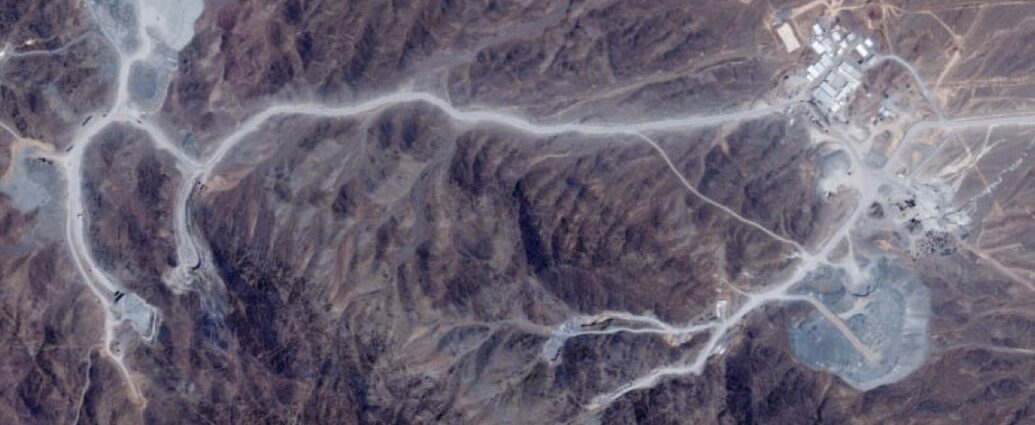
Iran’s Pickaxe Mountain nuclear site sees surge in construction activity, analysts say – report
The Iranian nuclear site buried under Pickaxe Mountain has seen an increased level of construction work over the last year, analysts reviewing satellite imagery shared with CNN on Wednesday.
Construction at the site, analysts from the Center for Strategic and International Studies (CSIS) think tank told CNN, “has shifted from active excavation toward probably internal construction and continued exterior reinforcement.”
The site has seen “more road activity,” as well as “raising and hardening of the (tunnel) portal accesses, paving of the internal road network, reinforcement around access areas, and the flattening and removal” of excavated dirt.
According to CSIS, the site has likely been designed to be a safe haven for Iran’s nuclear program, CNN reported.
CSIS analysts said that the site could serve as a centrifuge assembly facility, an enrichment facility, or other “nuclear-weapons-relevant” work. However, based on the continuous construction, the analysis estimated that the site “is not yet capable of enrichment work, if that is the intended purpose.”

A source familiar with the matter told CNN that the United States had considered Pickaxe Mountain one of the potential targets if the war against Iran escalated in the last several months.
One source said that the Defense Department had recently held a “planning sprint” on the topic of strikes against Iranian underground facilities, including Pickaxe Mountain.
US explores options for striking deeply buried Iranian sites
Pickaxe Mountain could prove difficult to strike with existing US non-nuclear bombs due to the granite surrounding the underground facility, according to the CSIS analysis cited by CNN.
Four days before the US launched Operation Epic Fury, a Defense Threat Reduction Agency program manager signed an emergency $1.2 million contract justification for repairs to an underground test facility at White Sands Missile Range in New Mexico, CNN reported.
The document referred to preparations for a live-fire test of classified capabilities and said the work needed to be completed within two to three weeks due to a “time-sensitive national security directive.”
Three sources told CNN that the planned test was connected to the Iran war and efforts to develop ways of targeting Iran’s deepest underground facilities.
CNN said it could not independently verify whether the test occurred or confirm the purpose of activity observed at the White Sands site.
US developing next-generation penetrator
The US struck Iranian nuclear sites during Operation Midnight Hammer in June 2025. A top US general later told lawmakers that only the entrances to the deeply buried Isfahan nuclear site were buried because the Pentagon believed its Massive Ordnance Penetrator bombs could not destroy the facility, CNN reported.
The US military is also developing a successor to the Massive Ordnance Penetrator that could potentially target more deeply buried facilities.
A prototype contract was awarded in September 2025, and the Air Force sought defense industry sources for the weapon in June, CNN reported.
CNN also reported that the US maintains operational plans to strike Pickaxe Mountain. The site was included in a target package considered earlier this summer, although it remains unclear whether existing US munitions could penetrate deeply enough to destroy what Iran may have moved underground.